The estuarine crocodile is a remarkable creature that can be found in the brackish waters of Northern Australia. They are the largest reptiles on earth, growing up to 23 feet in length.
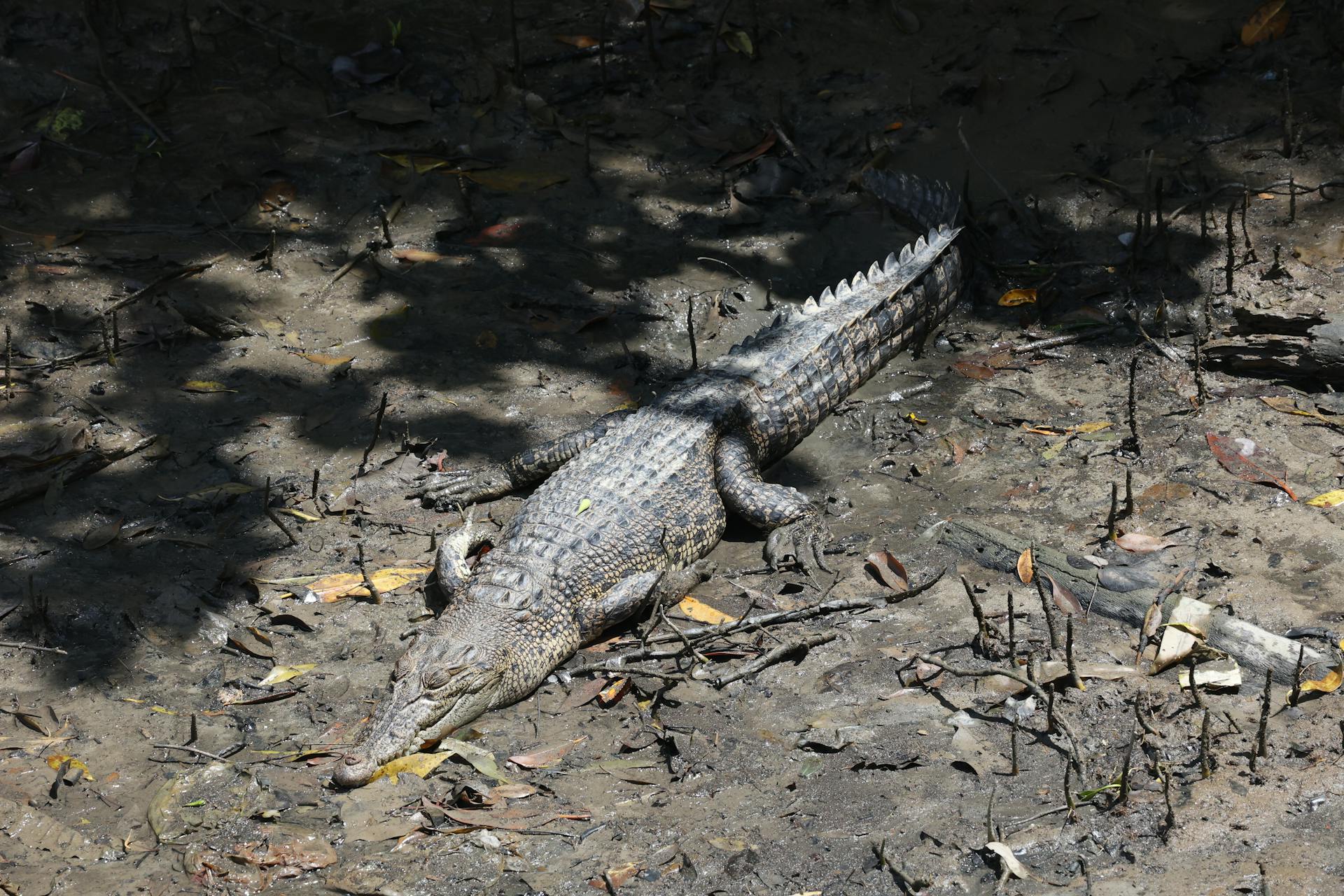
Their habitats range from mangrove swamps to saltwater estuaries, where they can be seen basking in the sun on riverbanks and mudflats.
Estuarine crocodiles are carnivores and feed on a variety of prey, including fish, crustaceans, and small mammals.
Recommended read: Dog Sit
Physical Characteristics
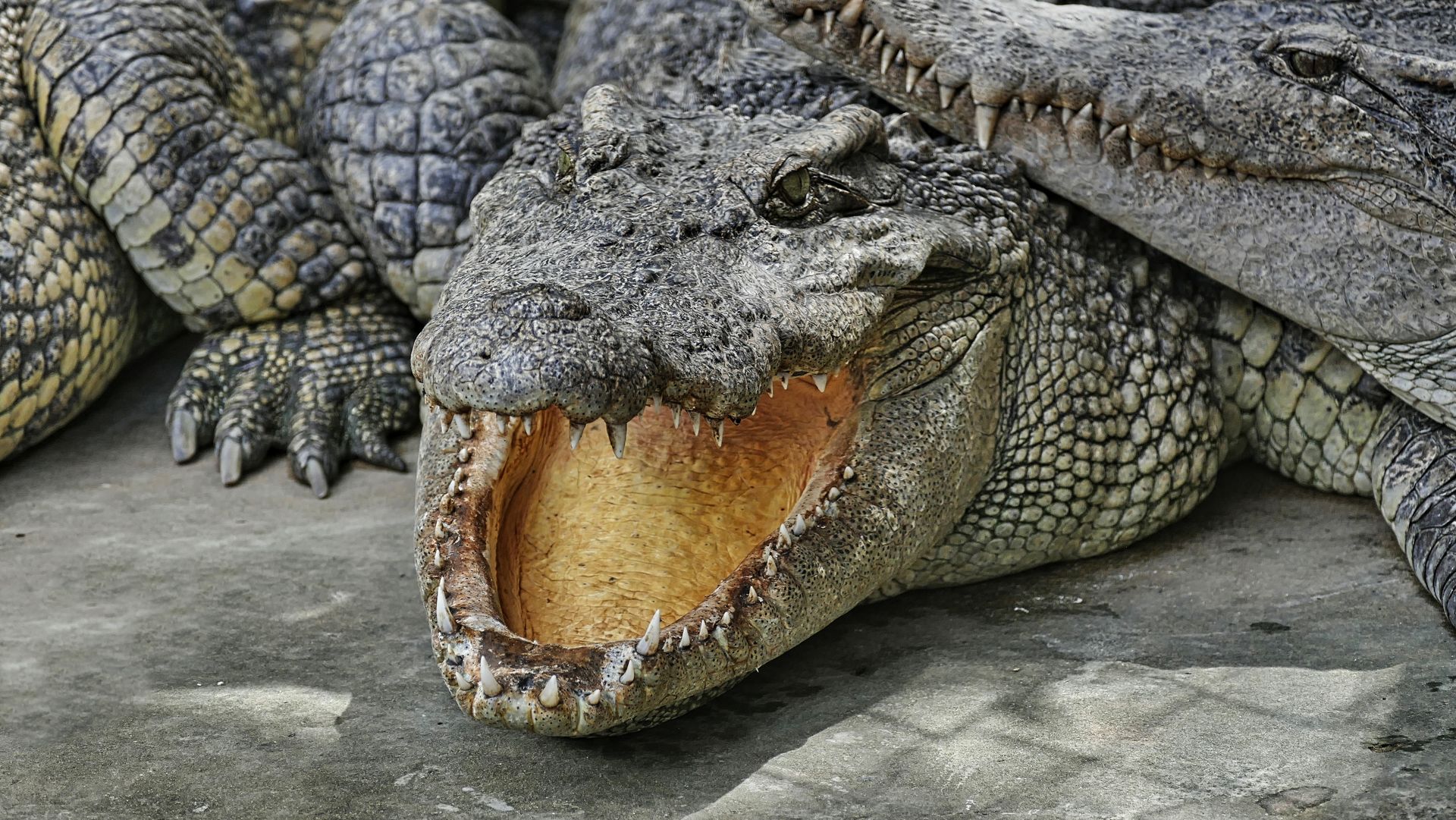
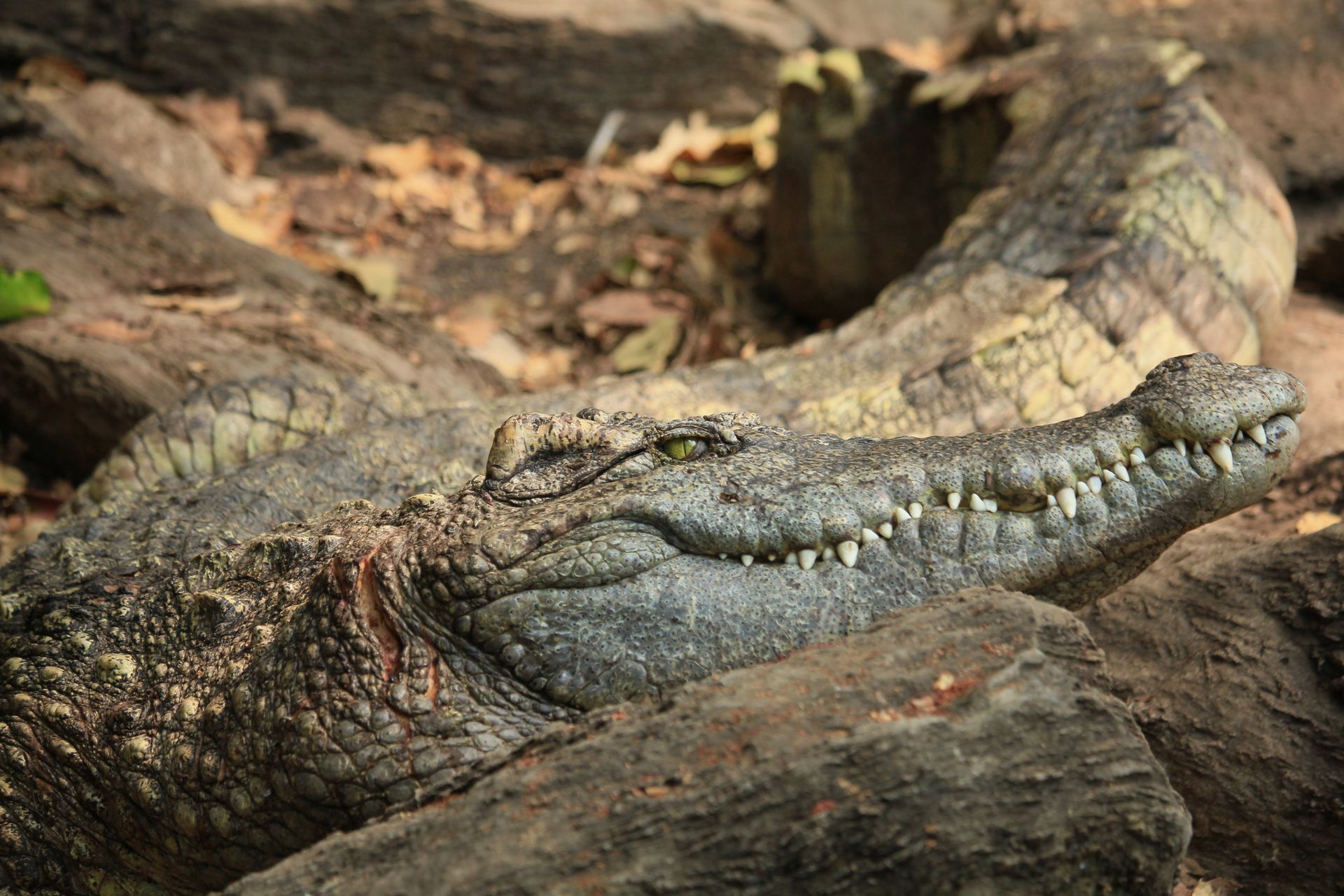
The Estuarine crocodile has a distinctive appearance, with a long, well-toothed snout and eyes and nostrils set atop its head.
Its skin is thick and has embedded bony plates called osteoderms, which provide protection.
The Estuarine crocodile has a long, muscular tail and a streamlined body.
Short limbs with clawed, webbed feet are typical of this species.
Adult Estuarine crocodiles have a broad snout that is less than twice as long as the width of their head.
They range in colour from golden tan to grey to black, with irregular darker mottling.
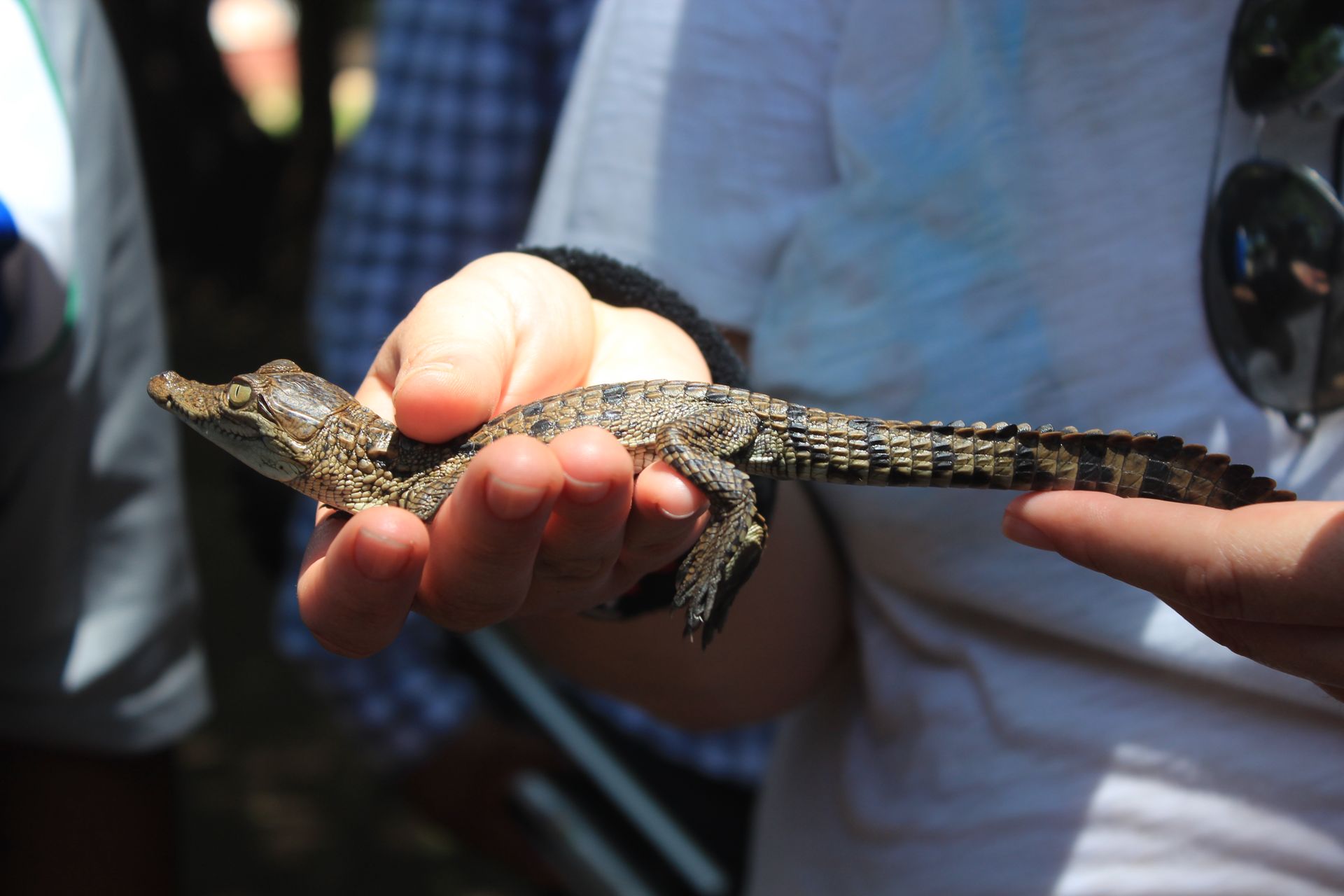
Juveniles are brightly patterned with dark spots/bands on their body and tail, which tend to fade with age.
The belly of an Estuarine crocodile is cream-coloured.
Adults typically range in length from 3-5m, with males growing much larger than females.
The largest Estuarine crocodile reliably measured was caught in the Mary River in the Northern Territory in 1974.
Habitat and Distribution
Estuarine Crocodiles can be found in a wide range of habitats, including rivers, estuaries, creeks, swamps, lagoons, and billabongs.
They can tolerate salinities ranging from 0% (freshwater) to 35% in full strength sea water, and have even been recorded in water twice as saline (70%) as sea water.
In northeastern Queensland, they don't occur above 250m, primarily due to physical barriers such as escarpments and other types of rapidly rising ground.
Historically, Estuarine Crocodiles occurred from southwestern India and Sri Lanka east through southeastern Asia, the Philippines, the Indonesia Archipelago, and northern Australia to the Solomon Islands.
You might enjoy: Largest Salt Water Crocodile
They can cross large stretches of open ocean, with records of individuals being found on remote islands in the Indian Ocean and the western Pacific Ocean, such as Fiji.
In Australia, they're found in northern coastal areas and drainages, from Broome in northwestern Western Australia to the Gladstone area in southeastern Queensland.
They also occur on a number of islands off the Northern Territory and Queensland coasts, which may be as far as 96km from the nearest point on the mainland.
Behavior and Diet
Estuarine crocodiles are mostly nocturnal, but they'll hunt during the day if they get the chance. They're opportunistic feeders, which means they'll eat just about anything they can catch and overpower.
Small crocodiles feed frequently on small prey like insects and crustaceans, while larger individuals feed less often on bigger prey like water birds, sea turtles, and even mammals up to the size of water buffalo. They're also known to be cannibalistic.
Juvenile crocodiles tend to sit and wait in shallow water for prey to come within striking distance, but they may also chase small animals and leap from the water to snare overhanging prey. Larger crocodiles actively hunt and are attracted to any movement that may represent a potential meal.
Feeding and Diet

Estuarine Crocodiles are mostly nocturnal, but they'll hunt during the day if they get the chance. They eat just about anything they can catch and overpower.
Small crocodiles feed frequently on small prey, such as insects and crustaceans. They tend to 'sit and wait' in shallow water for suitable prey to come within striking distance.
Larger individuals feed less often and on bigger prey, including water birds, sea turtles, and mammals up to the size of water buffalo. They're also known to be cannibalistic.
Juvenile crocodiles can leap from the water to snare overhanging prey. If the meal is too big to be swallowed whole, the crocodile will grab hold with its jaws and shake violently or roll to tear off a manageable piece.
After eating its fill, the crocodile may store the remains in mangroves or underwater to feed on again at a later time.
Behaviours
Saltwater crocodiles are ambush predators that lie in wait for fish or animals to come close, before rushing forward to attack.

They will eat just about any animal they can get their jaws on, including water buffalo, monkeys, wild boar, and even sharks.
Male crocodiles become very mobile during the breeding season as they look for a mate and drive off rival males.
Females also become intolerant of other females and will jostle for dominance during this time.
The female crocodile deposits between 40-60 eggs on average, but can lay as many as 90 at a time.
She buries her eggs in nests of vegetation and mud which are elevated to avoid loss from flooding during the rainy season.
After mating, the female crocodile protects her nest until the eggs are hatched between 65 and 114 days depending on nest temperature.
The sex of the hatchlings is determined by nest temperature, with males produced at around 31.6° C.
The female crocodile helps dig out the hatchlings and then carries them in her mouth down to the water, where she continues to protect them until they learn to swim.
Predators

Young hatchlings face numerous threats, including birds of prey, large fish, and freshwater turtles, which is why very few make it to adulthood.
Their biggest predators are actually other crocodiles, which is a harsh reality of their ecosystem.
Estuarine Crocodiles were once hunted extensively for their skins, resulting in a significant decline in their numbers.
However, since being protected, they've made a remarkable comeback and reclaimed much of their original territory.
Sadly, many are still accidentally killed in fishing nets every year, which is a concerning issue that needs attention.
Communication
Estuarine Crocodiles use sound to communicate with each other. They emit a low rumbling growl in response to a predator.
Hatchlings 'chirp' to gain the attention of their mother and to keep members of the creche together. This is a crucial way for young crocodiles to stay connected.
Adults and juveniles may also growl to advertise their presence during the breeding season. Males will use this vocalization to signal their availability to females.
Body posture is another important form of communication for Estuarine Crocodiles. Raising the snout can signal submission, while tail arching is a threat display.
Chemical signals may also play a role in Estuarine Crocodile communication, although the extent to which this occurs is not yet clear.
Conservation and Threats
Estuarine crocodiles face significant threats to their survival. Habitat destruction, particularly in the estuarine mangrove belt, is a major concern.
Up to 75% of eggs laid in a season will not hatch due to various reasons such as infertility, flooding, overheating, poor gas exchange, and desiccation.
The conservation status of estuarine crocodiles varies by region, with some areas considering them vulnerable and others specially protected.
In some parts of their range, estuarine crocodiles are hunted for their hide and meat, and large individuals are persecuted due to their man-eating tendencies.
Successful captive breeding in crocodile farms, especially in Southeast Asia and Australia, has helped reduce the hunting pressure on wild populations.
Conservation
Conservation efforts have made a significant impact on reducing the hunting pressure on wild Estuarine Crocodile populations. Successful captive breeding in crocodile farms, especially in Southeast Asia and Australia, has helped to decrease the demand for wild-caught individuals.
Habitat destruction is a major threat to Estuarine Crocodiles, with the estuarine mangrove belt being particularly vulnerable. This destruction can lead to a loss of food sources and breeding grounds for the species.
Only about 25% of Estuarine Crocodile eggs laid in a season are estimated to survive to hatching. This is due to a variety of factors, including infertility, flooding, overheating, poor gas exchange, and desiccation.
Estuarine Crocodiles are often hunted for their hide, which is valued for making high-quality leather products like shoes and handbags.
Danger to Humans
The Estuarine Crocodile is a formidable predator that's not to be underestimated. A large specimen is likely to consider humans as potential prey, which is why it's essential to exercise caution in areas where they're known to inhabit.
Most attacks occur on swimmers or people canoeing or bending down at the water's edge, which seems to elicit a greater predatory response than from a person standing upright. This is a crucial point to remember when engaging in water activities.
Crocodile warning signs are posted around popular waterways for a reason, so it's vital to obey them. Ignoring these signs has led to numerous attacks and near-misses.
Some areas that may seem safe can be deceiving, such as shallow pools, drainage canals, or even ditches with muddy water. It's always better to err on the side of caution and avoid these areas altogether.
If you're camping near water, choose a site well away from the water's edge, preferably on high ground. This will reduce the risk of an encounter with an Estuarine Crocodile.
Here are some essential precautions to take when in crocodile-inhabited areas:
- Obey all crocodile warning signs
- Do not assume shallow water is safe, especially if it's muddy
- Supervise children at all times and explain the dangers
- Do not walk around at night without a torch if fishing or camping near water
- When camping, choose a site well away from the water
- When fishing, stand at least 3m back from the water's edge
- Do not leave animal carcasses or fish guts near where people swim or fish
- When boating, do not allow arms or legs to dangle over the sides
A person seized in the water by an Estuarine Crocodile has little chance of escaping without serious injury, if at all. Resulting wounds are usually horrific and likely to become infected.
Discussion
The conversation about conservation and threats is a complex one, but it's essential to understand the issues at hand.
Deforestation is a significant threat to biodiversity, with an estimated 13 million hectares of forest lost each year.
The main drivers of deforestation are agriculture, urbanization, and logging, which often lead to habitat loss and fragmentation.
Agricultural expansion is the leading cause of deforestation, accounting for over 70% of forest loss.
The consequences of deforestation are far-reaching, affecting not only wildlife but also local communities and the global climate.
In the Amazon, for example, deforestation has led to the loss of over 17% of the forest since the 1970s.
Climate change is also a significant threat to conservation efforts, with rising temperatures and changing precipitation patterns affecting ecosystems worldwide.
The IPCC estimates that up to 30% of plant and animal species could become extinct due to climate change by 2050.
The impact of climate change on ecosystems can be devastating, with coral bleaching, sea-level rise, and shifts in species distributions all contributing to the decline of biodiversity.
The good news is that conservation efforts are underway, with many organizations working to protect and restore ecosystems.
The recovery of species such as the California condor and the black-footed ferret is a testament to the effectiveness of conservation efforts.
Encountering and Observing
In the wild, estuarine crocodiles can be found in coastal areas, particularly in mangrove swamps and river mouths.
These areas provide a mix of salt and freshwater, which is perfect for the crocodiles' salt-excreting glands to function.
It's not uncommon to spot an estuarine crocodile basking in the sun on a riverbank or in a mangrove stand.
They can grow up to 23 feet in length, making them a formidable sight.
Encountering a Crocodile
Encountering a crocodile can be a daunting experience, but staying calm is key. You should back away slowly and give the animal a wide berth.
Crocodiles are wild animals and should not be approached or provoked. In fact, it's best to keep a safe distance and not try to feed them either.
If you're in a situation where you need to be near a crocodile, such as on a guided tour, be sure to follow the instructions of your guide and stay behind any safety barriers.
Direct Observations
Direct observations are a great way to learn about wildlife, and in Kakadu National Park, National Park rangers have been keeping records of feeding activities.
These records show that direct feeding of crocodiles is likely to be biased towards crocodiles hunting terrestrial prey in the water-edge.
Researchers have also been studying the gut contents of individual crocodiles that were killed for management purposes.
This provides valuable information about the types of food crocodiles are eating in the wild.
Media and Research
There are over 2,600 estuarine crocodile stock photos and images available for browsing or searching.
You can find more great stock photos and pictures by searching for related terms like wild boar, swordfish, or barramundi.
Estuarine crocodiles are also known as saltwater crocodiles, and they're one of the most dangerous predators in the world.
Photographers have captured stunning images of saltwater crocodiles in their natural habitat, showcasing their impressive size and strength.
In fact, one photograph was taken with a full frame camera and G telephoto lens in Queensland, Australia.
Saltwater crocodiles are found in Northern Australia, and their numbers have risen dramatically since they were fully protected from hunting in the 1970s.
Here are some of the places where estuarine crocodiles have been photographed:
- Queensland, Australia
- Broome, Western Australia
- Darwin, Northern Territory, Australia
- Adelaide River, Northern Territory, Australia
- Corroboree wetlands, Darwin, Northern Territory, Australia
Featured Images: pexels.com