In Georgia, common snapping turtles are a common sight, especially in freshwater areas. They can live up to 40 years in the wild.
If you encounter a snapping turtle in Georgia, keep a safe distance - they can grow up to 19 inches in length and weigh up to 55 pounds.
These turtles are carnivores and primarily feed on fish, crustaceans, and insects.
Snapping Turtle Facts
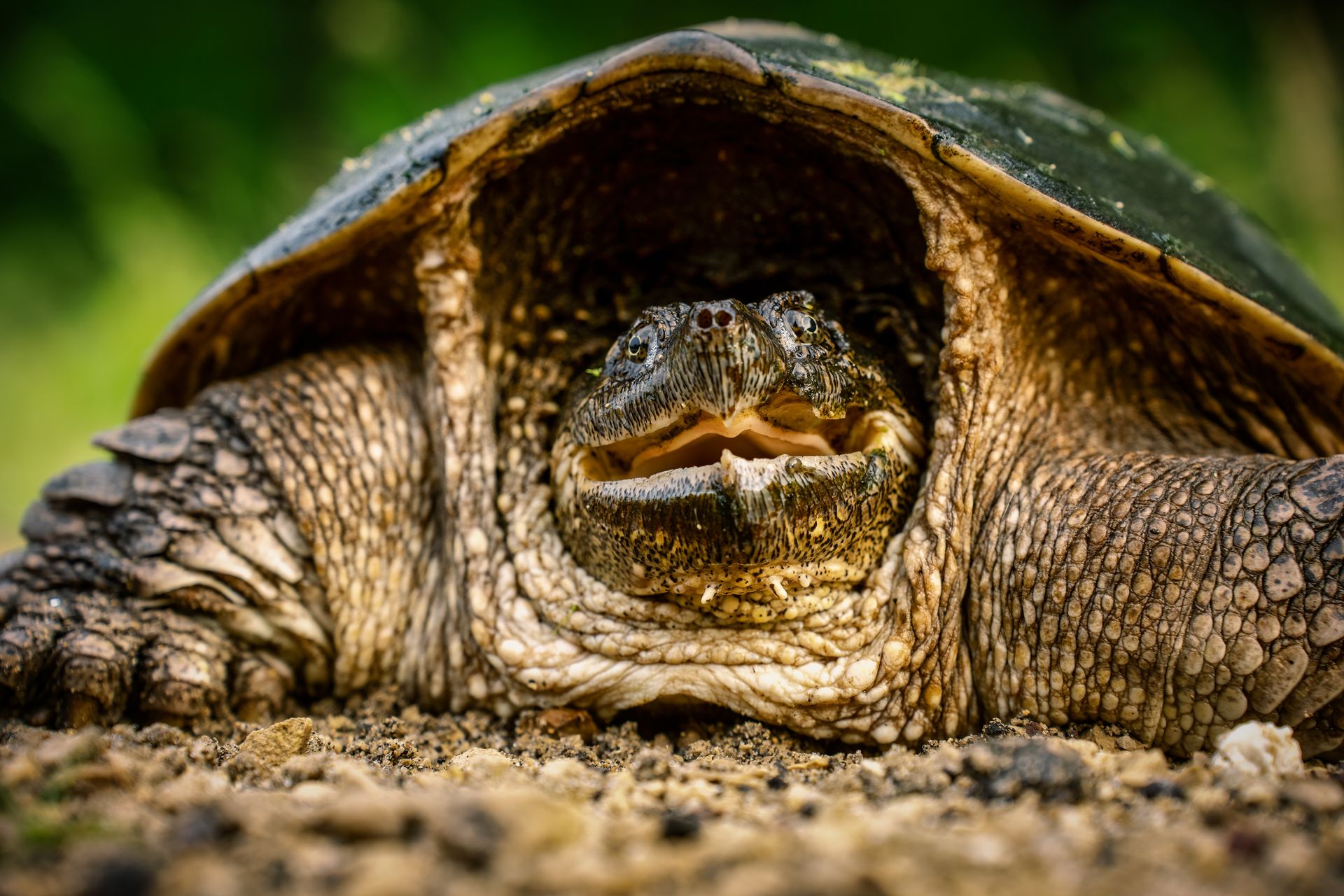
The common snapping turtle is a large aquatic turtle that can grow up to 49 cm in length.
They have an enormous head, moderately hooked beak, and thick, powerful legs.
Their carapace is rough and usually coated with algal growth, and the posterior edge is serrate.
In young turtles, the carapace has three longitudinal keels, but in adults, these keels are worn off.
Male snapping turtles grow larger than females and have thicker tail bases.
They are often found away from water during spring, and their diet consists of a variety of invertebrates, vertebrates, and plants.
Female snapping turtles lay one clutch of 20-40 spherical, leathery-shelled eggs from mid-May to mid-June.
These turtles are aggressive and menacing when encountered on land, but calm and retiring in water.
They are not a threat to swimmers, as they seek only escape when approached by humans.
You might like: Dodo Raphus Cucullatus
Conservation and Safety
As you're out driving in Georgia during the spring, you might come across a turtle crossing the road, especially if you're traveling in May or June. Hundreds of Georgia turtles die each year beneath the wheels of cars and trucks.
Turtles are most on the move during this time because females are searching for suitable places to lay eggs. They bury their eggs in sand, soil, or decaying vegetation in flask-shaped nests that females dig with their hind legs.
If you see a turtle crossing the road, make sure it's safe to pull off the highway before helping it. Turn on your hazard warning lights to alert other drivers.
Always move the turtle to the other side of the road in the direction it was going. Don't try to drive it to a "better location" or take it home, or it'll just try to return to its original home.
If you're dealing with a snapping turtle, be extra careful - they can lunge at you with lightning speed if they're frightened. Wash your hands after handling a turtle to stay safe.
Take a look at this: Common Snapping Turtle Eggs
Snapping Turtle Behavior
Snapping turtles can wander considerable distances over land and between bodies of water, especially during rainy periods in spring and summer.
On land, snapping turtles are surprisingly fast and will typically move out of sight within an hour or two if left alone.
Snapping turtles do not feed on land and do not intentionally chase after people and/or pets.
If you see a snapping turtle in your yard, it's best to give the turtle space and let it leave on its own accord.
For more insights, see: Land Iguanas of the Galapagos Islands
Snapping Turtle Encounters
Snapping turtles can be found wandering in yards and neighborhoods, especially during rainy periods in spring and summer.
If you see a snapping turtle in your yard, it's best to give it space and let it leave on its own accord.
Snapping turtles move surprisingly fast on land and will typically move out of sight within an hour or two.
Snapping turtles do not feed on land and do not intentionally chase after people and/or pets.
Snapping Turtle Care
If you've found a young or hatchling snapping turtle in your yard, it's best to leave it alone and not attempt to relocate it. They don't require any parental care to survive and will make their way to the closest body of water on their own.
If you've found an injured snapping turtle, contact a licensed wildlife rehabilitator who takes in reptiles. It's essential to contact a licensed rehabilitator first to ensure they're willing to accept the animal before attempting to capture or help.
You can also check if a local wildlife rehabilitation center is available to take in injured snapping turtles.
Intriguing read: Fish and Wildlife Western Pond Turtle
Turtle Diet
Snapping turtles are omnivorous, opportunistic feeders, which means they'll eat just about anything they can find. This includes vegetation, plant matter, and small prey items that can be swallowed whole.
Much of their diet is scavenged as they forage in the mud along the bottom of waterbodies, using both sight and smell to detect food sources. They'll feed on invertebrates, fish, amphibians, reptiles, carrion, and occasionally birds.
Snapping turtles can't chew their food, so they tend to prefer small prey items that can be easily swallowed. This makes it easier for them to eat and digest their meals.
Their diet varies depending on what's available in their environment, and they'll take advantage of whatever food sources they can find.
Snapping Turtle Health
If you've found a young or hatchling snapping turtle in your yard, it's best to leave it alone and not attempt to relocate it. They're perfectly capable of surviving on their own, and will make their way to the closest body of water to forage and hide from predators.
Snapping turtles are tiny when they first hatch, but they don't require any parental care to survive. They're a hardy species, and can thrive in their natural environment.
If you've found an injured snapping turtle, contact a licensed wildlife rehabilitator who takes in reptiles. Always contact a licensed rehabilitator first to make sure they're willing to accept the animal before attempting to capture or help injured wildlife.
Here are some key things to remember when dealing with injured snapping turtles:
- Contact a licensed wildlife rehabilitator for help.
- Don't attempt to capture or help the turtle yourself.
Wildlife Management
In Georgia, helping road-crossing turtles can be a lifesaver, especially during May and June when they're most active. Hundreds of turtles die each year due to car accidents.
If you spot a turtle on the road, make sure it's safe to pull over and turn on your hazard warning lights. Always move the turtle to the other side of the road in the direction it was going.
Be cautious when handling snapping turtles, as they can lunge at you with lightning speed if frightened.
Turtles Need Road Crossing Help in Georgia
If you're driving in Georgia during May and June, keep an eye out for slow-moving turtles crossing the road. These creatures are on the move, mostly females searching for a suitable place to lay eggs.
Hundreds of Georgia turtles die each year beneath the wheels of cars and trucks, making this time of year the most dangerous period in their lives.
If you see a turtle on the road, always make sure it's safe to pull over before attempting to help. Turn on your hazard warning lights to alert other drivers.
When moving a turtle across the road, move it in the direction it was headed. Don't try to drive it to a "better location" or take it home, as it will just try to return to its original home.
Be extra careful when dealing with a snapping turtle, as they can lunge at you with lightning speed. If you're dealing with a snapping turtle, consider not directly handling it at all.
To safely help a turtle, follow these steps:
- Put your own safety first by watching out for oncoming vehicles and signaling properly when pulling over.
- Remove the turtle in the direction it was headed.
- Never pick up a snapping turtle by the tail, as this can cause severe dislocation and injury.
- Resist the temptation to take the turtle home or move it to a different location.
Wildlife Problems
Snapping turtles are large freshwater turtles that are fairly common across North Carolina.
They often elevate their hindquarters, gape their jaws, and lunge at offending objects when closely approached on land.
In water, snapping turtles are less aggressive and usually retreat or withdraw when confronted by a larger animal.
They will not attack or bite people or pets unless purposefully provoked, despite their defensive behavior.
Snapping turtles are not inherently aggressive, but will defend themselves when they feel threatened.
See what others are reading: Dog Names That Are Not Common
Featured Images: pexels.com