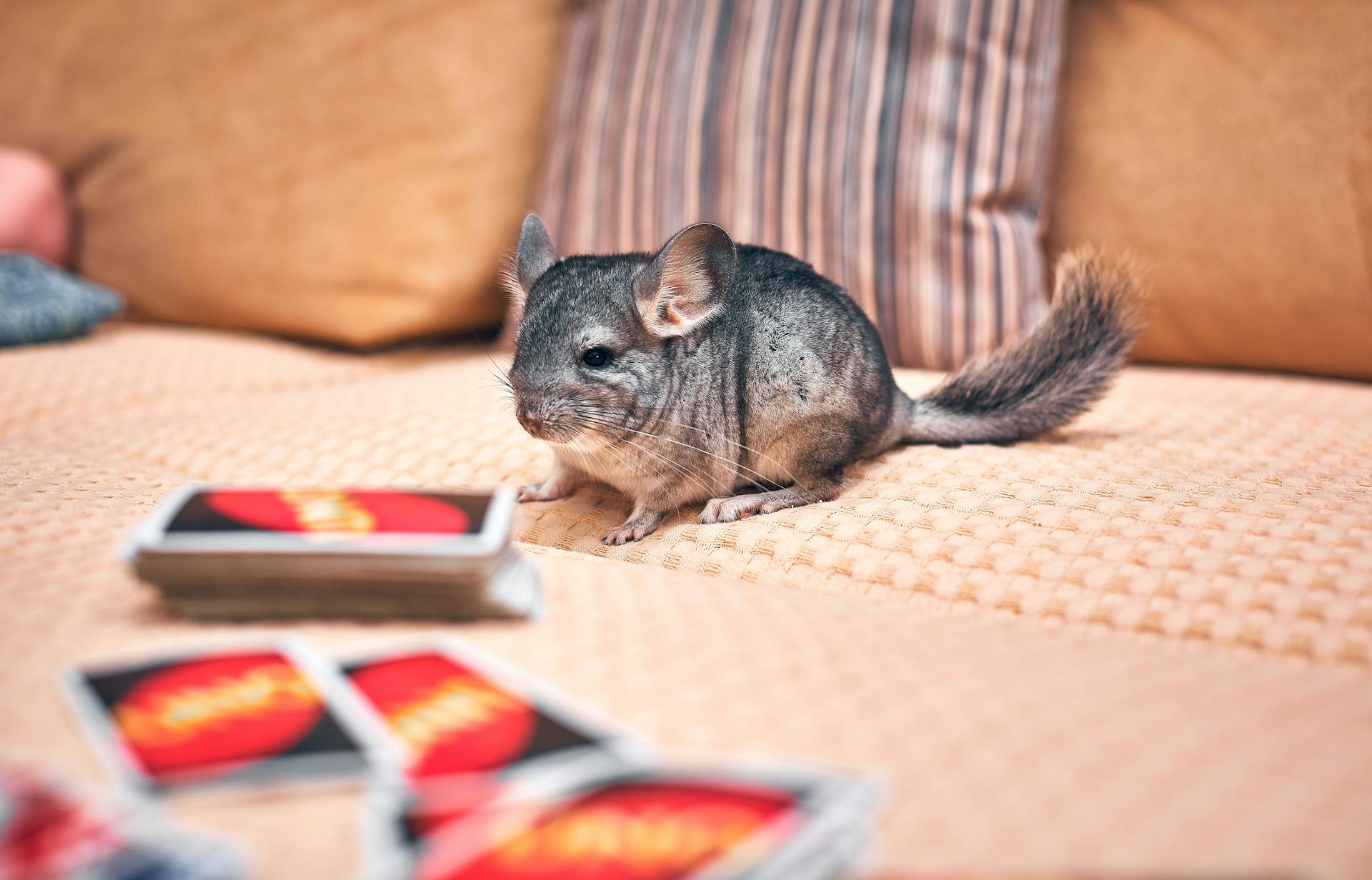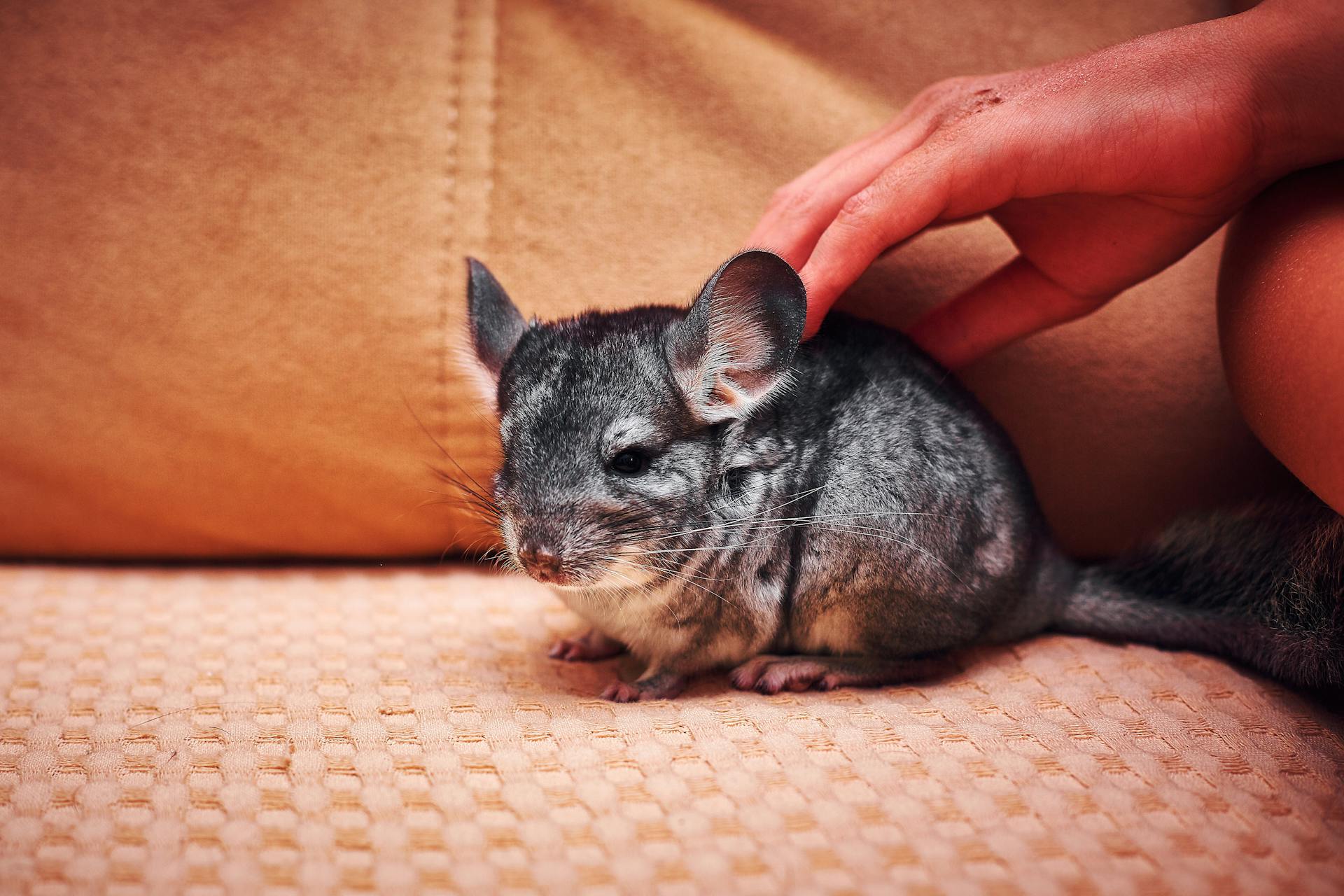
Chinchillas and dogs can live together in harmony, but it's essential to understand their unique needs and personalities.
Chinchillas are naturally skittish animals and can be easily stressed by loud noises or sudden movements, so it's crucial to socialize them well to dogs.
Dogs, on the other hand, are social animals that thrive on interaction and may view chinchillas as playmates or prey.
Some dogs, especially those with high prey drives, may see chinchillas as a chase-worthy toy.
In general, it's best to keep dogs and chinchillas separate until they're both comfortable with each other's presence.
Can They Get Along?
It's not impossible for a chinchilla and a dog to form a bond, but it's not a good idea in most situations. Chinchillas simply don't need to be around dogs, or other predators like cats, in the house.
In fact, it's a disaster waiting to happen. Even if you could make it work, it's likely not worth the time. I've had two dogs and a chinchilla, and I keep them in separate rooms for chinchilla playtime.
My chinchilla cage is now on the same floor as my dogs, but they've all gotten used to each other. My chinchilla has a hiding box in the cage, so she can hide away if she feels scared.
Introducing a Chinchilla to Your Family
Introducing a chinchilla to your family can be a challenging task, but with the right approach, it can be done safely. Ideally, it's best to keep your chinchilla and dog separate, but if that's not possible, follow these guidelines.
If you must introduce them, your chinchilla should be in its cage during the introduction. Keeping your dog on a leash and introducing it after a walk or exercise can help prevent overactivity. This will give you more control over the situation.
To help your dog get used to the chinchilla's presence, start by letting your dog sniff the cage. This will allow your dog to combine sight and smell, which is important for animals. Praise and reward your dog for behaving calmly in the chinchilla's presence, and be aware of signs of stress, such as staring or snapping.
Here are some steps to introduce your chinchilla to your family dog:
- Keep your chinchilla in its cage during the introduction.
- Let your dog sniff the cage and get used to the chinchilla's presence.
- Praise and reward your dog for calm behavior.
Remember, even if your dog seems friendly, it's still possible for them to accidentally injure your chinchilla. So, it's best to keep them safely apart, especially when you're not home to supervise.
Introducing a Chinchilla
Introducing a chinchilla to your family requires some careful planning. Ideally, you should keep your chinchilla and dog apart, but if that's not possible, follow these guidelines.
Your chinchilla should be in its cage during the introduction, it's safest that way. This will help prevent any potential conflicts between the two animals.
Only introduce your dog to your chinchillas after it's been for a walk or has exercised, this will stop it from being too overactive during the introduction. A tired dog is a calmer dog.
Keep your dog on a leash/lead during the introduction, you need to be in control of the situation. This will also help prevent any accidental escapes by your chinchilla.
To introduce your dog to your chinchilla, start by letting your dog get used to the smell of your chinchilla. Interact with the chinchilla (still caged), so your dog knows you are aware of the new animal's presence.
Here's a step-by-step guide to introducing your dog to your chinchilla:
- Let your dog get used to the smell of your chinchilla.
- Interact with the chinchilla (still caged), so your dog knows you are aware of the new animal's presence.
- After a day or two, let your dog check out the cage up close so your dog can combine sight and smell of your home's new occupant.
Remember to praise and reward your dog for behaving calmly in the chinchilla's presence. Friendly sniffs are a good sign, but staring or snapping indicate that it's best to keep them safely apart.
Chinchilla Cage Should Be Separate
When introducing a chinchilla to your family, it's essential to consider its cage placement. Your chinchilla cage should be separated from your dog in the beginning.
Dogs can cause more issues than just pawing, biting, or chasing your chinchilla. Chinchillas are most active early in the morning and late at night, which is also playtime for them.
In these active times, it's best to have playtime in an area away from where your dog commonly hangs out. This will prevent any potential conflicts.
Even if your dog can't reach the chinchilla, a dog barking can frighten a chinchilla. Chinchillas will often use sounds and body posture to communicate fear or other messages.
This fear can have adverse consequences, including panic attacks or even cardiac arrest. A clean and clear plan is necessary to ensure your chinchilla can return to safety if things go bad.
Related reading: Active Dogs Service Dog Vest
Choosing the Right Dog Breed

If you're considering getting a dog, it's essential to choose a breed that gets along with chinchillas. Some dog breeds have a high prey drive, making them a bad match for chinchillas.
Pit bulls, for example, are highly active and not a good choice. Terriers, including rat terriers, also have a strong instinct to hunt small animals like chinchillas.
On the other hand, some breeds are more docile or have protective qualities. Collies, for instance, can display protective qualities around chinchillas.
Labradors, like collies, can also be protective of chinchillas. However, it's crucial to gauge your individual dog's behavior, as some may still pose a risk.
If you're looking for a breed that's relatively safe around chinchillas, consider a calmer dog like a Labrador or a retriever. A Sheltie or a similar-sized dog might also be a good option.
Here's a list of dog breeds to consider and avoid:
Remember, even with a good breed, it's essential to supervise interactions between dogs and chinchillas and take steps to prevent any potential harm.
Playtime and Interactions
Chinchillas need a safe space when they're allowed out of their cage, and it's best they don't have to deal with a predator like a dog.
Chinchillas are prey and always feel vulnerable, which means they'll get stressed even if the dog is friendly. A dog's investigation can cause a chinchilla to panic, and it's cruel to frighten them.
In a secure basement with a door and baby gate, a chinchilla can have a safe space where they can relax and thrive. This is crucial for a chinchilla's well-being and can help prevent stress and anxiety.
- The lighting in a basement is often perfect for a chinchilla's natural cycles.
- The temperature in a basement is usually ideal for a chinchilla (64 to 68 degrees).
- Running triple de-humidifiers and an air purifier can keep the air clean for both the chinchilla and the owner.
Can Play?
Chinchillas can't play with dogs. Even if your dog is the best-behaved in the world, your chinchilla won't want to play with it. To your chinchilla, the dog is a potential predator.
If your dog tries to play with your chinchilla, it will think that the dog wants to attack it, and it will become stressed and frightened. Whether it's for the purpose of playing or not, never let your chinchillas loose in the same room as a dog.

Your chinchilla's preference is to hide when faced with a threat, and if it can't, it may fur slip or even become aggressive and bite. This will not harm the dog, but it could cause it to attack back.
In a safe environment, like a playpen, your chinchilla can interact with your children, but it's essential to keep the dog away.
Alternative Playtime Options
If you're looking for alternative playtime options for your chinchilla, consider a chinchilla-safe area where you can interact with your pet. This area should be proofed to remove or protect dangerous electrical cords.
Your chinchilla can jump high and hide very easily, making it essential to block access to other areas of the home.
A chinchilla playpen is an excellent alternative to allow your chinchilla time out of the cage in a safe space.
Take a look at this: Is It Safe to Take Dogs to the Dog Park
Final Considerations
As you consider introducing your chinchilla and dog, remember that the choice is ultimately yours.
It's essential to ensure both pets are even interested in this meetup or introduction to each other.
May Cause Stress and Overheating
Chinchillas get stressed and frightened very easily. This can happen when they're out for playtime and start getting stressed or running away for safety.
Their dense fur makes them prone to overheating, and adding anxiety to the mix can accelerate this process.
Chinchillas can quickly develop heat stroke, a common and serious health issue that's best avoided at all costs.
Letting your dog scare your chinchilla or placing added anxiety on it can cause more danger and potential for harm to your furry friend.
Those hamster balls you might think are a safe solution? They actually speed up overheating and won't protect your chinchilla from feeling the same fear.
Final Thoughts
Ultimately, the decision to introduce your chinchilla and cat is yours to make, but it's essential to consider their individual personalities and temperaments.
Both pets should be comfortable with the idea of meeting each other, or it may not go well.
The key to a successful introduction is to do it slowly and in a controlled environment, such as a neutral room where neither pet feels territorial.
It's also crucial to monitor their behavior and body language, looking for signs of stress or aggression.
If your chinchilla is not interested in interacting with your cat, it's best to respect its boundaries and not force the issue.
The same goes for your cat, if it's not interested in meeting your chinchilla, don't push the matter.
Frequently Asked Questions
Can chinchillas get worms from dogs?
Yes, chinchillas can get worms from contaminated hay that has been passed by dogs infected with Baylisascaris procyonis. This can happen if the hay is not properly cleaned or stored.
Featured Images: pexels.com