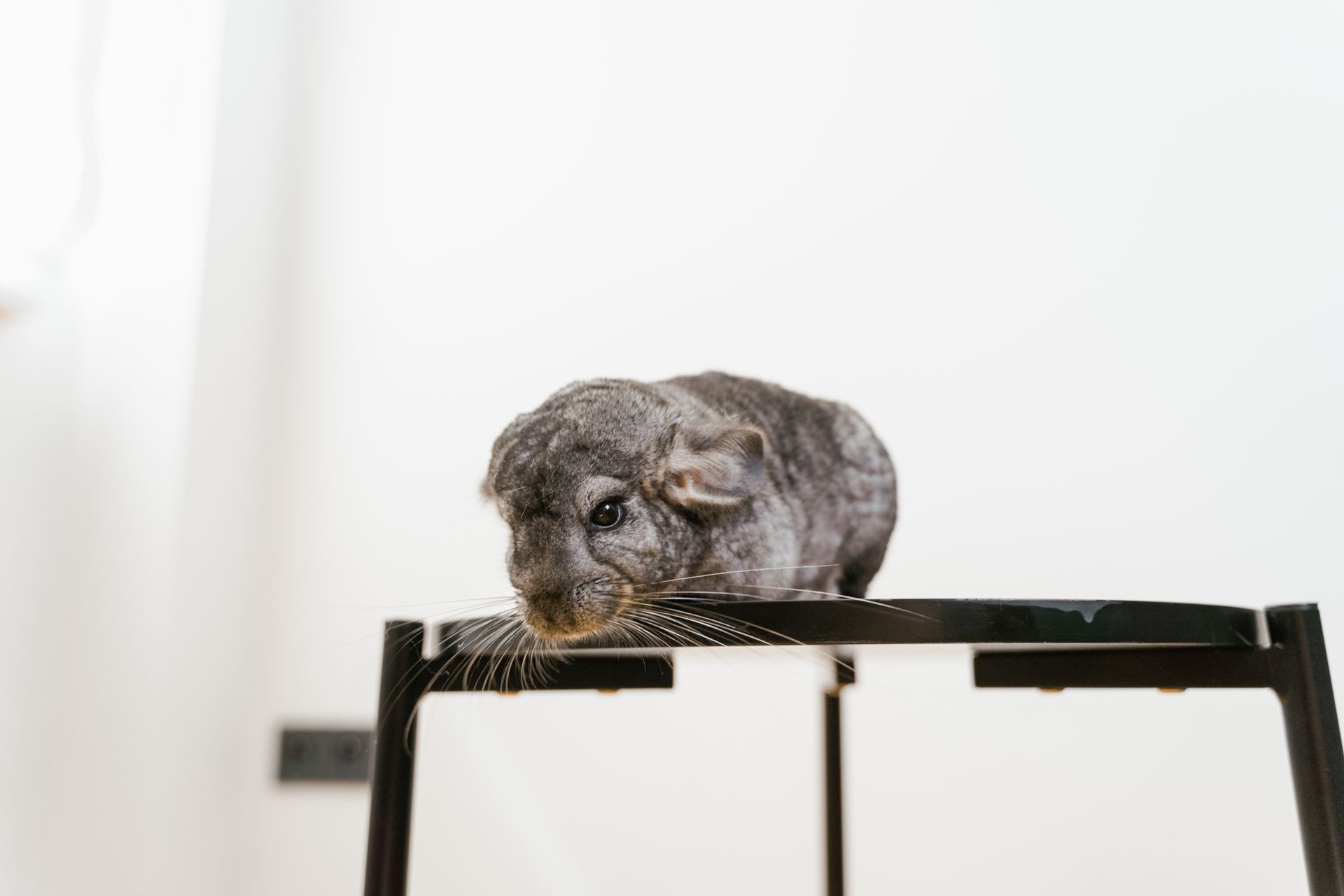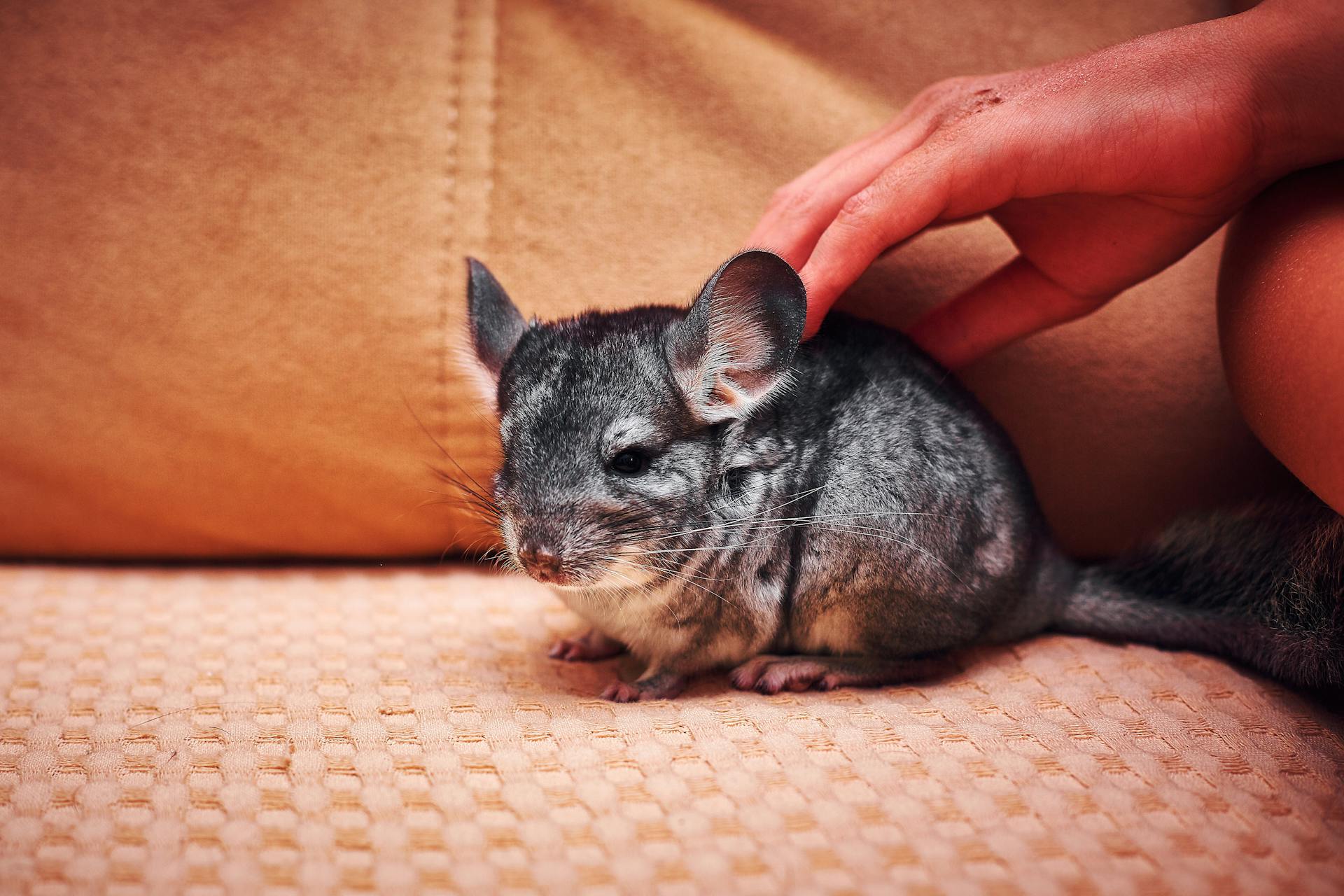
Chinchillas are native to the Andes mountains in South America, specifically in present-day Peru and Bolivia. They live in rocky, mountainous areas between 3,000 and 5,000 meters above sea level.
These small mammals are well adapted to their harsh environment, with thick fur coats that keep them warm in freezing temperatures. Their fur is also water-repellent, helping them to stay dry in wet conditions.
Chinchillas are herbivores, feeding on grasses, plants, and fruits. They have a specialized digestive system that allows them to break down and extract nutrients from plant material.
In the wild, chinchillas are solitary animals, only coming together to mate. They are also excellent jumpers, using their powerful hind legs to leap great distances in search of food or to escape predators.
Explore further: Chinchilla Fur Slip
Physical Characteristics
Chinchillas have a distinctive physical appearance that sets them apart from other animals. Their head and body length ranges from 225-380 mm.
Their fur is incredibly dense and soft, with each hair typically having a black tip. This unique characteristic helps to keep them warm in their high-altitude habitats. Chinchillas can weigh anywhere from 500g to 800g, with females being slightly heavier than males.
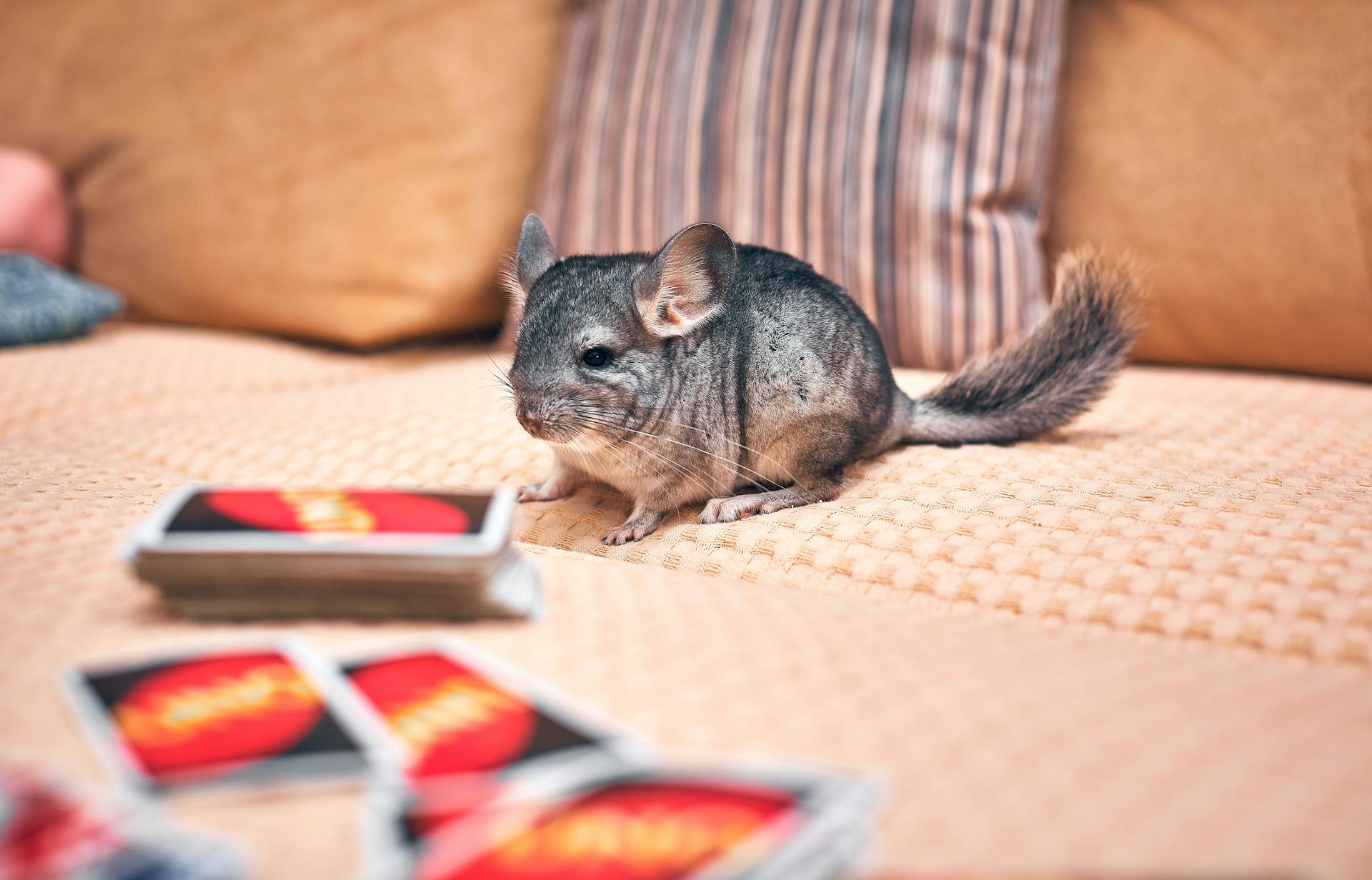
Their fur is usually pearl, bluish, or brownish gray on their dorsal side, while their belly is a yellowish-white. The ventral side's color can vary, but it's often one of these three colors. Each hair growing out of one follicle can be quite impressive, with up to 60 hairs sprouting from a single root.
Their head is broad and their external ears are large, giving them a unique look. Chinchillas have large, black eyes with a vertical split pupil, which is a distinctive feature of this species. They also have vestigial cheek pouches, which are small remnants of a once-useful feature.
Here are some additional physical characteristics of chinchillas:
- Endothermic
- Homoiothermic
- Bilateral symmetry
Habitat and Behavior
Chinchilla lanigera can be found in the barren, arid areas of mountains at elevations of 3,000-5,000 meters. They den in crevices and holes among the rocks.
Female chinchillas are the dominant sex and are very aggressive toward one another and toward males during estrus. Serious fighting in the wild is rare, and they express threats through growling, chattering their teeth, and urinating.
Chinchillas are social animals and have been known to live in colonies of more than 100 individuals. They are primarily nocturnal animals with crepuscular activity peaks, but can also be active on sunny days, sitting in front of their holes and climbing on rocks with amazing agility.
- Key Behaviors
- motile
- social
Habitat
Chinchilla lanigera calls the barren, arid areas of mountains home, specifically at elevations of 3,000-5,000 meters.
These animals thrive in harsh environments, where they den in crevices and holes among the rocks.
Behavior
Chinchillas are social animals that can live in colonies of over 100 individuals.
They're primarily nocturnal, but can also be active during twilight hours. In the wild, they've been observed to be quite agile, climbing and jumping on rocks with ease.
Female chinchillas are the dominant sex and can be quite aggressive towards each other and males during estrus. They express threats through growling and chattering their teeth.
Domesticated chinchillas can also be hand-tamed and are known to be very social. They can play and interact with their owners.
Here are some key behaviors of chinchillas:
- motile
- social
Classification and Status
Chinchilla lanigera is a critically endangered species, listed as such on the IUCN Red List. This classification means that the species is at high risk of extinction in the wild.

The Convention on International Trade of Endangered Species of Wild Fauna and Flora lists all chinchilla species, including C. lanigera, in Appendix 1, making international trade in the animals or their skins illegal among all signer nations.
Here's a breakdown of the classification and status of C. lanigera:
- Kingdom: Animalia
- Phylum: Chordata
- Class: Mammalia
- Order: Rodentia
- Family: Chinchillidae
- Genus: Chinchilla
- Species: Chinchilla lanigera
Chinchilla lanigera is also protected by law in its natural habitat, but hunting for its fur continues in remote areas, making enforcement challenging.
Classification
Classification is a crucial aspect of understanding the natural world.
The kingdom Animalia is home to a vast array of species, with over 22,000 pictures and 7,100 specimens available for study.
Within the kingdom Animalia, the phylum Chordata is a key classification, comprising chordates with 15,213 pictures and 6,829 specimens.
Chordates are further divided into subphylum Vertebrata, which includes vertebrates with 15,168 pictures and 6,827 specimens.
Vertebrates are then classified into class Mammalia, which includes mammals with 4,389 pictures and 6,622 specimens.
Mammals are further divided into order Rodentia, which includes rodents with 789 pictures and 847 specimens.
Rodents are then classified into family Chinchillidae, which includes chinchillas and viscachas with 5 pictures and 11 specimens.
The genus Chinchilla is a key classification within the family Chinchillidae, with 3 pictures and 7 specimens available for study.
Here's a breakdown of the classification hierarchy:
- Kingdom: Animalia
- Phylum: Chordata
- Subphylum: Vertebrata
- Class: Mammalia
- Order: Rodentia
- Family: Chinchillidae
- Genus: Chinchilla
- Species: Chinchilla lanigera
Conservation Status
Chinchillas are listed as vulnerable by the IUCN. Fewer than 10,000 Chinchilla lanigera are thought to have survived in the wild.
Chinchillas are protected by law in their natural habitat, but hunting for their fur continues in remote areas, making enforcement challenging. This is largely due to the fact that over 100 chinchilla pelts are needed for a single fur coat.
The Convention on International Trade of Endangered Species of Wild Fauna and Flora lists all chinchilla species in Appendix 1, making international trade in the animals or their skins illegal among signatory nations.
Chinchillas are now bred commercially, but attempts to reintroduce them into the wild have failed.
Here's a summary of the conservation status of chinchillas:
- IUCN Red List: Critically Endangered
- US Federal List: No special status
- CITES: Appendix I
Chinchilla Lanigera
The Chinchilla Lanigera is a truly unique creature. It's a medium-sized rodent.
One of its most striking features is its famously thick, beautiful fur. This fur is a major part of what makes the Chinchilla Lanigera so special.
The Chinchilla Lanigera is a social animal, and it's actually a matriarchal one at that. This means that the females hold a higher social status within the group.
It's native to the Andes mountain range, which is a pretty rugged and unforgiving environment.
For your interest: Chinchilla Dense Fur
Reproduction and Conservation
Chinchillas breed during the winter months, and female chinchillas are mostly monogamous.
They have two litters each year, which is a remarkable reproductive strategy considering their vulnerable conservation status.
After a four-month gestation period, they give birth to litters of one to six young, with most litters including two or three babies.
These well-developed babies nurse until they are 6 to 8 weeks old.
The IUCN Red List lists Chinchilla lanigera as Critically Endangered, and fewer than 10,000 individuals are thought to have survived in the wild.
Here are some key conservation facts:
- IUCN Red List: Critically Endangered
- US Federal List: No special status
- CITES: Appendix I (making international trade illegal)
Reproduction and Development
Chinchillas breed during the winter months wherever they live.
Female chinchillas are mostly monogamous, which is quite unique in the animal kingdom.
They have two litters each year, which means they give birth to a new set of babies twice a year.
After a four-month gestation period, female chinchillas give birth to litters of one to six young.
Most litters include two or three babies, which is the average number you can expect.
These babies are born well developed, which is impressive considering their size.
They nurse until they are 6 to 8 weeks old, at which point they start to wean off their mother's milk.
Conservation Efforts
Chinchillas have been hunted mercilessly for their dense, soft fur, which has been prized in fashion. Well over 100 chinchilla pelts are needed for a single fur coat.
Protective legislation has been in place since 1929, but was not properly enforced until 1983. Populations continue to decline (over 90 percent in the past 15 years).
You might enjoy: Chinchilla Fur Density
Although they are protected in the wild, chinchillas continue to be hunted for their fur in some remote areas. Chinchillas are also plagued by extreme habitat loss and habitat quality reduction.
Commercial breeding of chinchillas has become a common practice, but efforts to reintroduce them into the wild have not been successful. Fewer than 10,000 C. lanigera are thought to have survived in the wild.
The Convention on International Trade of Endangered Species of Wild Fauna and Flora lists all chinchilla species in Appendix 1, making international trade in the animals or their skins illegal among all the signer nations.
Here are some key conservation statuses of chinchillas:
- IUCN Red List: Critically Endangered
- IUCN Red List: Critically Endangered
- US Federal List: No special status
- CITES: Appendix I
Domestication
Domestication of chinchilla lanigera is a fascinating process that has been shaped by human interaction over thousands of years. Chinchillas were first domesticated in the Andes mountains, where they were valued for their soft fur.
Their thick fur, which can grow up to 20 inches long, was highly prized by the Incas for its warmth and softness. Chinchillas were often used as a form of currency and were considered a symbol of wealth.
Domestication allowed for selective breeding, which led to the development of different coat colors and patterns. Chinchillas can now be found in a wide range of colors, from solid white to dark brown.
Today, chinchillas are popular pets due to their gentle nature and low maintenance care. They are social animals and thrive in the company of humans.
Frequently Asked Questions
What is the difference between a chinchilla and a chinchilla Lanigera?
Chinchilla Lanigera is smaller and has a longer tail compared to the standard chinchilla, with a more rounded ear shape. This distinct variation is noticeable in its physical characteristics.
What is the average lifespan of a pet chinchilla chinchilla lanigera )?
The average lifespan of a pet chinchilla is 10 years. With proper care, some chinchillas can live up to 20 years or more.
Featured Images: pexels.com