
If you're interested in becoming an animal control officer, you'll need to enroll in a training program. These programs are usually offered by local law enforcement agencies or animal control organizations.
Typically, these programs last several weeks or months and cover topics such as animal behavior, handling, and welfare. You'll also learn about laws and regulations related to animal control.
Hands-on training is a crucial part of these programs, where you'll get to practice restraining and handling animals safely. This is usually done under the supervision of experienced officers.
Here's an interesting read: How to Be an Animal Control Officer
Get Certified for an Exciting Future in 2 Weeks!
You can get certified as an Animal Control Officer in just 2 weeks. The East Coast Animal Control Academy, based in Maryland, offers a program that delivers the knowledge, skills, and credentials you need to perform your duties safely and effectively.
The academy has been preparing new Animal Control Officers since 2003. This experience is invaluable in helping you succeed in your future role.
Maryland's original ACO Academy is a trusted source for Animal Control Officer training. This program fulfills your state-mandated training requirements, giving you peace of mind and a solid foundation for your career.
Consider reading: Md Bird Identification
Eligibility and Requirements
To get started with animal control officer classes, you'll need to meet the eligibility requirements. Students must have a minimum of a high school diploma or GED.
In order to be considered for the program, you'll also need to be currently employed in the animal control field, with proof of employment required.
Faca
The FACA Animal Control Officer Certification is a 40-hour course that meets the training requirements under Chapter 828.27(4)(a)(1) Florida Statutes.
This course is open to the general public, including those looking to find job placement in the animal protection field. Most employers require a combination of related education and animal handling experience.
The course covers basic instruction in areas of concern to personnel whose duties include capture, control, and the keeping and disposing of domestic and wild animals.
The course topics include introduction to animal control, civil citations, state laws, investigation, report writing and records, and more.
Here are some of the specific course topics:
- Introduction to animal control,
- Civil citations,
- State laws,
- Investigation,
- Report writing and records,
- Canine identification and behavior,
- Dog and cat capture and restraint,
- Constitution of the United States,
- Search and seizure,
- Courtroom presentations and procedures,
- First Aid,
- Cruelty investigations,
- Rabies,
- Zoonosis and occupational illnesses/injuries,
- Restraint and handling of wild and exotic animals,
- Human relations and interpersonal communication,
- Developing a positive public image, and an
- Administrative exam.
The successful completion of this course can improve your chances of being hired in the animal protection field.
Eligibility
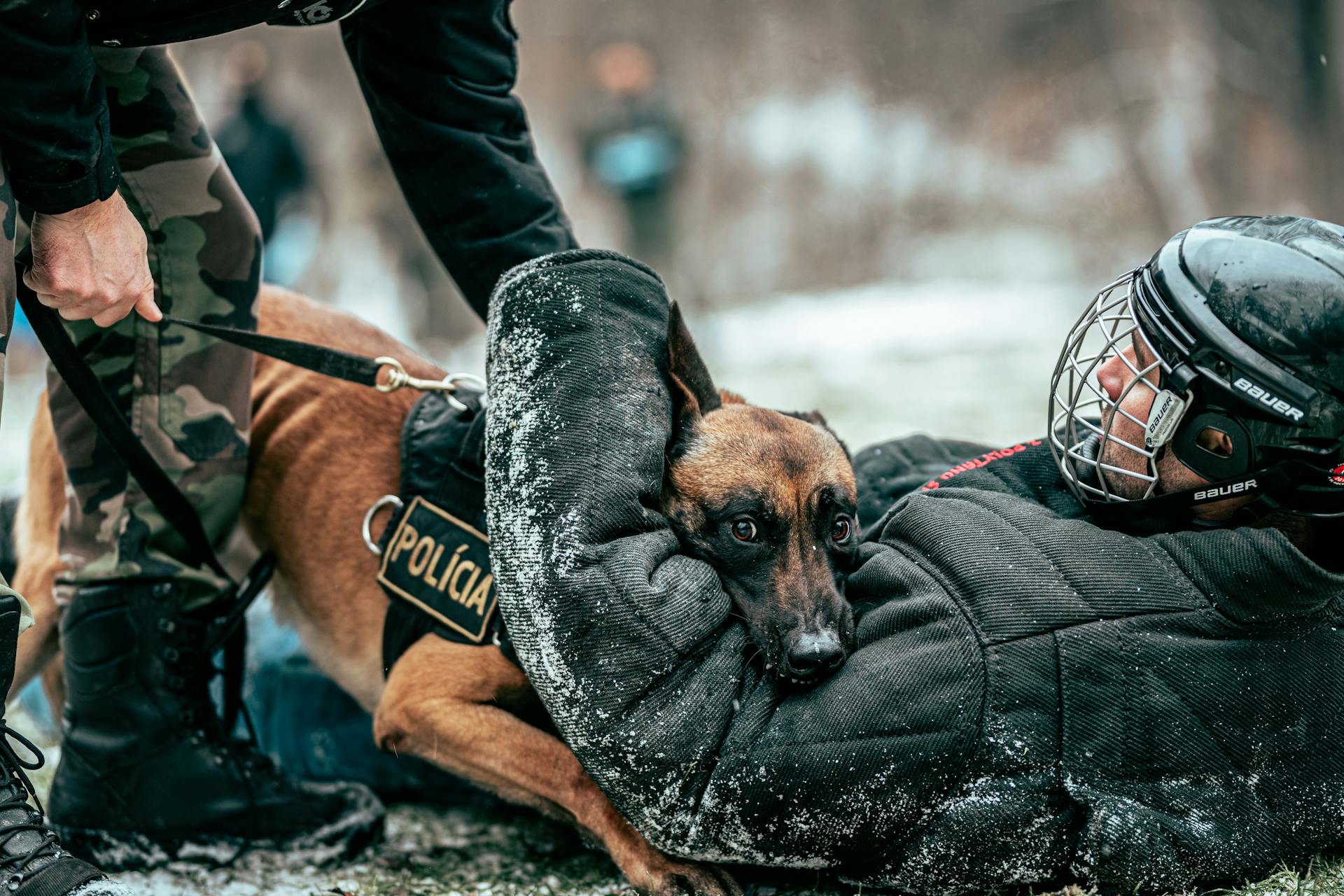
To be eligible for the program, you must have a minimum of a high school diploma or GED.
Proof of employment in the animal control field is also required.
Shelter Technician
To become a Shelter Technician, you'll need to meet certain requirements. A key part of this process is obtaining certification, which typically involves completing a training program that covers topics like Animal Care in a Sheltering Environment and Animal Shelter Record-Keeping.
Shelter Technician certification programs often include courses on Animal Shelter Design and Operations, which teach you how to create a safe and efficient shelter environment. This can be a valuable asset in your future career.
To succeed in this role, you'll need to understand Canine and Feline Behaviors and Assessments, which will help you care for animals effectively. This involves recognizing signs of stress, fear, and aggression in animals.
Emergency Animal Sheltering is also a crucial aspect of being a Shelter Technician, as you'll need to be prepared to handle unexpected situations like natural disasters or animal emergencies.
Related reading: How to Become a Zoo Veterinary Technician
Course Content
The course content for animal control officer classes is quite comprehensive. This 40-hour certification course provides participants with the necessary skills and resources to successfully perform the duties of an animal control officer.
The course covers various topics, including constitutional, Florida state, and local law, as well as the U.S. Justice System. It also includes fundamental knowledge of canine and feline animals.
One of the key areas of focus is on legal procedures, restraint, and capture equipment, report writing procedures, human, public, and violator relations, and euthanasia considerations. These are essential skills for animal control officers to have.
The course also covers field operations, disaster planning, zoonosis and rabies prevention and control, report writing, and courtroom preparation. These topics are crucial for animal control officers to understand.
Here's a breakdown of some of the specific topics covered in the course:
- Constitutional, Florida State & local law
- U.S. Justice System
- Fundamental canine & feline animal knowledge
- ADA service animals
- Field operations
- Disaster planning
- Zoonosis & rabies prevention & control
- Report writing
- Courtroom preparation
Some courses also cover topics such as canine behavior and aggressive dogs, safe animal handling and capture, stress management, and lifting and loading certification. These topics are essential for animal control officers to understand and practice.
Career Opportunities
The role of an Animal Control Officer is not only rewarding, but also stable and impactful. With a growing demand for trained professionals, you can expect a fulfilling career.
As communities increasingly recognize the importance of humane animal management, the demand for trained Animal Control Officers is expected to grow. This trend is a result of the essential role these officers play in ensuring community health and safety.
According to the U.S. Bureau of Labor Statistics, the median annual wage for animal control workers is $43,170. This is a significant consideration for anyone looking to enter this field.
The top 10% of animal control workers can earn over $67,930 per year, making it a career with potential for advancement and financial stability.
If you're interested in exploring career opportunities and job openings, consider checking out the resources listed below:
- Explore Career Opportunities & Job Openings
Specialized Training
Animal control officers receive specialized training to prepare them for the demands of the job. This training includes instruction in canine behavior and aggressive dogs.
You might like: Blood Tracking Dog Training
Some courses, like the Florida Animal Control Officer State Certification Course, cover constitutional and state law, as well as the use of restraint and capture equipment. This comprehensive training helps officers understand their role in enforcing laws and regulations.
The training also covers report writing procedures, human, public, and violator relations, and euthanasia considerations. In addition, officers learn about the use of oleoresin capsicum (OCAT) and chemical immobilization.
Here are some specific topics covered in specialized training:
- Canine behavior and aggressive dogs
- Constitutional and state law
- Restraint and capture equipment
- Report writing procedures
- Euthanasia considerations
- Oleoresin capsicum (OCAT) certification
- Chemical immobilization
Outside Courses
If you're considering taking an animal control officer course from an outside source, you should first request verification from the course sponsor that the course has been pre-approved by the DSHS. This ensures that the course meets the required standards and curriculum.
Before attending a non-DSHS course, you should request verification from the course sponsor that a specific ACO Basic Training or Euthanasia Training course has been pre-approved by the DSHS. This includes checking if the course sponsor is adhering to the standards and curriculum prescribed by the DSHS for meeting Chapter 829 ACO training requirements.

Upon completion of training, you can request a new certificate from the course sponsor if the one issued doesn't contain specific information. This includes the course title, participant's name, whether the course is Basic or continuing education (CE), course date and location, length of course, and the course sponsor's name and contact information.
Here's a list of what your certificate should include:
- Course title
- Participant's name
- Whether the course is Basic or continuing education (CE)
- Course date and location
- Length of course
- A statement that the course was approved by DSHS (for CE courses prior to 1-1-23 and all Basic and Euthanasia training courses)
- A statement that the course sponsor attests that they have “read and adhered to standards and curriculum prescribed by the Texas Department of State Health Services” (for CE courses on or subsequent to 1-1-23)
- Course sponsor's name and contact information
Remember, the approval of an animal control course by the DSHS only pertains to the approval of the course curriculum, instructors, length, date, and location. It's the course sponsor's responsibility to determine if there are any applicable restrictions in place during a disaster declaration.
Field Training
Field Training is a crucial part of any officer's career, and it's essential to have the right training to succeed.
The ACO Field Training Officer certification course is specifically designed for officers who are responsible for training new animal control officers. This course provides a smooth transition from the classroom to the street.
The course is 40 hours long and covers topics such as human behavior, the learning process, and effective communication. Students must attend all 40 hours of the training class and participate in discussions, presentations, and scenario-based training exercises.
Students who successfully complete the training class will be issued a certificate and photo identification card as a Florida ACO Field Training Officer.
Curious to learn more? Check out: Boxer at Obedience Class
Chemical Immobilization Technician
The Chemical Immobilization Technician certification course is a 16-hour instructor-led course designed for law enforcement and animal care and control professionals. It meets the training requirements for Florida animal control officers prescribed under F.S.S. 828.27(1)(b).
This course covers a range of topics, including the history of chemical immobilization, chemical immobilization equipment, pharmacology, and officer, public, and animal safety considerations. Students must participate in discussions and scenario-based training exercises.
To complete the course, students must attend all 16 hours of training, pass a marksmanship course, and pass a 50-question written examination. Students who successfully complete the course will be issued a certificate and photo identification card with an endorsement as a Chemical Immobilization Technician.
The tuition fee for this course is $400.00.
Consider reading: Animal Health Technician
Location and Training
Animal control officer classes are designed to equip professionals with the skills and knowledge needed to handle challenging situations.
The training courses are typically held over several days, allowing students to absorb and apply the information in a hands-on way.
Day 1 covers canine behavior and aggressive dogs, as well as community cooperation and outreach. Students learn how to approach and handle aggressive dogs safely.
On Day 3, students learn about safe animal handling and capture, including the proper use of restraint equipment. They also explore stress management and compassion fatigue to prevent burnout.
Lifting and loading certification is also covered on Day 4, ensuring that students can safely handle and transport animals.
Additionally, students receive OCAT certification, which prepares them to use oleoresin capsicum spray safely and effectively.
Chemical immobilization is taught on Day 5, providing students with a range of options for handling difficult situations.
Some courses may also cover courtroom testimony and report writing, helping students to effectively communicate their findings and experiences in a court of law.
Understanding the link between animal abuse and other forms of crime is also an important part of the training, as is evidence collection and handling.
If this caught your attention, see: A Day in Life of Animal Control Officer
Frequently Asked Questions
Is it hard to be an animal control officer?
Becoming an animal control officer requires meeting specific requirements, completing training, and gaining experience, but with dedication and hard work, it's achievable. If you're passionate about animal welfare and community service, this career path may be a rewarding challenge.
What is an Aco certification?
An ACO certification is a 40-hour course that equips animal control officers with the skills and resources needed to perform their duties effectively. This certification is a crucial step for those seeking a career in animal control.
How much do animal control officers make in the US?
Animal control officers in the US earn an average hourly wage of $21.58. This hourly rate translates to a competitive salary for a rewarding career in animal welfare and public safety.
Is an animal control officer a cop?
Animal control officers are not traditional law enforcement officers, but they do have powers and responsibilities that blur the line between animal control and law enforcement. Their roles and authorities are more complex than just dog catching, making them a unique part of public safety.
Do you need experience to be an animal control officer?
Yes, gaining field experience is typically a requirement to become an animal control officer. This experience can be acquired after completing a training program and meeting other minimum requirements.
Featured Images: pexels.com