The American alligator, specifically the subspecies Alligator mississippiensis, is a fascinating creature that has adapted to its environment over millions of years.
Found in the southeastern United States, these alligators inhabit freshwater environments such as swamps, marshes, and lakes.
Their large size and powerful jaws make them apex predators in their ecosystem.
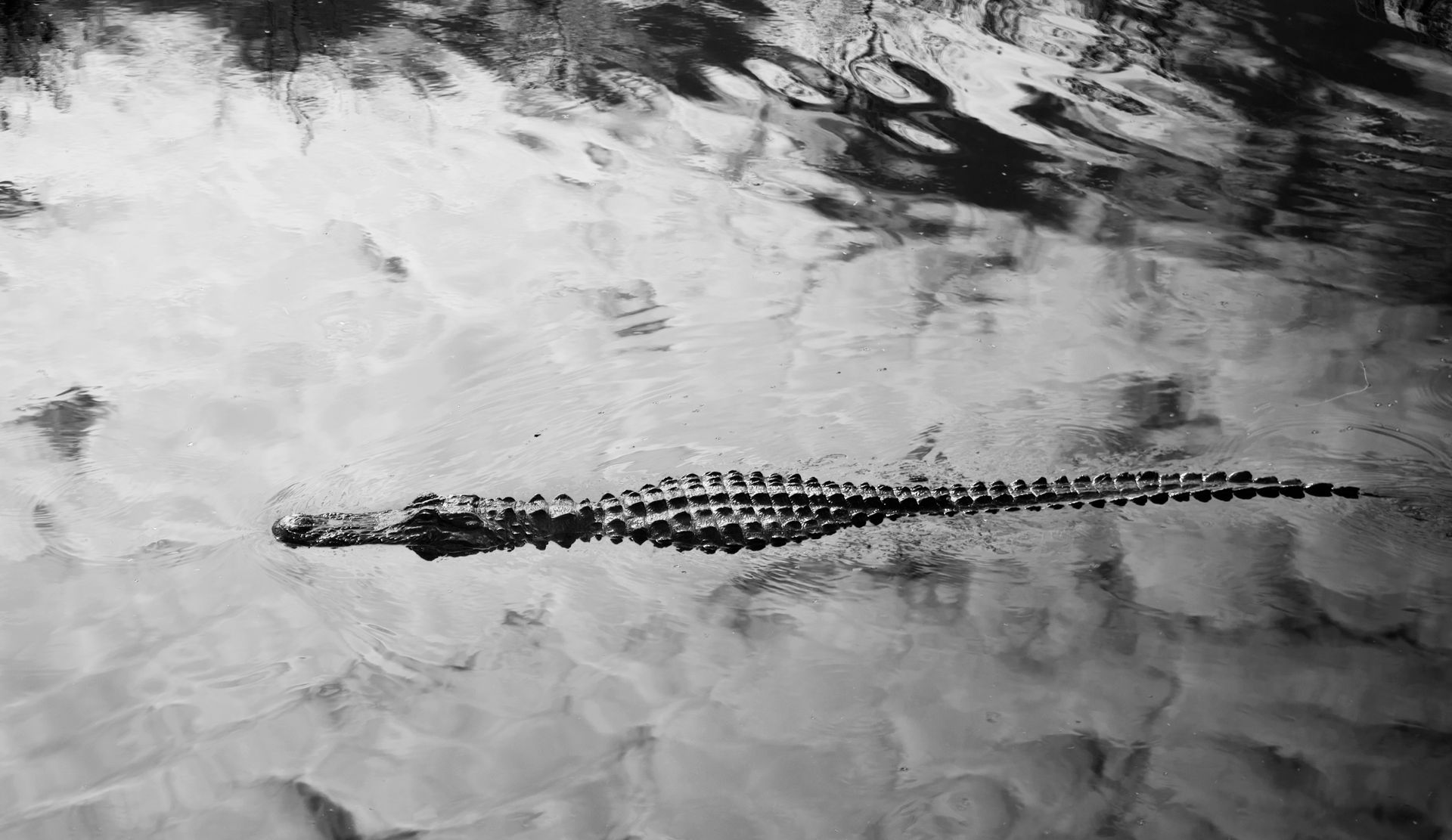
The American alligator's biology is characterized by a long, broad snout and a muscular tail that helps them swim and maneuver in the water.
They can grow up to 15 feet in length and weigh over 1,000 pounds, making them one of the largest reptiles in North America.
American alligators are ectothermic, meaning their body temperature is regulated by the environment, and they can be found basking in the sun to warm up.
Their scaly skin helps to conserve water and protect them from the elements.
In the wild, American alligators can live up to 50 years or more, and they are an important part of their ecosystem, playing a crucial role in maintaining the balance of nature.
Recommended read: American Water Spaniel
Physical Characteristics
American alligators have a unique physical appearance that sets them apart from other reptiles. Their bodies are armored with embedded bony plates called osteoderms or scutes, which provide protection.
Alligators have four short legs, with the front legs having five toes and the back legs having only four toes. They also have a long, rounded snout with upward-facing nostrils, allowing them to breathe while underwater.
One of the most distinctive features of alligators is their jaw structure. Unlike crocodiles, alligators have a large, fourth tooth in the lower jaw that fits into a socket in the upper jaw, making it invisible when the mouth is closed. They also have approximately 80 teeth of all the same size, which are constantly being replaced throughout their lifetime.
Here are some key physical characteristics of American alligators:
- Range length: 257 to 437 cm (101.18 to 172.05 in)
- Average length: 350 cm (137.80 in)
- Range weight: 91 to 360 kg (200.44 to 792.95 lb)
- Average weight: 150 kg (330.40 lb)
Size
American alligators can grow to varying sizes depending on factors such as growth rate, diet, and climate. They can range from long and slender to short and robust.
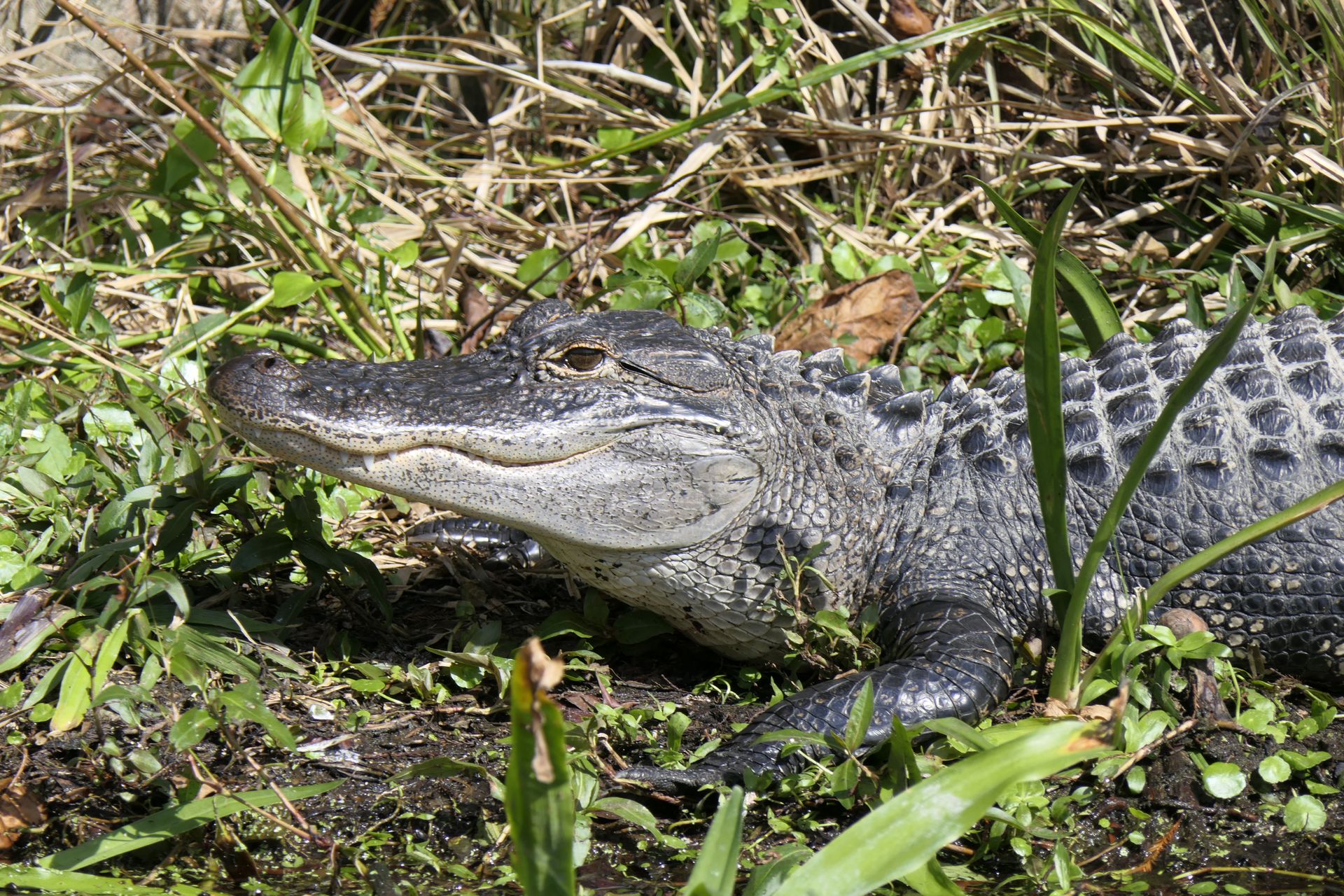
On average, large adult American alligators tend to be relatively robust and bulky compared to other similar-length crocodilians. Captive males measuring 3 to 4 meters in length can weigh between 200 to 350 kilograms.
Large male American alligators can reach an expected maximum size up to 4.6 meters in length and weigh up to 500 kilograms. Females, on the other hand, typically reach a maximum of 3 meters in length.
Here are some reported sizes of American alligators:
Adult male alligators can grow up to 15 feet long, and females typically reach nearly 10 feet.
Physical Characteristics
American alligators have a distinctive physical appearance that sets them apart from other reptiles. They have an "armored" body with muscular, flat tails and four short legs, with the front legs having five toes and the back legs having only four toes.
Their skin is covered in bony plates called osteoderms or scutes, which provide protection from predators and the environment. These plates are found on their back and can be darkly colored or light in color, depending on the individual.
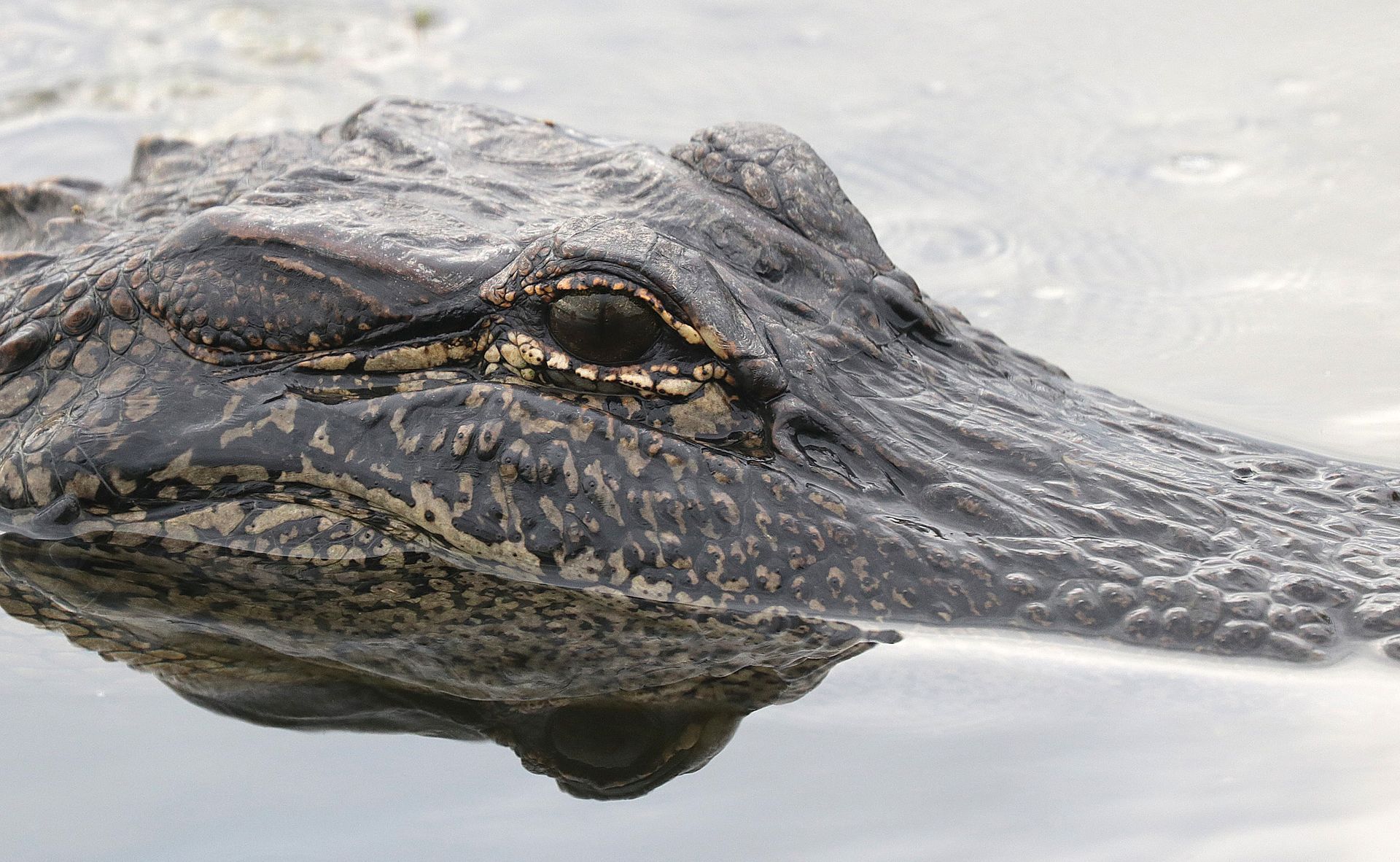
One of the most noticeable features of an alligator is its long, rounded snout, which has upward-facing nostrils at the end. This unique snout shape allows alligators to breathe while their bodies are underwater.
Alligators have a remarkable tooth replacement system, with up to 3,000 teeth replaced in a lifetime. They have between 74 and 80 teeth in their mouth at any given time, and these teeth are constantly being replaced as they wear down.
In terms of size, female alligators typically don't exceed 10 feet in length, while males can grow much larger. The Florida state record for length is a 14-foot 3 1/2-inch male from Lake Washington in Brevard County.
Here's a breakdown of the average length and weight of an American alligator:
As alligators grow, their physical characteristics change. Juveniles have bright yellow stripes on their tails, while adults have dark stripes. The tail of an alligator accounts for half of its overall body length, and the weight of an alligator depends on habitat, food availability, and sex.
Behavior and Movement
American alligators are social animals, and they live in groups. They tend to inhabit smaller, close-knit groups, rather than large social circles.
Juvenile alligators eat primarily insects, amphibians, small fish, and other invertebrates, while adults eat rough fish, snakes, turtles, small mammals, and birds. They regulate their body temperature by basking in the sun or moving to areas with warmer or cooler air or water temperatures.
American alligators are territorial, motile animals, and they make holes in the ground to live in during extreme conditions. These holes can be very large and act as a barrier of protection in times of extreme cold or hot temperatures.
Here are some key behaviors of American alligators:
- terricolous
- fossorial
- natatorial
- motile
- territorial
Their territory size can range from 409,000 to 689,000 m^2.
Movement
American alligators are quite agile on land, moving either by sprawling or walking, with the latter involving lifting their belly off the ground. They can walk at a relatively fast pace, increasing their speed through the distal ends of their limbs, unlike most other land vertebrates.
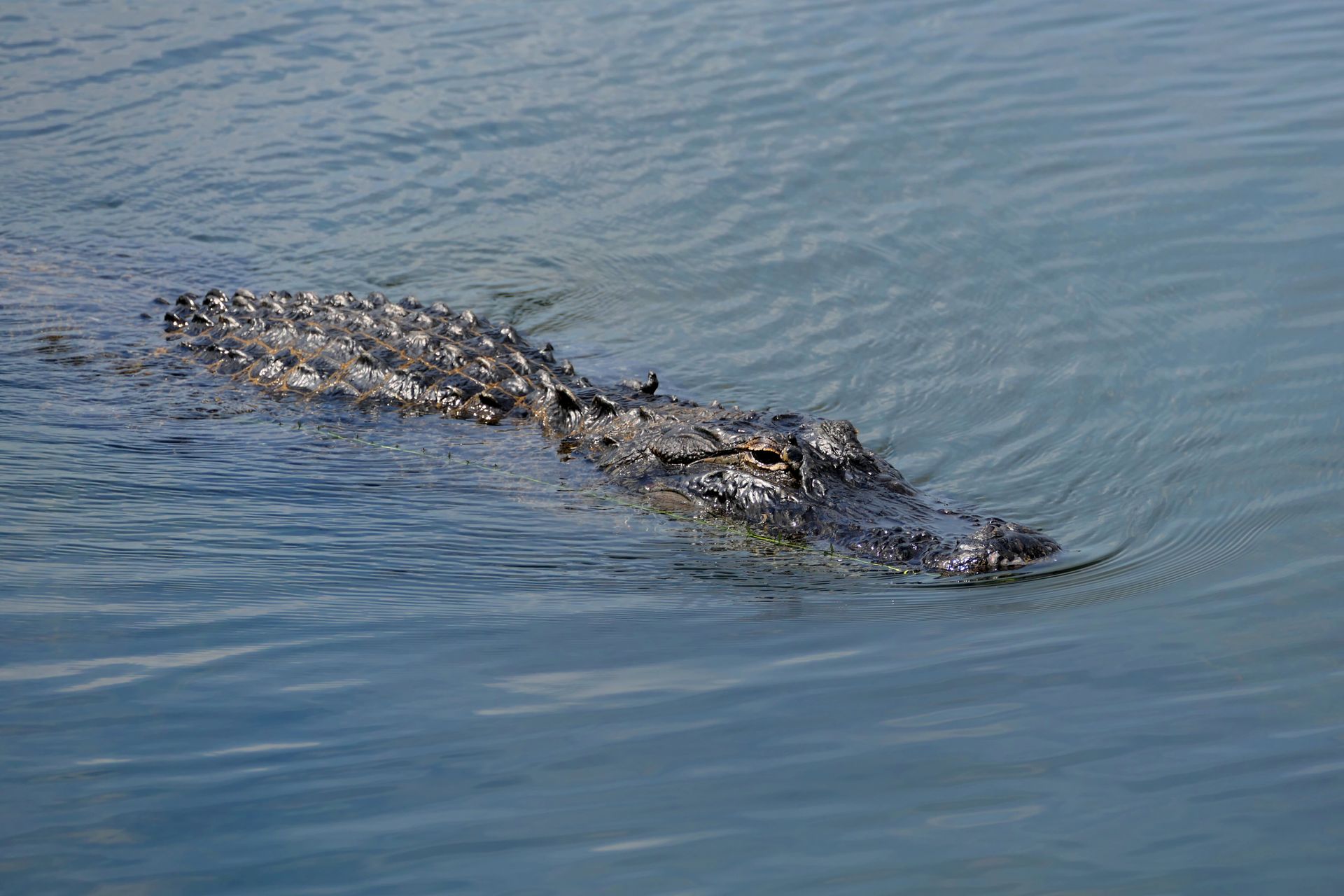
On land, American alligators can move using two forms of locomotion: the "low walk" and the "high walk". The low walk is similar to sprawling, while the high walk involves lifting their belly off the ground.
In the water, American alligators swim like fish, moving their pelvic regions and tails from side to side. Their webbed rear feet assist in swimming, bearing four toes in contrast to the five toes of their front feet.
Swimming is a crucial skill for American alligators, allowing them to navigate their aquatic environment with ease. Their bodies are adapted for this purpose, with features such as webbed feet that help them propel through the water.
American alligators can also alter the position of their lungs within their torso, shifting the center of buoyancy, which allows them to dive, rise, and roll within the water.
Here are some key facts about American alligators' movement:
- On land, they move using the "low walk" and the "high walk" forms of locomotion.
- In the water, they swim like fish, moving their pelvic regions and tails from side to side.
- Their webbed rear feet assist in swimming, bearing four toes in contrast to the five toes of their front feet.
- They can alter the position of their lungs within their torso to shift the center of buoyancy.
Bellowing
Bellowing is a distinctive form of communication used by American alligators.
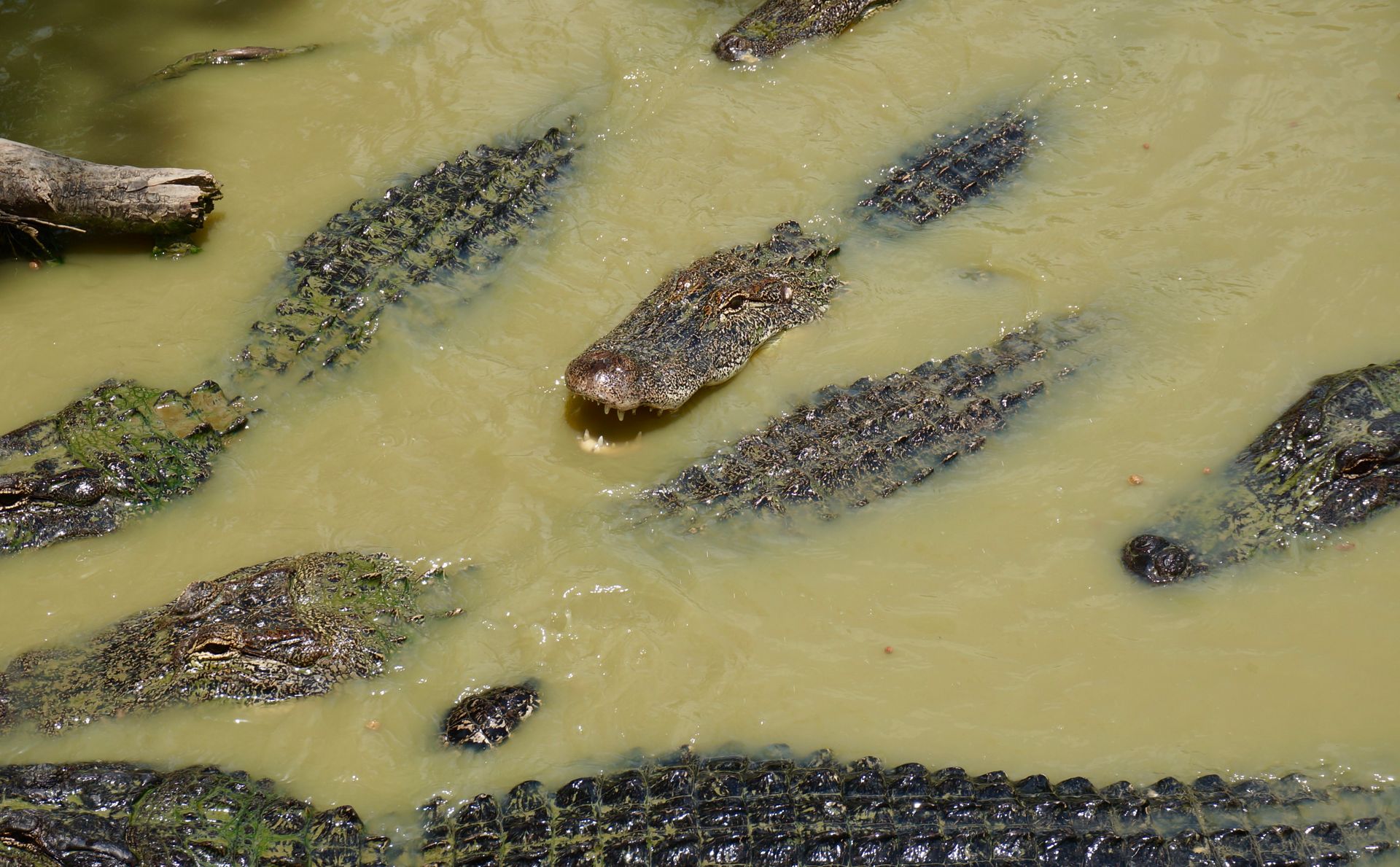
Both males and females bellow loudly by sucking air into their lungs and blowing it out in intermittent, deep-toned roars. Males are known to use infrasound during mating bellows.
The bellowing posture of American alligators is characterized by a "head oblique, tail arched" position. This posture is often seen during courtship and mating behaviors.
During the breeding season, large bellowing choruses are commonly initiated by females and perpetuated by males. These choruses can be felt more than they are heard due to the intense infrasound emitted by males.
American alligators bellow in B flat, specifically "B♭1", with an audio frequency of 58.27 Hz. This unique sound can even be induced by external stimuli such as tuba players, sonic booms, and large aircraft.
A different take: Evolution of Alligators
Habitat and Distribution
American alligators are found in a variety of freshwater environments, including swamps, marshes, rivers, ponds, and lagoons. They are most commonly found in the southeastern United States, ranging from the northern coasts of North Carolina to Lake Worth in central Texas.
In some areas, they can be found in brackish water settings, but they are generally more tolerant of freshwater environments. In fact, they can only tolerate salt water for brief periods because they don't have salt glands.
American alligators often occupy man-made water structures such as swimming pools, fishponds, and dammed lakes in urban and suburban areas. This is likely due to the abundance of water and prey animals like fish and birds.
These creatures are primarily aquatic, spending most of their time in the water. However, they can be seen on land, especially during mating season or when they're basking in the sun.
Here are some of the key habitats and biomes where American alligators can be found:
- Habitat Regions:
- temperate
- freshwater
- Aquatic Biomes:
- lakes and ponds
- rivers and streams
- brackish water
- Wetlands:
- marsh
- swamp
American alligators are found in a range of states, including North Carolina, South Carolina, Georgia, Alabama, Mississippi, Louisiana, Arkansas, Oklahoma, and Florida. They can even be found in some urban areas, like golf courses, which provide them with a reliable source of food and water.
For another approach, see: Carolina Northern Flying Squirrel
Conservation and Management
The American alligator is a Federally protected species, listed as Threatened under the Endangered Species Act due to their similarity in appearance to the American crocodile.
In 1987, the USFWS removed the American alligator from the endangered species list, as it was considered to be fully recovered. However, it's still regulated by the USFWS to protect still endangered crocodilians that may be passed off as American alligators during trafficking.
The American alligator is listed under Appendix II of the Convention on International Trade in Endangered Species (CITES), which means international trade in the species is regulated.
The federal government also lists it as threatened because of the potential for hunters to confuse it with the American crocodile, which is endangered.
Hunting is allowed in some states, but it's strictly controlled. The greatest threat to American alligators is currently destruction of habitat, including water management systems and increased levels of mercury and dioxins in the water.
Check this out: Do Alligators Eat Humans
Here are the conservation statuses of the American alligator:
- IUCN Red List: Lower Risk - Least Concern
- US Federal List: Threatened
- CITES: Appendix II
- State of Michigan List: No special status
This means that while the American alligator is not currently considered endangered, it's still protected by law and trade in the species is regulated to prevent overhunting and habitat destruction.
Reproduction and Development
American alligators reach sexual maturity at around 10 to 12 years, when they're about 6 feet long. This is a significant milestone in their lives.
Males roar to attract females and ward off other males, often circling the female before mating. Courtship typically starts in April, with mating occurring in early May.
After mating, the female builds a nest of vegetation, which can measure up to 10 feet in diameter and 2 to 3 feet high.
Reproduction and Development
American alligators reach sexual maturity at around 10 to 12 years, when they're about 6 feet long.
Males roar to attract females and ward off other males during breeding season, which takes place in shallow waters at night.
Courtship starts in April, with mating usually occurring in early May.
The female builds a nest of vegetation, sticks, leaves, and mud in a sheltered spot in or near the water, which can measure up to 10 feet in diameter.
The female lays 35 to 50 eggs, and some can even lay up to 90 eggs, which are then covered with vegetation and hatch after a 65-day incubation period.
The sex of the juveniles is determined by the temperature of the nest, with temperatures of 31°C or below producing females, and 32°C producing 75 percent males.
Newly hatched alligators measure about 6 to 8 inches long and live in small groups called "pods".
Females aggressively defend their young during the first few years, and it's estimated that 80 percent of young alligators fall victim to predators.
Crocodilians are one of the only orders of reptiles that offer maternal care to their young, with the juveniles growing about a foot a year.
For another approach, see: Are Alligators Aggressive to Humans
Lifespan/Longevity
American alligators can live a surprisingly long time, especially when compared to other reptiles. They can typically live 20-30 years in the wild.
In captivity, however, they can live up to 50 years, which is a significant increase in lifespan. The longest recorded time for an alligator living in the wild was 56 years.
Their lifespan in captivity can vary depending on several factors, but on average, females can live up to 34.8 years. Males, on the other hand, can live up to 56.0 years in captivity, which is significantly longer than their female counterparts.
Here's a breakdown of their average lifespan in captivity:
- Typical lifespan: 50 years
- Range lifespan: 73.1 years
- Average lifespan (female): 34.8 years
- Average lifespan (male): 56.0 years
Evolution and Taxonomy
The American alligator, Alligator mississippiensis, has a rich evolutionary history. Fossils identical to the existing American alligator are found throughout the Pleistocene, dating back to 2.5 million to 11.7 thousand years ago.
The American alligator's closest living relative is the Chinese alligator, which belongs to the same subfamily Alligatorinae. This subfamily is the sister group to the caimans of Caimaninae, which together comprise the family Alligatoridae.
A Late Miocene fossil skull of an alligator was discovered in Marion County, Florida, dating to approximately seven or eight million years ago. This fossil skull was virtually indistinguishable from that of the modern American alligator, suggesting that the A. mississippiensis lineage has existed in North America for seven to eight million years.
Here's a brief overview of the alligator's evolutionary timeline:
History and Taxonomy
The American alligator was first classified in 1801 by French zoologist François Marie Daudin as Crocodilus mississipiensis. This was a significant step in understanding the species' identity.
The genus Alligator was created in 1807 by Georges Cuvier, who based it on the English common name alligator, derived from the Spanish word el lagarto, meaning "the lizard".
The American alligator and its closest living relative, the Chinese alligator, belong to the subfamily Alligatorinae. This subfamily is also home to several extinct species.
Here's a breakdown of the taxonomy of the American alligator:
The American alligator's scientific name, Alligator mississippiensis, reflects its unique characteristics and geographic distribution.
Evolution
The American alligator has a long and fascinating evolutionary history. Fossils identical to the modern species have been found throughout the Pleistocene, dating back to 2.5 million to 11.7 thousand years ago.
A remarkable discovery in 2016 found a Late Miocene fossil skull in Florida, dating to around seven or eight million years ago, which was almost indistinguishable from the modern American alligator. This suggests that the A. mississippiensis lineage has existed in North America for a significant period.
However, a 2020 study reevaluated the American alligator's Late Miocene record, reassigning older fossils to other species, Alligator mefferdi and Alligator hailensis. This suggests that American alligators may have evolved during the Middle Pleistocene.
The alligator's mitochondrial genome was sequenced in the 1990s, indicating that it evolved at a rate similar to mammals and greater than birds and most cold-blooded vertebrates.
You might like: Common Snapping Turtle Species
Feeding and Predation
American alligators are carnivores and opportunistic feeders, which means they'll eat whatever is available in their environment. They have a diverse diet that includes a wide variety of animals, from invertebrates like insects and snails to fish, birds, turtles, snakes, amphibians, and mammals.
Hatchlings, or young alligators, primarily feed on invertebrates such as insects, insect larvae, snails, spiders, and worms, as well as small fish and frogs. As they grow, they gradually expand their diet to larger prey.
American alligators have a unique skin that serves as a protective mechanism against predators. Their skin is thick and has bony scutes called osteoderms underneath, which provide a tough barrier to help defend against predators.
Here are some examples of common prey for American alligators:
- Largemouth bass
- Spotted gar
- Freshwater pearl mussels
- American green tree frogs
- Yellow mud turtles
- Cottonmouths
- Common moorhens
- Feral wild boars
- Muskrats
- Raccoons
- Nutria
In the absence of their primary food source, American alligators may feed on carrion and non-prey items like rocks and artificial objects. These items help with digestion by crushing up meat and bones, especially those with shells.
American alligators are apex predators and will eat any animal that comes to the water to drink, making them a top predator in their ecosystem.
Unique Behaviors
American alligators are social animals that live in groups, and their behavior is quite fascinating. They are territorial, motile animals that make holes in the ground to live in during extreme conditions.
These holes can be very large and act as a barrier of protection in times of extreme cold or hot temperatures or irregular weather patterns, such as droughts and tropical storms. They are also ectotherms, which means they bask in the early morning to regulate their body temperature.
American alligators are known to use tools to hunt prey, specifically lures to catch birds. They balance sticks and branches on their heads to lure birds looking for suitable nesting material, which is a unique behavior among reptiles.
Their activities take place diurnally and seasonally, being most active in the spring. They tend to inhabit smaller, close-knit groups, rather than large social circles, and their movement on land is a slow, high walk.
- Key Behaviors:
- terricolous
- fossorial
- natatorial
- motile
- territorial
American alligators have also been observed engaging in cooperative hunting, where they work together to catch prey. They have been seen taking turns in each position, forming a semicircle to push fish closer to the bank, and then taking the fish to a resting area.
For another approach, see: Fish and Wildlife Western Pond Turtle
Possible Tool Use
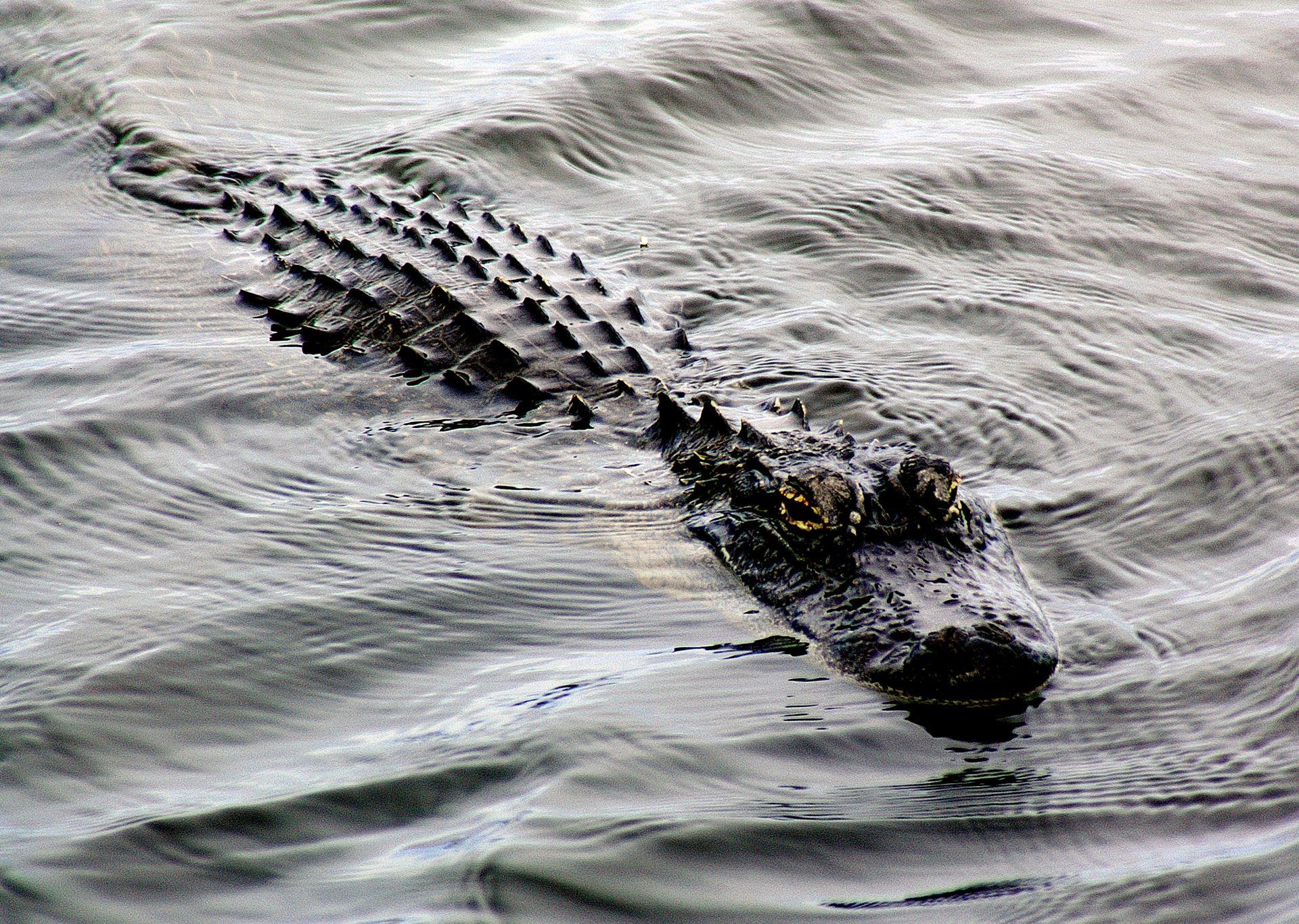
American alligators have been observed using lures to hunt prey, making them one of the first reptiles recorded to use tools. They balance sticks and branches on their heads to lure birds looking for nesting material.
This strategy is particularly effective during nesting season, when birds are more likely to gather sticks. In fact, it's been documented in two Florida zoos and some parks in Louisiana.
Researchers attempted to reproduce this behavior in a three-day experiment, but it failed to document the use of sticks as lures. The experiment found that stick-displaying behavior was not more frequent near rookeries, but rather associated with no-rookery sites.
Cooperative Hunting
Cooperative hunting is a fascinating behavior exhibited by American alligators. They've been observed taking turns in positions to catch fish, with one alligator pushing the fish towards the bank while the other waits to grab it.
In one instance, around 60 alligators gathered in an area and formed a semicircle, pushing the fish closer to the bank. This coordinated effort allowed them to catch fish more effectively.
This cooperative hunting technique has been observed to occur over multiple days, with the alligators continuing to work together to catch their prey.
Fish make up a significant portion of an adult American alligator's diet, with catfish being a common catch in some regions.
Frequently Asked Questions
What is the maximum size of the alligator Alligator mississippiensis?
The maximum size of the American alligator is 5.84 meters (19 ft 2 in) in length, as recorded in 1998. This species can grow up to 16.5 feet in length.
Why did the American alligator almost go extinct?
American alligators almost went extinct due to overhunting for their hides and meat over a century. Conservation efforts, including the Endangered Species Act, helped protect them and allow populations to recover.
Featured Images: pexels.com