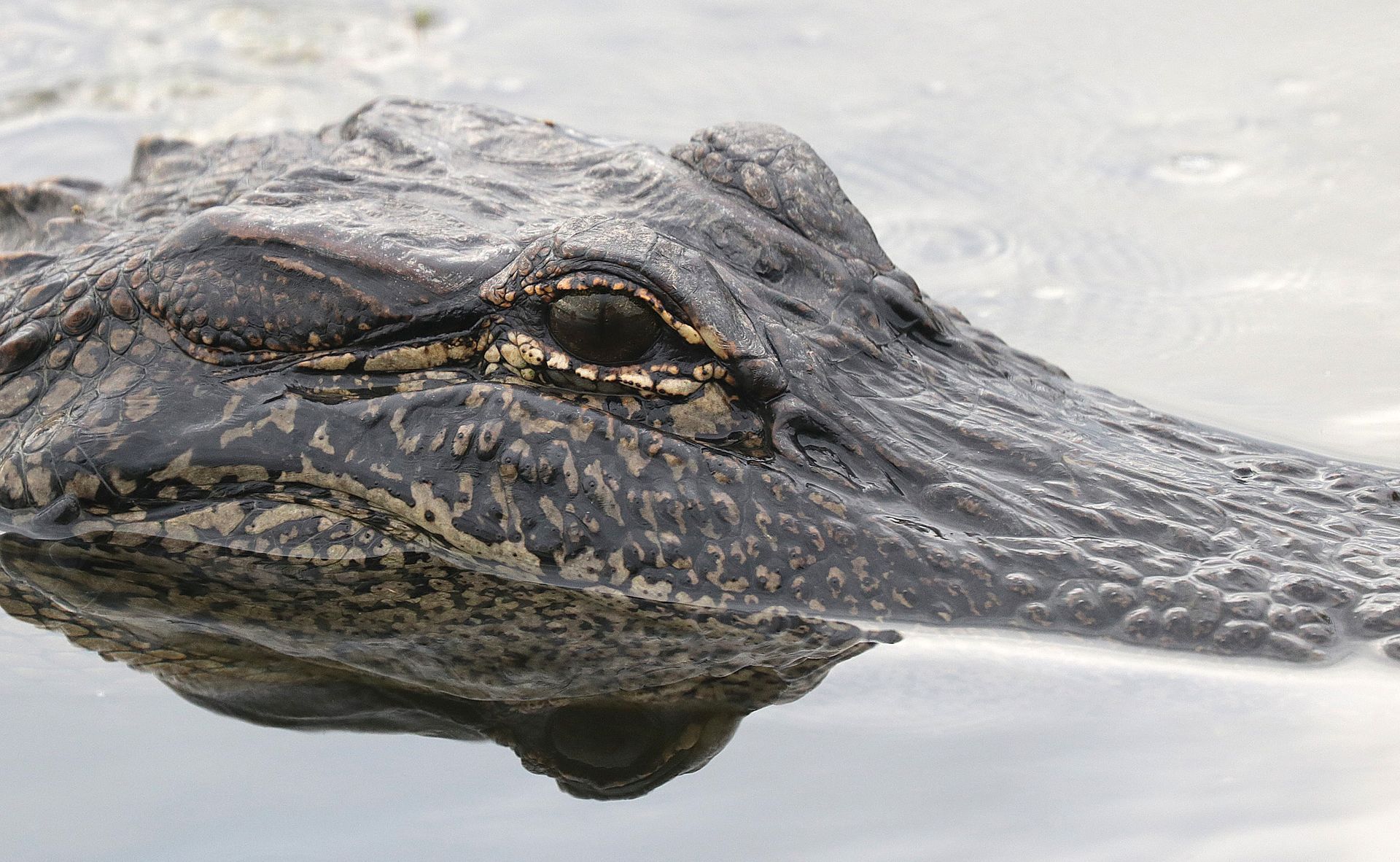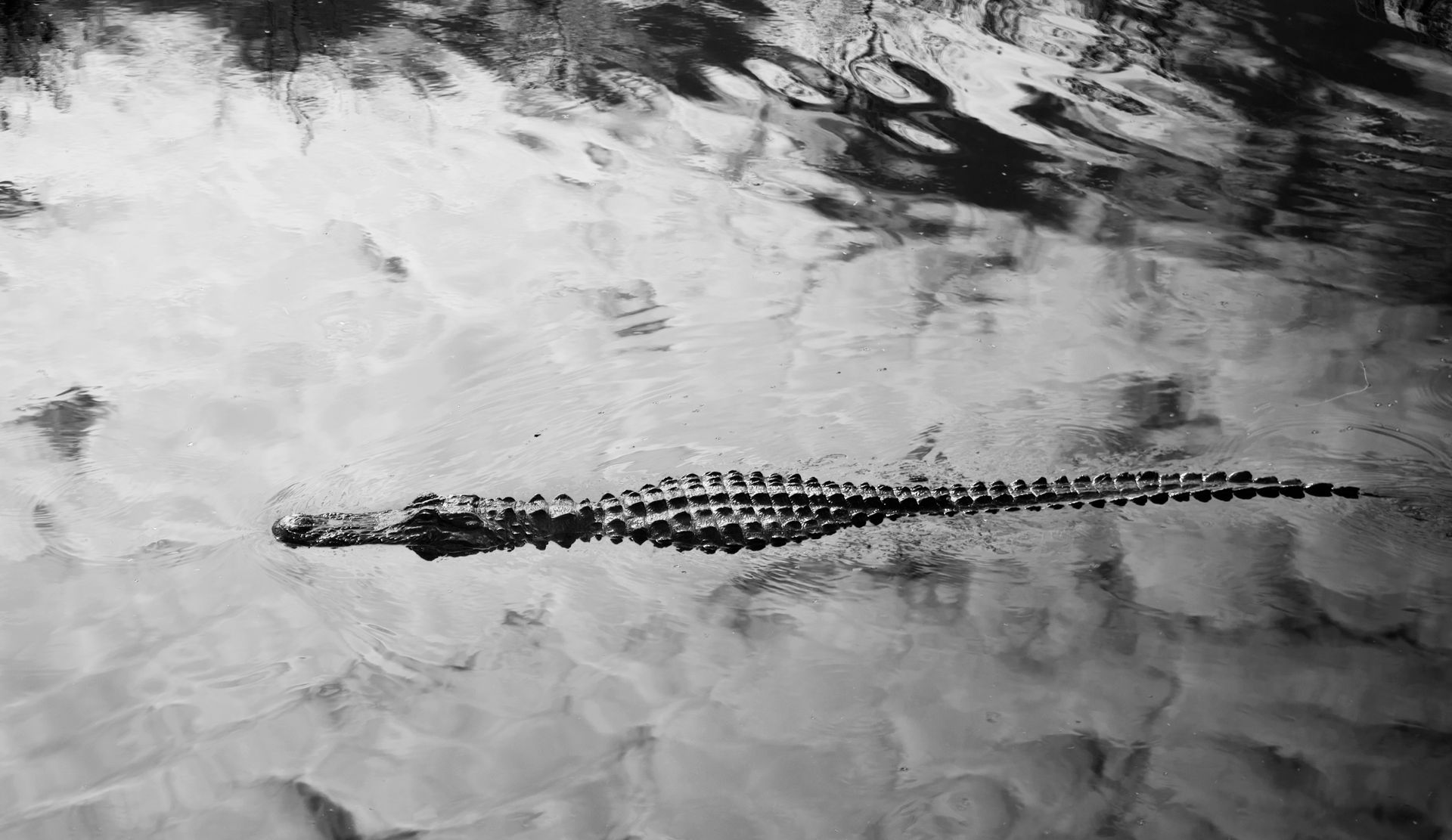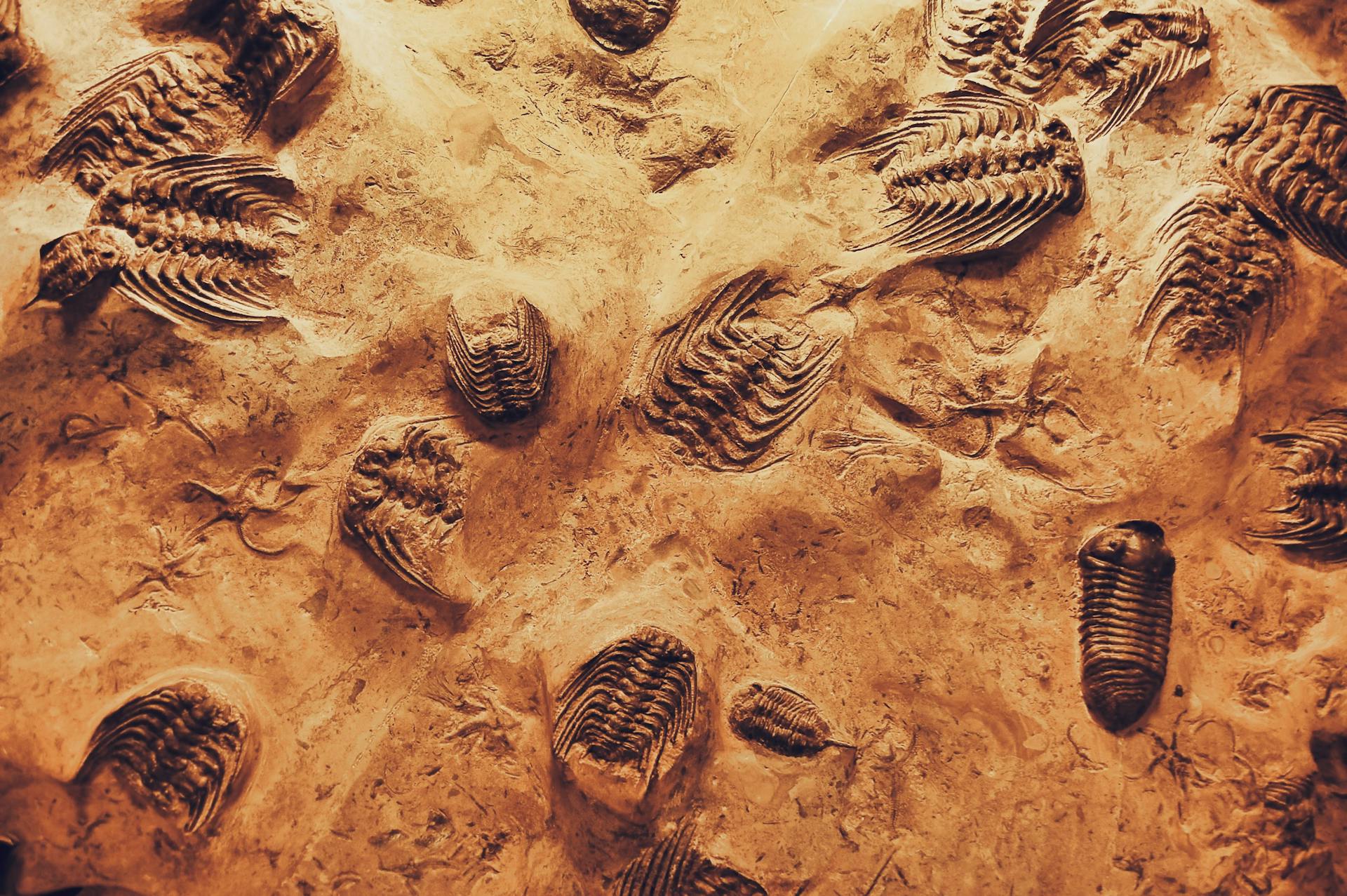
Alligators have been around for a long time, with fossil records dating back to the Oligocene epoch, around 33 million years ago. The earliest known alligator fossils were found in North America and were similar to modern alligators.
The first alligator species to appear was the genus Alligator, which is still alive today. This ancient species was a bit smaller than modern alligators, but still had the distinctive snout and powerful jaws.
As you'd expect, alligators have evolved over time to adapt to their environment. In fact, during the Oligocene epoch, alligators were found in what is now the southeastern United States, where they likely preyed on early mammals and other animals.
One of the most significant changes in alligator evolution occurred during the Miocene epoch, around 20 million years ago. This is when the modern alligator species, Alligator mississippiensis, emerged.
New Discoveries
American alligators have been around for a whopping 8 million years, with some fossil evidence showing they looked almost identical to the ones we see today.
Researchers have reexamined an 8-million-year-old alligator skull found in Florida and found that it actually belongs to the modern American alligator species, not an extinct one as previously thought.
This means that the American alligator has remained virtually unchanged for 6 million years longer than previously believed, a remarkable example of stability in evolution.
Scientists now think that the American alligator's preference for freshwater habitats might be due to its ancient history with a larger, marine crocodile that went extinct around 5 million years ago.
This larger crocodile, Gavialosuchus americanus, could have been a threat to the smaller American alligator, leading it to adapt to freshwater habitats to avoid becoming a food source.
New research has also challenged the idea that modern crocodiles and alligators have a simple evolutionary past, suggesting that they came from a variety of surroundings and occupied different ecosystems over time.
In fact, the study found that modern crocodiles and alligators have paddles instead of limbs when living in the sea, and hoof-like claws and long legs when on land, showing a complex evolutionary history not just of habitat, but of form.
Here's a summary of the different habitats that ancient crocodiles and alligators might have occupied:
Related Species
Alligators have some close relatives in the crocodilian family tree. The alligatoroid lineage is divided into two main groups: alligators and caimans, which are more closely related to each other than to crocodiles.
Alligators and caimans have a distinctive overbite and U-shaped snouts, and they lack the salt glands found in crocodiles and gharials.
These two groups have a long and diverse fossil record, with the earliest members dating back to the Cretaceous Period over 80 million years ago.
Some of the earliest species were quite similar to modern crocodiles and came in a variety of sizes and habits. True alligators and caimans arose by around 60 million years ago.
Fossil alligators are known from North America and Eurasia, while fossil caimans are known from North and South America.
A unique perspective: Do Alligators or Crocodiles Live in Saltwater
Comparisons and Encounters
Alligators and crocodiles are often confused with each other, but they belong to different families. In fact, the American alligator is a member of the Alligatoridae family, while the crocodile belongs to the Crocodylidae family.
Both alligators and crocodiles have been around for a long time, with fossil records showing that they've remained largely unchanged for millions of years. The earliest known alligator-like creature dates back to the Oligocene epoch, around 33 million years ago.
Despite their similarities, alligators and crocodiles have distinct physical differences. Alligators have a wider, U-shaped snout, while crocodiles have a longer, V-shaped snout.
Check this out: Differences between Alligators and Crocodiles
Modern-Day Crocodiles and Alligators
Crocodiles and alligators have remained largely unchanged for millions of years, with some species still found in their original habitats.
Today, there are 24 species of crocodiles and alligators, ranging in size from the small 5-foot-long Cuvier's dwarf crocodile to the massive 23-foot-long saltwater crocodile.
The largest alligator species, the American alligator, can grow up to 15 feet long and weigh over 1,000 pounds in the wild.
In the wild, crocodiles and alligators are carnivores, feeding on fish, crustaceans, and small mammals.
Despite their fearsome reputation, these ancient creatures play a vital role in maintaining the balance of their ecosystems.
In some parts of the world, such as Southeast Asia, crocodiles and alligators are considered an important food source and are farmed for their meat and skin.
Featured Images: pexels.com