Alligators and crocodiles are both large reptiles that live in freshwater environments, but they have some key differences in their habitats.
Alligators prefer freshwater habitats such as lakes, rivers, and swamps, where the water is calm and there's an abundance of vegetation.
Crocodiles, on the other hand, can live in both freshwater and saltwater environments.
One notable example of a saltwater habitat where crocodiles thrive is in estuaries, which are areas where freshwater rivers meet the ocean.
Worth a look: Are Crocodiles Freshwater or Saltwater
Crocodiles vs Alligators
Crocodiles have a special advantage when it comes to living in saltwater environments. They possess salt glands that excrete higher amounts of salt from water.
Crocodiles' salt glands can be found on the tongue and work through a pump action to remove sodium and other seawater ions from their blood. These glands emit a concentrated salt solution.
Alligators, on the other hand, lack these salt glands and are less tolerant of saltwater environments. Younger alligators have a particularly challenging time in saltwater due to their thinner skin.
You might like: Largest Salt Water Crocodile
Alligator Habitat
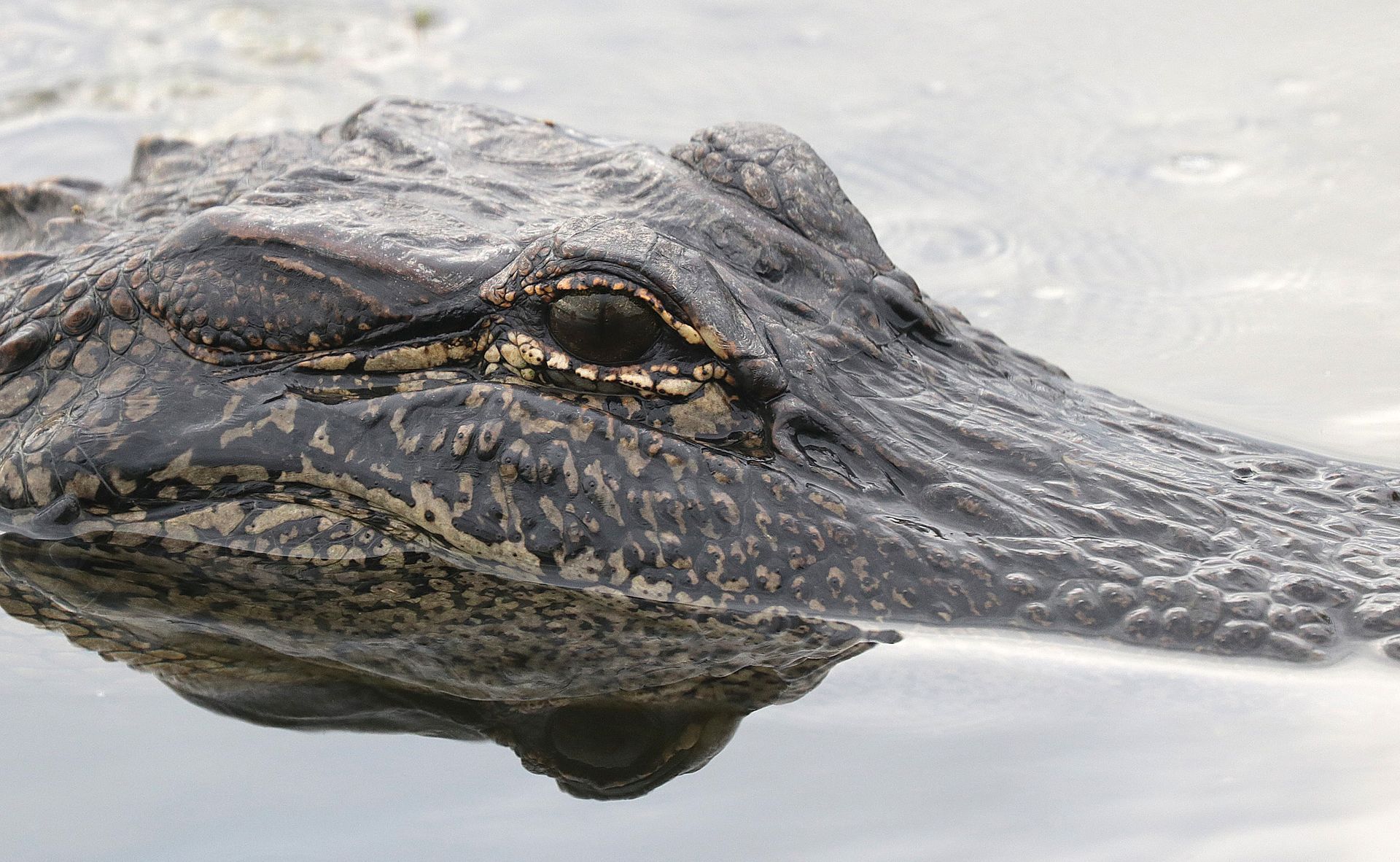
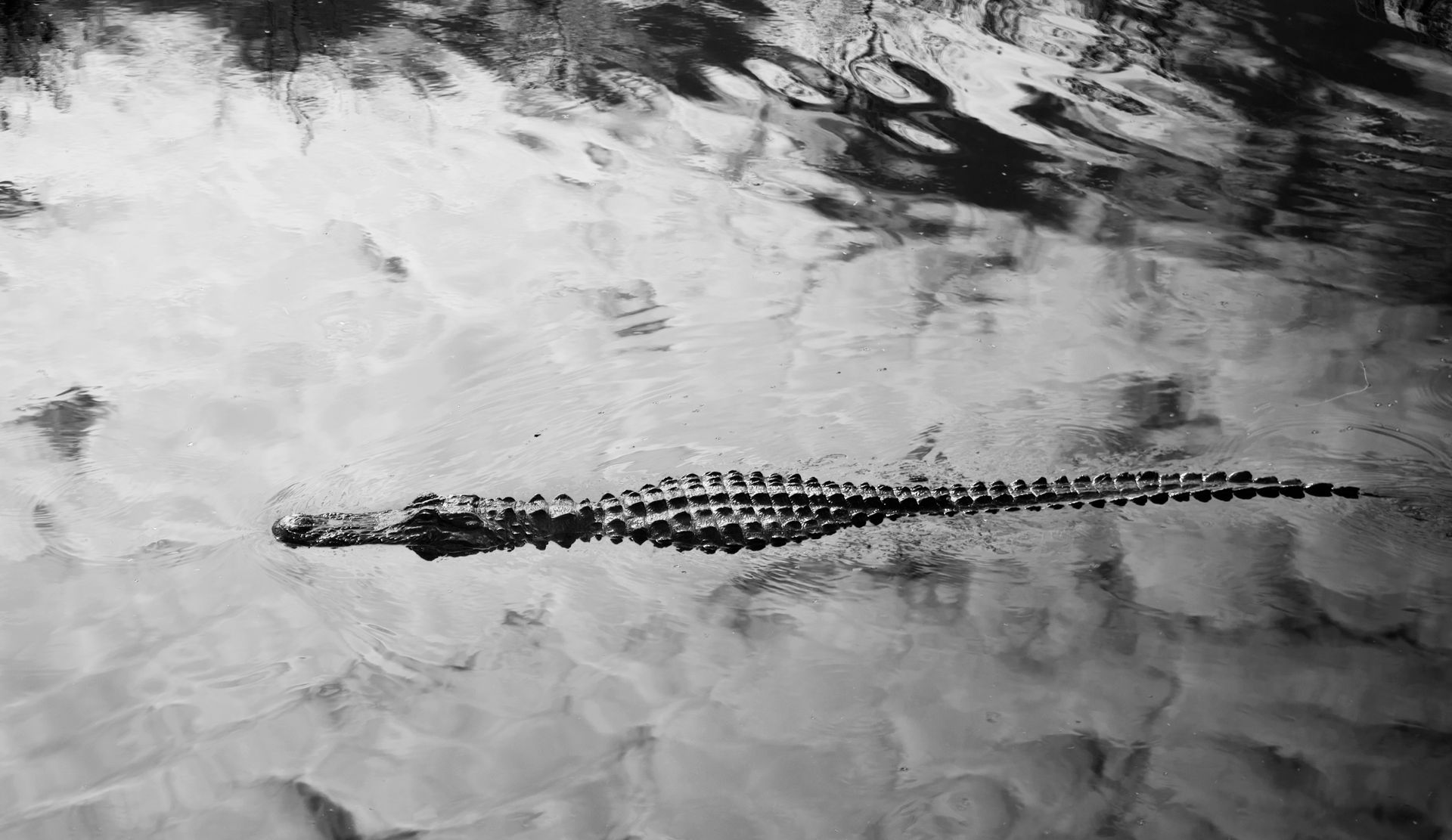
Alligators live in a variety of freshwater habitats, such as swamps, lakes, rivers, streams, and ponds. These habitats are found in the southeastern states of the U.S.
In these freshwater habitats, alligators spend most of their time. They're comfortable in freshwater environments and can be found in areas with minimal salt content.
However, alligators are not averse to visiting brackish water, which has a somewhat salty composition. They may spend several hours or days in these areas.
Alligators go into saltwater to feed, and they're opportunistic eaters. They'll consume fish, turtles, wading birds, snakes, frogs, and small mammals, and even smaller alligators if they're in the area.
In fact, alligators play a crucial role in maintaining a balanced ecosystem by transporting nutrients to marine habitats through their feeding habits.
Saltwater Habitats
Saltwater crocodiles are incredibly well adapted to life in saltwater, and can spend days or even weeks at sea, drifting and swimming hundreds of kilometres.
Their range extends from northern Australia to eastern India and South-east Asia, and they're comfortable in both coastal habitats and freshwater rivers.
Saltwater crocodiles are able to live in coastal habitats, but they're also at home in freshwater rivers.
These huge reptiles are so well adapted to life in saltwater that they can hunt en route while drifting at sea.
Saltwater Challenges
Alligators face several challenges when exposed to saltwater. Prolonged exposure to saltwater disrupts their internal osmotic balance, leading to dehydration and electrolyte imbalances.
Saltwater draws water out of an alligator's body, causing dehydration and electrolyte imbalances. This is because alligators lack specialized salt glands that allow marine reptiles to excrete excess salt.
The lack of salt glands limits an alligator's ability to tolerate saltwater systems. Salt glands are found on the tongue of crocodiles, which helps them excrete excess salt.
Alligators need freshwater sources for drinking, but saltwater habitats lack the necessary resources. This makes saltwater ecosystems unsuitable for alligators.
In saltwater habitats, alligators may experience a lack of prey, which can affect their feeding behavior and health. Alligators prey on fish, turtles, birds, and mammals, but some of these animals don't live in saltwater systems.
Swimming in saltwater requires more energy than in freshwater due to the higher density of saltwater. This causes more energy expenditure for alligators.
Here are some challenges alligators face in saltwater:
- Osmoregulation Stress: Saltwater disrupts their internal osmotic balance, leading to dehydration and electrolyte imbalances.
- Lack of Salt Glands: Alligators lack specialized salt glands that allow marine reptiles to excrete excess salt.
- Unsuitable Habitat: Saltwater habitats lack the necessary resources alligators need to survive.
- Limited Feeding Opportunities: Saltwater habitats may not have the same amount and diversity of prey as freshwater habitats.
- Increased Energy Expenditure: Swimming in saltwater requires more energy due to the higher density of saltwater.
- Negative Effect on Health: Prolonged exposure to saltwater can affect an alligator's health, making them susceptible to diseases and other stressors.
Saltwater Crocodiles
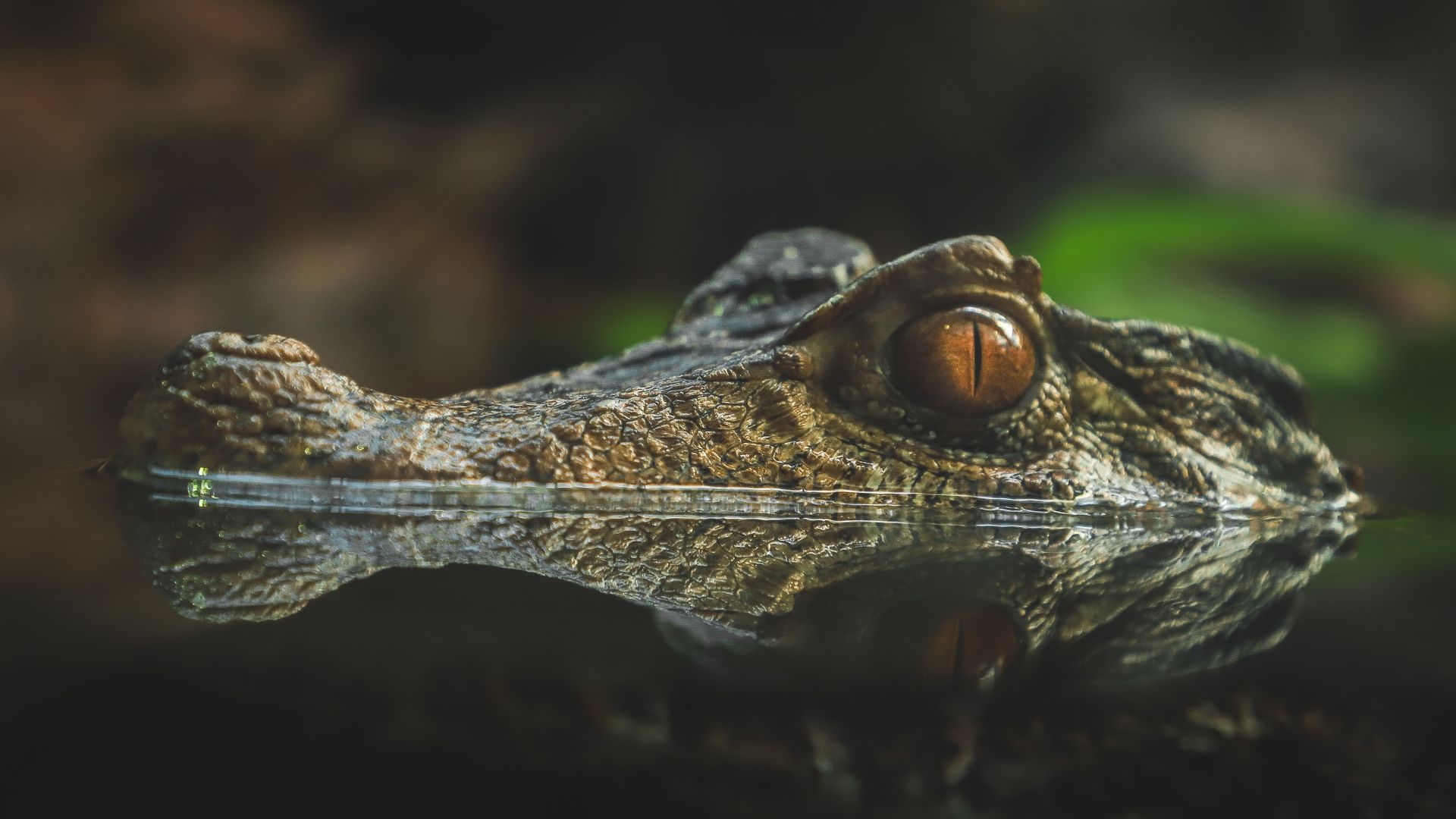
Saltwater crocodiles are the longest and arguably the most dangerous crocodile species, native to northern Australia and other Indo-Pacific nations. They can live in both marine and freshwater environments, which can lead to confusion.
Their powerful bite can produce over 3,500 pounds per square inch (PSI) in force, making them a formidable predator. This is due to their jaw length being 1/7th of their total length.
Saltwater crocodiles have a unique four-chambered heart with fully conscious regulation, allowing them to control their heart rate and blood flow. This sophisticated mechanism enables them to hold their breath for up to seven hours.
Size of Crocodiles
Saltwater crocodiles are truly massive creatures. The average male saltwater crocodile is 5m in length.
These enormous reptiles can weigh a significant amount, with the average male weighing around 500kg.
The females, on the other hand, are significantly smaller. The average female saltwater crocodile measures a little under 3m in length.
Despite their size, females still weigh less than 100kg.
For your interest: How Long Do German Rottweilers Live
Saltwater Crocodiles
Saltwater crocodiles are the longest and arguably the most dangerous crocodile species, found in northern Australia and other Indo-Pacific nations.
They can live in both marine and freshwater environments, which might lead to confusion about their habitat.
The largest saltwater crocodile ever recorded was a whopping 20 feet 3 inches long and weighed almost 2,400 pounds.
Saltwater crocodiles have the most powerful bite in the world, producing over 3,500 pounds per square inch (PSI) in force.
Their jaw length is only 1/7th of their total length, making them a formidable predator.
Saltwater crocodiles have mastered the art of ambush predation and are considered one of the most successful coastal predators.
Their heart is a remarkable four-chambered organ that allows them to control their heart rate and blood flow.
This sophisticated mechanism enables saltwater crocodiles to hold their breath for up to seven hours and prevents extreme blood loss during traumatic injuries.
Featured Images: pexels.com