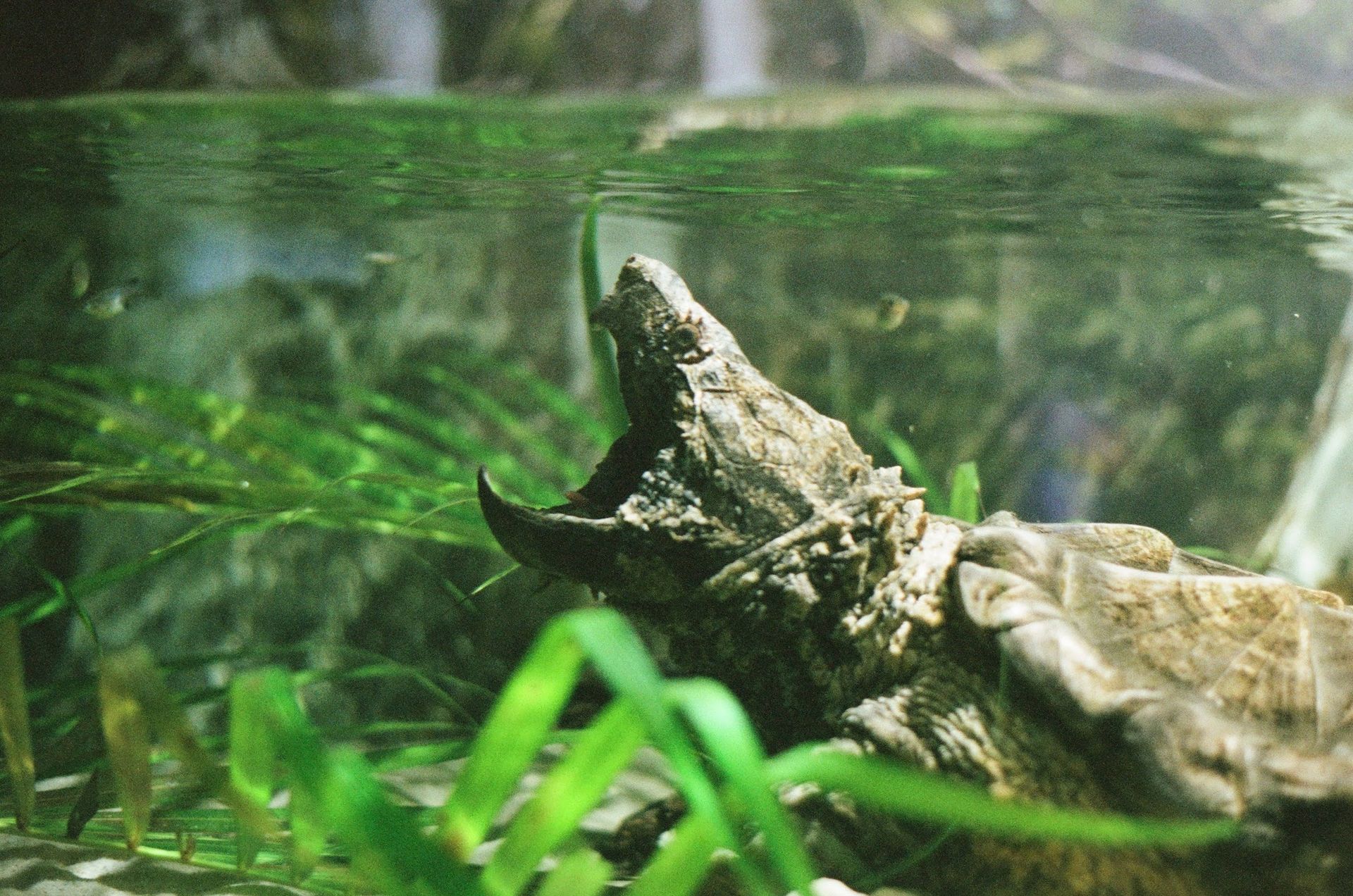
The alligator snapping turtle's life cycle is a remarkable process that spans several decades.
They can live up to 80 years in the wild.
These turtles start their lives as eggs, which are laid in the summer months.
Female alligator snapping turtles typically lay 20-50 eggs per clutch.
After about 80 days, the eggs hatch and the young turtles emerge.
Newly hatched turtles are about 2 inches long and weigh about 1 ounce.
They are immediately on their own, venturing out into the world to start their journey.
Readers also liked: Common Snapping Turtle Eggs
Reproductive Biology
The alligator snapping turtle's reproductive biology is a fascinating topic, and researchers have made some exciting discoveries.
Mating in alligator snapping turtles typically occurs in the spring, while nesting happens in late spring or early summer.
These turtles exhibit a postnuptial peak in testosterone during the fall, which is a unique characteristic of their reproductive cycle.
Females, on the other hand, have a biphasic cycle, with testosterone peaking in both the spring and fall.
Hormone analyses, conducted using ELISA, have shown that male alligator snapping turtles have a distinct hormonal pattern, which is different from that of females.
The study found that the alligator snapping turtle's reproductive seasonality is similar to that of other temperature turtles, which is influenced by environmental conditions such as temperature.
The researchers used ultrasound to examine the reproductive status of captured males and females, which helped validate the hormone analyses and provided a more comprehensive understanding of the turtles' reproductive biology.
Conservation and Threats
Alligator snapping turtles face several conservation threats due to habitat loss and degradation.
Their populations are declining in many areas due to the destruction of their aquatic habitats.
One of the main threats to their survival is the degradation of their aquatic habitats, which are often polluted with agricultural runoff and sewage.
This pollution can make it difficult for them to find food and shelter.
In addition to habitat loss and degradation, alligator snapping turtles are also threatened by hunting and the pet trade.
Consider reading: Common Snapping Turtle Habitat
Their meat and shells are highly valued on the black market, making them a prized catch for poachers.
The pet trade is also a significant threat, as many turtles are captured and sold to collectors and enthusiasts.
This can lead to further habitat degradation and the introduction of invasive species.
Conservation efforts are underway to protect alligator snapping turtles and their habitats.
Some organizations are working to restore and protect their habitats, and to educate the public about the importance of conservation.
These efforts are crucial for the long-term survival of this species.
A different take: Common Snapping Turtle Species
Alligator Snapping Turtle Reproduction
The alligator snapping turtle's reproductive cycle is influenced by environmental conditions, just like many other turtle species. Changes in temperature and other factors stimulate hormonal axes, triggering mating behavior and gonadal recrudescence.
Mating occurs in the spring and nesting takes place in late spring or early summer. This is based on preliminary results from a study on the Flint River, Georgia population.
Male alligator snapping turtles exhibit a postnuptial peak in testosterone during the fall, while females show a biphasic cycle with testosterone peaking in the spring and fall.
Genetics and Development
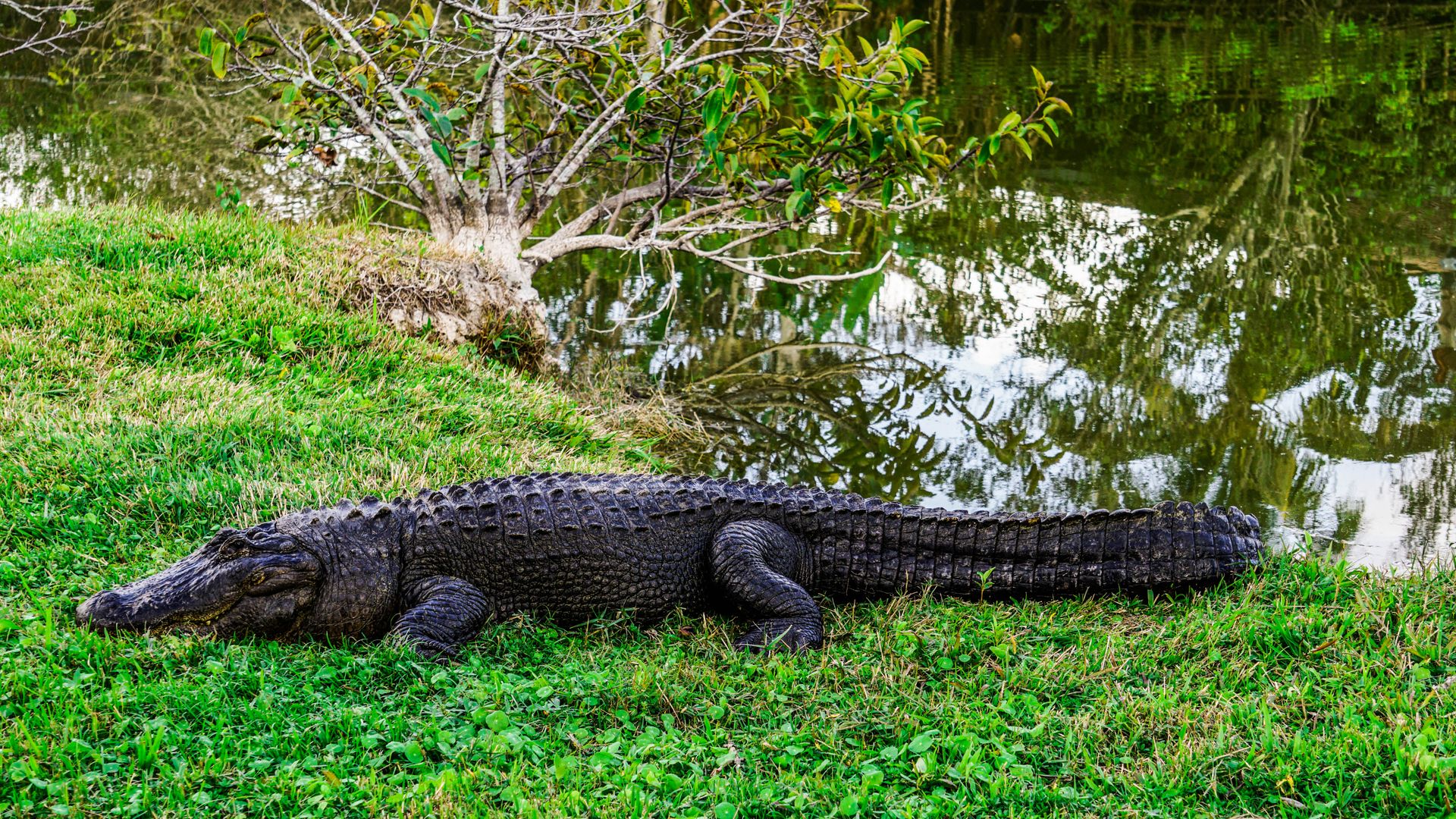
The sex of an alligator snapping turtle is determined by the temperature of the nest, with males developing at temperatures above 32°C (90°F) and females at temperatures below 26°C (79°F).
Female alligator snapping turtles can store sperm from multiple males in their reproductive tract for up to two years, allowing for delayed fertilization.
The sex of the hatchlings is determined by the temperature of the nest, with males developing at temperatures above 32°C (90°F) and females at temperatures below 26°C (79°F).
Behavior and Nesting
Alligator Snapping Turtles are known to be solitary animals, only coming together for mating. They have a unique mating behavior where the male will vibrate his tail to attract a female.
During courtship, the male will also perform a series of head bobs to show off his size and strength to the female. The female will choose the largest male to mate with.
After mating, the female will lay her eggs in a nesting site, which can be up to 2 feet deep and 3 feet wide. She will dig a hole using her powerful hind legs and claws.
For another approach, see: Male Reproductive System in Dogs
The female will also cover her eggs with vegetation and soil to protect them from predators and temperature fluctuations. This nesting behavior is crucial for the eggs to hatch successfully.
Alligator Snapping Turtles typically lay between 20 to 50 eggs per clutch, which is a relatively small number compared to other turtle species.
Featured Images: pexels.com