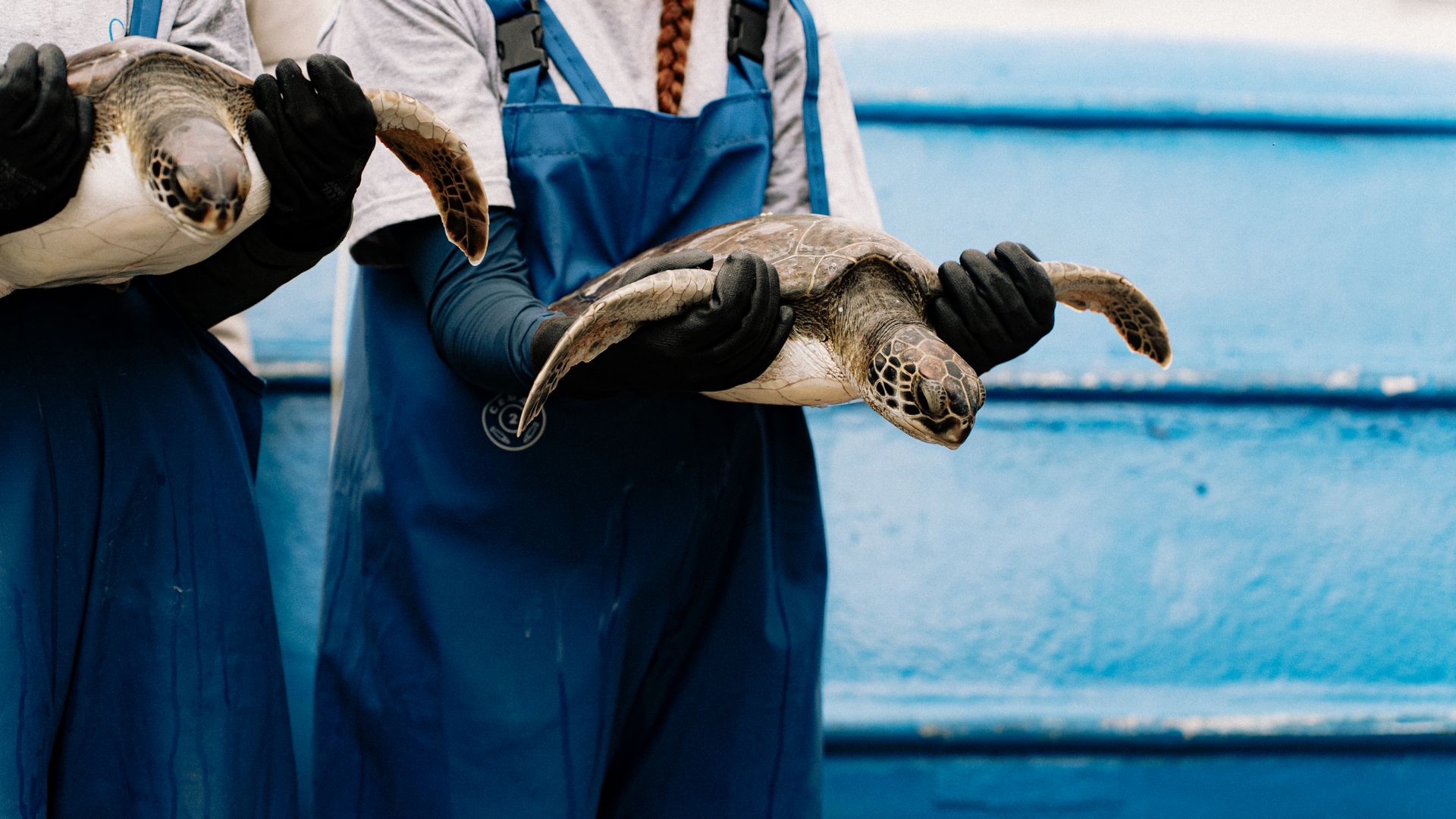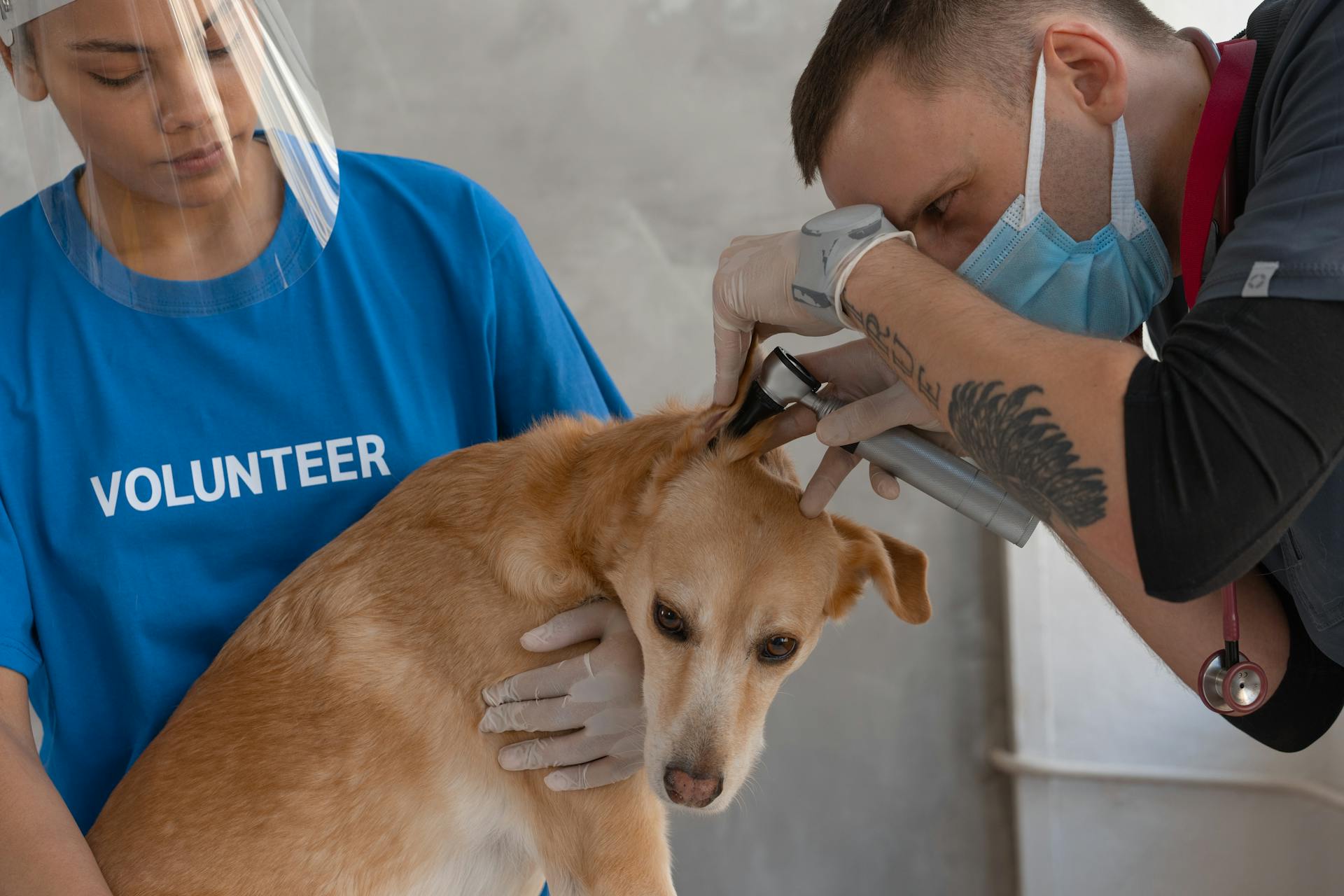
Pursuing a degree in wildlife conservation can lead to a wide range of exciting career paths.
Wildlife conservationists can work in various government agencies, such as the U.S. Fish and Wildlife Service, which employs over 7,000 people to protect and conserve wildlife and their habitats.
Some wildlife conservationists may choose to work in research institutions, like the Wildlife Conservation Society, which has been involved in numerous conservation projects worldwide since 1895.
Many wildlife conservationists also find work in non-profit organizations, like the World Wildlife Fund, which has been working to conserve nature and reduce the most pressing threats to the diversity of life on Earth since 1961.
With a degree in wildlife conservation, you can make a real difference in the world by working to protect and preserve the natural world.
A fresh viewpoint: Do You Need a Degree to Be a Veterinary Assistant
Careers in Wildlife Conservation
Careers in wildlife conservation are projected to grow by 4% to 5% between 2023 and 2033, according to the US Bureau of Labour Statistics. This growth is driven by the increasing need to manage human-wildlife interactions and mitigate the impacts of climate change on ecosystems.
With a degree in wildlife conservation, you'll have a wide range of job opportunities, including wildlife biologist or specialist, wildlife manager or conservationist, and game warden/conservation officer. These roles typically involve working for government agencies, non-profit organizations, or natural resource consulting firms.
Some specific job titles and their median annual salaries, as reported by the Bureau of Labor Statistics, include:
- Wildlife biologist or specialist: $64,650
- Conservation scientist: $63,750
These figures demonstrate the potential for stable and well-compensated careers in wildlife conservation, making it an attractive field for those passionate about protecting the natural world.
Careers in Fisheries Sciences
If you're passionate about working with fish and their habitats, you'll find a range of in-demand jobs in the global marketplace.
With a degree in fisheries sciences, you'll be equipped to provide insights in economic sectors that need fisheries experts.
You can work to protect natural resources by managing and restoring aquatic habitats.
As a conservation scientist in fisheries, you'll monitor environmental health and develop conservation plans to preserve fish populations and their ecosystems.
You'll enter the workforce ready to fill in-demand jobs and make a positive impact on the world.
Consider reading: Fish and Wildlife Western Pond Turtle
Career Opportunities with a Bachelor's Degree
A career in wildlife conservation can be incredibly rewarding, and the good news is that the job market is growing. According to the US Bureau of Labour Statistics, careers in wildlife conservation are projected to grow by 4% to 5% between 2023 and 2033.
With a bachelor's degree in wildlife conservation, you'll have a wide range of career options to choose from. Some of the most in-demand jobs include wildlife biologist or specialist, wildlife manager or conservationist, and game warden/conservation officer.
You may also find work as an environmental consultant, wildland manager, ecologist, or park ranger. These roles typically involve working with government agencies, non-profit organizations, or natural resource consulting firms.
Here are some specific job titles and their corresponding median annual salaries, according to the Bureau of Labor Statistics:
These figures can give you an idea of what to expect in terms of salary, but keep in mind that salaries can vary depending on factors like location, experience, and industry.
Degree Requirements and Options
The wildlife conservation degree typically requires a significant number of credits, with some programs allowing up to 90 credits to be transferred from outside institutions.
The program at Oregon State University's College of Agricultural Sciences, for example, is an online fisheries, wildlife, and conservation sciences bachelor's program that requires students to get outside and conduct assignments in the field. This hands-on approach will give you a solid educational foundation in fish and wildlife conservation.
You can expect to take a variety of courses, including those that focus on the social, legal, and economic principles that underpin modern wildlife management and conservation efforts. Some programs, like the one at Missouri Western State University, offer a minor in wildlife ecology and management that can complement a major in related fields.
Here are some key courses you might take in a wildlife conservation program:
- BIOL 201 Organisms that Sustain the Earth: Understanding Plants
- BIOL 203 Ecological Principles: Applications to Conservation and Wildlife
- ENCJ 305 Natural Resource Law and Policy
- MATH 401 Statistics for Wildlife Professionals
- WCON 201 Plant and Wildlife Interactions
- WCON 301 Human Dimensions of Wildlife Conservation
- WCON 303 Life History and Identification of Birds and Mammals
- WCON 305 Wildlife Conservation Genetics
- WCON 307 Vectors, Wildlife, and Disease
- WCON 403 Habitat Management for Wildlife
- WCON 405 Wildlife Population Management
Requirements
To pursue a degree in wildlife conservation, you'll typically need to complete 120 credits. Some programs allow you to transfer in up to 90 credits from outside institutions.
The coursework for a wildlife conservation degree will give you a solid foundation in the social, legal, and economic principles that underpin modern wildlife management and conservation efforts. You'll also learn about the life history traits and ecology of plants and animals, and how these factors influence wildlife habitat management.
You'll have the opportunity to gain hands-on experience through lab and field exercises, as well as internships and independent research projects. Many programs also offer opportunities for you to work with nationally renowned faculty and gain experience in both fieldwork and research.
Some programs, like the one at MWSU, offer a 180-acre field study area on campus, complete with a network of trails that run through various habitats, ponds, and streams. This provides a unique opportunity for you to apply your knowledge in a real-world setting.
Here are some of the skills you can expect to gain in a wildlife conservation degree program:
- Fish, avian and wildlife conservation
- Population dynamics
- Marine ecology
- Animal genetics
- Vertebrate physiology
- Habitat restoration
- Animal care and rehabilitation
- Ecosystem ecology
A minor in wildlife ecology and conservation can also be a great way to complement your major in related fields, such as environmental sciences, biology, and veterinary science. This will give you a foundation in managing wildlife populations and allow you to choose elective courses in specific kinds of animal populations, from birds to mammals to insects.
Indoor Jobs
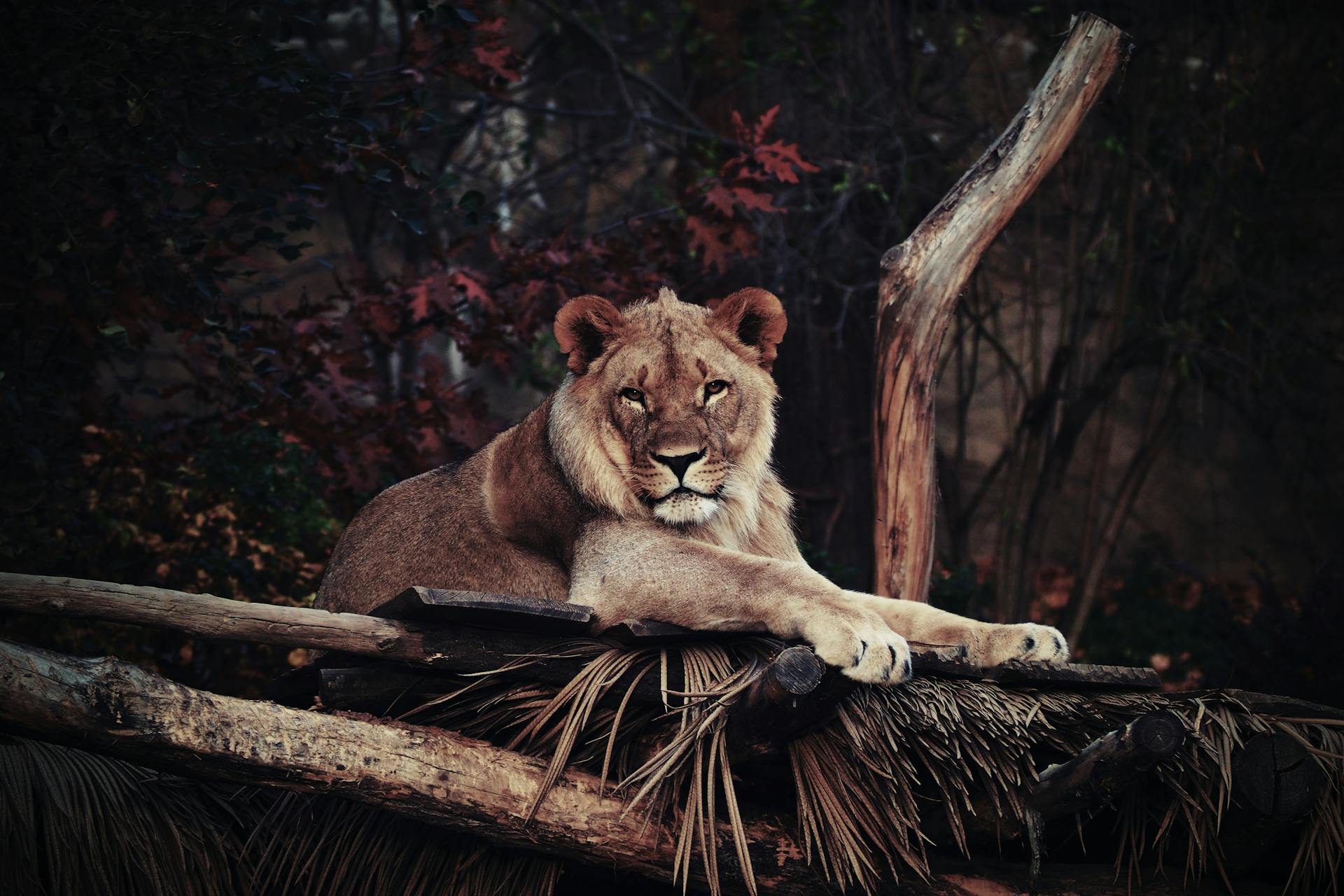
If you're interested in wildlife conservation but don't want to work outdoors, there are plenty of indoor jobs available.
You can work in indoor roles such as data analysis, research, or policy-making, which are all crucial to wildlife conservation efforts.
Many organizations, including government agencies and non-profits, need professionals to analyze data and research to inform conservation decisions.
These roles often require a strong foundation in science, math, or policy-making, which can be developed through various degree programs.
Indoor jobs in wildlife conservation can be just as rewarding as their outdoor counterparts, and they often come with a more stable and predictable work environment.
Specializations and Fields
As a wildlife conservationist, you'll have the opportunity to specialize in various fields, including environmental consulting, wildlife management, and conservation biology.
You can expect to work with private companies or governments to help them assess environmental impact and develop sustainable practices, as seen in environmental consulting roles.
Some specific specializations include fisheries, wildlife, and conservation sciences, which can lead to careers in fish, avian, and wildlife conservation, population dynamics, and marine ecology.
You'll have the chance to work with nationally renowned faculty and gain experience in both fieldwork and research through hands-on classes and indoor and outdoor laboratories.
Some potential career paths include wildlife biologist or specialist, wildlife manager or conservationist, and game warden/conservation officer.
Here are some potential career options for wildlife conservationists:
- Wildlife biologist or specialist
- Wildlife manager or conservationist
- Game warden/conservation officer
- Environmental consultant
- Wildland manager
- Ecologist
- Park ranger
Environmental Consultant
As an environmental consultant, you'll work with private companies or governments to help them assess environmental impact, develop sustainable practices, and comply with wildlife protection laws. This role is all about finding ways to minimize harm to the environment and ensure that human activities don't disrupt delicate ecosystems.
One of the key aspects of being an environmental consultant is working with clients to develop sustainable practices. This might involve identifying areas where their operations are having a negative impact and coming up with creative solutions to mitigate those effects.
Environmental consultants often work on projects related to wildlife conservation, which is a critical area of focus given the growing threats to ecosystems and animal populations due to climate change. In fact, the Bureau of Labor Statistics notes that job opportunities in this field will increasingly focus on the interaction between humans and wild animal populations.
If you're interested in becoming an environmental consultant, you may want to consider pursuing a degree in a related field, such as wildlife ecology and conservation biology. This can provide you with the educational foundation you need to succeed in this role and open up a wide range of job opportunities.
Here are some potential job titles for environmental consultants:
- Environmental consultant
- Wildlife biologist or specialist
- Wildlife manager or conservationist
- Game warden/conservation officer
- Wildland manager
- Ecologist
- Park ranger
Keep in mind that salaries for environmental consultants can vary depending on the specific job and location. However, according to the U.S. Bureau of Labor Statistics, zoologists and wildlife biologists had a median annual salary of $64,650 in 2021, and conservation scientists and foresters had a median annual salary of $63,750 in 2021.
Specializations and Fields
Environmental consultants work with private companies or governments to assess environmental impact, develop sustainable practices, and comply with wildlife protection laws.
You can specialize in various fields, such as wildlife ecology and conservation biology, which prepares you to study wild animal populations and learn about ways to protect threatened and endangered species.
A minor in wildlife ecology and conservation offers you the chance to learn more about protecting wildlife populations and understanding population biology.
Some potential careers with a degree in wildlife ecology and conservation biology include wildlife biologist or specialist, wildlife manager or conservationist, and game warden/conservation officer.
You can also work as an environmental educator, educating the public about wildlife conservation and sustainability to build environmental awareness.
Other specializations include zoology, which studies animals in captivity and the wild, focusing on species behavior, health, and breeding, and wildlife rehabilitation specialist, caring for injured or orphaned animals with the goal of rehabilitating and releasing them back into the wild.
Here are some potential career paths in the field of wildlife conservation:
- Wildlife biologist or specialist
- Wildlife manager or conservationist
- Game warden/conservation officer
- Environmental consultant
- Wildland manager
- Ecologist
- Park ranger
These careers often involve working with government agencies, nonprofit organizations, or natural resource consulting firms to protect wildlife populations and ecosystems.
Education and Universities
If you're interested in pursuing a degree in wildlife conservation, there are many excellent options to consider. The University of Prince Edward Island in Canada offers a Bachelor of Wildlife Conservation (BWC) program that's highly affordable, with a yearly tuition of just $8,410.
This program is a great choice for those who want to gain practical, theoretical, and analytical skills in wildlife studies. The University of Guelph in Canada also offers a top-notch wildlife conservation degree, with a tuition of $37,190 per year.
Oregon State's online fisheries, wildlife, and conservation sciences bachelor's program is another excellent option, which allows students to gain hands-on experience through field assignments and independent research projects.
On a similar theme: Dog Training Degree
Environmental Educator
As an environmental educator, you'll have the opportunity to work in various settings such as schools, museums, or community organizations to educate the public about wildlife conservation and sustainability.
You'll be building environmental awareness by sharing your knowledge with others, which is a rewarding experience that can make a real difference in people's lives.
Some of the skills you'll gain in this field include teaching and public speaking, as well as the ability to design and implement educational programs.
You'll also have the chance to work with diverse groups of people, from children to adults, and help them develop a deeper appreciation for the natural world.
Here are some of the specific skills you'll gain through education and training in environmental education:
- Fish, avian and wildlife conservation
- Population dynamics
- Marine ecology
- Animal genetics
- Vertebrate physiology
- Habitat restoration
- Animal care and rehabilitation
- Ecosystem ecology
Research and Academia
Research and academia are closely tied to the field of wildlife conservation. Botswana tops the list of countries that are doing the most to protect wildlife, with the highest conservation land ratios in Africa and over 25% of its land area reserved for parks and other reserves.
Working with universities, research institutions, or conservation organisations is a great way to conduct wildlife research, publish studies, or teach students about conservation biology and ecology. Oregon State's online fisheries, wildlife, and conservation sciences bachelor’s program is a winner of the Online Learning Consortium’s John R. Bourne Outstanding Online Program Award.
You might like: Wildlife Conservation Society
This prestigious award is based on the program's track record of student success and faculty satisfaction. Students in this program get outside, conduct assignments in the field, gain work experience, and in some cases, conduct independent research projects.
Graduates with a major in wildlife ecology and conservation biology are typically employed by government agencies, nonprofit organizations, or natural resource consulting firms. Some possible job titles include wildlife biologist or specialist, wildlife manager or conservationist, game warden/conservation officer, environmental consultant, wildland manager, ecologist, and park ranger.
Here are some examples of job opportunities and median salaries in the field:
- Wildlife biologist or specialist: $64,650/year
- Wildlife manager or conservationist: $63,750/year
- Game warden/conservation officer: $64,650/year
- Environmental consultant: $63,750/year
- Wildland manager: $64,650/year
- Ecologist: $63,750/year
- Park ranger: $64,650/year
Getting Started
If you're considering a career as a wildlife conservationist, it's essential to understand the field's core principles.
A wildlife conservationist degree typically takes four years to complete, and can be earned through a Bachelor of Science in Wildlife Conservation or a related field.
To get started, you'll need to build a strong foundation in biology, ecology, and conservation principles.
Wildlife conservationists often work in remote areas, so it's crucial to develop outdoor skills like camping, hiking, and wildlife tracking.
On a similar theme: What Does a Wildlife Conservationist Do
Advisors
Having a plan is key to success, and that's especially true when it comes to your academic journey. Mapping your degree plan is important.
Consult with your academic advisor to create a plan and monitor it regularly, just like you would with any other important project.
Get Involved
Getting started with a new endeavor can be intimidating, but Missouri Western's student chapter of The Wildlife Society makes it easy to get involved. The chapter offers hands-on field work opportunities.
You can participate in prairie restoration, deer spotlight surveys at Squaw Creek National Wildlife Refuge, or quail surveys. These experiences will give you a chance to make a real difference in the world.
You'll also have the opportunity to work with state, federal, and local agencies and organizations. This will help you build connections and learn about the inner workings of these groups.
Members of the student chapter attend workshops and conferences to stay up-to-date on the latest research and techniques. You'll be able to learn from experts in the field and network with like-minded individuals.
Getting great research opportunities and internships is also a perk of being part of the student chapter. This can be a great way to gain experience and build your resume.
Curious to learn more? Check out: Wildlife Rehabilitator Job Work Environment
Featured Images: pexels.com