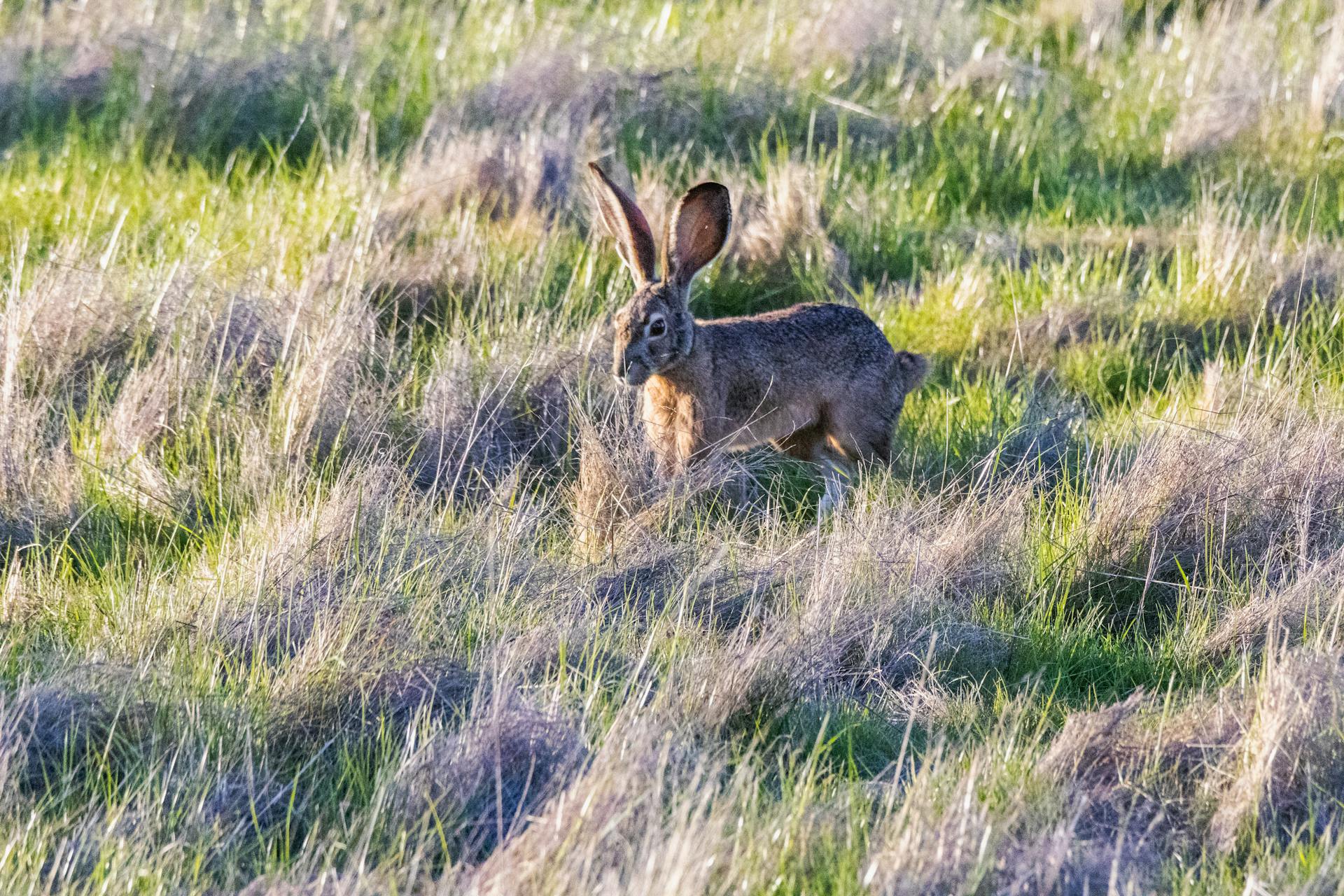
The White-tailed Jackrabbit is a remarkable creature, with some fascinating characteristics that set it apart from other hares. They can grow up to 27 inches in length, making them quite large.
One of the most distinctive features of the White-tailed Jackrabbit is its impressive jumping ability. They can leap up to 20 feet in a single bound, which is quite impressive.
These hares are herbivores, which means they primarily feed on plants and vegetation. They have a specialized digestive system that allows them to break down cellulose in plant cell walls.
Their large ears help them to detect predators and stay alert in their surroundings. Their ears are so sensitive that they can even detect sounds that are too faint for humans to hear.
Check this out: Antelope Jackrabbit
Physical Description
The white-tailed jackrabbit is a large and impressive creature, with some remarkable physical characteristics. They have a distinctive appearance that helps them blend in with their surroundings.
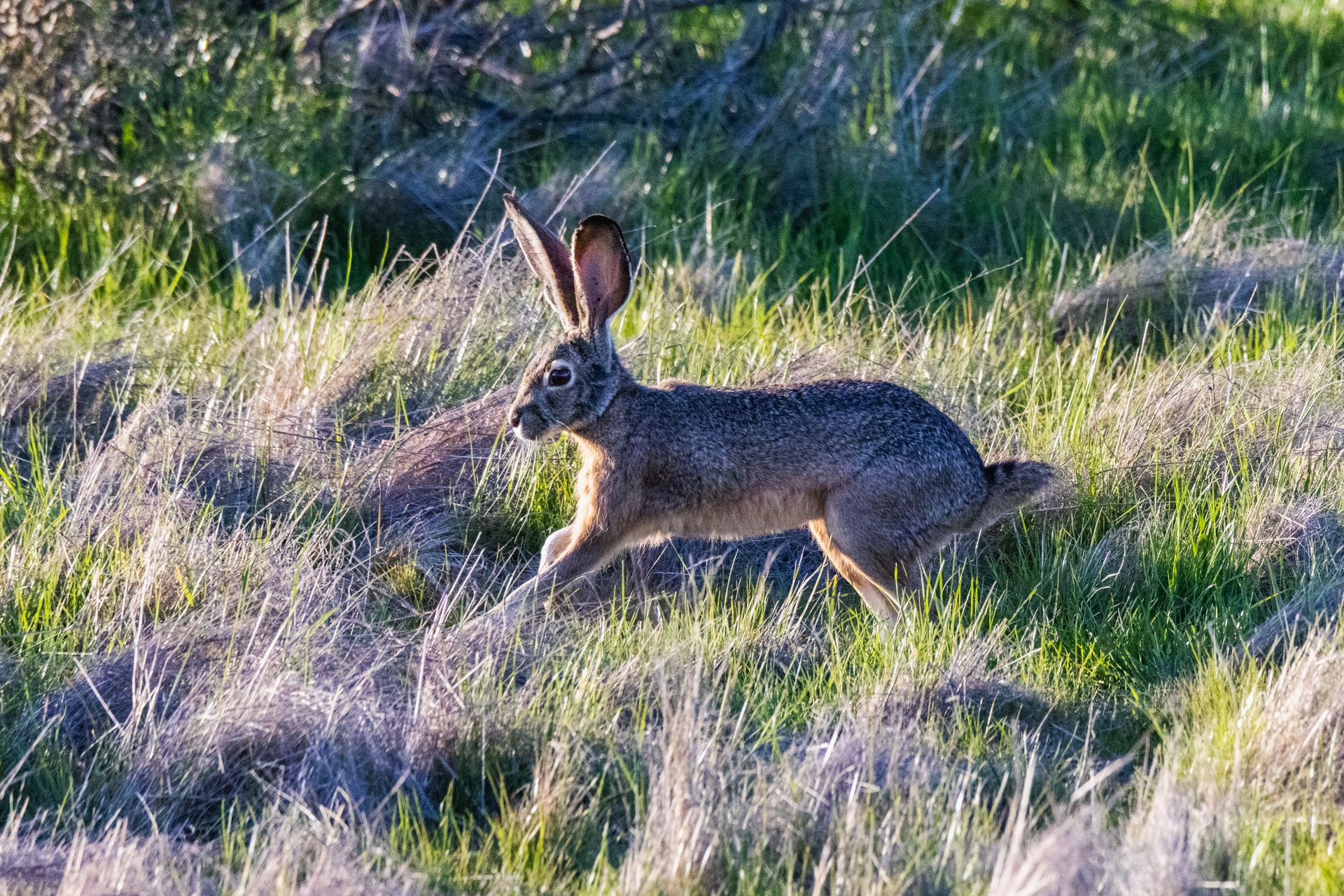
Adult white-tailed jackrabbits typically range in length from 56 to 65 cm (22 to 26 inches), with a tail measuring between 6.6 to 10.2 cm (2.6 to 4.0 inches). Their weight can vary from 2.5 to 4.3 kg (5.5 to 9.5 pounds). Females are slightly larger than males.
One of the most striking features of the white-tailed jackrabbit is its ears. These large black-tipped grey ears are chestnut brown and white on the inner surface, and they play a crucial role in heat dissipation and predator detection.
The hind legs of the white-tailed jackrabbit are also noteworthy, being long and powerful, characteristic of hares. The back, flanks, and limbs are dark brown or greyish-brown, while the underparts are pale grey. The tail is white with a dark central stripe above.
Here are some key physical characteristics of the white-tailed jackrabbit:
- Adult length: 56 to 65 cm (22 to 26 inches)
- Weight: 2.5 to 4.3 kg (5.5 to 9.5 pounds)
- Ears: large black-tipped grey, chestnut brown and white on the inner surface
- Hind legs: long and powerful
- Back, flanks, and limbs: dark brown or greyish-brown
- Underparts: pale grey
- Tail: white with a dark central stripe above
In the northern part of their range, white-tailed jackrabbits molt in autumn and turn white except for their ears.
Habitat and Distribution
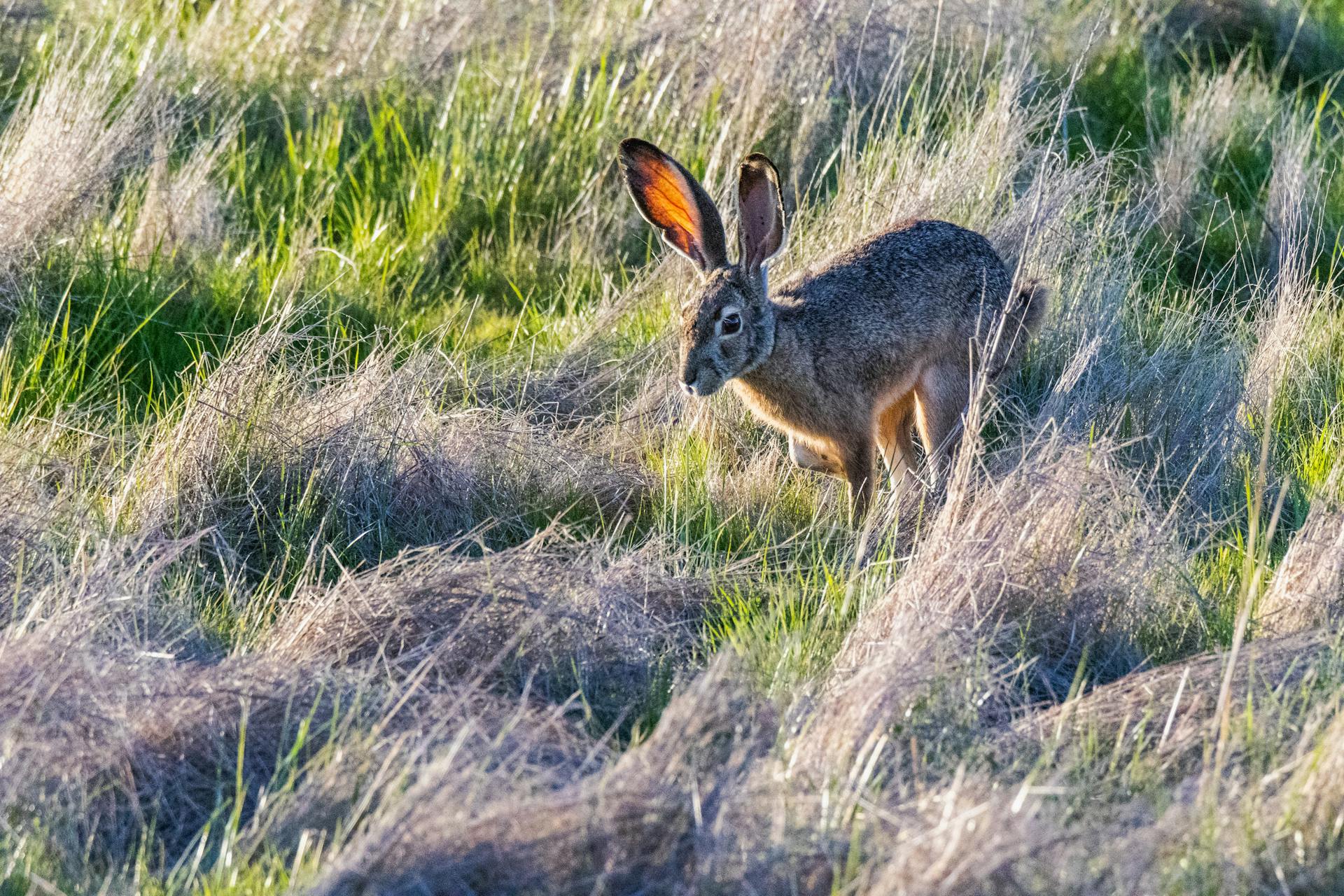
The white-tailed jackrabbit is native to western and central North America, spanning across Canada and the United States. They're found in provinces like Alberta, British Columbia, Manitoba, Ontario, and Saskatchewan in Canada, and states like California, Colorado, Idaho, Illinois, Iowa, Kansas, Missouri, Minnesota, Montana, Nebraska, New Mexico, Nevada, North Dakota, Oregon, South Dakota, Utah, Washington, Wisconsin, and Wyoming in the US.
The white-tailed jackrabbit's range overlaps with that of the black-tailed jackrabbit, but they prefer lowland plains and prairies, while the black-tailed jackrabbit lives at higher altitudes. In fact, their habitats are often segregated due to their differing altitude preferences.
They can be found in various landscapes, including mountain parks with scattered conifer trees, sagebrush country, and native shortgrass prairie. This adaptable species can even thrive in human-dominated landscapes, such as pastures and fields.
Here are some specific details about their habitat:
- Habitat Regions: temperate, terrestrial
- Terrestrial Biomes: desert or dune, savanna or grassland, forest, mountains
- Range elevation: 40 to 4,300 m (131.23 to 14,107.61 ft)
- Range mass: 3 to 4 kg (6.61 to 8.81 lb)
Their range extends from the prairies of the midwestern states and Canadian provinces westward to the Rocky Mountains, Cascades, and Sierra Nevada mountain ranges, and southward to the northern borders of Arizona and New Mexico.
Ecology and Behavior
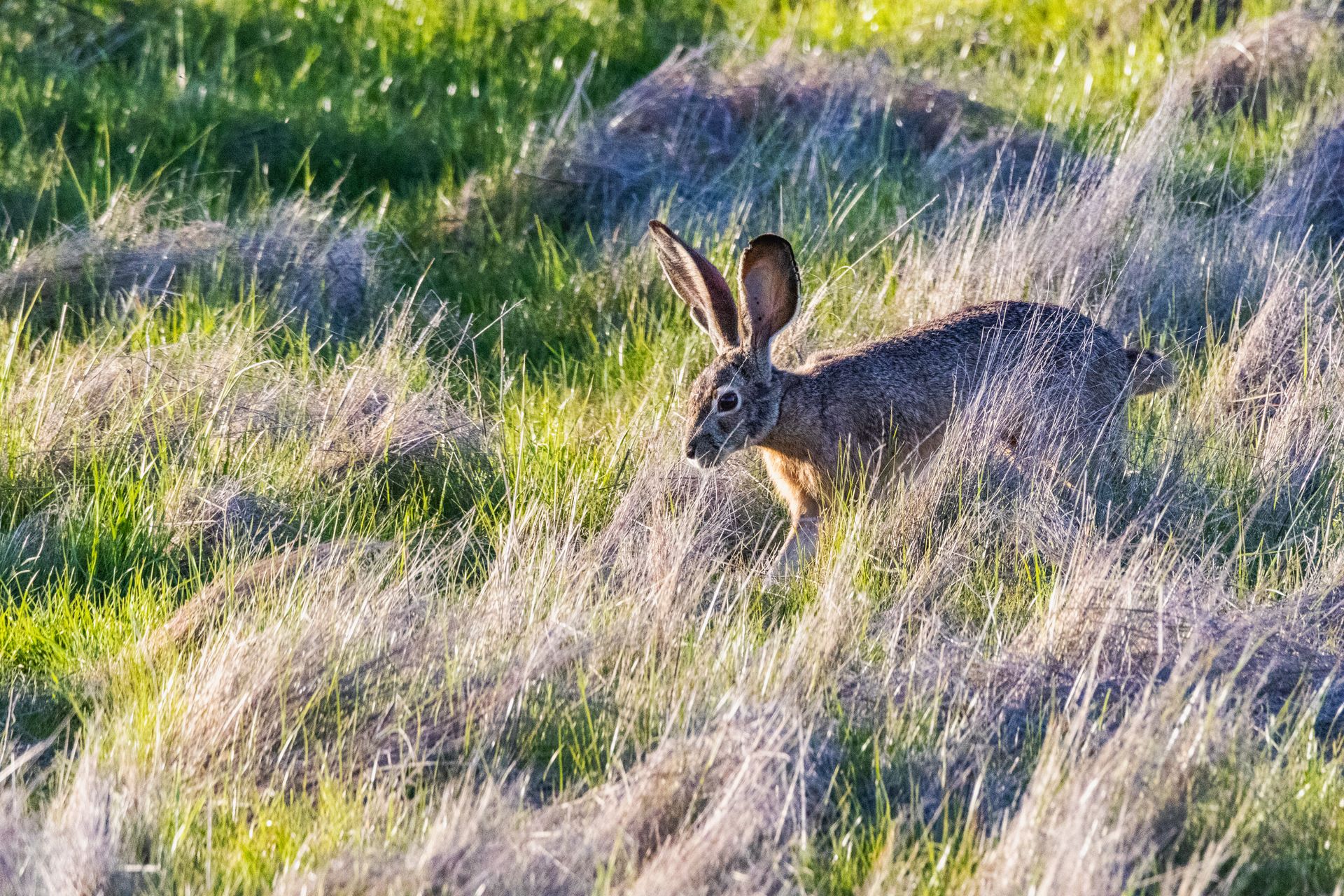
White-tailed jackrabbits are quite skilled at evading predators, crouching in the vegetation to blend in with their surroundings. Their cryptic coloration makes them difficult to observe.
They can run at speeds of up to 55 km/h (34 mi/hr) and leap up to 5 m (16 ft) when detected, adopting a zigzag course to confuse their pursuers.
Their predators include various mammalian predators like red and grey foxes, American badgers, coyotes, bobcats, mountain lions, and gray wolves.
Ecology and Life History
White-tailed jackrabbits prefer hilly, bunchgrass sites, where they can easily roam and find food. They're particularly fond of areas with grasses and forbs, which make up the bulk of their diet.
Home ranges for these rabbits can be quite large, extending up to 1.9 miles in diameter. This gives them plenty of space to explore and find suitable habitats.
White-tailed jackrabbits are nocturnal herbivores, meaning they do most of their foraging at night. They feed primarily on grasses and forbs, with shrubs making up a smaller portion of their diet.
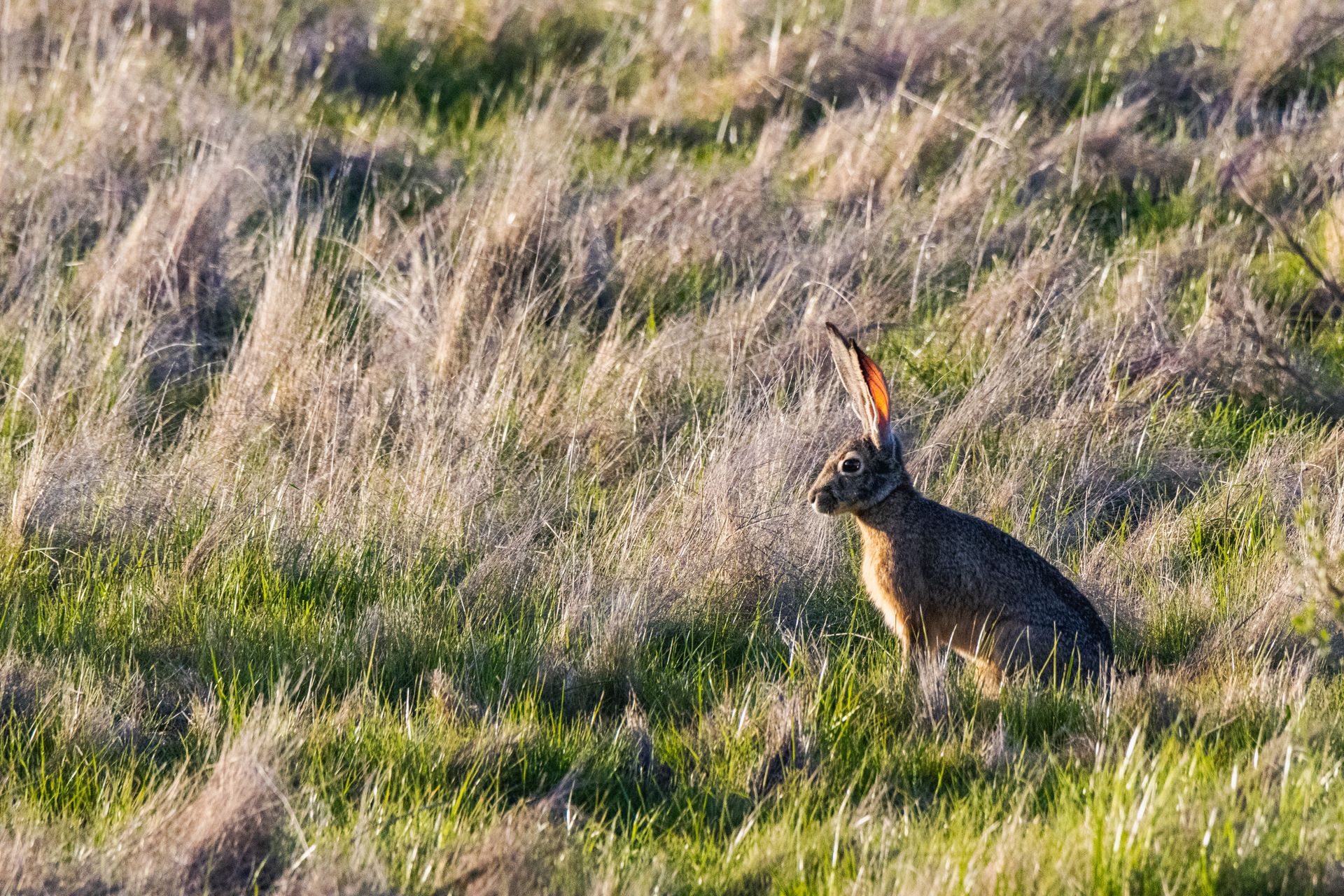
In the winter, rabbits will often descend to sagebrush flats in valley bottoms to escape the harsh weather. They'll rest by day in shallow holes dug in the ground at the bases of rocks or shrubs, or in cavities connected by tunnels beneath the snow.
Individuals may begin to breed as early as seven months of age. Breeding season typically starts in late February and may extend into May.
Here's a rough breakdown of the white-tailed jackrabbit's life cycle:
The typical litter size is four or five young, and they become independent of their mothers at around two months of age.
Predation
Predation is a crucial aspect of a jackrabbit's life. They have to constantly be on the lookout for predators.
One of the most effective ways jackrabbits avoid predators is by relying on their cryptic coloration. This means they blend in with their surroundings, making it difficult for predators to spot them.
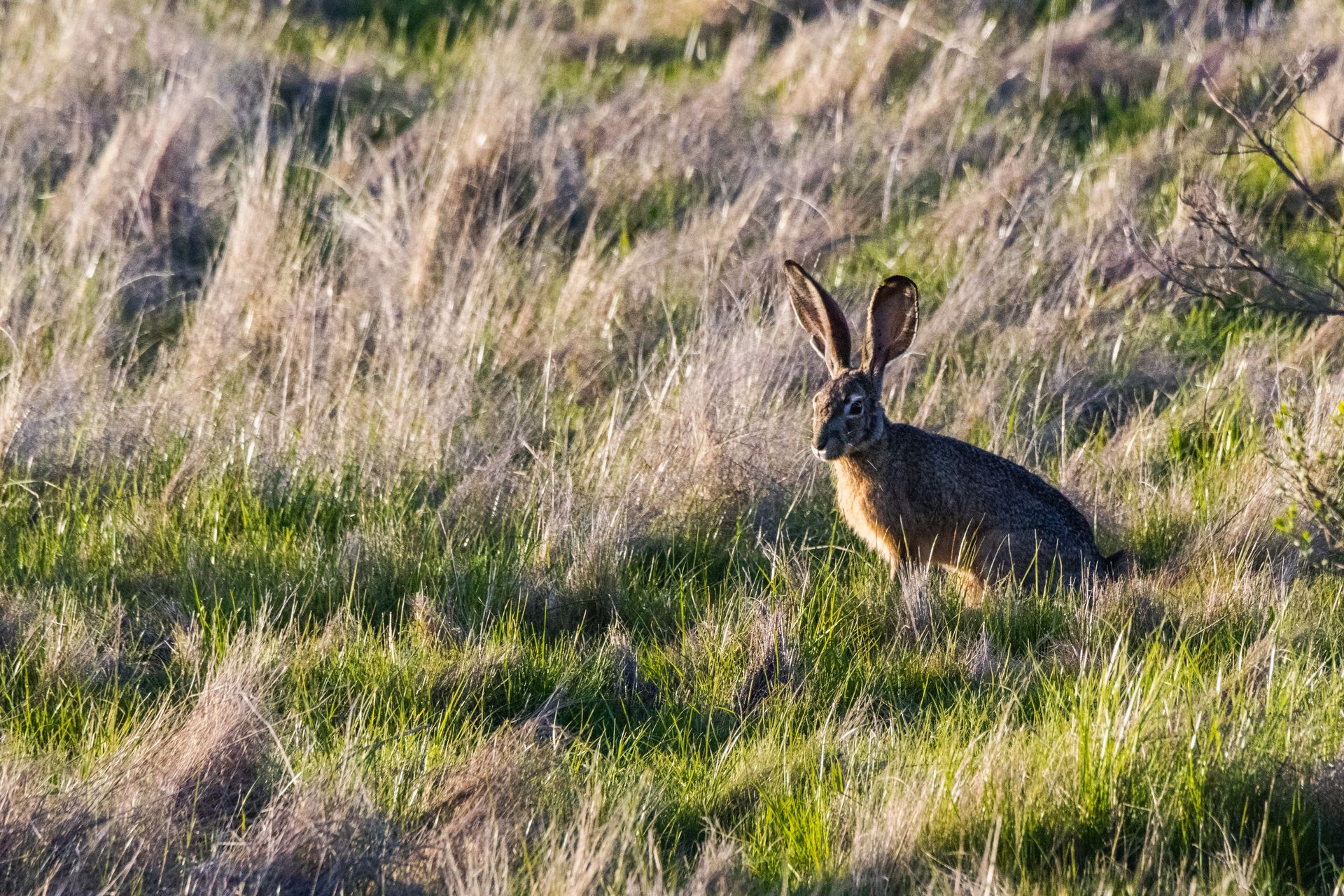
Jackrabbits will often lie perfectly still, hoping to avoid detection. They'll even point their large ears slightly up to detect any potential threats.
If a predator does get close, jackrabbits can move quickly, bounding away with surprising speed and height. They'll even zig-zag their way through the underbrush to throw off their pursuers.
In some cases, jackrabbits have even been observed swimming to escape predators. This shows just how resourceful they are in the face of danger.
Here are some of the predators that jackrabbits need to watch out for:
- Red fox
- Grey fox
- Coyote
- Bobcat
- Cougar
- Badger
- Snakes
- Owls
- Eagles
- Many species of hawks
Species Information
The white-tailed jackrabbit is actually a hare, not a rabbit. They have longer feet and ears compared to rabbits.
Hares typically live in open country, unlike cottontails which prefer brushy habitats.
They are born fully furred and ready to hop, unlike cottontails which are born blind, nearly naked, and helpless.
Suggestion: Are Rottweilers Born with Tails
Lifespan and Conservation
The white-tailed jackrabbit's lifespan in the wild is approximately 8 years, which is a relatively short life span compared to some other animals.
This short lifespan is likely due to the many predators that the jackrabbit has in the wild, such as coyotes and hawks.
In the wild, the typical lifespan of a white-tailed jackrabbit is around 8 years, which is considered high for a small mammal like this.
Expand your knowledge: Florida Wild Turkey
Conservation Status

The white-tailed jackrabbit's conservation status is a mixed bag. They're considered a species of "least concern" by the IUCN, which is a good thing.
However, some subspecies, like the Lepus townsendii townsendii, are a different story. They're considered a mammal of special concern in California, where populations have declined dramatically due to competition with livestock and overgrazing.
The IUCN Red List categorizes the white-tailed jackrabbit as "least concern", which is reflected in the following list:
- IUCN Red List: Least Concern
- US Federal List: No special status
- CITES: No special status
Despite being considered "least concern", the species' population is actually decreasing in some areas, and they've been extirpated in others. It's likely due to the conversion of prairie and steppes into agricultural land.
Lifespan/Longevity
Lifespan/Longevity is a crucial aspect of an animal's life cycle. In the wild, Lepus townsendii typically lives for approximately 8 years.
This lifespan can vary depending on various factors, such as food availability and habitat quality.
A typical lifespan of 8 years in the wild is a remarkable feat, especially considering the challenges these animals face in their natural environment.
Here's a breakdown of what we know about Lepus townsendii's lifespan:
- Typical lifespan: 8 years (wild)
Humans
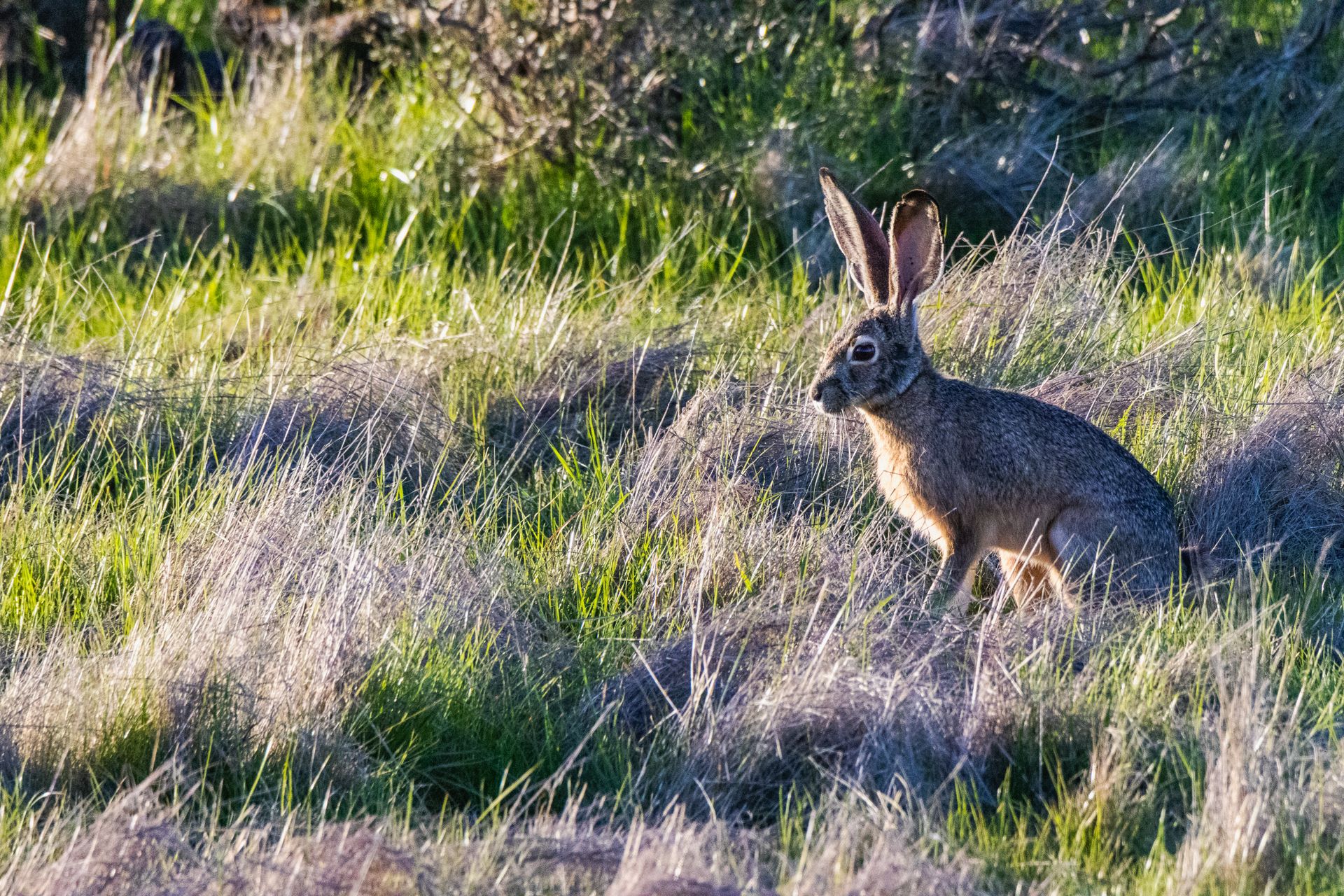
Humans have a complex relationship with white-tailed jackrabbits, viewing them as pests in agricultural settings.
Historically, jackrabbits have been hunted for their fur and food, but their wild nature makes them poor pets.
People sometimes mistake solitary jackrabbits as "abandoned" and try to rescue them, but wildlife experts advise against it unless they show obvious signs of injury or distress.
Frequently Asked Questions
Do white-tailed jackrabbits turn white?
Yes, white-tailed jackrabbits turn white in winter, but only in northern climates. In southern areas, their fur remains brown-gray year-round.
Featured Images: pexels.com