Reining horses are a special breed of horses that excel in a specific type of horse riding competition. They're known for their agility, balance, and willingness to perform precise movements.
Reining horses are typically trained to perform a pattern of circles, spins, and stops, which requires a great deal of trust and communication between horse and rider. This unique combination of athleticism and partnership makes reining horses truly special.
Their agility and balance allow them to perform complex maneuvers with ease, such as sliding stops and spins. This level of precision requires a horse with a strong work ethic and a willingness to please its rider.
Here's an interesting read: Professional Horse Rider
Origins and History
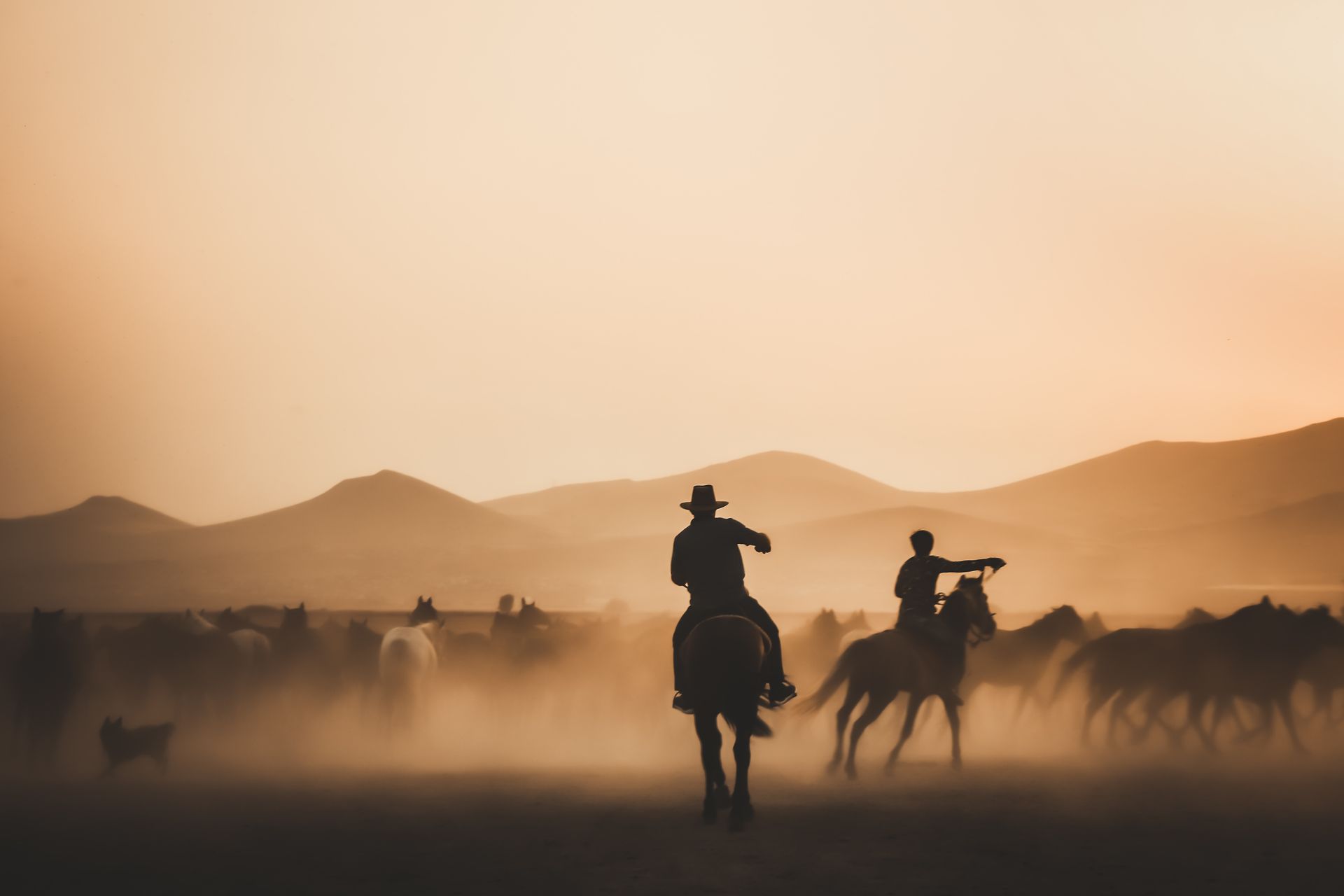
Reining horses originated in the Americas, dating back to the earliest Spanish settlers in what today is Mexico and the Southwestern United States, including Texas and California.
Ranchers needed horses that could change directions quickly, stop on a dime, and sprint after errant cows. These ideal characteristics evolved into the sport of reining, as well as related events like cutting and working cow horse.
The sport of reining was first recognized by the American Quarter Horse Association (AQHA) in 1949, and later by the United States Equestrian Federation (USEF) in its western division and within a number of its breed divisions.
Working ranch horses had to be fast, nimble, and well-trained, able to stop and quickly change directions to chase after cows. This training allowed cowboys to free up their hands for other tasks.
The sport of reining emerged from cowhands challenging each other to competitions that tested which horses could turn faster, stop harder, and slide farther.
Reining Horse Movement
Reining horses are incredibly agile and responsive to the rider's commands, with powerful hindquarters that allow them to hold position in a sliding stop or a rollback. They also require excellent coordination for proper spins and flying lead changes.
A reining horse's leg conformation is essential, as the limbs and joints are often under considerable stress in competition. This is particularly true for the Stock horse breeds, particularly the American Quarter Horse, which dominate the field.
In a reining pattern, a horse and rider perform a series of maneuvers that demonstrate the horse's athletic ability, obedience, and responsiveness to the rider's commands. The specific pattern and maneuvers required can vary depending on the level of competition and the governing organization.
A reining pattern typically consists of a series of circles, lead changes, rollbacks, and spins, which the horse must perform with precision and control. This demonstrates its athleticism and responsiveness to the rider's cues.
Here are the seven to eight maneuvers included in each pattern:
- Stops: The horse stops from a lope, bringing the hind legs under its body and sliding on its hind feet.
- Spins: Horses complete a series of 360-degree turns around an inside hind leg.
- Circles: The horse performs large, fast circles at a near gallop and small, slow circles at a controlled lope.
- Rollbacks: Horses change direction by running to a stop, rolling the shoulders 180 degrees in the opposite direction by turning over the hocks.
- Lead Changes: The horse changes the leading foreleg when changing direction at the lope without breaking gait.
- Rundown: Horses gallop along the side of the arena while maintaining at least a 6 m (20 ft) distance from the wall.
- Back: The horse backs quickly in a straight line for at least 3 meters (10 ft).
- Pause: Horses are asked to stand still and settle between pattern maneuvers.
The Horse
Reining horses are typically agile, quick, and very responsive to the rider's commands.
The Stock horse breeds, particularly the American Quarter Horse, dominate the field of reining due to their powerful hindquarters and excellent coordination.
Correct leg conformation is essential for reining horses, as their limbs and joints are often under considerable stress in competition.
Horses with excellent temperaments are crucial for performing with both speed and precision in reining.
While any horse can compete in reining, horses descended from the original breeds developed to work on ranches dominate the sport.
These horses require special consideration for managing and feeding to thrive in the athletic demands of reining.
The Horse
The horse is a crucial part of the reining sport, and its breed plays a significant role.
Horses descended from the original breeds developed to work on ranches dominate the sport, particularly the American Quarter Horse.
To be a successful reining horse, it must be agile, quick, and very responsive to the rider's commands.
Correct leg conformation is essential, as the limbs and joints are often under considerable stress in competition.
A horse's temperament is also of paramount importance, with a happy and willing-to-learn horse being ideal.
A horse's intelligence is also crucial, with a horse of average intelligence being the most desirable.
The horse must be started during its 2-year-old year in a simple snaffle bit and taught to be responsive, all-around saddle horses.
They must learn the basics of a reining foundation, including to lope quietly on a circle, gallop straight lines, halt and stand relaxed, step around in a turn and back willingly.
If this caught your attention, see: How to Get a Horse's Attention?
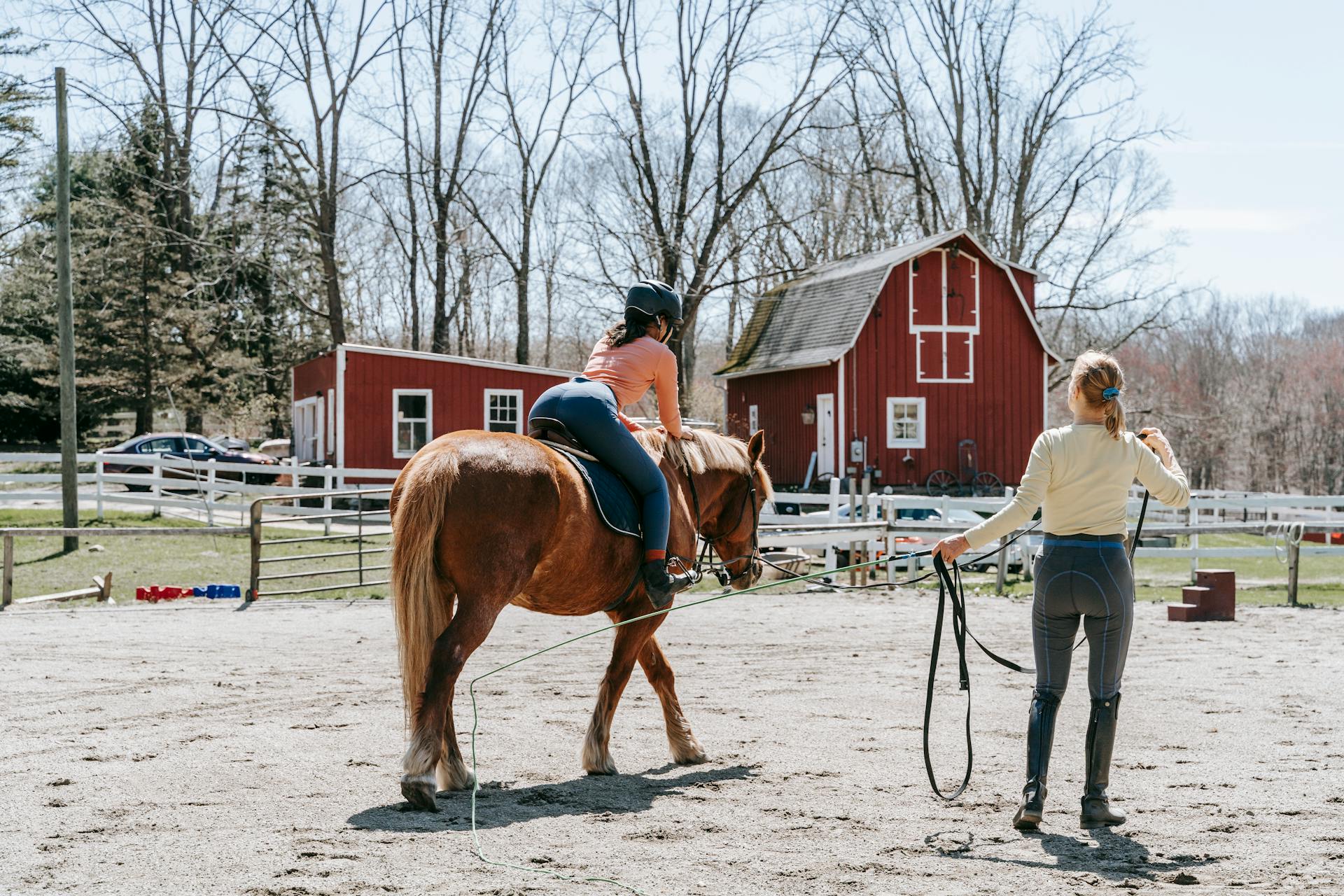
The young horse must never be rushed in its training, or smoothness will suffer later.
Reining horses need significant amounts of energy to perform the explosive maneuvers found in reining patterns.
A forage-based diet balanced to meet the horse's nutritional needs is the best way to ensure the horse maintains a healthy gastrointestinal tract.
The optimal diet for a reining horse depends on its breed, age, competition schedule, training program, and health history.
Careful conditioning, planned rest, and consistent veterinary and farrier care can help reduce the health risks reining horses face from training and competition.
For more insights, see: Horse Health
Horse Breeds
Horses used in reining are typically stock horse breeds, developed to work with cattle and other livestock.
These breeds include Western performance horses that work cattle, also known as cow horses.
Breeders specifically look for agile, intelligent horses that respond quickly to the rider's aids.
Strong work ethics, a calm temperament, and good cow sense are essential characteristics in these horses.
The American Quarter Horse Association (AQHA) offers breed-specific reining competitions.
Reining horses also require a balanced conformation and correct legs to withstand the strain of reining maneuvers.
Studies show that specialized breeding for reining has led to significant differences in performance between Quarter Horses competing in reining and other Western sports.
Take a look at this: Quarter Horse
Horse Tack
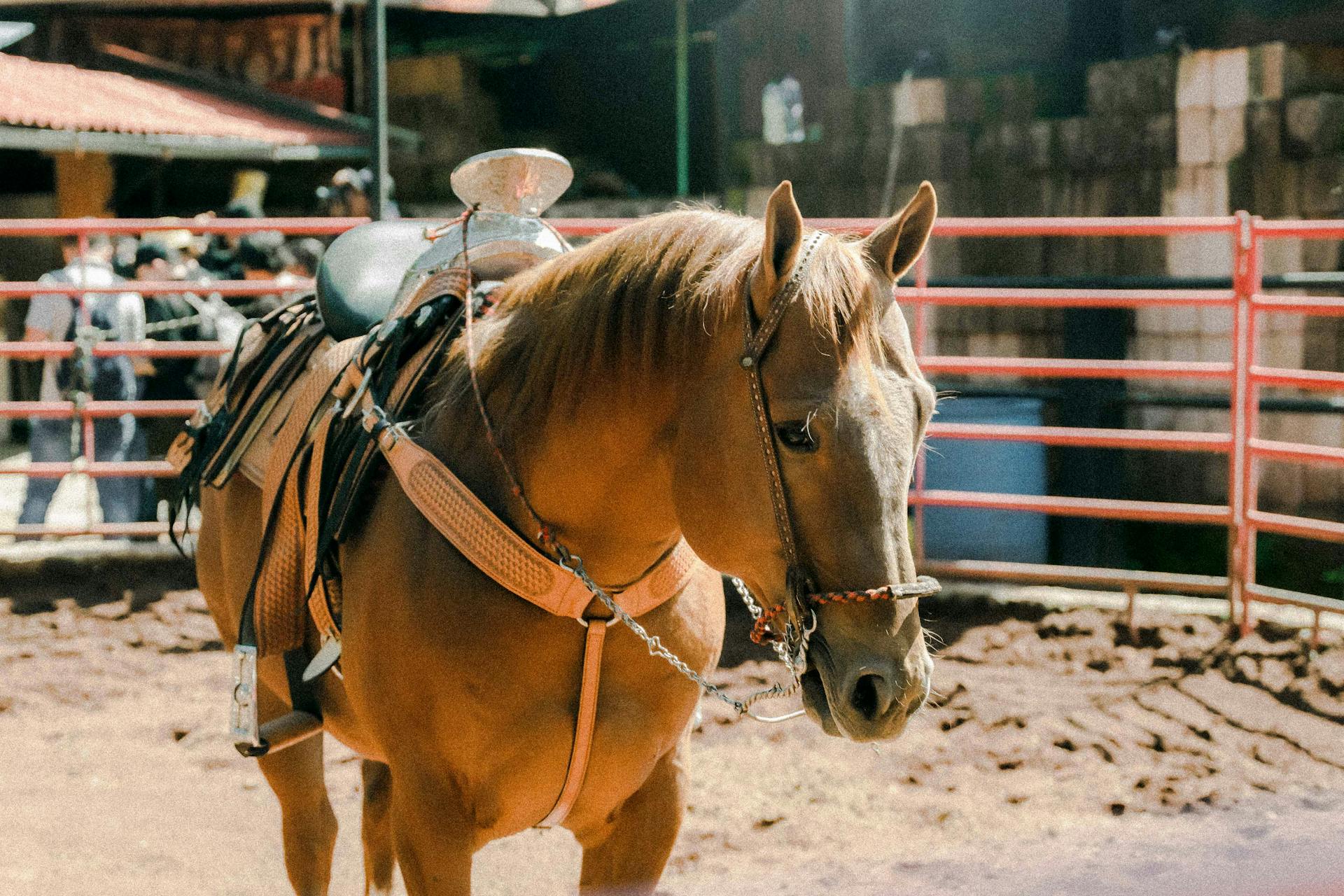
Horses must wear a Western saddle and bridle without a noseband. This is a standard requirement in reining competitions.
A bosal hackamore or snaffle bit is allowed on some young horses, but most reining competitions require curb bits. This is because curb bits provide more control and precision.
Riders must give all rein commands with only a single hand while using a curb. This is a crucial aspect of reining, as it requires the rider to be highly skilled and coordinated.
Horses typically wear splint boots, bell boots on their front legs, and skid boots on their hind legs. These boots help prevent injuries, especially when performing high-risk maneuvers.
Consider reading: Wear Riding
Reining Horse Training and Competition
Reining horse training is rooted in the foundational Western horsemanship used by cowboys to train reliable working ranch horses. This training method is still effective today.
Riders of all ages and experience can participate in reining competitions, and the National Reining Horse Association (NRHA) provides resources to help new riders find local professionals to learn from.
The training process for reining horses is systematic, aiming to gain confidence in the rider and master the skills seen in the arena.
Readers also liked: Horse Training
Training
Reining training still relies on the foundational skills used to train working ranch horses, which also improve rideability for pleasure and performance horses.
Many riders of all ages and experience can participate in reining competitions, and NRHA provides resources to help new riders find local professionals to learn from.
Riders can develop their horse's rideability and strength by training reining maneuvers and patterns, even if they don't compete.
Trainers develop reining horses systematically to gain confidence in their rider and master the skills seen in the arena.
Not every horse is suitable for reining, as it requires a horse with a happy temperament and average intelligence.
A horse's temperament is of paramount importance, and Flarida prefers to work with horses that are willing to learn and accept training.
Reining horses are started during their 2-year-old year in a simple snaffle bit and taught to be responsive and all-around saddle horses.
They learn the basics of a reining foundation, including loping quietly on a circle, galloping straight lines, halting and standing relaxed, stepping around in a turn, and backing willingly.
The NRHA futurity is a lucrative competition that most reiners aim for in their horse's 3-year-old season, with regional competitions narrowing down the field to just 35 horses for the finals.
Intriguing read: When to Blanket an Old Horse?
Competition
Competition is where it all comes together for reining horse trainers and riders. Reining competitions use patterns and maneuvers to showcase skills desired in ranch-type horses within the confines of a show arena.
Judges evaluate the quality of the ride, assigning scores to determine the winner. In reining competitions, the ride is everything – every move, every step, and every nuance is scrutinized to award the highest score.
Types of Shows
Reining can be found at various types of shows.
The National Reining Horse Association hosts affiliate shows locally and national shows each year that include a futurity and derby.
You can also find reining at many AQHA and other breed-specific shows across the nation.
The American Performance Horseman show brings together top professional riders in reining, along with other disciplines, for a high-stakes competition.
Do Horses Move in Patterns?
Reining horses move in patterns that demonstrate their athletic ability, obedience, and responsiveness to the rider's commands. These patterns can vary depending on the level of competition and governing organization.
A standard reining pattern consists of circles, lead changes, rollbacks, and spins, which require precision and control from the horse. The horse must respond quickly and accurately to the rider's cues.
In NRHA shows, the specific patterns and maneuvers required can be found in the NRHA Show Pattern booklet. This booklet outlines the different patterns for each level of competition.
Horses must perform these maneuvers with precision and control, demonstrating their athleticism and responsiveness to the rider's cues. This requires a strong partnership between the horse and rider.
Here are some specific reining patterns used in competitions:
- NRHA Show Pattern 1
- AQHA’s Reining Pattern 1
Cost and Purpose
Reining horses are a unique combination of equine athleticism and precise direction from the rider, requiring hours of work and repetition to reach a performance level.
The cost of a reining horse can vary widely, depending on factors like the horse's age, training, bloodlines, and show record.
Riders who enjoy the challenge of riding and showing a reining horse often find it a rewarding experience, despite the significant investment required.
At the lower end of the price range, a young or untrained reining horse can cost anywhere from a few thousand dollars to around $20,000.
The Purpose of Reining Horses
Riding a reining horse combines equine athleticism with precise direction from the rider.
Horses and riders invest hours of work and repetition in reaching a performance level in which they can enter competitions against others of similar competition levels.
Many riders enjoy the challenge of riding and showing a reining horse.
This combination of athleticism and precision requires a lot of hard work and dedication from both the horse and the rider.
Horse Costs
Owning a reining horse can be a significant investment, with costs ranging from a few thousand dollars to several hundred thousand dollars or more, depending on the horse's age, training, bloodlines, and show record.
A young or untrained reining horse can cost anywhere from a few thousand dollars to around $20,000, making it a more affordable option for some owners.
Horses with more training and experience can cost anywhere from $20,000 to $50,000 or more, requiring a larger budget for owners who want a more skilled horse.
Top-level show horses with a proven record of success can be very expensive, with prices ranging from $50,000 to several hundred thousand dollars or more, making them a significant investment for serious competitors.
It's essential to consider all the additional expenses that come with owning a reining horse, including boarding, training, veterinary care, transportation, and entry fees for competitions, which can add up quickly.
See what others are reading: Horse Show
Featured Images: pexels.com