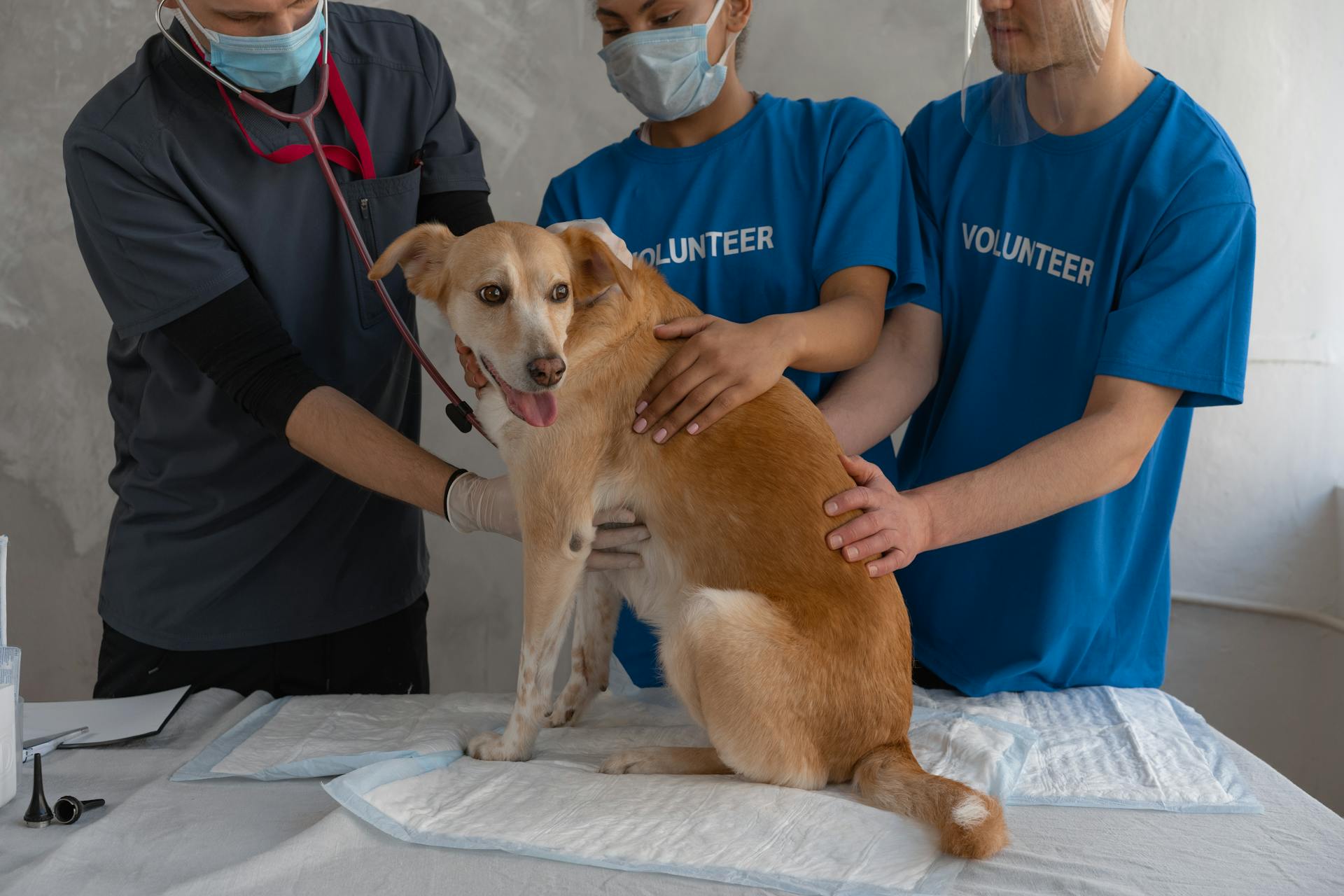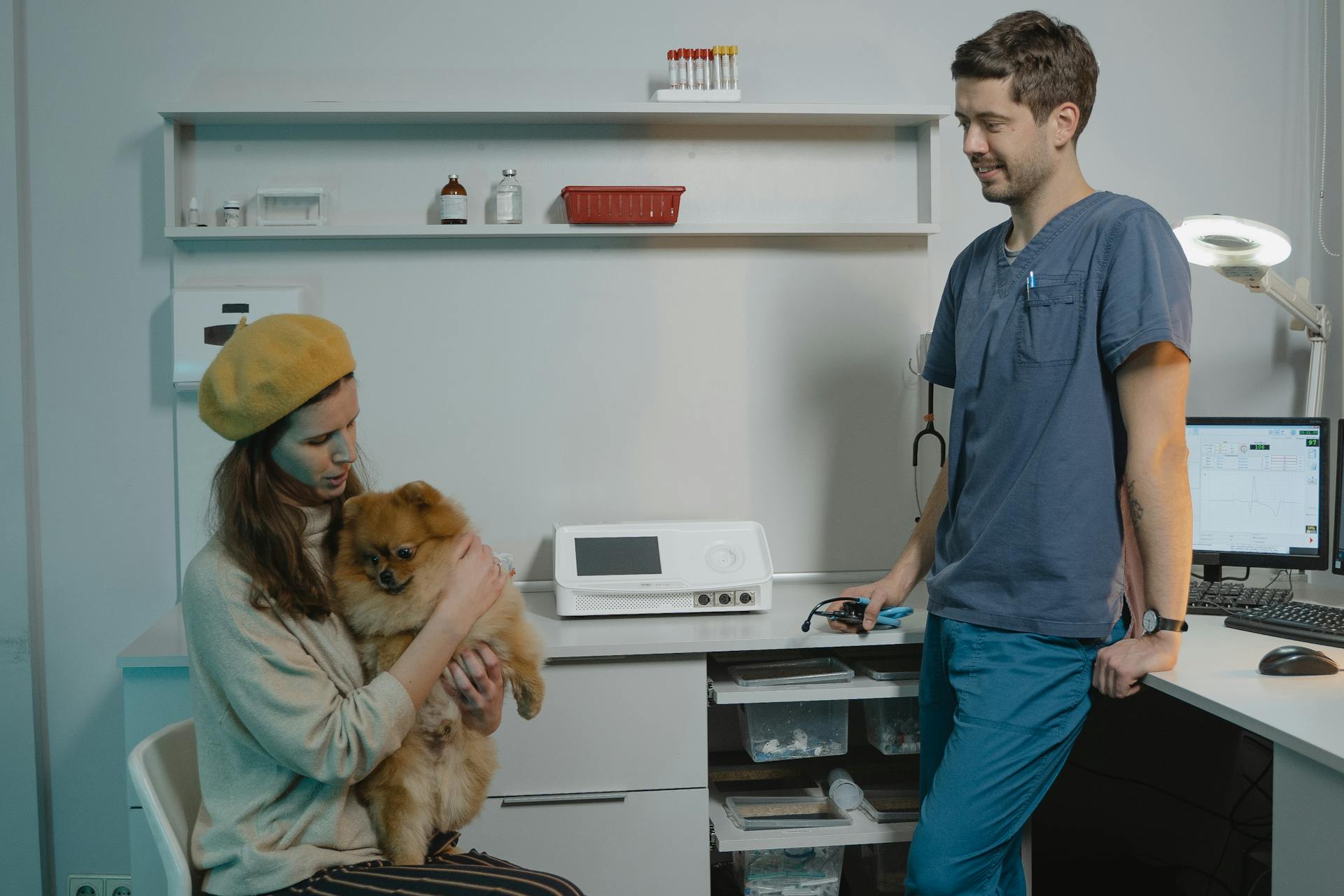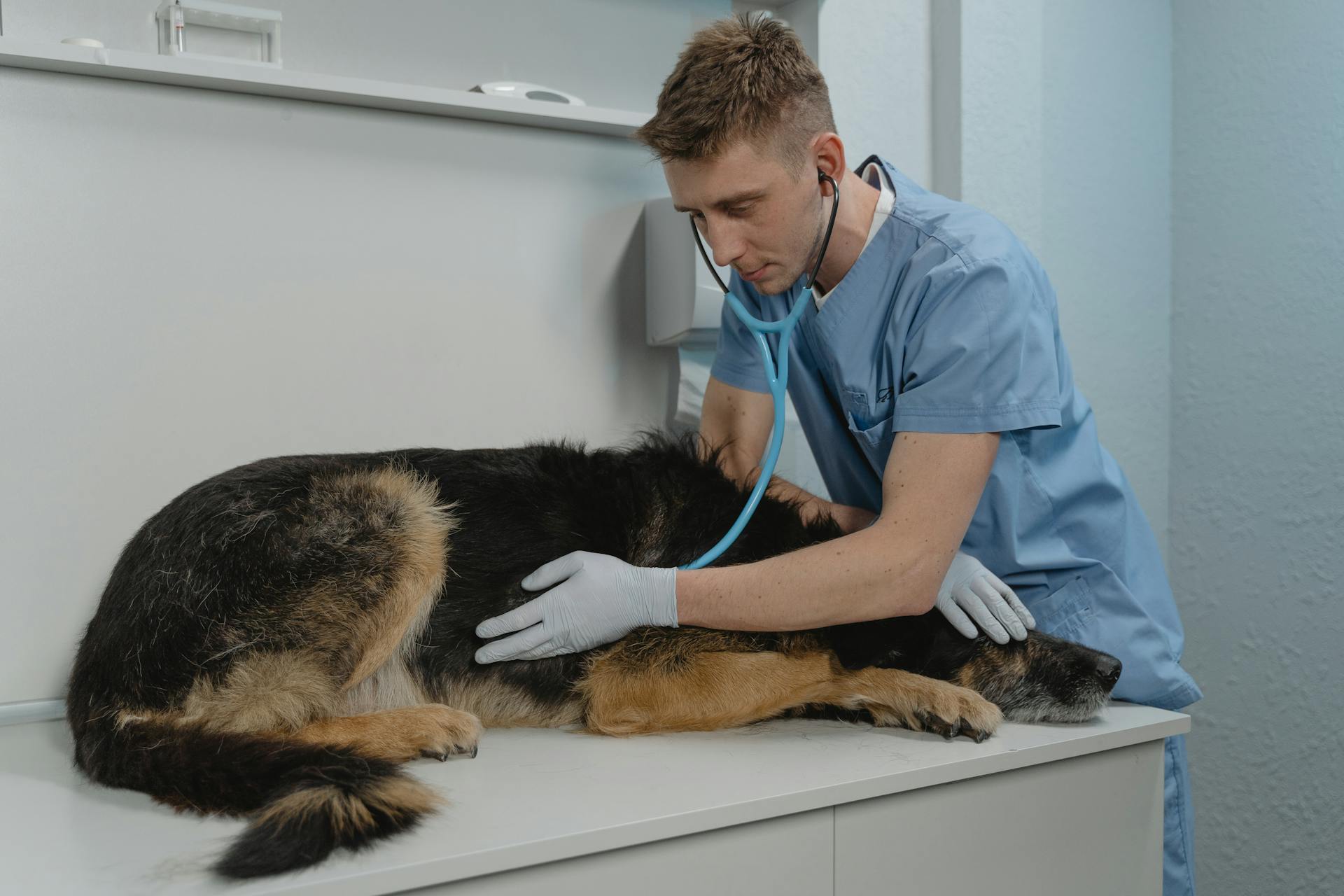
If you're a veterinary technician looking to give back, there are plenty of opportunities to volunteer abroad and at home. Many organizations offer programs that allow you to work with animals in need, from disaster relief to conservation efforts.
You can volunteer with organizations like the Humane Society, which has programs in the US and abroad that help animals affected by natural disasters. For example, they have a program in Puerto Rico that helps care for animals affected by hurricanes.
Volunteering at home can be just as rewarding, and you can find opportunities through local animal shelters and rescue groups. Some organizations, like the Best Friends Animal Society, have programs that allow you to volunteer with animals in need in your own community.
In addition to these organizations, you can also look for opportunities through your state veterinary medical association or local veterinary clinics.
You might enjoy: Animal Shelter Helper
Opportunities
If you're looking for a unique way to give back to the animal community, there are plenty of veterinary technician volunteer opportunities to explore.
Some organizations, like Animal Experience International, offer a range of programs in 13 countries, allowing you to gain practical experience while helping animals around the world.
You can choose from wildlife rehabilitation in Australia, dog rescue in Nepal, or even shark rescue in South Africa.
Animal Experience International Experiences include:
- Wildlife rehabilitation in Australia
- Dog rescue in Nepal
- Sea turtle conservation in Costa Rica
- Shark rescue in South Africa
- Wild horse conservation in Mongolia
If you're looking for something a bit closer to home, you might consider volunteering with the OSPCA. They have High-Quality, High-Volume spay/neuter clinics (MASH events) that provide a unique chance to work alongside other veterinary professionals and gain valuable hands-on experience.
The OSPCA is also looking for fosters for animals who need a bit more medical care than a typical foster home can offer.
In addition to these opportunities, there are also many local organizations, such as the Toronto Cat Rescue (TCR), that rely on foster homes to care for at-risk cats. If you're interested in volunteering with TCR, they provide all the necessary training online.
If you're looking for a more exotic volunteer experience, you might consider the Nevis Animal Speak Volunteer Holidays, which combine your passion for animals with a Caribbean vacation.
Curious to learn more? Check out: Penn Foster Veterinary Technician
Roles and Responsibilities
As a veterinary technician volunteer, you'll have the opportunity to work in various roles, each with its own set of responsibilities. You'll be expected to work as a team and share in all duties, including clean up, packing, paperwork, instrument prep, and occasionally cooking.
Be prepared to get your hands dirty, as you'll be lifting boxes, scrubbing, and sweeping. If you're not comfortable with manual labor, this might not be the program for you. The clinic operates on a team effort, and everyone pitches in to get the job done.
Here are the different types of volunteer roles you can expect to find:
Oavt Seeking Committee Members
The OAVT is looking for committee member volunteers to sit on their committees. This is a great opportunity to contribute to the OAVT and the profession through regulatory activities.
Volunteering with the OAVT can deliver a wealth of benefits, including building self-esteem and confidence, learning and developing new skills and interests, and making a real difference in your community and profession.
To participate in a committee, you'll engage in tasks such as regulatory work, which is a great introduction to how the OAVT operates. This is a great way to develop a skill set and network that will benefit you throughout your career.
To express your interest, please fill out the form by March 5, 2025. You can also check out the video below for additional information about committee volunteerism.
Some of the benefits of volunteering with the OAVT include:
- Building self-esteem and confidence
- Learning and developing new skills and interests
- Enhancing and expanding your work experience
- Meeting and networking with other professionals in the industry and members of the public
- Making a real difference in your community and profession!
Roles
As a volunteer, you'll be expected to work as part of a team and share in all duties, including clean up, packing, paperwork, instrument prep, and occasionally cooking. Be prepared to pitch in and get your hands dirty, as lifting boxes, scrubbing, and sweeping are all part of the job.
If you're not comfortable with getting your hands dirty, this might not be the program for you. The clinic operations require a lot of hands-on work, and everyone is expected to contribute.
Volunteer roles are assigned based on prior experience, volunteer interests, clinic operations, and team need. This means that your role will be tailored to your skills and interests.
The clinic has different types of volunteers, including veterinarians, credentialed veterinary technicians and assistants, students, and support volunteers. Each type of volunteer has specific responsibilities and roles.
Here are the different types of volunteers and their roles:
Continuing Education
As a veterinary technician, staying up-to-date with the latest knowledge and skills is crucial for providing top-notch care to animals. You can earn RACE approved continuing education credit by participating in RAVS field clinics, which offer 10-30 hours of credit depending on the clinic length and type.
To be eligible, you'll need to complete the pre-clinic training assessment and participate in all clinic orientations and rounds. This ensures you're well-prepared for the hands-on experience and can make the most of your time.
You can earn CE credit for one clinic per year, so be sure to take advantage of this opportunity to enhance your skills and knowledge.
Here's an interesting read: Veterinary Technician Skills
Why join VWB?
Joining VWB is a great way to support local organizations and make a positive difference in vulnerable communities. Volunteers work with partner organizations to achieve this goal.
You'll have the opportunity to contribute to meaningful initiatives and gain personal benefits by sharing your skills in complex and interesting contexts. This can be a great way to give and grow as a person.
Volunteering with VWB can be a life-changing experience that leaves you inspired and refreshed. Many volunteers return to their lives and jobs with a renewed sense of passion for animal welfare and international cooperation.
You'll have the chance to expand your mind by experiencing new countries and cultures. This firsthand learning experience will show you the interconnected world we share.
International Opportunities
If you're looking for international veterinary technician volunteer opportunities, you've come to the right place. There are many organizations that offer safe and ethical volunteering experiences abroad.
One organization is Veterinarians Without Borders, which has a wide range of volunteer placements available, including veterinary clinics in Canada's Northwest Territories and Nunavut. You can express your interest in joining their team on a temporary clinic by taking their survey.
Veterinarians Without Borders has a diverse team of volunteers, including veterinarians, veterinary technologists, and other professionals. Their volunteer placements can range from three weeks to two years, depending on the position.
You can also consider Animal Experience International (AEI), which offers 18 programs in 13 countries, including wildlife rehabilitation in Australia and dog rescue in Nepal. AEI Experiences are specifically tailored to your needs as an RVT and require no lengthy application process.
Here are some examples of AEI Experiences:
- Wildlife rehabilitation in Australia
- Dog rescue in Nepal
- Sea turtle conservation in Costa Rica
- Shark rescue in South Africa
- Wild horse conservation in Mongolia
AEI is a great option if you want to gain practical experience, launch an exciting career, or just feel great that you're able to help animals around the world. You don't have to be a veterinary professional to travel with them – you can volunteer with a friend, family member, or partner.
Requirements
To become a veterinary technician volunteer, you'll need to meet some basic requirements. First and foremost, you must be at least 16 years old.
You'll also need to complete the volunteer liability release form, which is a standard procedure for most volunteer programs.
To ensure a smooth and efficient experience for everyone, you'll need to schedule each shift in advance and communicate your availability with the Volunteer Coordinator.
You'll be working in a fast-paced environment, so being comfortable with animal-related issues is a must.
To effectively communicate with staff, the public, and other volunteers, you'll need to have strong interpersonal skills.
Here are the key requirements to keep in mind:
- Complete the volunteer liability release form
- Call and schedule a tour of our clinic
- Be at least 16 years of age
- Must schedule each shift and communicate hours needed with Volunteer Coordinator
- Must be comfortable with working around animal-related issues in a fast-paced work environment
- Ability to communicate and work well with staff, the public, and other volunteers
Specific Organizations
If you're looking for a specific organization to volunteer with, here are a few options to consider.
The Ontario SPCA and Humane Society has a volunteer program for RVTs and vets to join their MASH Spay/Neuter Clinics. They travel to underserved communities across Ontario to provide spay/neuter and basic veterinary services.
Story Book Farm Primate Sanctuary in Sunderland Ontario is looking for dedicated and passionate volunteers to join their team. Duties include helping with regular health checks, in-house fecal exams, primate training, and cleaning enclosures.
The OAVT is looking for volunteers to sit on their committees, which can deliver a wealth of benefits including building self-esteem and confidence, learning new skills, and making a real difference in your community and profession.
Here are some specific organizations that are currently looking for RVT volunteers:
Keep in mind that some organizations may require previous volunteer experience, so be sure to check their requirements before applying.
Frequently Asked Questions
What can vet techs do without a vet?
Vet techs can apply their skills in various roles beyond veterinary offices, such as animal welfare organizations, conservation efforts, and education. Explore the many career paths available to vet techs outside of traditional veterinary settings.
How to get animal experience for vet school?
Gain diverse animal experience by working with large animals, volunteering for wildlife rehab, or participating in animal lab settings
Featured Images: pexels.com