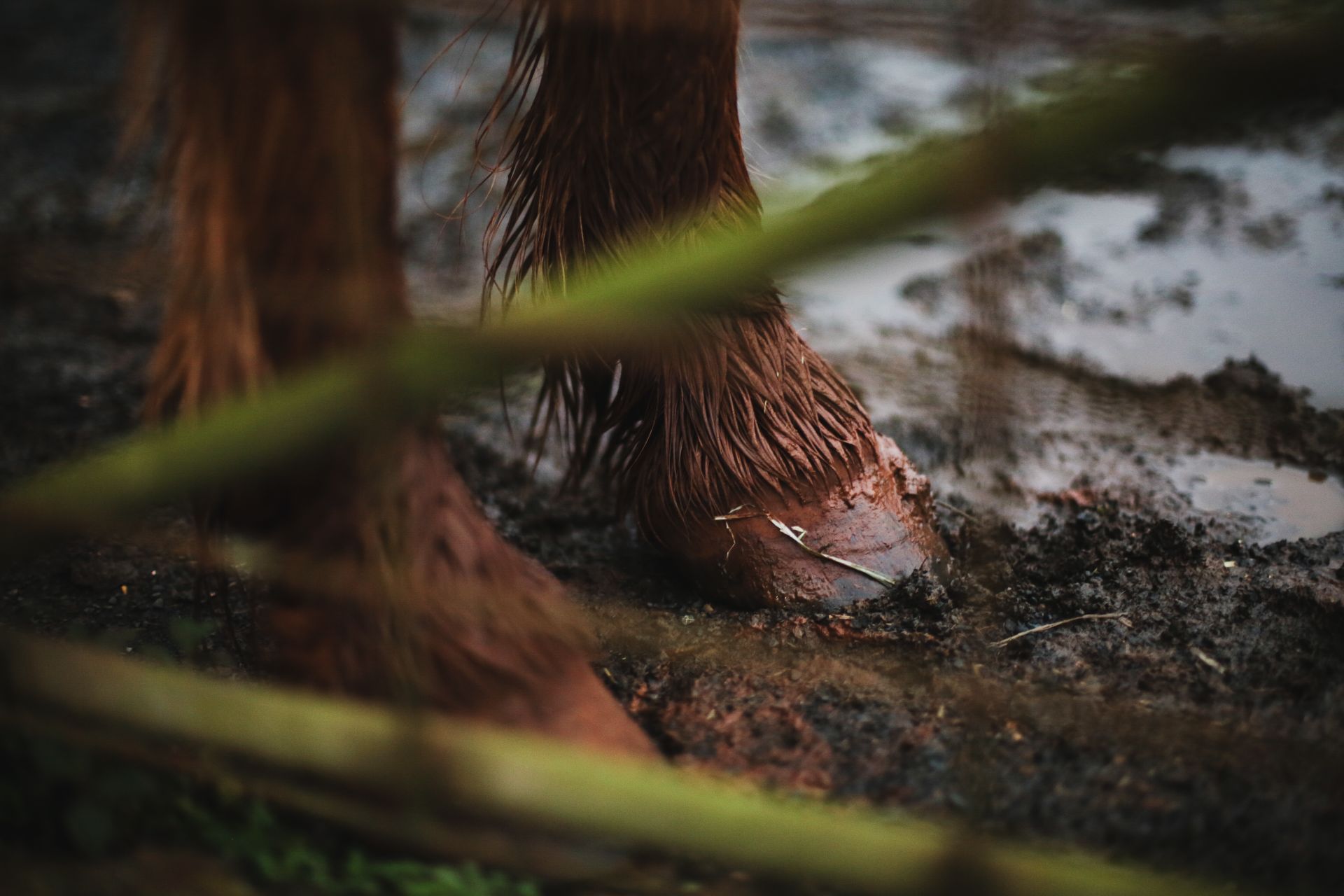
Thrush is a common hoof infection in horses that can be painful and debilitating. It's caused by a combination of bacteria, fungi, and other microorganisms that thrive in a moist, dirty environment.
The infection starts in the frog, the V-shaped structure in the center of the hoof, and can spread to the surrounding tissues. This can lead to a foul odor and a rough, cracked appearance.
Horses with thrush often exhibit a strong aversion to having their hooves picked up or touched, and may show signs of pain when walking or bearing weight.
Regular cleaning and disinfecting of the hooves can help prevent thrush, especially in horses that are prone to it or live in dirty conditions.
Causes and Prevention
Thrush in horses is a common problem that can be caused by a variety of factors.
Proper care and maintenance of a horse's hooves is crucial in preventing thrush. Regular exercise, for example, can help keep a horse's hooves clean and healthy by allowing them to self-clean and dry out.
For more insights, see: Horse Equine Artists
Horses that spend most of their time in a stall are more prone to thrush due to the accumulation of dirt, debris, and excess moisture. Daily cleaning of the hooves and stall can help minimize the risk of thrush.
Abnormal hoof shape, such as deep and narrow sulci, can also contribute to thrush. This type of hoof shape traps dirt and moisture, creating an ideal environment for thrush-causing bacteria to thrive.
A horse's diet can also play a role in the development of thrush. A poor diet can lead to a weakened immune system, making a horse more susceptible to thrush.
Here are some common causes of thrush in horses:
- Abnormal hoof shape
- Chronic lameness and/or poor circulation in the foot
- Improper trimming or hoof care
- Insufficient exercise or too much stall time
- Poor diet
By understanding the causes of thrush and taking proactive steps to prevent it, horse owners can help keep their horses healthy and thriving.
Understanding Thrush
Thrush is a relatively common bacterial infection of the horse's hoof, which can affect one hoof or all four at once. It typically affects the center and grooves of the frog, a triangular structure on the underside of the hoof.
Several bacterial and/or fungal microorganisms can cause thrush, but the bacterium Fusobacterium necrophorum is most frequently involved.
Thrush infection can cause minor to significant damage to hoof tissues and requires treatment to prevent it from spreading.
What Is
Thrush is a fungal infection that affects the mouth and other parts of the body. It's caused by an overgrowth of yeast on the skin or mucous membranes.
Candida is a type of fungus that's normally present in small amounts on the skin and in the mouth. However, it can multiply quickly in certain conditions.
The symptoms of thrush can vary depending on the location and severity of the infection. They can include white patches on the tongue, mouth, or throat, as well as redness and soreness.
Thrush can be contagious, especially if you have a weakened immune system or are taking antibiotics.
What Is in?
Thrush is a relatively common bacterial infection that affects a horse's hooves.
It can occur in one hoof or all four at once, and typically affects the center and grooves of the frog, a triangular structure on the underside of the hoof.
The bacterium Fusobacterium necrophorum is most frequently involved in causing thrush.
A foul-smelling black discharge is a common symptom of thrush, emanating from infected hooves.
Horses with thrush may exhibit tenderness when pressure is applied to their affected hooves.
Damp and dirty environmental conditions promote thrush infections, creating an environment where bacterial and fungal organisms can thrive.
Diagnosis and Detection
The characteristic odor and appearance of the frog are usually adequate to diagnose thrush in horses.
If you suspect your horse has thrush, consult with your veterinarian to confirm a diagnosis of the condition.
A physical examination of the hoof is necessary to determine if the infection is present in the frog.
Your veterinarian will check for signs of infection such as discharge, odor, and necrotic tissue.
They will also check for lameness and assess your horse’s response when pressure is applied to the frog to determine if the hoof is painful.
Canker is a condition that can be differentiated from thrush by its degenerative nature, confinement to the frog, and adjacent sulci, and is more commonly associated with lameness than thrush is.
For your interest: Equine Veterinarian Schools
Managing Thrush
Removing necrotic tissue is crucial in treating thrush. This process, called debridement, involves cutting away the infection so it stops growing. Experienced owners can sometimes handle this themselves by carefully trimming off black areas of the hoof.
However, if the infection has buried deep into the hoof or involves sensitive tissue, a veterinarian or other trained specialist should be consulted.
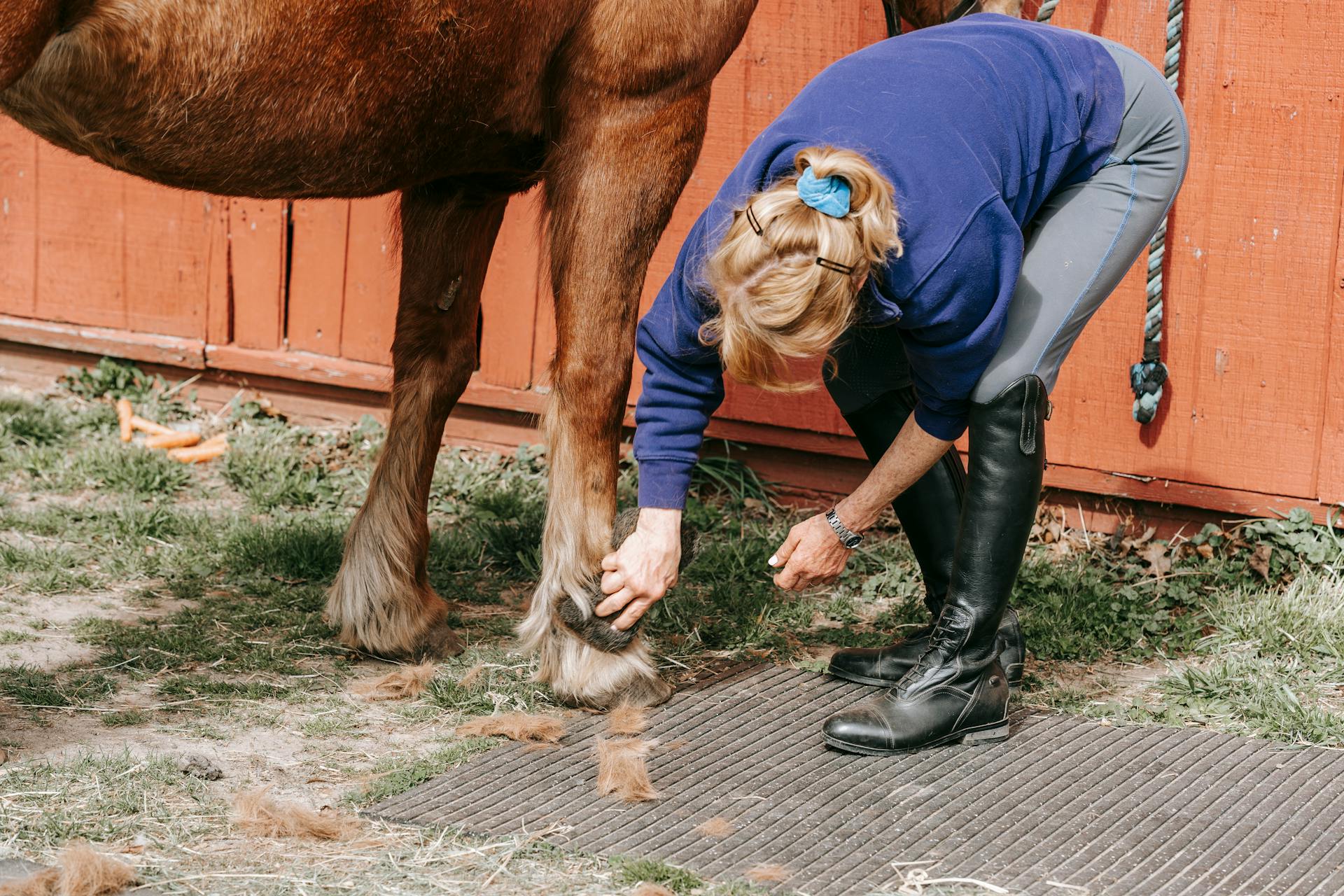
Daily cleaning and soaking are necessary to help treat the infection. Affected hooves should be cleaned daily using a hoof pick to gently remove debris and dead tissue from them.
A soft brush and cotton swabs soaked in diluted iodine or other antiseptic solution are ideal for cleansing the hooves after debris and dead tissue have been removed. Soaking the hooves for 20 to 30 minutes each day in a solution recommended by your veterinarian or farrier may aid in clearing the infection.
After cleansing/soaking the hooves, they should be thoroughly dried using clean swabs.
A fresh viewpoint: Equine Veterinarian
Hoof Care and Maintenance
Regular hoof care and maintenance are crucial in preventing thrush in horses. Debridement of abnormal horn of the frog is necessary to allow access to the deeper diseased tissue for topical treatment.
Treating thrush requires the removal of dead tissue from the hoof by a farrier or veterinarian. Sedation and or local anesthetic may be necessary to complete this process.
Daily cleaning is essential in treating thrush. Affected hooves should be cleaned daily using a hoof pick to gently remove debris and dead tissue from them. A soft brush and or cotton swabs soaked in diluted iodine or other antiseptic solution are ideal to use for cleansing the hooves after debris and dead tissue have been removed.
Avoid using acidic solutions to cleanse the hooves as they can destroy healthy tissue. Soaking the hooves for 20 to 30 minutes each day in a solution recommended by your veterinarian or farrier may aid in clearing the infection.
After cleansing/soaking the hooves, they should be thoroughly dried using clean swabs. Using a hoof boot can aid in keeping the hooves clean while the inner tissues heal.
Hoof care products such as Keratex or Thrush Buster may be used to help protect the hoof from pathogens. These products can form a barrier that helps to prevent the penetration of dirt and manure into the frog.
Additional reading: Equine Veterinarian Education Requirements
Here are some tips for maintaining healthy hooves:
Checking the structural integrity and overall health of your horse's hooves each time you clean them is essential. This includes checking for signs of abscesses and white line disease which are also caused by infectious agents entering the hoof tissues.
Prevalence and Conformation
Hoof disorders are a common issue in horses, with 85% of horses observed having at least one form of hoof disorder when examined during regular hoof trimming. This is a significant problem that affects many horses.
Thrush is one specific hoof disorder that affects all breeds and ages of horses. In fact, a study conducted in the Netherlands found that 45% of 942 randomly selected horses had thrush.
Horses with a long heel conformation may be more prone to thrush, especially in damp and unclean environmental conditions. This is because their hooves have deep, narrow frog sulci that trap moisture and bacteria-laden debris.
Here are some common hoof conformation issues that can increase the risk of thrush:
- Long heel conformation
- Recessed frog
- Contracted heels
These conformation issues can lead to a buildup of dirt and moisture in the hooves, creating an ideal environment for thrush to develop.
Prevalence
Hoof disorders are a common issue in horses, with one study finding that 85% of horses observed had at least one form of hoof disorder.
The exact number of horses affected by thrush is unknown, but it's clear that it's a widespread problem.
Thrush affects all breeds and ages of horses, making it a universal concern for horse owners.
In one study, 45% of randomly selected horses were found to have thrush.
Hoof Conformation
Hoof conformation plays a significant role in a horse's susceptibility to thrush infection. Horses with a long heel conformation are at an increased risk for thrush infection when exposed to damp and unclean environmental conditions.
A long heel conformation can result in deep, narrow frog sulci, which trap moisture and bacteria-laden debris in the hooves. This creates an ideal environment for infection to develop.
Horses with contracted heels usually have underlying pain in the back of the foot, such as navicular syndrome. They tend to land toe first rather than heel first, reducing the self-cleaning ability of the foot.
Expand your knowledge: Equine Conformation Chart
A horse's hoof shape can either help or hinder its ability to self-clean. Deep, narrow grooves (sulci) on either side of the frog can trap dirt and moisture, making it harder for the hoof to dry out and clean itself.
A healthy hoof shape, on the other hand, allows for good airflow and helps to prevent the buildup of bacteria and moisture.
Trotting Toward Health
Thrush is a common equine hoof infection caused by the bacteria Fusobacterium necrophorum, which can penetrate the hoof and cause damage.
The bacteria can be found in the environment, and horses can become infected through contaminated soil, water, or manure.
Hoof thrush can be prevented by keeping your horse's hooves clean and dry, and by providing a healthy diet and regular hoof care.
Regular trimming and shoeing can also help prevent thrush by removing any dead or damaged tissue.
If your horse does develop thrush, it's essential to treat the infection promptly to prevent it from spreading.
If this caught your attention, see: Horse Hoof Care Products
Vetericyn's Horse Mobility line can help with this, and their Hoof Care spray can penetrate the hoof to draw out exudates faster than other treatments.
For more severe cases, Hoof Soak can be used to purge hoof-eating microbes.
Here are some common signs of thrush, which can help you identify the infection early:
- Discharge or odor from the hoof
- Redness or inflammation around the hoof
- Cracks or fissures in the hoof wall
Frequently Asked Questions
Does apple cider vinegar cure thrush in horses?
Apple cider vinegar may help alleviate mild cases of thrush in horses by creating an environment hostile to bacteria and fungi. However, severe cases require veterinary assessment for proper treatment.
What is the prognosis for thrush in horses?
The prognosis for thrush in horses is generally good with proper treatment and management. However, recurrence is more likely in horses with certain hoof conformations.
Featured Images: pexels.com