An equine conformation chart is a visual representation of a horse's physical characteristics, evaluating its structure and movement from various angles. This chart is a crucial tool for horse buyers and breeders to assess a horse's potential for athletic performance, soundness, and overall quality.
A well-structured conformation chart can help identify desirable traits such as a strong topline, well-defined joints, and balanced proportions. These characteristics are essential for a horse's overall health and performance.
The chart typically includes measurements of the horse's body parts, such as the length of the back, the depth of the chest, and the length of the legs. These measurements help breeders and buyers evaluate the horse's potential for athletic ability and soundness.
A horse's conformation can greatly impact its performance and longevity, making it essential for buyers and breeders to carefully evaluate a horse's physical characteristics before making a purchase or breeding decision.
Here's an interesting read: Dog Grooming Blade Lengths
Head and Neck
The head and neck of a horse is a vital part of its overall conformation. A well-proportioned head and neck can make a big difference in a horse's comfort, movement, and overall well-being.
A horse's head should be proportionate to its body, with a straight or slightly concave profile. A horse with a head that's too small or too large for its body can lead to breathing difficulties and other issues.
A good rule of thumb is to look at the horse's head in profile, and imagine a line from the poll (the highest point of the horse's head) to the point of the chin. This line should be straight or slightly concave, with no sharp angles or kinks.
Neck Length and Position
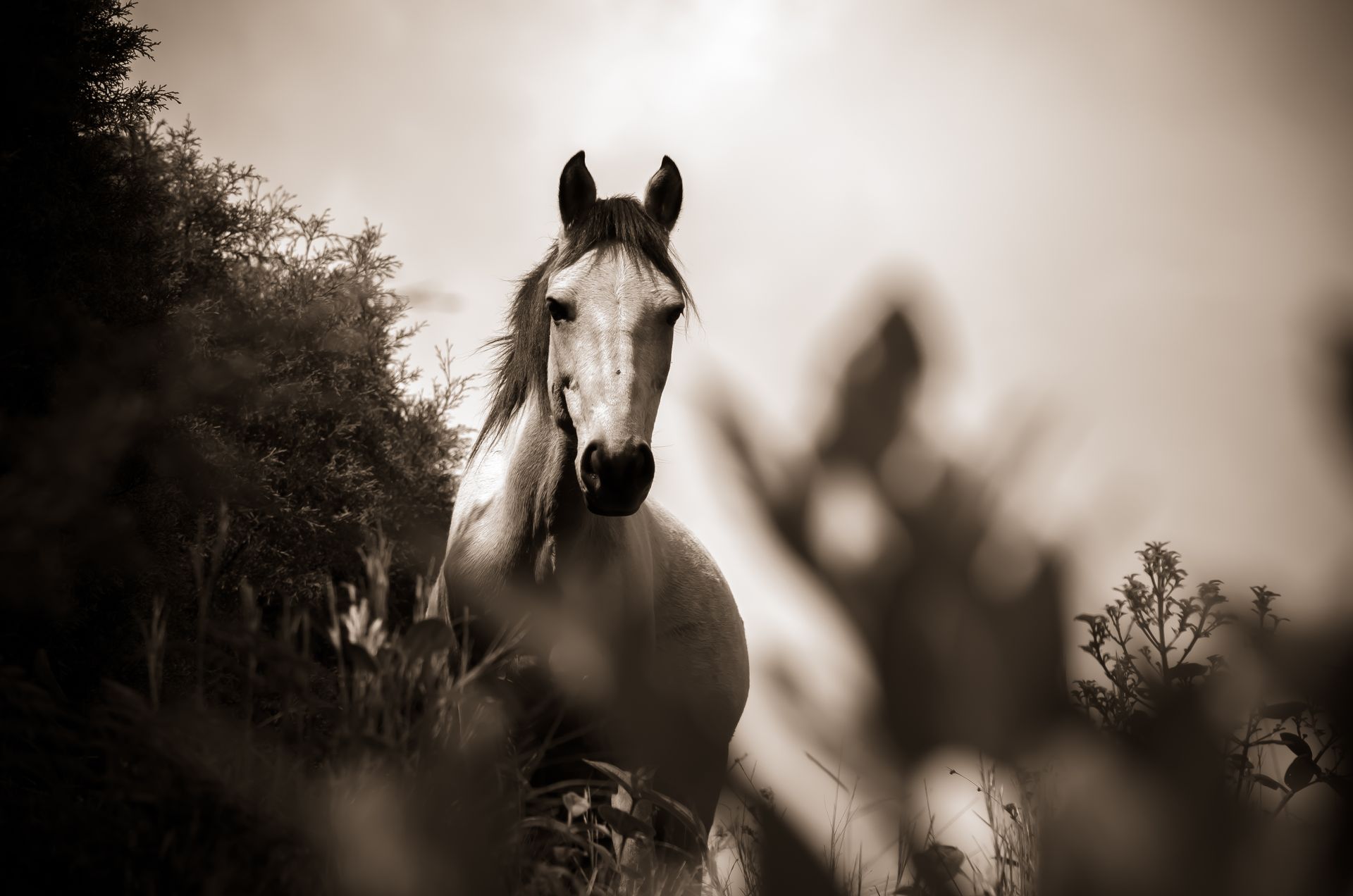
A horse's neck length and position play a crucial role in its overall balance and movement. Ideally, a horse's neck should be about one third of its length, measured from poll to withers, with a length comparable to the length of its legs.
A horse with a neck of ideal length is easier to supple, develop strength, and control with hand and leg aids. This is why you often see horses with horizontal necks, such as Thoroughbreds, American Quarter Horses, and some Warmbloods, exceling in various sports.
A short neck, on the other hand, is less than one third the length of the horse and is common in many breeds. This type of neck hinders a horse's balancing ability, making it more prone to stumbling and clumsiness.
There are three main types of neck lengths: ideal, short, and long. Here's a quick rundown of each:
A long neck may hinder a horse's balancing ability and cause it to fatigue more quickly due to the greater weight on its front end. This is why long-necked horses are often used for jumping, speed sports without quick changes of direction, or straight line riding.
Jaw Size
A well-defined jaw is essential for a horse's overall head and neck appearance. The lower jaw should be clearly defined, with a wide space between the two sides of the jawbone that allows for the larynx and muscle attachments.
The ideal width of the jaw is about 7.2 cm, roughly the width of a fist. This measurement is crucial in determining the overall balance and proportion of the horse's head.
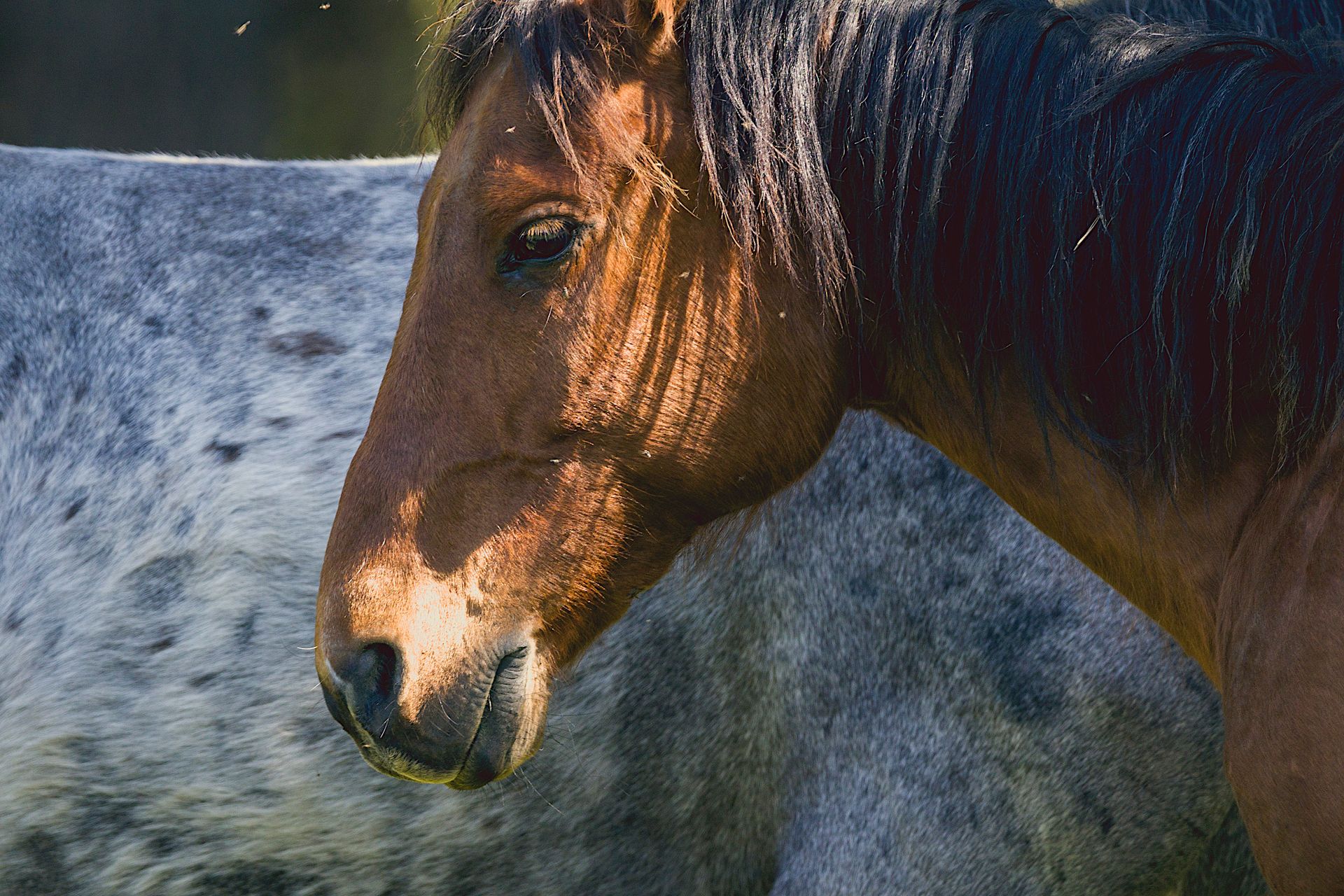
A narrow jaw, on the other hand, is defined as a width of less than 7.2 cm. This can affect the horse's ability to flex at the poll.
A large jaw, measuring greater than 7.2 cm, can give the horse's head a false appearance of being short and add weight to the head. This can also reduce the horse's ability to flex at the poll, making it harder to achieve proper collection and balance.
Here's a summary of jaw sizes:
- Narrow jaw: less than 7.2 cm
- Large jaw: greater than 7.2 cm
- Ideal jaw width: about 7.2 cm (width of a fist)
Ears
Ears should be proportional to the head. They should be set just below the level of the poll at the top of the head. Ears should be a position where they can be rotated forward and backward.
Ears that are too large or too small can make the head seem too small or large in proportion with the body.
To ensure proper ear placement, consider the following guidelines:
- Ears should be proportional to the head.
- Ears should be set just below the level of the poll at the top of the head.
- Ears should be a position where they can be rotated forward and backward.
Body and Loin
The body and loin of a horse are crucial areas to evaluate in an equine conformation chart. A well-balanced body and loin area can greatly impact a horse's athletic ability and overall performance.
A horse's body length should be around 60-70% of its height, measured from the point of the shoulder to the point of the buttock. This ratio is essential for a horse's overall balance and movement.
A horse's loin should be well-muscled and relatively short, measuring about 1/4 to 1/3 of the horse's body length. This helps to create a compact, athletic appearance.
A horse with a long, thin loin may be prone to back problems and lack overall power. On the other hand, a horse with a short, muscular loin can excel in high-level athletic pursuits.
A well-balanced body and loin area can also greatly impact a horse's ability to carry a rider and perform complex movements.
Legs and Hooves
Legs and Hooves are crucial for a horse's overall health and performance. A well-proportioned horse leg conformation is essential for shock absorption and movement.
Good horse leg conformation means straight, correctly aligned limbs when viewed from the front, side, and rear. They should have well-defined joints with no swelling or abnormalities and short cannon bones with longer forearms, as this provides strength.
A straight line should run from the point of the buttock down through the hock, fetlock, and hoof when viewed from the side. Hocks should be well aligned with the leg and in line with the stifles and cannon bones when viewed from behind.
Here are some common leg conformation faults to look out for:
- Post-legged: The hock has too little angle, making the leg stiff and upright.
- Long pasterns: More than 3/4 length of the cannon, which can diffuse impact but predispose the horse to bowed tendons or suspensory ligament injuries.
- Short pasterns: Less than 1/2 length of the cannon, which can lead to a jarring ride and amplified stress on the lower leg.
These conformation faults can affect a horse's performance and overall health. It's essential to be aware of these potential issues when evaluating a horse's legs and hooves.
Legs
Legs are a crucial part of a horse's overall conformation, and it's essential to evaluate them carefully to ensure the horse's comfort and performance.
Good horse leg conformation means straight, correctly aligned limbs when viewed from the front, side, and rear. They should have well-defined joints with no swelling or abnormalities and short cannon bones with longer forearms, as this provides strength.
A straight line should run from the point of the buttock down through the hock, fetlock, and hoof when viewed from the side, and the hocks should be in line with the stifles and cannon bones, without turning in or out.
Post-legged horses have a common conformation fault where the hock has too little angle, making the leg stiff and upright, which can reduce shock absorption and result in stiff movement.
Here are some key characteristics of good and bad leg conformation:
The angle of the pasterns is also crucial, and it's best at a moderate slope (between 50 and 55 degrees) and moderate length.
Ground and Environment
When evaluating a horse's conformation, it's essential to choose a neutral environment that allows you to focus on the horse's build without distractions.
Ensure the horse is standing on perfectly flat ground to eliminate any influence from uneven terrain. This makes it easier to evaluate if the horse is even from wither to croup.
Good lighting conditions are also crucial. Ensure your horse is standing in good light with minimal shadows. Lighting conditions can hide or emphasize flaws, potentially misleading your perception of the horse's conformation.
Avoid taking photos of your horse in environments with distracting backgrounds. When submitting a conformation photo, ensure the background environment is not too distracting. Minimize any background elements so the judge may focus solely on your horse's physical attributes.
To make the evaluation process smoother, follow these guidelines for selecting the right environment:
- Perfectly flat ground
- Free of long grass or impeding vegetation
- Good light with minimal shadows
Shoulder and Hindquarter
A well-built hindquarter is crucial for efficient movement and strong engagement. A horse with ideal hindquarter conformation will have a well-muscled, proportionate, and correctly angled pelvis that is in line with the withers.
Weak or sloping hindquarters can lead to reduced power and propulsion, making collection and engagement difficult. A horse with a goose-rumped conformation will have a steep croup, which can cause excessive hock engagement and stress on joints.
The following conformation faults can be detrimental to a horse's movement and health: weak or sloping hindquarters, goose-rumped, flat croup, and cow-hocked. These faults can be managed through conditioning, healthcare, and correct training techniques.
Hindquarter
A well-built hindquarter is essential for efficient movement and strong engagement. It should be well-muscled, proportionate, and correctly angled, with the pelvis in line with the withers.
A horse with a weak or sloping hindquarter will lack muscle tone, reducing power and propulsion. This can make collection and engagement difficult, especially in dressage.
Goose-rumped horses have a steep croup, which causes excessive hock engagement. This can place stress on joints and lead to extension difficulty.
Flat croup is a shallow pelvis that reduces hind-end engagement and push-off power. This results in shorter strides and less efficient movement.
A cow-hocked horse has hocks that angle inward, leading to strain and inefficient movement. This can also increase the risk of lameness.
Here are some common hindquarter conformation faults:
- Weak or sloping hindquarters
- Goose-rumped
- Flat croup
- Cow-hocked
These conformation faults can often be managed through conditioning, healthcare, and correct training techniques.
Shoulder
Shoulder conformation is a vital aspect of a horse's overall structure. Good shoulder conformation means well-sloped shoulders that are ideally around 45–50° when the horse stands square.
This angle allows for smooth movement and a long, free stride. I've seen horses with this conformation excel in various disciplines, including jumping and dressage.
The horse's elbows should be in alignment with the withers for optimal movement. This alignment is crucial for balance and stability.
Horses with steep shoulders, where the angle is under 45°, will likely have short, choppy strides and poor reach. This conformation can make it challenging for the horse to perform well in certain activities.
On the other hand, horses with laid-back shoulders, where the angle is over 50°, can reduce power and affect collection. This conformation may be suitable for dressage but can struggle with jumping.
Here's a summary of the different shoulder conformation types:
Evaluation and Inspection
To properly evaluate a horse's conformation, it's essential to set them up correctly for inspection. This involves aligning their body in a way that allows you to accurately judge the positioning of various structures in relation to each other.
To ensure accurate evaluation, assess the horse's balance by considering the distribution of their body from front to back and side to side. This will help you understand how the horse's proportions relate to each other.
Structural Correctness is also crucial, focusing on the alignment of the horse's skeletal structure, particularly in the legs. Proper alignment is key to evaluating the horse's overall conformation.
The five components of conformation evaluation are interconnected and form a holistic circle of attributes. These are Balance, Structural Correctness, Way of going, Muscling, and Breed and Type. Each of these aspects is vital to understanding the horse's overall conformation and potential as an athlete.
Here are the five components of conformation evaluation, summarized in a list:
- Balance: Evaluating the distribution of the horse’s body from front to back and side to side.
- Structural Correctness: Assessing the alignment of the horse’s skeletal structure, particularly in the legs.
- Way of going: the way the horse moves, in regard to both cleanliness and quality of movement.
- Muscling: Observing the quantity and quality of muscle mass throughout the horse’s body.
- Breed and Type: Assessing how closely the horse adheres to breed-specific characteristics and how the horse is built for their intended purpose.
Withers
Withers is a crucial part of evaluation and inspection, often used to determine the condition of a property or asset.
A Withers inspection typically involves a thorough examination of a building's structure, including its foundation, walls, and roof.
The goal of a Withers inspection is to identify any defects or potential issues that could impact the property's value or safety.
Withers inspections can be performed on various types of properties, including residential and commercial buildings.
A Withers report usually includes detailed notes and photographs of any defects or issues found during the inspection.
The report may also provide recommendations for repairs or maintenance to address any identified issues.
Withers inspections can be conducted by a variety of professionals, including engineers, architects, and contractors.
Setting Horse for Inspection
Proper positioning of the horse is critical for accurate evaluation.
Conformation rules are based on the alignment of the horse's body, making it essential to set them up correctly.
The positioning of the lower portion of the horse's legs in relation to their knees and hocks is crucial for evaluation.
If the horse is not correctly positioned, it becomes difficult to accurately judge the appearance and alignment of various structures in relation to each other.
To set a horse up for inspection, it's essential to follow established guidelines that ensure proper alignment of the body.
Factors of Evaluation
Evaluating a horse's conformation is a complex process that requires considering multiple factors. These factors are interconnected and form a holistic circle of attributes.
Balance is a crucial aspect of conformation evaluation, assessing the distribution of the horse's body from front to back and side to side. This involves paying close attention to the proportions of the horse's body as they relate to each other.
Structural correctness is another key factor, evaluating the alignment of the horse's skeletal structure, particularly in the legs. This is essential for determining the horse's overall athleticism and ability to perform.
The way a horse moves, also known as its way of going, is a critical component of conformation evaluation. This encompasses both the cleanliness and quality of movement.
Muscling is also an important factor, observing the quantity and quality of muscle mass throughout the horse's body. This helps determine the horse's strength, power, and endurance.
Breed and type are also essential considerations, assessing how closely the horse adheres to breed-specific characteristics and how the horse is built for its intended purpose. This helps determine the horse's suitability for various disciplines and activities.
A fresh viewpoint: Dog Breed Lifespan Chart
Frequently Asked Questions
What is the rule of thirds in horse conformation?
The rule of thirds in horse conformation divides a horse into three equal sections: front, middle, and hind, with a balanced horse having equal length in all three. This assessment helps evaluate a horse's overall balance and structure.
What is bad conformation in a horse?
Bad conformation in a horse refers to physical characteristics that can lead to joint stress, reduced stability, and movement issues. Examples include knock-knees, bow legs, and toeing-in, which can affect a horse's overall health and performance.
Can you ride a horse with bad conformation?
Yes, you can ride a horse with bad conformation, but its performance, comfort, and safety may be affected in various ways. Understanding the specific flaws can help you prepare for potential issues and take steps to mitigate them.
Featured Images: pexels.com