Owning a thoroughbred race horse can be a thrilling experience, but it requires a significant investment of time, money, and resources.
Thoroughbred horses are typically purchased at auction, with prices ranging from $1,000 to $1 million or more.
To care for a thoroughbred, you'll need to provide a safe and suitable living environment, which includes a large enclosure with adequate fencing and shelter.
Regular veterinary check-ups are crucial to ensure the horse's health and well-being, with costs ranging from $50 to $500 per visit, depending on the service required.
History and Origin
The history of the Thoroughbred breed is a fascinating one that began just over 300 years ago with three foundation stallions.
These foundation stallions were imported to England from the Middle East in the late 1600s and early 1700s, specifically the Godolphin Arabian, the Darley Arabian, and the Byerley Turk.
The term “thro-bred” first emerged in 1713 to describe the resulting cross between these stallions and English mares.
Genetic studies show that most Thoroughbreds alive today descend from just 27 stallions from the 18th and 19th centuries.
Over 95% of paternal lineages trace back to the stallion Eclipse, a great-great-grandson of the Darley Arabian.
The first breed registry for Thoroughbred horses emerged with the original volume of the General Stud Book, published by James Weatherby in 1791.
This studbook collected and documented the pedigrees of racehorses descended from these bloodlines in Great Britain.
Records indicate flat racing existed in England as early as the year 1174, but the first formal publication devoted to racing, the Racing Calendar, wasn’t founded until 1727.
The launch of this publication corresponds with the rising popularity of Thoroughbred bloodlines at racetracks.
The sport gained royal support in Britain under the reign of Charles II, an avid horse racing enthusiast, in the 17th century.
Bulle Rock, the first Thoroughbred in the American Colonies, crossed the Atlantic in 1730, marking the beginning of Thoroughbred racing in the United States.
Recommended read: Horse Racing
Breed Characteristics
The typical Thoroughbred ranges from 15.2 to 17.0 hands high, averaging 16 hands. They can be bay, dark bay or brown, chestnut, black, or gray, with less common colors like roan and palomino.
Their faces and lower legs may be marked with white, but white typically won't appear on the body. Coat patterns with more than one color on the body are not recognized by mainstream breed registries.
Thoroughbreds are classified as "hot-blooded" breeds, bred for agility and speed, and are generally considered spirited and bold.
Suggestion: Horse Fences White
Breed Characteristics
Thoroughbreds typically range in height from 15.2 to 17 hands, with an average of 16 hands.
Their coats can be bay, dark bay, brown, chestnut, black, or gray, with less common colors like roan and palomino also recognized.
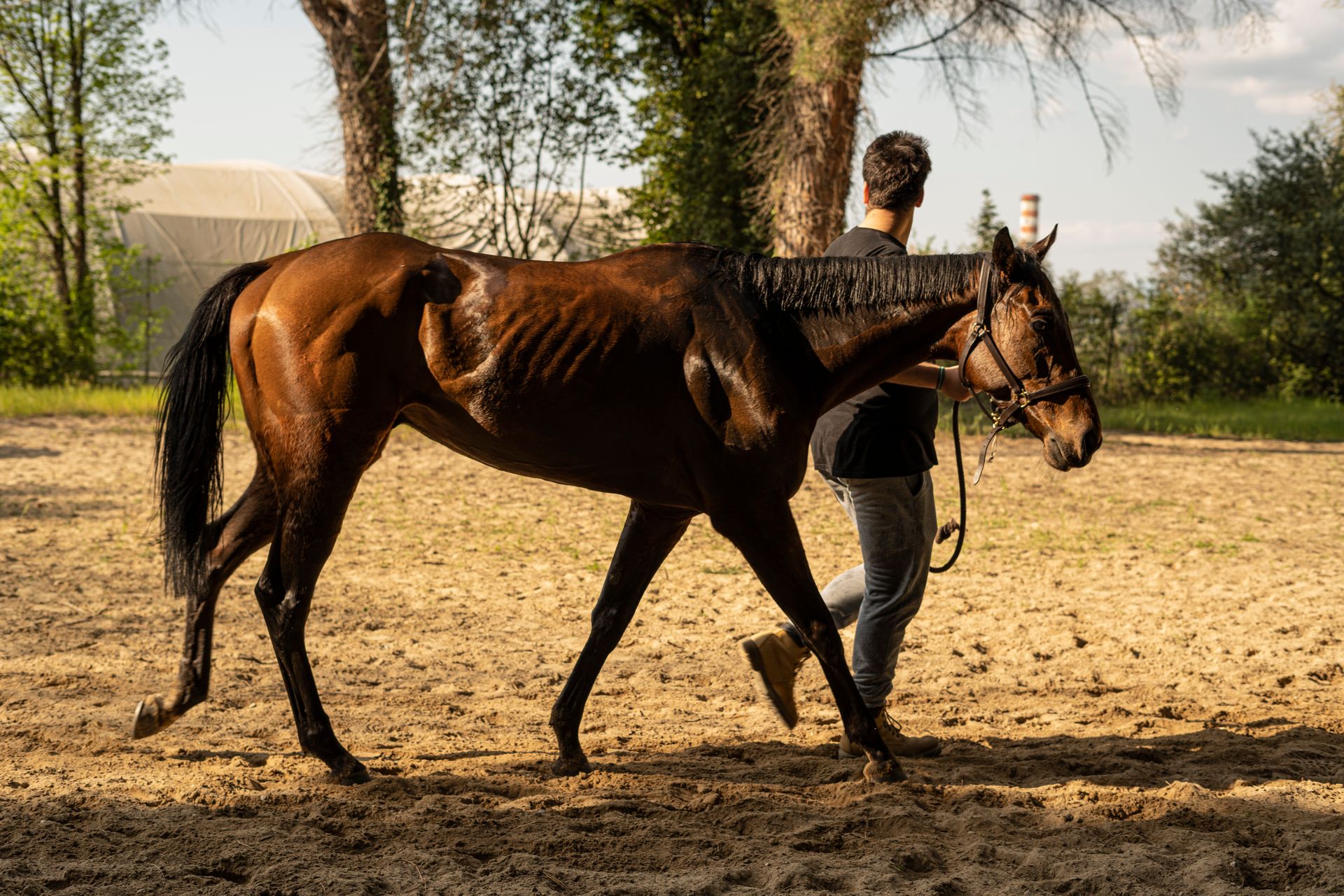
A well-chiseled head on a long neck, high withers, a deep chest, a short back, good depth of hindquarters, a lean body, and long legs are characteristics of a good-quality Thoroughbred.
Thoroughbreds are classified as "hot-blooded" breeds, bred for agility and speed, and are generally considered spirited and bold.
Their faces and lower legs may be marked with white, but white will generally not appear on the body.
Thoroughbreds born in the Northern Hemisphere are considered a year older on January 1st, while those born in the Southern Hemisphere are considered a year older on August 1st.
These artificial dates help standardize races and competitions for horses in certain age groups.
Their refined head with widely spaced eyes is a characteristic often associated with their Arabian blood.
Most Thoroughbreds have lean bodies suitable for speed, which means they'll weigh less than a 16-hand horse from a stockier breed.
Their long legs with clean, pronounced tendons promote soundness and stride length.
Thoroughbreds are generally intelligent and sensitive, but may not make the best mounts for beginner riders.
Their spirited, high-energy personalities can be a challenge to handle, but also make them valuable partners in high-performance activities.
Breed Registry
The Thoroughbred breed registry is a bit unique, with The Jockey Club being the governing body in North America. The club's database contains pedigree information of over 1.8 million horses dating back to the late 1800s.
To be eligible for registration, a Thoroughbred foal must have a sire and dam that are both registered in the American Stud Book. This closed studbook system is a key part of the breed's registry.
The Jockey Club only registers foals resulting from live cover of the mare by the stallion, which is an important distinction from other breed registries. This approach helps maintain the integrity of the breed's pedigree records.
The breed standard for Thoroughbreds is primarily based on racing ability, rather than specific conformational traits. This means that horses are selected for their breeding value based on their track performance.
Health and Care
Thoroughbred race horses are highly energetic and require regular exercise and turnout to thrive. They need a safe outlet for excess energy to prevent behavioral problems.
If possible, keep your Thoroughbred turned out on pasture to meet his needs for forage and freedom of movement. This is especially beneficial as they have a low risk of metabolic conditions associated with grazing.
Excess environmental moisture can compromise hoof wall integrity if your Thoroughbred struggles with hoof problems, so it's essential to minimize exposure to mud and dirty bedding.
Some behavioral problems in OTTBs can indicate an underlying digestive issue, so it's crucial to consult your veterinarian if you suspect a health problem. Working with a nutritionist to evaluate your Thoroughbred's diet can help identify any issues.
Recommended read: Why Was the Horse so Happy?
Breeding and Management
The Thoroughbred industry is a large agribusiness, generating around $34 billion in revenue annually in the United States and providing about 470,000 jobs.
The number of Thoroughbred foals registered each year in North America varies greatly, with the largest numbers registered in the states of Kentucky, Florida, and California. Australia is the second-largest producer of Thoroughbreds in the world.
Unlike other breeds, a Thoroughbred can't be registered unless conceived by live cover, the witnessed natural mating of a mare and a stallion. This practice prevents an oversupply of Thoroughbreds and preserves the high prices paid for horses of the finest or most popular lineages.
Retired Horses
Involuntary causes account for nearly half of all racehorse retirements, with musculoskeletal injuries being a major contributor.
These injuries can be caused by the high-impact nature of racing, which can put immense stress on a horse's joints and muscles.
Respiratory problems and cardiac conditions are also common reasons for retirement, highlighting the importance of regular veterinary check-ups.
Gastric ulceration is another issue that affects nearly every Thoroughbred racehorse, making it essential for new owners to work with their veterinarians to diagnose pre-existing conditions.
Some Thoroughbreds have abnormally large hearts, which can increase cardiac output during a race and is associated with superior performance, earning it the nickname "X Factor".
Care and Management
If you're bringing home an OTTB, remember that his new life likely varies significantly from his life at the track. Try to make transitions gradually to limit stress.
Thoroughbreds are highly energetic and need regular exercise and turnout to thrive. Some owners struggle with behavioural problems if their Thoroughbreds don’t have a safe outlet for excess energy.
Keeping your Thoroughbred turned out on pasture is ideal, as it meets his needs for forage and freedom of movement. Unlike some breeds, Thoroughbreds have a low risk of metabolic conditions associated with grazing.
Minimize exposure to mud and dirty bedding to prevent hoof problems. Excess environmental moisture can compromise hoof wall integrity if your Thoroughbred struggles with hoof issues.
OTTBs usually need significant retraining before they’re ready to start their new careers.
Registration, Breeding, and Population Management
The Jockey Club is the North American breed registry for Thoroughbred horses, maintaining the American Stud Book that records every Thoroughbred imported to or born in the United States, Canada, and Puerto Rico.
The club's database contains pedigree information of over 1.8 million horses dating back to the late 1800s, with around 20,000 Thoroughbreds added each year.
The breed standard for the Thoroughbred is primarily based on racing ability, with horses demonstrating their breeding value through their track performance.
A Thoroughbred can only be registered if it's conceived by live cover, the witnessed natural mating of a mare and a stallion, due to concerns about the accuracy of artificial insemination and embryo transfer in assigning parentage.
The closed studbook and tightly regulated population of the Thoroughbred are at risk of loss of genetic diversity due to the level of inadvertent inbreeding inevitable in such a small population.
Over 78% of alleles in the current population can be traced to just 30 foundation animals, 27 of which are male, with 10 foundation mares accounting for 72% of maternal lineages.
The Thoroughbred industry generates around $34 billion in revenue annually in the United States and provides about 470,000 jobs through a network of farms, training centers, and race tracks.
The largest numbers of Thoroughbred foals are registered in the states of Kentucky, Florida, and California, while Australia is the second-largest producer of Thoroughbreds in the world.
The Thoroughbred breed has a relatively small population, which can contribute to health problems exacerbated by inbreeding, such as cardiac and skeletal issues.
Selective breeding for speed has increased the risk of musculoskeletal injury in Thoroughbreds, as well as other health challenges that require unique management in their second careers.
Recommended read: Horse Health
Crossbreeding
Thoroughbreds have been influential in creating new breeds, such as the American Quarter Horse and the Standardbred. They've also been used to enhance or introduce specific qualities into existing breeds.
Crossbreeding Thoroughbreds with other breeds has led to the creation of many modern riding horse breeds. The Anglo-Arabian, for example, is a result of Thoroughbred and Arabian bloodlines.
Thoroughbreds are often crossed with sturdy draft horse breeds to produce "warmbloods", which are known for their refinement and performance capabilities. Warmbloods are commonly seen in competitive events like show jumping and dressage.
The Dutch Warmblood, Hanoverian, and Selle Français are all examples of warmblood breeds that have Thoroughbred blood. Many warmblood registries note the percentage of Thoroughbred breeding in their horses.
Nutrition and Diet
As a Thoroughbred owner, you want to ensure your horse is getting the right nutrition to thrive in its second career. Thoroughbreds need a balanced diet with adequate amounts of amino acids, vitamins, and minerals to maintain a shiny coat, grow strong hooves, and support performance.
Forage should be the primary source of nutrients in your Thoroughbred's diet, with high-quality hay providing the necessary energy. Look for soft, leafy, immature, green hay to maximize palatability and intake.
To ensure your Thoroughbred gets all the necessary nutrients, consider adding a supplement like Omneity, which provides a balanced mix of key micronutrients commonly deficient in forage.
A Thoroughbred's digestive system can be sensitive, so it's essential to provide a diet that minimizes the risk of colic and gastric ulcers. A high-grain diet can contribute to digestive issues, so it's best to opt for a forage-based diet with limited grain.
Thoroughbreds need adequate protein to support topline and muscle mass, and alfalfa hay can be an excellent source of protein, particularly if your grass hay is low in protein. However, alfalfa should not be your horse's primary forage, as large amounts can throw off the calcium and phosphorus ratio.
If you choose to feed a concentrate, split your horse's ration into multiple small meals throughout the day to minimize the risk of gastrointestinal upset.
You might like: How to Get a Horse's Attention?
Nutrition and Diet
Thoroughbreds need a diet that's tailored to their specific needs, and it's not just about feeding them a lot of grain. In fact, a high-grain diet can lead to digestive issues, including a higher risk of colic and gastric ulcers.
Forage should be the primary source of nutrients in a Thoroughbred's diet, so it's essential to select high-quality, high-calorie hay. Look for soft, leafy, immature, green hay to maximize palatability and intake.
A balanced diet with adequate amounts of amino acids, vitamins, and minerals is crucial for maintaining a Thoroughbred's overall health. Deficiencies in these nutrients can lead to hoof problems, poor coat quality, impaired immune function, and poor performance.
Thoroughbreds need adequate dietary protein to support topline and muscle mass, and alfalfa hay can be an excellent source of protein. However, alfalfa should not be the primary forage, as large amounts can throw off the horse's calcium and phosphorus ratio.
If you choose to feed a concentrate, split your horse's ration into multiple small meals throughout the day to minimize the risk of gastrointestinal upset. Work with an equine nutritionist to determine if your Thoroughbred needs grain and select a formula suitable for your horse.
Here's a sample diet for a mature Thoroughbred in light work with normal body condition:
This diet provides 109% of the horse's digestible energy requirements, 192% of its protein requirements, and 8.9% of its non-structural carbohydrate (NSC) requirements.
Value
Eating a variety of whole foods can provide essential nutrients for optimal health. Fruits, vegetables, whole grains, lean proteins, and healthy fats are all valuable components of a balanced diet.
A diet rich in fiber from whole foods can help regulate blood sugar levels and promote digestive health. The recommended daily intake of fiber is 25-30 grams.
Incorporating omega-3 fatty acids into your diet can support heart health and reduce inflammation. Fatty fish like salmon and sardines are excellent sources of these beneficial fats.
Check this out: Horse Health Certificate
The Mediterranean diet, which emphasizes whole grains, fruits, and vegetables, has been shown to reduce the risk of chronic diseases like heart disease and type 2 diabetes. This diet pattern is associated with a lower risk of mortality.
Eating a diet high in processed and packaged foods can lead to nutrient deficiencies and an increased risk of chronic diseases. A diet rich in whole foods can help support overall health and well-being.
Terminology
The term "thoroughbred" can be a bit confusing, but it's essential to understand its meaning in the context of horse breeding.
The Thoroughbred is a distinct breed of horse, and it's not just a term for any purebred horse.
In modern usage, horse breeders consider it incorrect to refer to any animal as a thoroughbred except for horses belonging to the Thoroughbred breed.
This distinction is important, as it helps to avoid confusion and miscommunication.
The term "thoroughbred" is a proper noun referring to this specific breed, though it's often not capitalized, especially in non-specialist publications, and outside the US.
Medical Challenges
Horse racing is hazardous, and injuries to Thoroughbreds are a significant concern.
The level of treatment given to injured Thoroughbreds is often more intensive than for horses of lesser financial value, but it's also a topic of controversy.
Leg injuries that are not immediately fatal can still be life-threatening because a horse's weight must be distributed evenly on all four legs.
A horse's weight can cause circulatory problems, laminitis, and other infections if one leg is temporarily out of commission.
Horses cannot remain lying down for extended periods like humans do in bed rest, as this can lead to sores, internal damage, and congestion.
The euthanization of horses like Barbaro and Eight Belles after severe racing accidents has sparked criticism from animal rights groups.
On the other hand, advocates of racing argue that it provides funding and incentives for medical and biomechanical research on horses.
Veterinary science has advanced significantly, and previously hopeless cases can now be treated.
Earlier detection through advanced imaging techniques like scintigraphy can help keep at-risk horses off the track.
Expand your knowledge: Corgi Dog Racing
Thoroughbred Racing
Thoroughbred racing is a high-stakes game, and the numbers are staggering. In 2007, there were 71,959 horses who started in races in the United States alone.
The average Thoroughbred racehorse in the United States and Canada ran 6.33 times in 2007. This is a testament to the dedication and hard work that goes into training these incredible animals.
Statistically, fewer than 50% of all race horses ever win a race, and less than 1% ever win a stakes race such as the Kentucky Derby or Epsom Derby.
For your interest: Race Horses Cost
Horse Racing
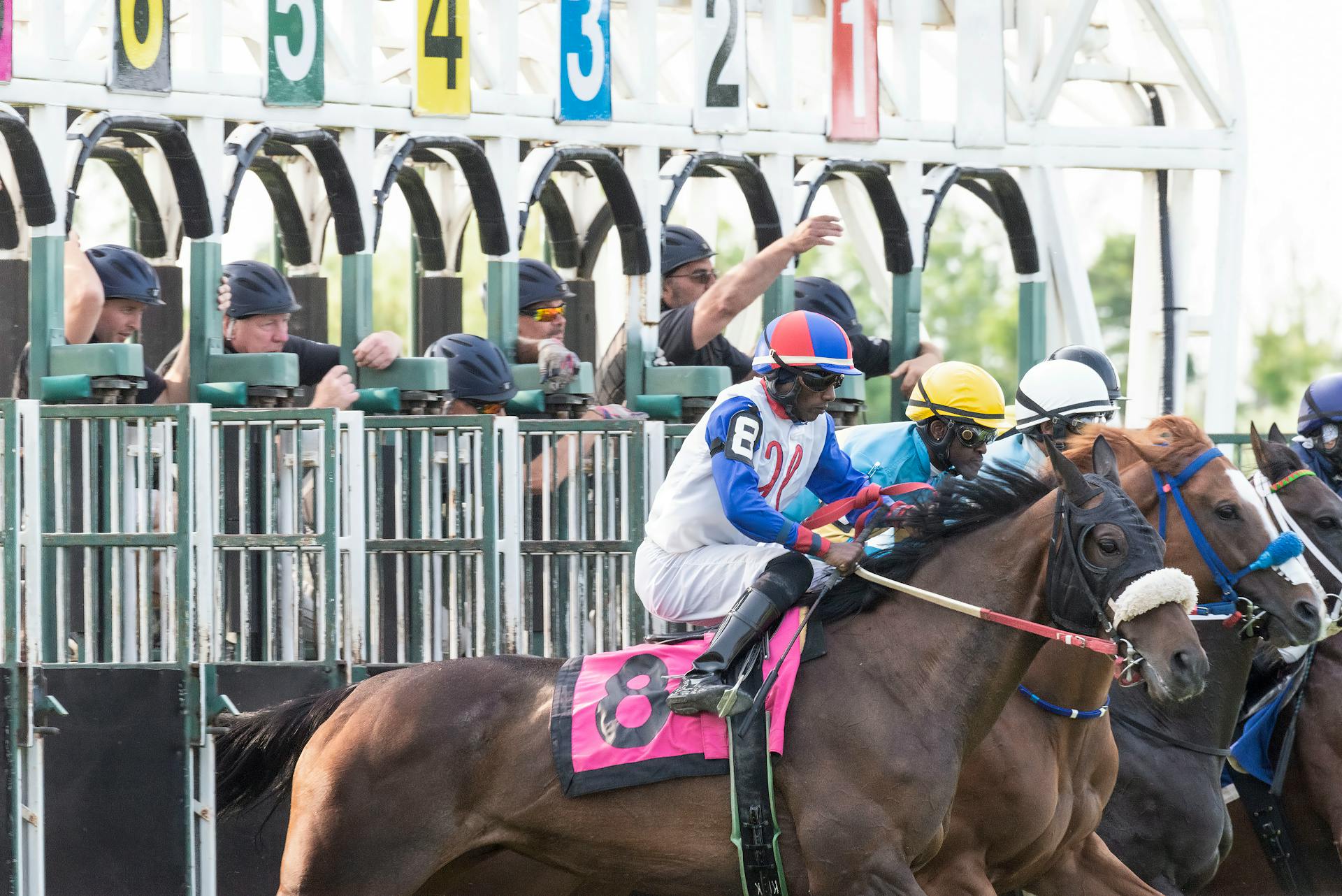
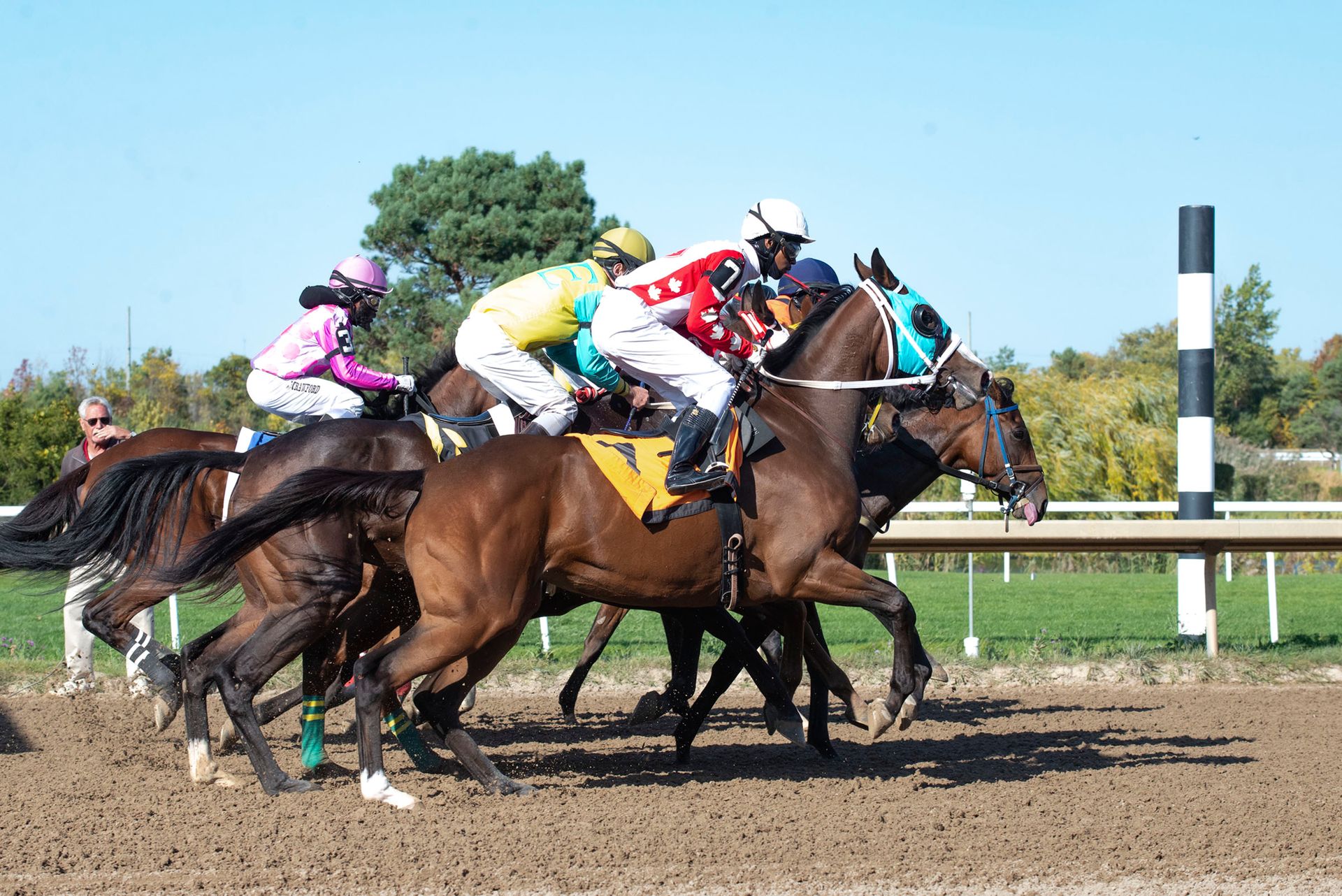
Horse racing is a popular sport that requires a lot of skill and athleticism from the horses involved. Thoroughbred horses are primarily bred for racing under saddle at the gallop.
Sprinters are usually well-muscled, while stayers, or distance runners, tend to be smaller and slimmer. The size of the horse is one consideration for buyers and trainers when choosing a potential racehorse.
In 2007, there were 71,959 horses who started in races in the United States. The average Thoroughbred racehorse in the United States and Canada ran 6.33 times in that year.
Larger horses mature more slowly and have more stress on their legs and feet, predisposing them to lameness. Smaller horses are considered by some to be at a disadvantage due to their shorter stride and a tendency of other horses to bump them.
Historically, Thoroughbreds have steadily increased in size: the average height of a Thoroughbred in 1700 was about 13.3 hands high. By 1876 this had increased to 15.3 hands high.
Fewer than 50% of all race horses ever win a race, and less than 1% ever win a stakes race such as the Kentucky Derby or Epsom Derby.
A unique perspective: Win Horse Races
Uses
The Thoroughbred breed is incredibly versatile, and its uses extend far beyond the racing track.
They're bred primarily for racing, but their athleticism also makes them suitable for show jumping and combined training.
Many retired Thoroughbred horses are retrained as family riding horses, dressage horses, and youth show horses, making them a great option for those looking for a reliable and gentle mount.
The larger Thoroughbred horses are in high demand for hunter/jumper and dressage competitions, where their size and agility give them an edge.
Suggestion: Horse Show
Australia and New Zealand
Australia and New Zealand are two of the most prominent breeding countries for thoroughbred race horses.
The country of Australia has a rich history of producing top-notch thoroughbreds, with the first Australian-bred horse to win the Melbourne Cup being Archer in 1861.
New Zealand, on the other hand, has a thriving thoroughbred industry with many world-class farms and trainers.
The Australian Stud Book, established in 1870, is a comprehensive record of all thoroughbred horses bred in Australia.
In New Zealand, the Thoroughbred Breeders' Association of New Zealand was established in 1966 to promote and support the thoroughbred industry.
The country of Australia has a strong reputation for producing fast and agile thoroughbreds, with the average speed of an Australian-bred horse being 35.5 km/h.
Frequently Asked Questions
Is Thoroughbred the fastest horse?
Thoroughbreds are known for their exceptional speed, reaching over 37-40 mph. Secretariat, a legendary Thoroughbred, holds the record for the fastest horse ever.
Who is the most famous Thoroughbred horse?
Secretariat is widely considered the most famous Thoroughbred horse in America, holding records in all three Triple Crown races. His impressive 31-length win in the Belmont Stakes remains a legendary achievement in horse racing history.
What's the difference between a Thoroughbred and a regular horse?
A Thoroughbred is a specific breed of horse known for its endurance and distinct physical characteristics, such as a slim body and broad chest. Unlike regular horses, Thoroughbreds are bred for speed and agility, making them well-suited for long-distance running.
Featured Images: pexels.com