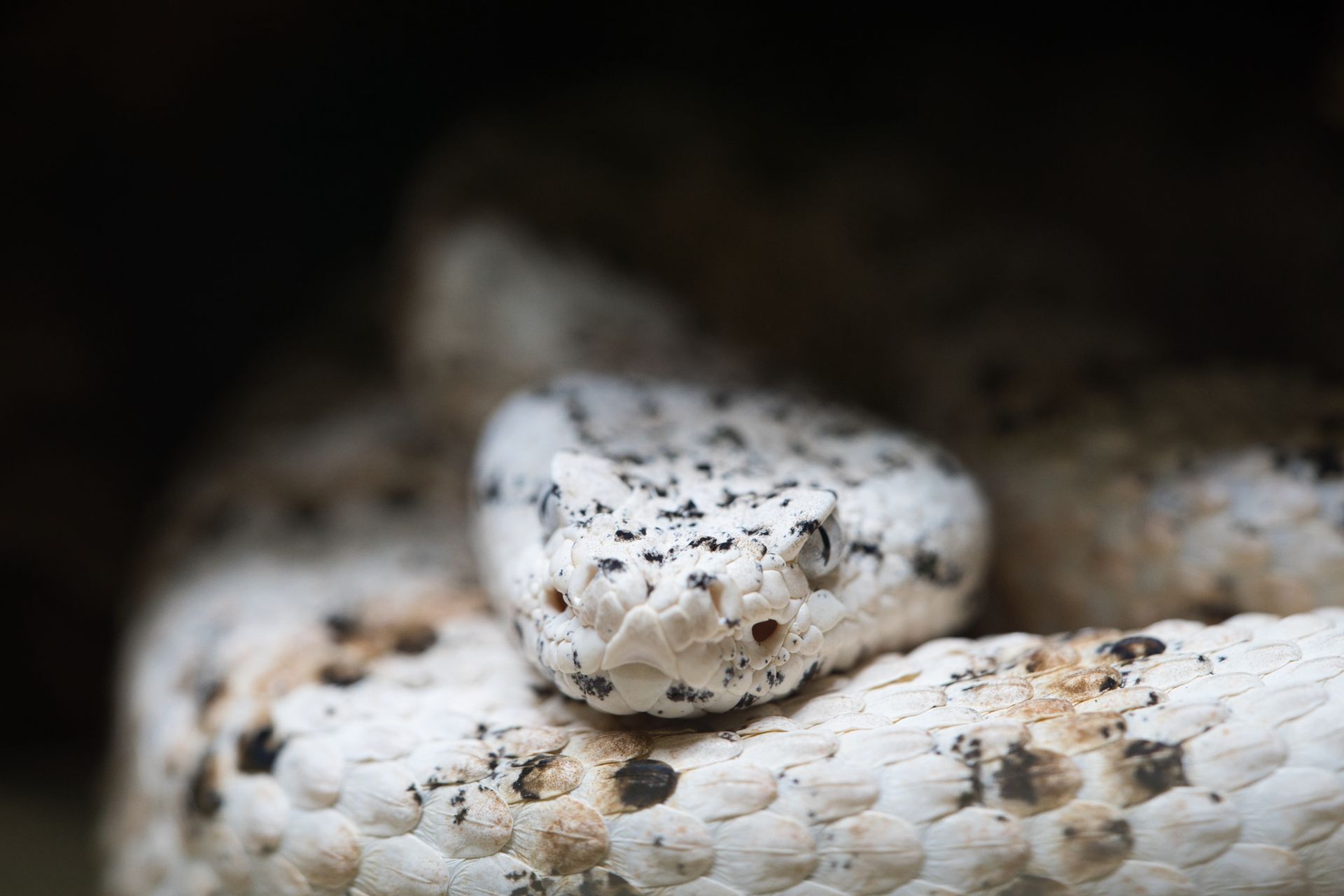
The speckled king snake is a fascinating species, and learning more about it can be a real treat. They are found in the southeastern United States.
These snakes are expert hunters, and their diet consists mainly of other snakes, including venomous species like the rattlesnake and copperhead.
Speckled king snakes are known for their distinctive patterns, with dark blotches or spots on a lighter background.
They are generally non-venomous and harmless to humans.
Take a look at this: Common Snapping Turtle Species
Physical Characteristics
The speckled kingsnake is a striking reptile with a unique appearance. Its total length can reach up to 48 in (120 cm), with some individuals growing up to 72 in (180 cm) in length.
The speckled kingsnake's pattern is one of its most distinctive features, with a shiny black base color covered in small yellowish-white spots. Each dorsal scale has a single spot on it, creating a speckled look.
Its belly is a bright yellow color with large black rectangular markings. The species' coloration is often referred to as "salt-and-pepper" due to its distinctive black and yellow pattern.
Speckled kingsnakes are relatively long, with adults averaging 30 to 42 inches in length.
You might like: Black King Shepherd
Geographic Range
The speckled kingsnake is found in the central and southern United States from southern Iowa to the Gulf of Mexico.
Its range overlaps with that of the desert kingsnake, Lampropeltis splendida, and it's known to intergrade with that species.
Speckled kingsnakes are commonly found in areas near water with plenty of low vegetation and ground cover.
They thrive in coastal prairie and on barrier islands near marshes along the upper Texas coast.
In east and central Texas, they can be found in woodlands, prairies, and old fields, as well as in the vicinity of marshes and other wetlands.
In Arkansas, a study found that kingsnakes mostly used shrubby areas on levees and did not make use of agricultural areas.
They're often concealed or underground, like in an old mammal burrow.
A fresh viewpoint: Adult California Kingsnake
Behavior and Defense
Speckled kingsnakes are masters of stealth, spending most of their time concealed in low vegetation and leaf litter, under tree stumps or flat rocks, or underground.
They're not exactly built for speed, and their small, recurved teeth don't pack a venomous punch, so they rely on staying hidden to avoid predators.
As temperatures rise, they become more active at night, which is when they're most likely to be seen.
If they're confronted or captured, they'll often pull back in a striking position and bite, hanging on and chewing with their strong jaws.
They'll even go so far as to thrash about and expel feces and a bad-smelling musk, making it an unpleasant experience for anyone trying to handle them.
What Do They Eat?
Speckled kingsnakes are formidable hunters that feed on a wide variety of prey, including small mammals, lizards, and other snakes. They are powerful constrictors that can kill their prey by making breathing impossible and stopping circulation.
Kingsnakes have been known to eat our native venomous snakes as well as nonvenomous ones, showing no preference for the type of snake they hunt. They can even swallow snakes that are as long as they are, folding them in their lengthy stomach to make them fit.
Mice are a principal prey for kingsnakes, but they also have a fondness for turtle eggs and have been observed waiting for female turtles to lay their eggs.
How Do They Defend?

Speckled kingsnakes are not built for speed, and they have no venom to rely on for defense.
Their best defense is to avoid being seen, which they achieve by spending most of their time in low vegetation and leaf litter, under tree stumps or flat rocks, or underground.
These hiding spots not only provide concealment but also serve as great places to hunt for prey.
As temperatures rise, speckled kingsnakes become more active at night, which may help them avoid detection.
If confronted or captured, they often pull back in a striking position and will bite, hanging on and chewing with strong jaws.
They may also thrash about and expel feces, releasing a foul-smelling musk that can make handling them unpleasant.
Additional reading: Louisiana Speckled King Snake
Classification and Etymology
The speckled king snake's classification has undergone some changes over the years. It was first described by American herpetologist John Edwards Holbrook in 1842 as Coronella sayi.
Holbrook's mistake was corrected by Leonhard Stejneger in 1902, who pointed out that Coluber sayi is actually a different snake, Pituophis catenifer sayi. Stejneger proposed the name Lampropeltis holbrooki to honor Holbrook.
The speckled king snake is now considered a full species, Lampropeltis holbrooki, rather than a subspecies of L. getula. It's also listed as a least concern species by the IUCN Red List.
Intriguing read: Pituophis Catenifer Sayi
Taxonomy and Etymology
The speckled kingsnake's taxonomy and etymology are quite fascinating.
The speckled kingsnake was first described by American herpetologist John Edwards Holbrook in 1842. He called it Coronella sayi, which was a mistake, as it was previously described by Schlegel as Coluber sayi.
This mistake was later corrected by Leonhard Stejneger in 1902. He pointed out that Coluber sayi is actually a different snake, Pituophis catenifer sayi.
The name sayi couldn't be applied to the speckled kingsnake, so Stejneger proposed the name Lampropeltis holbrooki, honoring Holbrook. This name has stuck, and the speckled kingsnake is now classified as Lampropeltis holbrooki.
The speckled kingsnake was once considered a subspecies of L. getula, but has since been elevated to full species status.
Here are some key facts about the speckled kingsnake's taxonomy and etymology:
- IUCN Red List least concern species
- Lampropeltis
- Reptiles described in 1902
- Taxa named by Leonhard Stejneger
Relation to Other Kingsnakes
Speckled kingsnakes were once part of a group called "common kingsnakes" that ranged across the southern U.S.
These snakes were generally dark with some pattern, such as black and white bands or stripes, and were scientifically known as Lampropeltis getula with different subspecies.
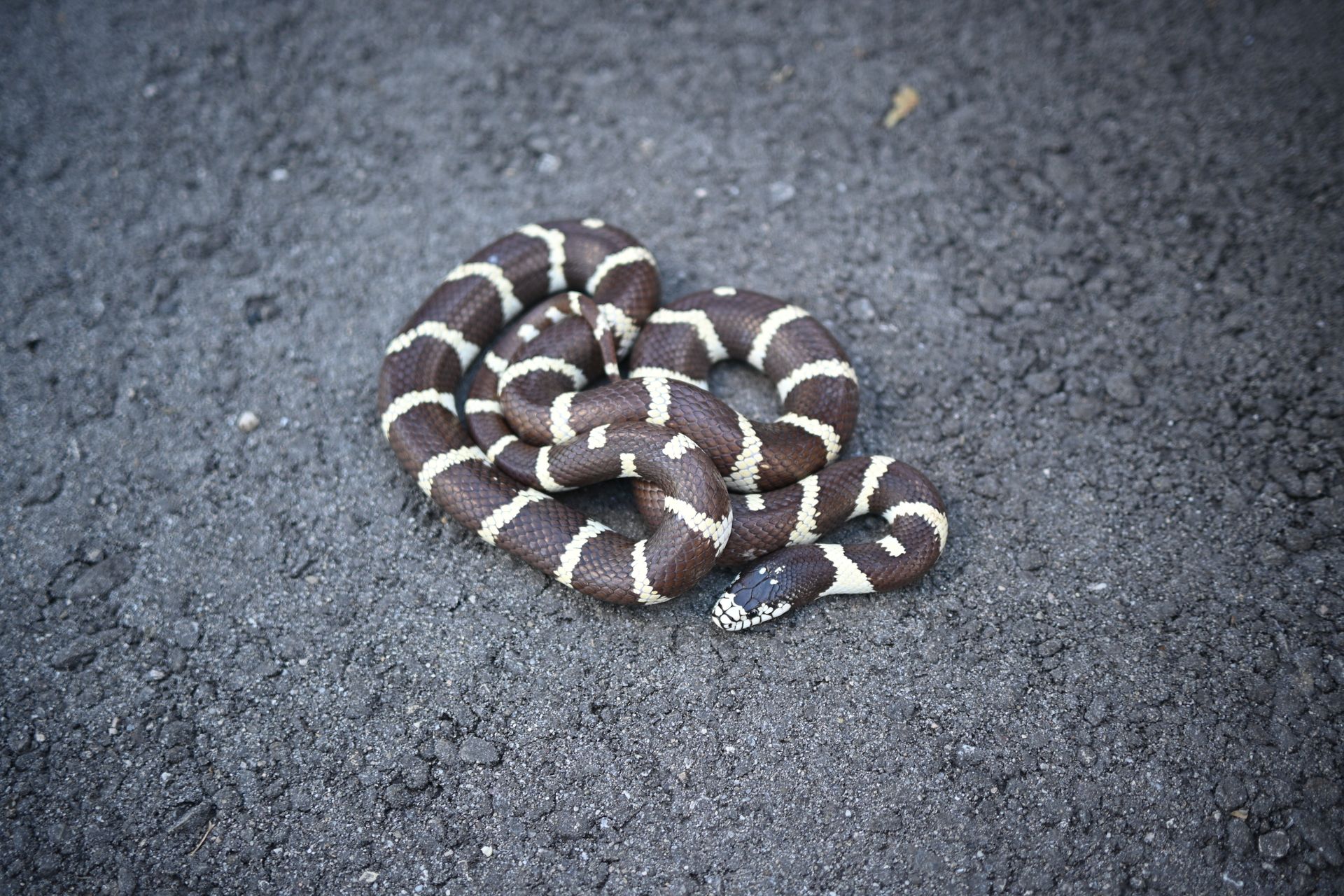
The speckled subspecies was Lampropeltis getula holbrooki.
Researchers using genetic analysis proposed that these snakes are not all one species, and only the most eastern form is the species getula.
The speckled kingsnake was said to be its own species, Lampropeltis holbrooki.
In fact, the desert kingsnake is a separate species, L. splendida.
Not all biologists agree with this classification, and have pointed out flaws in the methodology used to split these snakes into their own species.
If this caught your attention, see: Lampropeltis Holbrooki
Care and Products
Speckled Kingsnakes are fascinating reptiles known for their adaptability and diverse behaviors. They have a wide range of color variations across their geographic range, helping them blend into their surroundings effectively.
Their habitats range from forests to rocky areas, and they are highly valued by reptile enthusiasts for their beauty and hardiness. Speckled Kingsnakes are skilled hunters that use constriction to subdue their prey.
In the wild, they play a crucial role in controlling populations of small mammals, birds, reptiles, and amphibians. They are also known to eat other snakes, including venomous species, without being affected by their venom.
Worth a look: Western Hognose Snake Range
Best Care Products for Kingsnakes
Speckled Kingsnakes are fascinating reptiles known for their adaptability and diverse behaviors.
Their wide range of color variations helps them blend into their surroundings effectively, whether in forests, grasslands, or rocky areas.
Speckled Kingsnakes are opportunistic feeders and play a crucial role in their ecosystem by controlling populations of small mammals, birds, reptiles, and amphibians.
They are skilled hunters and use constriction to subdue their prey.
Their ability to eat other snakes, including venomous species such as rattlesnakes, without being affected by their venom is due to specialized enzymes and proteins in their blood that neutralize toxins.
To provide the best care for your pet Speckled Kingsnake, you'll want to create a suitable environment that mimics their natural habitats.
A good quality bedding, such as BabiChip or TropicalBase, can help maintain humidity and provide a comfortable surface for your pet to burrow and move around.
Our product line also includes ReptiEarth, a substrate specifically designed to meet the needs of reptiles like Speckled Kingsnakes.
If this caught your attention, see: California King Snake as a Pet
Common Reptichip Questions
Reptichip is an ideal environment for your speckled kingsnake, balancing cleanliness, comfort, and humidity. It's excellent for moisture retention, which is crucial for the well-being of many reptiles and amphibians.
The substrate is low in sodium and potassium, reducing the risk of mineral buildup that could harm your speckled kingsnake. This makes it a safe choice for reptile owners.
Reptichip is priced affordably, making it a consumer-friendly option. Its durability and ease of maintenance mean you'll need to replace it less frequently, making it a cost-effective long-term choice.
Reptichip has low tannin content, which means it won't stain your enclosure or your speckled kingsnake. This also makes it easier to clean and maintain.
Reptichip is excellent at odor absorption, keeping your living space fresh. This makes it one of the easiest substrates to maintain, allowing you more quality time with your speckled kingsnake.
Frequently Asked Questions
Do speckled kingsnakes eat copperheads?
Yes, speckled king snakes are known to eat copperheads, as well as other snakes, making them a valuable part of the ecosystem. Learn more about king snake behavior and their role in the wild in our online Field Guide.
What is the difference between speckled kingsnake and black kingsnake?
The main difference between the Speckled Kingsnake and the Eastern Black Kingsnake is the pattern of spots, with the Speckled Kingsnake having small yellow or white spots over its entire body and the Eastern Black Kingsnake having small, white, or yellowish spots. The Speckled Kingsnake's "salt-and-pepper" look is distinct from the Eastern Black Kingsnake's chainlike pattern.
Featured Images: pexels.com