
The Spalerosophis diadema snake species is a fascinating creature. It is a type of non-venomous snake found in the deserts and scrublands of North Africa and the Middle East.
This snake has a distinctive appearance, with a pattern of dark brown or black spots or blotches on a light brown or yellowish-brown background.
Physical Characteristics
The Persian Diadem Snake is a quite large species, reaching lengths of about 1.5 to 2 meters, although some individuals may grow larger.
Its head is broad and slightly triangular, with large, well-defined eyes that are adapted for excellent daytime vision. The eyes have a round pupil that constricts to a point in bright light, allowing the snake to see clearly even in harsh conditions.
The snake's base color is often a light yellow or tan, adorned with a series of irregular dark brown or black bands. This pattern serves as a perfect camouflage in their natural environment.
Its scales are smooth and glossy, adding to their decorative appearance. The snake's dorsal side is pale buff or sandy grey, with a median series of dark blotches, and smaller dark spots.
Here are some key physical characteristics of the Persian Diadem Snake:
- Length: 1.5 to 2 meters
- Head shape: Broad and slightly triangular
- Eye characteristics: Large, round pupils
- Scales: Smooth and shiny texture
- Coloration: Light yellow or tan base color with dark markings
Habitat and Distribution
The Diadem snake is found in a vast range of habitats, from northwestern Africa to Asia Minor, the Arabian Peninsula, Pakistan, Nepal, and North India.
It inhabits dry, rocky areas with sparse vegetation, providing shelter and abundant hunting opportunities. These environments are perfect for thermoregulation, as the snake can bask in the sun throughout the day.
The Diadem snake is often found under stones, in rock crevices, or rodent burrows, where it can hunt for lizards and small rodents. It's a skilled hunter that can adapt to different environments.
In semi-arid habitats, such as rocky hillsides and sparsely vegetated areas, the Persian Diadem Snake can thrive under a warm climate. This is particularly true in the southern regions of Iran, where it's native to the Fars and Kerman provinces.
During the day, the snake is largely diurnal, but at night, it hunts mainly mice and rats, which are abundant in these areas. This unique adaptation allows it to survive and thrive in its environment.
Recommended read: Can Snakes Be Found on Every Continent
Behavior and Care
Spalerosophis diadema, also known as the desert diadem snake, is a species of snake that is native to the southwestern United States and northern Mexico.
They are known to be active hunters, and will actively search for prey.
In the wild, they are primarily insectivores, feeding on a variety of insects, including ants, beetles, and grasshoppers.
Spalerosophis diadema are also known to be good escape artists, and can quickly slither away if threatened.
If you're considering keeping a desert diadem snake as a pet, it's essential to provide a well-ventilated enclosure with a substrate that can retain moisture, such as sphagnum moss.
A unique perspective: Desert Horned Lizard
Diadem Snake Terrarium Breeding
Breeding Diadem snakes in a terrarium can be a rewarding experience for reptile enthusiasts.
The Diadem snake has already been successfully bred in the terrarium.
Females lay eggs, which can number around 10 per clutch.
A female Diadem snake can incubate her eggs for 2 to 3 months before hatchlings emerge.
Natural Predators
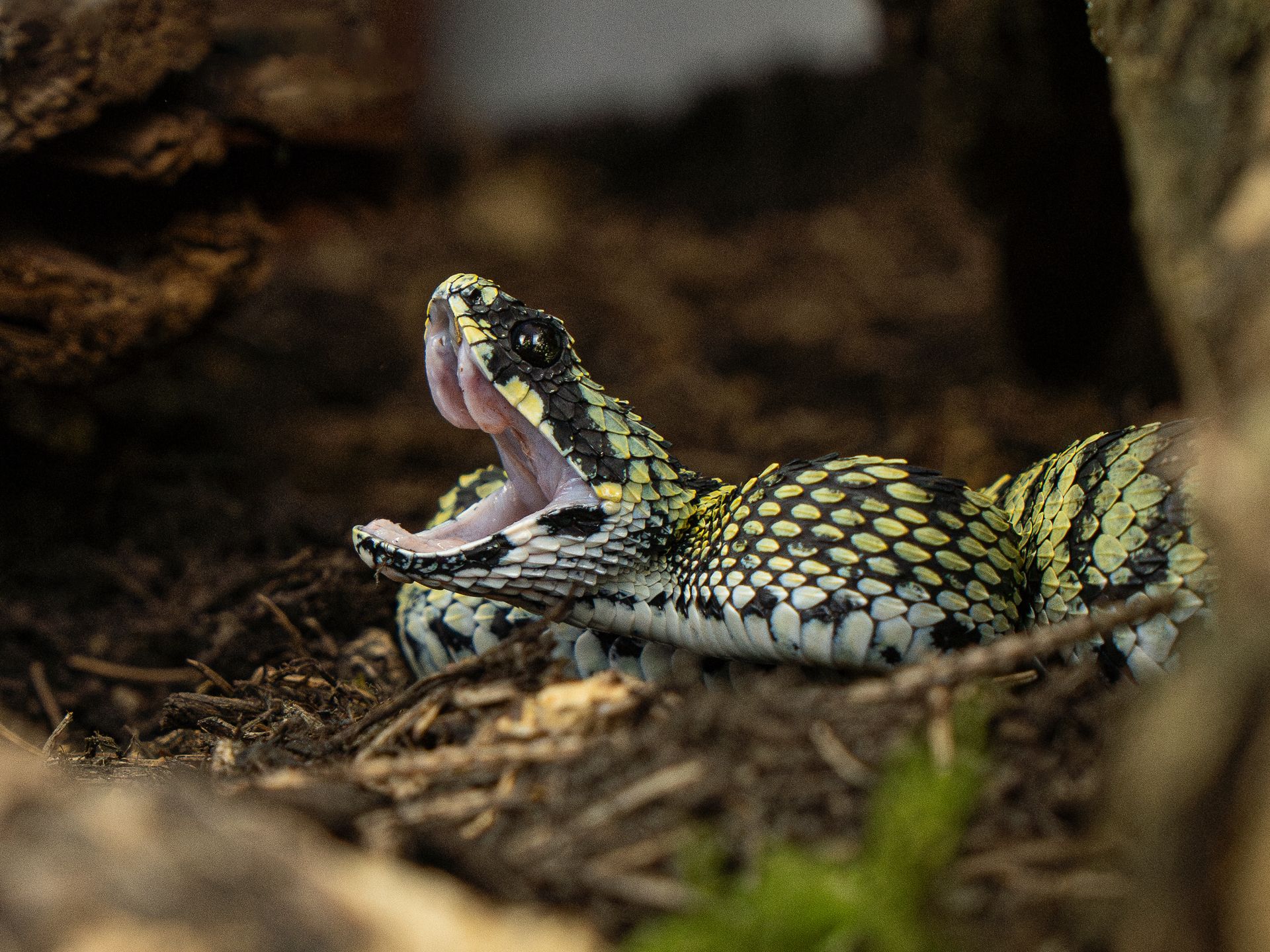
The Persian Diadem Snake has a few natural predators that it needs to watch out for. Birds of prey are a common threat, and larger snakes may also see the Persian Diadem Snake as a potential meal.
In particular, wild cats are known to prey on the Persian Diadem Snake when it's vulnerable or basking.
Conservation and Ecology
The Persian Diadem Snake plays a crucial role in maintaining a balanced food web in its ecosystem. Its presence helps control populations of small mammals and birds.
As a predator, the Persian Diadem Snake helps keep small mammal populations in check, preventing them from reproducing unchecked. This has a ripple effect throughout the ecosystem, maintaining a delicate balance.
Its role as prey for larger predators, such as birds of prey, also contributes to the overall biodiversity of its region.
Ecological Significance
The Persian Diadem Snake plays a crucial role in maintaining a balanced food web in its ecosystem. Its presence helps control populations of small mammals and birds that can otherwise reproduce unchecked.
As a predator, the Persian Diadem Snake is a vital component of its ecosystem, keeping populations of small mammals and birds in check. This helps maintain a delicate balance that is essential for the overall health of the ecosystem.
In turn, the Persian Diadem Snake also serves as prey for larger predators, such as birds of prey, contributing to the overall biodiversity of its region. This highlights the interconnectedness of species within an ecosystem.
The Persian Diadem Snake's role as both predator and prey underscores the importance of preserving its place in the ecosystem.
Conservation Status
The Persian Diadem Snake is not listed as endangered, but its habitat faces potential threats from degradation and human encroachment.
Protecting its natural habitat is essential to ensure the survival of this species.
Naming and Taxonomy
The Diadem snake, also known as Spalerosophis diadema, has a variety of names across different languages. In English, it's known as the Diadem snake or Royal snake.
This snake has been given multiple names in different languages, including Couleuvre à diadème in French, Diademschlange, Königsschlange in German, Cobra diadema, Cobra real in Portuguese, and Serpiente de Diadema, Serpiente real, Culebra de Diadema in Spanish.
The name "Diadem" refers to a royal crown or headband, which suits the snake's striking patterns and colors.
The Diadem snake has three recognized subspecies, each found in different regions. Here are the subspecies and their type localities:
The genus name Spalerosophis suggests a connection with the Greek word for “beautiful” or “well-formed,” which aptly describes the physical allure of this snake.
Subspecies
Subspecies are an important part of taxonomy, and they help us understand the diversity within a species.
In the case of the S. diadema species, there are three recognized subspecies.
These subspecies are found in different parts of the world, including Morocco to Egypt and Israel, India and Pakistan, and western Iran to southern Turkmenistan and Afghanistan.
Readers also liked: Common Snapping Turtle Species
The subspecies Spalerosophis diadema cliffordi is found from Morocco to Egypt and Israel, with its type locality in Tripoli, Libya.
The subspecies Spalerosophis diadema diadema is found in India and Pakistan, with its type locality near "Bombay", India.
The subspecies Spalerosophis diadema schiraziana is found in the Zagros Mountains and the region of Bushire in western Iran, eastwards to southern Turkmenistan and into Afghanistan and India, with its type locality in Shiraz, Iran.
Here's a breakdown of the three recognized subspecies of S. diadema:
- Spalerosophis diadema cliffordi: Morocco to Egypt and Israel
- Spalerosophis diadema diadema: India and Pakistan
- Spalerosophis diadema schiraziana: Western Iran to southern Turkmenistan and Afghanistan
Alternative Names
Naming an animal can be a fascinating topic, and it's interesting to see how different cultures refer to the same species.
The Diadem snake has several alternative names, including the Royal snake in English.
In French, it's known as the Couleuvre à diadème, which roughly translates to "diadem snake".
The German translation for Diadem snake is Diademschlange, Königsschlange, which also means "diadem snake" and "king snake".
In Portuguese, it's called Cobra diadema, Cobra real, which translates to "diadem cobra" and "royal cobra".
In Spanish, the Diadem snake is referred to as Serpiente de Diadema, Serpiente real, Culebra de Diadema, all of which mean "diadem snake", "royal snake", or "diadem cobra".
A fresh viewpoint: Javan Spitting Cobra
Etymology
The name of a species can tell us a lot about its characteristics and origins. The name "Diadem" refers to a royal crown or headband, highlighting the striking patterns and colors reminiscent of elegance and regality.
The genus name Spalerosophis is derived from the Greek word for "beautiful" or "well-formed." This aptly describes the physical allure of the Diadem snake.
Frequently Asked Questions
Are royal snakes poisonous?
No, royal snakes are non-venomous, making them a safe species to learn about.
Featured Images: pexels.com