India is home to over 300 species of snakes, ranging from the venomous to the harmless.
Some of the most common venomous snakes found in India include the Indian cobra, saw-scaled viper, and common krait.
These snakes are found in various habitats, including forests, grasslands, and even urban areas.
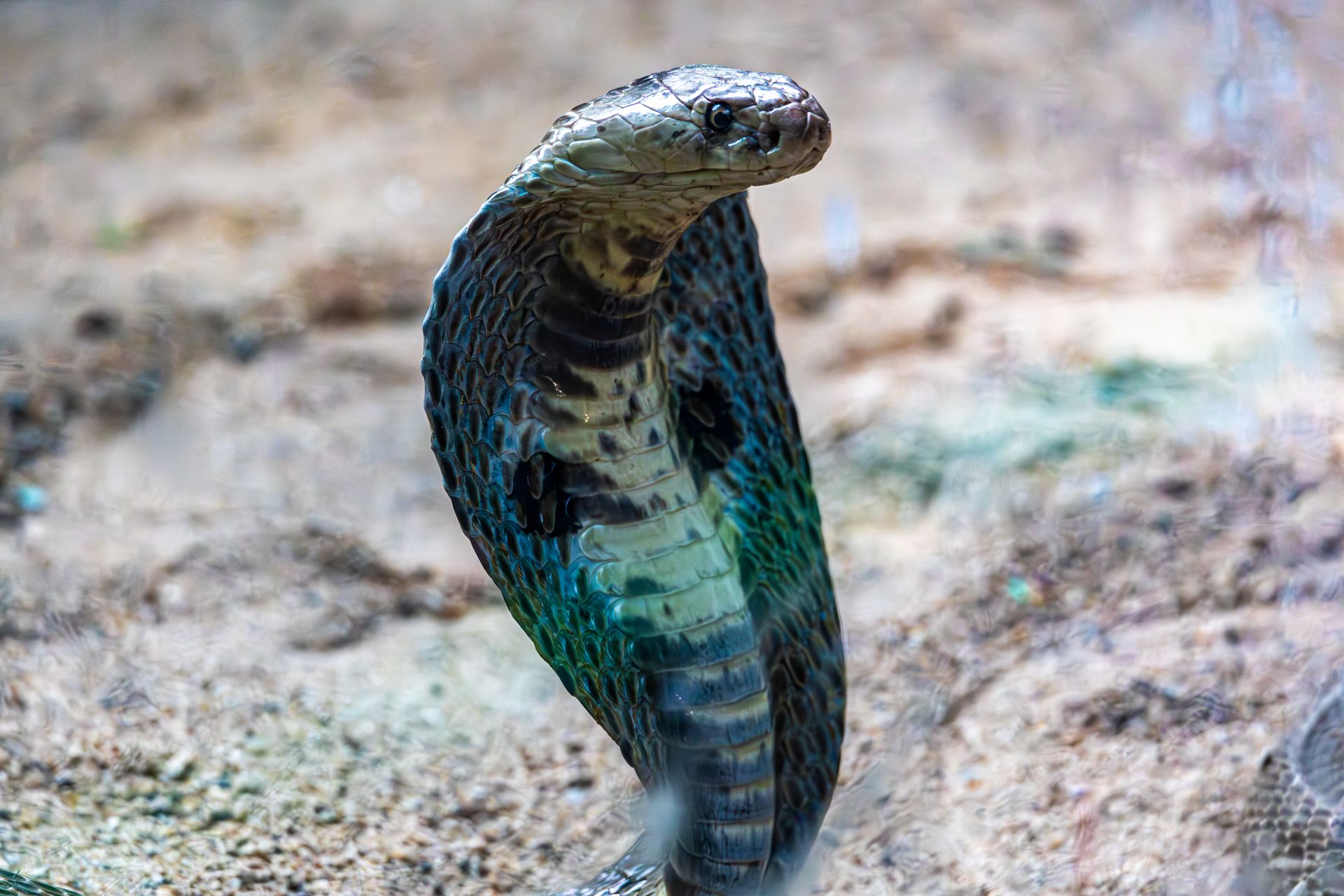
The Indian cobra is one of the most recognizable snakes in India, known for its hood and aggressive behavior.
In fact, the Indian cobra is responsible for the majority of snakebite-related deaths in the country.
It's worth noting that most snakes in India are harmless and play a crucial role in the ecosystem.
Many species of snakes in India are also considered endangered, due to habitat loss and other human activities.
The Indian python, for example, is a large non-venomous snake found in the southern regions of the country.
It's a remarkable creature, known for its ability to grow up to 20 feet in length.
For another approach, see: Indian Gray Mongoose
Snake Bites and Anti-Venom
Snake bites are a significant concern in India, causing the highest annual death rates and disabilities than any other nation. In fact, nearly 58,000 people die each year from snake bites.
The country's large population and overlapping human habitations with wildlife habitats contribute to this problem. As a result, the interaction between humans and snakes is inevitable.
Snake venom can cause internal bleeding, multiple organ failure, and even paralysis or death. The timely administration of antivenom is the only recommended treatment for snake bites.
The Polyvalent Antivenom Serum, available in government centers across India, neutralizes the venom of the "big four" snake species. This is a crucial resource for treating snake bites.
Sucking out venom from a snake bite is not an effective method and can even hasten the venom's passage into the bloodstream.
Snake Encounters
If you encounter a snake, maintain a safe distance. Remember that the reptile will not bother if left alone and it shall only charge if provoked or threatened.
Handling a wild snake will only lead to unfortunate consequences as it takes immense practice and patience. It's best to reach out to the nearest rescue organisation.
The Wildlife SOS rescue hotlines operate out of Delhi-NCR, Mathura and Agra, Vadodara, and J&K, and their 24×7 Rapid Response Unit successfully rescues thousands of reptiles each year.
Actions in case of encounter
Maintain a safe distance from the snake if you encounter one. This will help prevent any potential threats.
The reptile will not bother you if left alone, but it may charge if provoked or threatened. It's essential to remember this.
Handling a wild snake is not recommended, as it requires immense practice and patience. Even experts take time to learn how to handle snakes safely.
If you're in an area where Wildlife SOS has an active rescue helpline, you can reach out to them for assistance. They operate out of several locations, including Delhi-NCR, Mathura and Agra, Vadodara, and J&K.
You can contact the local Forest Department if you're in an area where Wildlife SOS does not have an active rescue helpline. They can also provide help in emergency situations.
The Wildlife SOS 24×7 Rapid Response Unit successfully rescues thousands of reptiles each year. Their team is well-equipped to handle snake encounters and other wildlife emergencies.
You might enjoy: Dandeli Wildlife Sanctuary
Bamboo Pit
The Bamboo Pit Viper is a bright green snake that blends into foliage. It's found in forests of the Western Ghats and Northeast.
This snake is mildly venomous and usually seen coiled on trees or bushes. It's a common sight in these regions.
The Bamboo Pit Viper grows to a length of 2.5 feet. It's a relatively small snake.
It lives in all arboreal habitats such as vines, bushes, and bamboo. This snake is well adapted to its environment.
Bamboo pit viper venom is a hemotoxin. It's a potent venom that can cause severe pain and bleeding.
A bite from a bamboo pit viper can cause severe pain, swelling, and bleeding. It can also lead to organ damage and death.
Checkered Keelback
The Checkered Keelback is a snake that's often mistaken for a viper due to its resemblance. It's actually harmless and non-venomous.
This snake is commonly found in ponds, lakes, and rice fields across the subcontinent.
Indian Snakes
India is home to more than 350 species of snakes, with only 15% to 17% being venomous, including sea snakes. This vast diversity is due to the country's large size and varied landscapes.
The largest snake found in India is the Reticulated Python, which can grow over 25 feet in length. The King Cobra, on the other hand, is the longest venomous snake in the world, reaching up to 20 feet.
Here's a breakdown of the different types of snakes found in India, grouped by family:
Note that this is not an exhaustive list, but it gives you an idea of the diversity of snakes found in India.
Different of India
India is home to a wide variety of snakes, from venomous killers to harmless beauties. Over 350 species of snakes call India home, and that number is constantly increasing as new discoveries are made. The country's diverse landscapes support this incredible array of snake species.
On a similar theme: Tiger Population in India Endangered Species
Only 15% to 17% of India's snakes are venomous, including sea snakes. The largest snake in India is the Reticulated Python, which can grow more than 25 feet in length. You can find these massive snakes in various parts of the country.
The King Cobra is the longest venomous snake in the world, and it's found in India. It can grow up to 20 feet in length. The Brahminy Blind Snake, on the other hand, is the smallest snake in India, with an average length of just 10 centimeters.
Common
Indian snakes can be quite deadly, and one of the most venomous is the Indian Krait, also known as the Common Krait.
They can kill a person within 45 minutes.
Common Kraits are relatively small snakes, growing up to 3 feet long.
Their venom is a neurotoxin, which can cause paralysis, respiratory failure, and death.
If you're in the mountains of Southern India, you might encounter the bamboo pit viper, a venomous snake that grows at a length of 2.5 feet.
Its venom is a hemotoxin, which can cause severe pain, swelling, and bleeding.
Recommended read: Indian Spitz Price in India
5 Indian Cobra
The Indian Cobra is a snake you don't want to mess with.
They can grow up to 6 feet long, making them a formidable creature.
Indian cobras are known for their distinctive hood, which they flare when threatened.
Their venom is a neurotoxin that attacks the nervous system, causing paralysis, respiratory failure, and even death.
A bite from an Indian cobra can kill a person within 2 hours if left untreated.
The Indian Cobra's venom is so potent that it's often featured in snake charmers' performances.
For another approach, see: Indian Bison Animal
Malabar Pit
The Malabar Pit Viper is a venomous snake found in the Western Ghats of India. It's highly adaptable and can be found in various habitats, including forests, plantations, and even urban areas.
This snake is nocturnal, which means it's most active at night. It has a unique ability to change its color, a form of camouflage that helps it blend in with its surroundings.
Malabar Pit Viper venom is a type of hemotoxin, which can cause severe pain, swelling, and bleeding. A bite from this snake can also lead to organ damage and death.
It's worth noting that the Malabar Pit Viper is one of the most unique snakes in India, with its ability to change color being a standout feature.
For another approach, see: Can Snakes Be Found on Every Continent
Venomous Snakes
India is home to many venomous snakes, including the Indian cobra, which is one of the most feared snakes in the world. Their snake bite can kill a person within 2 hours without antivenom.
The Indian cobra is easily identified by its distinctive hood, which they flare when threatened. They are relatively large snakes, growing up to 6 feet long.
Snake venom is a complex mixture of proteins, enzymes, anti-coagulants, neurotoxins, and other substances. Venom in all venomous species can be classified into three major categories: neurotoxic, hemotoxic, and cytotoxic.
Here are the three main types of venom and their effects on the body:
Venomous Big 4 of India
The Venomous Big 4 of India are responsible for the highest number of snake bites in the country.
The Indian cobra is one of the most well-known and feared snakes in the world, accounting for the highest number of snake bites in India. It's easily identified by its distinctive hood, which it flares when threatened.
Indian cobra venom is a neurotoxin, attacking the nervous system and causing paralysis, respiratory failure, and even death. A bite from an Indian cobra can kill a person within 2 hours without antivenom.
Russell's viper is another highly venomous snake, responsible for many snakebite cases in rural areas. It's characterized by its distinctive chain-like pattern.
The venom of Russell's viper is hemotoxic, disrupting blood clotting and causing degeneration of organs and tissue damage throughout the body. This makes it a serious threat to human life.
The "big four" antivenom is used for any and all snakebite-related treatments, but it's not effective for all snake species. This is why it's essential to know which snake you've been bitten by.
Here's a quick rundown of the Venomous Big 4 of India:
Saw Scaled
The saw-scaled viper is a small but deadly snake found in dry, rocky regions. It's extremely aggressive when threatened.
These snakes are known for making a rasping sound by rubbing their scales. It's a distinctive warning sign to stay away.
Saw-scaled vipers are relatively small, growing up to 2 feet long. They're often brown or black in color, with a zig-zag pattern on their backs.
Their venom is a hemotoxin, which can cause severe pain, swelling, and bleeding. A bite from a saw-scaled viper can even lead to organ damage and death.
They inhabit a variety of habitats, including sandy areas, rocky habitats, soft soil, and scrublands. They prey on lizards, frogs, and various arthropods like centipedes and scorpions.
Featured Images: pexels.com