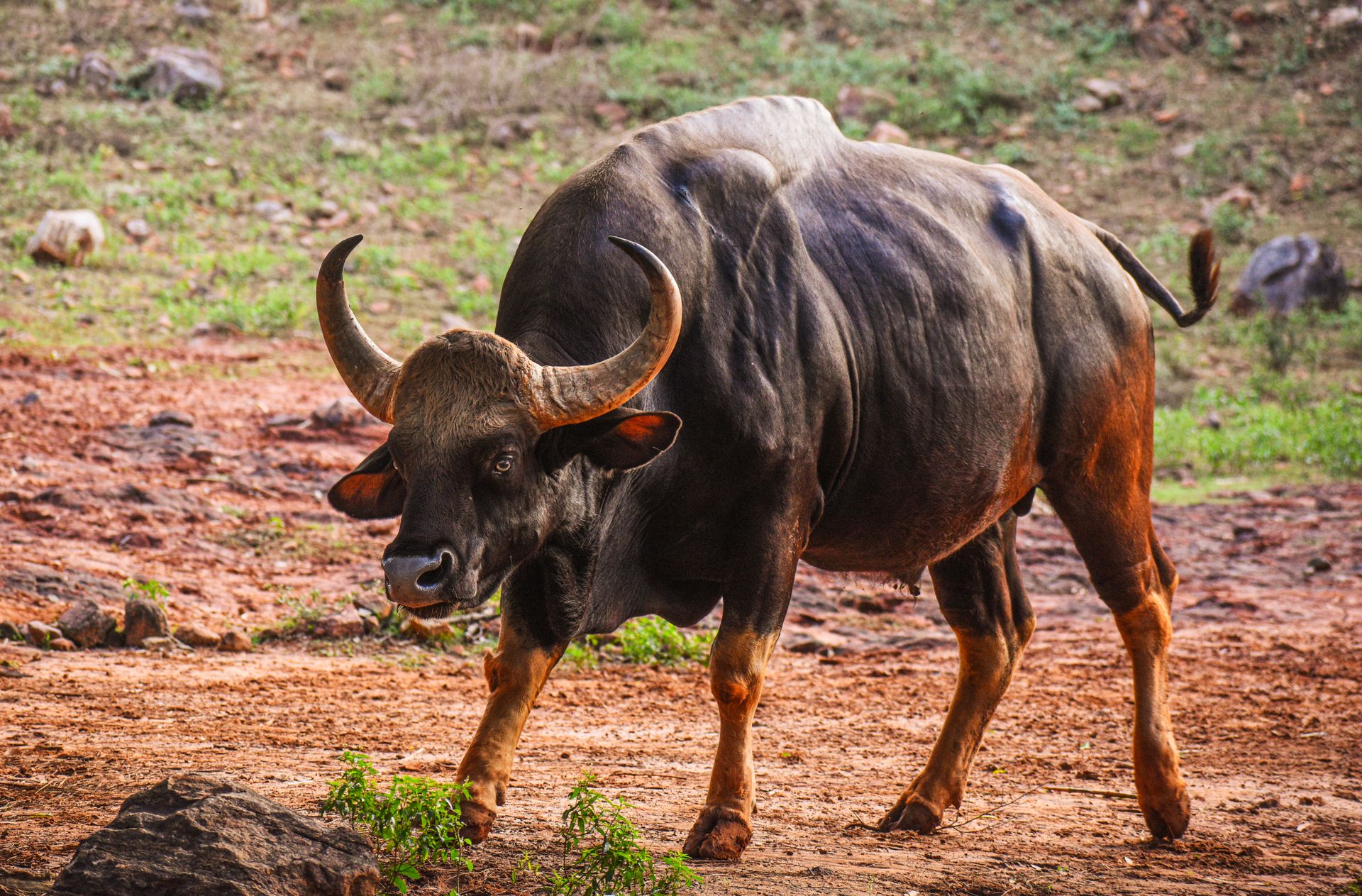
The Indian bison, also known as the gaur, is a majestic creature that plays a significant role in Indian culture and wildlife. They are herbivores, which means their diet consists mainly of grasses and other plants.
In the wild, Indian bison can be found roaming in grasslands and forests, where they feed on a variety of grasses, leaves, and fruits. They have a unique digestive system that allows them to break down and extract nutrients from plant material.
Indian bison are considered sacred in Hinduism and are often depicted in ancient Indian art and literature. They are also an important part of Indian folklore, with stories and legends surrounding their strength and majesty.
Additional reading: What Is Bison Animal
Scientific Information
A gaur is a large bovine species classified as Bos gaurus.
The gaur's scientific classification is as follows:
- Kingdom: Animalia
- Phylum: Chordata
- Class: Mammalia
- Order: Artiodactyla
- Family: Bovidae
- Subfamily: Bovinae
- Genus: Bos
- Species: Bos gaurus
The gaur belongs to the Bovidae family, which includes cattle and antelopes.
Distribution and Habitat
The Indian bison, also known as the gaur, is native to the Indian subcontinent and Southeast Asia. Its range extends from India, Nepal, and Bhutan, through Bangladesh, Myanmar, Thailand, Cambodia, and Laos, and into Malaysia and Indonesia.
The gaur prefers forested habitats, including tropical and subtropical rainforests, deciduous and evergreen forests, grasslands, shrublands, and bamboo forests. It requires a mixture of open and dense forest areas, as well as water sources like rivers, streams, and pools.
Historically, the gaur was found across much of its range, but today it is threatened by habitat loss due to deforestation, agricultural expansion, and urbanization. As a result, the gaur's distribution has become fragmented, with isolated populations in protected areas and forest patches.
Here are some of the gaur's preferred habitats:
- Tropical evergreen forests
- Bamboo forests
- Dry deciduous forests
The gaur's habitat requirements make it a key indicator species for forest health and conservation efforts.
Distribution and Habitat
The gaur, or Indian bison, is native to the Indian subcontinent and Southeast Asia.
Its range extends from India, Nepal, and Bhutan, through Bangladesh, Myanmar, Thailand, Cambodia, and Laos, and into Malaysia and Indonesia. This is a vast territory, covering many diverse landscapes.
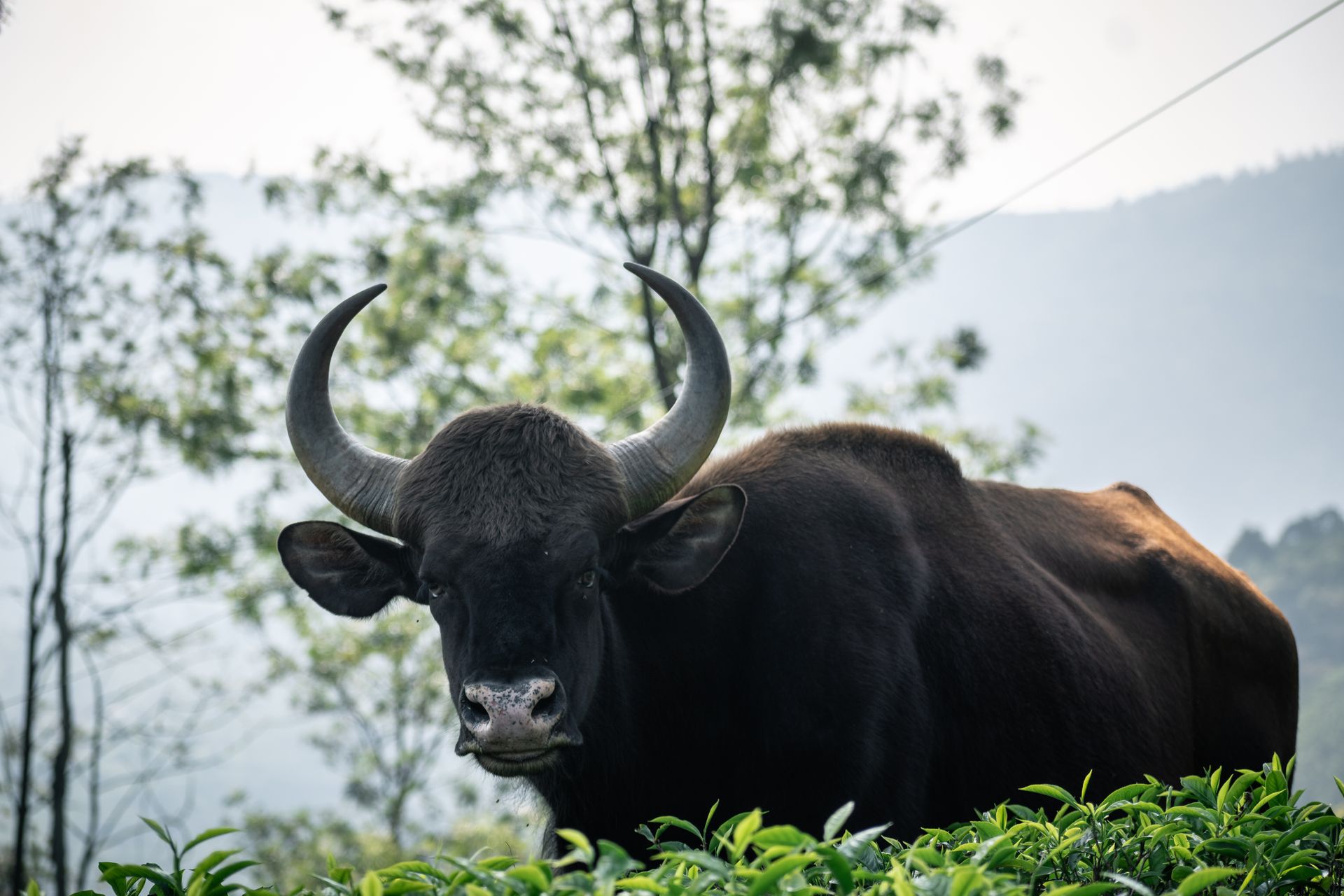
The gaur prefers forested habitats, ranging from tropical and subtropical rainforests to deciduous and evergreen forests. It's also found in grasslands, shrublands, and bamboo forests.
A mixture of open and dense forest areas, as well as water sources such as rivers, streams, and pools, is essential for the gaur's habitat requirements. This is why conservation efforts often focus on preserving these areas.
Historically, the gaur was found across much of its range, but today it's threatened by habitat loss due to deforestation, agricultural expansion, and urbanization. As a result, the gaur's distribution has become fragmented, with isolated populations in protected areas and forest patches.
Here are some of the specific habitats where the gaur can be found:
- Tropical evergreen forests
- Bamboo forests
- Dry deciduous forests
- Grasslands
- Shrublands
The gaur's adaptable nature has allowed it to thrive in these various habitats, making it a fascinating species to study and observe.
Population
The Indian Bison population is scattered across different locations, primarily in India, Bhutan, and Bangladesh.
Recent estimates suggest a population ranging from 23,000 to 34,000 individuals.
This wide distribution makes conservation efforts challenging, but it also highlights the importance of protecting these habitats.
The population is scattered, making it difficult to determine the exact numbers accurately.
These estimates give us a rough idea of the population size, but more research is needed to get a clearer picture.
Expand your knowledge: Burmese Python Population in Florida
Physical Characteristics
The Indian bison, also known as the gaur, is a large and imposing wild cattle species.
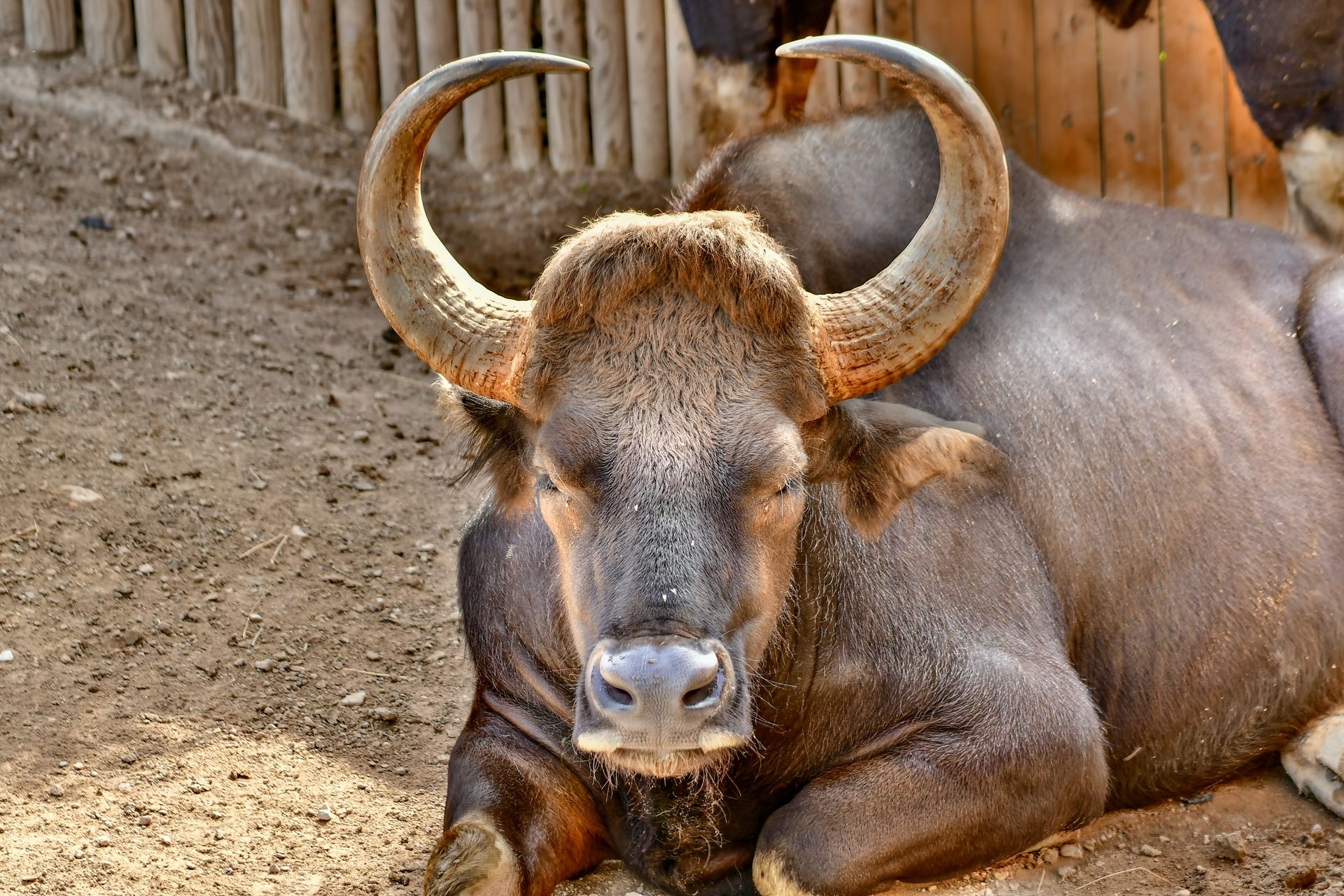
Its coat color varies from dark brown to black, with lighter-colored legs. The gaur's coat shimmers in the sunlight, giving it a distinctive appearance.
The gaur has a muscular build, with a hump at the shoulders, particularly in males, formed by a thickening of the vertebrae and muscles.
The horns of the gaur are long and curved, with a sharp tip, and are used for defense and display. In males, the horns can grow up to 1 m (3.3 ft) in length and curve outward.
Here are some key physical characteristics of the gaur:
The gaur's size varies depending on the sex, with males being about one-fourth larger and heavier than females.
Behavior, Ecology
The Indian bison is a social animal that thrives in small groups, or herds, consisting of females and their young led by a dominant male. This male gaur defends his territory and herd from rivals with threatening displays, vocalizations, and physical combat using his horns.
In the wild, Indian bison are primarily active during the day, spending their time foraging for food and socializing with other members of the herd. They are herbivores, feeding on a wide range of plant material including grasses, leaves, fruit, and flowers.
Their diet can vary depending on the season and availability of food in their habitat. In tropical forests, they feed on a variety of tree and shrub species, as well as bamboo shoots. During the dry season, when food may be scarce, they may also eat bark and woody material.
The Indian bison's complex digestive system allows it to break down tough plant material, such as fibrous grasses and leaves, using specialized microbes in its stomach. This unique system is similar to that of a cow, with a four-chambered stomach that allows for fermentation and digestion of plant material over an extended period.
Here's a breakdown of the Indian bison's social behavior:
- They form circular sleeping formations with calves protected in the center
- They establish a social structure with dominant individuals leading and protecting the group
- They communicate with each other using vocalizations, body language, and scent marking
Predators and Threats
The Indian bison, also known as the gaur, is a formidable opponent for most predators due to its large size and strength. However, it's still vulnerable to predation by large carnivores like tigers, leopards, dholes, and crocodiles.
Young calves are also at risk of being taken by smaller predators such as jackals and pythons. Human activities are the greatest threat to gaur populations, with habitat loss and fragmentation due to agriculture, logging, and human settlement greatly reducing their range and population size.
Hunting for meat, trophies, and body parts has also contributed to the decline of gaur populations in some areas. The gaur is susceptible to diseases transmitted from domestic livestock, which can have devastating effects on wild populations.
Climate change is also likely to impact gaur populations by altering their habitat and food availability.
Here are the main predators and threats to the Indian bison:
Conservation Status
The Indian bison, also known as the gaur, is listed as "vulnerable" on the IUCN Red List of Threatened Species, indicating a high risk of extinction in the wild.
Habitat loss and degradation due to human activities like deforestation, agriculture, and development are significant threats to gaur populations. Poaching and hunting are also major concerns.
Conservation efforts are underway to protect the gaur, including habitat protection and restoration, reduction of human-gaur conflicts, and regulation of hunting and poaching. Several protected areas have been established across the gaur's range.
The Indian government has also taken steps to conserve the gaur, listing it as an endangered species under the Indian Wildlife Protection Act 1972.
Recommended read: Wolf Hunting with Hounds
Status
The gaur is listed as "vulnerable" on the IUCN Red List of Threatened Species, indicating that it faces a high risk of extinction in the wild.
Habitat loss, degradation, and fragmentation are major concerns for gaur populations, primarily caused by human activities like deforestation, agriculture, and development.
Gaur populations are also threatened by poaching and hunting, as well as competition with domestic livestock and disease transmission from livestock.
A unique perspective: Livestock Guardian Animals
Conservation efforts are underway, including habitat protection and restoration, reduction of human-gaur conflicts, and regulation of hunting and poaching.
Several protected areas have been established across the gaur's range, such as national parks, wildlife sanctuaries, and reserves.
Captive breeding programs have been established in some areas to boost gaur populations and help ensure the species' survival.
Initiatives
Conservation efforts are underway to protect the Indian Bison, also known as the Gaur. Habitat protection and restoration, reduction of human-gaur conflicts, and regulation of hunting and poaching are key strategies being implemented.
Several protected areas have been established across the gaur's range, including national parks, wildlife sanctuaries, and reserves. These areas provide safe habitats for the bison and help reduce the risk of extinction.
Captive breeding programs have also been established in some areas to boost gaur populations. This approach has shown promise in reviving populations in depleted areas.
Conservation initiatives include reintroduction projects in key habitats, establishment of protected areas, increased anti-poaching efforts, community engagement and education, and raising awareness about the ecological importance of the bison.
You might enjoy: Wildlife Conservation
Here are some of the conservation measures being taken:
These conservation efforts are crucial for maintaining biodiversity and preserving the ecosystems in which the bison reside. By protecting the bison, we ensure the survival of not only this magnificent bovine species but also the interconnected web of life within their ecosystems.
On a similar theme: Bison Meat for Dogs
Diet and Feeding
The Indian bison's diet is a fascinating topic, and one that plays a crucial role in shaping their feeding habits and the ecosystems they inhabit.
Indian bison are herbivores, which means they primarily feed on plants. Their diet consists of a diverse range of items including grass, leaves, shoots, buds, bamboo, herbs, and fruits.
Feeding takes up a significant portion of their day, with the animals spending around 10 to 15 hours engaged in feeding activities.
Their diet leads them to travel considerable distances in search of food, influencing the distribution and abundance of plant species within their range.
Suggestion: Common Snapping Turtle Food
Indian bison rely on salt licks to fulfill their mineral needs, which is essential for their overall health.
Their feeding habits have a significant impact on the ecosystems they inhabit, influencing the distribution and abundance of plant species in their range.
Here's a breakdown of how their diet contributes to the shaping of the ecosystem:
Their feeding habits can shape the landscape and contribute to the overall biodiversity of their habitat, making them a keystone species.
Geographical Distribution
The Indian bison, also known as the gaur, can be found in a vast range of habitats across the Indian subcontinent and Southeast Asia. Its native range extends from India, Nepal, and Bhutan, through Bangladesh, Myanmar, Thailand, Cambodia, and Laos, and into Malaysia and Indonesia.
The gaur prefers forested habitats, including tropical and subtropical rainforests, deciduous and evergreen forests, grasslands, shrublands, and bamboo forests. It requires a mixture of open and dense forest areas, as well as water sources such as rivers, streams, and pools.
In India, the gaur thrives in the Central Indian Highlands, Eastern Ghats, and Western Ghats.
Different Regions
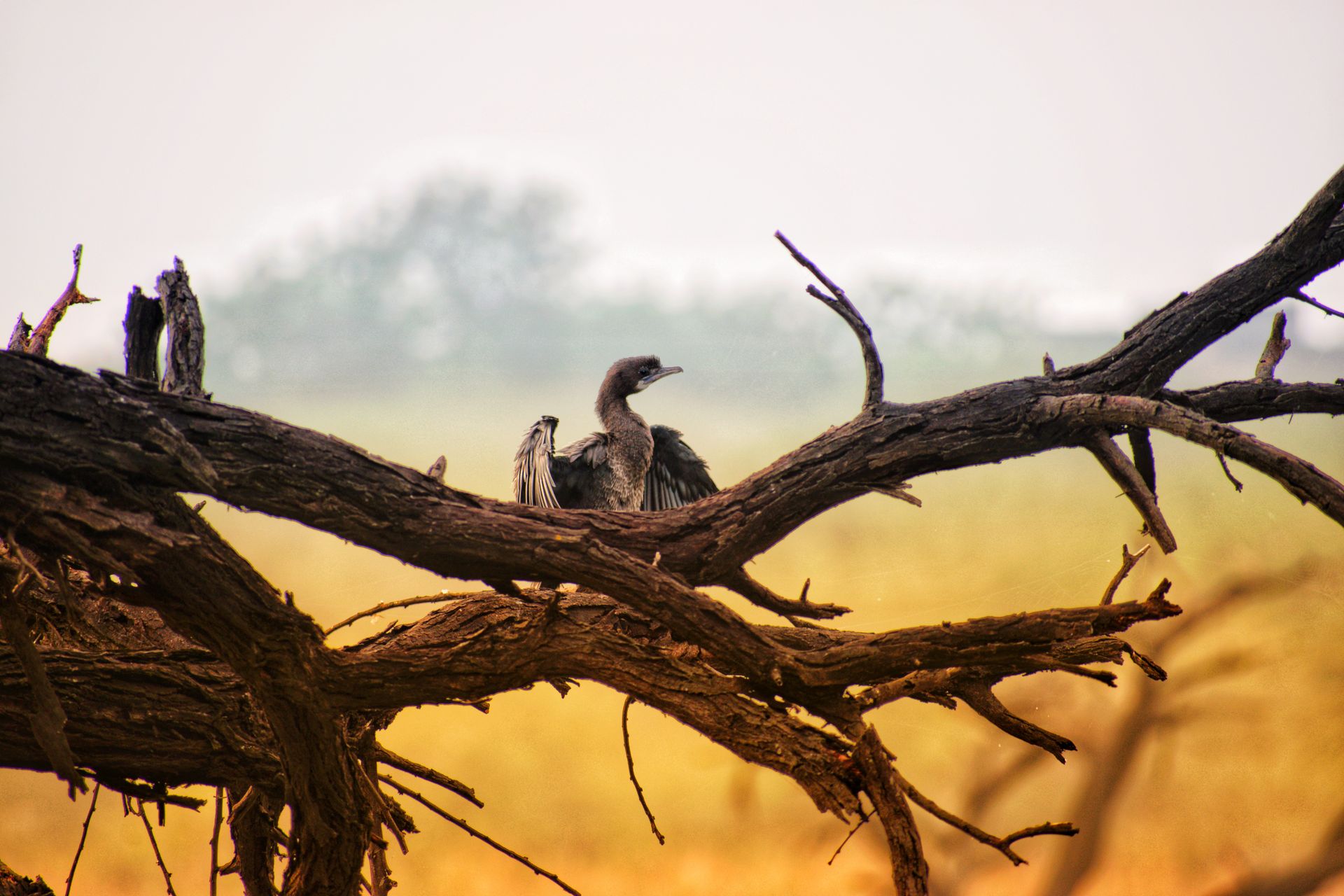
Indian Bison can be found in various regions across India and Bhutan, where they thrive and contribute to conservation efforts.
The Central Indian Highlands, Eastern Ghats, and Western Ghats are major regions in India where Indian Bison are known to live.
National parks like Tadoba, Kanha, and Periyar offer excellent opportunities for wildlife enthusiasts to observe Indian Bison in their natural habitat.
The gaur, or Indian bison, is native to the Indian subcontinent and Southeast Asia, with its range extending from India, Nepal, and Bhutan, through Bangladesh, Myanmar, Thailand, Cambodia, and Laos, and into Malaysia and Indonesia.
Indian Bison prefer forested habitats, including tropical and subtropical rainforests, deciduous and evergreen forests, grasslands, shrublands, and bamboo forests.
Their habitat requirements include a mixture of open and dense forest areas, as well as water sources such as rivers, streams, and pools.
Historically, Indian Bison were found across much of their range, but today they are threatened by habitat loss due to deforestation, agricultural expansion, and urbanization.
For more insights, see: Is Bison and Buffalo the Same Animal
Bhutan
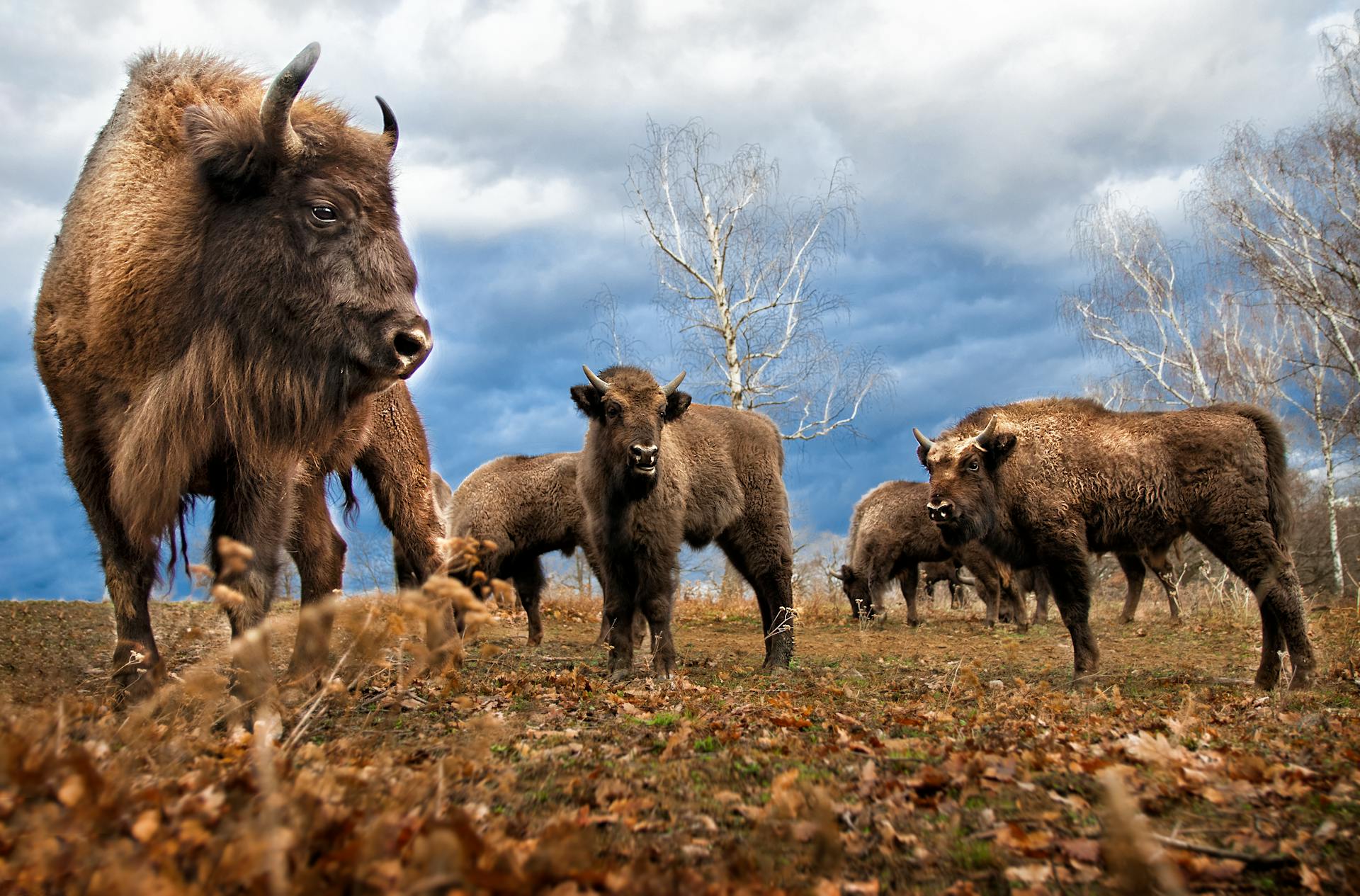
Bhutan is home to the Indian Bison, also known as Indian Gaur, which can be found in Royal Manas National Park and other protected areas.
These regions provide important habitats for the Indian Bison and play a vital role in their conservation efforts.
The Indian Bison is known for its distinctive call, color-changing abilities, lateral displays, and high-pitched whistles.
Interesting Facts About
The Indian bison is an incredible creature, and here are some interesting facts about it:
The Indian bison, also known as the gaur, is the largest wild bovid in the world, even larger than the African buffalo.
These majestic animals have a distinctive coat color that varies from dark brown to black, with lighter-colored legs.
Their powerful appearance is enhanced by a distinctive ridge of muscle, called a hump, behind their shoulders.
Indian bison are social animals and live in herds of up to 40 individuals, usually consisting of females and their offspring.
While they're primarily herbivores, they've been known to eat small mammals and birds on occasion.
One of their most impressive abilities is their swimming skills, and they can cross rivers with ease.
Their natural predators are few, but they're occasionally hunted by tigers and leopards.
Unfortunately, their low reproductive rate and habitat loss due to human activities are the primary threats to their survival in the wild.
The Indian bison holds a special place in some cultures and is considered a sacred animal by certain Hindu communities in India.
Culture
The gaur holds a special place in Indian culture, particularly in Hindu communities where it's considered a sacred animal. In traditional Indian medicine, various parts of the gaur's body are believed to have medicinal properties.
The gaur has been featured in literature and popular culture, including Rudyard Kipling's "The Jungle Book". This iconic novel has helped raise awareness about the gaur's importance in Indian ecosystems.
In modern times, the gaur has become the focus of conservation efforts, recognizing its value as part of India's natural heritage. The gaur is the state animal of several Indian states, including Goa, Karnataka, and Kerala.
Rare Sightings
Indian bison are a rare sight in the wild, with only around 1,500 individuals remaining in the country.
Their numbers have been declining due to habitat loss and poaching.
In fact, the Indian bison is listed as a vulnerable species by the International Union for Conservation of Nature.
The last recorded sighting of a wild Indian bison was in the state of Assam in 1997.
This sighting was a significant event, as it was the first confirmed sighting of a wild Indian bison in over a century.
Conservation efforts are underway to protect the remaining Indian bison and their habitats.
Frequently Asked Questions
Are there any bison in India?
Yes, India is home to the Indian Bison, also known as the Gaur, which is the largest wild cattle species. It's listed as vulnerable by the IUCN due to declining population since 1986.
How strong is a Gaur?
A Gaur's strength lies in its ability to snap into a powerful attack when threatened or feeling defensive, making it a formidable opponent.
How tall and how much does an Indian Bison weigh?
An Indian Bison typically stands between 170-230 cm tall and weighs between 400-1500 kg, with males being significantly heavier than females.
Featured Images: pexels.com