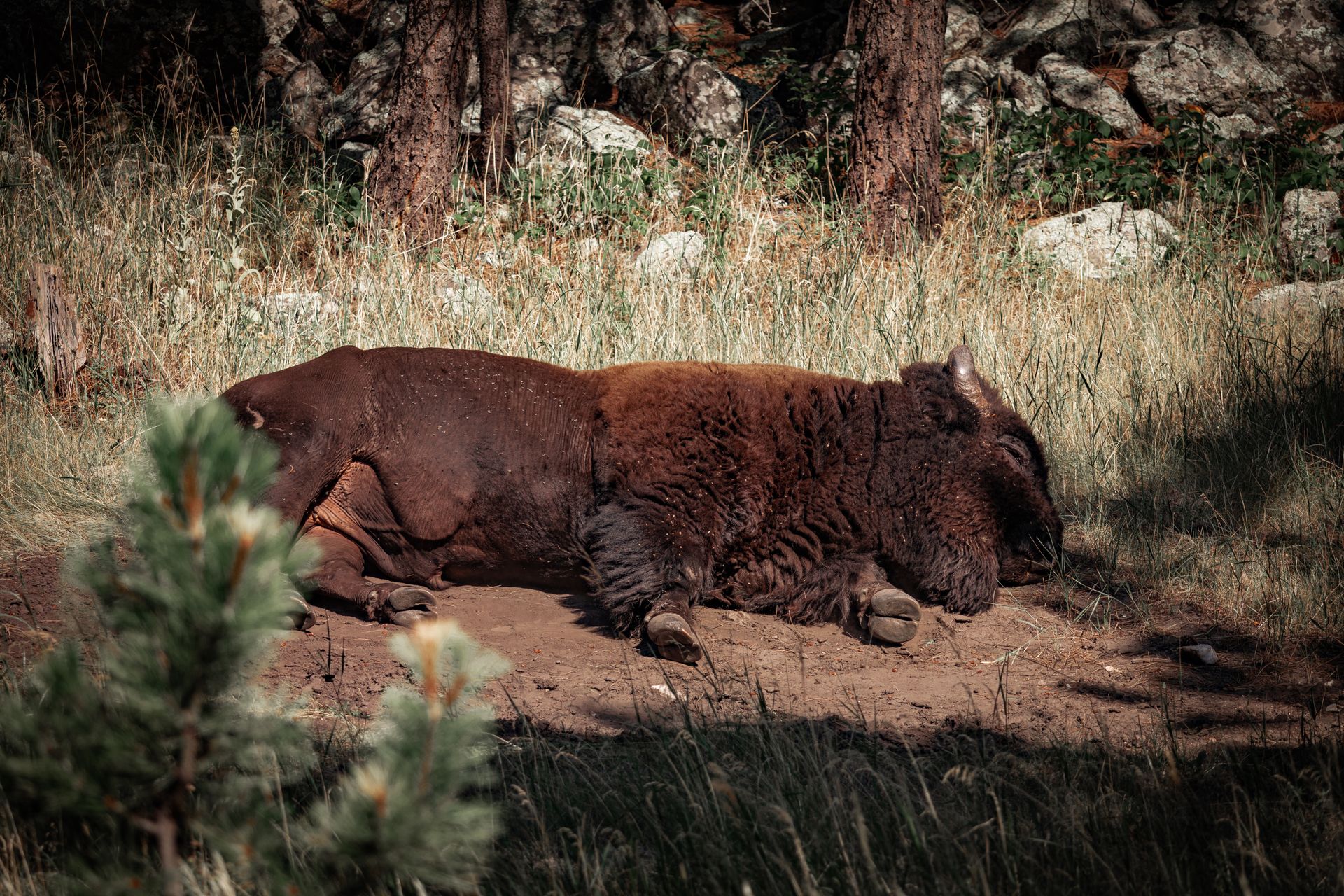
Bison and buffalo are often used interchangeably, but they're not exactly the same animal.
The main difference between bison and buffalo lies in their physical appearance and geographical distribution.
Bison are larger and have a more muscular build, with a distinctive hump on their shoulders.
In contrast, buffalo are generally smaller and have a more compact body.
Both bison and buffalo are part of the Bovidae family, which includes cattle, antelopes, and goats.
Take a look at this: Buffalo Bison Animal
What is a Buffalo?
A buffalo is a member of the Bovidae family, which also includes bison, but they live on different continents and are each part of a different genus.
The water buffalo lives in South Asia, specifically in countries like India and Sri Lanka.
The Cape buffalo is the only native African buffalo species and can be found in savannas and grasslands across sub-Saharan Africa.
What is a Buffalo?
Buffalo are members of the Bovidae family, just like bison. They live on different continents and are each part of a different genus.
The water buffalo lives in South Asia, and it's a species that's well adapted to its environment. The Cape buffalo, on the other hand, is the only native African buffalo species.
Buffalo can be quite large, and they have a distinctive appearance that sets them apart from other animals.
American Bison: Why Called Buffalo?
American bison are often mistakenly called buffalo, but they're actually two different animals. The name "buffalo" likely stuck because explorers who had seen African or Asian buffalo thought American bison were the same.
The American bison is native to North America and the national animal of the United States. They're divided into two subspecies: the plains bison and the wood bison.
Native Americans successfully managed the bison population in the Great Plains, but white settlers brought them near extinction. Today, bison are an important part of American wildlife.
Bison are surprisingly smart and agile animals. They can turn on a dime, using their front legs to quickly change direction.
Physical Characteristics
Bison are large, powerful animals with a distinctive appearance. They have a broad, flat head, a short, curved horn, and a shaggy coat that's usually brown or black.
Bison can weigh between 900 and 2,200 pounds, with males being larger than females. Their bodies are well-suited for running and grazing.
Bison typically stand between 5 and 6 feet tall at the shoulder, with some males reaching heights of up to 6.5 feet.
What is a Bison?
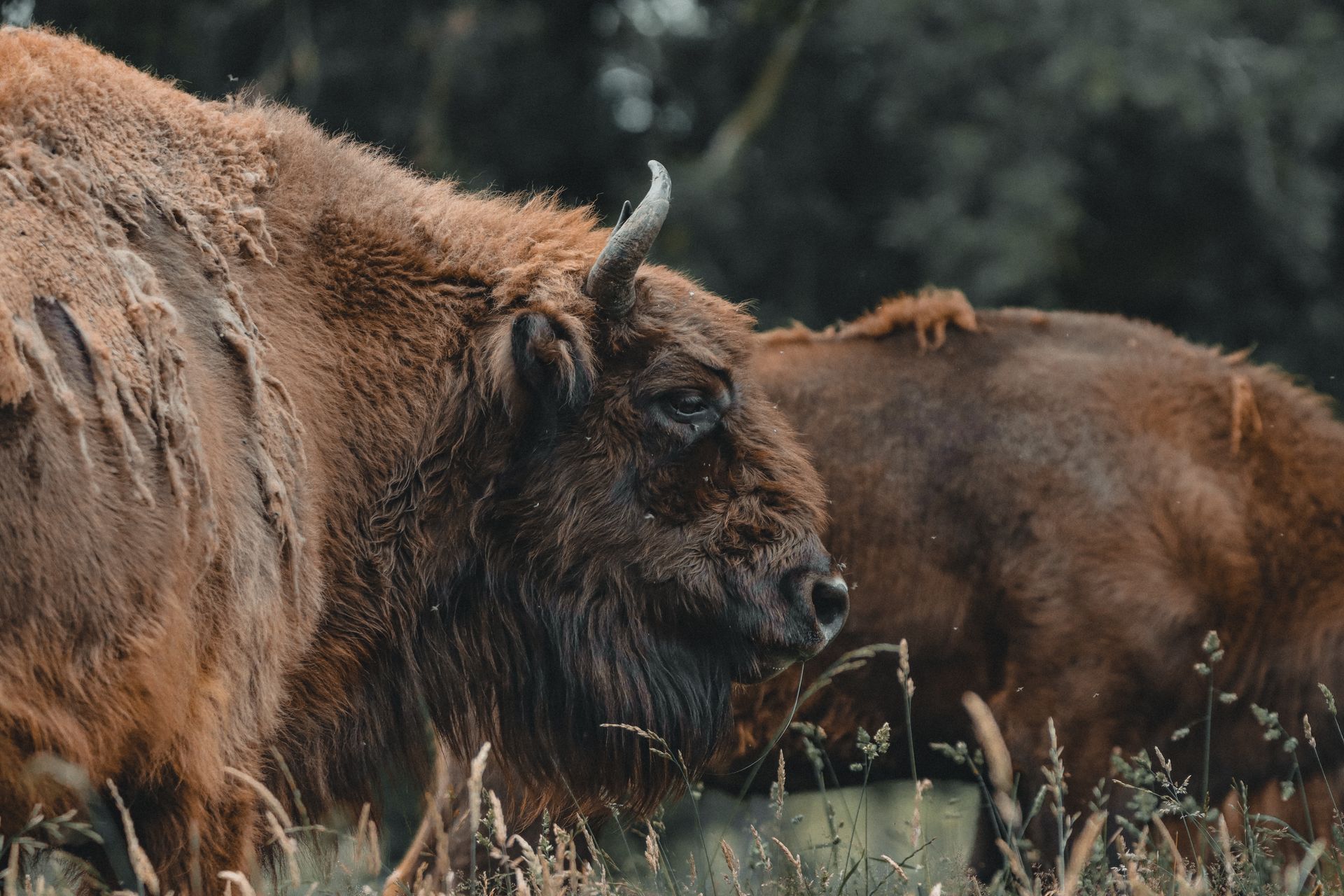
Bison are large, powerful animals with a distinctive appearance. They have a shaggy coat that's usually brown or black in color, which helps them blend in with their surroundings.
Their bodies are well-suited for their native grasslands and prairies, with long legs and a robust build that allows them to run at speeds of up to 30 miles per hour.
Core Differences in Physical Characteristics
Bison have a distinct hairy fur coat that grows thicker in the winters to protect them from the harsh environment.
One of the most noticeable differences between bison and buffalo is their physical appearance. Bison have very sharp horns that they use for defense, while buffalo's horns are longer but not as sharp.
A bison's rugged structure is reflected in its temperament, making it a very aggressive animal when threatened. In contrast, Asian water buffaloes are peaceful animals, which is why they are domesticated.
Bison can grow up to 6 feet in size, while buffalo typically reach 5 feet. This size difference is one of the most notable physical distinctions between the two animals.
Here's a comparison of the physical characteristics of bison and buffalo:
Bison can also run faster than buffalo, making them well-suited to their natural habitats.
Geographical Distribution
Bisons are native to North and South America, but you can now find them in Asia and Africa too.
Their range has expanded significantly, but originally they were only found in the Americas.
Buffaloes, on the other hand, are native to Asia and Africa, and have also been introduced to other parts of the world.
You might like: Native Australian Animals
American
American bison are native to North America and the national animal of the United States. They can be found in various parts of the country, including the Great Plains.
In fact, the plains bison once inhabited an area that spanned from Canada to Mexico, with approximately 50 million individuals roaming the land. This is according to Britannica, which notes that this was the largest aggregation of large animals known to recorded history.
The bison's geographical distribution is quite impressive, considering they're able to cover a lot of ground quickly. As Lydia Austin from Custer State Park notes, "They can turn on a dime", using their front legs to turn and swing their behind around, allowing them to change direction rapidly.
It's worth noting that the bison's range has been impacted by human activity, particularly the colonization of the West by white settlers. This led to a significant decline in their population, and they were nearly driven to extinction.
Geographical Distribution
Bisons are native to North and South America, but their range has expanded to include Asia and Africa.
Bisons can now be found on multiple continents, which is a significant departure from their original habitat.
In Asia, bison are often found in areas where they have been introduced, such as in national parks or wildlife reserves.
Buffaloes, on the other hand, are native to Asia and Africa, and have also been introduced to other parts of the world.
Their adaptability has allowed them to thrive in various environments, from grasslands to forests.
Diet and Habitat
Bison are herbivores and their diet consists mainly of grasses, which is different from buffalo who eat a variety of plants including grasses, clover, and alfalfa.
In North America, bison are found in grasslands and prairies, where they roam freely and can be seen in large herds.
Bison are well adapted to their natural habitat, with a thick coat of fur and a robust body that helps them withstand harsh winters and extreme temperatures.
Bison can be found in several national parks and wildlife refuges in the United States, including Yellowstone National Park and the National Bison Range.
In contrast, buffalo are found in a variety of habitats, including grasslands, savannas, and forests, and are native to Africa and Asia.
Curious to learn more? Check out: National Dog Show vs Westminster
Myths and Misconceptions
Bison and buffalo are not the same animal, despite what you might have heard. They belong to different genera and are native to different parts of the world.
The confusion stems from early European settlers who called bison "buffalo", and the name stuck in popular culture. This misnomer has been perpetuated by expressions like "buffalo nickel" or "buffalo robe", which actually depict bison, not buffalo.
Physically, bison have distinctive humps at their shoulders and larger heads, whereas true buffalo have no shoulder hump and typically have larger horns.
Myth 16:
Bison and buffalo are not interchangeable terms, despite what many people believe.
The confusion between the two animals stems from early European settlers who called bison "buffalo", a name that stuck in popular culture.
Bison belong to the genus Bison and are native to North America and parts of Europe.
True buffalo, on the other hand, belong to different genera (Syncerus and Bubalus) and are native to Africa and Asia.
Bison have distinctive humps at their shoulders, while true buffalo have no shoulder hump.
Bison also have larger heads than buffalo.
The terms "buffalo nickel" and "buffalo robe" actually refer to bison, not buffalo.
Myth 11:
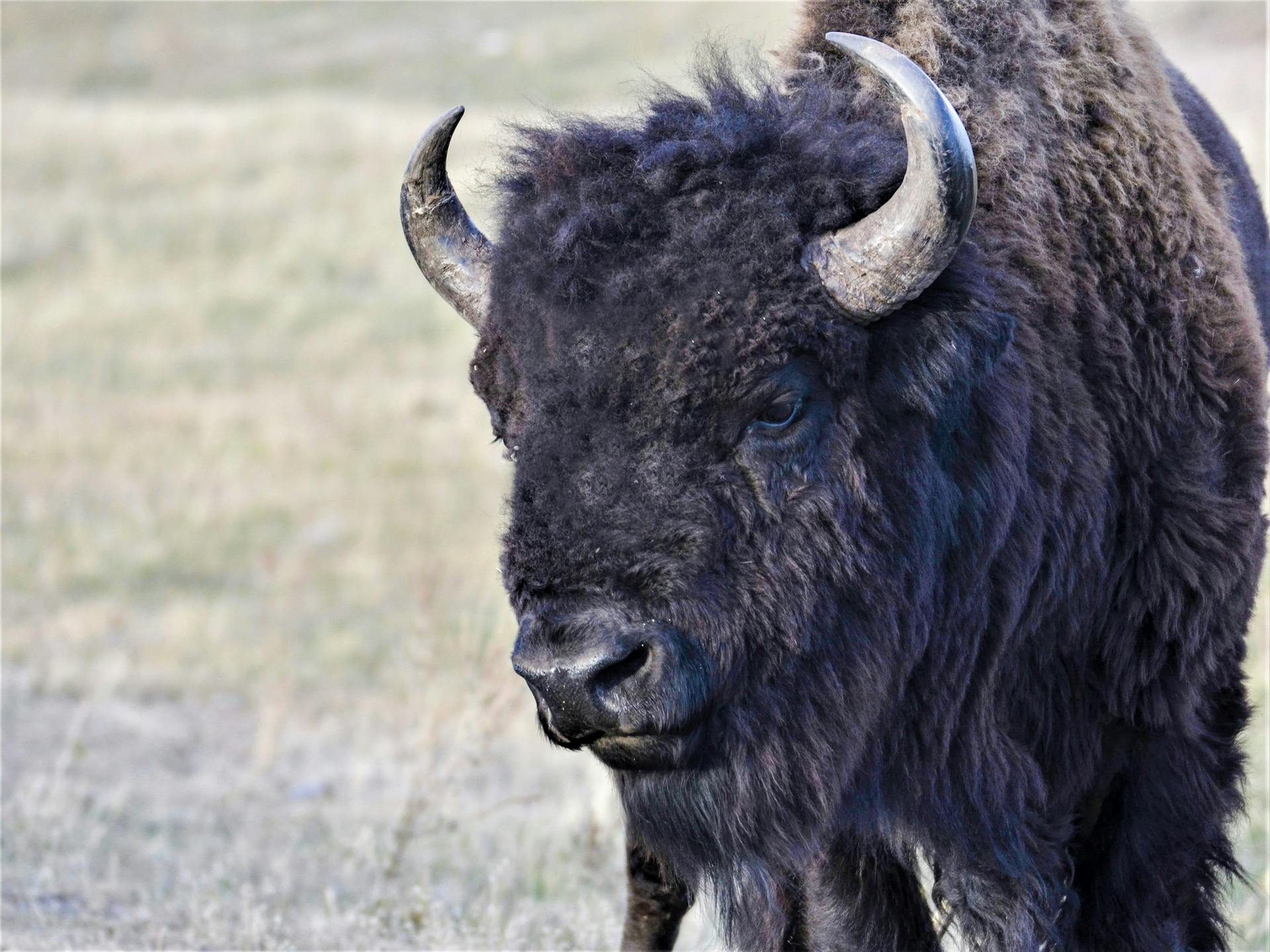
Bison are often mistaken for wild cattle, but they're actually distinct species with different evolutionary histories and ecological roles. They diverged from a common ancestor approximately 1 million years ago.
Bison have evolved specifically for the North American climate, with their massive head and shoulders designed to plow through deep snow and their thick winter coat protecting them from extreme cold.
Their grazing patterns, wallowing behavior, and even their dung support specific plant communities and wildlife. Bison graze differently than cattle, contributing to greater plant diversity in grasslands.
Research shows that bison play a keystone role in prairie ecosystems that cattle cannot replicate.
Comments:
It's time to debunk some common myths and misconceptions. One of the most notable is the difference between a bison and a buffalo, which are often used interchangeably but are actually two distinct species.
The term "buffalo" is often mistakenly applied to the American bison, but technically, it refers to the African and Asian water buffalo. This confusion has led to a lot of misinformation.
Here's a quick rundown of the difference between a bison and a buffalo:
Some people also get confused between a cow and a buffalo, but the key difference lies in the breed and the purpose of the animal. Cows are domesticated cattle, while buffaloes are wild or semi-wild animals.
The difference between a deer and an antelope is another common misconception. While both are types of hooved mammals, they belong to different families and have distinct physical characteristics.
For another approach, see: Difference between Dachshund and Mini Dachshund
Identifying and Raising
Bison are more independent calvers, rarely needing human assistance during birth compared to many domestic cattle breeds.
They're also more weather-hardy, requiring less winter shelter and supplemental feeding in harsh conditions.
However, bison present unique challenges, such as jumping fences that would contain cattle, requiring stronger, taller fencing typically 6 feet high.
Traditional cattle chutes and corrals are often inadequate for handling bison, making it essential to adapt management practices to their natural behaviors.
Bison have different grazing patterns than cattle, often covering more territory and utilizing a wider variety of plants.
Myth: Raising Is Just Like Raising Cattle
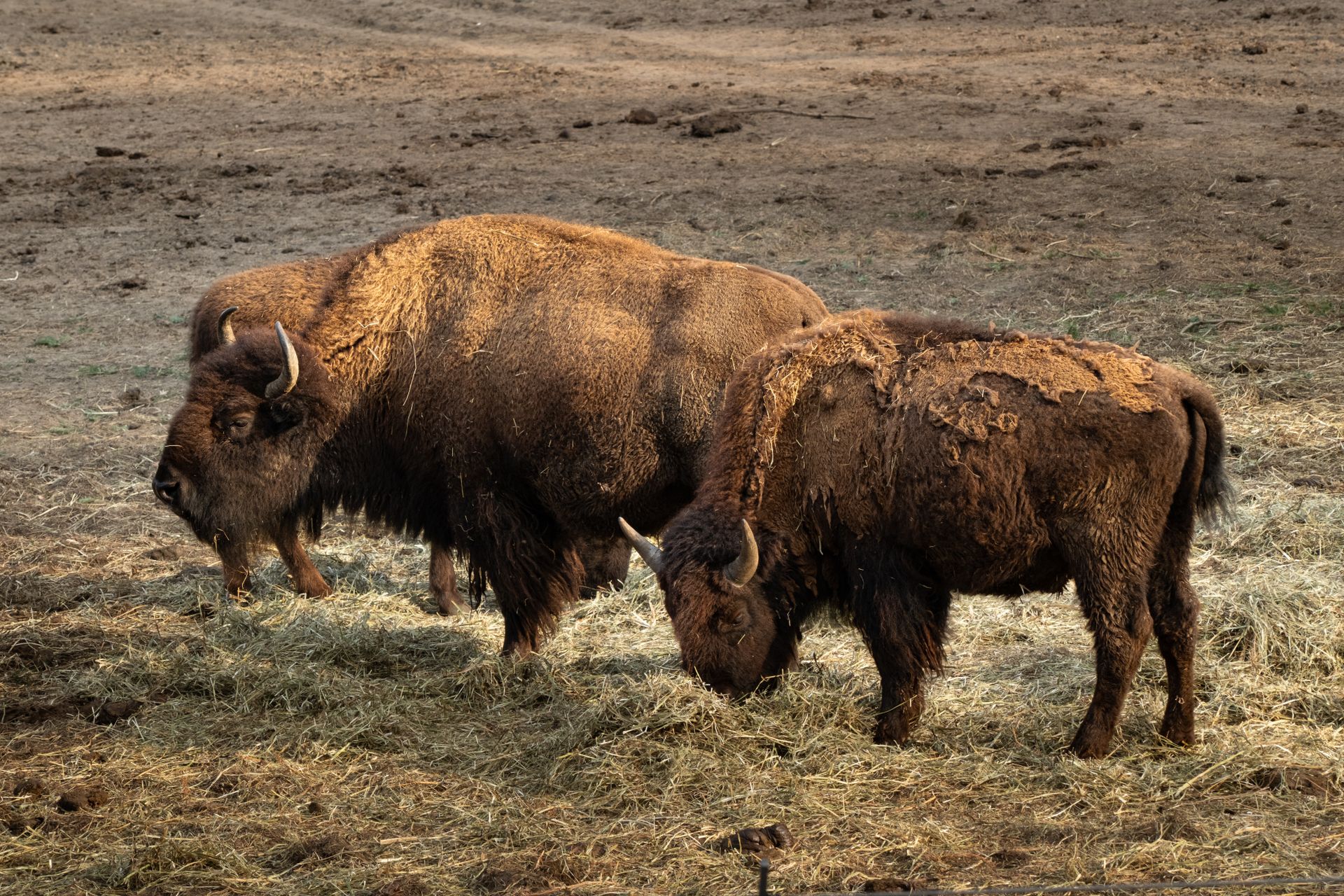
Raising bison is not just like raising cattle. In fact, bison retain much more of their wild nature and require different handling approaches.
Bison are more independent calvers, rarely needing human assistance during birth, unlike many domestic cattle breeds. This means ranchers need to be prepared for a more hands-off approach.
Bison are also more weather-hardy, requiring less winter shelter and supplemental feeding in harsh conditions. However, they can jump fences that would contain cattle, requiring stronger, taller fencing.
Bison have different grazing patterns than cattle, often covering more territory and utilizing a wider variety of plants. Traditional cattle chutes and corrals often fall short in handling bison.
To successfully raise bison, ranchers need to learn to work with their wild tendencies rather than against them. This means adapting management practices to the bison's natural behaviors.
In contrast to cattle, bison require fencing that's typically 6 feet high to contain them. This is a crucial consideration for any rancher looking to raise bison.
A fresh viewpoint: Animals in Captivity vs Animals in the Wild
Identifying vs
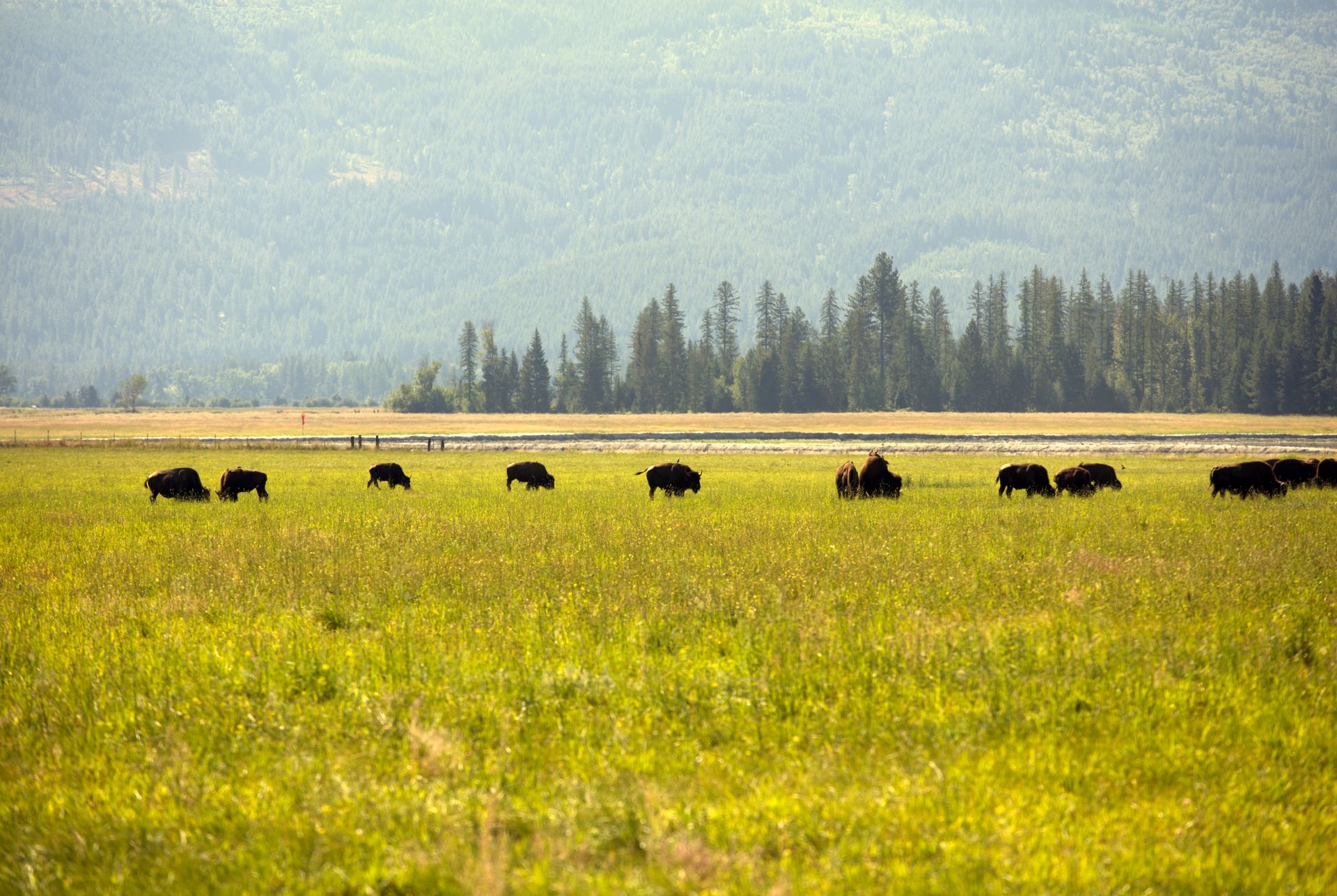
If you're trying to tell the difference between bison and buffalo, start by looking at their shoulders. Bison have a distinctive hump, which buffalo do not.
One way to tell a bison from a buffalo is to check for a beard - bison have thick coats on their faces, including beards. This is especially noticeable in the spring and early summer when they shed their coats.
Bison horns are typically short and point straight up, while buffalo horns are long and curved, resembling a handlebar mustache.
Here's a quick comparison of the key differences:
If you see an animal with a beard, it's likely a bison. And if you notice long, curved horns, it's probably a buffalo.
Uses
Buffaloes are primarily domesticated animals, with only a few species remaining wild.
Buffalo milk is consumed in Asia and Africa, making it a valuable resource for these regions.
Buffaloes are widely used as work animals due to their strength and endurance.
Bison, on the other hand, are mostly wild and not used for work.
Both buffaloes and bison are raised for their meat, providing a source of protein for many people.
Featured Images: pexels.com