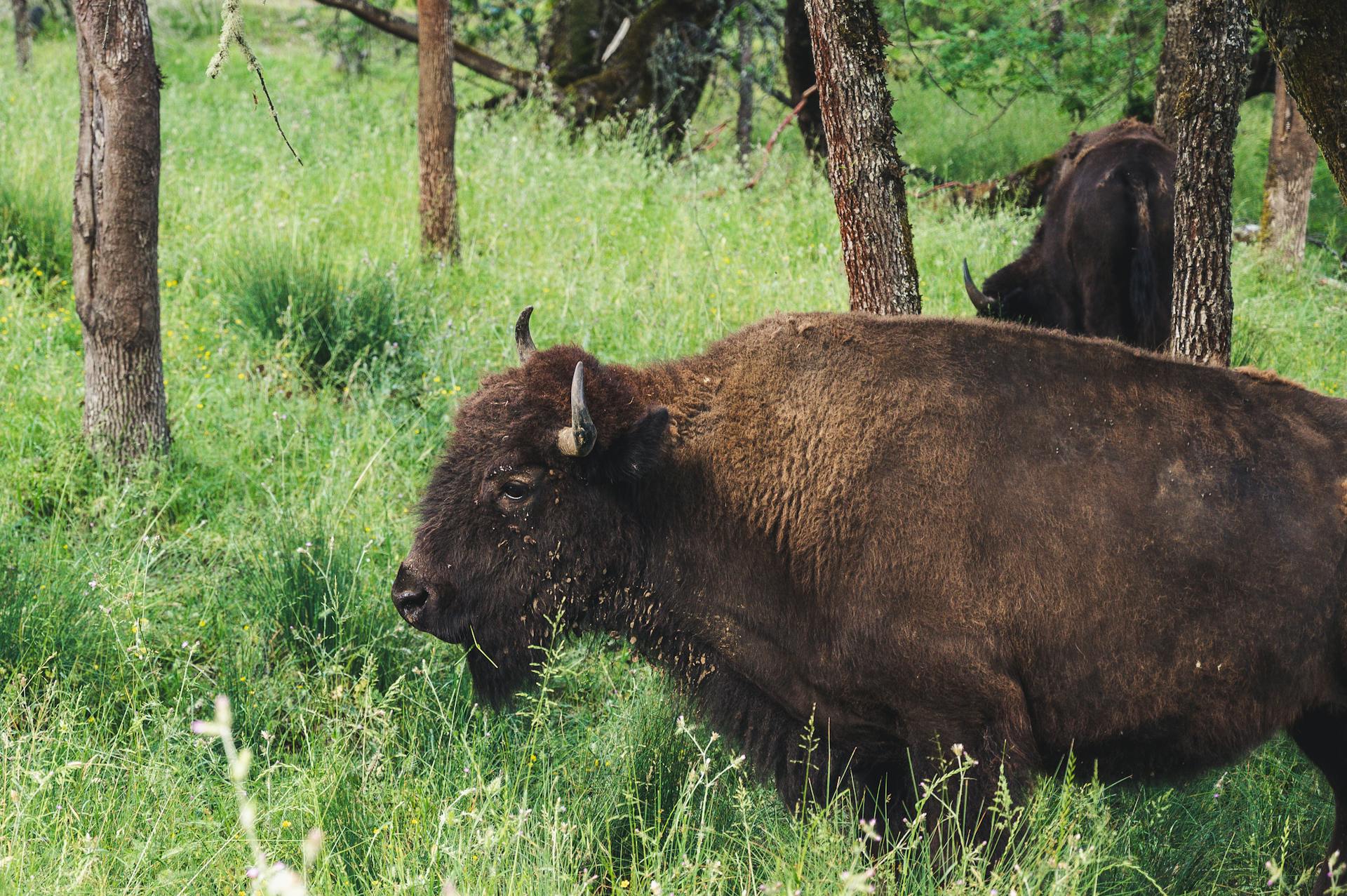
The American bison, also known as the American buffalo, is a majestic creature with a rich history. They are the largest land mammals in North America, with adults weighing up to 2,200 pounds.
Bison are herbivores, feeding on a variety of plants including grasses, fruits, and leaves. Their diet is crucial to their survival, and they can eat up to 40 pounds of vegetation per day.
Bison are known for their distinctive shaggy coats, which can range in color from dark brown to light tan. These coats help protect them from the elements and provide camouflage in their natural habitats.
In the wild, bison can live up to 15 years, although their average lifespan is around 10-12 years. This is due in part to the challenges they face, including habitat loss and hunting.
Etymology
The term "buffalo" has a rich history, and it's fascinating to explore its origins. In American English, both "buffalo" and "bison" are considered correct terms for the American bison.
Here's an interesting read: Is Bison and Buffalo the Same Animal
The word "buffalo" was first used to refer to the American mammal as early as 1625. This is a notable fact, considering how long ago it was used.
The term "buffalo" was applied to the American bison by Samuel de Champlain, who used the French word "buffles" in 1616. He was shown skins and a drawing by members of the Nipissing First Nation, who had traveled from east of Lake Huron to trade with another nation that hunted the animals.
The word "buffalo" comes from the Greek word "boubalos", which is also the origin for the Bubal hartebeest. This is a surprising connection, but it highlights the complex history of language.
In Plains Indian languages, male and female bison are distinguished, with different designations for each. For example, in Arapaho, the word for bison cow is "bii" and the word for bison bull is "henéécee."
Here are some examples of how Plains Indian languages distinguish between male and female bison:
- Arapaho: bii (bison cow), henéécee (bison bull)
- Lakota: pté (bison cow), tȟatȟáŋka (bison bull)
This distinction is not a general feature of the language, suggesting that the bison holds a special significance in Plains Indian life and culture.
Physical Characteristics
Bison are massive animals, with males reaching up to 3.5 meters in head-rump length and weighing between 318 to 1,179 kilograms.
Their coats change with the seasons, with a shaggy, dark-brown winter coat and a lighter-weight, lighter-brown summer coat.
Both males and females have short, curved horns that can grow up to 60 centimeters long and 90 centimeters wide, which they use for fighting and defense.
The largest recorded wild bull bison weighed 1,270 kilograms, while the largest semidomestic bison weighed 1,724 kilograms.
Bison are herbivores, and their daily schedule involves grazing, resting, and cud chewing in two-hour periods, followed by moving to a new location to graze again.
Their coats also feature thick beards and shed in the spring and early summer.
Here are some key physical characteristics of bison:
- Head-rump length: up to 3.5 meters (males), up to 2.85 meters (females)
- Weight: 318 to 1,179 kilograms (males), 360 to 640 kilograms (females)
- Horn length: up to 60 centimeters
- Horn width: up to 90 centimeters
Bison are able to jump 6 feet or more and can run up to 40 miles per hour.
Evolution and Genetics
Bison are members of the tribe Bovini, and genetic evidence shows they're closely related to yaks. This is because bison are nested within the genus Bos, but including bison makes Bos paraphyletic.
Their closest living relatives are each other, with European bison being more closely related to domestic cattle and aurochs through mitochondrial DNA. However, nuclear DNA indicates that the two living bison species are each other's closest living relatives.
Bison first appeared in Asia around 2.6 million years ago during the Early Pleistocene.
Evolution
Bison are part of the tribe Bovini and are genetically closest to yaks. They're nested within the genus Bos, making Bos paraphyletic without bison.
Bison first appeared in Asia around 2.6 million years ago, during the Early Pleistocene. This was a long time ago!
Genetic evidence shows that the two living bison species are each other's closest living relatives, but their mitochondrial DNA suggests a different relationship with domestic cattle and aurochs. This suggests that there might have been incomplete lineage sorting or ancient introgression.
Bison migrated to North America from Asia, specifically from the Siberian steppe bison (Bison priscus), around 195,000 to 135,000 years ago. This was a significant event in the continent's ecology.
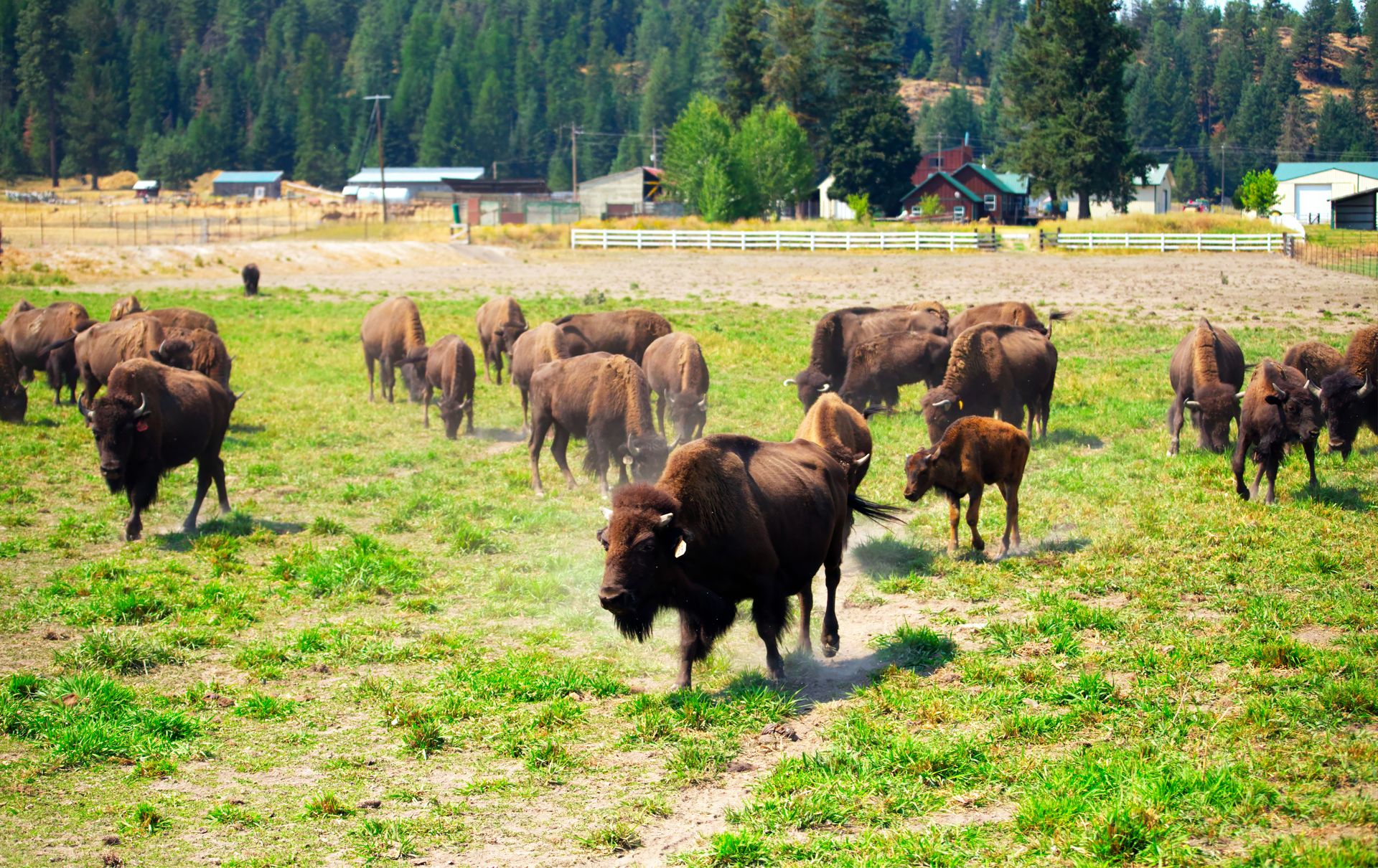
The bison population in North America rapidly differentiated into new species after their arrival. One of these species was the long-horned Bison latifrons, which was the largest of all bison.
Modern American bison likely evolved from B. antiquus at the end of the Late Pleistocene, with intermediates between the species referred to as Bison "occidentalis".
Are the Same?
Bison and buffalo are often used interchangeably, but they're actually distinct animals. The terms got mixed up due to early European explorers, possibly because of the French word boeuf, meaning beef.
Both bison and buffalo are in the bovidae family, but they're not closely related. Bison are found in North America and Europe.
The names stuck because of a misnomer that's been around for a while. Historians believe it's possible that bison hides resembled buff coats commonly worn by military men at the time.
Conservation and Management
The American bison population has made a remarkable recovery, rising from just 325 individuals in 1884 to 500,000 in 2017.
Conservation efforts played a crucial role in this recovery, and although the species is no longer classified as endangered, these efforts continue to ensure the population doesn't crash again.
Careful preservation and a general population boom contributed to the bison population's growth.
However, there are still around 30,000 bison surviving in conservation herds, highlighting the need for ongoing conservation efforts.
The bison population has fluctuated over the years, with estimates ranging from 60 million in pre-1800 times to just 300 individuals in 1900.
Here's a rough timeline of the bison population's growth:
These conservation efforts are crucial to prevent population crashes, ensuring the long-term survival of the American bison.
Behavior and Ecology
Bison are migratory animals, often traveling in herds between foraging sites during the summer. They can move up to 3 km (2 mi) per day in areas like the Hayden Valley, Wyoming.
Bison are primarily grazers, eating grasses and sedges, with a diet that varies depending on their location. On shortgrass pasture, they mostly consume warm-season grasses, while on mixed prairie, cool-season grasses make up 79-96% of their diet.
Bison need access to water or snow every day, and the availability of water can influence their summer ranges.
You might enjoy: Florida Wild Turkey Season
Behavior and Ecology
Bison are migratory animals and their herd migrations can be directional as well as altitudinal in some areas.
On average, bison travel 3 km (2 mi) per day in the Hayden Valley, Wyoming.
Bison have usual daily movements between foraging sites during the summer, which are influenced by seasonal vegetation changes.
In the summer, bison primarily eat grasses and sedges, with cool-season grasses making up 79-96% of their diet on mixed prairie.
Bison are largely grazers and drink water or consume snow on a daily basis.
Bison have been recorded traveling long distances, but they usually don't stray far from their summer ranges.
In montane and northern areas, sedges are a staple in bison's diet.
Bison have a unique way of finding food in winter, sweeping their large heads from side to side to clear away snow.
Is Aggressive?
Bison are tough, confident animals that will often react aggressively when they sense danger.
They have poor eyesight, which can lead to stampedes if an entire herd is startled.
Bison can run up to 30 mph, making them a force to be reckoned with.
Males display their fitness by charging and butting heads with other bulls, but they rarely fight to the death.
History and Domestication
Despite being the closest relatives of domestic cattle native to North America, bison were never domesticated by Native Americans. Later attempts of domestication by Europeans prior to the 20th century met with limited success. Bison were described as having a "wild and ungovernable temper".
Bison can jump close to 1.8 m vertically and run 55-70 km/h when agitated, making them difficult to confine. This agility and speed, combined with their great size and weight, requires specialized fencing systems to keep them contained. The most successful systems involve large, 6-metre fences made from welded steel I beams sunk at least 1.8 m into concrete.
These fencing systems are expensive but require very little maintenance, and making the fence sections overlap prevents the bison from trying to get to new range.
Suggestion: Great Pyrenees Kills 8 Coyotes
Native Americans
Native Americans have a deep spiritual connection with the bison, considering it a sacred animal and religious symbol. The bison is central to many creation stories and plays a vital role in ceremonies and daily life.
The Plains Indians, in particular, have a strong reverence for the bison, which is used in various ways, including making tipi covers, utensils, shields, and weapons. The sinew from the bison is even used for sewing.
The Sioux believe that the birth of a white buffalo is a sign of the return of White Buffalo Calf Woman, their primary cultural prophet and the bringer of their "Seven Sacred Rites". This event holds great significance in their culture.
The Mandan and Hidatsa tribes have a similar reverence for the bison, with the White Buffalo Cow Society being the most sacred of societies for women. This society likely holds great importance in their daily lives and cultural practices.
The bison is not only a symbol of spirituality but also a practical resource, providing essential items for daily life.
For another approach, see: White Breasted Nuthatch Flying
History
The history of buffalo in North America is a remarkable story of decline and rebirth. Prior to 1830, there were an estimated 30 million buffalo in the region.
Lewis and Clark's report about the buffalo in the West sparked a surge in hunting, with parties killing up to 250 head a day. This led to a drastic decline in buffalo numbers.
By the late 1800s, there were less than 1,000 buffalo left in North America, but they were never listed as endangered. This is a testament to the resilience of the species.
Today, there are over 500,000 head of buffalo in North America, with private ranchers playing a key role in their rebirth. This is largely due to the growing demand for buffalo meat.
Ted Turner, with approximately two million acres of land, is the second largest individual landholder in North America and has over 50,000 buffalo on his land.
For more insights, see: Are North Carolina Frogs Poisonous to Dogs
Domestication
Domestication has been a challenging task for many species, and bison are no exception. Despite being the closest relatives of domestic cattle native to North America, bison were never domesticated by Native Americans.
You might like: Are Horses Native to the United States
Bison were described as having a "wild and ungovernable temper". This temper, combined with their agility and speed, makes them difficult to confine. They can jump close to 1.8 m (6 ft) vertically and run 55–70 km/h (35–45 mph) when agitated.
The size and weight of bison also make them a challenge to domesticate. They can easily escape or destroy most fencing systems, including most razor wire.
Habitat and Distribution
American bison live in a variety of habitats, including open or semiopen grasslands, sagebrush, semiarid lands, and scrublands. They can also be found in lightly wooded areas and even in mountainous regions.
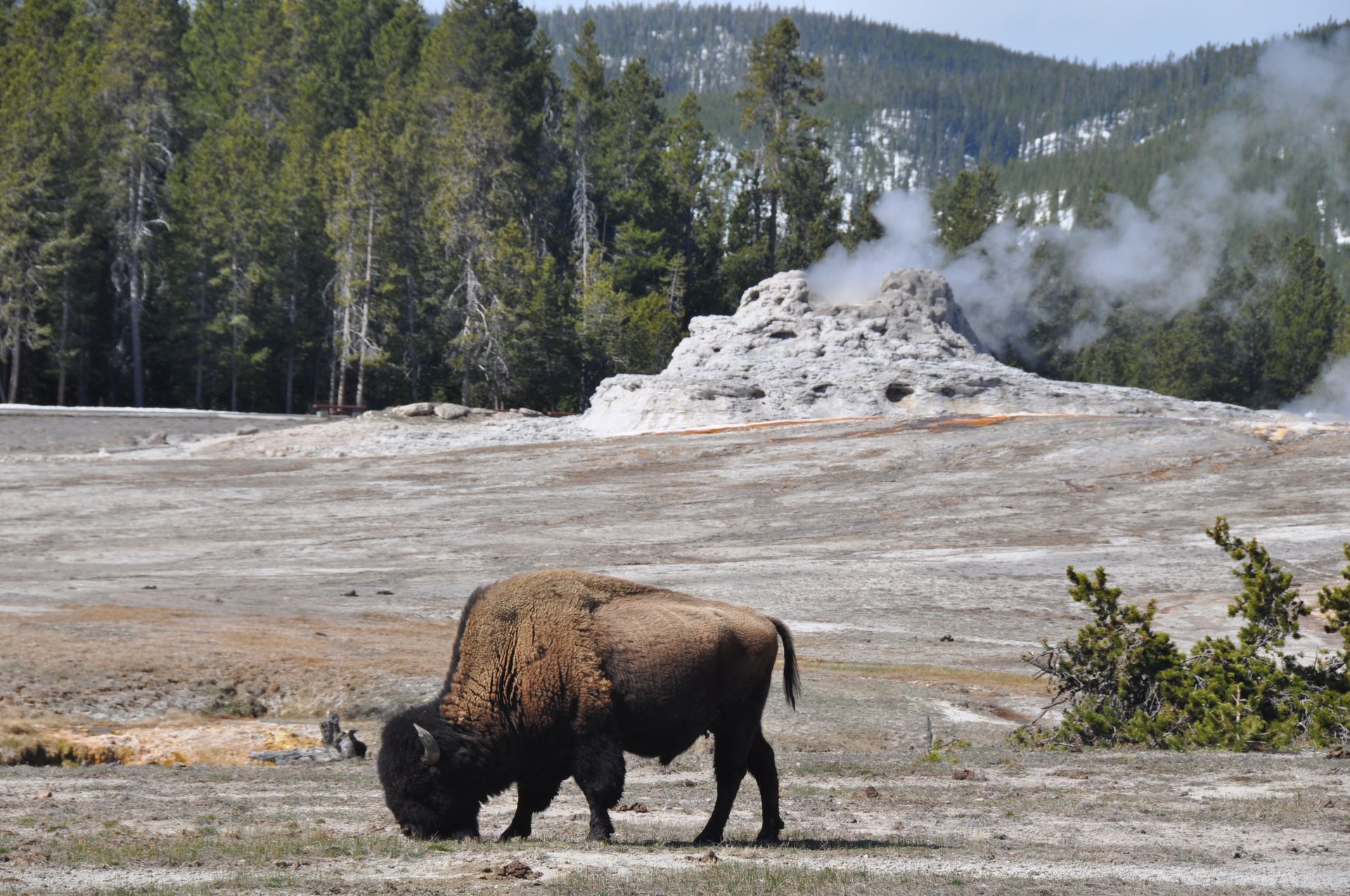
Bison are not typically high-altitude animals, but some herds have been spotted at elevations above 2,400 m (8,000 ft) in places like Yellowstone Park. In fact, the Henry Mountains bison herd has been known to roam the plains and mountain valleys of the Henry Mountains, Utah, up to an altitude of 3,000 m (10,000 ft).
Here's a breakdown of the original range and current distribution of bison in North America:
- Original range: The "great bison belt" that spanned from Alaska to northern Mexico, primarily in the grasslands and prairies of North America.
- Current range: Bison can be found in parts of Canada, including Alberta, British Columbia, Manitoba, Northwest Territories, Ontario, and Saskatchewan, as well as in Arizona, California, Idaho, Montana, South Dakota, Utah, Wyoming, Alaska, and possibly Texas in the US.
Yellowstone National Park
The Yellowstone National Park Bison herd is a fascinating example of conservation success. The herd started with just 25 individuals and went through two population bottlenecking events between 1896 and 1912, with a population ranging between 25 and 50 individuals during this time.
In 1902, 18 female and 3 male bison from outside herds were introduced to the Yellowstone herd, which helped to increase the effective population size to around 7.2 individuals. This introduction of new individuals was crucial in saving the herd, which now numbers around 5,900 individuals as of summer 2022.
The Yellowstone herd was kept completely isolated from 1902 to around 1920, and the founders from the Pablo-Allard herd and Goodnight (TSBH) herds contributed between 60 and 70% of the genetics of the current bison population at Yellowstone.
Some lightly wooded areas, as well as sagebrush, semiarid lands, and scrublands, are also known historically to have supported bison in the Yellowstone region. However, the herd is now found at elevations above 2,400 m (8,000 ft), which is not typical of their original habitat.
Related reading: Yellowstone Wolf Packs
Range and Population
The American bison population has made a remarkable recovery. There are now approximately 500,000 bison in the United States, with around 20,500 in conservation herds and the remainder in commercial herds.
Conservation efforts have played a crucial role in this recovery, with organizations like The Nature Conservancy reintroducing bison to over a dozen nature preserves across the country.
In 2016, The Nature Conservancy established its easternmost bison herd in the country at Kankakee Sands nature preserve in Indiana.
The bison population has grown steadily since the late 19th century, from 325 individuals in 1884 to 500,000 in 2017.
Here's a rough breakdown of the population growth:
Even though the bison population is no longer considered endangered, conservation efforts continue to ensure the population remains stable and healthy.
A unique perspective: Eastern Gray Squirrel Population Distibution Pattern
North America
North America is home to a diverse range of bison habitats, from river valleys to prairies and plains. American bison live in open or semiopen grasslands, as well as sagebrush, semiarid lands, and scrublands.
Bison can be found in hilly or mountainous areas where the slopes are not steep. In fact, some bison in Yellowstone Park are frequently found at elevations above 2,400 m (8,000 ft). The Henry Mountains bison herd, on the other hand, is found on the plains around the Henry Mountains, Utah, as well as in mountain valleys to an altitude of 3,000 m (10,000 ft).
Reintroduced plains bison in Banff National Park have been observed to roam mountainous areas, including high ridges and steep drainages. This is a significant departure from their typical habitat, but it highlights the adaptability of bison.
Bison migration routes were a crucial part of the North American landscape for thousands of years. In fact, many of the first thoroughfares of North America were created by bison and deer following seasonal migration patterns and between feeding grounds and salt licks. These routes were often followed by aboriginal North Americans, explorers, and pioneers.
Here's a brief overview of the original distribution of plains bison and wood bison in North America, also known as the "great bison belt":
The map of the extermination of the bison to 1889, based on William Temple Hornaday's research, shows a significant decline in bison range over time.
Where Do Americans Live?
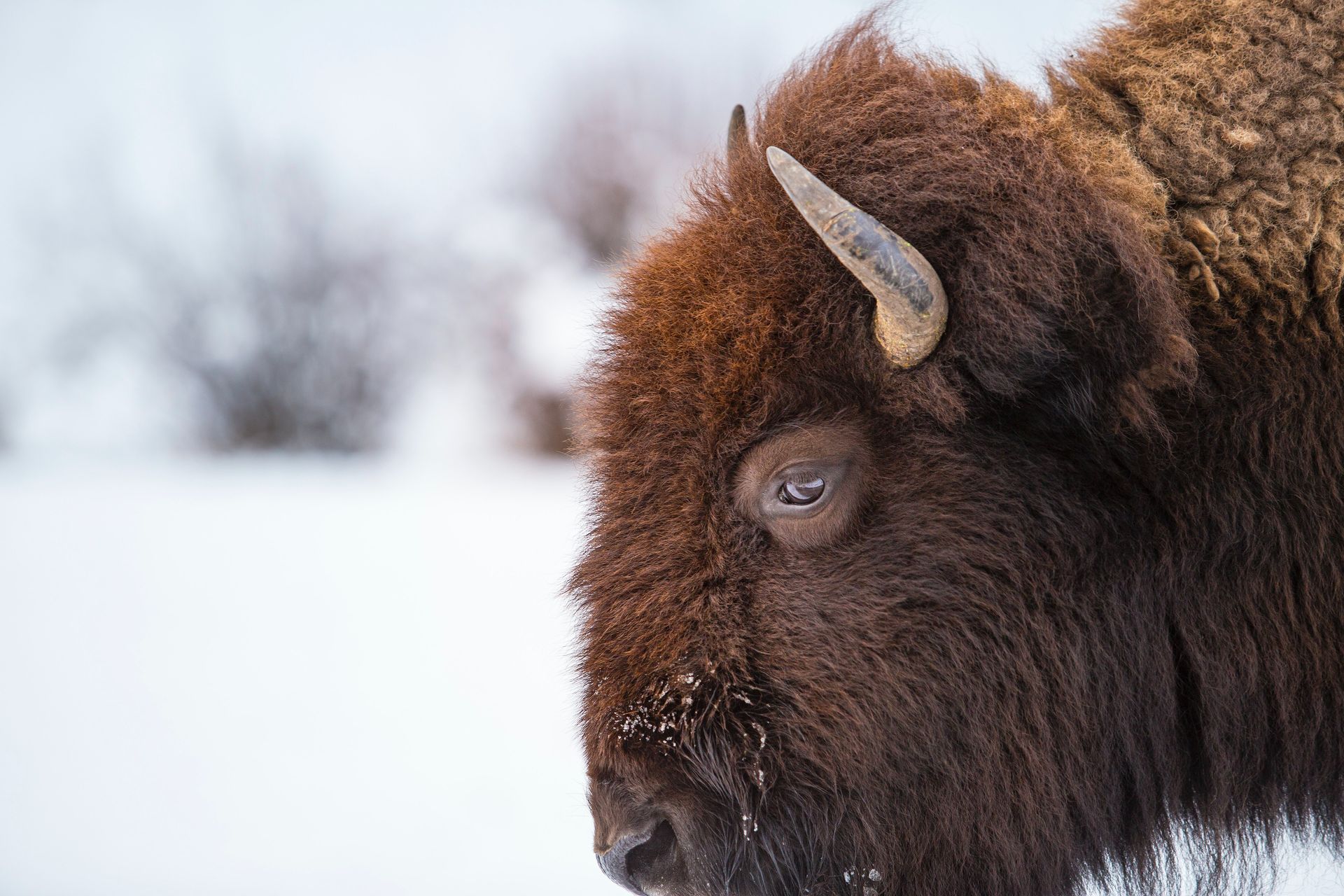
American bison were once found from Alaska to northern Mexico, primarily in the grasslands and prairies of North America. Today, they occupy only about 1 percent of their former range.
Their modern herds are very fragmented, and their distribution is limited to a few areas.
You can find herds in parts of Canada, including Alberta, British Columbia, Manitoba, Northwest Territories, Ontario, and Saskatchewan.
In the United States, they can be found in Arizona, California, Idaho, Montana, South Dakota, Utah, Wyoming, Alaska, and possibly Texas.
Classification and Terminology
The buffalo bison animal is often referred to as a type of cattle, but technically it's a member of the Bovidae family.
In North America, the terms "buffalo" and "bison" are often used interchangeably, but they actually refer to different species. The American bison is the one native to North America, while the European bison is a different species altogether.
Intriguing read: North American Raccoon Male vs Female
Differences from European
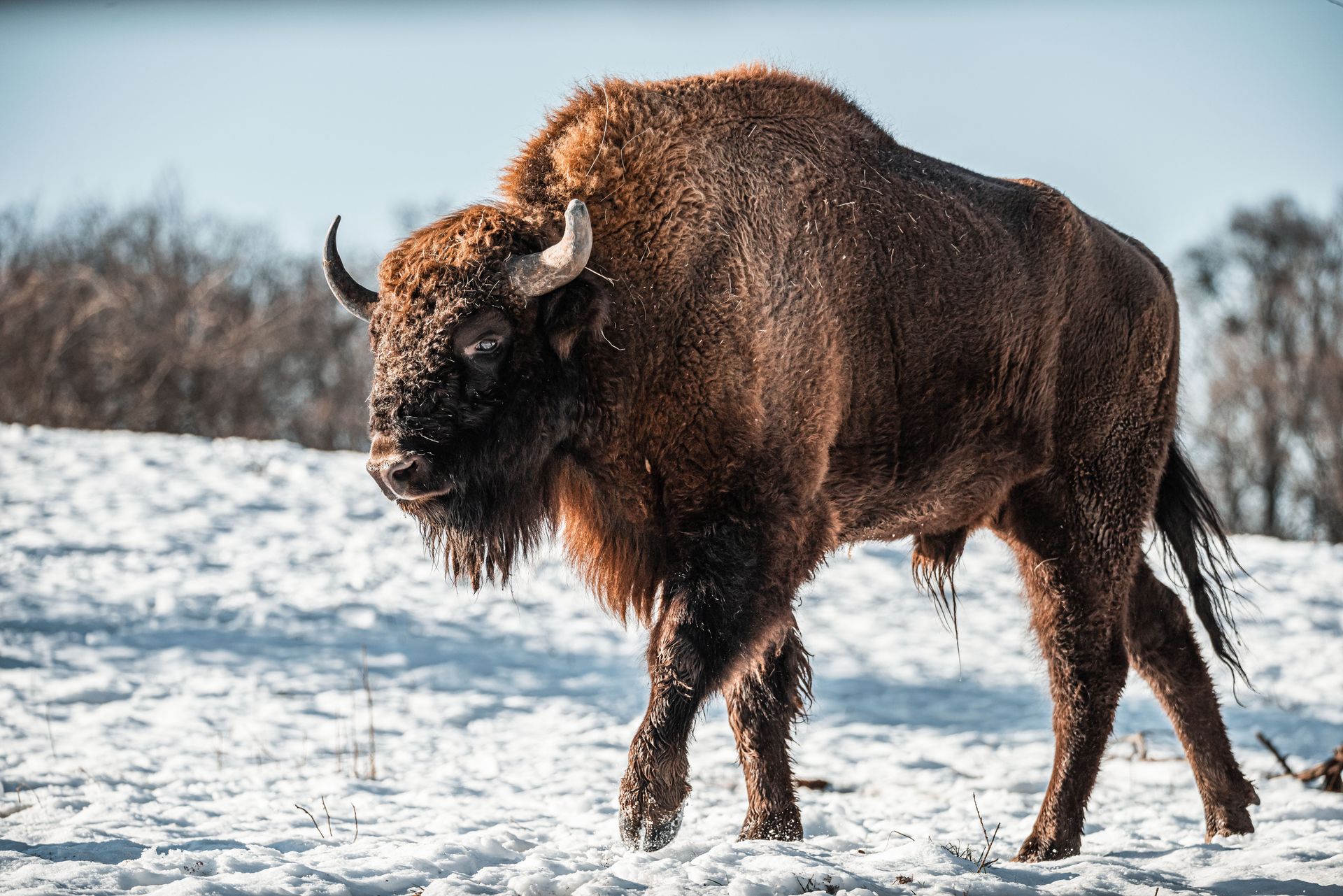
American bison are slightly heavier on average than European bison due to their less rangy build.
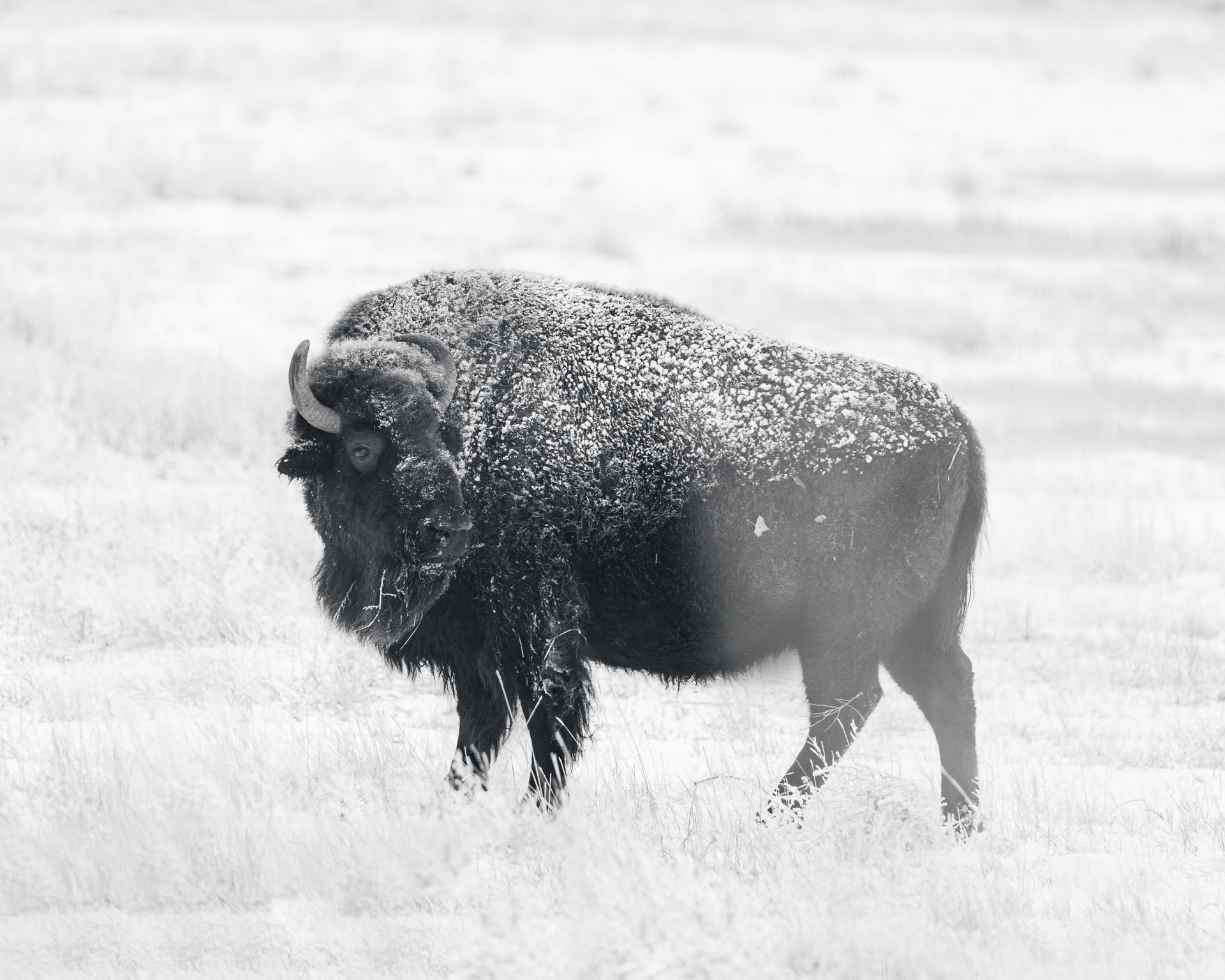
Their legs are also shorter, making them slightly shorter at the shoulder.
American bison tend to graze more and browse less than European bison.
Their necks are set differently, which affects their grazing habits.
The nose of the European bison is set farther forward than the forehead when the neck is in a neutral position.
The body of the American bison is hairier than that of the European bison.
However, the tail of the American bison has less hair than that of the European bison.
American bison are more easily tamed than European bison.
They also breed more readily with domestic cattle.
Take a look at this: European Red Squirrel
Is It "Buffalo" or
The age-old debate: is it "buffalo" or "bison"? Well, the truth is, the term "buffalo" is often used to refer to both American bison and water buffalo, but technically, it's a misnomer.
The American bison, also known as the American buffalo, is a large, hooved mammal native to North America.
The term "buffalo" is a reference to the French word "boeuf", meaning "ox", which was used to describe the American bison.
In fact, the American bison is not even a true buffalo, but rather a member of the bison genus.
Water buffalo, on the other hand, are a different species altogether, and are native to Asia and Europe.
Despite the confusion, the term "buffalo" has become widely accepted in North America to refer to the American bison.
So, while it's technically incorrect, it's not uncommon to see "buffalo" used to refer to both American bison and water buffalo in everyday conversation.
Explore further: Largest Salt Water Crocodile
Human Interaction
The Indigenous peoples of the Great Plains had a profound connection with buffalo bison, using all parts of the animal for more than 150 different purposes.
Buffalo bison were an integral part of traditional tribal societies, and their spiritual significance was immense. In fact, for some Plains indigenous peoples, bison are known as the first people.
The U.S. government's decision to massacre the buffalo was particularly devastating to the Indigenous people, leading to widespread spiritual loss and cultural disruption. As Crow chief Plenty Coups described it: "When the buffalo went away the hearts of my people fell to the ground, and they could not lift them up again."
Here's an interesting read: Are Dogs Spiritual Animals
Many conservation measures have been taken by Native Americans to restore the buffalo population, including the Inter Tribal Bison Council, which comprises 56 tribes in 19 states and focuses on reestablishing herds on tribal lands.
The Inter Tribal Bison Council represents a collective herd of more than 15,000 bison and aims to promote culture, revitalize spiritual solidarity, and restore the ecosystem.
Crossbreeding with Cattle
Crossbreeding with cattle has been a part of bison conservation history. During the 19th century, only 541 bison remained in North America, prompting ranchers to gather remnants of the existing herds to save the species.
The number of bison remaining alive in North America declined drastically due to the great slaughter of American bison during the 19th century. This led to a population bottleneck that necessitated conservation efforts.
Ranchers bred some of the bison with cattle to produce "cattalo" or "beefalo", a practice that was later abandoned due to the lack of hybrid vigor in the offspring. The crossbred animals were often sterile, with only the females being fertile.
On a similar theme: Animal Conservation Organizations
Male domestic bulls were crossed with bison cows to produce offspring, but the proportion of cattle DNA in these individuals was typically quite low, ranging from 0.56 to 1.8%. Many claimed "beefalo" had no detectable bison ancestry.
The U.S. National Bison Association has adopted a code of ethics that prohibits its members from deliberately crossbreeding bison with any other species. This move aims to preserve the genetic integrity of the bison population.
As Livestock
Living with livestock can be a unique experience that teaches us a lot about human interaction.
People who raise livestock often develop strong bonds with their animals, which can lead to a deeper understanding of animal behavior and needs.
As we learn to communicate with animals, we also learn to appreciate their individual personalities and quirks.
Raising livestock requires a great deal of responsibility and care, which can be a valuable lesson for children and adults alike.
In fact, studies have shown that children who help with farm chores are more likely to develop empathy and social skills.
Livestock can also provide a sense of purpose and community for those who care for them, especially in rural areas where social connections may be limited.
For example, many farmers rely on their neighbors and community members to help with tasks such as herding and harvesting.
Worth a look: Dogs Are Social Animals
Hunting
Hunting was a fundamental activity for the Indigenous peoples of the Great Plains, providing over 150 uses for all parts of the American bison.
For many tribes, the buffalo was an integral part of life and an essential food source. Bison hunting was later adopted by American professional hunters and the U.S. government, which led to the near-extinction of the species around 1890.
The concept of species extinction was foreign to many tribes, and the U.S. government's actions were particularly devastating. As Crow chief Plenty Coups described, "When the buffalo went away the hearts of my people fell to the ground, and they could not lift them up again."
Discover more: Wolf Hunting with Hounds
Some tribes took part in the Ghost Dance to boost morale during this time, consisting of hundreds of people dancing until 100 persons were lying unconscious.
In contrast, many conservation measures have been taken by Native Americans to restore the bison population. The Inter Tribal Bison Council, formed in 1990, comprises 56 tribes in 19 states and represents a collective herd of over 15,000 bison.
Here are some key facts about bison hunting:
- Bison were hunted by Indigenous peoples for over 150 uses, including food, clothing, shelter, tools, and ceremonial purposes.
- The U.S. government's bison hunting policies led to the near-extinction of the species around 1890.
- The Inter Tribal Bison Council was formed in 1990 to promote the conservation and restoration of bison herds.
Frequently Asked Questions
Why are bison no longer called buffalo?
Bison are no longer called buffalo due to a historical naming mistake that has been corrected over time. The term "buffalo" is now reserved for the Water Buffalo and Cape Buffalo species, while bison are recognized as a distinct and unique animal.
Featured Images: pexels.com