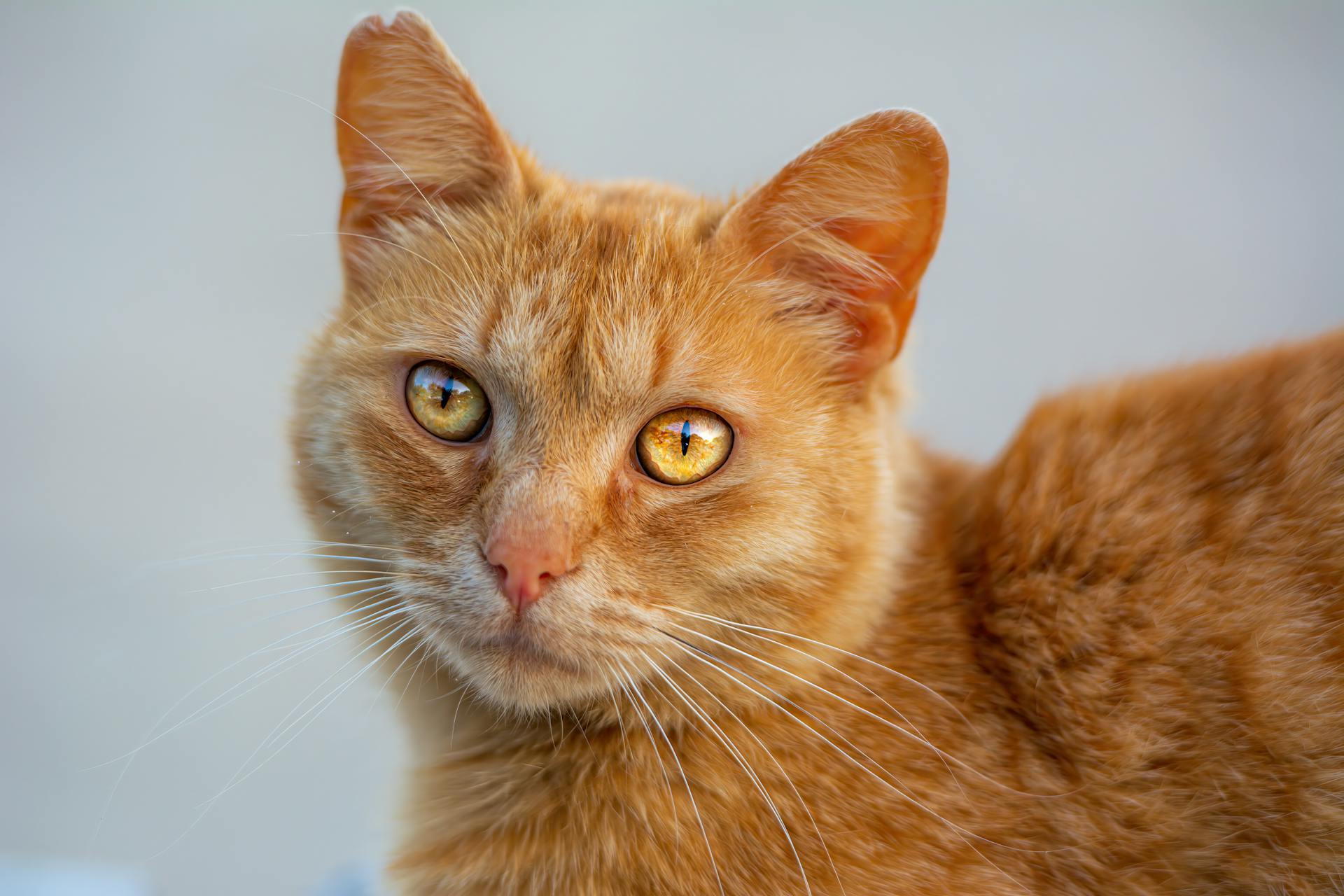
If you're looking for a low-maintenance cat that still packs a lot of personality, you'll love short hair domestic cat breeds. These cats are perfect for busy owners who want a pet that's easy to care for.
One of the most popular short hair domestic cat breeds is the Sphynx. This breed is known for its sleek, wrinkled skin and affectionate nature.
The Devon Rex is another great option, with its unique, curly coat that requires minimal grooming. They're also highly intelligent and active, making them a great choice for owners who want a pet that's always on the go.
The Cornish Rex is a close relative of the Devon Rex, with a similar coat type and playful personality.
Cat Breeds
The Exotic Shorthair is a great option for those who want a Persian-like cat without the high maintenance grooming. They're often called the 'lazy person's Persian' because they're relatively low maintenance.
These cats are a result of crossing Persians and British Shorthairs, which is evident in their short face, round head, and small wide-set ears. They're very gentle and affectionate, with a big love for laps, making them perfect for families who want a cuddly companion.
You might like: Persian Cat Breed
British
The British Shorthair is a beloved breed known for its plush, thick coat and adorable appearance. They come in a wide range of colors, making them a popular choice for cat enthusiasts.
One of the most distinctive features of the British Shorthair is their round head, cheeks, and big eyes, which give them a perpetually sweet expression. Their calm and reserved personalities also make them a great fit for families or single individuals.
British Shorthairs are one of the oldest English cat breeds, with a rich history that spans centuries. They were once street cats in Rome before becoming household favorites in the UK.
Here are some key characteristics of the British Shorthair breed:
Their charming, whimsical nature is also reflected in their "Cheshire Cat" grin, which adds to their irresistible charm.
Oriental
The Oriental is a stunning cat breed with a lithe body and long legs, making them a joy to watch. They have big ears and a short, silky coat that's irresistible to pet.
Their personality is just as charming as their looks, as they crave attention and fuss from their people. They adore cuddles and will often seek out human interaction.
These playful cats also love games, and some owners even teach them tricks like walking on a harness and playing fetch.
Exotic
The Exotic Shorthair is a great choice for anyone who wants a Persian-like cat without the high-maintenance grooming. They were created by crossing Persians and British Shorthairs.
Their short face, round head, and small wide-set ears are a clear indication of their Persian heritage.
This breed is often called the "lazy person's Persian" because they require less grooming.
The Exotic Shorthair is very gentle and affectionate, making them a great companion for anyone who wants a lap cat.
For your interest: Short Hair Dog Grooming
Siamese
The Siamese is a stunning breed with a short coat that comes in four distinct colours: seal point, chocolate point, blue point, and lilac point.
These beautiful colours and markings make them look very elegant, with their pale body and dark points giving them a glamorous appearance.
Siamese cats are very talkative and adore their people, wanting to spend every second with them.
Discover more: Types of Siamese Cat Breeds
Russian Blue
The Russian Blue is a stunning cat breed with a short-haired coat that's a beautiful blue-gray color.
Recommended read: Kerry Blue Terrier Short Hair
They're known for their classic features, which make them look like royalty - it's no wonder they're called the Russian Blue!
This breed has a mind of its own, so be prepared for a cat that's a bit independent and may not tolerate teasing from kids.
If you have kids who are good with animals, then the Russian Blue can be a great addition to your family.
You might like: Russian Blue Cat vs British Shorthair
Grooming and Care
Grooming short-haired cats is a relatively easy task, as their coat is less prone to matting and they tend to groom themselves.
A weekly brushing is recommended to keep their fur and skin in tip-top condition and remove any dead hair that can cause hairballs.
To groom your short-haired cat, use a soft-bristle brush, which is gentle on their skin and effective at removing loose hair.
Regular grooming sessions are also a good time to check their skin for issues, trim their nails, and clean their ears.
Consider reading: Short-haired Chihuahuas
Dental care is also important, so be sure to take care of your cat's teeth to keep them healthy and happy.
For indoor cats, exercise is vital to prevent weight gain and keep them mentally stimulated, so engage them in interactive play with feather wands, laser pointers, or DIY toys like crumpled paper balls or homemade cardboard puzzles.
Caring for Your Cats
Caring for your cat's grooming needs is essential to their overall health and well-being. Brushing your cat every week or so can keep their fur and skin in tip-top condition.
Short-haired cats like Domestic Shorthairs have relatively easy grooming needs. Their coat is less prone to matting and they tend to groom themselves, but regular brushing helps remove dead hair and prevent hairballs.
A weekly brushing is recommended for Domestic Shorthairs, using a soft-bristle brush to remove loose hair and reduce shedding. This is especially important for indoor cats who don't get as much natural grooming from the elements.
A different take: Remove Cat Hair
Exercise is vital for indoor cats to prevent weight gain and keep them mentally stimulated. Engage them in interactive play with feather wands, laser pointers, or DIY toys like crumpled paper balls or homemade cardboard puzzles.
Rotating toys regularly can keep their interest fresh and prevent boredom. Mental stimulation is just as important as physical exercise for your cat's overall health and happiness.
Cats love watching the world go by, and a window perch is a great way to provide them with entertainment and a view. Domestic Shorthairs can enjoy a long life of 12 to 15 years indoors with proper care and attention.
Their calm demeanor and minimal grooming needs make them suitable companions for seniors who want a low-maintenance pet.
Cats Hypoallergenic Feature
No cat is truly hypoallergenic, but some breeds might produce fewer allergens than others.
Their short coat can make a difference, as evidenced by the Domestic Shorthair breed, which might produce fewer allergens than long-haired breeds.
While no cat is completely allergen-free, some breeds' characteristics can make them more suitable for people with allergies.
For example, the Domestic Shorthair's short coat means they require less grooming, which can be beneficial for households with allergy concerns.
Top Claims

As a cat owner, it's essential to be aware of the potential health issues that can affect your feline friend. Obesity is one of the most common health concerns in Domestic Shorthair cats, often caused by overfeeding or lack of exercise.
Regular dental check-ups can help prevent dental problems in DSH cats, including gingivitis, periodontal disease, and tooth resorption.
Upper respiratory infections can affect any cat, but those in multi-cat households or recently adopted from shelters might be at a higher risk. Symptoms include sneezing, runny nose, and watery eyes.
Feline Lower Urinary Tract Diseases (FLUTD) can include urinary stones, bladder infections, and urinary tract blockages, which can be life-threatening if not treated immediately. Male cats are especially susceptible to blockages.
Heart disease can affect some DSH cats, including hypertrophic cardiomyopathy, where the heart muscles thicken. Regular veterinary check-ups can help detect such conditions early.
To keep your cat healthy, it's crucial to prevent parasitic infections, such as fleas, ticks, and ear mites, by using regular preventive treatments and check-ups.
Physical Characteristics
The Domestic Shorthair is a solidly built cat with a balanced body structure. They often have a rounded head, which can vary slightly in shape due to genetic diversity.
Their fur is short, coming in a wide range of colors and patterns, including tabby, tortoiseshell, and calico. Domestic Shorthairs have full cheeks, especially in males, giving them a distinctive appearance.
Devon Rex
The Devon Rex is a standout breed with its elf-like features and lively demeanor. Their large, low-set ears and expressive face make them a joy to look at.
Their short, wavy coat is not only a visual delight, but it's also hypoallergenic and sheds very little, which is great for keeping the house tidy.
This coat is unusually soft and very fine, requiring minimal grooming. In fact, it's so fragile that it should never be brushed.
Some Devon Rex cats can even have hairless points, which is a result of a genetic mutation.
Characteristics

Domestic Shorthairs have a balanced, solid body structure with a head, nose, and ears that are proportionate to their body.
Their short fur can come in loads of different colors and patterns, including tabby, tortoiseshell, black and whites, gray to silver, and even calico.
The head of a Domestic Shorthair is often rounded, but some may exhibit slightly more elongated or angular faces.
Their cheeks are often full, especially in males.
History of Cats
The Domestic Shorthair cat has a rich history that spans over 4,500 years, dating back to Ancient Egyptian times around 2000 BC. They were initially used to control the rodent population around food stores and markets.
Their ancestors were employed as rat catchers on ships heading to the New World about 500 years ago. This skill made them firm favorites with settlers in what is now the United States.
The Domestic Shorthair cat's ability to control rodents earned them a spot in human homes, where they've remained as beloved pets ever since.
Cats Facts
Domestic Shorthair cats can be found all over the world, not just in America. Their genetic diversity makes them less prone to genetic health issues than some purebred cats.
One of the benefits of Domestic Shorthair cats is their adaptability to different environments. They're a great choice for people who want a low-maintenance pet.
Their genetic diversity also means they come in a wide range of coat colors and patterns.
Health Problems
Some short hair domestic cat breeds are prone to health issues such as Patellar Luxation, a condition where the kneecap slips out of place.
The Devon Rex is known to have a higher incidence of this condition due to its unique body structure.
Skin problems are also common in short hair breeds, with the Cornish Rex being particularly susceptible to skin allergies.
The Sphynx, despite its lack of fur, can still experience skin issues due to its skin's oil production.
Dental problems are a concern for many cat breeds, including the short hair breeds.
Ideal Owners and Homes
If you're considering bringing a Domestic Shorthair cat into your home, you'll want to think about what kind of owner you are. First-time cat owners will love DSH cats due to their adaptability, making them an excellent choice for those new to cat ownership.
Families with kids will also find DSH cats suitable, but it's essential to teach children how to handle and respect pets. They generally get along well with children, but gentle guidance is necessary.
DSH cats can thrive in multi-pet households, including homes with other cats and dogs. However, introductions should be done gradually and under supervision to ensure a smooth transition.
A home equipped to entertain your DSH cat is ideal, with toys, time, and plenty of places to hide and snuggle up. They prefer homes that aren't too chaotic, where a routine can be easily kept up, and where they can get used to the presence of strangers from a young age.
Ideal Cat Owners

First-time cat owners will love Domestic Shorthairs due to their adaptability and easy-going nature.
They're typically easy to care for, requiring less specialized care than some purebreds.
Families with children will find Domestic Shorthairs to be a great match, but it's essential to teach kids how to handle and respect pets.
Many DSH cats coexist peacefully with other pets, including cats and dogs, especially if introductions are done gradually and under supervision.
Domestic Shorthairs are perfect for active individuals, as they're playful and interactive, but also appreciate downtime.
Their calm demeanor makes them suitable companions for seniors, offering companionship without being overly demanding.
They have minimal grooming needs, which is a bonus for busy owners or those who prefer low-maintenance pets.
A unique perspective: Cats for Pets
What's the Ideal Home?
A home that's equipped to entertain is a must for cats like Domestic Shorthairs. They need toys and time to play, and plenty of places to hide and snuggle up when they're tired.

A routine is also important, as most cats prefer a calm and peaceful environment. This makes it easier to keep up with their needs and provide a sense of stability.
If you have a lot of people coming and going, it's a good idea to socialize your cat from a young age. This will help them get used to the presence of strangers and reduce stress.
Frequently Asked Questions
What is the best short hair indoor cat?
The American Short Hair is a popular and affectionate short-haired indoor cat breed that often enjoys human companionship. If you're looking for a lap cat, this breed is definitely worth considering.
Featured Images: pexels.com