Sharp-tailed grouse are found in the grasslands and prairies of North America, specifically in the Great Plains region, where they inhabit areas with dense grasses and low vegetation.
They thrive in areas with tallgrass prairies, such as those found in the Flint Hills of Kansas and Oklahoma.
These birds are well adapted to the dry conditions of the prairies, with their strong legs and sharp talons allowing them to forage for food in dense vegetation.
In the winter months, sharp-tailed grouse can be found in areas with more open grasslands and shrublands, where they can easily escape predators.
Geographic Distribution
Sharp-tailed grouse can be found from Alaska east to Hudson Bay and south to Utah. They are relatively common residents of Montana, North and South Dakota, and Nebraska.
In Colorado, plains sharp-tailed grouse have seen a significant decline in their range, but can still be found in northern and central Weld County, with small numbers also spotted in northern Logan and (occasionally) Sedgwick counties.
Expand your knowledge: Northern Mockingbird Habitat
Sharp-tailed grouse are found in the Interior valleys and their foothills in Alaska, with small populations occurring in the western Copper River Basin.
The subspecies found in Alaska also inhabits the Canadian provinces of Yukon and extreme northern Alberta.
Here's a breakdown of the sharp-tailed grouse range in North America:
- Alaska: Interior valleys and foothills, with small populations in the western Copper River Basin.
- Canada: Yukon and extreme northern Alberta.
- United States: Montana, North and South Dakota, Nebraska, Utah, Colorado (northern and central Weld County), and small numbers in northern Logan and Sedgwick counties.
Habitat and Behavior
Sharp-tailed grouse are adaptable birds that can be found in a variety of habitats. They occupy medium to tall grasslands for nesting, loafing, and night-roosting cover.
Flowering plants provide an important part of habitat during the summer brooding period. They also use shrubs heavily when available, for both cover and as a food source.
In subarctic regions, sharp-tailed grouse prefer recent burn areas, open grass-shrub habitat, and sunny, grassy knobs are important features of breeding grounds.
Habitat
Sharp-tailed grouse are adaptable birds that thrive in a variety of habitats. They can be found in grasslands, forests, and even agricultural lands.
In Colorado, they prefer medium to tall grasslands for nesting, loafing, and night-roosting cover. They use shrubs heavily when available, both for cover and as a food source.
Flowering plants provide an essential part of their habitat during the summer brooding period. This is crucial for their survival, as they rely on these plants for sustenance.
In the northern Columbia Basin, they inhabit grassy areas with patches of trees. Their primary habitat is the grass and shrub savanna in the three-tip sage and central arid steppe zones.
During the winter, they seek out trees and shrubs for cover. This helps them escape harsh weather conditions and predators.
In Alaska and other subarctic regions, they prefer recent burn areas, open grass-shrub habitat, and agricultural lands. They also inhabit sunny, grassy knobs, which are important features of their breeding grounds.
Migration Status
In terms of migration, these animals don't make long-distance journeys, but they may move several miles between seasons to find the best habitats for summer and winter.
Species Information
The plains sharp-tailed grouse is a bird of Colorado's eastern grasslands. They can be found in a wide geographic range, from Alaska in the north southward through the central Great Plains of the United States, and eastward through much of Canada and the western Great Lakes in the U.S.
Recommended read: Great Tailed Grackle Range
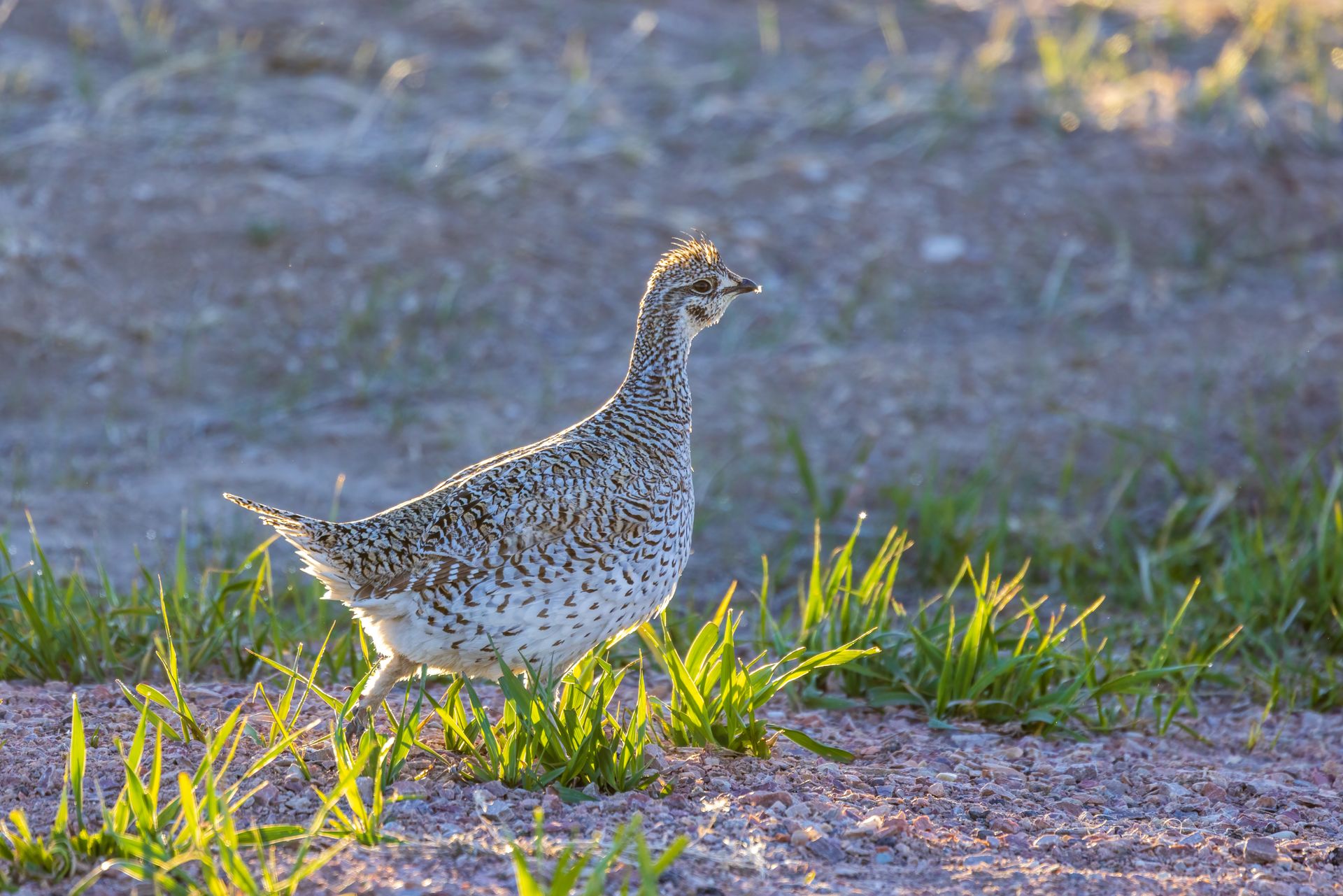
These birds have a distinctive appearance, with a brown and whitish overall look, a pointed tail visible when standing or in flight, and brown V's against the white background on the breast. Males also exhibit purple air sacs on their necks during breeding season.
The sharp-tailed grouse has a wingspan of 20 to 24 inches and a length of 16 to 18 inches. They can be identified by their body shape, chevron-shaped spots on underparts, and white outer feathers on their tail in flight.
Males gather on leks (breeding grounds) in the spring to perform their breeding displays, with tails up, wings spread, and heads held low.
Check this out: Brown Headed Cowbird Range
Frequently Asked Questions
What is the difference between sharp-tailed and ruffed grouse?
Sharp-tailed and Ruffed Grouse have distinct habitats and physical characteristics, with Sharp-tailed Grouse found in prairies and open woodlands and Ruffed Grouse in forest understories, and the latter lacking white-spotted upperparts and having dark bars on the sides. Understanding these differences is key to identifying these birds in the wild.
Featured Images: pexels.com