Sariska Tiger Reserve in India is a protected area that spans over 273 square miles in the state of Rajasthan. It's a haven for wildlife enthusiasts and conservationists alike.
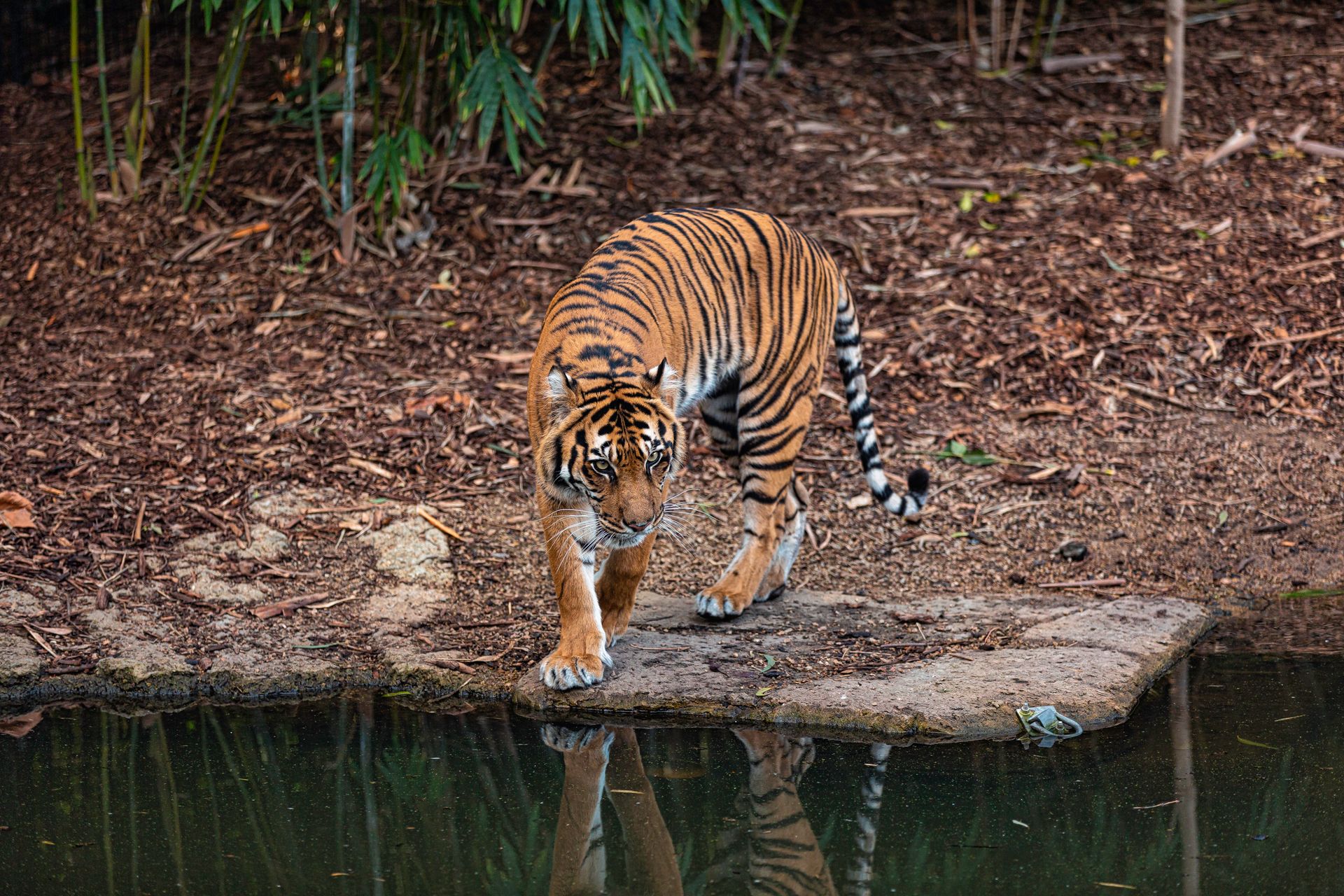
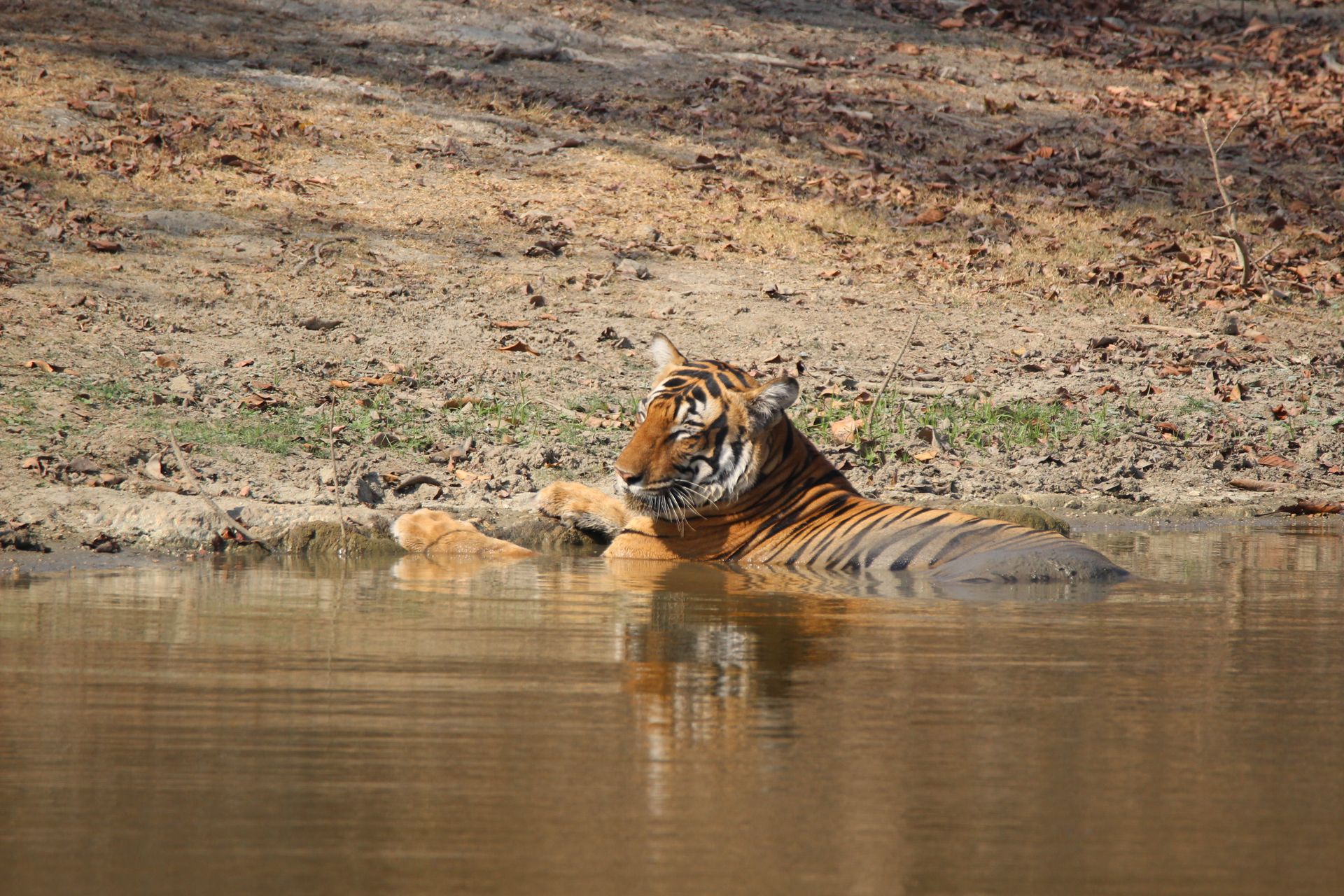
The reserve is home to a wide variety of flora and fauna, including the majestic Bengal tiger.
Sariska was declared a wildlife sanctuary in 1955 and was later upgraded to a tiger reserve in 1978.
Discover more: Kanha Tiger Reserve
About Sariska Tiger Reserve
Sariska Tiger Reserve is a national park that showcases nature in its best form, spanning over 800 square kilometers and nestled in the lap of Aravali hills.
The reserve is home to numerous animals apart from tigers, including jungle cats, rhesus macaque, sambhar, chital, and wild boar. You can also spot a number of bird species, such as sand grouse, harbor quails, and crested serpent eagles.
Sariska Tiger Reserve contains mountains, grasslands, dry deciduous forests, and cliffs, offering a perfect intermingling of nature.
A jeep safari at Sariska tiger reserve is a great way to spot beautiful animals going about their day, especially tigers. You can also visit the Kankwadi fort and go bird watching, as the reserve is home to more than 220 species of birds with migratory birds from Europe, Central Asia, and other regions.
A fresh viewpoint: Bandhavgarh Tiger Reserve India
The Neelkanth temple, built in the 6th century, stands on an isolated mountain in Sariska Tiger Reserve and has a collection of beautifully carved statues. The Pandupol Hanuman Temple is another temple located inside the reserve, standing amidst a scenic waterfall and having a mythological link with Mahabharata.
Here are some of the things you can do when you visit Sariska Tiger Reserve:
- Go on a jeep safari to spot tigers and other animals
- Visit the Kankwadi fort and go bird watching
- Explore the Neelkanth temple and its beautifully carved statues
- Visit the Pandupol Hanuman Temple and relax by the scenic waterfall
Getting There and Around
The nearest airport to Sariska Tiger Reserve is Jaipur, which is a two-and-a-half-hour drive by road.
You can also drive down from Delhi and reach within four to five hours, making it a viable option for those with a car.
The closest railway station is Alwar Junction, lying 37km from the park and a major halt for trains from various cities.
From Alwar Junction, you can take a local taxi or bus to reach the resort you are staying at or ask them for a pickup.
Best Time to Visit
Sariska Tiger Reserve is an all-year-round destination, except for the months it is shut. The reserve is open throughout the year, making it a great option for travelers with flexible plans.
Sightings are usually higher in summers due to watering holes drying up in the forest. This makes summer a good time to spot tigers.
The winter months offer a more pleasant experience with lush greenery adding more charm. It's also a great time for birdwatchers, as the reserve is a haven for them.
Sightings at Baghani and Kali Ghati are likely in the winter months. This is because there is a new tigress, ST 30, which has a small territory, and a male tiger, ST 23, also resides here.
Worth a look: Pilibhit Tiger Reserve
What to Expect
As you plan your visit to the Sariska Tiger Reserve in India, you should expect a mix of excitement and challenges. The reserve is open from 6 am to 5 pm, so be sure to plan your day accordingly.
You'll have the opportunity to take a guided safari tour, which is the best way to see the tigers in their natural habitat. These tours are usually 3-4 hours long and cover a significant portion of the reserve.
Be prepared for varying weather conditions, including hot summers and cold winters, and don't forget to bring sunscreen, a hat, and comfortable clothing.
What to Spot?
As you step into the Sariska Tiger Reserve, you'll be surrounded by a dense forest belt that's home to a wide variety of birds. With over 200 species of birds, you can expect to spot some incredible sights.
One of the best ways to experience the birdlife at Sariska is to go birdwatching with a trained guide who can help you spot terrestrial birds like the painted spurfowl, dusky eagle owls, and Indian peafowl.
During the monsoons, the park transforms into a haven for water birds, with species like the northern shoveler, northern pintail, and Eurasian wigeon making an appearance.
Readers also liked: Tiger Population in India Endangered Species
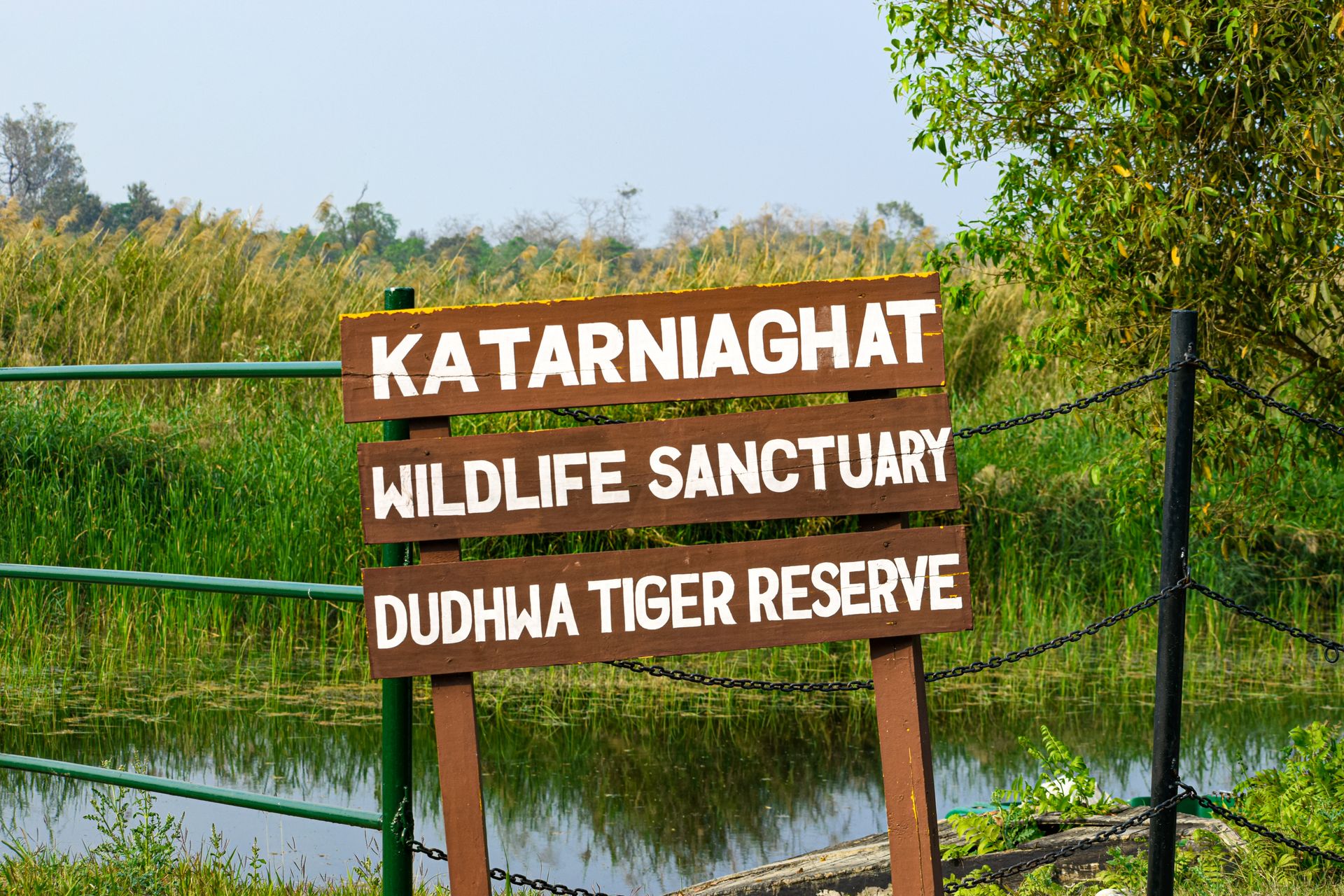
If you're lucky, you might even catch a glimpse of the seven species of vultures that call Sariska home.
In addition to the birds, the reserve is also home to a range of mammals, including leopards, hyenas, and four-horned antelopes.
Here's a list of some of the mammals you might spot during your visit:
- Leopards
- Hyenas
- Four-horned antelopes
- Nilgai
- Wild boar
- Caracal
- Asiatic wildcat
- Rusty spotted cat
- Porcupine
- Pangolin
Lessons Learned
Corruption and apathy of officials can lead to the destruction of wildlife and their habitats. It's a harsh reality that we must acknowledge and learn from.
A robust and corruption-free system for wildlife conservation is essential. This means having a strong and fair enforcement mechanism in place.
The Sariska Tiger Poaching case study highlights the need for a multidimensional approach to conservation. This involves protecting animals, ensuring their habitats' sustainability, and addressing human-tiger conflict.
Public participation and awareness are crucial in conservation efforts. People living in and around tiger reserves must be made aware of the importance of conservation and the negative impacts of poaching and habitat destruction.
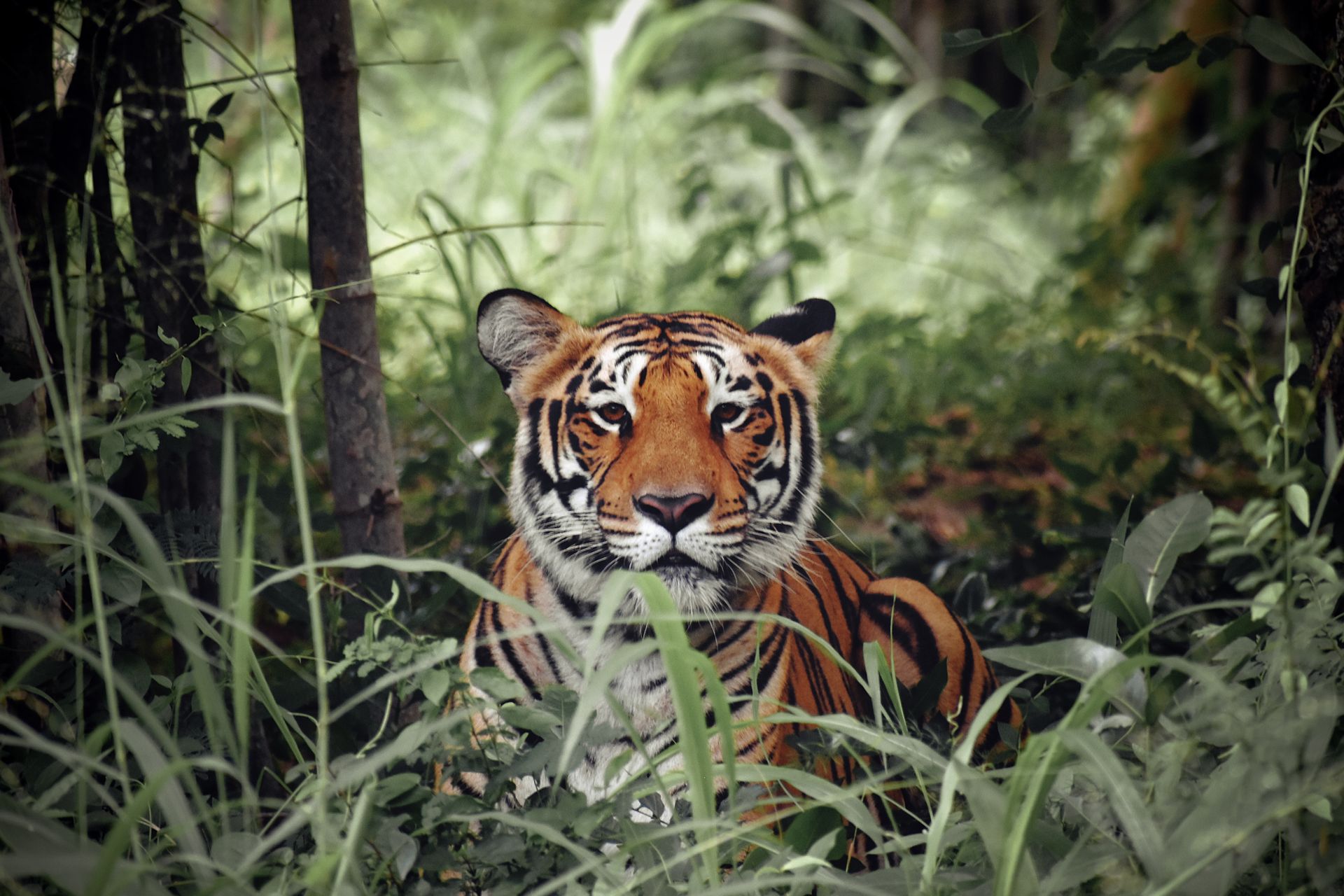
The government and conservationists must work together to prevent such incidents from happening again. This requires a collaborative effort and a commitment to protecting wildlife and their habitats.
Strong enforcement measures and accountability are necessary in the fight against poaching and illegal wildlife trade. This includes having a system in place to hold officials accountable for their actions.
Background to the Controversy
In 2002, the National Tiger Conservation Authority (NTCA) reported the presence of 16 tigers in the Sariska Tiger Reserve.
The locals first reported a decrease in tiger sightings in 2004, which was initially dismissed as a temporary phenomenon.
Not a single tiger was left in the reserve by 2005, a stark contrast to the 16 reported just three years prior.
The reserve had become a graveyard for tigers, and poaching was suspected to be the primary cause.
A fresh viewpoint: Mythological Tigers
Planning Your Visit
The Sariska Tiger Reserve has two safaris during the day, and the timings vary according to the season.
You can choose from morning safaris that start between 6 am and 7 am, or afternoon safaris that start between 2 pm and 3 pm.
Most accommodations around the reserve offer safari booking services, and some even have an in-house naturalist to accompany you on the safari at an additional cost.
You can also book a safari to any of the gates on the government portal, but be aware that 75% of safari booking slots are reserved for advance bookings that can be made up to 365 days prior.
Current or 'tatkal' bookings can be made about 30 minutes before each safari, but it's recommended to let an agent or your hotel make a booking as they already have an SSO ID required for online bookings.
The official portal lists the fee starting from Rs776 for Indians and Rs1,516 for foreigners, but be aware that there are additional costs including the driver and guide fee.
A government safari usually costs around Rs8,000 for a gypsy with a maximum of six passengers, and this cost includes all taxes, driver and guide fees, and the vehicle cost.
Terrain and Reserve
Sariska Tiger Reserve is nestled in the lap of the Aravali hills, spanning over 800 square kilometres. The terrain is hilly with numerous valleys, both wide and narrow, and expansive undulating plateaus.
The characteristic features of the Aravalli range - sharp hog-back ridges - are conspicuous in the Reserve. Most of the high ridges are composed of quartzite conglomerates and grits.
You can explore the Reserve's terrain by going on a jeep safari, which will take you through the mountains, grasslands, dry deciduous forests, and cliffs. This is a great way to spot beautiful animals going about their day, especially tigers.
Reserve
The Sariska Tiger Reserve is a national park that spans over 800 square kilometers, nestled in the Aravali hills of Alwar. It's a perfect intermingling of nature, with mountains, grasslands, dry deciduous forests, and cliffs.
The reserve is home to numerous animals, including tigers, jungle cats, rhesus macaque, sambhar, chital, wild boar, and many more. You can spot these animals on a jeep safari, which is a highly enjoyable experience, especially when done in groups.
The reserve is also a haven for birdwatchers, with over 220 species of birds, including migratory birds from Europe, Central Asia, and other regions. You can go birdwatching while on the safari, adding an extra level of fun to your trip.
Here are some of the architectural and natural spots you can explore in the reserve:
- Neelkanth temple, built in the 6th century, with beautifully carved statues
- Pandupol Hanuman Temple, standing amidst a scenic waterfall and having a mythological link with Mahabharata
- Kankwadi fort, accessible only by jeep safari
The reserve is also unique in its animal distribution, with each species having its own area limits. For example, Slopka is best for observing sambhar, Kundli for chitals, and Tarunda & Kalighati for nilgai.
Trees
The trees in Sariska are just as fascinating as the terrain. Dhok (Anogeissus pendula) is the dominant tree species, covering over 90 percent of the forest area.
You'll find Boswellia Serrata and Lannea cormandalica growing at rocky patches, where they can thrive in the rugged conditions.
Kattha (Acacia catechu) and Bamboo are common in the valleys, which is no surprise given the abundance of water and fertile soil.
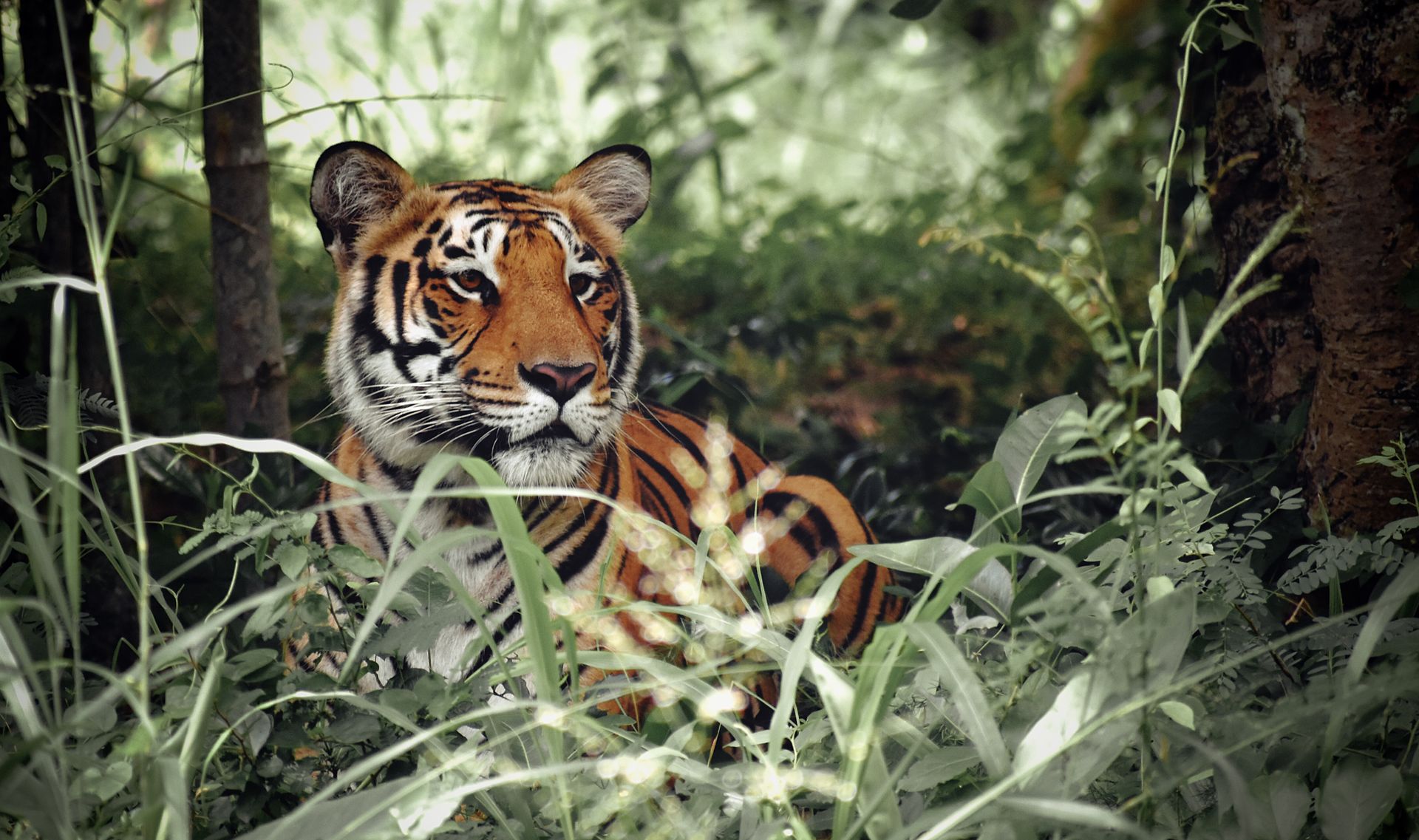
Some valleys support Palas (Butea monosperma) and Ber (Zizyphus spp.), adding to the forest's biodiversity.
Arjun (Terminalia arjuna) is another noteworthy tree species found in the forest, known for its medicinal properties.
Gugul (Commiphora wightii) and Kadaya (Sterculia urens) are also found in the forest, each with its unique characteristics.
Amla (Emblica Officinalis) and Bahera (Terminalia belerica) are two more tree species that call Sariska home, adding to the forest's rich ecosystem.
Extension
The extension of the Sariska Tiger Reserve has been a remarkable story of conservation efforts. In 2008, two tigers from Ranthambhore National Park were relocated to Sariska Tiger Reserve.
This marked a significant turning point in the reserve's history, as it was the first time tigers had been introduced to the area in years. The relocation of these two tigers was a bold move by the conservation efforts.
By 2012, the tiger population had begun to grow, with two tiger cubs and their mother spotted in the reserve, bringing the total number of tigers to seven. This was a major milestone in the reserve's recovery.
You might like: Tigers in India
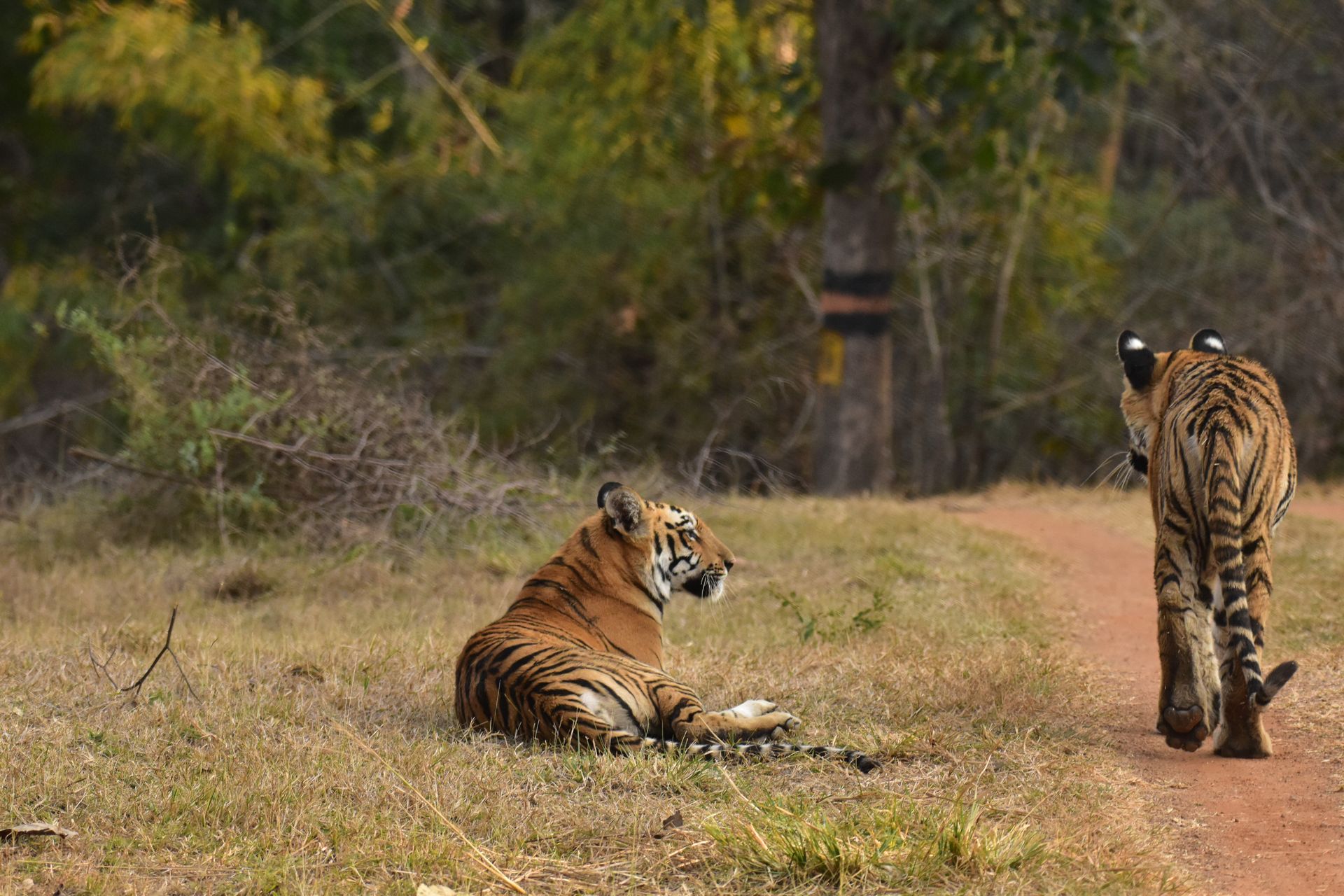
The introduction of more tigers continued, with two more cubs spotted in 2014, increasing the total number of tigers to 11. This growth was a direct result of the conservation efforts.
By 2020, the tiger population had risen to 20, a testament to the hard work and dedication of the conservation team.
Curious to learn more? Check out: Books about Tigers
Terrain
The terrain of Sariska is hilly with numerous valleys, both wide and narrow, and expansive undulating plateaus.
The reserve features sharp hog-back ridges, a characteristic of the Aravalli range.
Most of the high ridges in Sariska are composed of quartzite conglomerates and grits.
These unique geological features make the reserve a fascinating place to explore.
The combination of hilly terrain, valleys, and plateaus creates a diverse landscape that is both beautiful and challenging to navigate.
Featured Images: pexels.com