Pilibhit Tiger Reserve is a treasure trove of biodiversity, located in the heart of Uttar Pradesh, India. Spanning over 600 square kilometers, it's a haven for wildlife enthusiasts and nature lovers alike.
The reserve is home to a diverse range of flora and fauna, including over 400 species of birds, 350 species of plants, and 50 species of mammals. This incredible variety of species is a testament to the reserve's rich biodiversity.
One of the reserve's most notable features is its unique landscape, which is a mix of forests, grasslands, and wetlands. This diverse landscape provides a habitat for a wide range of animals, from the majestic Bengal tiger to the humblest of birds.
See what others are reading: Tiger Population in India Endangered Species
Location and Boundaries
The Pilibhit Tiger Reserve is located in a unique position in the Indo-Nepal border. It is bounded by the Indo-Nepal border to the north.
The reserve's boundaries stretch from Pilibhit-Bankati road to Mahof up to the Uttarakhand boundary along the Indo-Nepal border up to international pillar no. 17. This marks the beginning of the reserve's northern boundary.
See what others are reading: Bandhavgarh Tiger Reserve India
The northern boundary continues from pillar no. 17 to pillar no. 28, which is a significant landmark in the reserve's geography. This section of the boundary is a clear indication of the reserve's unique position in the region.
The reserve's eastern boundary starts from Indo-Nepal pillar no. 28 and follows the boundary of various forest blocks, including Bifurcation Forest Block, Barahi Forest Block, and Navadiya forest Block of Barahi Forest Range. This marks a significant change in the reserve's geography.
Here are the reserve's boundaries in detail:
- Northern Boundary: Pilibhit-Bankati road to Mahof up to Uttarakhand boundary along Indo-Nepal border up to international pillar no. 17, and from Indo-Nepal border pillar no. 17 to pillar no. 28.
- Eastern Boundary: Indo-Nepal pillar no. 28 along the boundary of Bifurcation Forest Block, Barahi Forest Block, and Navadiya forest Block of Barahi Forest Range, and up to the boundary of Navadiya Forest Block, Haripur Forest Block, and Dakka Forest Block of Haripur Range.
- Southern boundary: From the Reserve Forest boundary of Haripur Range up to the Reserve Forest boundary of Barahi range, Mahof range, Mala Range, and Dioria range.
- Western boundary: From the Reserve Forest boundary of Pasgaon Compartment 6 and Ramnagar Compartment no. 1 of Dioria Range along the Reserve Forest Boundary of Banganj Compartment no. 5, Gada Compartment no. 130, Ghamela Compartment no. 119 of Mala range up to Bankati.
The southern boundary of the reserve is a long stretch that covers several forest blocks, including Barahi range, Mahof range, Mala Range, and Dioria range.
Geography and Climate
The Pilibhit Tiger Reserve is situated in the upper Gangetic Plain Biogeographic land, spanning across the Pilibhit district. It's bounded by the River Sharda in the north-east and the River Ghaghara in the south-west, making it a haven for wildlife.
The reserve's core area is a whopping 602.79 km², with a buffer area of 127.45 km². This massive expanse provides a home for a diverse range of flora and fauna. A wildlife corridor links the reserve with neighboring parks, including Jim Corbett National Park and Dudhwa National Park.
The climate in Pilibhit is subtropical monsoon, with varying weather conditions throughout the year. Here's a breakdown of the temperature fluctuations:
Geography
Pilibhit Tiger Reserve is located in the Pilibhit district of Uttar Pradesh, India, spanning between latitudes 28°8’0”N to 28° 50’0”N and longitudes 79° 53’02”E to 80° 18’03”E.
The reserve's geography is characterized by the upper Gangetic Plain Biogeographic land, making it an ideal place for wildlife due to its proximity to the River Sharda in the north-east and the River Ghaghara in the south-west.
The reserve consists of a core area of 602.79 km (232.74 sq mi) and a buffer area of 127.45 km (49.21 sq mi) in its periphery. The core area is restricted for human habitation, but there is some amount of disturbance due to traffic on roads passing through the reserve.
You might like: Sariska Tiger Reserve India
A wildlife corridor links Pilibhit Tiger Reserve with Jim Corbett National Park, Kishanpur Wildlife Sanctuary, and Dudhwa National Park, and Shuklaphanta National Park in Nepal.
Here are the protected areas in Uttar Pradesh:
Pilibhit Tiger Reserve's diverse geography supports a variety of ecosystems, including dense Sal Forests, tall Wet Grasslands, marshy Wetlands and Rivers, and open Woodlands and Scrub Forests.
Weather in
The weather in Pilibhit is quite varied, but overall it's a great place to visit regardless of the season. Summer months, from March to June, bring hot and dry conditions with temperatures reaching up to 35°C.
During the summer months, the heat can be unbearable, but wildlife sightings increase, especially near waterholes. If you're a photography enthusiast or tiger lover, this is a great time to visit.
The monsoon season brings hot and humid conditions, with highs around 30°C to 32°C and lows around 24°C to 26°C. This is a good time to see the lush greenery and wildlife in action.
If this caught your attention, see: Reservation Dog Season 3
Post-monsoon months, from October to November, are pleasant, with highs in the mid-20s and lows around 15°C. This is a great time for safaris, as the weather is mild and dry.
Winters, from December to February, are the most pleasant time to visit Pilibhit. While nights can be chilly, the days are mild and perfect for early morning safaris. Be sure to pack warm clothing for the chilly mornings.
Here's a breakdown of the average temperature ranges in Pilibhit throughout the year:
Wildlife and Flora
The Pilibhit Tiger Reserve is home to a diverse range of wildlife and flora, making it a unique and fascinating ecosystem. The reserve harbors North Indian tropical moist deciduous forests with sal, moist Bhabar dhun sal, and dry Shivalik sal, among other types of forests.
The reserve is also home to over 110 tree and 51 shrub species, including teak, Eucalyptus, and Ailanthus. These plantations are largely confined to the buffer area of the reserve. Several invasive weeds like Lantana and Cannabis are prevalent in the habitat.
Some of the key species found in the reserve include the Bengal tiger, leopard, cheetal, and sambar deer. The reserve is also a haven for birds, with 326 species recorded.
A different take: Kanha Tiger Reserve
Flora
The flora of Pilibhit Tiger Reserve is incredibly diverse, with over 110 tree and 51 shrub species. The reserve is home to a wide range of vegetation, including sal and mixed forests.
These forests are interspersed with grasslands, known as 'Chaur', which are an outcome of abandoned settlements or past clearings. The grasslands are gradually getting colonized by gregarious woody species.
You can find several old plantations in the reserve, dating back to the sixties and seventies, which include species like teak, Eucalyptus, and Ailanthus. These plantations are largely confined to the buffer area of the reserve.
The reserve is also home to several invasive weeds, including Lantana and Cannabis. These weeds can be a threat to the native flora and fauna.
In addition to the forests and grasslands, the reserve is also home to a variety of grasses, including Phragmites karka, Cynodon dactylon, and Vetiveria zizanioides.
Fauna
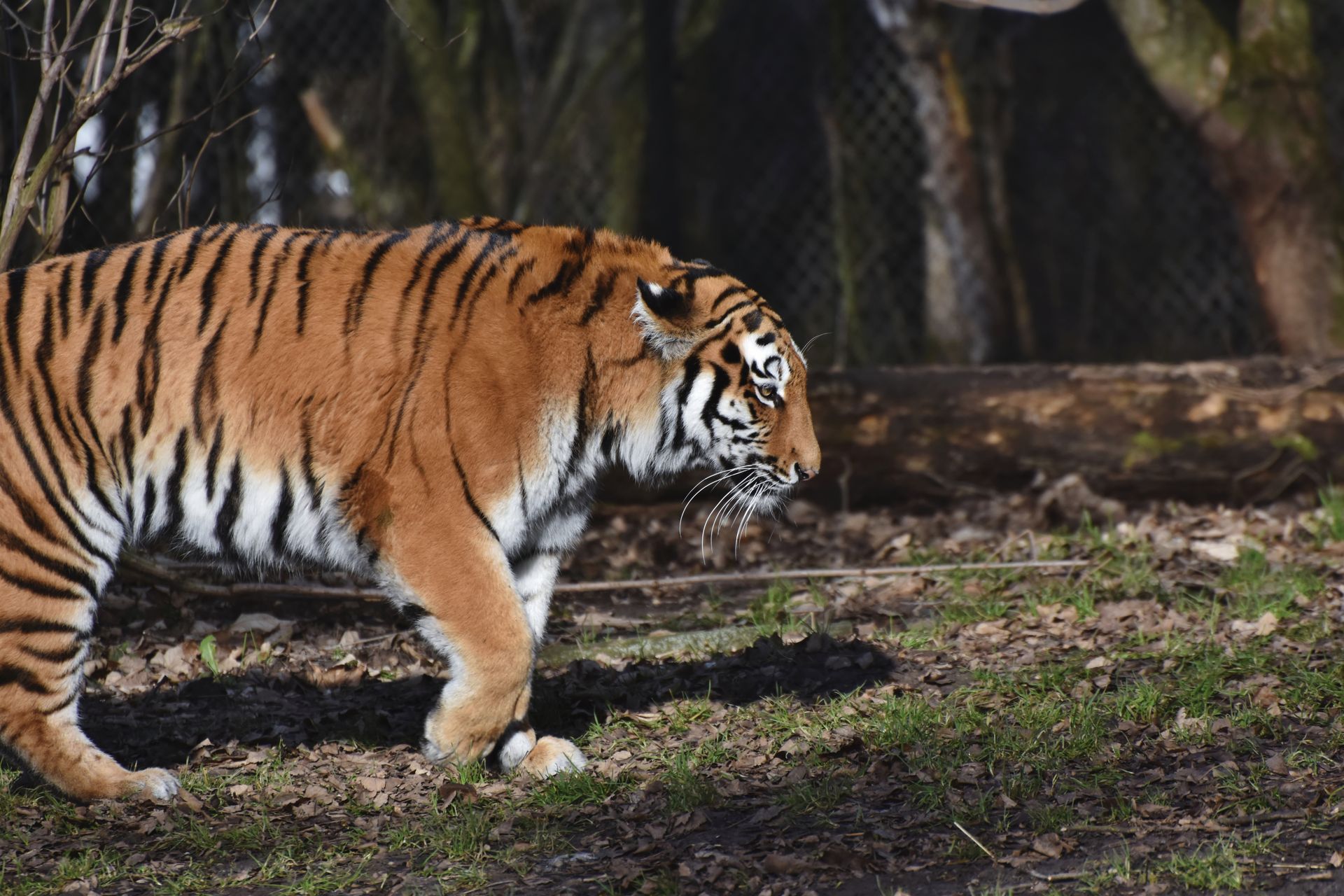
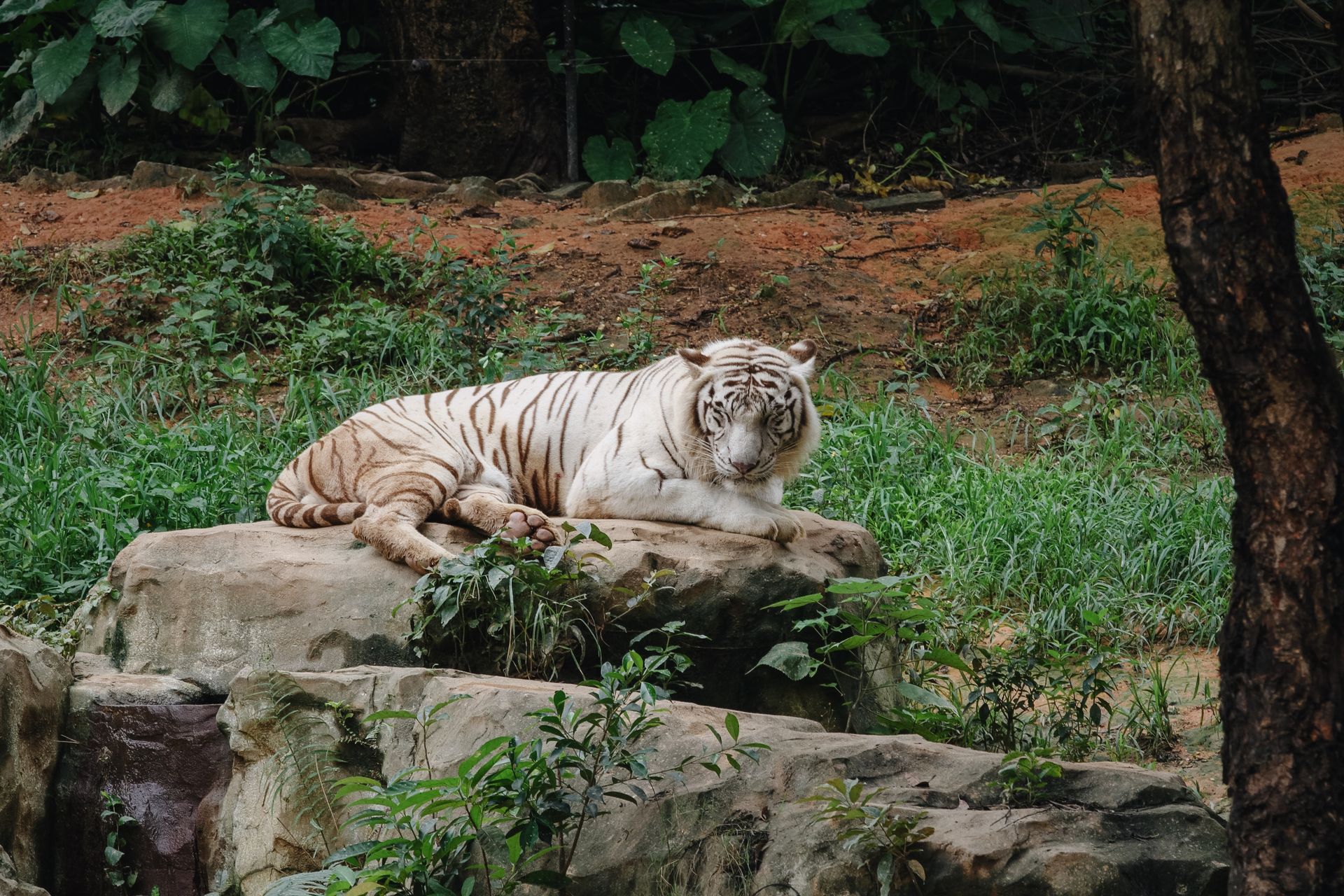
Pilibhit Tiger Reserve is home to a diverse range of wildlife, including the majestic Royal Bengal Tigers and Indian Leopards. These top predators roam the reserve's forests and grasslands, playing a crucial role in maintaining the ecosystem's balance.
The reserve is also a haven for herbivores, with species like the Cheetal, Sambar Deer, and Blue Bull thriving in the area. These gentle giants can be seen grazing in the meadows and forests, their large eyes and ears alert to any potential threats.
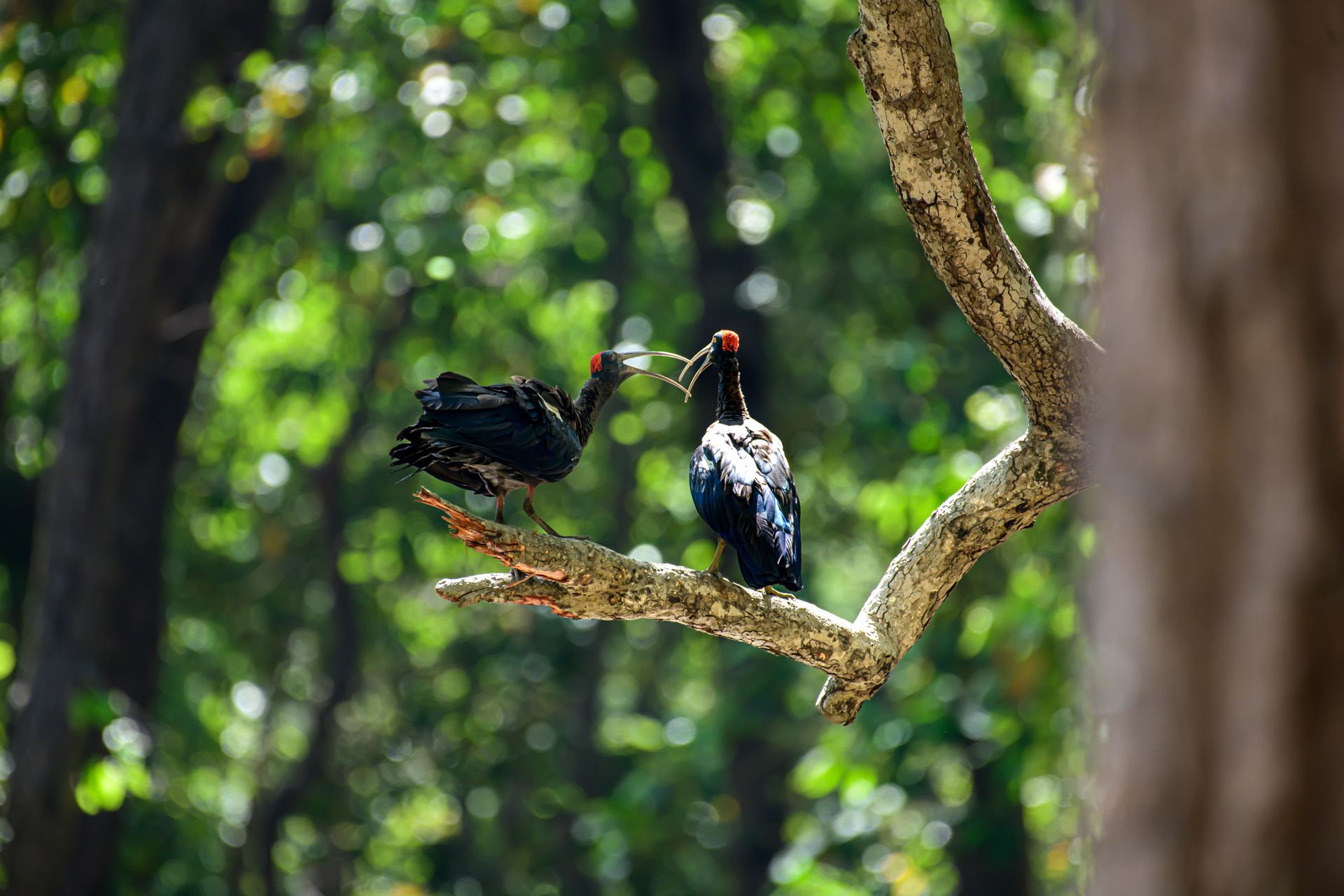
Birdwatchers will be thrilled to know that Pilibhit Tiger Reserve is a paradise for bird enthusiasts. With over 326 species of birds documented, including the majestic Sarus crane and the colorful Peafowl, visitors can spend hours spotting these feathered friends. The reserve's wetlands and forests provide the perfect habitat for these birds, making it a must-visit destination for any bird lover.
Here's a breakdown of the different types of wildlife found in Pilibhit Tiger Reserve:
Reptiles, including the majestic Indian Rock Python and the venomous King Cobra, also call the reserve home. These scaly creatures play a vital role in the ecosystem, helping to regulate the populations of small mammals and birds.
The reserve's river system is home to over 79 species of fish, providing a vital source of food for many of the reserve's inhabitants. From the majestic Gharial to the colorful Lizard species, the reserve's aquatic life is as diverse as it is fascinating.
National Park Information
Pilibhit Tiger Reserve is a paradise for nature lovers and wildlife photographers, offering both morning and afternoon safari opportunities to witness the captivating wildlife in their natural habitat. The reserve is home to a diverse terrain, supporting various ecosystems such as dense Sal Forests, Tall Wet Grasslands, Marshy Wetlands and Rivers, and Open Woodlands and Scrub Forests.
The morning safari typically starts around sunrise, with timings varying slightly based on seasonal changes. In winter, the morning safari runs from 6:30 am to 10:00 am, while in summer, it starts at 6:00 am and ends at 9:30 am.
The reserve is a crucial corridor for wildlife, especially tigers, and is known for its high density of Bengal tigers. The Pilibhit Tiger Reserve covers an area of 730 sq. km and forms a part of the Terai Arc Landscape, an extensive ecological corridor linking India and Nepal.
Buffer Zone
The Buffer Zone is a great place to explore, with three entry gates to choose from: Powalgarh Gate, Ghoshitola Gate, and Bisalpur Gate.
You'll find luxurious grasslands, open jungles, and streams all around, making it a perfect spot for spotting diverse wildlife. The chances of seeing a variety of animals are higher here, but be prepared for a more crowded experience.
Higher number and frequent jeep safaris occur in this zone, so you might want to plan ahead and book your safari in advance to avoid any last-minute hassles.
Reserve
Pilibhit National Park is a treasure trove of biodiversity, with a stunningly diverse terrain that supports a variety of ecosystems.
The park boasts a dynamic blend of habitats, including dense Sal forests, tall wet grasslands, and marshy wetlands. These ecosystems provide essential cover and breeding grounds for big cats like tigers, and offer prime grazing land for herbivores like swamp deer and hog deer.
The reserve is home to a wide range of species, including sloth bears and leopards, which inhabit the open woodlands and scrub forests.
Curious to learn more? Check out: Hilltop Reservation Dog Park
Here's a breakdown of the different habitats found in Pilibhit National Park:
- Dense Sal Forests: Providing essential cover and breeding grounds for big cats.
- Tall Wet Grasslands: Offering prime grazing land for herbivores like swamp deer and hog deer.
- Marshy Wetlands and Rivers: Nourished by the Sharda, Ghaghara, and Khakra rivers, fostering aquatic biodiversity.
- Open Woodlands and Scrub Forests: Crucial habitats for species such as sloth bears and leopards.
Pilibhit National Park is a crucial corridor for wildlife, especially tigers, and is known for its high density of Bengal tigers, which is why it was declared a tiger reserve in 2014.
Related reading: Books about Tigers
Unique Features
Pilibhit's tigers are expert swimmers, frequently swimming across rivers and marshes, unlike tigers in dry landscapes.
Their unique adaptation to the wet and dense forest environment is reflected in their thick coat and robust build, making them richer in terms of coat compared to tigers in central India.
Their cubs often stay with their mothers longer than in other tiger reserves, thanks to the dense cover and abundant food sources in Pilibhit.
Here are some notable tigers in Pilibhit, known for their unique markings, behavior, and success in raising cubs:
- T-1 (Rudra) – One of the dominant male tigers of the reserve, known for his vast territory and successful breeding history.
- T-2 (Maya) – A famous tigress responsible for nurturing multiple litters, contributing significantly to the growing tiger population.
- T-3 (Veer) – A young and aggressive male known for expanding his range and challenging older tigers.
- T-4 (Choti) – A tigress often sighted near water bodies, recognized for her distinct facial markings.
What Makes Unique?
Pilibhit Tiger Reserve is a hidden gem among India's tiger reserves. Unlike heavily commercialized reserves, it offers an undisturbed, intimate wildlife experience, making it a paradise for nature lovers and wildlife photographers.
A different take: Tiger Reserves of India
The reserve's unique habitat, with dense forests and abundant prey base, provides an ideal environment for tigers to flourish. This has led to a remarkable recovery of the tiger population, earning the reserve global recognition.
Pilibhit's tigers are expert swimmers, frequently swimming across rivers and marshes. This is a notable adaptation, unlike tigers in dry landscapes.
Their thick coats and robust builds are also a result of their adaptation to the wet and dense forest environment. This is evident in their richer coats compared to tigers in central India.
One of the fascinating behaviors of Pilibhit's tigers is their close-knit family groups. Cubs often stay with their mothers longer than in other tiger reserves, thanks to the dense cover and abundant food sources.
Here are some notable tigers in Pilibhit, known for their unique markings, behavior, and success in raising cubs:
- T-1 (Rudra) – One of the dominant male tigers of the reserve, known for his vast territory and successful breeding history.
- T-2 (Maya) – A famous tigress responsible for nurturing multiple litters, contributing significantly to the growing tiger population.
- T-3 (Veer) – A young and aggressive male known for expanding his range and challenging older tigers.
- T-4 (Choti) – A tigress often sighted near water bodies, recognized for her distinct facial markings.
Famous for?
The Pilibhit Tiger Reserve is famous for its scenic spots that enhance the wildlife experience. One such spot is Chuka Beach, popular for its natural beauty.
Its natural beauty makes Chuka Beach a standout location within the reserve.
Activities and Safaris
At Pilibhit Tiger Reserve, you can choose from a variety of safaris to explore the park's diverse wildlife. The Classic Jeep Safari is a thrilling way to spot the majestic Bengal Tiger, along with other animals like leopards, deer, and elephants.
Expert guides accompany you on this adventure, sharing their knowledge and experiences of the park's history. They'll help you track down the tiger, listening for alarm calls, pugmarks, and tiger tracks.
A night safari is also an option, where you can decode the world of darkness and spot nocturnal species like owls and crickets. The dim light makes their eyes glow in the dark, creating a magical experience.
You can also opt for an elephant safari for a closer look at nature, birds, and wildlife. These intelligent mammals can move around in forests easily, revealing hidden gems that may not be seen during jeep safaris.
The park offers both morning and afternoon safari opportunities, allowing you to witness wildlife in their natural habitat. The morning safari starts around sunrise, typically between 6:30 am and 10:00 am, depending on the season.
The afternoon safari begins in the early afternoon and extends until sunset, providing an excellent opportunity to observe animal behavior as they prepare for the night.
Planning and Budget
You can enjoy the thrill of Pilibhit Tiger Reserve without overspending with a budget safari that includes guided jungle rides, basic stays, and plenty of chances to spot wildlife—all at a great price.
The Dudhwa-Pilibhit Budget Safari offers an exciting and affordable wildlife adventure, taking you through the lush landscapes of Dudhwa National Park and Pilibhit Tiger Reserve.
Budget
Planning a wildlife adventure doesn't have to break the bank. The Dudhwa-Pilibhit Budget Safari offers an exciting and affordable experience.
You can enjoy guided jungle rides and spot wildlife without overspending. This budget safari includes basic stays, making it a great option for travelers on a tight budget.
The Pilibhit Budget Safari is a great alternative for those who want to experience the thrill of Pilibhit Tiger Reserve without overspending. It includes all the essentials for a memorable wildlife adventure.
With these budget safaris, you can explore the lush landscapes of Dudhwa National Park and Pilibhit Tiger Reserve at a great price.
Weekend
Planning a weekend getaway can be a great way to unwind and recharge.
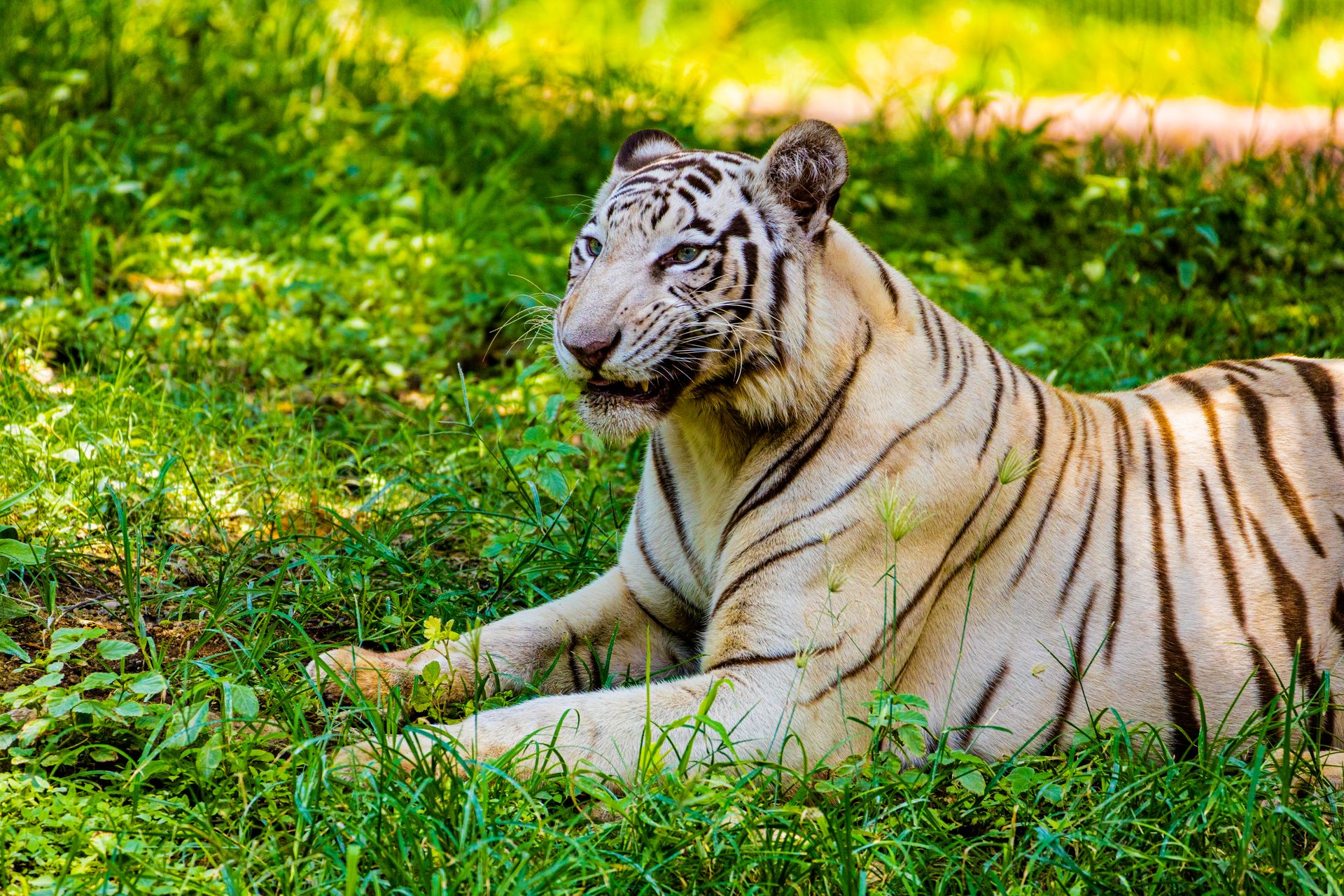
If you're looking to explore the great outdoors, consider booking a Pilibhit Weekend Safari, which includes spotting Bengal tigers, vibrant birds, and lush greenery over 3 nights and 4 days.
A DSLR or camera is a must-have to capture your memorable safari moment.
How to Book
To book a safari in Pilibhit Tiger Reserve, you can contact Big Cats India for an end-to-end package including airport transfer, accommodation, meals, and internal transfer.
Planning ahead is key, so it's advised to book your safari well in advance to get the best zones for sightings.
You can also book Pilibhit Safari online from the tourism website, where you can see the exact entry fee, jeep safari fee, elephant safari cost, and guide fee.
However, keep in mind that the website only books your safari permits, not the accommodation, food, and internal transfer to the reserve gates.
If you're unsure which gate(s) to choose from, don't hesitate to contact Big Cats India or message them for assistance to book your safari in Pilibhit.
Expand your knowledge: Tiger Cats Pets
Getting There and Essentials
The Pilibhit Tiger Reserve is located in the state of Uttar Pradesh, India, and is accessible by road and rail. It's about 380 kilometers from New Delhi, the capital city.
The closest airport is the Bareilly Airport, which is about 120 kilometers from the reserve. From there, you can take a taxi or bus to get to the reserve.
To get to the reserve, you'll need to plan your trip in advance, especially during peak season. The best time to visit is from November to March when the weather is cooler and the roads are clearer.
How to Get to the Park
Getting to the park is relatively easy, with multiple options available.
The park is a 10-minute walk from the city center, making it a great option for those who want to get some exercise.
You can also take bus number 12, which stops right in front of the park entrance, and the fare is $2.50.
If you're driving, there is a large parking lot near the park entrance with a fee of $5 per hour.
The park is also accessible by bike, with a bike path leading directly to the park entrance.
Remember to check the park's website for any updates on parking fees or bike path closures before you go.
Key Items to Bring
When planning your safari, consider the Pilibhit weather. It can get really cold quickly in the evening, especially during winter.
Binoculars are a must-have to view wildlife from a safe distance. Bring a hat and shades to protect yourself from direct sunlight.
A bandanna or cotton scarf is handy to cover your face and avoid dust. Don't forget to pack woolens for your afternoon safari if you're visiting during winter.
It's a good idea to dress in layers to stay comfortable throughout the day.
General Information
Pilibhit Tiger Reserve is located in the Pilibhit, Bahraich & Lakhimpur Districts of Uttar Pradesh. The reserve covers a total area of 730.2498 Sq. Km.
The nearest airport to Pilibhit Tiger Reserve is Pantnagar Airport, which is approximately 74 km away. If you're planning to visit by train, the nearest railway junction is Pilibhit Junction.
Pilibhit Tiger Reserve was notified as a tiger reserve in 2008, and it has since become a thriving tiger stronghold. In 2014, it was officially declared India's 45th Tiger Reserve, marking a major milestone in the country's conservation journey.
The reserve has a rich biodiversity and high tiger density, making it a crucial area for conservation. Pilibhit Tiger Reserve has been recognized globally for its commitment to wildlife preservation.
Here's a summary of the key facts about Pilibhit Tiger Reserve:
- Total Area: 730.2498 Sq. Km
- Location: Pilibhit, Bahraich & Lakhimpur Districts, UP
- Notified as Tiger Reserve: 2008
- Nearest Airport: Pantnagar (74 km)
- Nearest Railway Junction: Pilibhit Junction
Featured Images: pexels.com