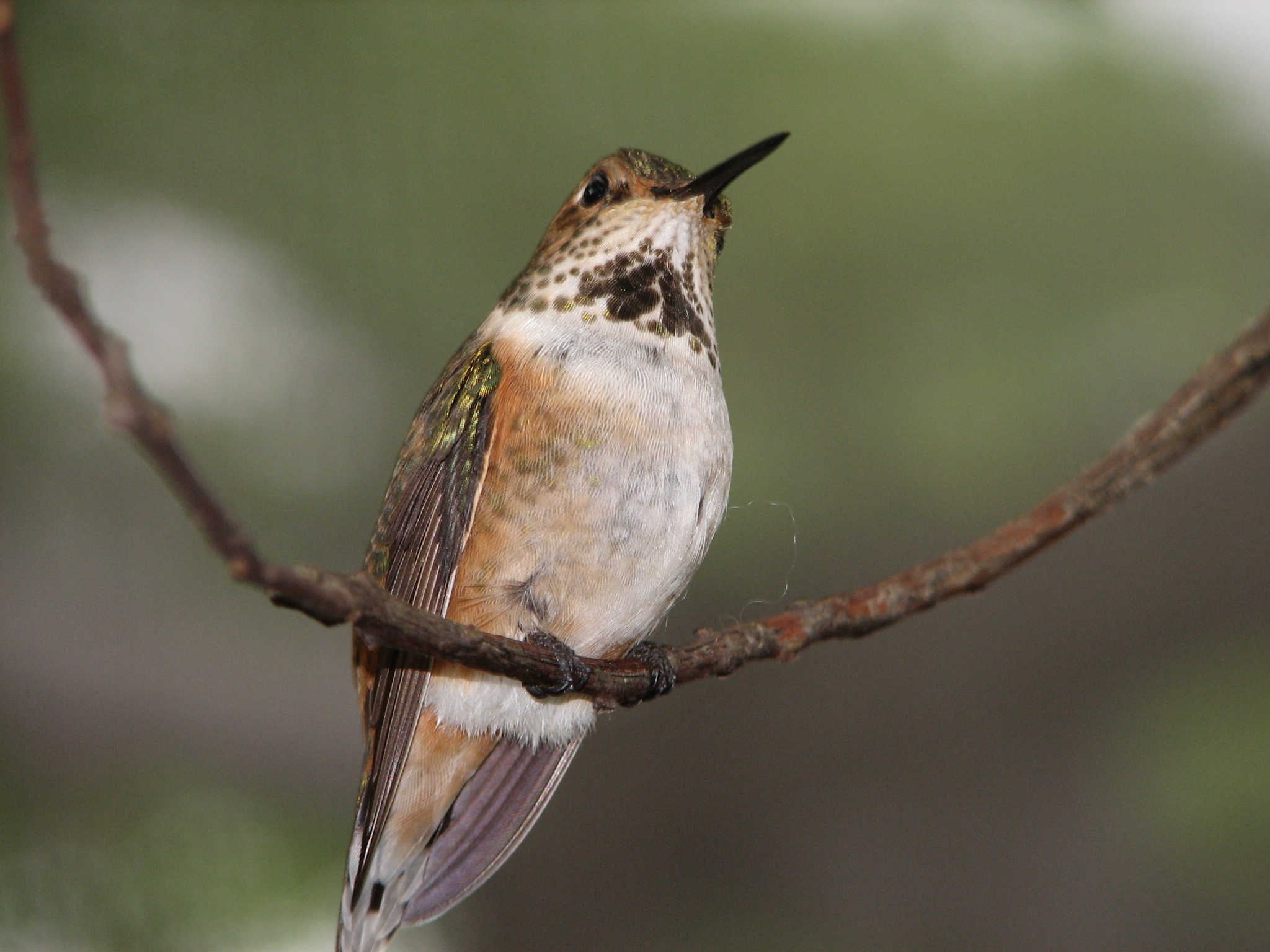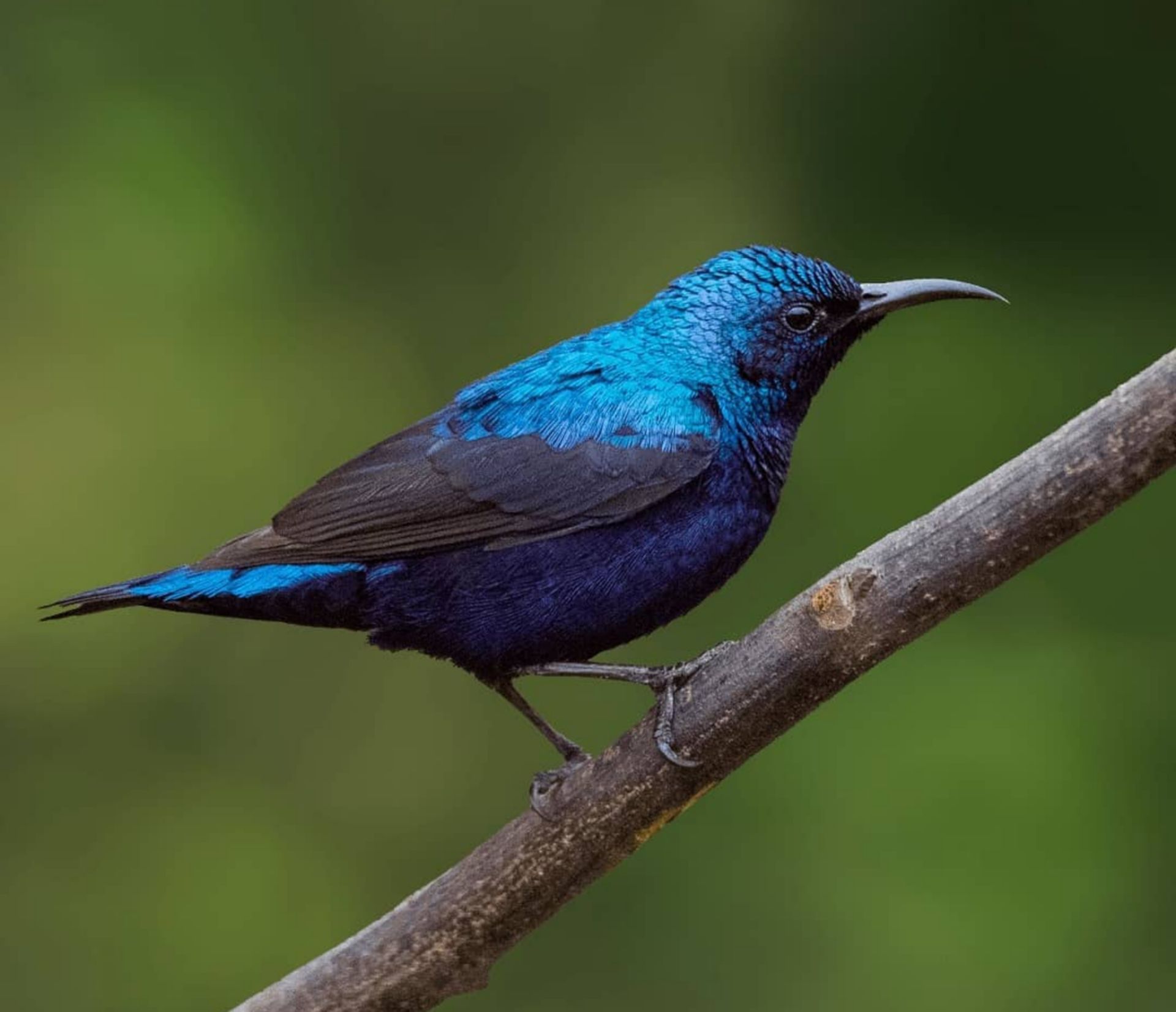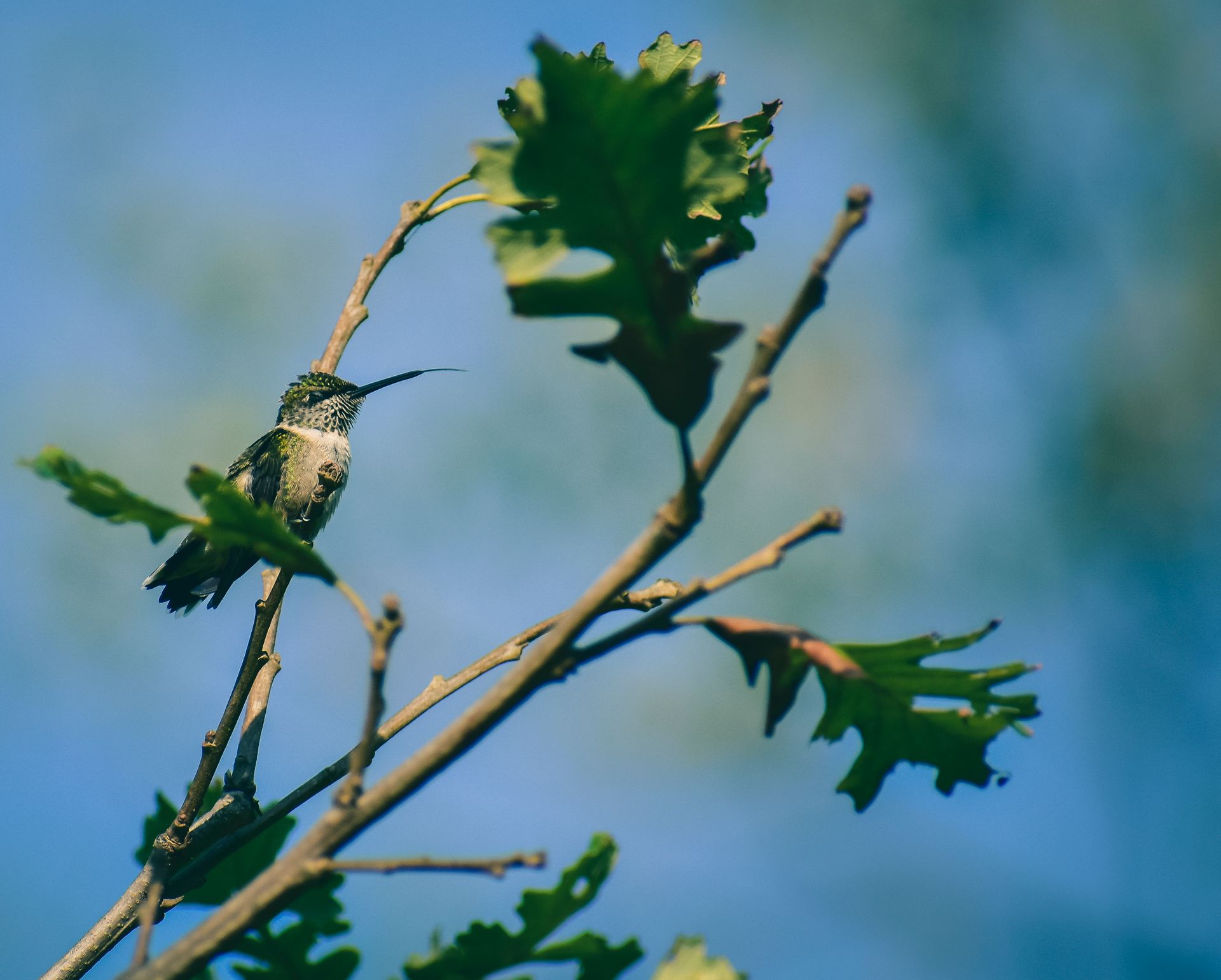
The Ruby Throated Hummingbird is a migratory bird that spends the summer months in North America, typically between May and September. They are found in a variety of habitats, including backyards, gardens, and forests.
These birds are attracted to areas with an abundance of nectar-rich flowers, such as trumpet-shaped flowers like honeysuckle and fuchsia.
In the fall, Ruby Throated Hummingbirds begin their migration to Central America, a journey that can be up to 500 miles long. They fly at high altitudes, often above 1,000 feet, to take advantage of wind currents and conserve energy.
Ruby Throated Hummingbird
The Ruby Throated Hummingbird is eastern North America's sole breeding hummingbird. These birds are found in many parts of the eastern United States and Canada.
They are incredibly small, but their bright green and red plumage makes them stand out in the full sun. I've seen them zip from flower to flower, feasting on nectar.
Feeders and flower gardens are great ways to attract these birds to your yard. By installing a few feeders and planting some nectar-rich flowers, you can turn your yard into a hummingbird haven.
By early fall, these birds are bound for Central America, so be sure to enjoy them while they're around.
Behavior and Habitat
The ruby-throated hummingbird breeds throughout most of the eastern United States and in southern Canada, particularly in Ontario, in deciduous and pine forests and forest edges, orchards, and gardens.
This species has the largest breeding range among all hummingbirds in the United States, with the female building a nest in a protected location in a shrub or a tree.
In the winter, ruby-throated hummingbirds are mostly seen in Mexico and Florida, where they spend most of their time.
Distribution and Habitat
The ruby-throated hummingbird breeds throughout most of the eastern United States and south-central and southeastern Canada in deciduous and pine forests and forest edges, orchards, and gardens.
The female builds a nest in a protected location in a shrub or a tree, which is a remarkable feat considering the bird's tiny size.
This species has the largest breeding range among all hummingbirds in the United States, which is a testament to its adaptability and resilience.
The ruby-throated hummingbird is migratory, spending most of the winter in Florida, southern Mexico, and Central America, as far south as extreme western Panama, and the West Indies.
Some birds embark on a nonstop 900-mile journey across the Gulf of Mexico and Caribbean from Panama or Mexico to the eastern United States during migration, which is an incredible feat of endurance.
In winter, the bird is seen mostly in Mexico and Florida, where it likely finds suitable food sources to sustain itself during the cold months.
Older male and female birds were better prepared for long-distance flight than first-year birds by having higher body weights and larger fuel loads during migration southward in autumn along the northern coast of the Gulf of Mexico.
Discover more: Where Do Ruby Throated Hummingbirds Winter
Behavior and Ecology
Ruby-throated hummingbirds are solitary creatures, only coming together for brief courtship periods. They're fiercely territorial and will aggressively defend their feeding grounds from other hummingbirds.
These tiny birds are capable of incredible feats, such as flying 800 km non-stop over water during their spring migration. They achieve this by doubling their fat mass before the flight and then expending it entirely during the 20-hour journey.
Their heart rates can reach up to 1260 beats per minute, making them one of the most metabolically active animals on the planet. They breathe at a rate of about 250 breaths per minute, even at rest.
To conserve energy on cold nights, hummingbirds may enter a state of hypothermic torpor. This allows them to reduce their metabolic rate and survive the chilly temperatures.
Ruby-throated hummingbirds are voracious feeders, consuming up to half their body weight in sugar each day. They prefer to feed on nectar from red or orange tubular flowers, but will also eat insects and drink tree sap if available.
Their diet consists mainly of nectar, small insects, and spiders, which provide essential protein, minerals, and vitamins. They have a slight preference for red, orange, and bright pink flowers, but will visit other flowers as well.
Young hummingbirds, on the other hand, require a diet rich in protein, which they get from insects. Nectar alone is insufficient for their growing needs.
See what others are reading: Ruby Crowned Kinglet Diet
Flight and Feeding
Ruby-throated hummingbirds are incredibly agile in flight, with muscles making up 25–30% of their body weight, allowing them to fly not only forward but also backward and hover in mid-air. This unique ability is similar to insects and is made possible by their long, blade-like wings that connect to the body only from the shoulder joint.
Their ability to hover is due to their small mass, high wingbeat frequency, and relatively large margin of mass-specific power available for flight. Hummingbirds beat their wings up to 80 times per second during hovering.
Hummingbirds primarily feed on nectar from flowers and flowering trees, as well as small insects and spiders. They show a slight preference for red, orange, and bright pink tubular flowers as nectar sources.
Flight
Hummingbirds have an incredible ability to fly, with muscles making up 25–30% of their body weight. This allows them to have great agility in flight.
Their long, blade-like wings are a key factor in their flight capabilities. Unlike the wings of other birds, these wings connect to the body only from the shoulder joint.
This unique adaptation allows the wing to rotate almost 180°, enabling the bird to fly not only forward but backward, and to hover in mid-air. This is similar to insects and unique among birds.
Hummingbirds can hover due to their small mass, high wingbeat frequency, and relatively large margin of mass-specific power available for flight. Several anatomical features contribute to this ability.
During hovering, hummingbird wings beat up to 80 times per second. This fast wing movement creates lift on the downstroke of a wing flap and also on the upstroke in a ratio of 75%:25%, respectively.
The main wing bone, the humerus, is specifically adapted for hovering flight. It's relatively short with proportionally massive deltoid-pectoral muscles.
These muscles permit pronounced wing supination during upstroke when hovering. This helps the bird to maintain its position in mid-air.
Food and Feeding
Hummingbirds are known to feed on nectar from flowers and small insects, which provide essential protein, minerals, and vitamins.
Their diet consists mainly of nectar, but small arthropods play a crucial role in supplying protein and other vital nutrients.
Hummingbirds show a preference for red, orange, and bright pink tubular flowers as nectar sources.
They also visit flowers not adapted to hummingbird pollination, like willow catkins, and occasionally drink sugar-rich tree sap.
Young hummingbirds are fed insects for protein since nectar is insufficient for their growth and development.
In fact, hummingbirds need to feed constantly, consuming up to half their weight in sugar each day to fuel their high-energy flight.
They primarily feed on flower nectar, preferring red or orange tubular flowers like Trumpet Creeper and Cardinal Flower.
Hummingbirds also eat insects and occasionally drink tree sap, and some even visit hummingbird feeders for sugar water.
For more insights, see: Ruby Red Throated Hummingbird Migration Map
Identification and Tips
To attract Ruby-throated Hummingbirds to your backyard, try setting up hummingbird feeders or planting tubular flowers.
You can make sugar water mixtures with about one-quarter cup of sugar per cup of water, and it's best to use table sugar.
Food coloring is unnecessary, so you can skip that step.
Photos and Videos
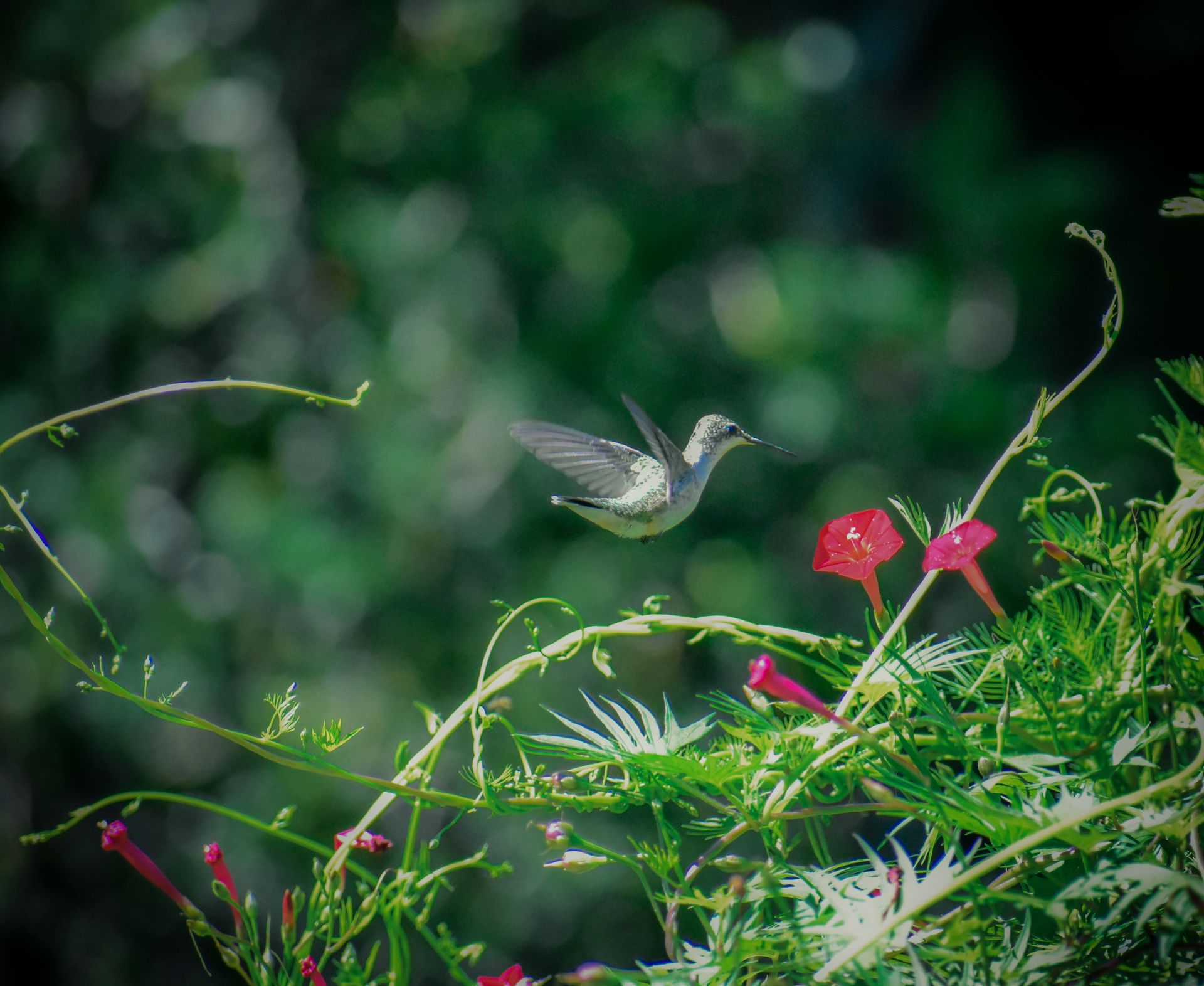
The Ruby-throated Hummingbird is a stunning bird to capture on camera, and I've had the pleasure of observing them in action.
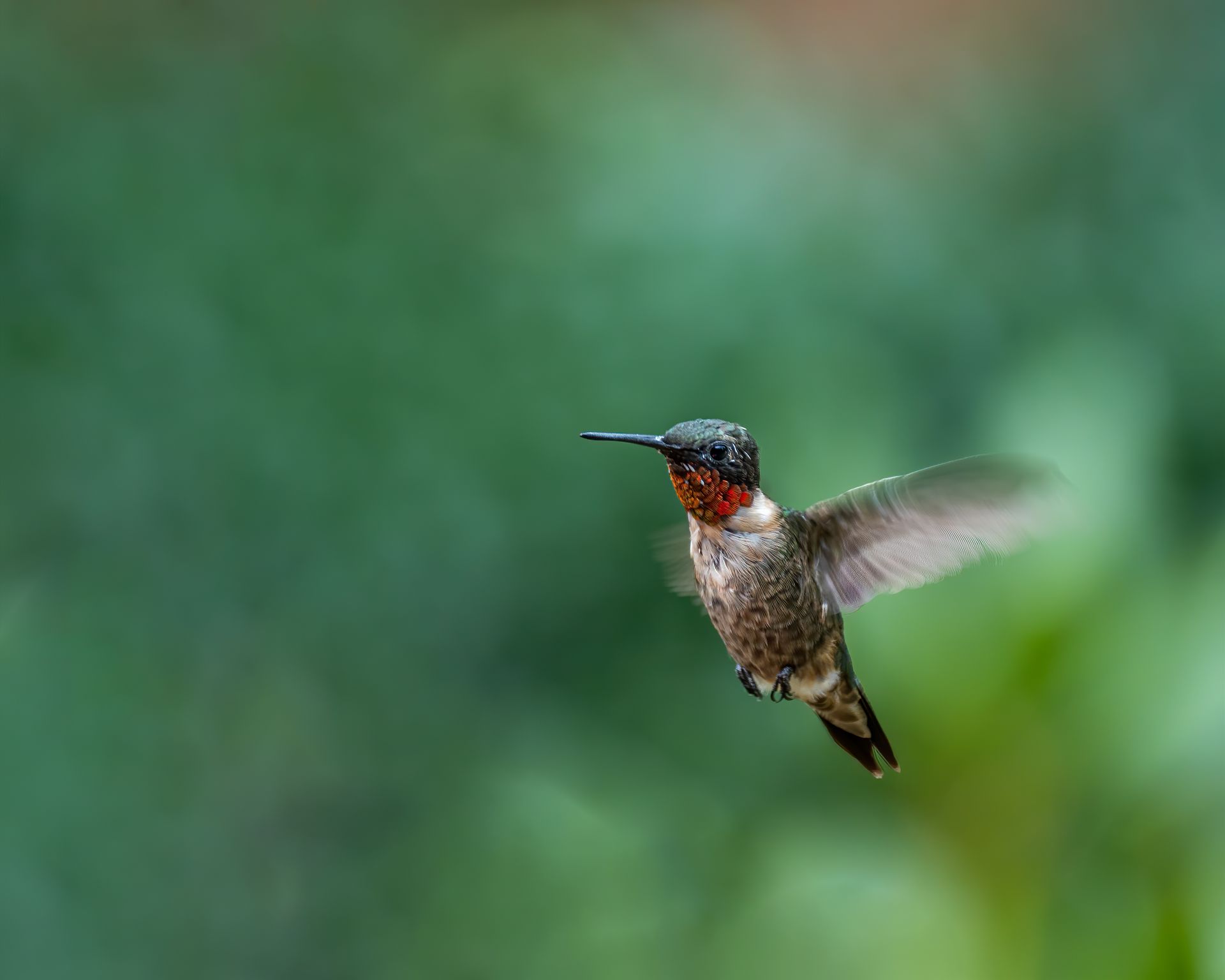
Its emerald green back and brilliant red throat make for a striking combination, especially when the throat appears iridescent and looks black or dark red, then lights up when viewed at the correct angle.
To get a good shot, try to capture the bird in flight, as its ability to stop instantly, hover, and adjust its position with exquisite control is truly impressive.
Beating its wings so fast they're almost invisible, the hummingbird hovers with pinpoint precision while drinking nectar from flowers with its long, thin bill.
The bird's diet consists of a variety of flowering plants, so look for it near colorful blooms.
Recommended read: When Do Ruby Throated Hummingbirds Migrate
Taxonomy
The ruby-throated hummingbird was formally described by Carl Linnaeus in 1758.
Linnaeus based his description on earlier accounts by Mark Catesby and George Edwards, who had published their work in 1729 and 1743 respectively.
The type locality of the ruby-throated hummingbird is South Carolina.
The specific epithet colubris is from the Spanish word colibrí, meaning "hummingbird".
Backyard Tips
To attract Ruby-throated Hummingbirds to your backyard, set up hummingbird feeders or plant tubular flowers. These birds are common in suburbs and towns, and can become quite bold, feeding at hanging plants and feeders on your porch or next to your windows.
You can make sugar water mixtures with about one-quarter cup of sugar per cup of water. Food coloring is unnecessary; table sugar is the best choice.
Change the water before it grows cloudy or discolored to keep your hummingbird feeders clean and safe for the birds. During hot weather, sugar water ferments rapidly to produce toxic alcohol.
Be careful about where you put your hummingbird feeders, as some cats have learned to lie in wait to catch visiting hummingbirds.
Sounds and Range
Ruby-throated Hummingbirds are found east of the Mississippi River, and their range extends from southern Canada to the Gulf Coast.
Their remarkable migration pattern involves flying straight across the Gulf of Mexico, a non-stop flight for a bird the size of a peanut.
In the spring, their migration north appears to be timed to the appearance of certain flowers along their route.
Ruby-throated Hummingbirds are known for their rapid, squeaky chirps, which are used primarily for threats, and during courtship displays, the male makes a rapid tik-tik tik-tik tik-tik sound with his wings.
Songs and Sounds
The Ruby-throated Hummingbird's songs and sounds are a true marvel. They can be heard in the male's elaborate aerial courtship display, which reaches heights of up to 50 feet.
During these displays, the male's wings make a distinctive twittering sound, accompanied by his high-pitched, squeaky chittering voice. You can listen to an example of this display online.
The male's vocalizations are rapid, squeaky chirps, primarily used for threats. Males may vocalize to warn another male that has entered his territory.
The male's wings also produce a rapid tik-tik tik-tik tik-tik sound during the courtship displays. This sound is made during the shuttle display and at each end of the side-to-side flight.
A second, rather faint, repeated whining sound is sometimes produced with the outer tail-feathers during the dive. This sound is made as the male flies over the female, spreading and shutting the tail as he does so.
Consider reading: Ruby Throated Hummingbird Juvenile Male
Region and Range
The Ruby-throated Hummingbird is the only species that nests east of the Mississippi River. Its range is vast, covering southern Canada, the central and eastern states, and the Gulf Coast during the spring and summer.
They winter mainly in the tropics, from coastal southern Mexico south to northern Panama, although some can be found along the U.S. Gulf Coast and at Florida's southern tip.
This bird's migration patterns are remarkable, with most North American hummingbird species being migratory, unlike their South American relatives, which travel short distances up and down mountain slopes.
Ruby-throated Hummingbirds, on the other hand, fly straight across the Gulf of Mexico during their migrations to and from their wintering grounds, an incredible feat for a bird the size of a peanut!
If this caught your attention, see: When Do Ruby Throated Hummingbirds Migrate South
Conservation Status
The Ruby-throated Hummingbird is not currently considered endangered, but it still faces many threats.
They are frequently victims of window collisions, which can be fatal.
Outdoor cats and other predators also regularly prey on these birds.
Habitat loss on both breeding and wintering grounds is another significant threat.
Fortunately, some initiatives are in place to help mitigate these risks.
The Cats Indoors program encourages pet owners to keep their cats indoors to prevent them from harming birds.
This program can make a big difference in keeping both cats and birds safe.
ABC's Glass Collisions program offers solutions to prevent birds from hitting windows.
By working together, we can help reduce the number of window collisions.
Shade-coffee farms provide safe havens for Ruby-throated Hummingbirds and other migratory birds on their wintering grounds.
Purchasing Bird Friendly certified coffee is a great way to support these birds and their habitats.
You might enjoy: Cats Catch Hummingbirds
Frequently Asked Questions
Why do I only see female ruby-throated hummingbirds at my feeder?
It's possible that you're seeing female ruby-throated hummingbirds at your feeder due to a nesting female nearby or because young males resemble females in their first year. This common phenomenon can lead to an imbalance in the number of males and females you see at your feeder.
Featured Images: pexels.com