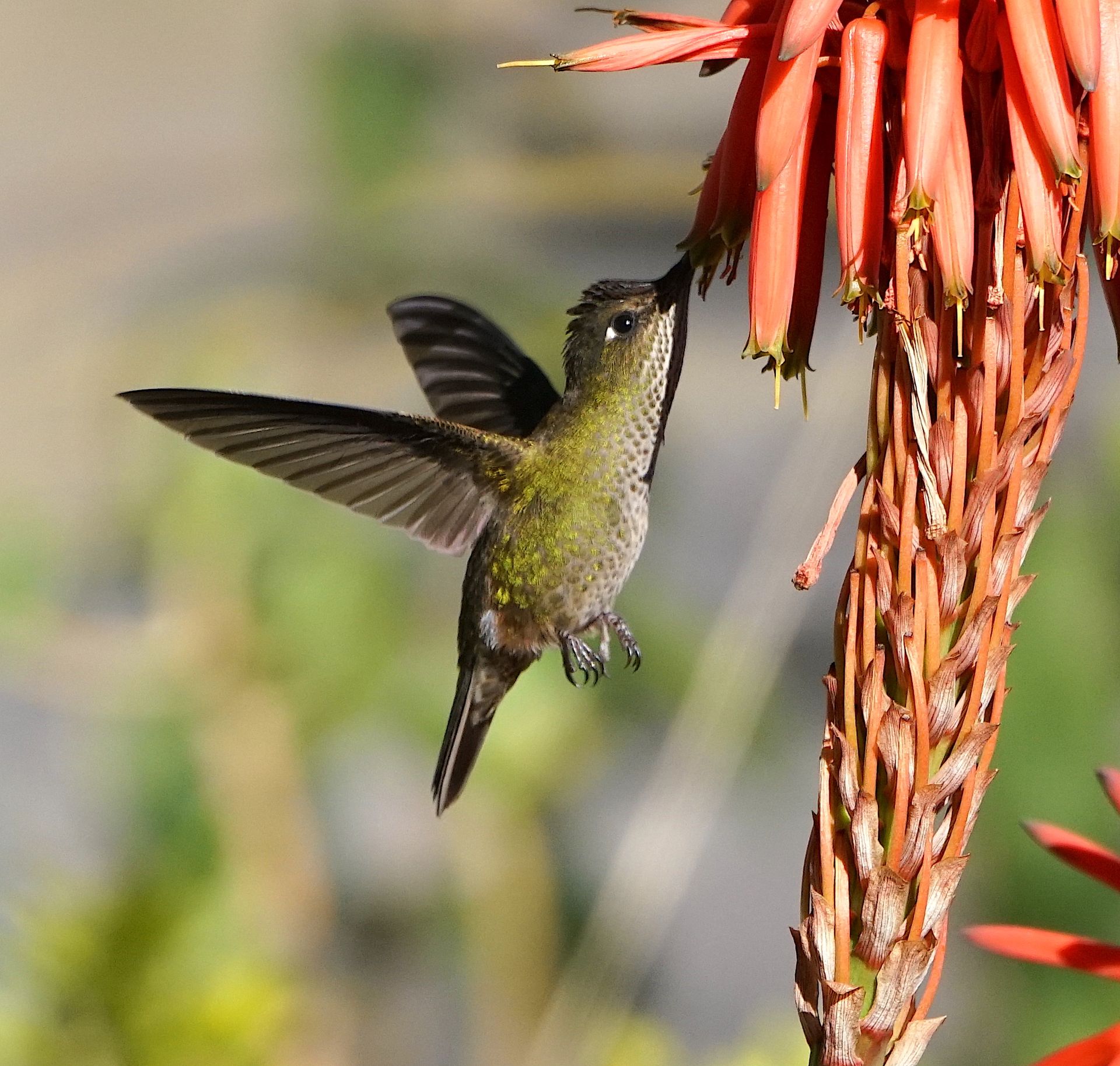
The Broad-tailed Hummingbird is a stunning bird species that can be found in the western United States and Mexico.
In terms of behavior, these birds are known to be highly territorial and will fiercely defend their feeding grounds against other hummingbirds.
They are also incredibly agile flyers, able to beat their wings up to 80 times per second to hover in mid-air and chase after nectar-rich flowers.
One of the most fascinating aspects of Broad-tailed Hummingbird behavior is their unique mating ritual, in which males will perform a series of aerial acrobatics to attract females.
Their habitat typically consists of mountain meadows and alpine forests, where they can be found flitting between flowers and sipping nectar from tubular blooms.
Recommended read: Eastern Screech Owl Behavior
Physical Characteristics
The Broad-tailed Hummingbird is a medium-sized bird, measuring 4 inches in length.
Their wingspan is quite impressive, reaching 5.25 inches, which is a significant factor in their agility and maneuverability.
The female Broad-tailed Hummingbird tends to be slightly larger than the male.
You might like: Broad Billed Parrot
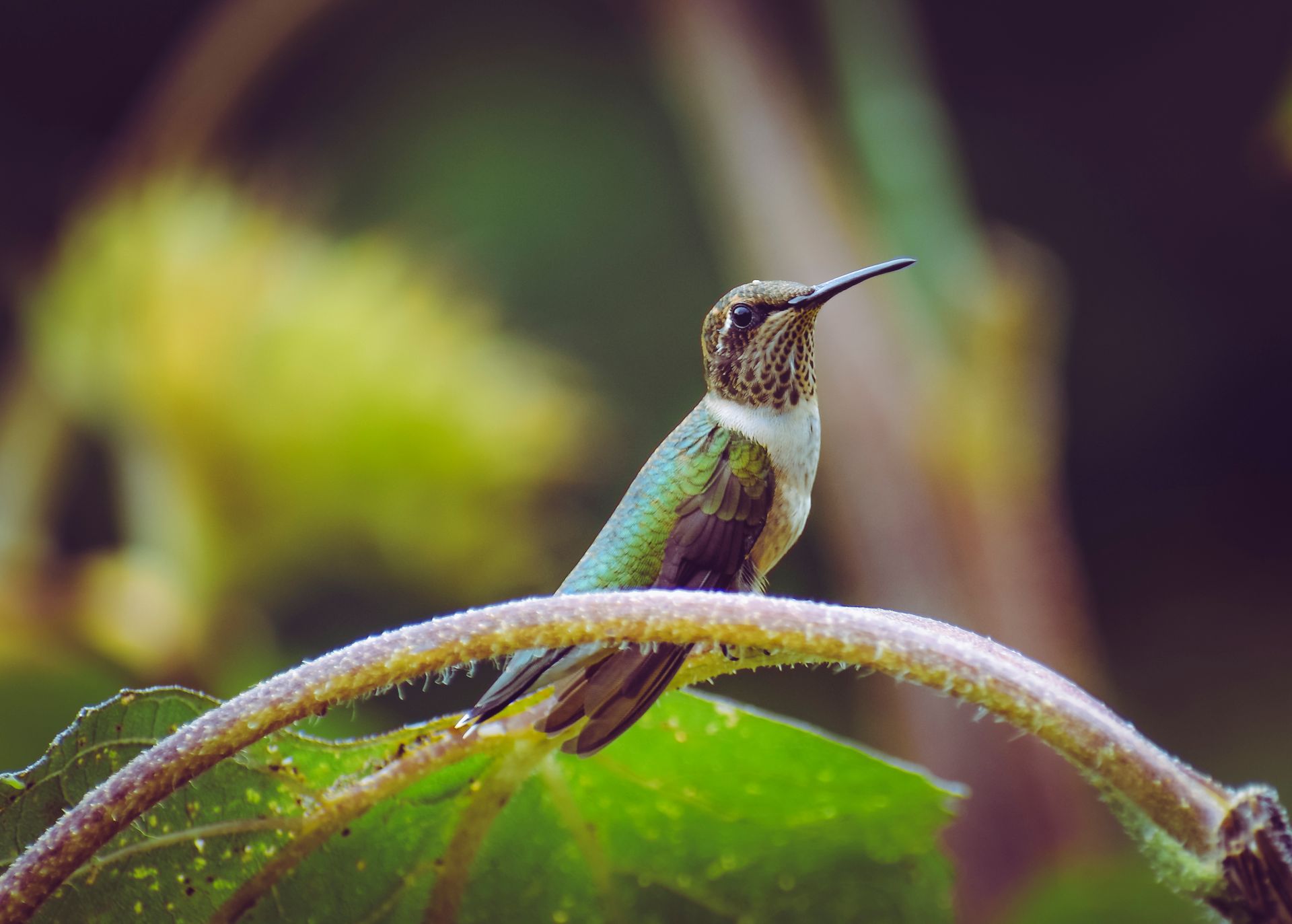
Adults of both sexes have an iridescent green back, which is a beautiful sight to behold.
A distinctive white eye ring is a characteristic feature of both male and female Broad-tailed Hummingbirds.
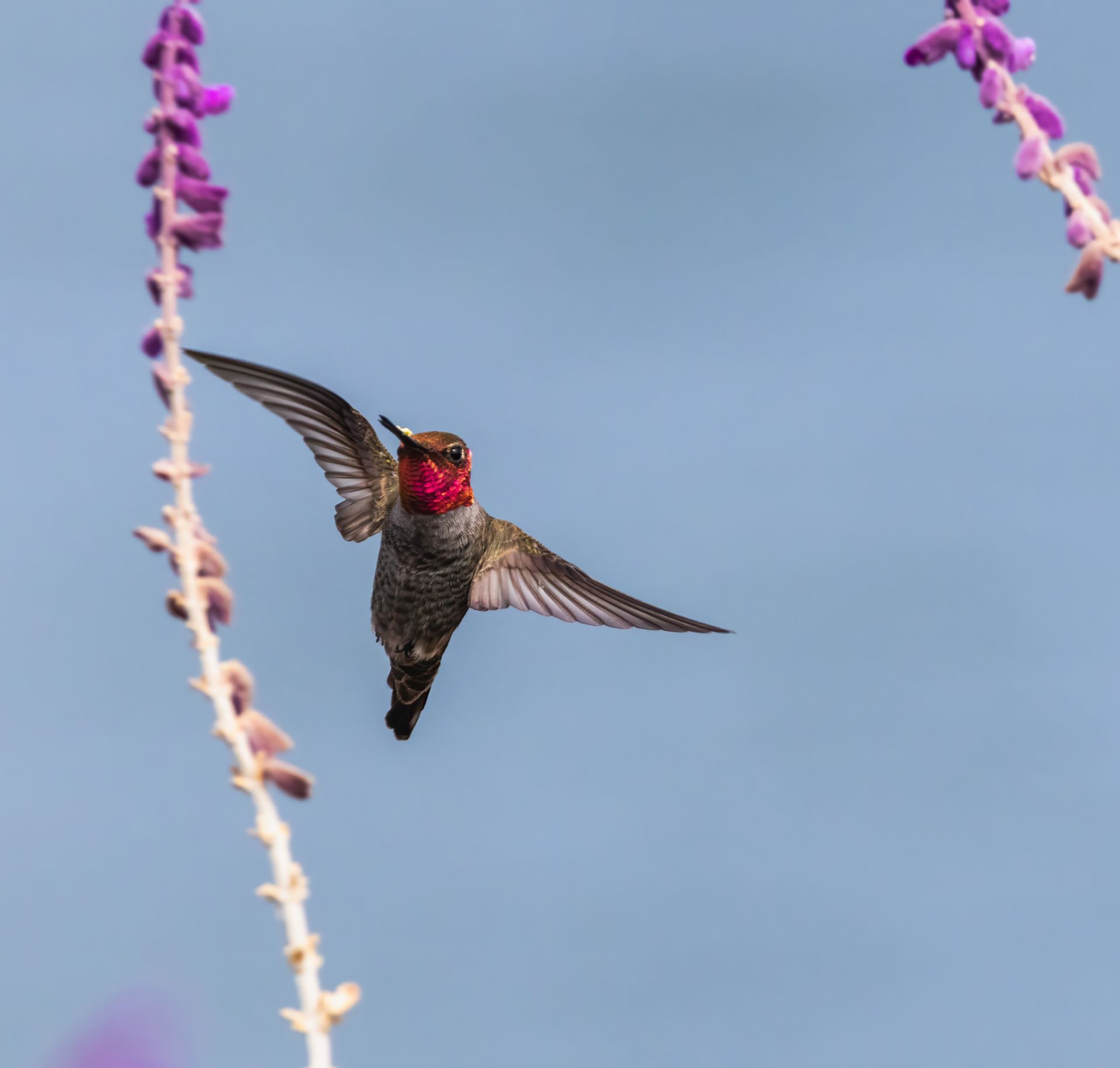
The male's bright rose-red gorget is a striking feature that sets him apart from the female.
The female's paler coloration, cinnamon flanks, and spotted cheeks help distinguish her from the male.
The Broad-tailed Hummingbird's wings produce a loud whistle, which is a unique and fascinating sound.
In contrast, the female's underparts are a blended buff color, with a white throat and iridescent green or bronze speckling.
You might enjoy: Broad Tailed vs Ruby Throated Hummingbird
Behavior and Habitat
The Broad-tailed Hummingbird is a year-round resident in oak-pine forests in central Mexico. It breeds in open subalpine meadows or shrubby habitats near forests at high elevations.
In the mountains and upper Sonoran habitats of western states, Broad-tailed Hummingbirds utilize a variety of open habitats, including pinyon, juniper, and mountain mahogany trees, as well as foothills, oak woodlands, shrub patches, and riparian areas.
On a similar theme: Broad Faced Potoroo
They can be found in the following specific tree species: pinyon, ponderosa pine, Douglas fir, Engelmann spruce, fir, aspen, and subalpine fir.
Here are some of the plants that Broad-tailed Hummingbirds feed on:
- Scarlet Gilia (Ipomopsis aggregata)
- Century Plant (Agave spp.)
- Figwort (Scrophularia spp.)
- Lousewort (Pedicularis canadensis)
- Lupine (Lupinus spp.)
- Nasturtium (Tropaeolum majus)
- Octillo (Fouquieria spendens)
- Penstemon (Penstemon spp.)
- W. Red Columbine Aquilegia elegantula
- SW Red Columbine (Aquilegia triternata)
- Paintbrush (Castilleja spp.)
- Sagebrush Bluebell (Mertensia oblongifolia)
- Sage (Salvia spp.)
- Cactus (Echinocereus spp.)
- Low Larkspur Delphinuim nelsoni
- Wax Current (Ribes ciliatum)
- Evergreen shurb (Cestrum spp.)
- Butterfly Bush (Buddleia dara)
In their winter range, Broad-tailed Hummingbirds also use thorn and oak forests at lower elevations, as well as mixed oak-pine and cypress forests at higher elevations.
Habitat
The Broad-tailed Hummingbird's habitat is quite impressive, ranging from open subalpine meadows to shrubby habitats near forests at high elevations. These mountain habitats require the Broad-tailed Hummingbirds to undergo torpor at night.
In the western states, they utilize a variety of open habitats in the mountains and upper Sonoran habitats. They are a year-round resident in oak-pine forests in central Mexico.
In the US, they breed in habitats including pinyon, juniper, and mountain mahogany in California, ponderosa pine and Douglas fir in Arizona, and aspen, ponderosa pine, and Engelmann spruce in Colorado, Wyoming, and Utah.
A different take: Mountain Cur Tail
Some specific trees they breed in include:
- Pinyon (Pinus monophylla)
- Juniper (Juniperus californica)
- Mountain mahogany (Cercocarpus spp.)
- Ponderosa pine (Pinus ponderosa)
- Douglas fir (Pseudotsuga menziesii)
- Engelmann spruce (Picea engelmanni)
- Aspen (Populus Tremuloides)
- Subalpine fir (Abies lasiocarpa)
In their winter range, they use thorn and oak forests at lower elevations, and mixed oak-pine and cypress as well as fir forests at higher elevations.
Behavior
Broad-tailed Hummingbirds are incredibly agile flyers, able to hover at 50 wingbeats per second to snatch insects from the air or drink nectar from flowers.
They're also quite territorial, with males hovering above tall vegetation to keep an eye out over their territory and chasing away unwelcome visitors.
During courtship, males perform spectacular aerial displays for females, involving a series of climbs and dives while loudly trilling their wings.
Males climb high into the sky and rapidly dive toward the ground, pulling out of the dive in front of a female.
If a male loses sight of a female, he hovers high above the ground and looks around for her.
In fact, males are promiscuous and often mate with several females in one breeding season.
Worth a look: American Bald Eagle Female
They don't form pair bonds and don't care for the young even after they fledge, leaving females to raise their chicks on their own.
To conserve energy, both males and females may go into a hypothermic torpor at night, slowing their heart rate and dropping their body temperature if it's cold or if they can't find enough food.
Hummingbird
Hummingbirds are nectar lovers, but they also have a sweet tooth for insects. They pick small insects out of the air to supplement their diet, especially when raising chicks.
They're not picky eaters, either - they'll even visit sapwells created by Red-naped Sapsuckers as a nectar substitute.
Hummingbirds are incredibly resourceful, and their adaptability is just one of the many reasons we love watching them flit from flower to flower.
Broaden your view: Cats Catch Hummingbirds
Conservation Status
The broad-tailed hummingbird is listed as a species of least concern, but this doesn't mean it's out of the woods yet.
Its population size is moderate, and it has a wide range, which is a good sign. However, a 52% decline in population between 1966 and 2015 has been documented in one survey.
These birds are surprisingly adaptable to human-modified habitats, which is a key factor in their conservation status.
A significant decline in population has been observed in riparian habitats in Utah and western coniferous forests, with a 15-49% decline in the Southern Rocky Mountains of New Mexico.
The reasons behind these declines are unclear, but potential culprits include fire suppression, timber harvest, and grazing.
In some areas, people are using feeders to artificially elevate populations during times of nectar scarcity, which can have both positive and negative effects.
Unfortunately, birds drawn to urban areas are at high risk of window and car collision.
In rural areas, electric livestock fences are known to kill broad-tailed hummingbirds, as they're attracted to the red plastic insulators.
Cutting overstory trees may seem like a good idea to help flowering shrubs bloom, but its long-term effects are unknown.
Climate change will likely impact this species, as it's well adapted to extreme conditions, but moisture and seasonal phenology will change.
Vocalizations and Displays
The Broad-tailed Hummingbird's vocalizations are a fascinating aspect of its behavior. They produce a sharp "cheet" sound, repeated multiple times, which is a common call.
Their wing beats also serve as a communication signal, with both sexes able to produce a "wing hum" sound when flying, ranging from 35 to 100 Hz. This sound can be heard by other birds.
Male Broad-tailed Hummingbirds are particularly skilled at producing a "wing trill" sound during courtship displays, which can be heard up to 75 meters away by females. This sound is produced by air passing through the 9th and 10th primary feathers.
During courtship, males perform a U-shaped flight pattern, diving from 30-50 feet before ascending and descending together with the female. This display produces a loud wing buzz.
Vocalizations
The broad-tailed hummingbird's call is a sharp "cheet" sound, repeated over and over.
This bird's vocalizations are a key part of its communication, and it's not just limited to its call. The hummingbird's wing beats also produce sound, which can be a signal to other birds.
Related reading: What Does a Cat Do When It Loses Its Tail?
The wing hum, produced when the hummingbird flies, ranges in frequency from 35 to 100 Hz and is a sound both males and females can make for communication.
During courtship displays, male hummingbirds produce a distinctive wing trill, which creates a buzzing sound that can be heard up to 75 meters away by females.
Courtship Displays
During courtship, male Broad-tailed hummingbirds fly before the female in a U-shaped pattern, diving from 30'-50' to produce a loud wing buzz.
The male's courtship display is quite a show, with the bird ascending to 90' with the female, often with one bird 4'-5' below the other, before descending together.
Males court females for a short time, mate, and then resume their quest for other females, leaving the female to take care of the rest of the breeding cycle.
The male's contribution to the breeding cycle is solely his genes, taking no part in nest building, incubation, or rearing of young.
Throughout the breeding season, males will essentially spend all of their energy attempting to attract females.
Discover more: Female Dog Tail down
Classification and Similarity
The Broad-tailed Hummingbird is a unique species, but it can be tricky to identify, especially when it comes to females and juveniles.
Female Allen's and Rufous Hummingbirds are slightly smaller than female Broad-tailed Hummingbirds and they have shorter tails.
Female and juvenile Anna's Hummingbirds have a distinctive white arc over the eye that extends down the side of the face, a feature not seen on female Broad-tailed Hummingbirds.
Anna's Hummingbirds also tend to have dingier breasts than Broad-tailed Hummingbirds, making them easier to tell apart.
Ruby-throated Hummingbirds occur in the East and generally do not overlap with Broad-tailed Hummingbirds, but in areas where they could overlap during migration, Ruby-throated Hummingbirds have a blackish or dark gray ear patch not seen on Broad-tailed Hummingbirds.
In contrast, Broad-tailed Hummingbirds have a more consistent appearance throughout their range.
Here are some key differences to look out for when trying to identify Broad-tailed Hummingbirds:
- Females and juveniles: shorter tails, pale eyering (Anna's), or dingier breasts (Anna's)
- Ruby-throated Hummingbirds: blackish or dark gray ear patch (in areas of overlap)
Frequently Asked Questions
What is the difference between a Ruby-throated Hummingbird and a Broad-tailed Hummingbird?
The main difference between Ruby-throated and Broad-tailed Hummingbirds is their tail feather color, with Ruby-throated Hummingbirds having green and black feathers and Broad-tailed Hummingbirds having cinnamon-colored feathers. This distinctive feature helps identify each species.
What is the difference between Anna's hummingbird and a Broad-tailed Hummingbird?
The main difference between Anna's Hummingbird and the Broad-tailed Hummingbird is the color of their crowns, with Anna's having a rosy-red crown and Broad-tailed having a green crown. This distinctive feature helps identify the two species.
Featured Images: pexels.com