The fascinating world of prehistoric reptiles! These incredible creatures have been a part of our planet's history for over 300 million years, with some species still roaming the Earth today.
The first reptiles appeared during the Carboniferous period, and they quickly evolved into a diverse group of animals that dominated the ancient landscapes.
Some of the most iconic prehistoric reptiles include the giant sauropod dinosaurs, which could grow up to 100 feet long, and the fierce Tyrannosaurus Rex, a carnivorous dinosaur that ruled the Cretaceous period.
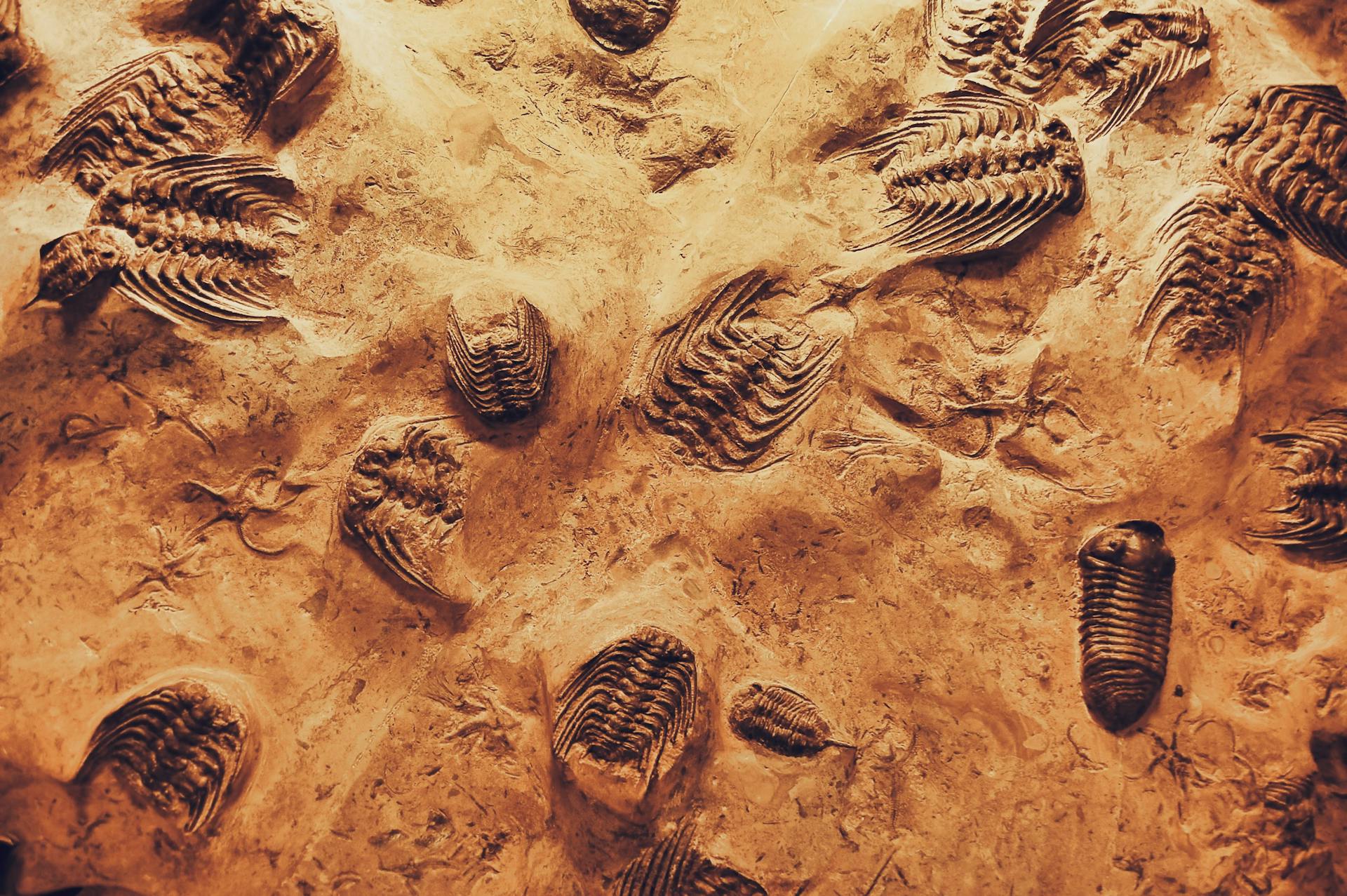
These incredible animals left behind a treasure trove of fossils, which have allowed us to learn more about their lives and habitats.
Prehistoric Reptiles
The earliest true reptiles evolved from advanced amphibians around 300 million years ago, during the late Carboniferous period.
Some of the most ancient reptiles date back to this time, including the first true reptiles that would eventually give rise to modern reptiles.
These early reptiles likely lived in a variety of habitats, including on land and in water, as evidenced by the diversity of ancestral reptiles that have been discovered.
Ancestral Reptiles of the Paleozoic Era
The Paleozoic Era was a time of great change on Earth, and it's fascinating to see how reptiles evolved during this period. The first true reptiles emerged around 300 million years ago, during the late Carboniferous period.
These early reptiles were small, about 1-2 feet long and a few pounds, with powerful jaws and sharp teeth. The Archaeothyris, one of the earliest known reptiles, was a small, scurrying creature that looked like many other lizards of the time.
Archaeothyris was special because it was the first known synapsid, a family of reptiles with a unique skull structure. This made it an important ancestor to many subsequent reptile groups, including the pelycosaurs and therapsids.
These early reptiles likely lived in a variety of habitats, but we don't know much about their specific environments. The Paleozoic Era was a time of great geological change, with many continents forming and breaking apart.
The synapsid family, to which Archaeothyris belonged, would go on to evolve into early mammals during the Triassic period. This is a remarkable example of how life on Earth has changed over millions of years.
For your interest: Which Era Is Known as the Age of Reptiles?
Barbaturex
Barbaturex was a relatively large lizard, about three feet long and 20 pounds, with ridges on its lower jaw and a squat, splayed posture.
It's named after Jim Morrison, the lead singer of The Doors, and was a remote ancestor of modern iguanas.
This "bearded king" competed directly with comparably sized mammals for vegetation, showing that Eocene ecosystems were more complicated than once believed.
Barbaturex was one of the largest lizards of the Eocene epoch, but still relatively small compared to snakes and crocodiles of the time.
It weighed about as much as a medium-sized dog, giving you an idea of its size.
Bunostegos
Bunostegos was the late Permian equivalent of a cow, but it wasn't a mammal - it was a type of prehistoric reptile called a pareiasaur.
Bunostegos lived during the Early Permian period, which spanned from 275 to 270 million years ago.
This creature was a part of a family that didn't evolve into mammals for another 50 million years or so.
Bunostegos is an interesting example of a prehistoric reptile that shares some similarities with modern cows.
Philydrosaurus
Philydrosaurus was a tiny creature, less than a foot long and weighing only a few ounces. It likely fed on fish and insects.
This small reptile was part of the choristoderans, a family of semi-aquatic diapsid lizards that lived during the Mesozoic Era.
Philydrosaurus holds a special place in paleontology because it's the only known choristoderan with a fossilized adult and its six offspring.
The presence of the young with their mother suggests that Philydrosaurus cared for its offspring, at least for a short time after birth.
Characteristics and Types
Dinosaurs, a type of prehistoric reptile, had a unique stance with legs perpendicular to their body. This characteristic sets them apart from other reptiles.
They laid eggs, just like other reptiles, which is a common trait among many species. Dinosaurs also had a distinctive skull feature - a hole between the eye socket and nostril, shared by all archosaurs.
One of the most fascinating features of dinosaurs is their powerful jaw muscles, which were attached to the top of the skull through two holes behind the eye socket. This allowed them to open their jaws wide and clamp down with great force.
Here are the main characteristics of dinosaurs:
- Upright stance with legs perpendicular to their body
- Laid eggs
- Skull with a hole between the eye socket and nostril
- Two holes behind the eye socket for powerful jaw muscles
Dinosaur Characteristics
Dinosaurs were a diverse group of reptiles, but they all shared some key characteristics. Many dinosaurs had long tails, which they used for balance and as a counterweight to their tails.
Some dinosaurs, like the Hypsognathus, were herbivores and had unique evolutionary niches that allowed them to survive. They also had spikes on their heads, which likely deterred larger predators.
Dinosaurs came in a range of sizes, from the tiny Scleromochlus, which was about 4-5 inches long, to the massive Bradysaurus, which was about six feet long and weighed 1,000-2,000 pounds.
Here are some key characteristics of dinosaurs:
- Long tails
- Herbivores and carnivores
- Varied sizes
- Unique evolutionary niches
- Some had spikes or armor plating for defense
These characteristics helped dinosaurs adapt to their environments and thrive in a variety of ecosystems.
Hylonomus
Hylonomus was a tiny creature, about the size of a small gecko. It's hard to imagine something so small being a true reptile, but it's true.
Hylonomus lived over 300 million years ago during the Carboniferous period. That's a long, long time ago.
Expand your knowledge: Small Reptiles as Pets
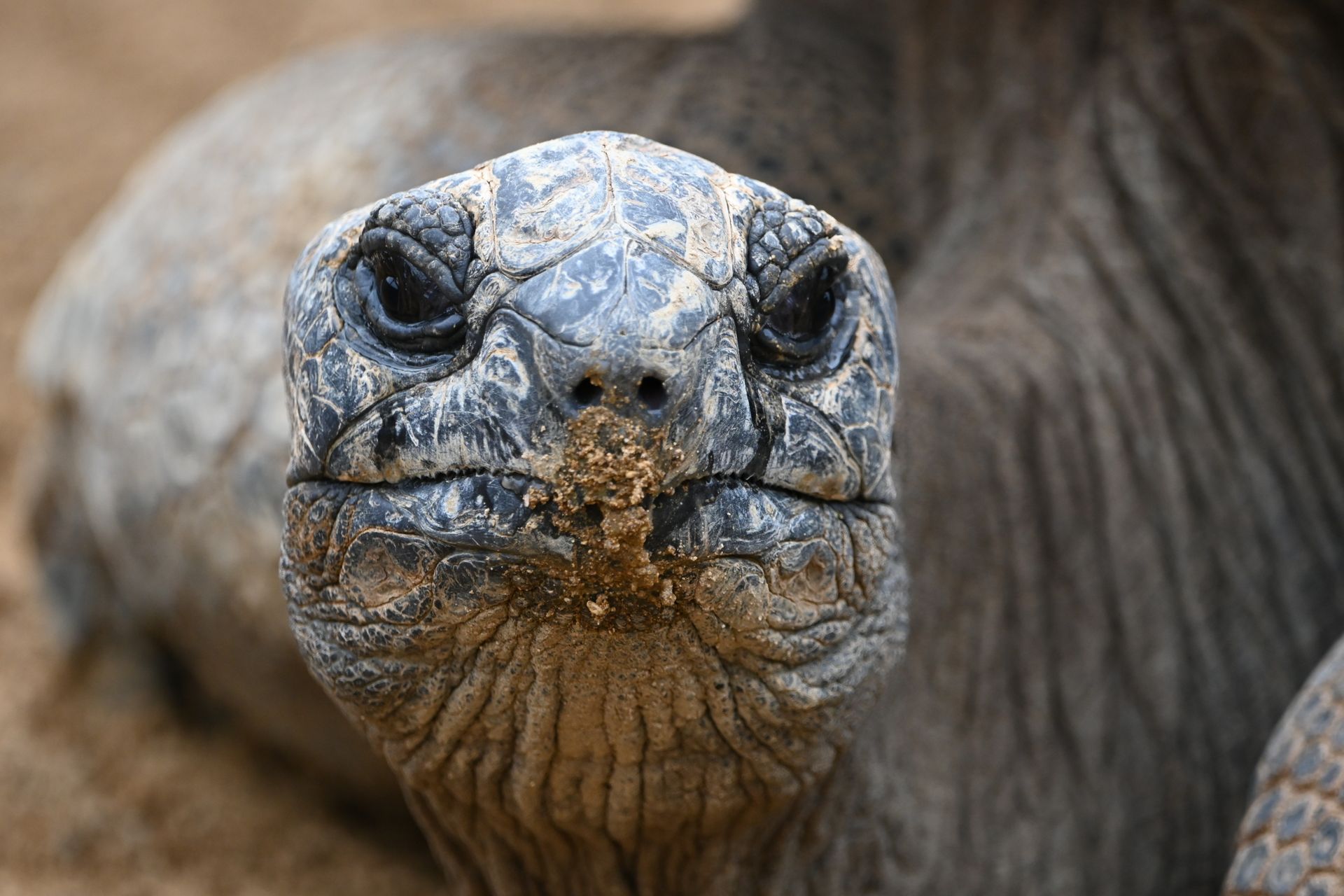
This little guy had a distinctly reptilian appearance, with a quadrupedal, splay-footed posture, long tail, and sharp teeth. It's amazing to think that this tiny creature is an ancestor of the mighty dinosaurs.
Hylonomus was about two feet long and weighed only one pound. That's smaller than a housecat!
Its large head was equipped with numerous teeth, perfect for catching and eating small prey.
Longisquama
Longisquama was a small, gliding reptile.
Its plumes were thin and narrow, protruding from its vertebrae.
Other
In addition to their main characteristics, some types of personalities have unique quirks that set them apart. Introverts tend to be more reserved and may prefer quieter environments.
Some personalities are naturally more adaptable than others. Extroverts, for example, often thrive in social situations and can adjust to new environments quickly.
A few types of personalities are more likely to be perfectionists. Individuals with a Type A personality, for instance, may have high standards for themselves and others.
Certain personalities are more prone to mood swings. People with a Type B personality, on the other hand, tend to be more laid-back and even-tempered.
Some personalities are more likely to take risks. Individuals with a Type C personality, for example, may be more impulsive and willing to try new things.
Other personalities are more likely to be detail-oriented. People with a Type A personality, for instance, often have a keen eye for detail and are meticulous in their work.
Pterosaurs and Other Flying Reptiles
Pterosaurs and other flying reptiles were quite the sight to behold. Anhanguera, a flying reptile that lived with the dinosaurs, is a great example of this.
The largest pterosaur ever recorded is Quetzalcoatlus, which had a massive wingspan of 35 feet. Its wings were so big that it's hard to imagine it flying without crashing.
Quetzalcoatlus couldn't have weighed more than 500 pounds, even when it was soaking wet, which is surprisingly light for such a massive creature.
Here's an interesting read: Paradise Flying Snake
Large Reptiles
Archelon, the largest marine turtle to have ever existed, weighed a whopping two tons and measured 12 feet in length. This is four times as heavy as a Leatherback Turtle, the largest testudine alive today.
The SuperCroc, Sarcosuchus, was a 40-foot-long crocodile that weighed as much as 15 tons, making it ten times as heavy as the biggest crocodiles alive today. This massive reptile likely lurked in African rivers during the middle Cretaceous period.
Smok, an archosaur from the early to middle Triassic period, weighed a full ton, making it a notable exception among its contemporaries.
Megalancosaurus
Megalancosaurus was a tiny reptile that lived during the Triassic period. It was only about two feet long and weighed around 5-10 pounds.
The males of this genus had a unique feature - opposing digits on their hind feet, which likely helped them during mating.
Megalancosaurus had a bird-like skull and a pair of distinctly avian forelimbs.
Spinosaurus, 10 Tons
Spinosaurus was a massive carnivorous dinosaur that weighed around 10 tons, making it one of the heaviest dinosaurs to have ever existed.
It's worth noting that some experts still debate whether Spinosaurus was indeed the biggest meat-eater, with some arguing that the South American Giganotosaurus may have matched or even outclassed it in size.
Spinosaurus was not only big, but it was also incredibly agile, with recent evidence suggesting that it was the world's first identified swimming dinosaur.
Imagine being able to swim with a dinosaur that weighed as much as 10 tons - it's mind-boggling to think about!
Spinosaurus had a unique sail of skin on its back and a crocodile-like snout, which would have made it a formidable predator in its time.
It's interesting to compare Spinosaurus with the Tyrannosaurus Rex, which was once thought to be the biggest carnivorous dinosaur but has since been surpassed in size by Spinosaurus and Giganotosaurus.
Related reading: Boa Constrictor Imperator Size
Marine Reptiles
Marine reptiles were a diverse group of creatures that roamed the oceans during the prehistoric era. One of the earliest reptiles to return to a partially aquatic lifestyle was the Mesosaurus, which lived during the early Permian period.
The Mesosaurus is notable for its throwback to the ancestral amphibians that preceded it by tens of millions of years. This ancient creature is profiled in-depth.
Elasmosaurus, a plesiosaur, was a svelte undersea predator that measured about 45 feet from head to tail and weighed two or three tons. It preyed on smaller fish and squids.
Limnoscelis
Limnoscelis was unusually large, measuring about four feet from head to tail.
Its short, stubby feet made it a slow mover, which likely led it to target slow-moving prey.
Limnoscelis pursued a carnivorous diet, setting it apart from its relatives, the diadectomorphs.
This reptile-like amphibian was a throwback to its ancestors from tens of millions of years earlier.
Mesosaurus
Mesosaurus was one of the first reptiles to return to a partially aquatic lifestyle.
This was a throwback to the ancestral amphibians that preceded it by tens of millions of years.
Pliosaur Kronosaurus
Kronosaurus was named after the mythical Greek god Cronos, who ate his own children.
This fearsome pliosaur ruled the seas of the middle Cretaceous period, eating pretty much anything that happened across its path.
Kronosaurus was once believed to be smaller than Liopleurodon, but it now appears to be roughly the same size, and perhaps a bit larger.
This marine reptile was massive, weighing around 7 tons.
Kronosaurus had a distinctive body shape, with a squat torso, thick head perched on a short neck, and long, ungainly flippers.
Subject of Research
The subject of research on prehistoric reptiles is fascinating. The locomotor ecomorphology of Mesozoic marine reptiles is a key area of study, examining how these ancient creatures moved through the water.
Mesozoic marine reptiles were incredibly diverse, with some species developing powerful tails for propulsion, while others used their limbs to swim. The study of their locomotion helps us understand how they adapted to their environment.
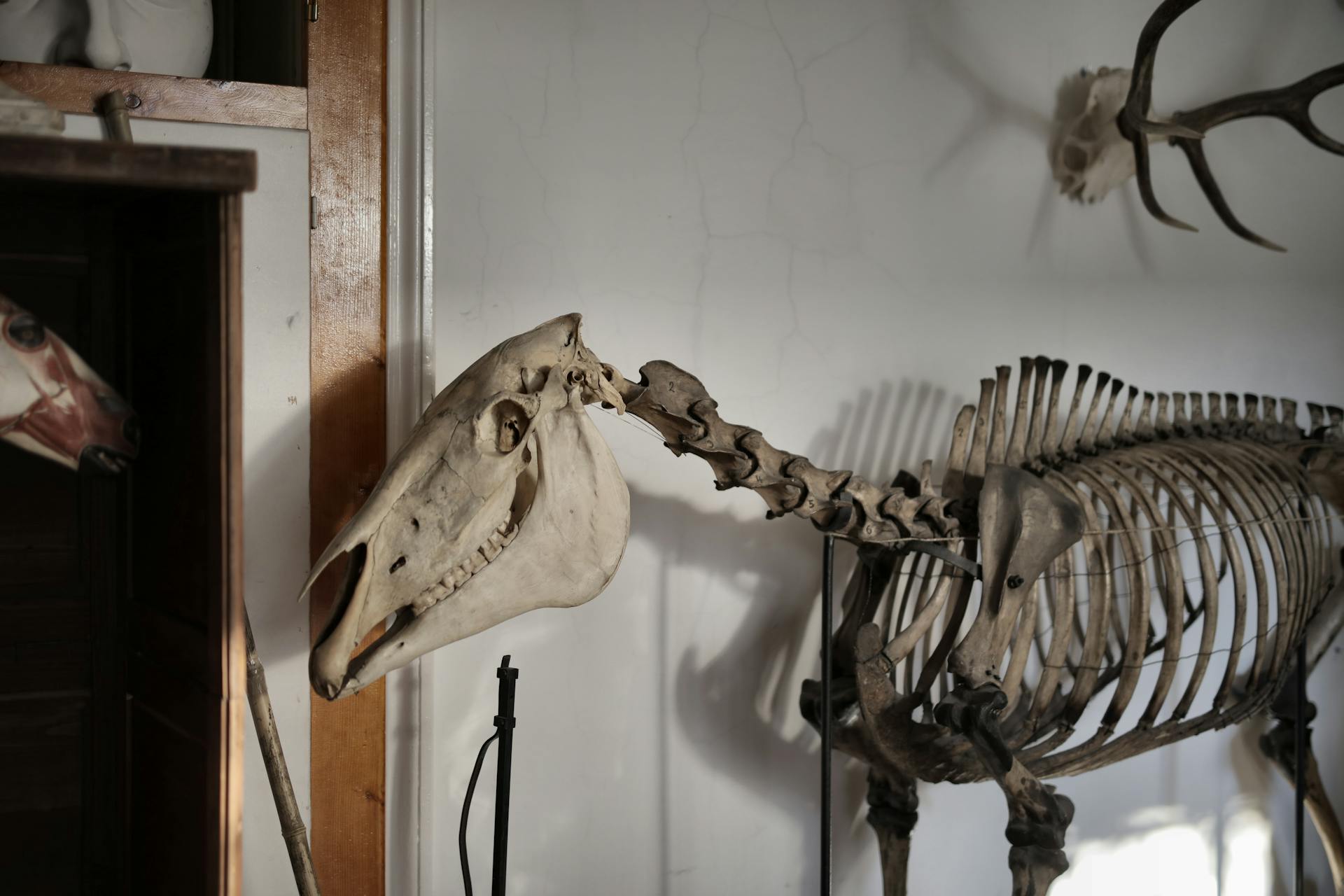
The subject of research also includes the study of the skeletons of these ancient reptiles, which provide valuable clues about their movement and behavior.
Recommended read: Marine Crocodylomorphs
Featured Images: pexels.com