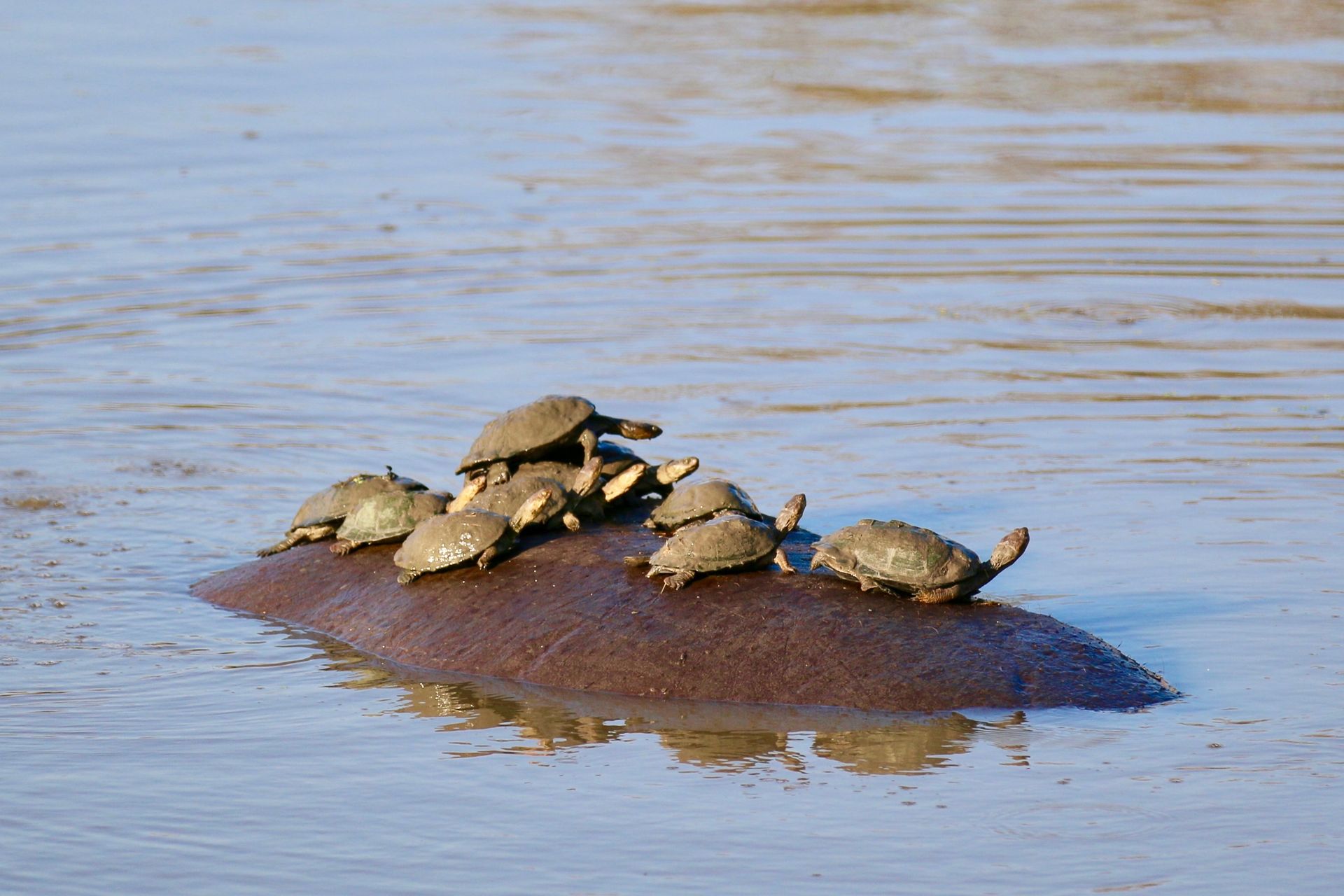
African Sideneck Turtles are a type of freshwater turtle that can be found in sub-Saharan Africa. They are semi-aquatic, meaning they spend most of their time in water but come onto land to bask in the sun.
These turtles can grow up to 16 inches in length and weigh up to 2 pounds. They have a distinctive side-necked posture, where they tilt their head sideways to look around.
African Sideneck Turtles are herbivores, feeding on aquatic plants, grasses, and fruits. They are also known to eat small aquatic animals, including snails and insects.
In the wild, African Sideneck Turtles can live up to 20 years, but their lifespan in captivity is often shorter due to various health issues.
For more insights, see: List of Aquatic Reptiles
Behavior and Temperament
African sideneck turtles have a unique ability to right themselves using their neck muscles if they find themselves turned upside-down.
They can be socialized with frequent interaction, but might be a little shy at first. Once they're comfortable, they're typically inquisitive and active.
These turtles aren't for handling, as they're stressed easily and might bite when provoked. They might also carry salmonella bacteria, so it's essential to wash your hands after handling anything in their environment.
African sideneck turtles can be curious almost to the point of aggressive, but they're not known for being aggressive with people. If they're nervous, they may use their claws to try to escape.
They're relatively undemanding and make great pets, but it's crucial to provide them with a suitable habitat that's not too small or dirty. This will help prevent aggressive behavior among them.
Housing
To provide the best possible environment for your African sideneck turtle, you'll want to create a spacious and well-filtered aquarium or pond. A minimum tank size of 90-110 gallons is recommended, with a water depth that's no deeper than 1.5 times the length of the turtle itself.
African sideneck turtles are semi-aquatic, so they need a place to bask and dry off. A dry land area with a basking platform or dock is essential, and it should be large enough for the turtle to climb out of the water and completely dry off. You can use a floating dock or large rocks to create this area.
Worth a look: Blotched Water Snake
For filtration, you'll need a canister-style filter that can handle at least 2x the amount of water in the enclosure. This is crucial for keeping the water clean and preventing toxic compounds from building up.
To keep your turtle's water clean, you'll need to perform routine water changes. Remove and replace approximately 30% of the enclosure's total water volume every 1-2 weeks. This will help maintain the water's quality and prevent the buildup of toxins.
African sideneck turtles prefer a water temperature between 70°F and 85°F, with the basking area around 95°F. You can use a heat lamp and UV-emitting light to provide the necessary warmth and light for your turtle.
Here are some essential components to include in your African sideneck turtle's environment:
- A dry land area with a basking platform or dock
- A canister-style filter
- A heat lamp and UV-emitting light
- A water depth that's no deeper than 1.5 times the length of the turtle itself
- A water temperature between 70°F and 85°F
Remember, bigger is always better when it comes to the tank size, so consider investing in a larger aquarium or pond if possible.
Choosing and Caring for Your Pet
Choosing an African Sideneck Turtle as a pet requires careful consideration. They are best left to intermediate and advanced turtle keepers due to their environmental requirements and long lifespan.
African Sideneck Turtles can thrive in a well-maintained tank, but it's essential to start with a clean environment. A thorough cleaning of the tank and replacement of the filter can make a huge difference in your turtle's health and happiness.
To ensure your turtle stays healthy, it's crucial to provide a basking area with a dock that's large enough for your turtle to climb on top of. If not, you may need to upgrade to a new dock with a more accessible ramp.
For more insights, see: African Sideneck Turtle Tank Size
Choosing Your
Choosing your pet requires some thought and research. Young African sideneck turtles often cost between $50 and $100.
To ensure you get a healthy turtle, visit a reputable breeder or rescue organization. They should be able to tell you about the turtle's origin and health.
Look for signs of illness in your turtle, such as flakiness on the shell, difficulty breathing, lethargy, or a lack of appetite.
Pet Care Tips
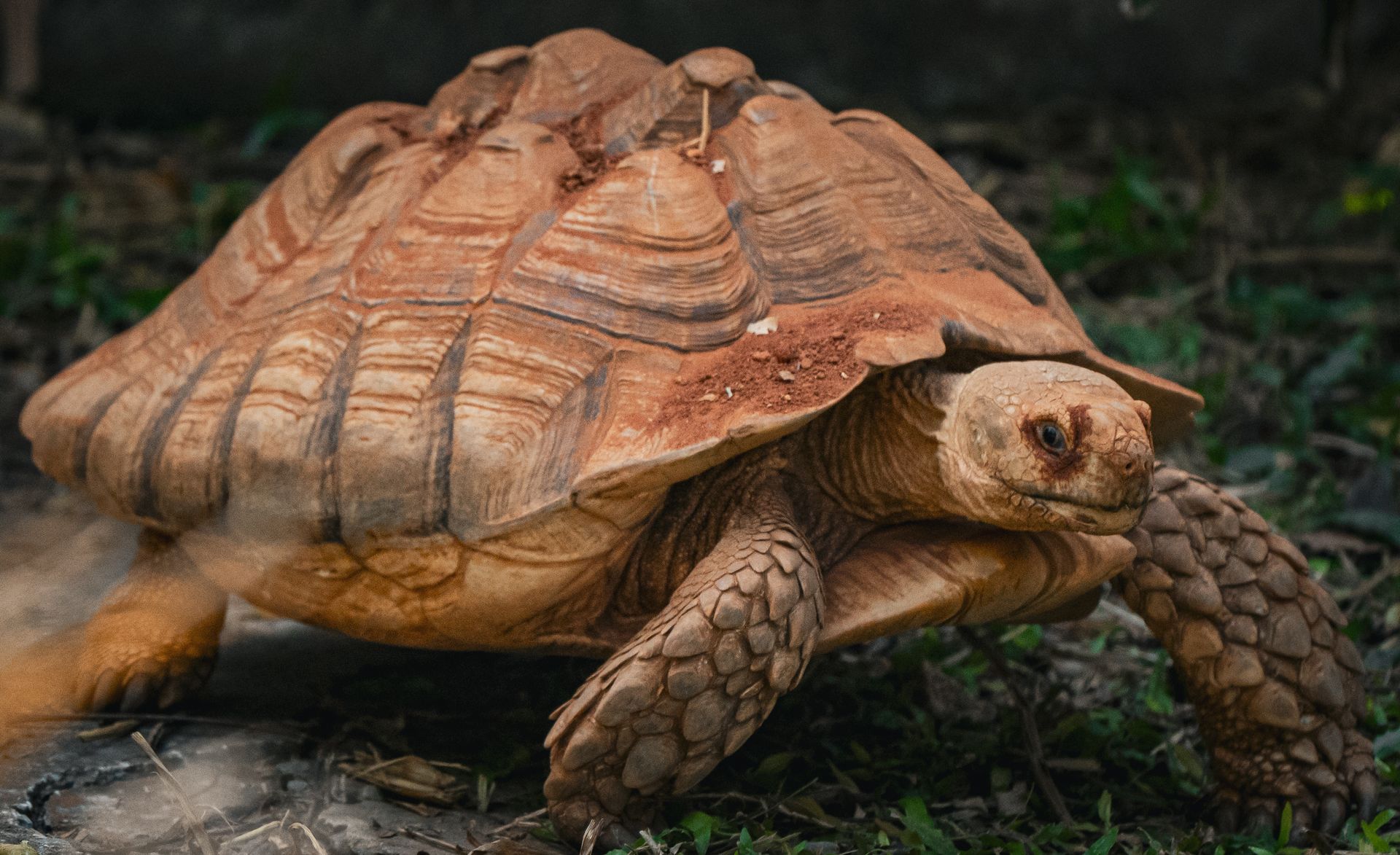
Choosing the right food for your African sideneck turtle is crucial. Feed a variety of foods to prevent your turtle from developing a fixation on a single food type.
Adult sideneck turtles should be fed as much as they will eat in a few seconds, once every second or third day. This will prevent overfeeding and keep your turtle healthy.
In the wild, African sidenecks are omnivores, munching on insects, plants, and fish. You can feed your turtle earthworms, snails, clams, fish, aquatic insects, cooked chicken pieces, beef hearts, crustaceans, and small amphibians for meat proteins.
Stick to nutrient-rich greens like spinach, romaine, and red-leaf lettuce for your turtle's greenery. Avoid iceberg lettuce as it's not nutrient-rich.
To avoid frequent tank cleanings, remove your turtle from its tank and feed it in a separate container. This will also prevent food aggression and feeding frenzies if you have multiple turtles.
African sidenecks are aquatic turtles, so they eat in their tanks and meals can become messy. Keep your tank clean to keep your turtle healthy.
If your turtle is not eating, it might be too cold. Double-check your turtle's temperatures to ensure they're not too warm or too cool.
Check this out: Aquatic Reptiles
Feeding and Diet
African sideneck turtles are omnivores, which means they need both plant- and animal-based foods in their diet.
In the wild, they munch on insects, plants, and fish, so variety is key to a successful diet. Adult sidenecks should be fed as much as they will eat in a few seconds, once every second or third day.
For young and growing turtles, insects and protein should make up the majority of their diet. As they get older, they tend to give up most of their carnivorous tendencies.
Some good animal-based foods for African sideneck turtles include earthworms, snails, clams, fish, aquatic insects, cooked chicken pieces, beef hearts, crustaceans, and small amphibians. For greenery, stick to nutrient-rich greens like spinach, romaine, and red-leaf lettuce.
To avoid frequent tank cleanings, feed your turtle in a separate container. If you keep multiple turtles, feed them one at a time to avoid food aggression and feeding frenzies.
Explore further: Common Snapping Turtle Diet
Here's a breakdown of the recommended feeding schedule for African sideneck turtles:
Some specific animal-based foods for African sideneck turtles include crickets, dubia roaches, freeze-dried shrimp/krill, frozen bloodworms, silkworms, snails, guppies, mollies, platies, and mosquito fish. For vegetable foods, collard greens, dandelion greens, endive, green leaf lettuce, kale, red leaf lettuce, romaine lettuce, raw grated squash, carrots, green beans, and raw grated sweet potato are all good options.
Turtle pellets like Omega One Juvenile Turtle Pellets, Omega One Adult Turtle Sticks, Tetra ReptoMin, Zoo Med Natural Aquatic Turtle Food, and Mazuri Aquatic Turtle Diet are also suitable for African sideneck turtles.
Recommended read: Semi Aquatic Reptiles
Stay Healthy and Happy
To keep your African sideneck turtle healthy and happy, it's essential to provide the right environment. African sideneck turtles are extremely hardy creatures, but they still need proper lighting, heating, and dietary requirements.
You should have a reptile veterinarian on hand before bringing your pet turtle home, just in case. Dehydration, malnutrition, and parasites (both internal and external) are common illnesses that can affect your turtle.
One of the simplest ways to keep your turtle healthy is to feed them nutritious foods. Dubia roaches are a favorite food of African sideneck turtles and provide essential nutrients.
African sideneck turtles require exposure to UVB lighting to maintain good health and wellbeing. This is crucial for vitamin D production, appetite, activity, and a stronger immune system.
UVB bulbs like the Zoo Med Reptisun T5 HO 5.0 and Arcadia Forest 6% are great options for African sideneck turtles. You should replace the UVB bulb every 12 months to maintain its performance.
You can also provide extra illumination with a strong LED or T5 HO 6500K daylight lamp, especially during the day when your turtle is active. This will help replicate daylight and support any live plants you may have.
Size and Lifespan
African sideneck turtles can grow to be quite large, reaching an adult size of 7 to 12 inches.
The females tend to be larger than the males, with males reaching a maximum length of about 10 inches.
Given proper care, these turtles can live a remarkably long life, with some species living for more than 50 years in captivity.
Size
African sideneck turtles can grow to a decent size, reaching an adult length of 7 to 12 inches.
Females tend to grow larger than males, with the maximum length for males being around 10 inches.
If you're planning to keep an African sideneck turtle in a tank, make sure it's at least 90-110 gallons of water, and no deeper than 1.5 times the length of the turtle itself.
It's also worth noting that bigger tanks are always better for these turtles, so don't be afraid to go bigger if possible.
Lifespan
African sideneck turtles can easily live for a few decades when given proper care.
Some species have been known to live for over 50 years in captivity.
Proper care is crucial for these turtles to live a long and healthy life.
See what others are reading: Leatherback Sea Turtles Habitat
Appearance and Varieties
The African sideneck turtle's appearance is quite unique. They're typically dark colored, with a grayish black plastron and a wide, poorly defined yellow area.
Their heads are a lovely olive-to-brown color with black markings on top, and they have two barbels (beard-like sensory organs) that protrude from the lower jaw. These barbels are a distinctive feature of the African sideneck.
Their feet are lightly webbed with long, sharp claws, and their face is often described as cute, with a mouth that's fixed into a smiling shape and big round eyes.
Appearance
African sidenecks are typically dark colored, and their underbellies (called plastrons) are a grayish black color with a wide, poorly defined yellow area.
Their heads are olive-to-brown with black markings on top, and they have two barbels (beard-like sensory organs) that protrude from the lower jaw.
You can spot these barbel nubs on the chin of a young African sideneck turtle.
Their feet are lightly webbed with long, sharp claws, or nails.
Their faces are actually quite cute, with a mouth that's fixed into a smiling shape and big round eyes.
The African sideneck's appearance can vary, with three main forms: the "normal form", the "rainforest form", and the "savannah form."
If this caught your attention, see: South African Mastiff Black
Varieties
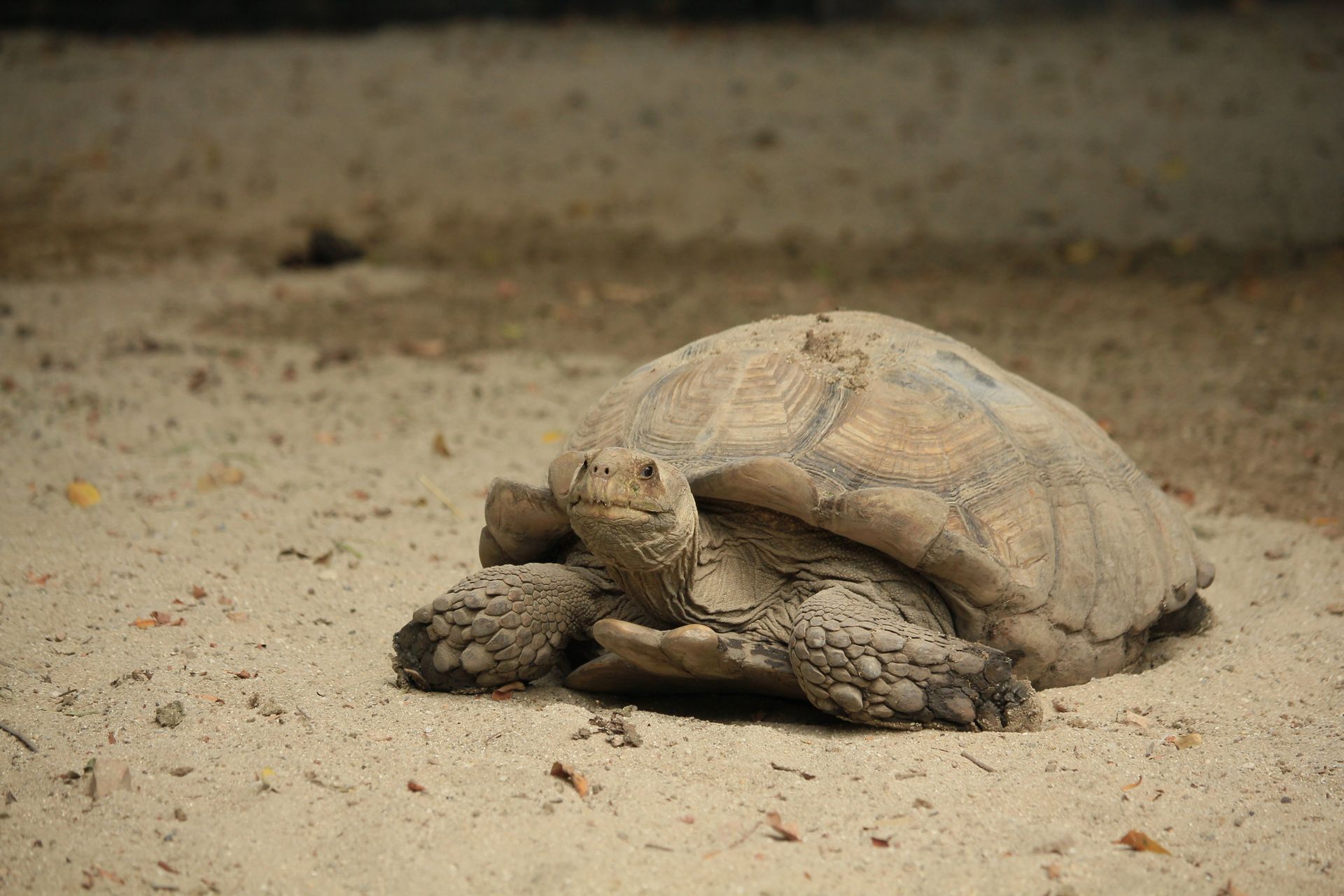
African sidenecks are very similar to the African helmeted turtle, and the names are often interchanged.
They are also known as West African mud turtles, which is a common name for this species.
African sidenecks get their nickname due to their unique way of withdrawing their heads into their shells, drawing their head to the side and under the upper edge of their shell.
Similar Species and Native Habitat
The African sideneck turtle has some fascinating similarities to other species. They are a type of aquatic turtle, and as such, they share some characteristics with other reptiles and amphibians.
In terms of their native habitat, African sideneck turtles are found in West African countries such as Angola, Guinea, Ghana, Senegal, Liberia, Sierra Leone, and the Congo. They live in rivers, lakes, and ponds during the wet season.
Their social nature is quite interesting, as they are fairly social with other aquatic turtles. This is likely due to their ability to live in groups in the wild.
Here's a quick rundown of their native habitat:
Similar Species
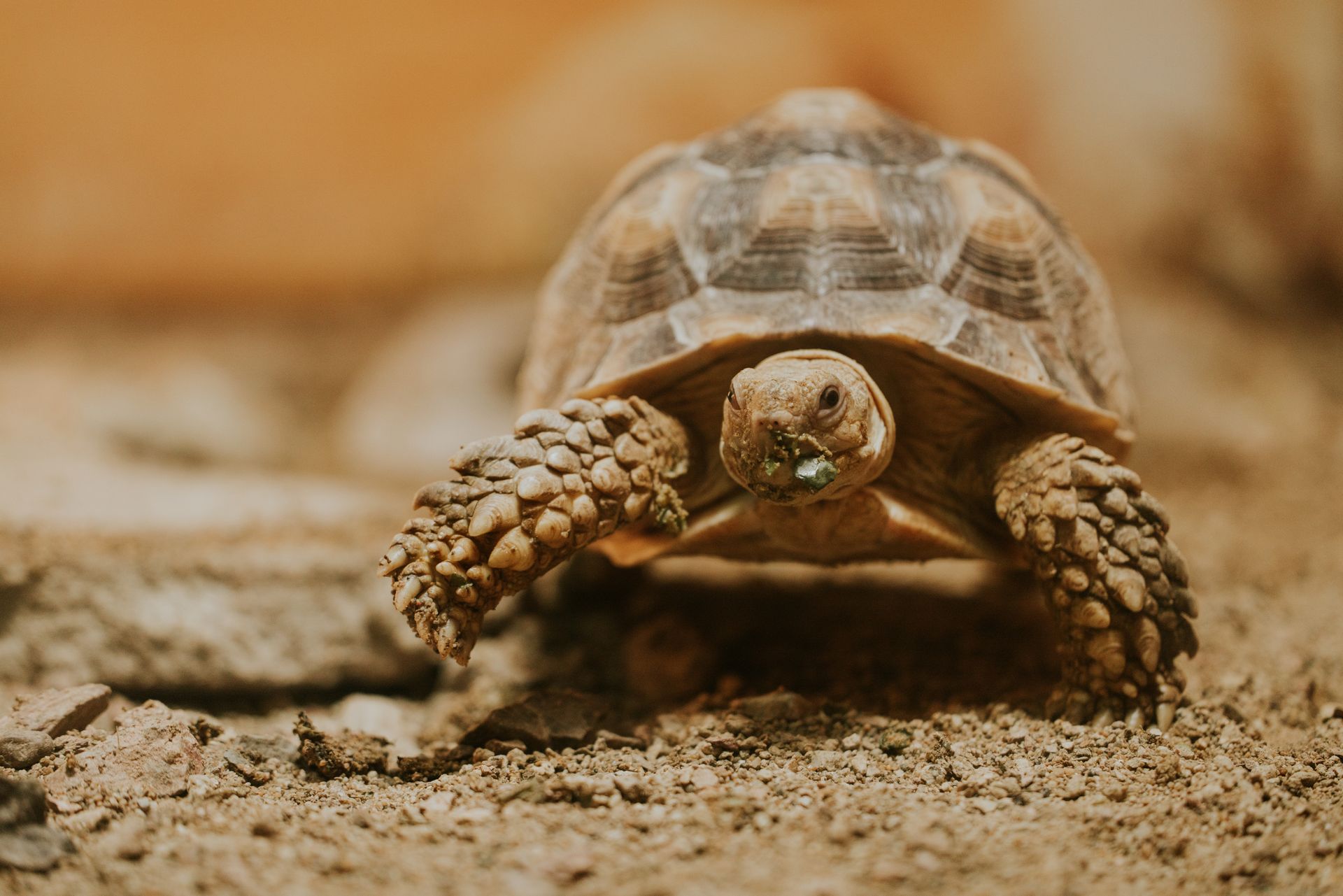
The African Sideneck Turtle has some fascinating relatives. One of the most interesting is the Pet Turtle, which is commonly kept as a pet but is often contaminated with Salmonella, according to the U.S. Food and Drug Administration.
Some of the other species in the same family as the African Sideneck Turtle include aquatic turtles, which are known to be prone to certain diseases. The Metabolic And Endocrine Diseases Of Reptiles, as described in the Merck Veterinary Manual, highlight the importance of proper care and nutrition for these animals.
Here are some examples of similar species to the African Sideneck Turtle:
Feeding aquatic turtles requires careful consideration, as described in the VCA Hospitals article on the topic. It's essential to provide a balanced diet to prevent disease and ensure the health of these animals.
Native Habitat
African sideneck turtles are native to Africa, specifically the West African countries of Angola, Guinea, Ghana, Senegal, Liberia, Sierra Leone, and the Congo.
They live in rivers, lakes, and ponds, and are fairly social with other aquatic turtles. Their long neck is a distinct advantage, allowing them to flip themselves back over when flipped upside-down using their neck muscles.
During the wet season, they thrive in these aquatic environments, but during the dry seasons, they bury themselves deep in the mud to estivate, or in underground burrows when temperatures get too warm.
Minimum Requirements
To care for an African sideneck turtle, you'll need to provide a suitable enclosure. The minimum size for a single adult turtle requires 90-110 gallons of water.
The enclosure should not be deeper than 1.5 times the length of the turtle itself. Bigger is always better, so consider upgrading to a larger space if possible.
Housing multiple turtles in the same enclosure is not recommended. Stick to one turtle per enclosure for a harmonious environment.
If you're lucky enough to have an outdoor space, an African sideneck turtle can thrive in a pond. Just make sure the pond is no deeper than 1.5 times the length of the turtle, and consider adding a retaining wall at least 24” tall to prevent escape.
Frequently Asked Questions
Can an African sideneck turtle live in a 20 gallon tank?
For juvenile African sideneck turtles, a 20 gallon tank is suitable. However, as they mature, a larger tank with a minimum capacity of 75 gallons is recommended
Featured Images: pexels.com