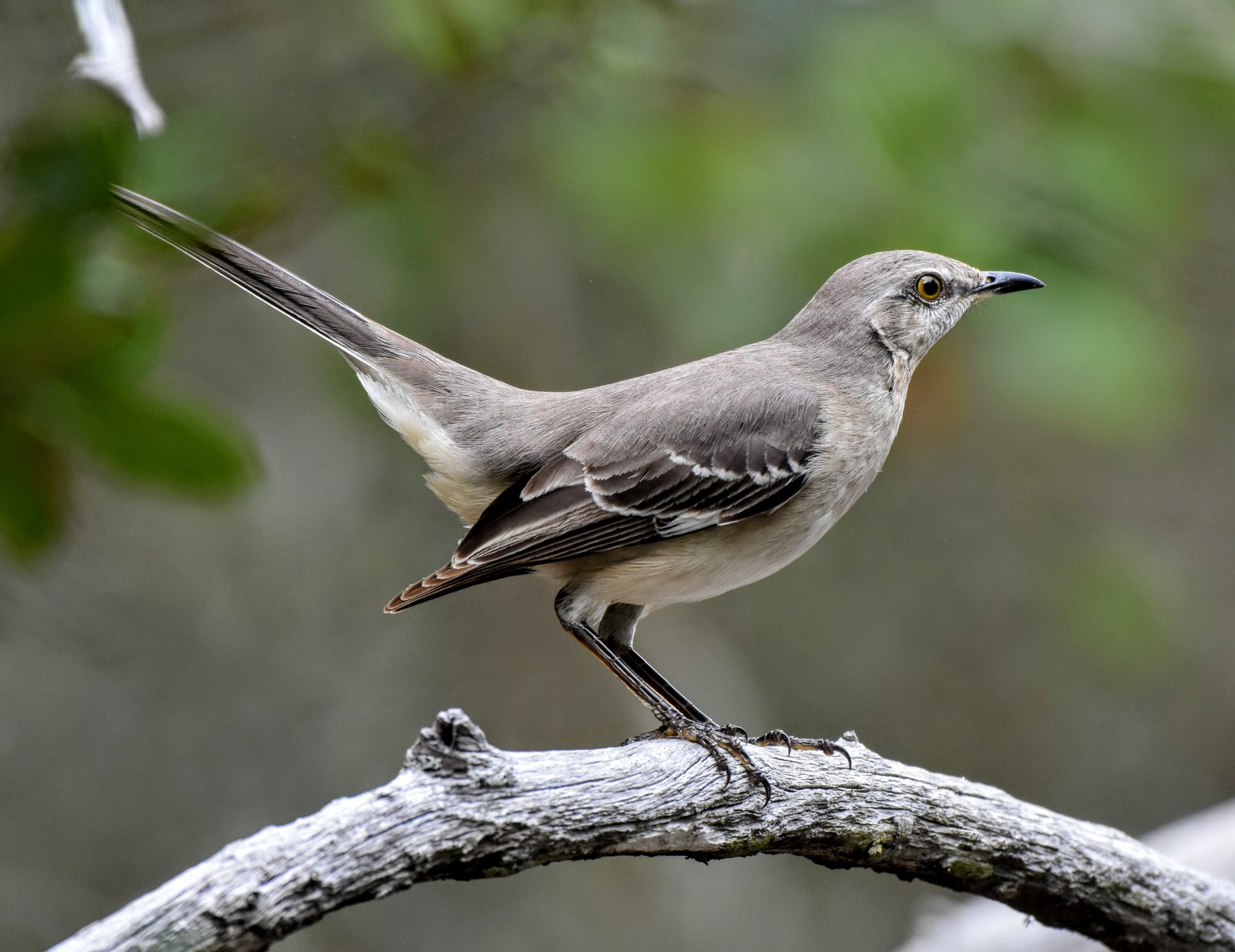
The Northern Mockingbird is a bird species native to North America, known for its distinctive song and aggressive behavior when defending its territory.
These birds are found in a variety of habitats, including urban and rural areas, and are known to be adaptable to different environments.
One of the most recognizable features of the Northern Mockingbird is its gray and white plumage, with a distinctive white patch on its wings.
They are also known for their intelligence and ability to mimic other sounds, including car alarms and animal calls.
Related reading: American White Ibis Bird
Northern Mockingbird Facts
The Northern Mockingbird is a bird species found in the southern United States, known for its loud, mimicking song that can be heard during spring and summer nights in suburban neighborhoods. They are very common and conspicuous, often seen on wires and fences in towns.
These birds are medium-sized, 9-11 inches long, with a long thin bill and long legs. They have grayish plumage, paler on the breast and belly, with two white wingbars on each wing. A white patch on each wing is often visible on perched birds, and in flight, these become large white flashes.
A unique perspective: American White Pelican
Northern Mockingbirds are very vocal and have dozens of songs and imitations, including the calls of other birds, frogs and toads, music, and machinery. They often mimic the call of red-tailed hawks, confusing birders with their eerily accurate imitation.
In terms of their behavior, these birds are aggressive and will forcefully chase off intruders in their territory. Any living thing that approaches their nest is subject to attack, and they will aggressively chase off cats and even humans that venture too close.
Their diet consists primarily of insects and berries, with a focus on insects in late spring and summer, especially beetles, grasshoppers, caterpillars, ants, and wasps. They will rarely eat crayfish and lizards, and their fall and winter diet leans heavily to berries and wild fruits.
Here's a list of some of the Northern Mockingbird's impressive vocal talents:
- They have dozens of songs and imitations
- They can mimic the calls of other birds
- They can mimic frogs and toads
- They can mimic music
- They can mimic machinery
Interestingly, the Northern Mockingbird's impressive vocal talents were once worth up to $50 in the 19th century, which is equivalent to over $1,300 in today's dollars. This highlights the bird's popularity and the value placed on its singing abilities.
Physical Characteristics
Northern mockingbirds are medium-sized birds, and one of the most noticeable things about them is their physical characteristics. They have long tails and short, rounded wings.
Males are larger than females, with a length of 22 to 25.5 cm and a weight of about 51 g. Females, on the other hand, are slightly smaller, measuring 20.8 to 23.5 cm in length and weighing about 47 g.
Their plumage is a beautiful gray-brown on top and light gray underneath, with a large white patch on each wing that's easy to spot when they fly. They also have white outer tail feathers that are quite distinctive.
Young northern mockingbirds look similar to adults, but they have brown spots on their underparts, which makes them a bit easier to tell apart.
Here's a quick rundown of the physical characteristics of northern mockingbirds:
- Males: 22-25.5 cm long, 51 g weight
- Females: 20.8-23.5 cm long, 47 g weight
- Range mass: 47 to 51 g (1.66 to 1.80 oz)
- Range length: 20.8 to 25.5 cm (8.19 to 10.04 in)
Their Habitat
Northern mockingbirds are adaptable birds that can thrive in a variety of habitats. They are found throughout North America, including Canada and Mexico, and are most common in the southern United States, especially in Texas and Florida.
They like open habitats and forest edges, and are often seen in residential areas, farmlands, along roads, in city parks, open grassy areas with thickets and brushy deserts. They occupy similar habitat all year.
To give you a better idea of the types of habitats they prefer, here are some specific examples:
- desert or dune
- savanna or grassland
- scrub forest
They also like grassy areas, but need a tree or other high structure to perch on. This is why you might see them in urban areas with trees or parks with tall grasses.
Behavior and Diet
Northern mockingbirds are excellent singers, capable of performing at least 39 different songs and 50 different call notes. They can even imitate sounds they hear, like dogs barking or other birds singing.
Northern mockingbirds are solitary and territorial, becoming very aggressive during the nesting season. They'll attack animals, including big ones like cats, dogs, and humans, that enter their territory.
These birds are diurnal, meaning they're active during the day. Some northern mockingbirds migrate south for the winter, while those that nest in the southern part of their range stay in the same area year-round.
Here are some key behaviors of northern mockingbirds:
- arboreal
- flies
- diurnal
- motile
- migratory
- sedentary
- solitary
- territorial
Northern mockingbirds are omnivores, eating a variety of foods including insects, berries, seeds, and small animals. They'll search for food on the ground or while perched in a tree or shrub, and drink water from puddles, rivers, lakes, or wet plants.
Their behavior
Their behavior is quite fascinating. Northern mockingbirds are excellent singers, capable of performing at least 39 different songs and 50 different call notes.
They're also skilled mimics, able to imitate sounds they hear, such as dogs barking or other birds singing. This talent is a remarkable example of their intelligence and adaptability.
Northern mockingbirds are generally solitary and territorial, which means they like to have their own space and defend it from others. During the nesting season, they become particularly aggressive, attacking animals that enter their territory, even larger animals like cats, dogs, and humans.
Here are some key behaviors associated with Northern mockingbirds:
- Arboreal: They spend a lot of time in trees.
- Flys: They're able to fly.
- Diurnal: They're active during the day.
- Motile: They're able to move around.
- Migratory: Some Northern mockingbirds fly south for the winter.
- Sedentary: Some Northern mockingbirds stay in the same area year-round.
- Solitary: They like to be alone.
- Territorial: They defend their territory from others.
This mix of behaviors allows them to thrive in a variety of environments, from the north to the south.
Their Diet
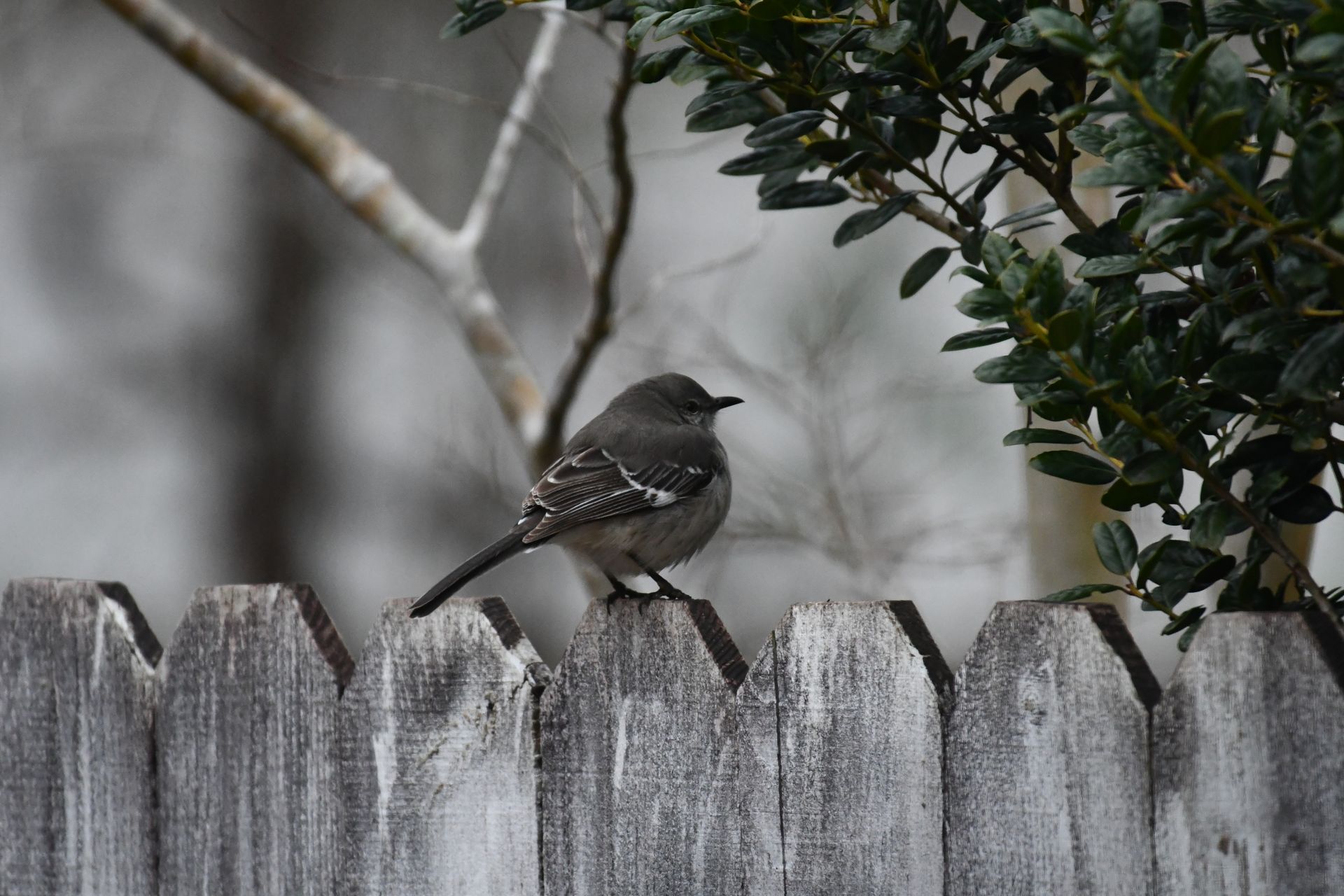
Northern mockingbirds are omnivores, which means they eat a variety of foods including insects, berries, and seeds.
Their main insect sources are beetles, ants, grasshoppers, and spiders. They also eat earthworms and sometimes small crustaceans and small lizards.
They eat the fruits of several plants, including holly, mulberries, raspberries, dogwoods, brambles, grapes, and figs.
Northern mockingbirds usually search for food on the ground or while perched in a tree or shrub.
They drink water from puddles, the edges of rivers or lakes, or from wet plants.
Predators and Conservation
Northern mockingbirds have their fair share of predators. Adult birds are killed by sharp-shinned hawks, screech owls, scrub jays, and great horned owls.
Females that are incubating eggs are sometimes killed by snakes. This highlights the importance of protecting nesting sites and females during breeding season.
Adult northern mockingbirds will make alarm calls when predators come near to a nest. They may also mob the predator, swooping at them and sometimes even hitting them. This behavior is crucial for protecting their young and territory.
Additional reading: Northern Green Anaconda Killed
What Eats Them and How Do They Survive?
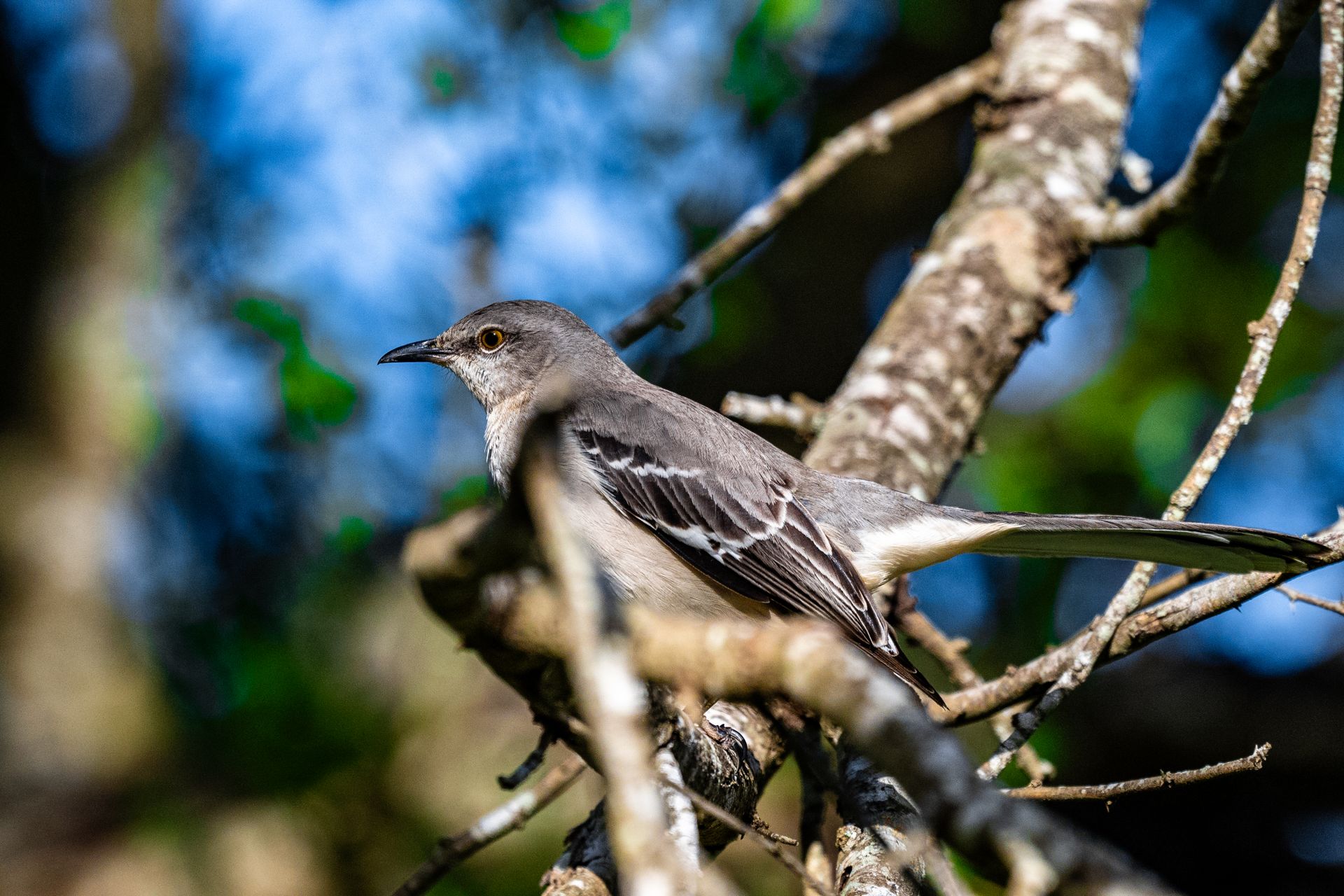
Northern mockingbirds have some fierce predators, including sharp-shinned hawks, screech owls, scrub jays, and great horned owls, which can kill adult birds.
Adult mockingbirds take turns incubating eggs and will sometimes be killed by snakes while doing so.
Blue jays, fish crows, American crows, snakes, and squirrels are known to eat northern mockingbird eggs and chicks.
To defend themselves, northern mockingbirds make alarm calls when predators approach their nests.
Several adults may mob a predator that enters their territory, swooping at it and sometimes even hitting it.
This defense strategy is crucial for the survival of northern mockingbirds, especially when they have young to protect.
Worth a look: Brown Headed Cowbird Egg
Are They Endangered?
Northern mockingbirds have a large population, with approximately 45,000,000 individuals worldwide.
The IUCN Red List classifies the northern mockingbird as Least Concern.
The US Migratory Bird Treaty Act protects this species.
The northern mockingbird has no special status on the US Federal List, the CITES list, or the State of Michigan List.
Featured Images: pexels.com