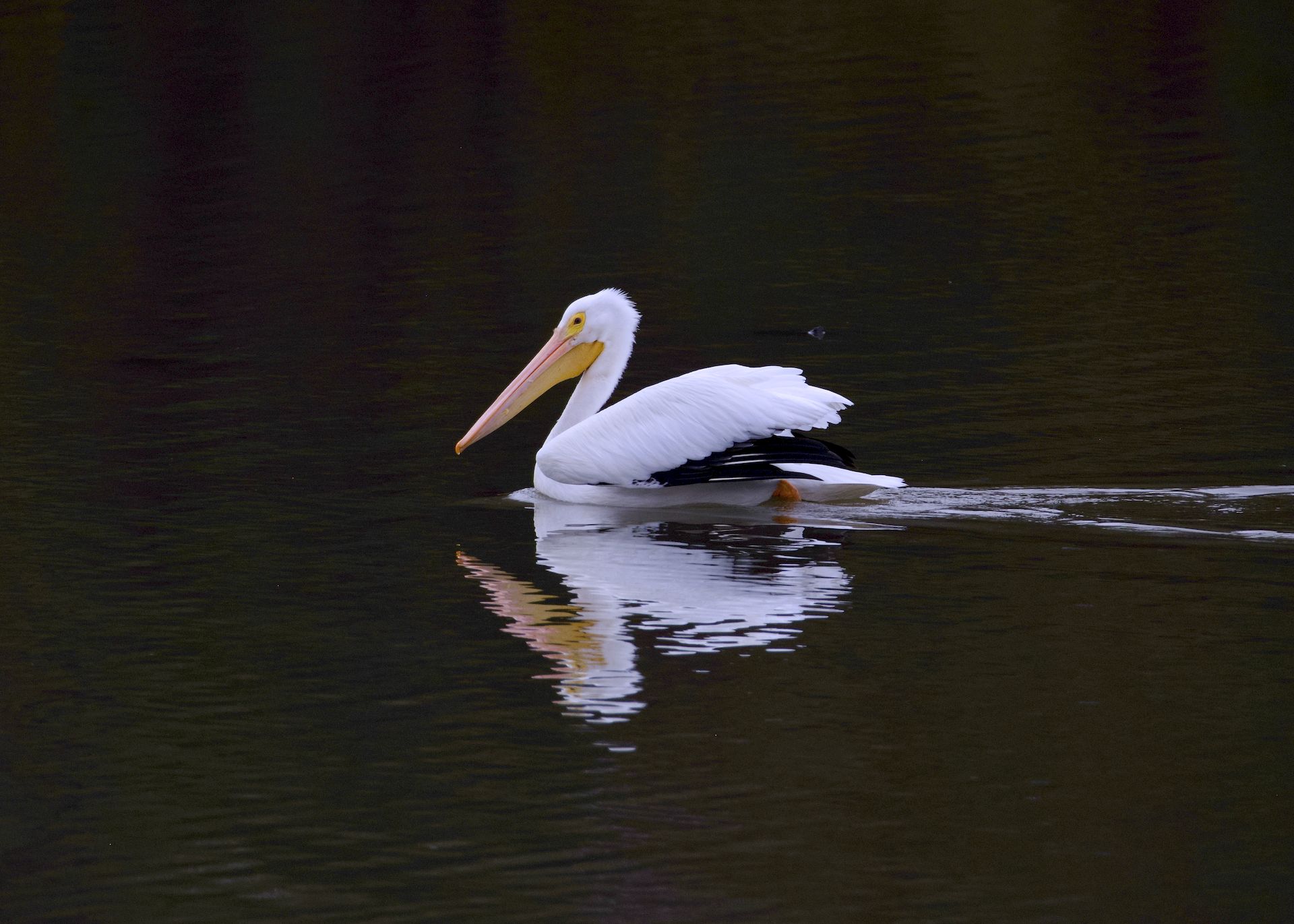
The American White Pelican is one of the largest waterbirds in North America, with a wingspan of up to 9 feet and weighing up to 30 pounds.
They have a distinctive white body and a large, pouched bill that is a deep pink color.
These birds are found in wetlands and shallow lakes throughout the United States and Canada, where they feed on fish and other aquatic animals.
In the breeding season, American White Pelicans are known for their elaborate courtship displays, which involve flying, calling, and displaying their brightly colored bills.
Physical Description
The American White Pelican is an impressive bird, with some remarkable physical characteristics. It's one of the longest birds native to North America, measuring about 50-70 inches in length.
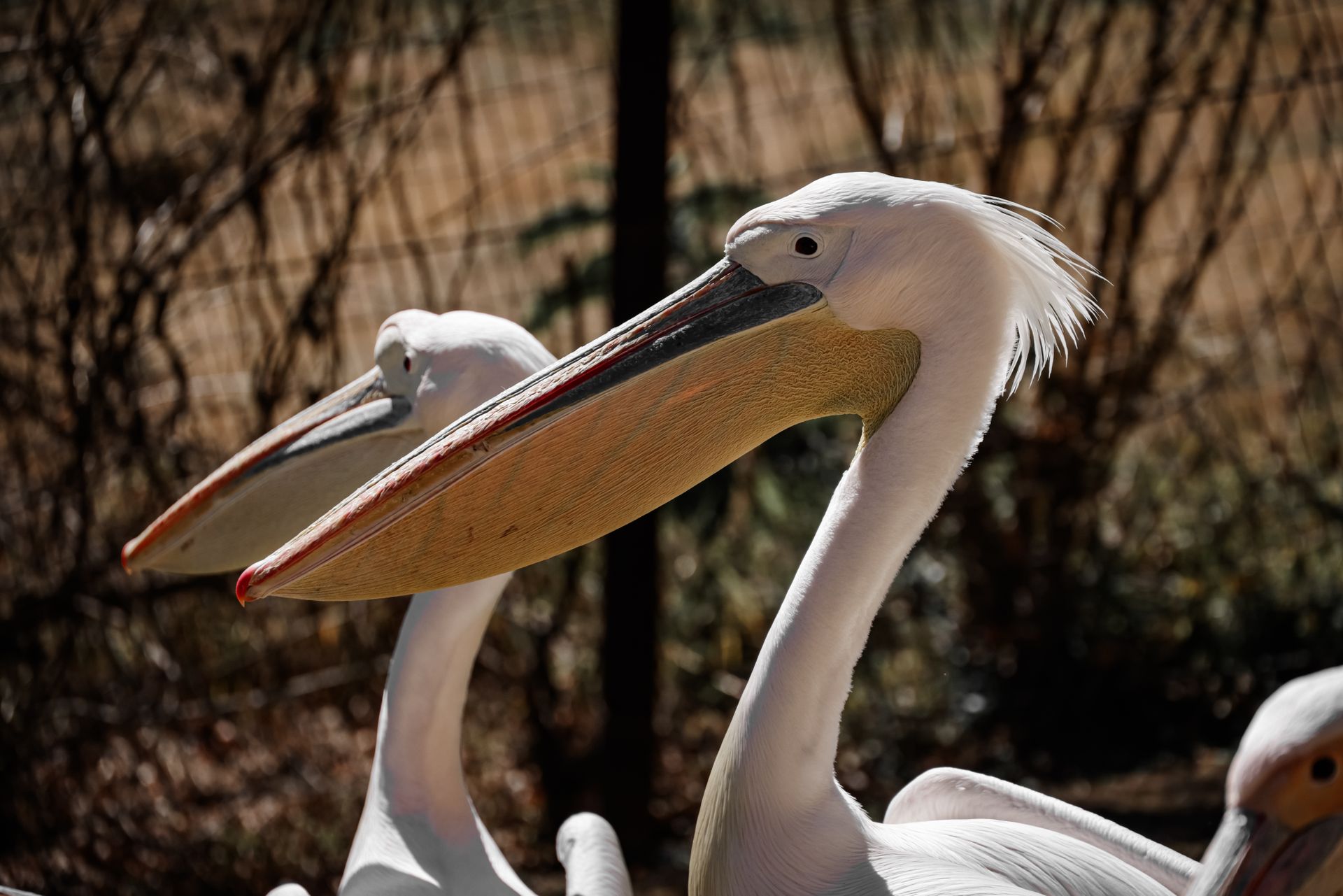
Its huge beak is a notable feature, measuring 11.3-15.2 inches in males and 10.3-14.2 inches in females. The beak is also flat on top and has a large throat sac below.
The pelican's wingspan is equally impressive, ranging from 95-120 inches. This large wingspan allows the bird to use soaring flight for migration with ease.
In terms of weight, American White Pelicans can range from 7.7 to 30 pounds, with an average weight of 11-20 pounds. One study found a mean body mass of 15.4 pounds.
The plumage of the American White Pelican is almost entirely bright white, except for the black primary and secondary remiges, which are only visible in flight. From early spring to mid-summer, the breast feathers have a yellowish hue.
The bill is a vibrant orange color during the breeding season, as is the bare skin around the eye and the feet. Iris coloration can range from bright white to hazel to blue-gray, depending on the bird's age and season.
Both males and females have the same appearance, with no noticeable differences. Immature birds, on the other hand, have light grey plumage with darker brownish nape and remiges.
Related reading: How Much Should an American Bulldog Weigh
Taxonomy and Classification
The American white pelican has a rich history of classification. The species was formally described by Johann Friedrich Gmelin in 1789.
Gmelin placed the American white pelican in the genus Pelecanus, which is a group of large waterbirds known as pelicans. The scientific name Pelecanus erythrorhynchos was coined by Gmelin, derived from the Latin term for a pelican and the Ancient Greek words for "red" and "bill".
The American white pelican is a monotypic species, meaning it has no recognized subspecies. This is a unique characteristic among birds.
Here's a breakdown of the taxonomic classification of the American white pelican:
The American white pelican's classification is closely tied to its physical characteristics, including its distinctive red bill.
Habitat and Distribution
American white pelicans are found in a variety of habitats, including brackish and freshwater lakes in inland North America.
They nest in colonies of several hundred pairs on islands in remote areas, with the most northerly nesting colony located on islands in the rapids of the Slave River between Fort Fitzgerald, Alberta, and Fort Smith, Northwest Territories.
Some colonies are found in the state of Washington, with several groups visiting the bird sanctuary at Useless Bay since 2015.
In the Great Basin, a significant portion of the population uses Gunnison Island in the Great Salt Lake as a nesting ground, with about 10–20% of the population calling it home.
Manitoba holds half of the large number of pelicans that migrate to Canada each spring to breed, with nesting colonies concentrated in the province's three largest bodies of water, Lakes Winnipeg, Manitoba, and Winnipegosis.
They winter on the Pacific and Gulf of Mexico coasts, from central California and Florida south to Costa Rica, and along the Mississippi River as far north as St. Paul, Minnesota.
In winter quarters, they prefer estuaries, bays, and lakes over open seashore, and cross deserts and mountains but avoid the open ocean on migration.
Stray birds have been seen in the Caribbean, including in Colombian territory, where they may have been swept off course by hurricanes.
Behavior and Diet
American white pelicans are social birds that thrive in groups, often gathering in numbers of a dozen or more to feed together. They corral fish to each other, making it easier to catch their prey.
Each bird eats more than four pounds of food a day, which can range from minnows to 3.5-pound pickerels. Typical fish prey include common carp, Lahontan tui chub, and Sacramento perch.
In some cases, American white pelicans will steal food from other birds, a behavior known as kleptoparasitism. They've even been known to steal fish from great blue herons while in flight.
On occasion, pelicans will forage alone, especially in deep water where fish can escape by diving out of reach. However, they prefer to feed in groups whenever possible.
Here's a breakdown of the types of fish American white pelicans eat:
- Cypriniformes: common carp, Lahontan tui chub, minnows, and shiners
- Perciformes: Sacramento perch and yellow perch
- Salmoniformes: rainbow trout and salmon
- Siluriformes: catfish
- Other animals: crayfish, amphibians, and larval salamanders
Reproduction and Predation
American white pelicans are colonial breeders, with up to 10,000 pairs per site. They arrive on the breeding grounds in March or April.
Nesting starts between early April and early June, and both males and females develop a pronounced bump on the top of their large beaks during the breeding season. This bump is shed by the end of the breeding season.
The nest is a shallow depression scraped in the ground, into which some twigs, sticks, reeds, or similar debris have been gathered. After about one week of courtship and nest-building, the female lays a clutch of usually two or three eggs.
Both parents incubate for about one month, and the young leave the nest 3–4 weeks after hatching. Only one young per nest usually survives at this point.
The young spend the following month in a creche or "pod", moulting into immature plumage and eventually learning to fly. After fledging, the parents care for their offspring some three more weeks.
Here's a breakdown of the breeding process:
- Arrival on breeding grounds: March or April
- Nesting starts: Early April to early June
- Clutch size: Usually 2-3 eggs
- Incubation period: About one month
- Fledging: 2-3 months after hatching
Breeding and Feeding
Breeding adult American White Pelicans are huge snow-white waterbirds with a long neck and a massive bill. A yellow plate forms on the upper bill of breeding adults.
They are highly social birds and are seasonally monogamous, pairing up quickly after arriving at their large colony sites. These sites are usually located on isolated lake or marsh islands.
Courtship consists of circular flights over the colony, often in groups, and a variety of displays on the ground, including strutting, bowing, and head swaying. Both parents work together to build their nest, a simple scrape on the ground, sometimes edged with a shallow rim of vegetation.
Average clutch size is two eggs, and both adults share incubation duties for close to a month. They warm the eggs under their large, webbed feet, a behavior that occurs only in pelicans and some pelican-like birds.
Young pelicans hatch naked and blind, but their eyes open within a day. They quickly develop a covering of white down.
Life in the nest is competitive and dangerous. Older nestlings often kill their younger siblings or push them out of the nest, particularly in times of food scarcity. This behavior is called siblicide.
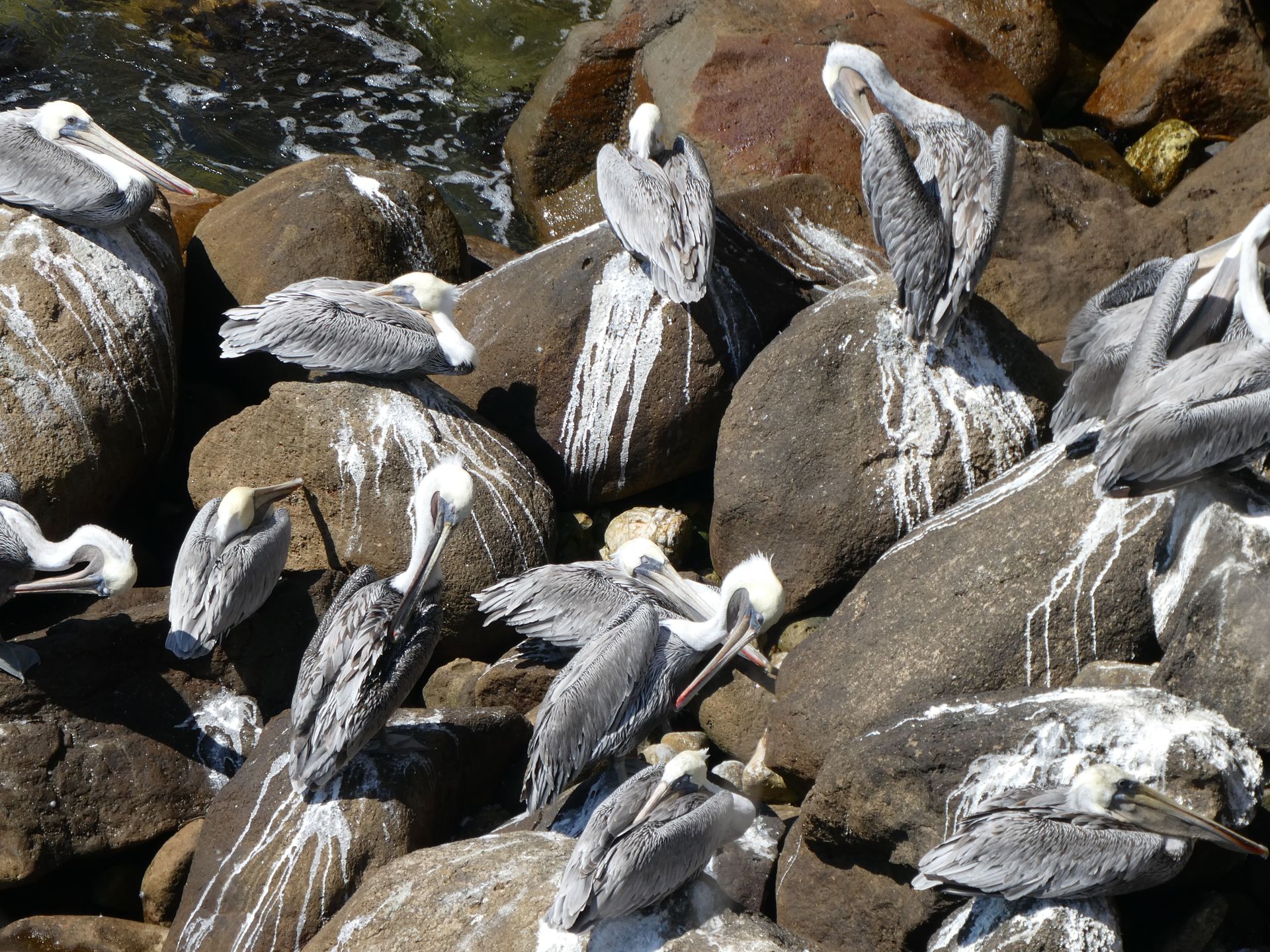
Both pelican parents feed their young by regurgitating food. After several weeks, hatchlings leave the nest and congregate in large groups, known as pods or crèches. These groups provide protection from predators while parents are away foraging.
Young pelicans leave the pod each day to return to the vicinity of their nest, where their parents continue to feed them. The young fledge after 2-3 months and leave the colony soon after.
Nonbreeding Adult
The nonbreeding adult is a majestic sight to behold, with its black flight feathers and white body making it a striking figure in the air. It's a large bird, but its broad, stable wings allow it to soar with ease.
This bird's wings are incredibly broad, giving it the stability it needs to stay aloft for long periods of time. It often soars using thermals, which are rising columns of warm air that can help it conserve energy.
As I've observed, these birds are incredibly agile in the air, and their ability to soar using thermals is a testament to their impressive flying skills.
Explore further: Broad Tailed Hummingbird
Predation
Predation is a significant threat to pelican colonies. Red foxes and coyotes prey on colonies that they can access.
Pelican eggs and nestlings are also vulnerable to predation by certain bird species. Herring gulls, ring-billed gulls, and California gulls have all been known to prey on pelican eggs and young.
Recommended read: Brown Headed Cowbird Eggs
Great horned owls, red-tailed hawks, bald eagles, and golden eagles are also predators of young pelicans. They prey on them while they're still in the nest.
If a human gets too close to a pelican colony, the pelicans may temporarily abandon their nests. However, if the threat is another bird, the pelicans will not abandon the nest and may fight back by jabbing at the interloper with their bills.
Only red foxes and coyotes are known to prey on full-grown pelicans. They are the only predators that can take down a nesting adult on rare occasions.
Check this out: Red Shafted Northern Flicker
Status and Conservation
The American White Pelican is a protected species, thanks to the Migratory Bird Treaty Act of 1918. It's also considered a Species of Least Concern globally, but that doesn't mean it's out of the woods yet.
Habitat loss is a major issue for these birds, with flooding and drought being common problems. Human-related losses include entanglement in fishing gear, boating disturbance, and poaching. Habitat degradation is also a concern.
Worth a look: American White Ibis Habitat
The excessive use of DDT and other pesticides in the mid-20th century took a toll on American White Pelican populations. However, with stricter environmental laws in place, their numbers have recovered well.
Here are some key statistics on American White Pelican populations:
American White Pelicans are sensitive to human disturbance and will abandon their eggs and young if a breeding colony is approached too closely.
Photos and Videos
The American White Pelican is a sight to behold, and capturing its majestic beauty through photos and videos is a must for any nature enthusiast.
Its large size makes it a great subject for photography, and its striking white plumage provides a beautiful backdrop for showcasing its unique features.
One of the most distinctive features of the American White Pelican is its long yellow bill, which is used to scoop fish out of the water.
This extendable pouch is a remarkable adaptation that allows the pelican to catch its prey with ease.
The American White Pelican's impressive size and striking appearance make it a popular subject for wildlife photographers and videographers.
Additional reading: American Akita Size
This Week Is!
This week is the American White Pelican! It's a huge waterbird with an overall length up to 70 inches.
They have a wingspan up to ten feet, the second-largest wingspan of any North American bird. That's massive!
Adult American White Pelicans are snowy white with black flight feathers visible only when the wings are spread. Their bright yellow-orange bill and legs are a striking contrast.
A flock of pelicans is called a squadron, which is pretty cool. You'll often see them feeding together in groups of a dozen or more birds.
They don't plunge-dive like Brown Pelicans do, instead dipping their beaks into the water to catch fish and other aquatic organisms. It's quite the sight to see them upend like large dabbling ducks!
Each bird eats more than four pounds of food a day, which is a lot of fish!
Ecology and Climate
American white pelicans are highly gregarious migratory birds that nest in colonies. They spend the winter along coastal areas in bays, inlets, and estuaries that contain exposed places, such as sand islands, for loafing and roosting.
In their breeding areas, they're sensitive to climate change, with more variable spring weather resulting in young chicks exposed to harsh conditions and higher breeding failures. This can be devastating for the species.
They're adapted to take advantage of changing situations, but higher temperatures increase the frequency of mortality events from Type C botulism. Wild American white pelicans may live for more than 16 years, but in captivity, the record lifespan stands at over 34 years.
Ecology and History of Life
American white pelicans are highly gregarious migratory birds that nest in colonies.
They mostly spend the winter along coastal areas in bays, inlets, and estuaries that contain exposed places, such as sand islands, for loafing and roosting.
In fact, these areas ideally will be near foraging sites, which can be 30 miles or more from breeding sites.
The birds will also spend time on inland freshwater reservoirs, lakes, or rivers.
Their foraging areas include the shallows of lakes, rivers, and marshes, where they feed on fish, amphibians, and crustaceans.
Young pelicans are cared for by both parents for three to four weeks, then join other young within the colony and fledge at 9 to 10 weeks old.
American white pelicans are highly susceptible to disturbance and females rarely lay a second clutch if the first clutch is lost.
Natural predators of eggs and chicks include gulls, coyotes, large corvids, and other mammals.
In the wild, American white pelicans may live for more than 16 years, while in captivity, the record lifespan stands at over 34 years.
This species mostly spends the winter along coastal areas, but they also migrate to Canada each spring to breed, nesting from the coast of British Columbia east to Lake of the Woods and Lake Nipigon in Ontario.
Climate Change Sensitivity
Climate change is affecting the American white pelican's breeding habits in the upper Plains. Earlier migration of adults has exposed young chicks to more variable weather.
This has led to higher frequency of breeding failures due to high mortality events during cold, wet weather.
Variable spring weather is also causing more chicks to be exposed to harsh conditions, which can be detrimental to their survival.
Droughts could result in lower water levels, allowing predators to access nesting islands and potentially eliminating some nesting sites.
Higher temperatures increase the frequency of mortality events from Type C botulism.
Frequently Asked Questions
How rare is a white pelican?
The white pelican is considered a Species of Least Concern globally, but it holds a special concern status in California. Its conservation status varies by region, making it a unique species to learn about.
What is a fun fact about the American White Pelican?
The American White Pelican has a remarkable wingspan, second only to the California condor in North America. Its impressive wingspan makes it a fascinating bird to learn more about.
Do white pelicans have black tipped wings?
Yes, American White Pelicans have black-tipped wings. Their distinctive wing markings are a notable characteristic of this bird species.
Featured Images: pexels.com