The Mauritius flying fox is a unique and fascinating species that plays a vital role in the ecosystem of Mauritius. Found only in the wild on this island nation, it's a species that's both adapted and endemic to its environment.
These large bats are herbivores, feeding on nectar, pollen, and fruits, which makes them important pollinators and seed dispersers. Their diet consists mainly of the island's native flora.
The Mauritius flying fox is a large bat, with adults reaching a wingspan of up to 1.5 meters. They have a distinctive appearance, with a thick fur coat and a long, pointed snout.
Consider reading: Fauna and Flora of Mauritius
What is a Flying Fox?
The Mauritian flying fox is a type of megabat. They are the largest bats in the world.
Megabats are also known as "fruit bats" because they primarily eat fruit. They don't rely on echolocation to find their food, unlike many smaller bats.
Instead, flying foxes use their excellent eyesight and sense of smell to locate their next meal.
Habitat and Ecology
The Mauritian flying fox can often be seen flying in most parts of the country at dawn and dusk when the bats go out and come back from foraging. They prefer secure places with restricted access, the leeward side of mountains and they avoid areas that have full exposure to the sun.
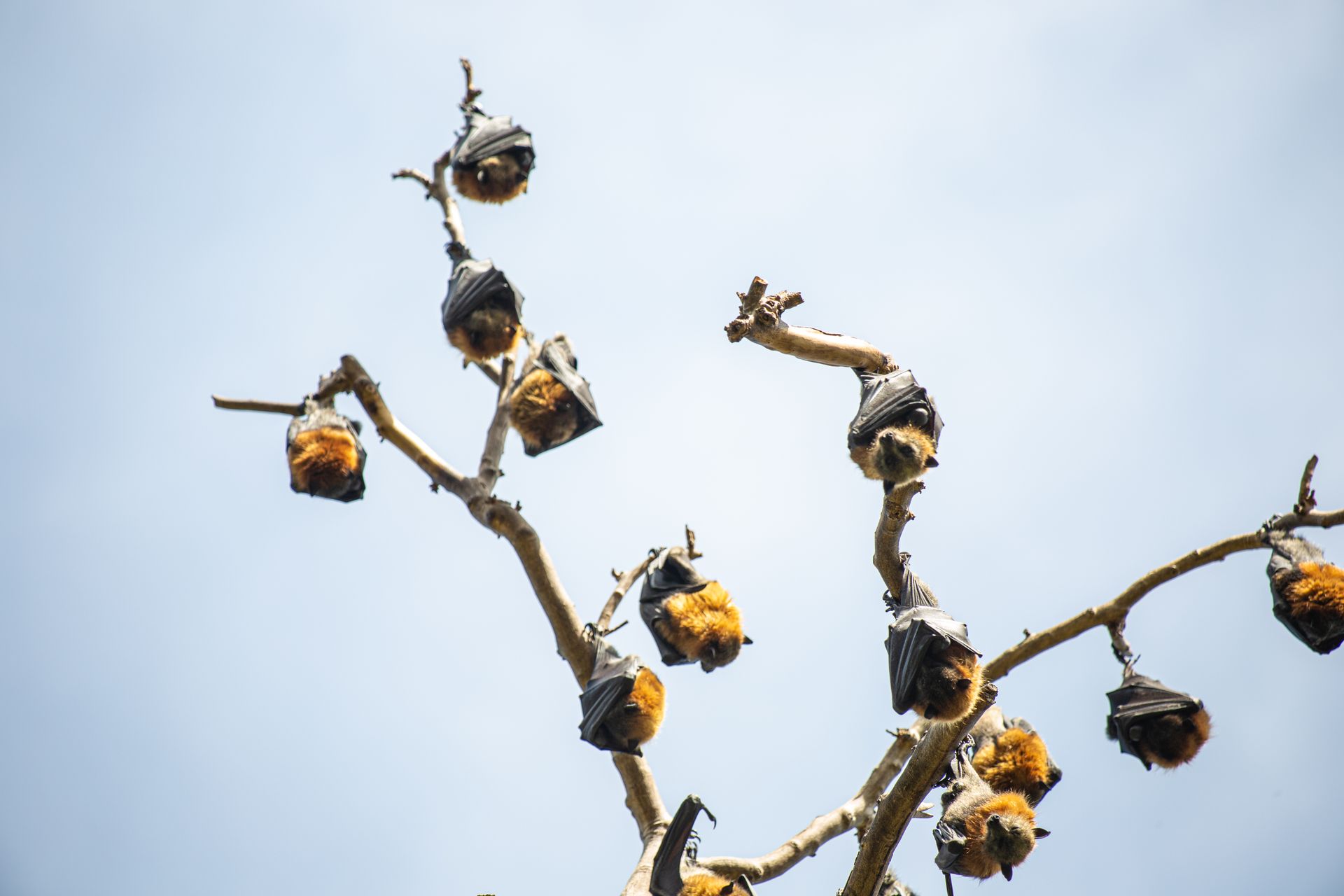
Their roosting sites can consist of a few hundred trees, with five species commonly used, most of which are exotic (Eucalyptus spp, Tecoma, Araucaria spp, Bois noir and Bois de natte). These trees provide a solid resting site for bats to roost in large groups during the day.
The Mauritian flying fox relies mainly on fruit for its diet from native plant species and exotic species, found both in the forest and on plantations, small holdings and gardens. They also consume nectar, playing a role in seed dispersion and pollination and contributing to maintaining plant diversity in the fragmented native landscape of the island.
What They Eat
Mauritian flying foxes are herbivores, meaning they only eat plants. Their diet mainly consists of fruit, nectar, and pollen.
As they fly from tree to tree, they help to pollinate flowers by transferring pollen from one plant to another. This process is crucial for the reproduction of many plant species.
By consuming fruit, Mauritian flying foxes also help to spread seeds to new locations, allowing new plants to grow and thrive. This is a vital part of their ecosystem.
Curious to learn more? Check out: Will Fox Attack Dogs
Ecology
The Mauritian flying fox is an essential part of the island's ecosystem, playing a vital role in seed dispersion and pollination. Its diet consists mainly of fruit and nectar, making it a crucial component in maintaining plant diversity.
In the wild, you can spot these bats flying in most parts of the country at dawn and dusk, when they go out and come back from foraging. They often roost in forests, particularly in the mountain ranges, where they prefer secure places with restricted access.
These bats are highly adaptable, and their roosting sites can consist of a few hundred trees, with exotic species like Eucalyptus and Tecoma being commonly used. The canopy structure and terminal branches of these trees provide a solid resting site for the bats to roost in large groups during the day.
The Mauritian flying fox is an opportunistic feeder, eating whatever plants or fruits are available to it at the time. One study found that the bats consumed 20 species of plants, with 18% of them being native to Mauritius.
Here's a breakdown of the native plant species consumed by the bats:
Their role in seed dispersion is particularly important, as they disperse many seeds in flight through their feces. This ultimately benefits many native species, contributing to the survival of the island's ecosystem.
Conservation and Threats
The Mauritian flying fox is in trouble, and conservation efforts are underway to protect this unique species. Many organizations and individuals are working together to safeguard the future of the Mauritian flying fox.
Protecting their forest habitats is a top priority. Efforts are being made to restore and preserve the forests where the Mauritian flying foxes live.
Educating people about the importance of bats is also crucial. By spreading awareness, we can change people's perceptions and attitudes towards these fascinating creatures.
Working with farmers to find ways for bats and farms to coexist is another key aspect of conservation. This involves finding solutions that benefit both the bats and the farmers.
Monitoring the population of the Mauritian flying fox is essential to understand the extent of the threat they face. Unfortunately, their numbers are very low, and they are at risk of disappearing forever.
Several threats put the Mauritian flying fox in danger, including habitat loss, cyclones, and hunting. The species is listed as endangered, which means their numbers are very low and they are at risk of disappearing forever.
The Mauritian government has made a decision that has sparked international concern. The government plans to cull 20% of the bat's global population, which is around 18,000 individuals.
You might like: Burmese Python Population in Florida
Life Cycle and Reproduction
Mauritian flying foxes typically have one baby at a time, which is called a pup.
These pups are born without fur and are incredibly small.
The mother takes care of her pup, carrying it with her as she flies.
Conservation Efforts
Conservation efforts are underway to protect the Mauritian flying fox.
Protecting and restoring their forest habitats is crucial for the survival of these unique animals.
Restoring habitats helps to create a safe environment for the bats to live and thrive.
Educating people about the importance of bats is also a key part of conservation efforts.
By teaching people about the value of bats, we can increase awareness and reduce threats to their populations.
Working with farmers to find ways for bats and farms to coexist is another important aspect of conservation.
Farmers can benefit from having bats around, as they help to pollinate plants and control pests.
Monitoring their populations is essential to understand how many bats are left and to track the effectiveness of conservation efforts.
Conservationists use monitoring data to inform their decisions and make targeted efforts to protect the bats.
Description
The Mauritius flying fox is quite impressive, with a wingspan of 80 cm (31 in), making it the largest endemic mammal on the island.
They have beautiful golden fur, which is a lovely sight to behold.
Their ears are small, but they have thick hair on their tibiae, which is a unique feature.
The dorsal coloration of the Mauritian flying fox is a glossy, blackish brown mantle, tinged with rufous, which extends posteriorly into a dark brown median spinal tract, flanked by buff lateral patches.
Adult Mauritian flying foxes have an average forearm length of 152 mm, with no difference between males and females.
These magnificent creatures are mostly nocturnal, but some can be seen during the day.
They normally roost by sunrise, and their weight ranges from 40-800 g.
Mauritian flying foxes can be found from sea level to 1500 m above.
Take a look at this: Southern Brown Bandicoot
Featured Images: pexels.com