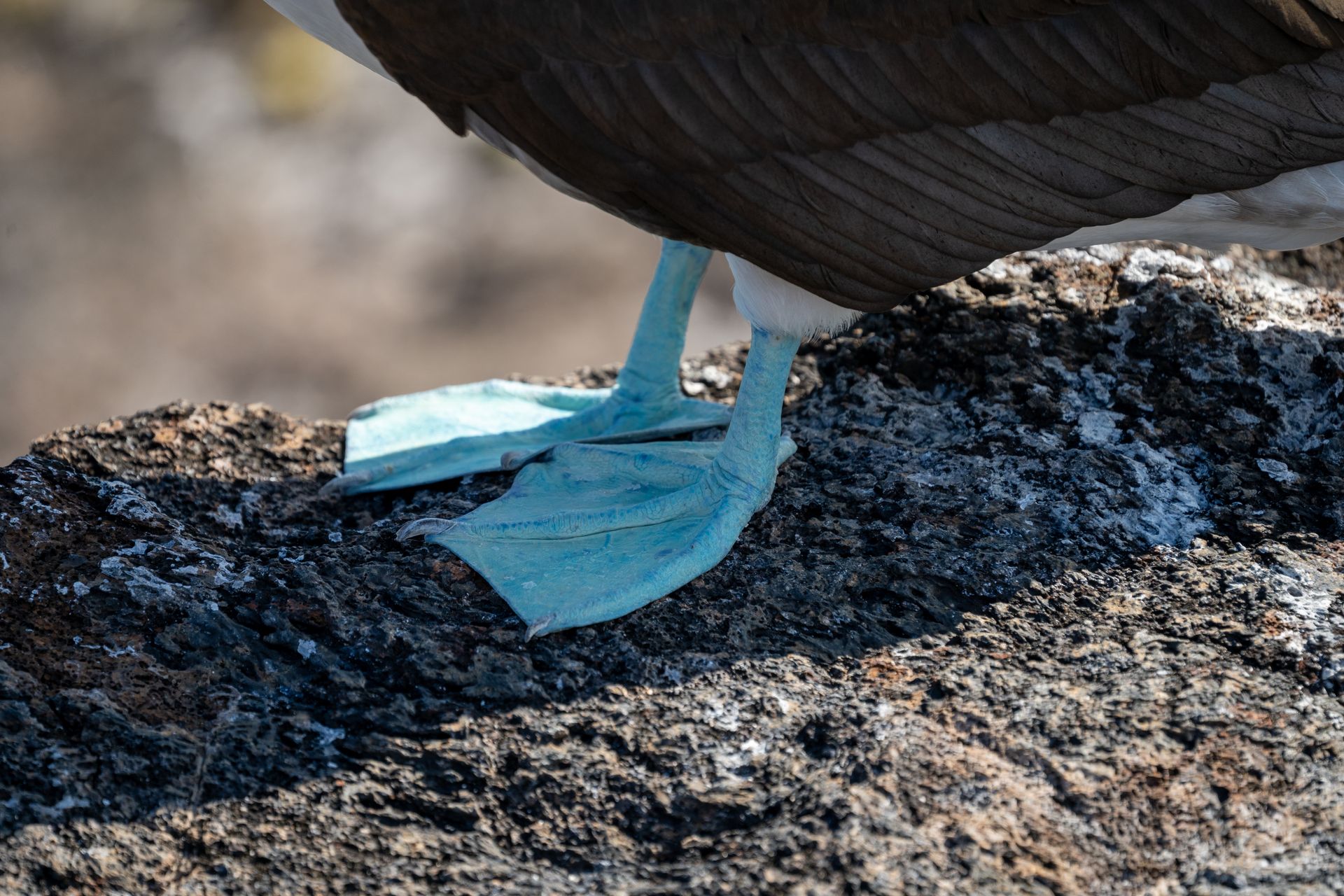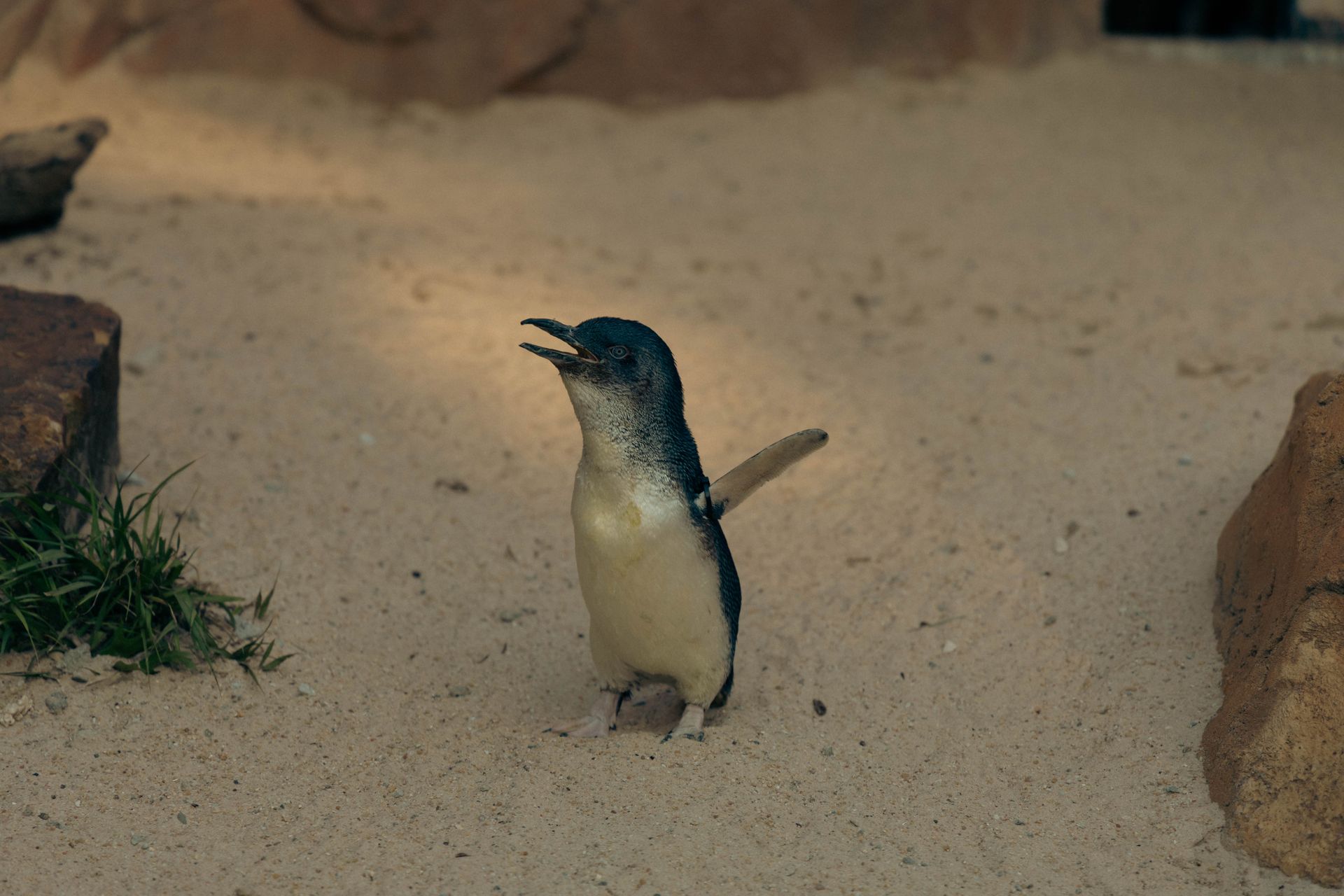
The little blue penguin is a tiny but mighty bird, reaching heights of about 13 inches and weighing around 2.2 pounds. They have a distinctive blue-gray back and white belly, with a distinctive blue stripe above their eyes.
These penguins are found in the coastal waters of New Zealand and Australia, where they can be seen swimming and diving in search of food. They are excellent swimmers, reaching speeds of up to 25 miles per hour in the water.
In the wild, little blue penguins can live up to 20 years, which is impressive for their small size. They are social birds and are often found in large colonies.
Expand your knowledge: African Black Footed Penguins
Physical Characteristics
The Little Blue Penguin's physical characteristics are quite striking. Their head and upperparts can range in color from slate-blue to almost black, depending on their geographic location.
Their ears are covered in small slate-grey feathers that fade to white underneath, while their chin and belly are a pure white. Their flippers are a beautiful blue color.
Their bill is a dark grey-black, measuring around 3-4 cm in length. Their eyes are a pale silvery- or bluish-grey or hazel, and their feet are pink above with black soles and webbing.
As they grow and mature, their physical appearance changes. Juvenile birds have a shorter bill and lighter upperparts, while hatchlings are covered in black down that's replaced with chocolate brown down within 8 to 14 days.
Size
Standing height of Little Blue Penguins is between 36 to 43 cm (13 to 15 in).
Their length, measured from the tip of the beak to the end of the tail, is several inches longer.
Adult Little Blue Penguins typically weigh between 0.9-1.4 kg (2-3 lb), with their weight varying seasonally.
They are heaviest when they start the breeding season after foraging for several months and at the end of the breeding season after pre-molt foraging.
Both males and females lose weight during the breeding season when caring for eggs and feeding chicks.
On a similar theme: Magellanic Penguins
Appearance
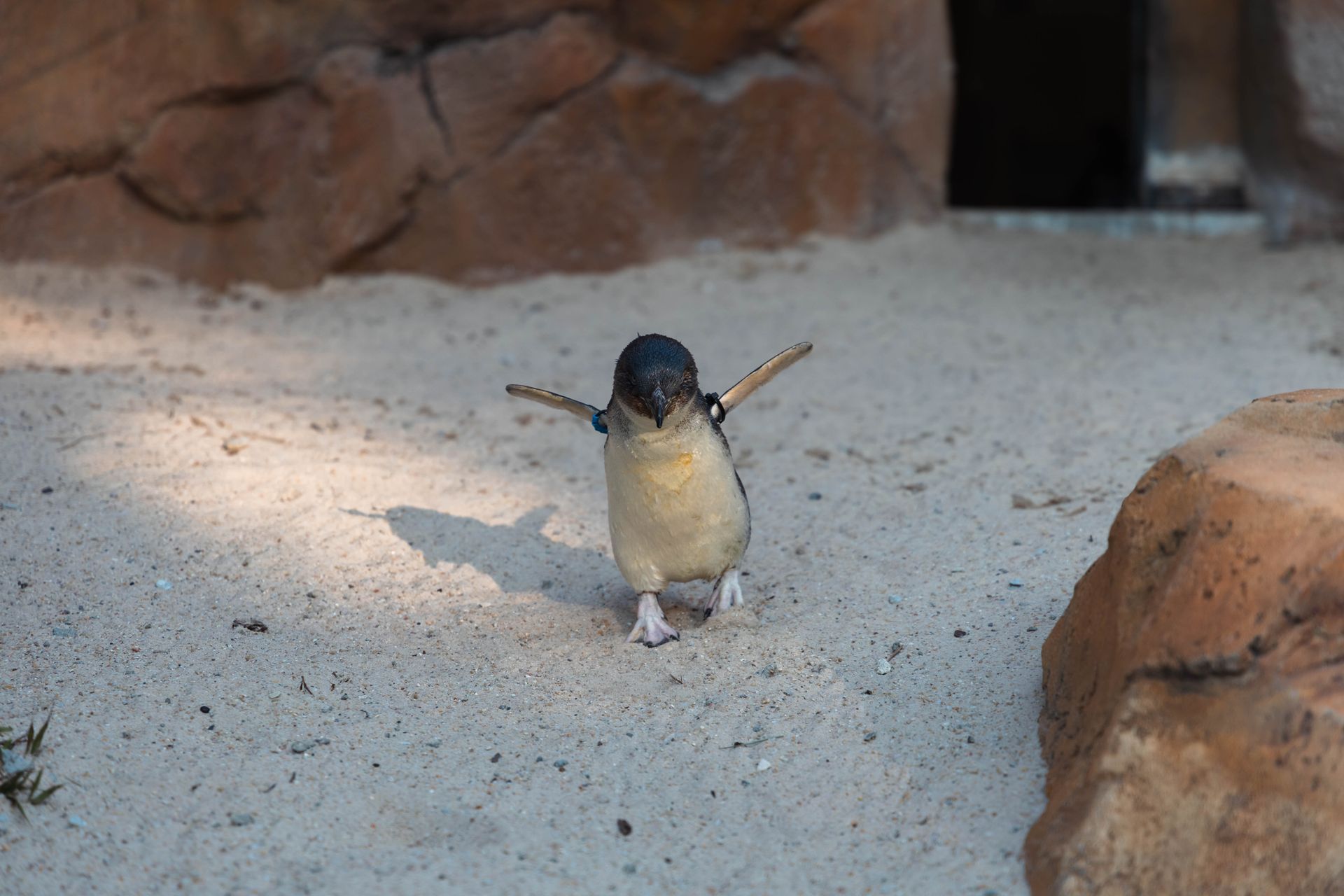
The bluish colour of these penguins is truly unique among all species. It's a distinctive feature that sets them apart.
Their head and upperparts can range in colour from slate-blue to indigo-blue to almost black, depending on their geographic location. The shade of blue varies by location.
The ears are covered in small slate-grey feathers that fade to white underneath, from the chin to the belly. This subtle colour transition is quite striking.
Their flippers are a lovely shade of blue, which adds to their overall visual appeal. The eyes are pale silvery- or bluish-grey or hazel, and the feet are pink above with black soles and webbing.
Chicks have a brown and white plumage that turns to the blue colour after their first molt. This transformation is a fascinating process to observe.
A different take: Location of Turtles
Habitat and Behavior
Little blue penguins inhabit both offshore islands with rocky shorelines and mainland sites near or in urbanized areas.
They're quite adaptable, aren't they? They can thrive in a variety of environments.
Little blue penguins are the smallest penguin species, standing only 25 cm tall and weighing an average of 1 kg.
Their unique appearance is quite striking, with slate blue plumage on the back and a white belly.
Little blues are known for their variety of calls, which they use to communicate at sea, declare territory, and call for mates.
Habitat
Little Blues are found in temperate water, which means they thrive in areas with mild temperatures. They prefer to live on offshore islands with rocky shorelines.
These islands often have a rugged coastline that provides a safe haven for the penguins. Mainland sites near or in urbanized areas are also suitable habitats for Little Blues.
Urbanized areas can provide Little Blues with food and shelter, making them a viable option for the penguins.
Broaden your view: Falkland Islands Wildlife
Description & Behavior
Little blue penguins are the smallest penguin species, standing at only 25 cm tall. They weigh an average of 1 kg.
Their distinctive "tuxedo" appearance is a notable feature, with slate blue plumage on the back and a white belly.
Feeding Behavior (Ecology)
Little blue penguins are skilled divers, reaching depths of 10-20 m in search of food. They typically spend about 24 seconds underwater, although some dives have been recorded as deep as 60 m.
These birds tend to stick close to home, foraging within 25 km of the coast. However, they're capable of longer trips, with some recorded journeys reaching up to 75 km.
Little blue penguins are relatively fast swimmers, reaching speeds of up to 6 kph.
Adaptation and Life Cycle
Little Blue Penguins have some amazing adaptations that help them thrive in their environment. They have about 10,000 feathers, which is three to four times the feather density of flying birds.
This unique feather structure provides excellent insulation when they're at sea, keeping them warm and cozy. The feather bases are very downy, trapping air and preventing it from being squeezed out by water pressure.
One of the most interesting things about Little Blue Penguins is their life cycle. They can be found on land from June through March, where they lay eggs, attend to their young, and moult. During this time, they're quite social and can be hand-fed fish by visitors.
Here's a brief overview of their life stages:
- They reach sexual maturity between the ages of 2-3.
- In New Zealand, they lay eggs between September and November.
- Both parents take turns incubating eggs for about 36 days.
- Chicks reach their adult weight of 1 kg in about a month and typically fledge about a month later.
Adaptation
Little Blue Penguins are incredibly adapted to their environment. They have about 10,000 feathers, which is three to four times the feather density of birds that can fly.
Their feathers are specially designed to keep them warm and dry. The feather bases are very downy, trapping air and providing an effective insulation when the penguin is at sea.
Their feathers also have stiff tips that prevent them from being compressed by water pressure. This stops the insulating air layer from being squeezed out, keeping the penguin warm and dry.
Their countershading is another clever adaptation. Dark on top and light on the bottom, it protects them from predators swimming above or below them.
If this caught your attention, see: Do Bird Feathers Have Diseases
Life Cycle
Little blue penguins typically reach sexual maturity between the ages of 2-3. This is when they become ready to start their own families.
They lay their eggs between September and November, usually two eggs at a time. These eggs are incubated for about 36 days by both parents.
Both parents take turns guarding and feeding the chicks for the first 2-3 weeks. After that, they leave the chicks to forage for food on their own, as they need more to support their rapid growth.
Chicks reach their adult weight of 1 kg in about a month. They typically fledge, or learn to fly, about a month later.
Here's a breakdown of the life cycle of little blue penguins:
Conservation Status
Little blue penguins are listed as Least Concern on the International Union for Conservation of Nature (IUCN) Red List, but their populations are declining in some areas.
Their populations are stable in most locations, with around 1.2 million individual birds and 500,000 breeding pairs. However, declines have been observed in urbanized areas and island locations where predation is high.
Oil pollution from wrecks and deliberate discharge in their foraging areas is a significant threat to little blue penguins. In 2012, a freighter spill in New Zealand killed an estimated 20,000 birds, including little blue penguins.
Predation by introduced mammalian species, such as weasels, foxes, and cats, is also a major threat to little blue penguins. Feral cats, in particular, have been responsible for the extinction of one colony.
Little blue penguins are vulnerable to human activities like predation by introduced species, plastic pollution, roadkill, and human harassment. Their eggs and chicks are also subject to predation by water rats and predatory seabirds.
Their predators at sea include fur and leopard seals, killer whales, gulls, and White-bellied Sea Eagles. Little blue penguins are also caught in fishing nets and compete with commercial fisheries for food.
Human activities like oil pollution, predation, and habitat destruction are major threats to little blue penguins.
You might like: Leatherback Sea Turtles Diet
Taxonomy and Overview
The little blue penguin is a member of the animal kingdom, which is home to a vast array of species.
Its taxonomic breakdown is as follows: it belongs to the phylum Chordata, which includes animals with a notochord, a dorsal nerve cord, and a post-anal tail.
The little blue penguin is a bird, and its class is Aves, which is the class that includes all birds.
It's a member of the order Sphenisciformes, which is a group of flightless birds that includes penguins.
The little blue penguin's family is Spheniscidae, which is a family of penguins that includes several species.
Its genus is Eudyptula, and within this genus, it is classified as the species E. minor.
Taxonomic Breakdown:
Taxonomy is a way to classify living things into groups based on their characteristics. This helps us understand how different species are related to each other.
The kingdom Animalia is the group that includes all animals, from tiny insects to massive blue whales.
The phylum Chordata is a subgroup of Animalia that includes animals with a backbone or spinal cord.
The class Aves is a group within Chordata that specifically includes birds.
The order Sphenisciformes is a subgroup of Aves that includes penguins.
The family Spheniscidae is a group within Sphenisciformes that includes all penguins.
The genus Eudyptula is a subgroup of Spheniscidae that includes the little penguin.
The species E. minor is the specific type of penguin that belongs to the genus Eudyptula.
Additional reading: Eudyptula Novaehollandiae
Information About
Taxonomy is a way of classifying living things into groups based on their characteristics and features. This helps scientists understand the relationships between different species.
The process of taxonomy involves creating a hierarchical system of classification, with more general groups at the top and more specific groups at the bottom. This system is often represented by a tree-like diagram.
Biologists use a variety of characteristics to classify living things, including their physical structure, behavior, and genetic makeup. These characteristics can be used to identify the similarities and differences between different species.
The most widely used system of taxonomy is the Linnaean system, which was developed by Carl Linnaeus in the 18th century. This system groups living things into seven levels of classification, from domain to species.
A different take: American Bald Eagle Classification
Facts
Little blue penguins are also known as fairy penguins or blue penguins.
Their life expectancy in the wild is quite impressive, ranging from 6 to 20 years.
Frequently Asked Questions
Are fairy penguins and little blue penguins the same?
Yes, fairy penguins and little blue penguins are the same species, with the names referring to their common names in Australia and New Zealand, respectively.
What do little blue fairy penguins eat?
Little blue fairy penguins primarily feed on small fish, krill, and squid, which they hunt in shallow waters and at the sea floor. Their diet consists of anchovies, pilchards, garfish, and shrimp-like crustaceans.
How fast can a fairy penguin swim?
Little penguins, also known as fairy penguins, can swim at speeds of 2-4 km/h on average, with the fastest recorded speed reaching 6.4 km/h.
Featured Images: pexels.com