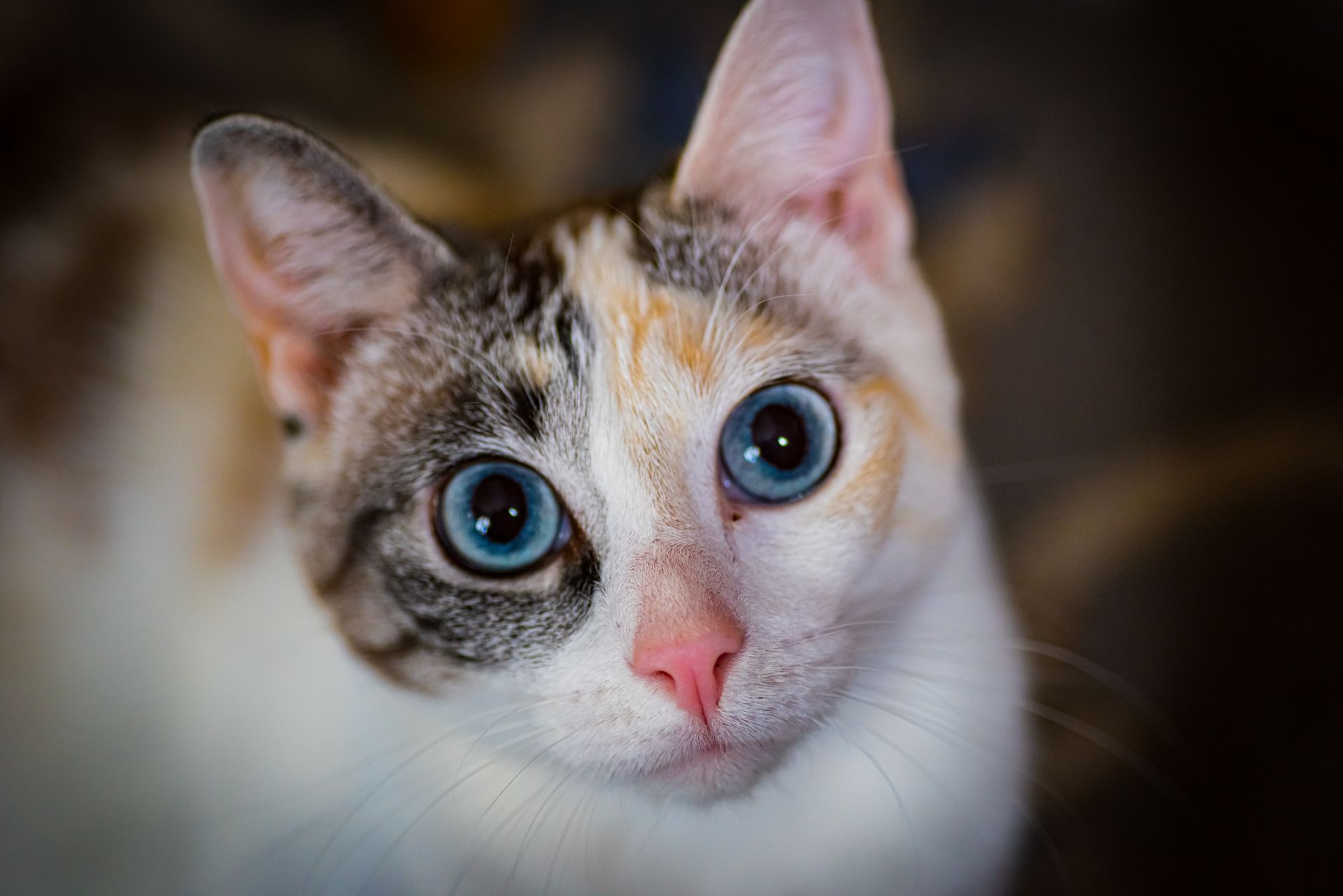
Cats have been domesticated for thousands of years, with evidence of their presence in human settlements dating back to around 9,500 years ago in the Fertile Crescent.
The earliest known evidence of cat domestication comes from a site in Cyprus, where the remains of domesticated cats were found alongside those of humans and other domesticated animals.
It's believed that cats were initially drawn to human settlements for their rodent population, which helped to protect grain stores and other food sources.
Domesticated cats were highly valued by ancient Egyptians, who considered them sacred animals and often mummified and buried them with their owners.
History of Domestication
The domestication of cats is a fascinating story that spans thousands of years. They were first valued for their ability to kill rodents and venomous snakes.
In ancient Egypt, cats became sacred animals and were incorporated into religious cults, particularly as attendants of Bastet, the lion (later, cat) goddess. This demand for cats as votive offerings gave rise to commercial catteries, where cats were bred in their millions.
The domestication of cats is believed to have begun when wildcats visited farms between 10,000 to 12,000 years ago during early human civilization in the Near East and the current area of West Asia. It was the agricultural period that made the domestication of the cat beneficial for both parties.
Cat skeletons show that the domestication of the wildcat began 10,000 years ago to 12,000 years ago. Domestication proper came much later, in Egypt about 4,000 years ago.
The Egyptians adored their domesticated cats and even mummified them. In fact, killing a cat or taking a cat out of ancient Egypt was prohibited and punishable by death. Some wealthy people even adorned their felines in gold.
Feline remains from 4,200 to 2,300 BC have been found in Poland, which suggests that cats migrated to Central Europe around then to charm people for food scraps and rodents. This was the beginning of the European wildcat.
Domestic cats show no reduction in genetic diversity compared with the wild subspecies, which suggests that there was no founding genetic bottleneck. Multiple genetic analyses produced concordant results, tracing the maternal origins of cat domestication to at least 5 wildcat lines originating in the Near East.
The domestic cat is referred to as a sixth subspecies, F. silvestris catus, although it is clear that domestic cats derive very recently from F. silvestris lybica.
Curious to learn more? Check out: Why Are There No Cats in the Bible?
Domestication Generally
Domestication generally is a fascinating topic, and cats are no exception. Domestication is a dependence on humans for food, shelter, and control of breeding (Price, 2002).
Cats are a great example of domestication through natural selection, rather than artificial selection. Unlike dogs and barnyard animals, cats didn't have humans actively selecting them for desirable traits. Instead, wildcats that exploited human environments were simply tolerated by people and over time, they gradually diverged from their wild relatives (Wandeler et al., 2003; Driscoll et al., 2009).
The domestic cat is a product of 11 million years of natural selection in a world free of people, and 12,000 years of natural selection in a world increasingly dominated by humanity (Johnson et al., 2006; O'Brien and Johnson, 2007).
Domestic cats have not undergone a significant reduction in genetic diversity, suggesting that there was no founding genetic bottleneck (Driscoll et al., 2007). This is interesting, as it means that domestic cats are still quite similar to their wild ancestors.
Consider reading: Where Do Wild Horses Live in the United States
The majority of domestic cats today are random-bred house cats, or are feral and intact, meaning they choose their own mates (Price, 2002). This is a key characteristic of domestication, as it indicates that humans are not actively controlling the breeding process.
Here are some key differences between domestic and wild cats:
- Domestic cats have longer intestines than wildcats, which may be due to a "less strictly carnivorous diet" (Darwin, 1890).
- Domestic cats are polyestrous, meaning they can have multiple breeding cycles per year, whereas wildcats are not (Serpell, 1990).
- Domestic cats have a wide range of coat colors and patterns, whereas wildcats typically have a striped mackerel tabby pattern (Serpell, 1990).
Evidence and Insights
Archaeological evidence shows that cat domestication happened in various parts of the world, with cat skeletons found in human-populated areas.
In China, researchers discovered cat remains dating back to around 3500 BC, indicating a possible period of domestication. However, no direct connection was found between these ancient domesticated cats and modern cats.
Scientists have found that 13 genes changed as felines evolved from feral to friendly, linked to cognition and behavior, especially fear responses and learning new behaviors using food rewards.
The genetic makeup of wild and domestic cats shows no major differences, as people haven't bred them for specific physical attributes.
Sources of Evidence

Archaeological evidence shows that cat domestication occurred in various parts of the world.
Cat skeletons found in human-populated areas provide evidence of cat domestication. Cat remains discovered in China suggest a short period of cat domestication of the leopard cat in China/Central Asia.
Scientists found cat remains in China dating from around 3500 BC, indicating cat domestication in agricultural areas. However, no lineage can be traced from the domesticated leopard cat in China to modern kitties.
An archaeological record of a dig in Cyprus found an adult human buried with stone tools and a cat 9,500 years ago. This discovery provides historical and archaeological support for cat domestication.
Egyptian art from 4,000 years ago depicts the most domestic cat evidence. This suggests that ancient Egyptians had a significant relationship with domesticated cats.
Cat remains found in Poland date back to 4,200 to 2,300 BC, showing that cats migrated to Central Europe. This migration marked the beginning of the European wildcat.
A cat skeleton from ancient Egypt has a shortened skull matching those of today's domesticated cats. This suggests that domestic cats arrived in the Roman Empire in 31 BC via trade routes.
A unique perspective: Ancient Roman War Dogs
Genetic and Evolutionary Insights
Felines have undergone significant changes as they evolved from feral to friendly, with 13 genes linked to cognition and behavior changing as a result.
These genes are particularly associated with fear responses and learning new behaviors using food rewards.
Scientists have compared the DNA of kitties throughout history and found no major DNA differences between wild and domestic cats.
This suggests that people aren't breeding them for specific physical attributes, unlike other domesticated animals.
Cat Breeding and Evolution
Cat breeding is a relatively new phenomenon, dating back about 150 years. People didn't deliberately breed cats until then, unlike dogs and other domesticated animals.
Cats were not actively bred for specific traits, but rather natural selection played a crucial role in their domestication. This means that cats with traits that made them more suitable for living alongside humans, such as docility and tolerance of human presence, were more likely to survive and reproduce.
The Egyptian Mau is believed to be one of the oldest types of domesticated cats, with some mummified remains dating back to 10,000 years ago. However, it's difficult to determine exactly who the oldest type of domesticated cat is.
Domestication of cats took a different trajectory than other animals. Wildcats are not well-suited for domestication due to their obligate carnivorous diet and solitary nature. They were likely tolerated by people and gradually diverged from their wild relatives over time.
A genetic examination of domestic cats and their wild counterparts revealed that the domestic cat is a product of natural selection, with 5 genetically distinctive wildcat subspecies present in different regions. The world's domestic cats carried genotypes that differentiated them from all local wildcats except those from the Near East.
The domestic cat is referred to as a sixth subspecies, F. silvestris catus, although it is clear that domestic cats derive very recently from F. silvestris lybica. This suggests that cat domestication is a relatively recent process, with the majority of domestic cats choosing their own mates and obtaining their own food.
Despite their relatively recent domestication, domestic cats have undergone significant changes, including the development of polyestrous behavior and coat colors that depart from the wildcat's striped mackerel tabby. However, the most noticeable adaptation is their overwhelming tolerance of people, a key attribute of any domesticated animal.
Domestic cats have undergone 11 million years of natural selection in a world free of people, and 12,000 years of natural selection in a world increasingly dominated by humanity. However, the power of artificial selection to produce modern fancy cat breeds has only recently been brought to bear on the accumulated store of wildcat genetic variation.
You might enjoy: Wild Cats as Pets
Here are some key differences between wild and domestic cats:
- Wildcats are obligate carnivores, while domestic cats have a more varied diet.
- Wildcats are solitary and territorial, while domestic cats are social and adaptable.
- Wildcats have a striped mackerel tabby coat, while domestic cats have a wide range of coat colors and patterns.
- Wildcats are not as tolerant of people, while domestic cats are often described as "delightful and flourishing profiteers" in our homes.
Reasons for Domestication
Cats domesticated themselves, and it's all because they found a convenient food source. They began hanging around humans, serving as pest control, and over time, they adapted to develop more docile traits.
The abundance of small prey in storehouses attracted cats, and they stuck around because it was a never-ending food source for them too. People started keeping domestic cats because they were convenient and helped control pests.
Domestication was a gradual process that took thousands of years, and it's still not entirely clear when it started. Some scientists believe it began around 10,000 years ago in the Near East, while others think it might have started as early as 12,000 years ago.
For your interest: Free Cat Food Battle Cats
Why Were Domesticated?
Domesticated cats are obligate carnivores, meaning they can only digest proteins, which makes them naturally inclined to hunt rodents that invade human food sources. This is a key reason why people tolerated and eventually domesticated them.
Their ability to eliminate mice and other small pests was a valuable asset to early agricultural communities. Wildcats are solitary animals that defend exclusive territories, which made them less likely to be actively sought out as pets.
However, the ones that were tolerant of people and wandered closer to farms had a better chance of survival. This is where natural selection came into play, favoring the cats that were more willing to interact with humans.
In fact, the domestic cat is a product of natural selection, rather than artificial selection like dogs and other barnyard animals. This means that domesticated cats are genetically similar to their wild ancestors, with no reduction in genetic diversity.
The domestic cat's maternal origins are traced back to at least five wildcat lines from the Near East, specifically the F. silvestris lybica subspecies. This suggests that the domestic cat is a relatively recent development in human history.
Why People First Kept Pets
Domestication of cats was a gradual process that occurred thousands of years ago. Wildcats were initially tolerated by people, and over time, they diverged from their "wild" relatives due to natural selection.
The domestication of cats took place in the Near East, where multiple genetic analyses traced the maternal origins of cat domestication to at least 5 wildcat lines. Domestic cats derive very recently from F. silvestris lybica.
Cats were first valued for their ability to kill rodents and venomous snakes, but they also became household pets and a part of family life. In Egypt, cats became sacred animals around 2,500 years ago and were incorporated into religious cults.
The domestication of cats was largely driven by their ability to eliminate house mice that invaded grains and other food sources. People discovered that small cats and kittens were cute and relatively harmless compared to their gigantic counterparts.
Seafarers spread domestic cats around the world, and in eighth-century Welsh law, the set price for an adult cat was the same as that for a full-grown sheep. Cats were highly valued as pest controllers for over 1,000 years.
The domestication of cats was a gradual process that occurred over thousands of years, and it's only been in the last 60-70 years that people have kept an indoor cat.
Explore further: Domestication of a Horse
Pre-Domestication and Emergence
Cats have a long and fascinating history that predates their domestication. They were initially valued for their ability to kill rodents and venomous snakes.
The first domestication of cats is believed to have occurred in Egypt around 4,000 years ago. However, it's thought that wildcats were tolerated by humans and gradually diverged from their wild relatives over time.
Wildcats were not as social as domesticated cats and were known to be aggressive. They had slightly larger brains proportionately than their domestic counterparts and had round pupils for better sight.
Domesticated cats, on the other hand, have vertical, slit pupils and have undergone significant changes in their behavior and physiology. They have become polyestrous, meaning they can have multiple litters of kittens per year, and their coat colors often depart wildly from the wildcat's striped mackerel tabby.
The domestic cat is a product of 11 million years of natural selection in a world free of people and 12,000 years of natural selection in a world increasingly dominated by humanity.
Here are some key differences between wildcats and domesticated cats:
- Wildcats have slightly larger brains proportionately than domesticated cats.
- Domesticated cats have vertical, slit pupils, while wildcats have round pupils.
- Domesticated cats purr, while wildcats roar.
- Domesticated cats are social and enjoy human interaction, while wildcats are solitary and aggressive.
Domestication Methods
The process of domesticating cats involved a gradual transition from wild to tame, with early evidence suggesting that humans and cats coexisted in the Middle East around 10,000 years ago.
Cats were likely attracted to human settlements by the abundance of rodents and other small prey, which made them valuable for pest control.
The earliest archaeological evidence of cat domestication comes from a site in Cyprus, where the remains of domesticated cats have been found dating back to around 9,500 years ago.
Cats were initially kept for their hunting skills, with evidence suggesting that they were used for pest control in ancient Egypt around 4,000 years ago.
It's believed that early cat domestication was a natural process, with humans and cats adapting to each other's presence over time.
The process of domestication was likely facilitated by the fact that cats are naturally solitary animals, making them easier to manage in a human environment.
Cats were also valued for their companionship, with ancient Egyptians often mummifying and burying their deceased cats with great ceremony.
Worth a look: Dogs in Ancient Warfare
Featured Images: pexels.com