Horse transportation rates can be overwhelming, but understanding the basics can make all the difference. The cost of transporting a horse can range from $50 to $500 or more, depending on the distance and mode of transportation.
If you're planning to transport your horse, it's essential to know the various options available. You can choose from trailer rental, horse van services, or even air transport for shorter distances.
The weight and size of your horse are crucial factors in determining the transportation cost. For example, a standard horse trailer can accommodate horses up to 1,500 pounds, while larger trailers can handle horses up to 2,000 pounds.
Researching different transportation companies can help you find the best rates for your needs.
Costs and Pricing
Horse transportation costs vary depending on distance, shipping method, location, and other factors.
The cost to ship a horse cross-country can include additional layover fees ranging from $150 to $300 a day.
Flying a horse is more expensive, with costs ranging from $2,000 to $10,000 for a one-way ticket, and up to $20,000 for a return flight.
Transporting a horse internationally can be costly, with isolation and quarantine fees ranging from $1,000 to $3,000.
Costs

The cost of transporting a horse can vary greatly depending on the distance of the journey. For trips less than 100 miles, you can expect to pay around $2.55 per mile, while for journeys over 100 miles, the cost drops to $1.10 per mile.
Longer distances require more fuel, time, and effort from the transport company, which increases the overall cost. Overnight stabling, where the horse is accommodated and cared for during a layover, can add to the overall cost, ranging from $150 to $300 a day.
The type of transportation used can also impact the cost, with horse trailers being more cost-effective for shorter distances and air transportation or specialized horse transport vehicles being necessary for longer distances. Flying a horse, on the other hand, can be extremely expensive, with costs ranging from $2,000 to $10,000 for a one-way ticket.
The time of year can also affect the cost, with wintertime often leading to higher rates due to road closures and longer routes required. The availability of suitable rest stops and facilities along the route is also an important consideration when calculating the costs.

Additional services such as temperature-controlled trailers or extra security measures can also add to the overall cost. The country you are shipping your horse to may also have additional vaccination and isolation requirements once you land, which will add to the cost of shipping your horse.
The quarantine requirements for horses are based on the country of origin, why you are bringing the horse into the country, and the disease state of the country. This can add an additional $1,000 to $3,000 to the cost of shipping your horse.
Size vs Costs
The size of your horse can significantly impact transport costs. Larger horses require more space on the trailer, which may require a larger trailer or even a separate compartment.
Horse hauling rates per mile range from $0.75 to $3, but the cost can vary depending on the size of the horse. A larger horse may require a larger trailer or transport vehicle, increasing the overall cost.

The size of the horse also determines the type of trailer or transport vehicle required. Larger horses may need a specialized horse transport truck, which can be more expensive.
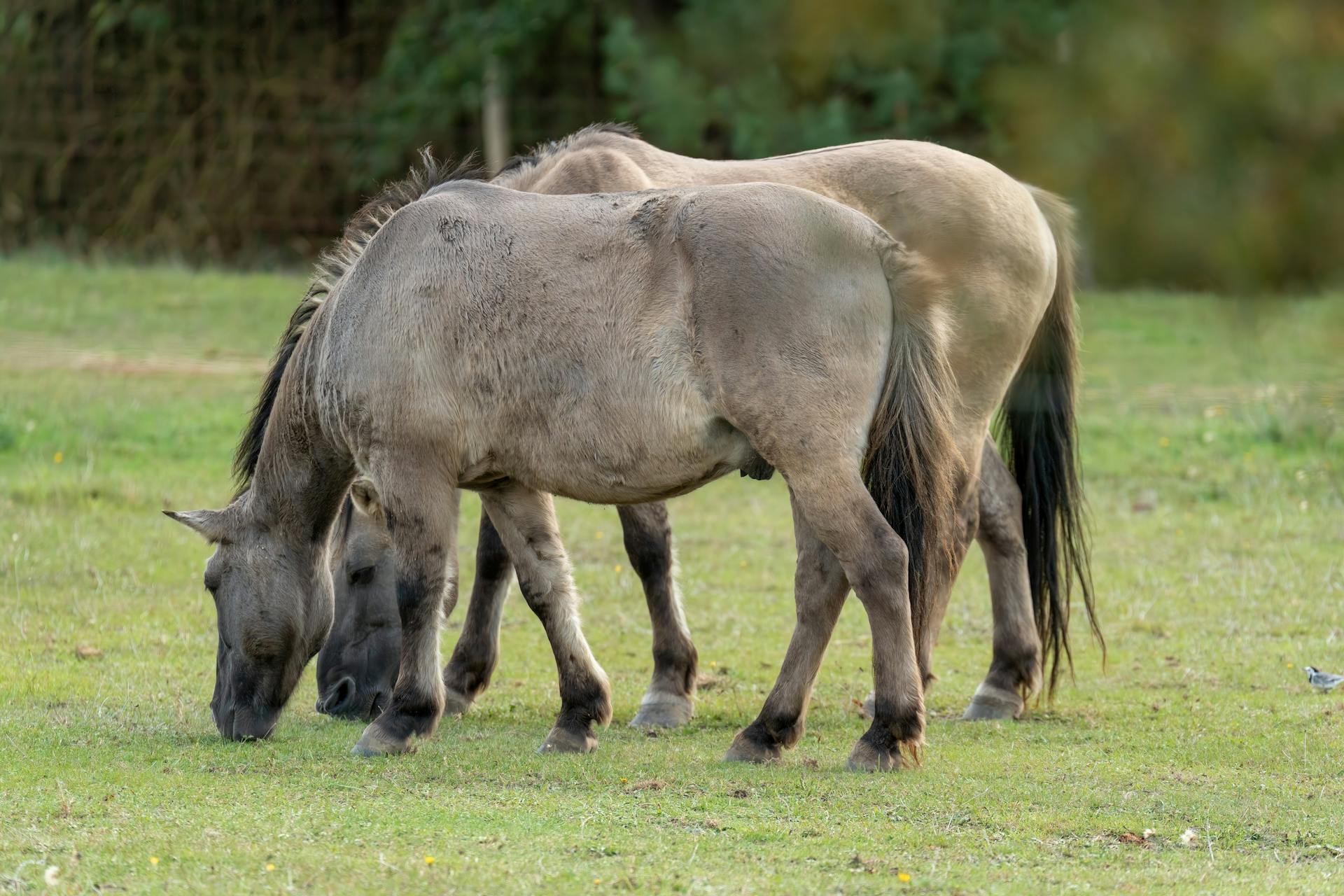
Horses come in different sizes, with smaller breeds like the Shetland Pony weighing around 400 to 450 pounds, while larger breeds like the Belgian Draft can exceed 2,000 pounds.
The weight of the horse can also impact the overall cost of transport. Heavier horses may require additional equipment, such as extra strapping or reinforced floors, to ensure their safety during transportation.
Weight restrictions may apply when transporting horses, particularly when crossing state or country borders. It's essential to be aware of these restrictions and ensure that the horse's weight is within the legal limits.
The cost of transport can increase if you need to hire a specialized transport company to handle a larger or heavier horse. Be sure to ask about their experience and equipment when inquiring about their services.
For more insights, see: What Do Horses Do When They Are Scared?
Explore further: Horse Transportation Services
Transportation Details
The average cost of transporting a horse by truck is around $150 to $300, depending on the distance and services chosen.
Most horse transportation companies offer a variety of services, including single horse transport, group transport, and specialized transport for horses that require extra care.
The cost of shipping a horse by air is significantly higher, ranging from $1,500 to $3,000 or more, depending on the airline and services used.
Typically, horses are transported in stalls or pens on a truck, with adequate ventilation and space for movement.
The duration of horse transport can range from a few hours to several days, depending on the distance and route taken.
A reputable horse transportation company will usually have experienced drivers and staff who are knowledgeable about horse behavior and handling.
Route and Road Conditions
Route and road conditions can significantly impact the duration and safety of horse transport, as well as the overall costs involved. Poorly maintained roads can increase the risk of discomfort or injury to the horses.
Factors to consider when evaluating road quality include potholes, road signs, speed limits, and potential construction or road closures. Weather conditions along the route, such as rain or snow, can also impact road conditions and contribute to potential hazards.
It's essential to assess the road quality beforehand to ensure a smooth and safe horse transport journey. Well-paved and maintained roads provide a safer and more comfortable travel experience for horses, while poorly maintained roads can cause discomfort or potential injury.
Distance
Transporting a horse over long distances can be a challenge, but understanding how the distance affects costs is crucial. The farther the distance, the higher the costs associated with transporting a horse.
Long-distance trips require more fuel, time, and effort from the transport company, making them more expensive. Overnight stays for the horses can also add to the overall cost.
The availability of suitable rest stops and facilities along the route is an important consideration when calculating the costs. This can impact the overall travel time and subsequently the cost.

For longer distances, air transportation or specialized horse transport vehicles may be necessary, which can significantly increase the transportation costs. The type of transportation used can also be affected by the distance of the journey.
Here's a rough estimate of how distance can impact horse transport costs:
Keep in mind that these estimates are rough and can vary depending on the specific circumstances of the transport.
Route Conditions
The condition of the route and roads can directly impact the duration and safety of the horse transport, as well as the overall costs involved.
The type of roads along the route is an essential factor to consider. Factors like the distance, type of roads, and potential obstacles along the way should all be taken into account.
Well-paved and maintained roads provide a safer and more comfortable travel experience for horses. On the other hand, poorly maintained or gravel roads may increase the risk of discomfort or potential injury to the horses.

It's essential to assess the road quality beforehand to ensure a smooth and safe horse transport journey. Factors to consider when evaluating road quality include the presence of potholes, road signs, speed limits, and potential construction or road closures.
The farther the distance, the higher the costs associated with transporting a horse, due to longer distances requiring more fuel, time, and effort from the transport company.
Longer distances often mean more stops and breaks for the horses and drivers, which can increase the overall travel time and subsequently the cost.
Services and Equipment
Weight restrictions may apply when transporting horses, particularly when crossing state or country borders. It's essential to be aware of these restrictions and ensure that the horse's weight is within the legal limits.
Heavier horses may require extra equipment to ensure their safety during transport, including heavy-duty straps, reinforced partitions, and thick rubber mats on the flooring. These additional requirements can incur additional costs.
The size of the horse will determine the type and size of the trailer or transport vehicle required, while the weight of the horse can impact overall costs and may necessitate additional equipment or permits.
A unique perspective: What Do We Do When We Fall off the Horse?
Skilled Drivers and State-of-the-Art Equipment

Skilled drivers are a must for safe and stress-free horse transport. They need to be knowledgeable horse people to handle the horses with care.
A tired driver is a dangerous driver, for both themselves and your horse. This is why it's essential to include the cost for multiple drivers in the quote, especially for long-distance hauls.
Horses too need breaks during long hauls, not just for food and water but also to relax from the tense process of trailer transport. Typically, this break is done with layover hubs, which adds to the cost of transportation.
The type of trailer required depends on the distance of transportation. For example, larger horses may need a larger trailer or a specialized horse transport truck.
Here are the major points to look for in a transport company:
- Experience of the driver
- Number of drivers needed
- Costs of medical paperwork when crossing state lines (Coggins)
- Emergency transport vs scheduled events
- Communication ability between trailer and horse owner
- Insurance type
- Licensed driver
- Dedicated transport or shared with other destinations
Vet Checks & Certificates
Vet checks are a crucial part of horse transport to ensure the well-being and safety of the horse during transportation.

These checks typically involve a veterinarian examining the horse to ensure it's fit to travel. They check for any signs of illness or injury and may also require a health certificate to be issued.
A health certificate is a document that verifies the horse is healthy enough to travel, and it's usually required by airlines or other transport services. It's essential to obtain this certificate from a licensed veterinarian before transporting your horse.
The cost of vet checks and health certificates can vary depending on the location and the veterinarian's fees. However, it's a necessary expense to ensure your horse's safety and well-being during transport.
Recommended read: Horse Health
Services
If you're planning to transport a horse, you'll need to consider additional services that can add to the overall cost. These can include overnight stabling, which can cost between $150 to $300 a day.
Some horse transportation services may offer special requirements such as temperature-controlled trailers or extra security measures. These can be especially important for horses that require a certain level of comfort or care during transport.
Horse transportation costs can vary depending on the shipping method, but flying a horse is generally the most expensive option, with one-way tickets costing between $2,000 to $10,000.
Shipping and Logistics
Shipping a horse can be a daunting task, especially when it comes to finding a reliable transportation service. Moving a horse requires a lot more space than smaller animals, making it a challenge to find a suitable option.
You can compare quotes from rated horse transport companies within minutes using Shiply, which often results in 75% cheaper rates than usual.
Finding a horse transportation service can be a struggle, but with Shiply, you can easily compare quotes and find a suitable option.
Frequently Asked Questions
What is the best horse transport company?
For safe and reliable horse transportation, consider Equine Express N.A. Inc., a trusted nationwide service with air-ride equipped tractor trailers. Their door-to-door horse shipping and hauling services are a top choice for horse owners.
Featured Images: pexels.com