Guinea pigs without hair might sound unusual, but they're a real thing. They're called hairless guinea pigs, and they're a result of genetic mutations.
Hairless guinea pigs have a unique appearance, with some having a short, wispy coat while others are almost completely bald. They're often referred to as "skinny pigs" due to their lack of fur.
These guinea pigs require special care to prevent skin problems and maintain their overall health. They need regular skin care and protection from the sun.
Their skin is sensitive and can easily get sunburned, so it's essential to keep them indoors or provide them with a safe outdoor enclosure.
See what others are reading: Hairless Guinea Pig Care
Unique Traits
Hairless guinea pigs need to eat more to maintain body heat, requiring a slightly higher optimal temperature range of 75 to 79 °F (24 to 26 °C).
Their skin has a rubbery texture and is quite vulnerable to sunburn, injuries, and fungal infections unless precautions are taken.
Baldwin guinea pigs should be housed indoors with nesting materials like blankets or fleece bags for heat conservation, and heating pads or external heat sources may be needed in cold weather.
The gene causing hairlessness in Baldwin guinea pigs is recessive, and breeding two Baldwins together will always result in all offspring being Baldwins.
Breeding a Baldwin guinea pig to a standard haired guinea pig will result in offspring that all carry one copy of the gene, but none will express hairlessness.
These offspring are called Baldwin carriers and are generally haired, looking like normal guinea pigs.
Since it's difficult to visually tell the difference between haired guinea pigs that carry the gene and those that don't, breeding two Baldwin carriers together is not recommended.
Baldwin Guinea Pigs
Baldwin Guinea Pigs are born with a full coat of hair, but it falls out gradually over the first few months of their lives.
They are entirely bald by the age of two months, with no hair from head to toe.
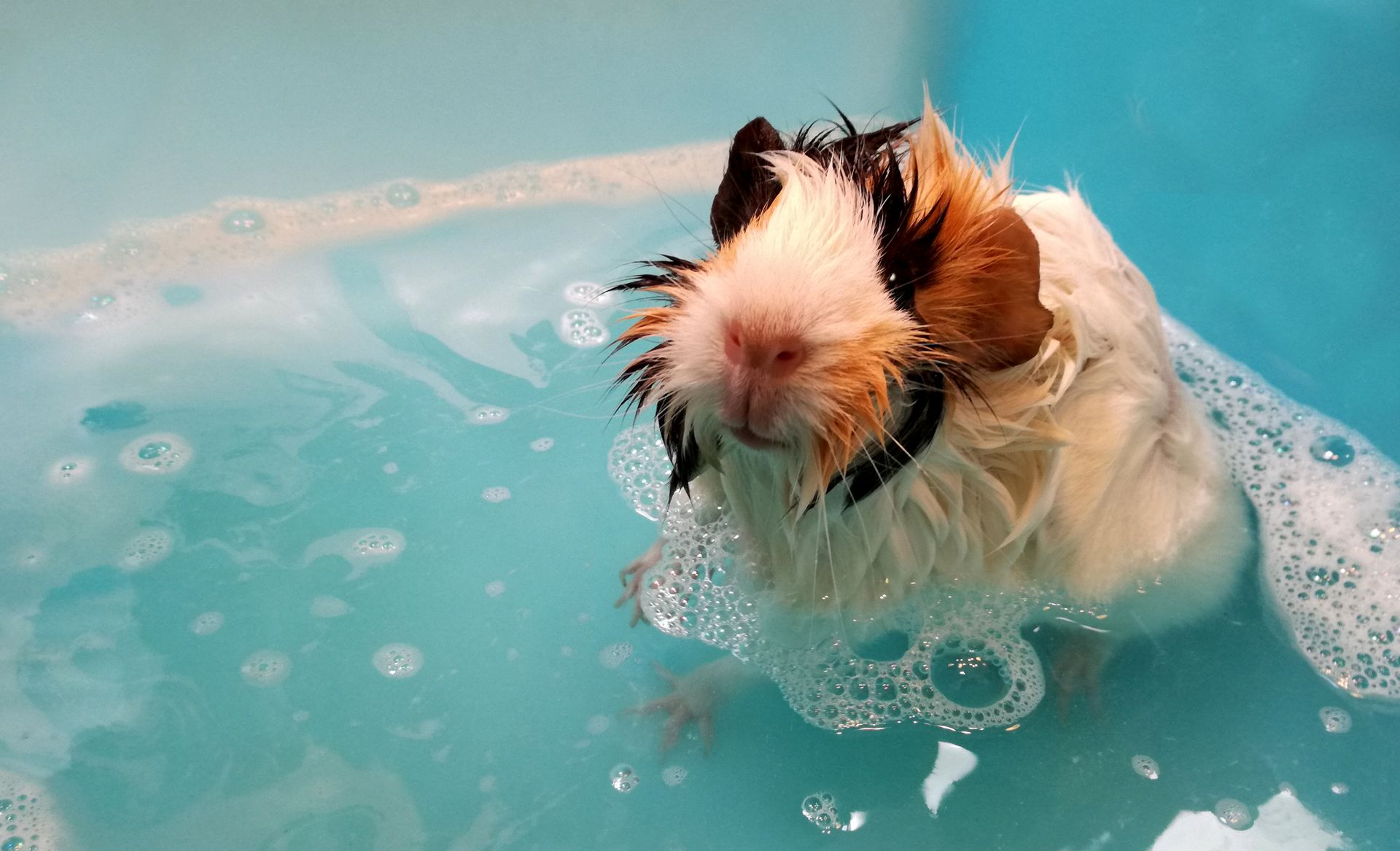
The Baldwin guinea pig is an accidental genetic mutation, discovered by a breeder in California who noticed her White Crested guinea pigs going bald.
This breeder, Carol Miller, was surprised to find that she had a new breed of adorable hairless guinea pigs at her hand.
The Baldwin guinea pig's hairlessness is due to a recessive mutation, which means that if bred with a guinea pig that has hair, the offspring will have hair.
Breed Characteristics
Baldwin’s Hairless Guinea Pigs are born with full fur coats, but they start to shed their hair at two to five days old due to a recessive gene.
They are nearly completely bald by two months of age, except for some whiskers and a few hairs on their feet.
These guinea pigs have wrinkled skin and rounded, full bodies with small, curious faces and large droopy ears.
Their skin often has a rubbery feel to it, and can look similar to human skin otherwise.
They need to be kept in a warm environment, ideally around 24 to 26 °C (75 to 79 °F), to prevent them from feeling cold to the touch.
Direct sunlight can be a problem, so it's best to keep them indoors with plenty of 'nesting' bedding and additional heat sources on cold days.
Key Differences
Hairless guinea pigs are quite unique, and it's essential to understand their differences from their furry counterparts. They don't have a layer of fur to protect their skin, so they require extra care.
Every hairless guinea pig is an individual with its own personality, and they can get along with other guinea pigs just fine. However, their needs are a bit more complex due to their lack of fur.
Skinny pigs, a type of hairless guinea pig, require more attention to their wellbeing, especially when it comes to keeping them warm and clean. This means owners need to be aware of their additional needs.
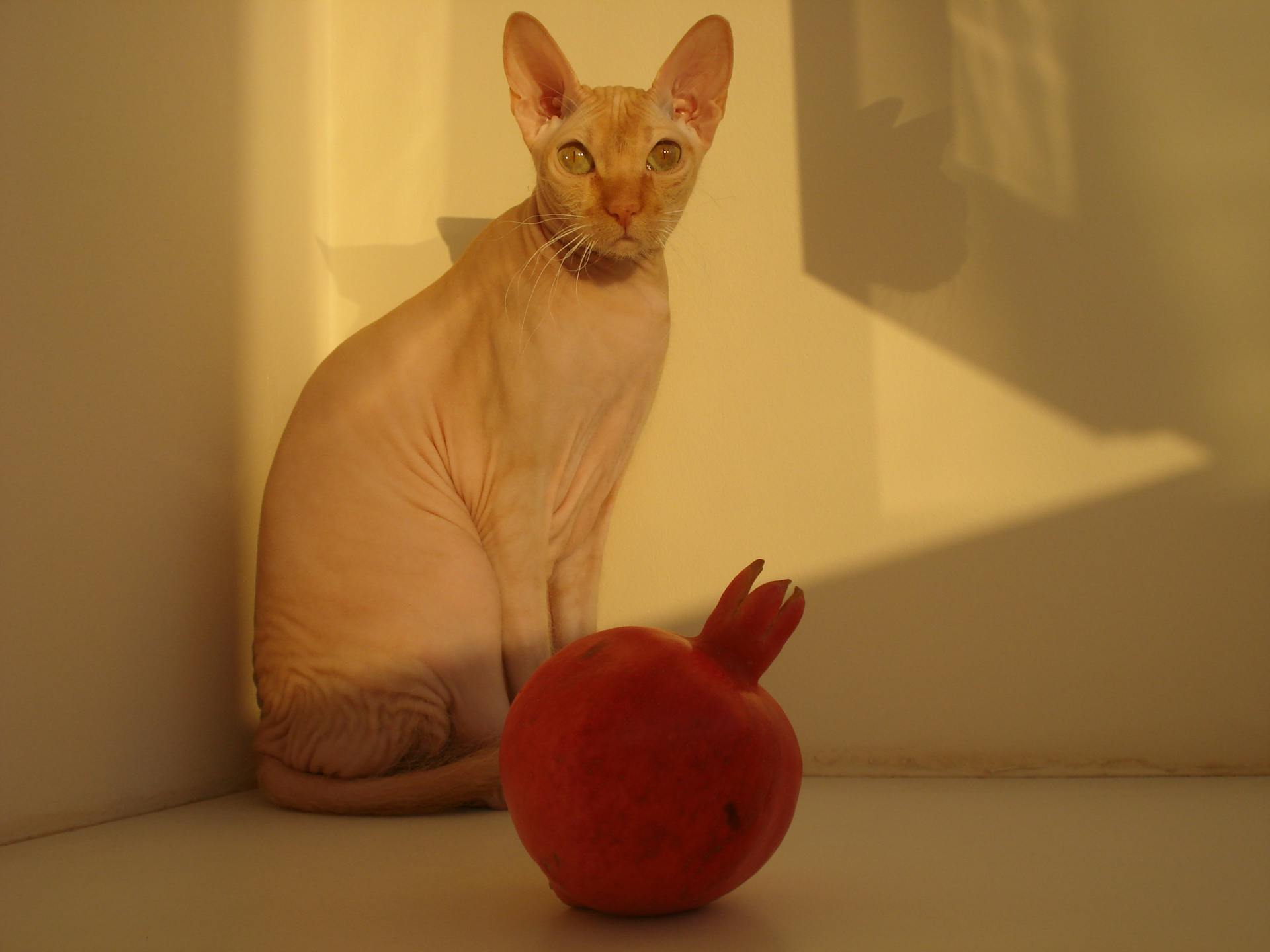
Hairless guinea pigs cost more to heat and feed than their furry friends, and their homes need to be cleaned more often. It's crucial to consider these extra expenses when deciding to bring one home.
As relatively new breeds, there are still concerns about the potential consequences of promoting the recessive mutation that causes hairlessness. This includes questions about the efficacy of their immune system function.
Characteristics
Baldwin's Hairless Guinea Pigs are born with full fur coats, but they begin to shed their hair at two to five days old due to a recessive gene.
By two months of age, they are nearly completely bald, except for some whiskers and a few hairs on their feet. This unique characteristic is a result of their genetic makeup.
Their wrinkled skin is a distinctive feature, with obvious wrinkles around their crown and shoulders where a crest would normally be.
Their rounded, full bodies and small, curious faces make them adorable and endearing pets.

Their skin often has a rubbery feel to it, but can look similar to human skin otherwise.
They are more prone to skin issues and can be more sensitive to temperature changes and sunburn, so they require more care than traditional guinea pig breeds.
They need to be kept in a warm environment, ideally around 24 to 26 °C (75 to 79 °F), to stay comfortable.
They need more energy to keep their body warm, so they require a higher caloric intake to provide this energy.
Care and Life
Hairless guinea pigs are super sensitive to heat, cold, and drafts, so they need to live indoors with regular trips to the garden if the weather's right.
To keep them comfortable, the room temperature should be between 72°F to 75°F (21°C to 24°C).
They can't be protected from the sun's rays in any way, so it's best to keep them out of direct sunlight and in the shade, avoiding the midday sun and hot temperatures at all costs.
Skinny guinea pigs need shade, plenty of water, areas to keep cool, and hide from any wind when going outside.
Trips to the garden with your skinny pigs aren't out of the question, but you need to prepare a little more, like offering them a good outdoor setup.
Hairless guinea pigs are bred without fur, but that doesn't mean their wellbeing is at risk; in fact, it's the opposite.
Origins and Breeds
Baldwin's hairless guinea pigs originated from a spontaneous genetic mutation that resulted in hairlessness. This mutation was first spotted by a breeder in San Diego, California called Carol Miller.
The gene that causes hairlessness must be present in both parents for the condition to be displayed in the offspring. If only one parent has the gene, the offspring will be carriers of one copy of the recessive gene responsible for the baldness.
This breed is still a relatively recent discovery, but it's becoming increasingly popular due to the ease with which the mutation has been repeated.
Discover more: Pigging Dogs Breeds
Breed Origins

The Baldwin hairless guinea pig breed originated from a spontaneous genetic mutation that resulted in hairlessness. This mutation was first spotted by breeder Carol Miller in San Diego, California.
The mutation was observed in the offspring of Carol's white crested guinea pigs with golden agouti coloring. The gene responsible for the hairlessness must be present in both parents for the condition to be displayed in the offspring.
If only one parent has the gene, the offspring will maintain their hair but become 'carriers' of one copy of the recessive gene responsible for the baldness. Breeding two 'carriers' together will result in Baldwin hairless guinea pigs 25% of the time.
The anatomy of these guinea pigs is exactly the same as the haired variety, with the exception of baldness and a faster metabolic rate.
Discovering Unique Qualities and Origins
There are two types of guinea pigs that are naturally bald, both as a result of genetic mutations.

The Baldwin's hairless guinea pigs originated from a spontaneous genetic mutation that resulted in hairlessness. This mutation was first spotted by breeder Carol Miller in San Diego, California.
The gene that results in hairlessness must be present in both parents for the condition to be displayed in the offspring. If only one parent has the gene, the offspring will maintain their hair but also become 'carriers' of one copy of the recessive gene responsible for the baldness.
Baldwin's hairless guinea pigs are becoming popular due to the relative ease of repeating the mutation. Their anatomy is exactly the same as the haired variety, with the exception of baldness and a faster metabolic rate.
Their skin has a similar appearance to human skin, but has a more rubbery texture. This makes them quite vulnerable to sunburn, other injuries, and fungal infections unless precautions are taken.
Frequently Asked Questions
How much do hairless guinea pigs cost?
Hairless guinea pigs, also known as skinny pigs, can cost upwards of $150. Their unique appearance and relatively recent introduction to the market may contribute to their higher price point.
Do hairless guinea pigs make good pets?
Hairless guinea pigs, also known as skinny pigs, can make unique and adorable pets for the right owner. However, their specific needs and care requirements may differ from those of their furry counterparts.
Are hairless guinea pigs cuddly?
Yes, hairless guinea pigs, also known as skinny pigs, are affectionate and love to cuddle. However, they do require extra care due to their sensitive skin.
Featured Images: pexels.com