
The Florida Burmese Python Bounty is an initiative that aims to protect the state's ecosystem. The invasive Burmese python population is a significant threat to the environment.
The Florida Fish and Wildlife Conservation Commission (FWC) has been working to control the python population since 2009. This effort has led to the capture of over 12,000 pythons.
Hunters are paid a bounty of up to $1,000 for each python they catch. This incentive has encouraged many to participate in the removal efforts.
Here's an interesting read: Burmese Python Population in Florida
Program Overview
The Florida Burmese Python Bounty program is a unique opportunity to help control the invasive python population in the state. The program offers an hourly rate of either $13.00, $18.00, or $30.00 per hour depending on the area, for up to ten hours each day while actively searching for pythons on designated lands.
The program also provides an additional incentive payment of $50.00 for each python measuring up to four feet, plus an extra $25.00 for each foot measured above four feet. This payment structure rewards individuals for removing larger pythons from the ecosystem.
To put this into perspective, if you were to remove a python that's five feet long, you'd receive the base payment of $50.00, plus an additional $25.00 for each foot above four, totaling $75.00. This payment structure incentivizes individuals to target larger pythons that are more likely to be causing harm to the native ecosystem.
Here's a breakdown of the payment structure for pythons of different lengths:
Additionally, the program offers an extra $200.00 for each verified active python nest. This payment structure rewards individuals for not only removing pythons but also for identifying and reporting active nests.
The Challenge
The Florida Python Challenge is a 10-day marathon held every August, where competitors from around the world compete to catch the longest Burmese python and win up to $30,000 in prize money. It's a unique opportunity for the public to be compensated for catching the snakes.
Participants must follow strict rules, including carrying a printed or digital copy of their registration notification email, completing online training, and only removing Burmese pythons from designated competition locations. The use of firearms, dogs, and other animals to search, capture, or kill pythons is prohibited.
Here are the key rules to keep in mind:
- Participants must carry a printed or digital copy of their Florida Python Challenge registration notification email while hunting
- Participants must complete required online training and receive a unique completion code
- Only Burmese pythons removed from competition locations are valid entries
- The use of firearms is prohibited during the competition
- The use of dogs or other animals to search, capture, or kill is prohibited
- Air guns and captive bolts are allowed
- Python carcasses must be kept chilled or frozen, then turned into the nearest Florida Python Challenge check station within 24 hours of capture
The Challenge
The Florida Python Challenge is a unique event that takes place every August. It's a 10-day marathon where competitors from around the world come to catch the longest Burmese python and win up to $30,000 in prize money.
The challenge is hosted by the water management district in partnership with the Florida Fish and Wildlife System. It's an opportunity for the public to be compensated for catching the snakes, although this is only possible during the event.
To participate, you'll need to carry a printed or digital copy of your registration notification email while hunting. You'll also need to complete required online training and receive a unique completion code.
The rules are clear: only Burmese pythons removed from competition locations are valid entries. Firearms are prohibited during the competition, but air guns and captive bolts are allowed.
Here are the key rules to keep in mind:
- Participants must carry a printed or digital copy of their Florida Python Challenge registration notification email while hunting
- Participants must complete required online training and receive a unique completion code
- Only Burmese pythons removed from competition locations are valid entries
- The use of firearms is prohibited during the competition
- The use of dogs or other animals to search, capture, or kill is prohibited
- Air guns and captive bolts are allowed
- Python carcasses must be kept chilled or frozen, then turned into the nearest Florida Python Challenge check station within 24 hours of capture
The challenge is not just about catching the snakes, but also about humanely removing them from the ecosystem. The organizers encourage participants to humanely euthanize the pythons, following strict guidelines to ensure the snakes are treated with respect.
For more insights, see: Florida Snakes List
When Is the Challenge?
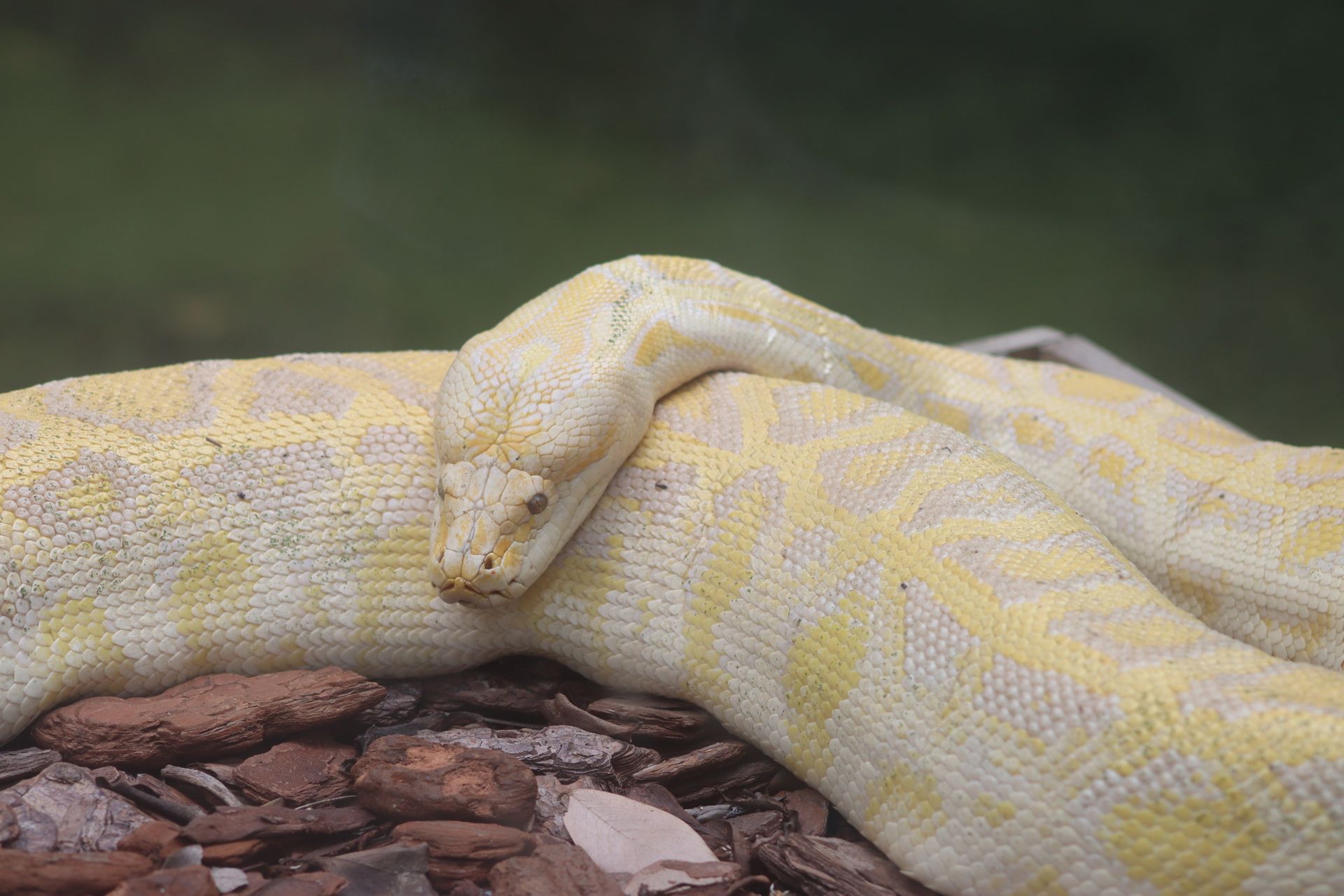
The Challenge is a great opportunity to get involved and make a difference. The 2024 python removal competition begins at 12:01 a.m. on August 9.
You'll have a whole week and a half to participate, which is a good amount of time to get organized and make the most of it. The challenge ends at 5 p.m. on August 18.
Mark your calendars for August 9 and get ready to join in on the action.
For another approach, see: Florida Python Challenge Resulted in 195 Invasive Burmese Pythons Removed
The Bounty Hunters
Siewe worked as a python removal agent for South Florida's Water Management District for four years. She'd be paid by the hour, between $13 and $18, and a bounty for every python she caught.
Fifty dollars was paid for every python under 4ft in length, another $25 per foot, and a $200 bonus for finding an active python nest. The programme, launched in 2017, has captured and euthanised 7,330 pythons so far.
The majority of pythons caught were under 4ft in length, but 17 were captured that measured between 16ft and 17ft long.
Suggestion: Burmese Python Caught in Florida
Competition Locations
The Bounty Hunters are set to take on the Florida Python Challenge in some of the state's most unique and diverse wildlife areas. The competition locations are spread throughout south Florida, offering a chance to spot a variety of wildlife in their natural habitats.
Big Cypress Wildlife Management Area is one of the competition locations, known for its vast cypress forests and diverse wildlife population. This area is a must-visit for any nature enthusiast.
Everglades and Francis S. Taylor Wildlife Management Area is another location where participants can search for invasive Burmese pythons. This area is home to a wide range of wildlife, including alligators, birds, and fish.
Frog Pond Public Small Game Hunting Area is a smaller competition location, but still offers a chance to spot some of the state's most unique wildlife. This area is a great place to learn about the importance of conservation and wildlife management.

Holey Land Wildlife Management Area is a unique competition location, known for its "holy land" of cypress and pine forests. This area is a must-see for anyone interested in wildlife and the outdoors.
Rocky Glades Public Small Game Hunting Area is a great place to spot some of the state's most elusive wildlife, including alligators and birds. This area is also home to a variety of fish and other aquatic species.
Rotenberger Wildlife Management Area is a lesser-known competition location, but still offers a chance to spot some of the state's most unique wildlife. This area is a great place to learn about the importance of conservation and wildlife management.
Southern Glades Wildlife and Environmental Area is the final competition location, offering a chance to spot a variety of wildlife in their natural habitats. This area is a must-visit for any nature enthusiast.
Here are the competition locations for the Florida Python Challenge:
- Big Cypress Wildlife Management Area
- Everglades and Francis S. Taylor Wildlife Management Area
- Frog Pond Public Small Game Hunting Area
- Holey Land Wildlife Management Area
- Rocky Glades Public Small Game Hunting Area
- Rotenberger Wildlife Management Area
- Southern Glades Wildlife and Environmental Area
The Bounty Hunters

In Florida, python removal agents are paid by the hour, with rates ranging from $13 to $18, depending on the location. They also receive a bounty for every python they catch.
Siewe, one of these agents, earned $50 for every python under 4ft in length. For longer pythons, the bounty is $25 per foot, with a maximum length of 17ft.
The programme, launched in 2017, has captured and euthanised 7,330 pythons so far. The majority of these pythons were under 4ft in length.
Some pythons were quite large, measuring between 16ft and 17ft long. Seventeen pythons fell into this category.
Siewe and her colleagues are trained to kill the pythons using a bolt gun.
The Impact
The Burmese python's presence in Florida's Everglades has been devastating to the ecosystem. They've had a 90-95% reduction in furbearing animals in the Everglades National Park since the late 1990s.
The loss is staggering, with a 99% decrease in raccoons, 99% decrease in opossums, and a complete absence of rabbits. This is a far cry from the teeming wildlife that once thrived in the area.
It's a stark reminder of the consequences of introducing non-native species to an ecosystem. The python's insatiable appetite has decimated native wildlife, making it challenging to find animals like deer, possums, or squirrels in the area.
Destroying an Ecosystem
The Burmese python has had a devastating impact on the Everglades ecosystem. They've been growing up to 18ft long in Florida.
Their insatiable appetite has led to a significant reduction in furbearing animals in the Everglades National Park. There's been a 90-95% reduction since the pythons appeared in the late 1990s.
Raccoons, opossums, and rabbits have been particularly affected, with a 99% decrease in raccoons and opossums, and a complete absence of rabbits. This is a stark contrast to what the area was like twenty years ago.
Back then, the place would have been teeming with wildlife, including deer, possums, and squirrels. Now, it's a rare sight to see any of these animals.
A chilling example of the pythons' power is a video recorded in 2017, showing a python holding an alligator underwater until it suffocated. This is a grim reminder of the impact these invasive species can have.
The python has been added to Florida's prohibited species list, making it illegal to buy, sell, or transport them.
Suggestion: Common Snapping Turtle Species
Feast of Snakes
The Feast of Snakes is a unique phenomenon that takes place in certain parts of the world. In India, for example, the festival of Nag Panchami is celebrated by worshiping snakes and offering them milk and flowers.
During this festival, people believe that snakes are sacred and should be treated with respect and care. In some regions, snakes are even considered to be a symbol of good luck and prosperity.
In the United States, the largest rattlesnake round-up is held annually in Sweetwater, Texas, where thousands of snakes are collected and released back into the wild. The festival has been running for over 70 years and attracts visitors from all over the world.
Snake enthusiasts and locals alike gather to participate in the event, which includes snake handling, milking, and other activities. It's a fascinating display of human fascination with these slithering creatures.
Curious to learn more? Check out: Slender Blind Snakes
Prizes and Preparation
To prepare for the Florida Python Challenge, you can start by watching optional training videos on how to search for and capture Burmese pythons. This will give you a head start on the competition.
You'll also want to study the requirements for human methods of killing pythons, as well as familiarize yourself with check station locations and the datasheets you'll need to fill out for each python you catch.
To maximize your chances of winning, make sure to learn how to identify and protect scout snakes, which may be found at the hunting locations. Participants will be disqualified if they kill a native snake, so it's essential to know the difference.
Here are the prizes you can win in the Florida Python Challenge:
You can also earn an additional $50 for each python measuring up to four feet, plus $25 for each foot measured above four feet. And, if you find a verified active nest, you'll receive an extra $200.
What Are the Prizes?
The prizes for the Florida Python Challenge are pretty cool. The grand prize is a whopping $10,000 for killing the most pythons.
Here's a breakdown of the prizes by category: Professional, Novice, and Military. Each category has its own set of awards.
For the Most pythons within the category, the top prize is $2,500, with the runner-up winning $1,500. The Longest python within the category is worth $1,000.
If you're wondering how you can win more than one prize, don't worry - you can only win one prize, and it's the one with the highest value.
Preparing for What's Next
To prepare for the Florida Python Challenge, you'll need to familiarize yourself with the competition rules.
Before heading out to search for Burmese pythons, watch the optional training videos to learn the best methods for searching and capturing them.
Study the requirements for human methods of killing pythons to ensure you're aware of the acceptable methods.
Find check station locations to know where to take the pythons you catch.
To ensure you don't accidentally harm a native snake, learn how to properly identify nonnative and native snakes.
Here are some key things to keep in mind:
- Know how to identify scout snakes, which may be found at the hunting locations.
- Familiarize yourself with the datasheets you'll need to fill out for each python you catch.
Tracker and Hunters
The tracker and hunters are a crucial part of the python removal effort in Florida. The Python Tracker charts are updated regularly to show the ongoing progress of python removal agents.
Python removal agents like Siewe are paid by the hour, between $13 and $18, and a bounty for every python they catch. Siewe worked as a python removal agent for four years, earning a bounty for every python she caught.
The bounty for pythons under 4ft is $50, and an additional $25 per foot for longer snakes. This bounty system has been in place since the program was launched in 2017.
Siewe's career as a python removal agent has been quite lucrative, with some pythons fetching a $200 bonus for finding an active nest. She's one of a handful of people making a living off hunting invasive pythons in Florida.
Python removal agents are trained to kill the reptiles using a bolt gun, as transporting them alive is not allowed. The program has captured and euthanized 7,330 pythons so far, with most being under 4ft in length.
Some pythons have been quite massive, with 17 captured measuring between 16ft and 17ft long. These large snakes are a rare but welcome catch for python removal agents.
For your interest: Do Dogs Catch Mice
Frequently Asked Questions
What is the $10000 prize for catching Burmese pythons in the Florida Python Challenge?
The grand prize of $10,000 is awarded to the participant who removes the most Burmese pythons overall during the Florida Python Challenge. Registration is now open for the 2025 challenge, so don't miss your chance to win.
Featured Images: pexels.com