Feline hepatic lipidosis, also known as fatty liver disease, is a serious condition that affects cats worldwide.
It's caused by the accumulation of fat in liver cells, which can lead to liver damage and even death.
Feline hepatic lipidosis is often referred to as the "silent killer" because it can sneak up on cats and owners without warning.
The exact cause of fatty liver disease is often unknown, but it's thought to be linked to obesity, diabetes, and certain medications.
Worth a look: Familial Renal Disease in Animals
Clinical Presentation
Feline hepatic lipidosis can be a challenging condition to diagnose, but knowing the clinical presentation can help you identify it early on.
Weight loss is a common symptom, with cats losing more than 25% of their body weight in some cases.
Vomiting and lethargy are also frequent complaints, and in severe cases, cats may exhibit extreme weakness and dramatic head and neck ventriflexion.
Jaundice, or a yellow discoloration of the whites of the eyes and other tissues, is a hallmark symptom of hepatic lipidosis.
Cats with this condition often have a poor or no appetite, leading to rapid weight loss.
Vomiting and diarrhea or constipation are common gastrointestinal symptoms, while dark urine and abnormal bleeding or bruising are also possible.
In severe cases, cats may become dyspneic or collapse during routine procedures or restraint due to ventilatory muscle weakness.
Here's a summary of the common symptoms of feline hepatic lipidosis:
- Poor or no appetite
- Rapid weight loss
- Jaundice (icterus)
- Vomiting
- Lethargy and depression
- Unusual behaviors
- Weakness
- Diarrhea or constipation
- Dark urine
- Abnormal bleeding or bruising
Diagnosis
Diagnosis of feline hepatic lipidosis typically involves a combination of clinical signs, blood tests, and imaging studies.
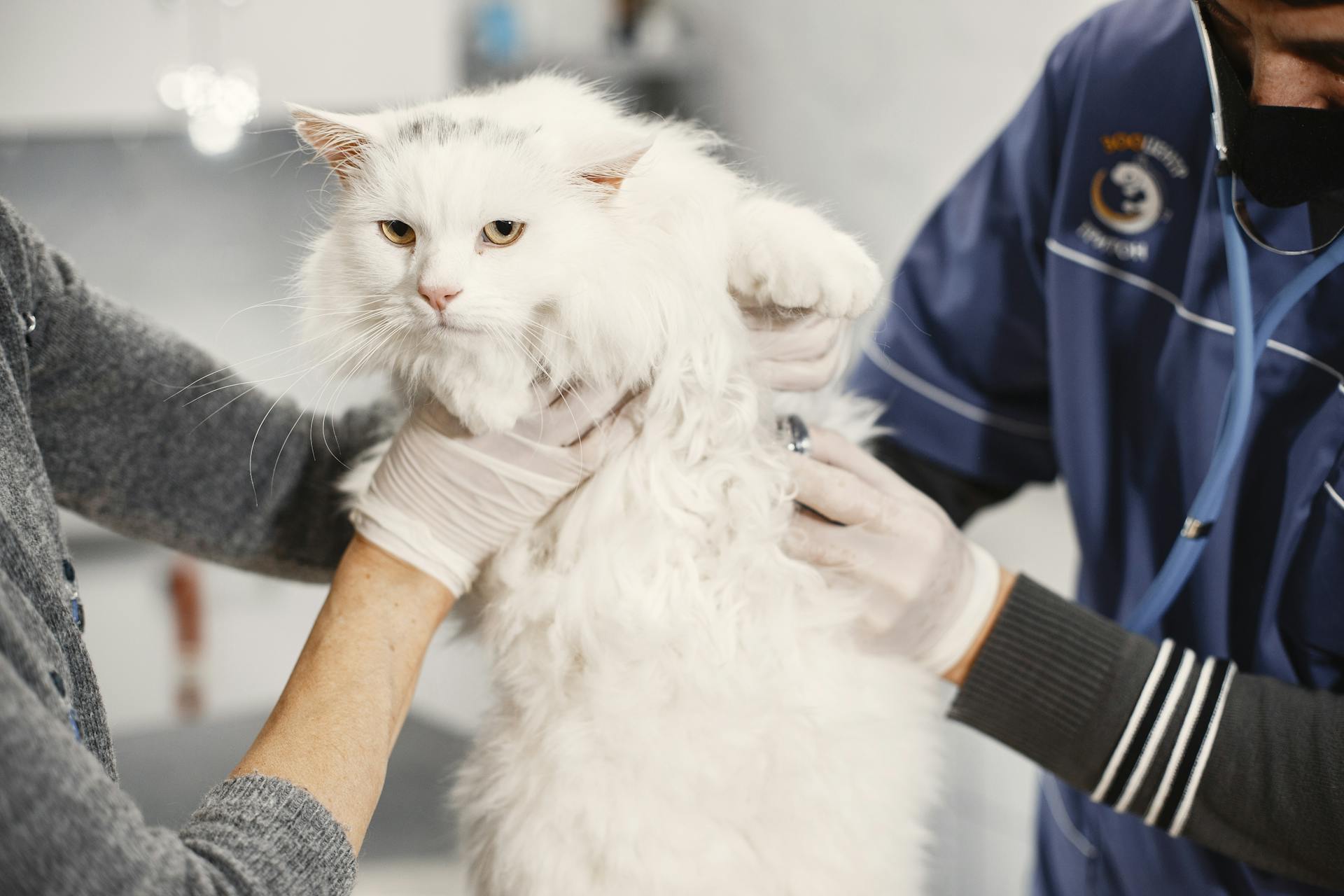
A veterinarian may suspect hepatic lipidosis in a cat that hasn't been eating much and has recently lost a lot of weight.
Blood tests often reveal high levels of bilirubin and very high levels of alkaline phosphatase, a type of liver enzyme.
An abdominal ultrasound can show that the whole liver looks abnormal, rather than just a specific part.
In some cases, a veterinarian may use a needle to remove a small sample of liver cells, which can be examined for fat accumulation.
You might enjoy: Blood Parasites in Cats
If the liver cells are filled with fat, the diagnosis of hepatic lipidosis is confirmed.
A liver biopsy may be necessary to rule out other underlying diseases, such as cholangitis/cholangiohepatitis, hepatic lymphoma, or inflammatory bowel disease.
Cytology of a US-guided hepatic aspirate can also help confirm the diagnosis, with hepatocytes displaying profound lipid vacuolar distention involving more than 80% of aspirated hepatocytes.
Treatment and Management
The goal of treatment for feline hepatic lipidosis is to correct fluid, electrolyte, and metabolic aberrations and initiate food intake.
Management of HL requires a thorough treatment approach that considers many factors, including the cat's overall health and the severity of the condition.
A feeding tube is usually the best option for getting food into a cat with hepatic lipidosis quickly, as force-feeding can backfire and lead to an aversion to eating.
Nasogastric tubes can work for a few days, but many cats require a month or two of tube-feeding. An esophagostomy tube is a better long-term solution, placed through an incision in the cat's neck.
Intriguing read: Why Is My Cat Eating My Dogs Food
To prevent refeeding syndrome, a potentially fatal shift of fluids and electrolytes within the body, cats need to be gradually reintroduced to food. A common schedule looks like this:
- Day 1 – feed 25% of the cat’s caloric needs divided into 4-6 meals
- Day 2 – feed 50% of the cat’s caloric needs divided into 4-6 meals
- Day 3 – feed 75% of the cat’s caloric needs divided into 4-6 meals
- Day 4 – feed 100% of the cat’s caloric needs divided into 4-6 meals
Cats with hepatic lipidosis may also require treatment with B vitamins, vitamin K, and vitamin E. Fluid therapy with added magnesium, phosphorus, and potassium may be necessary as well.
Veterinarians often prescribe nutritional supplements and medications like S-adenosylmethionine, L-carnitine, milk thistle, silybin, and ursodiol to support the liver.
Causes and Prognosis
Hepatic lipidosis, or fatty liver disease, in cats can be caused by a variety of factors, including inflammatory bowel disease, cholangiohepatitis, cancer, pancreatitis, and environmental changes that disrupt a cat's normal routine.
These underlying causes can lead to poor appetite, weight loss, and vomiting, making it difficult for cats to eat and absorb the nutrients they need. Cats that get lost or trapped without food can also starve and develop hepatic lipidosis.
Some common causes of high liver enzymes in cats include hepatic lipidosis, cholangiohepatitis, cancer, and pancreatitis. These conditions can damage liver cells and lead to high liver enzymes on a bloodwork panel.
Here are some common causes of hepatic lipidosis:
- Inflammatory bowel disease (IBD)
- Cholangiohepatitis and other types of liver disease
- Cancer
- Pancreatitis
- Environmental changes
A cat's prognosis for recovery from hepatic lipidosis is generally good if they receive prompt and proper care. Decline in total bilirubin by 50% within the first 7-10 days and declining serum beta-hydroxybutyrate concentrations are positive predictors of survival.
Causes of Fatty Liver Disease
Fatty liver disease in cats is a serious condition that can be caused by a variety of factors. Anything that stops a cat from eating can lead to hepatic lipidosis.
Inflammatory bowel disease (IBD) can cause a cat to stop eating, leading to fatty liver disease. Cats with IBD may vomit, have diarrhea, and lose weight.
Liver disease, including cholangiohepatitis, can also cause a cat to stop eating, leading to fatty liver disease. Poor appetite, weight loss, and vomiting are common symptoms.
Cancer can trigger a cat to stop eating, leading to fatty liver disease. Cancer anywhere in the body can cause a cat to lose its appetite and lose weight.
Curious to learn more? Check out: How to Stop Cat Zoomies at Night
Pancreatitis is another condition that can cause a cat to stop eating, leading to fatty liver disease. Inflammation of the pancreas can be painful and lead to decreased appetite, nausea, vomiting, and diarrhea.
Environmental changes, such as moving to a new home or adding a new family member, can disrupt a cat's routine and cause it to stop eating, leading to fatty liver disease. Cats that get lost or trapped without food may also develop hepatic lipidosis.
Some of the common causes of fatty liver disease in cats include:
- Inflammatory bowel disease (IBD)
- Cholangiohepatitis and other types of liver disease
- Cancer
- Pancreatitis
- Environmental changes
Prognosis
Hepatic lipidosis is a serious condition that requires prompt attention. Cats with hepatic lipidosis either recover within 14-21 days or sadly, they don't make it.
A decline in total bilirubin by 50% within the first 7-10 days is a positive sign that the cat is on the right track. This is a key indicator of survival.
Monitoring liver enzymes doesn't provide any useful information for predicting recovery. It's not a reliable tool for determining the cat's chances.
Cats that receive customized critical care, including nutritional support and metabolic supplements, have a much better chance of survival. In one study, the survival rate for severely affected cats was around 75-80%.
If hepatic lipidosis is caused by another underlying disease, the prognosis is more complicated. In these cases, the survival rate may be lower.
Early treatment and identification of the underlying cause are crucial for a good outcome. Cats that receive supportive care and manage their underlying condition have the best chance of recovery.
Imaging and Testing
Imaging plays a crucial role in diagnosing feline hepatic lipidosis. Thoracic radiographs may reveal abnormalities indicating a primary disease process, such as a prominent sternal lymph node that can reflect inflammatory disease in the abdomen or lymphoma.
Abdominal radiographs typically show hepatomegaly, but may also provide clues to underlying pathologies. Ultrasound examination is a valuable tool for assessing the entire abdomen, including the biliary tree, gallbladder, pancreas, intestinal wall thickness, and lymph nodes.
A thorough ultrasound examination should inspect the entire abdomen, paying close attention to the following areas: the biliary tree, gallbladder, sphincter of Oddi, pancreas, intestinal wall thickness, hepatic, peripancreatic, and mesenteric lymph nodes, kidneys, and urinary bladder.
Physical examination findings, such as jaundice and hepatomegaly, are also important indicators of feline hepatic lipidosis. A complete history of the cat's symptoms and health is also essential for a proper diagnosis.
General Information
Feline hepatic lipidosis, also known as fatty liver disease, is a serious condition that affects cats worldwide.
The pathophysiology of FHL is complex and not yet fully understood, but it's believed to be related to an imbalance between the influx of fatty acids into the liver and the liver's ability to process them.
Cats with FHL often present with anamnestic, clinical, and clinicopathologic findings, which are essential for making a diagnosis.
Diagnostic imaging of the liver, cytology, or histological examination of liver biopsies are also crucial for confirming the diagnosis.
Fluid therapy, electrolyte correction, and early nutrition are essential components of the therapy for FHL.
Cats with FHL often experience changes in their biochemical profile, including increased triglycerides and altered liver enzyme levels.
A study of 93 cats with different hepatobiliary diseases found significant changes in their biochemical profiles, highlighting the importance of monitoring liver function in cats with FHL.
The prognosis for cats with FHL depends on the severity of the disease and the timeliness and effectiveness of treatment.
Here are some key statistics on feline hepatic lipidosis:
Frequently Asked Questions
How long does it take for a cat to recover from hepatic lipidosis?
Recovery from hepatic lipidosis typically takes 6-7 weeks, during which a feeding method like a feeding tube may be necessary to provide consistent nutritional support.
Featured Images: pexels.com