If you're a cat owner, you're probably familiar with the occasional scratching or biting that can happen when your cat is feeling under the weather. Fleas, ticks, and mosquitoes can all transmit diseases to your cat, but did you know that there are also parasites that live inside your cat's blood?
Toxoplasmosis is a parasite that can infect your cat's blood, and it's caused by a tiny protozoan called Toxoplasma gondii. This parasite can be found in cat feces, contaminated food and water, and even in the tissues of infected animals.
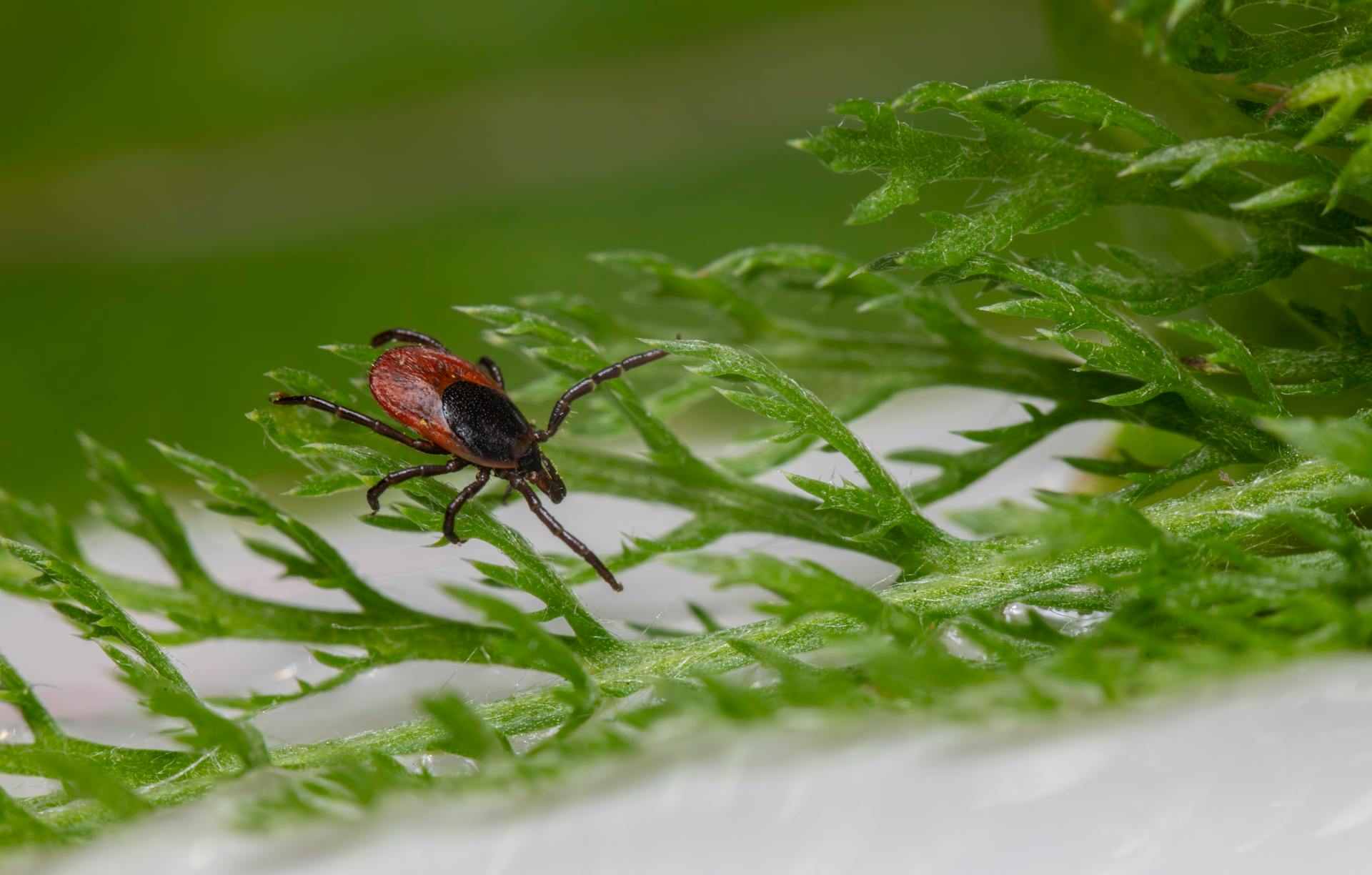
Feline babesiosis is another blood parasite that affects cats, caused by a parasite called Babesia felis. This parasite is transmitted through the bite of an infected tick, and it can cause symptoms like anemia, jaundice, and even kidney failure in severe cases.
Some cats may not show any symptoms at all, but others can experience a range of symptoms including fever, lethargy, and loss of appetite.
Recommended read: What Is the Cat's Name in Cinderella?
Symptoms and Clinical Signs
Blood parasites in cats can be a serious issue, and it's essential to recognize the symptoms and clinical signs to get your cat the help it needs.
Lethargy is one of the most common symptoms of blood parasites in cats, often accompanied by a lack of appetite.
Depression and anorexia are also common presenting problems in cats infected with blood parasites.
Fever and dehydration are frequent findings on physical examination, with body temperature often increasing to as high as 106°F (41°C).
Pale gums, or pallor, can be a sign of anemia, a common symptom of blood parasites in cats.
Splenomegaly, or an enlarged spleen, can be evident in some cats, as can lymphadenopathy, or enlarged lymph nodes.
Here are some common clinical signs associated with blood parasites in cats:
- Lethargy
- Depression
- Anorexia
- Fever
- Dehydration
- Pale gums
- Splenomegaly
- Lymphadenopathy
Jaundice, or yellow gums or eyes, can also occur, although it's less common.
As the disease progresses, cats may become hypothermic, develop seizures, or lapse into a coma.
Causes and Modes of Transmission
Cats can develop blood infections after being bitten by parasites like fleas, ticks, or flies. Cats who spend time outdoors are more likely to get these infections.
Male cats are more prone to blood infections than females, as they're more likely to escape outdoors and encounter fleas and ticks.
Cats without monthly parasitic protection and those with weakened immune systems are more at risk for bloodborne infections.
Related reading: Types of Cat Eye Infections
Babesiosis
Babesiosis is a disease caused by protozoan parasites of the genus Babesia, which infect red blood cells.
Ticks transmit Babesiosis, and the disease affects a wide range of domestic and wild animals, including cats and humans.
Babesia felis is responsible for severe illness in domestic cats, mainly in southern Africa, and other Babesia species cause intermittent cases in other areas.
The disease is unusual because it doesn't respond to the usual medicines used to destroy Babesia parasites, but alternative medications are available from your veterinarian.
Supportive treatment for Babesiosis includes the use of anti-inflammatory drugs, antioxidants, and corticosteroids, and blood transfusions may be life-saving in very anemic animals.
Preventing exposure to ticks by using tick control products and removing any ticks promptly will help keep your cat from being infected with this parasite.
Summary of Haemoplasma Transmission Routes
Haemoplasma infections in cats have been a topic of interest for many veterinarians and pet owners. The natural mode of transmission of feline haemoplasma infections in the field has not yet been confirmed.
Studies have failed to convincingly show that vectors, including fleas, are involved in the transmission of feline haemoplasmas. A recent study has shown that previous high haemoplasma prevalence rates in fleas were likely false positive results.
Haemoplasma transmission can occur via contaminated blood transfusions, and fighting may also transmit infection, particularly in cats with high levels of bacteraemia. Vertical transmission may also occur, but this has not been confirmed in cats.
It's essential to note that haemoplasma infections can be severe and even life-threatening, especially in healthy adult cats.
Surra
Surra is a serious disease that can affect horses, cats, and other domestic animals, and it's usually transmitted by biting flies found in various parts of the world, including North Africa, the Middle East, Asia, and Central and South America.

The disease is mostly deadly in camels, dogs, and horses, but it can also be transmitted to other species through infection in cats.
Surra's development and effects are similar to those of tsetse-transmitted trypanosomiasis, which means the signs, diagnosis, and treatment of the disease are also similar.
Outdoor cats or cats that live with other pets that go outdoors are at a greater risk of becoming infected with Surra, as they are more likely to come into contact with ticks that can spread the disease.
Discover more: Pets Similar to Cats
Causes and Modes of Transmission
Cats most commonly develop blood infections after being bitten by a parasite, such as a flea, tick, or fly.
Male cats are more likely to get these infections compared to females, likely due to their increased likelihood of escaping outdoors and encountering parasites.
Cats who are not on monthly parasitic protection and those with a weakened immune system are more at risk for bloodborne infections.
The Lone Star tick is the primary vector for transmitting Cytauxzoonosis to domestic cats, with the American dog tick being a less effective vector.
Haemoplasma transmission routes have not been fully confirmed, but studies suggest that vectors, including fleas, may not be involved in the transmission of feline haemoplasmas.
Contaminated blood transfusions and fighting can transmit haemoplasma infections, particularly in cats with high levels of bacteremia.
Multiple modes of transmission may exist for feline haemoplasma species, including indirect spread via vectors and direct spread via predation or fighting.
Infected cats can be diagnosed by identifying the parasite within blood samples or through laboratory tests.
The condition may be difficult to treat, but several drugs have successfully been used to treat the parasite in cats.
Outdoor cats or cats that live in homes with other pets that go outdoors are at a greater risk of becoming infected with Cytauxzoonosis.
Cats living near heavily wooded, low-density residential areas, particularly close to natural or unmanaged habitats where both ticks and bobcats may be in close proximity, are at highest risk of infection.
Broaden your view: Cats Back Legs Not Working
Diagnosis and Detection
A veterinarian will start by performing a head-to-toe check of the cat to find any abnormalities such as pale gums, dehydration, or visible parasites.
Pet parents should share the cat's thorough medical history to help with a diagnosis, including any medications the cat is taking, when symptoms started, if the cat is indoor or outdoor, and if the cat is taking any parasite prevention.
A complete blood count is often the first test performed to diagnose a parasitic blood infection, which finds changes to red blood cells, white blood cells, and platelets.
Other testing may include serum chemistry, PCR/serology, and SNAP 4Dx, which can diagnose a blood infection through specific testing.
A blood smear can be viewed under a microscope to identify blood parasites, and examination of a blood smear may reveal C. felis organisms within red blood cells or certain white blood cells.
Finding a tick on your cat may help with the diagnosis of cytauxzoonosis, but in many cases, a cat will have groomed the tick away before showing signs of illness.
For more insights, see: Nematode Infection in Dogs
Blood tests are helpful in diagnosing this disease, including a complete blood count, which shows decreased numbers of red blood cells, white blood cells, and platelets.
A diagnostic PCR test that can detect the DNA of the parasite is also available, and can be used in suspect cases where the parasite is not observed.
The most common abnormalities on the CBC in animals with cytauxzoonosis include leukopenia with toxic neutrophils and thrombocytopenia with a normocytic, normochromic anemia seen at later stages.
The following tests can be used to diagnose cytauxzoonosis:
- Leukopenia with toxic neutrophils and thrombocytopenia with a normocytic, normochromic anemia seen at later stages
- Microscopic observation of piroplasms or schizonts in blood
- Fine-needle aspiration of lymph node, spleen, or liver to identify schizonts
Treatment and Recovery
Treatment for parasitic blood infections in cats typically involves antibiotics, antiparasitic medications, and supportive care.
Oral doxycycline is often used to treat mycoplasma infections, but it can cause narrowing of the esophagus, so the dose must be followed by a syringe of water.
Supportive care may include fluids given by vein or underneath the skin, anti-inflammatories, steroids, and oxygen therapy depending on the needs of the cat.
In severe cases, hospitalization and supportive care will be needed, and a blood transfusion may be necessary for recovery.
Treatment can cure the acute infection, but in some cases, it may leave the cat a chronic carrier of the bacteria.
To help with recovery, pet parents should offer a private, quiet space for cats getting treatment.
Some cats like going to their carrier for quiet time, so keeping a cat carrier opened and easily accessible can be helpful.
Cats that are severely anemic may require a blood transfusion for recovery.
Recovery can be slow, taking as long as 5-7 days, and some cats may remain persistently infected with piroplasms.
A combination of atovaquone and azithromycin is recommended for treating cytauxzoonosis, a type of blood infection that can be fatal.
Supportive care with IV fluids and nutritional support is also necessary.
Recovery from cytauxzoonosis can take several weeks, and some cats may require ongoing care to manage symptoms.
Survival rates for cats treated with atovaquone and azithromycin combination therapy and supportive care are around 64%.
A cat's prognosis can be predicted by measuring the albumin to globulin ratio, which has a sensitivity of 92% and specificity of 88% at a cut-off point of 0.46.
If infection is not cleared, cats may have subsequent reactivation of infection with recurrence of clinical disease.
The survival rate of cats with acute cytauxzoonosis treated with atovaquone and azithromycin combination therapy and supportive care is around 64%.
The prognosis for cats with cytauxzoonosis can be improved by identifying the C felis cytochrome b subtype (cytb1), which is associated with increased survival.
Treatment for cytauxzoonosis typically involves hospitalization for supportive treatments such as intravenous fluids, blood transfusions, and drug injections.
Recovery may take up to a week of hospitalization, and some cats may require placement of a feeding tube for nutritional support.
Specific drug protocols include anti-protozoal drugs such as imidocarb or a combination of atovaquone and azithromycin.
Here is a summary of the typical treatment and recovery process for cats with parasitic blood infections:
Prevention and Management
Keeping your cat indoors is a simple and effective way to lower the risk of blood infections caused by parasites like fleas and ticks. This is especially true for haemoplasma infections, where outdoor status has been identified as a risk factor.
Regular flea and tick prevention is also crucial, with products like Bravecto and Revolution available by prescription through your veterinarian. These products can help prevent infections even if your cat does spend time outdoors.
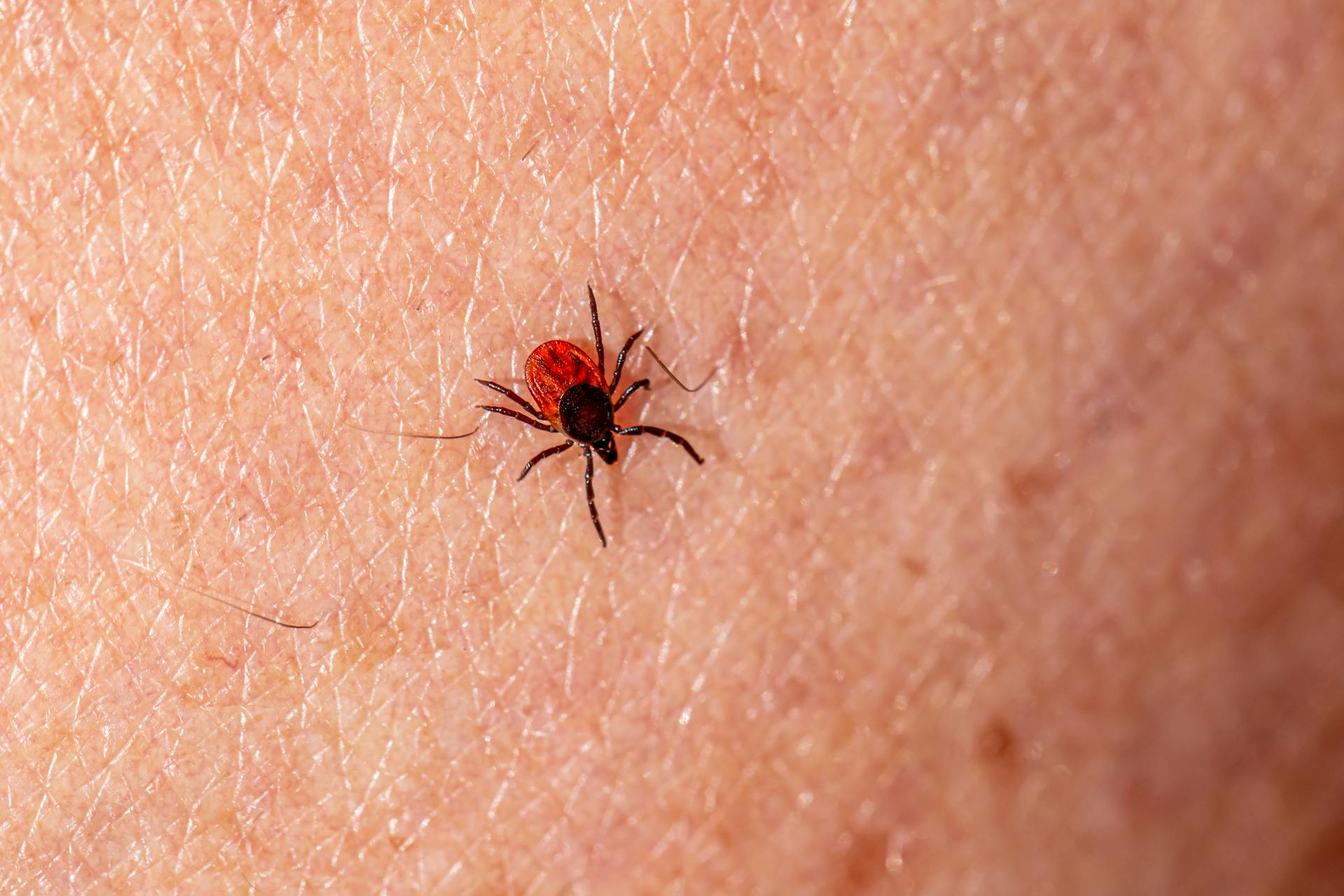
If you do find a tick on your cat, remove it as soon as possible by grasping it with fine tweezers near the skin and pulling it straight out.
Prevention
Keeping your cat indoors is a simple yet effective way to prevent blood infections caused by fleas, ticks, and other insects. This is especially true for haemoplasma infections, which have been linked to outdoor status.
To prevent tick exposure, use an effective, veterinarian-recommended tick preventive, especially if your cat spends time outdoors. For example, a tick-repellent collar containing imidacloprid 10%/flumethrin 4.5% has shown promising results in preventing A americanum ticks from attaching and transmitting C felis.
Routine use of a tick preventive is recommended to prevent cytauxzoonosis. This is especially important if your cat spends time in areas likely to be infested with ticks, such as densely wooded habitats.
If you do find a tick on your cat, remove it as soon as possible by grasping it with fine tweezers near your cat's skin and pulling it straight out. It's also a good idea to wear disposable gloves while removing the tick to prevent infection.
Preventing blood infections also involves screening blood donors for haemoplasma infection by PCR to prevent inadvertent transmission by blood transfusion. This is especially important for cats that are deemed to be of low risk for infections, as 3.7% of cats in one study were found to be infected with haemoplasmas.
Aberrant and Natural Hosts
Domestic cats are considered aberrant hosts of Cytauxzoonosis, meaning they can get infected but it's often fatal. However, there are reports of domestic cats surviving the infection.
The natural host of Cytauxzoonosis is the bobcat, which typically experiences subclinical infection followed by a chronic parasitemia.

Bobcats and domestic cats that survive infection can act as reservoir hosts, carrying the parasite without showing symptoms.
In addition to bobcats and domestic cats, several other wild felids can get infected with Cytauxzoonosis, including cougars, panthers, and tigers in the USA.
Other countries have reported infections in lions, jaguars, pumas, ocelots, Iberian lynx, meerkats, European wild cats, and an Asiatic wildcat.
Research has shown that bobcats and domestic cats are the only animals confirmed to be susceptible to Cytauxzoonosis among 91 wildlife, laboratory, and domestic farm animals tested.
Epidemiology and Prevalence
Feline haemoplasma infections have been identified in prevalence studies performed worldwide.
The prevalence of 'Ca. M. haemominutum' is more significant, ranging from 4.4 to 46.7% of infected cats, compared to M. haemofelis and 'Ca. M. turicensis'.
Studies have shown that geographical variation plays a role in the reported prevalence of feline haemoplasma infections.
In Europe, prevalence studies have been conducted in countries such as Cyprus, Denmark, Germany, Ireland, Italy, Latvia, Lithuania, Malta, Portugal, Romania, Russia, Serbia, Spain, Switzerland, Turkey, and the UK.
An increased prevalence of haemoplasma infections has been reported in stray, compared to owned cats.
Haemoplasma infections have also been identified in various wild felid species, including European wildcats.
Zoonotic Risk and Outlook
Haemoplasma infections in cats, including those with novel species, have been described in humans. This raises the possibility of zoonotic infections, but the risk is considered low.
The risk of human infection with feline haemoplasma species is not significant. However, veterinarians should handle blood and tissues from cats suspected to be haemoplasma-infected with caution.
Cats that live in homes with other pets that go outdoors or in densely wooded areas are at a greater risk of becoming infected. The range of ticks capable of spreading this disease has been expanding due to climate change.
Zoonotic Risk
Haemoplasma infections, like those caused by M. haemofelis, can be transmitted to humans from animals, raising the possibility of zoonotic infections.
Most veterinarians believe there is a low risk of human infection with feline haemoplasma species, but it's still essential to handle blood and tissues from infected cats with caution.
Outdoor cats are more likely to come into contact with ticks, which can spread the disease, and living in homes with other pets that go outdoors also increases the risk.
Feline haemoplasma species are typically found in areas with dense woodlands or naturalized habitats, where bobcats and ticks are more likely to thrive.
In the United States, the disease is currently found in central, south-central, south-eastern, and mid-Atlantic regions, but its range is expanding due to climate change and local weather patterns.
Ticks are most active between spring and fall, which is when most infections occur, so it's essential to take precautions during these months if you have an outdoor cat.
What Is the Outlook?
The outlook for cats infected with C. felis is generally positive, with a 60% survival rate if diagnosed and treated early.
Cats that survive the infection will typically make a full recovery within a few weeks, but they may remain persistently infected and act as a reservoir for the disease.
This means that recovered cats should be kept indoors to prevent them from infecting other cats.
Fortunately, C. felis infection is limited to the cat family and poses no risk to humans, dogs, or other species of animals.
Key Information and Summary
Cytauxzoonosis is a life-threatening infectious disease of domestic cats in the southcentral and southeastern United States. It's caused by infection with Cytauxzoon felis, which is transmitted by the lone star tick, Amblyomma americanum.
Infected cats often present with a range of symptoms, including depression, lethargy, anorexia, and fever as high as 106°F (41°C). They may also exhibit icterus, lymphadenopathy, hepatosplenomegaly, and dyspnea.
Diagnosis of cytauxzoonosis is typically made by identifying Cytauxzoon piroplasms in a peripheral blood smear or schizonts in cytology of infected tissues, and by PCR.
Recommended treatment for cytauxzoonosis includes a combination of atovaquone and azithromycin, heparin therapy, and supportive care with minimal stress/handling.
The following acaracidal products have shown promise in preventing transmission of C. felis:
Featured Images: pexels.com