Equine hoof canker is a painful and potentially debilitating condition that affects horses' hooves. It's caused by a fungal infection that thrives in moist environments.
The fungal infection that causes equine hoof canker is typically found in the moist, warm areas of the hoof, such as the frog and the sulcus. This type of environment allows the fungus to grow and multiply.
Symptoms of equine hoof canker can include discoloration, sensitivity, and pain in the affected area. In severe cases, the hoof can become severely damaged and infected, leading to laminitis or even sepsis.
Treatment for equine hoof canker usually involves a combination of antifungal medications, proper trimming and shoeing, and good hoof care practices.
Causes and Risk Factors
The exact cause of canker in horses is unknown, but research suggests that certain bacteria and a virus may be involved.
Horses living on muddy or moist pastures year round are at a higher risk of developing canker. This is because wet conditions can create an ideal environment for bacteria to thrive.
Draft breeds are also more susceptible to canker, possibly due to their larger size or specific characteristics.
Horses living in wet, unhygienic conditions, such as dirty bedding in stalls, are also at a higher risk.
Here are some common risk factors for canker in horses:
- Horses living on muddy or moist pastures year round
- Horses living in wet, unhygienic conditions
- Draft breeds
- Horses with autoimmune disorders
Causes of Horse Canker
The exact cause of canker in horses is unknown, but researchers have identified some possible contributing factors.
Some evidence suggests that a particular group of bacteria called spirochetes and bovine papillomavirus may be involved in the development of canker.
Climate may also play a role in the possible cause of canker, as it's more commonly identified in warm, wet, and tropical environments.
Growth of canker often begins on the sole of the horse's hoof, particularly in the sulci, which are the grooves on either side of the frog.
These growths can be gray or white in color, soft and moist, and produce a foul-smelling discharge.
Risk Factors
Horses living on muddy or moist pastures year round are more likely to develop canker. This is because the constant wet conditions create an ideal environment for the growth of canker.
Draft breeds are also at a higher risk of developing canker. This is likely due to their larger hooves, which can be more prone to moisture and infection.
Horses with autoimmune disorders are more susceptible to canker. This is because their compromised immune systems make it harder for them to fight off the infection.
Horses living in wet, tropical environments, and throughout the southeastern US have an increased risk to infection. This is likely due to the warm and humid climate, which can foster the growth of canker.
Horses living in wet, unhygienic conditions such as dirty bedding in stalls or poor hoof care can also develop canker. This is because the poor living conditions create an environment that's conducive to the growth of canker.
Here are some common risk factors for canker:
- Muddy or moist pastures
- Draft breeds
- Horses with autoimmune disorders
- Wet, tropical environments
- Unhygienic living conditions
Table 2
Table 2 provides a detailed breakdown of the equine hoof biopsy samples. The samples were taken from 10 horses, with ages ranging from 5 to 20 years.
The majority of the horses sampled were female, with 8 out of 10 being females. The most common breed represented in the samples was Czech warmblood, with 7 out of 10 horses being of this breed.
Cankers were the most common diagnosis, affecting 8 out of 10 horses. The canker affected the frog of the hoof in most cases, with 7 out of 10 horses having canker on the right or left frog.
Here's a breakdown of the locations where the canker affected the horses:
Interestingly, some of the horses had canker on the heel of the hoof, with horses 4.1 and 4.2 having canker on the right and left heel, respectively.
Symptoms and Diagnosis
Symptoms of equine hoof canker can be mistaken for thrush, but studies show that canker gets worse when thrush treatments are applied. This delay in treatment can increase the risk of canker recurrence by up to 13 times.
Explore further: Thrush Equine Hoof
Canker is most common in the hind feet, but front feet can also be affected. A foul odor to the hoof is a common symptom, along with a ragged appearance of the frog with numerous fronds on the surface.
Symptoms may also include a soft, white, cauliflower-like material on or near the frog, a cottage cheese-like exudate over the affected tissues, and pain on palpation of the affected tissues. In severe cases, the canker tissue may spread to other locations on the hoof, including the sole, bars, and hoof wall.
A veterinarian can typically diagnose canker based on an examination of the hoof and the appearance of the proliferating tissues near the frog. In some cases, a biopsy of the tissue may be submitted to a diagnostic laboratory to confirm the diagnosis.
Symptoms
Symptoms of canker in horses can be quite distinctive. Canker is most common in the hind feet, although front feet can also be affected.

A foul odor to the hoof is a common symptom of canker. This smell can be quite strong and is often one of the first signs that something is wrong.
The frog, a sensitive area on the underside of the hoof, may appear ragged with numerous fronds on the surface. This is a sign that the canker is progressing.
Soft, white, cauliflower-like material may appear on or near the frog. This is a characteristic symptom of canker.
A cottage cheese-like exudate may cover the affected tissues. This can be a sign that the canker is spreading.
Pain on palpation of the affected tissues is a common symptom of canker. This means that the horse may show signs of pain when the affected area is touched.
Lameness is a symptom of canker that can be quite debilitating for the horse. It's essential to address the issue promptly to prevent further complications.
In severe cases, the canker tissue may spread to other locations on the hoof, including the sole, bars, and hoof wall. Some horses may have multiple affected hooves.
Take a look at this: Horse Hoof Care Products
Diagnosis

Diagnosis is a crucial step in treating canker. A veterinarian can typically diagnose canker based on an examination of the hoof and the appearance of the proliferating tissues near the frog.
A veterinarian may also take a biopsy of the tissue to confirm the diagnosis. This involves submitting the tissue to a diagnostic laboratory for examination.
Under the microscope, a diagnostician can see a thin layer of defective epidermis, the tissue producing the keratin layer of the hoof. This helps confirm the diagnosis of canker.
Intriguing read: How to Become an Equine Veterinarian
Treatment and Recovery
Treatment of equine hoof canker involves several steps to promote healing and prevent recurrence. Debridement, or removal of affected tissue, is a crucial part of the process to prevent further growth and development.
Topical treatments are commonly used to resolve canker in horses, typically including an astringent and antibacterial product. These products help dry out the affected area and combat bacterial growth.
Common antibiotics used in topical treatments include chloramphenicol, metronidazole, ketoconazole and rifampin, lincomycin, and oxytetracycline and metronidazole. Some veterinarians may also prescribe systemic antibiotics to be given orally or by injection.
Following veterinary directions is essential, as dressings need to be regularly changed to promote healing. This helps prevent the growth of bacteria and promotes a clean environment for the affected area to heal.
Horses may require special shoeing to protect the area as it heals, and keeping them in a warm and dry environment encourages recovery. Severe infections require antibiotics to help clear up the infection.
In most cases, horses can recover from canker infections within two weeks with aggressive and timely intervention. However, treatment can take several months in some cases, and recurrence is possible after healing, but rare.
Here is a list of common antibiotics used in treating canker:
- Chloramphenicol (generic)
- Metronidazole (generic)
- Ketoconazole and rifampin (generic)
- Lincomycin (generic), Tricide, Gentocin
- Oxytetracycline and metronidazole (generic)
Prevention and Prognosis
Prevention is key when it comes to equine hoof canker. Regularly cleaning stalls with fresh, dry bedding as frequently as possible can help prevent the condition.
Providing dry "hard standing" areas in pastures and paddocks encourages horses to stay out of muddy conditions, which can reduce the risk of canker. Turning out into an arena or other indoor area is also a good alternative to muddy or wet pastures and paddocks.
Drying hooves thoroughly when bringing horses indoors after turnout can also help prevent canker. Regular and proper hoof upkeep increases the chances of early identification.
Stabling horses in warm, dry environments may reduce susceptibility to canker. Cankers are not known to be contagious, so there's no need to worry about passing it on to other horses.
To identify canker lesions early, regular inspections of horses' hooves are crucial. This can lead to more rapid treatment and a lower recurrence rate, as well as a better prognosis for the horse.
Prevention
Prevention is key when it comes to canker in horses. Regularly cleaning stalls with fresh, dry bedding can help prevent canker.
Providing dry "hard standing" areas in pastures and paddocks can encourage horses to stay out of muddy conditions. This can be especially helpful during periods of heavy rainfall.
Turning out into an arena or other indoor area can be a great alternative to muddy or wet pastures and paddocks. I've seen horses thrive in these types of environments.
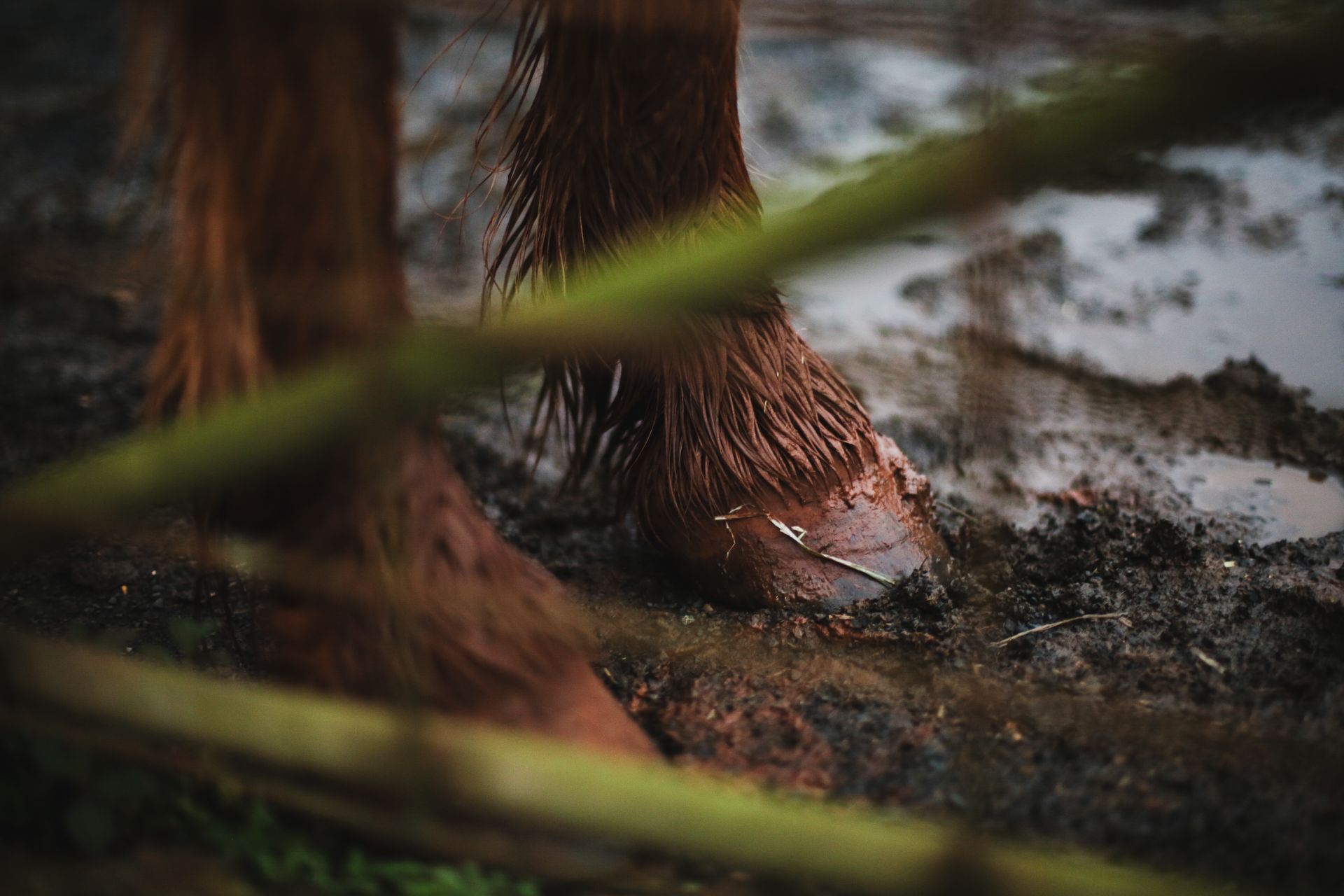
Drying hooves thoroughly when bringing horses indoors after turnout is also important. Excessive moisture can contribute to the development of canker.
Routine farrier care, such as removing excessive sole growth, can help prevent canker. This can also help identify potential issues early on.
Regularly inspecting horses' hooves can help identify canker lesions early, leading to more rapid treatment. Cases caught in the early stages of development have a lower recurrence rate and a better prognosis.
Stabling horses in warm, dry environments may reduce susceptibility to canker. This can be especially beneficial for horses that live in areas with high humidity.
Cankers are not known to be contagious, so you don't have to worry about spreading the issue to other horses.
Prognosis
Recovery from canker can take several weeks with routine bandaging and topical treatments.
The key to a successful recovery is early treatment.
Horses that are treated early in the development of canker have a good chance of making a full recovery.
However, canker cases that involve the sole, bars, and hoof wall, or horses with multiple hooves affected, have a poorer prognosis.
Only about 75% of severely affected horses have an acceptable long-term outcome.
Research and Conclusion
The detection of treponemes in equine hoof canker samples was accelerated by adjusting the annealing temperature based on the melting temperature of primers. This allowed for a more efficient PCR reaction, which was suitable for detecting T. pedis and T. brennaborense.
T. pedis was the most commonly detected species in horses with equine hoof canker, while T. medium ssp. bovis and T. pedis were frequent in cattle with bovine digital dermatitis. The presence of treponemal DNA was confirmed in both stud farms, indicating a potential source of the infection.
The study's findings suggest that DNA isolation with DNAzol Direct, PCR, Sanger sequencing, and genotyping are suitable methods for identifying the etiological agents of equine hoof canker and bovine digital dermatitis.
Results
The results of the study were quite interesting. A specific PCR protocol was developed to detect treponemes in samples, and it was found to be suitable for both T. pedis and T. brennaborense.
The annealing temperature of the PCR protocol was adjusted based on the melting temperature of primers, which was a key factor in accelerating the detection of treponemes.
The presence of treponemal DNA was confirmed in both stud farms, with T. pedis detected in 8 out of 13 samples, and T. brennaborense and T. denticola detected in 2 samples each.
Interestingly, T. pedis was found in horses both with and without hoof canker, which suggests that it may be more widespread than previously thought.
All samples were negative for the presence of bovine papillomavirus (BPV 1, 2), and cultivation for dermatophytes on Sabouraud dextrose agar was also negative in all samples.
The mycological analysis revealed a mix of fungal species, including Candida glabrata, Trichosporon spp., Aspergillus terreus, and Penicillium spp., which suggests that there may be a range of underlying causes for hoof canker.
Conclusions
The research on equine hoof canker and bovine digital dermatitis has led to some significant conclusions.
Several methods, including DNA isolation with DNAzol Direct, PCR, Sanger sequencing, and genotyping, have been found suitable for identifying the causes of these diseases.
The study has detected several species of Treponema, with T. pedis being the most commonly found in horses.
Treponema medium ssp. bovis and T. pedis were frequent in cattle, highlighting the importance of species-specific identification.
The analysis of other types of samples, such as fecal samples from the rectum or skin layers, could potentially reveal more about the causes of these diseases.
Future research could focus on these alternative sample types to gain a deeper understanding of the underlying causes.
Equine Hoof Canker
Canker in horses is a rare but painful condition that requires prompt attention.
The exact cause of canker is unknown, but some research suggests that bacteria called spirochetes and bovine papillomavirus may be involved.
Canker infections can spread from the hoof surface into softer tissues, causing severe damage.
In severe cases, this can lead to portions of the hoof sloughing off entirely, which is a serious and potentially life-threatening situation.
Emergency medical attention is required if a horse develops growths on their feet, as this can be a sign of a canker infection.
Promoting Responsible Hoofcare
Canker is a painful condition that can spread into softer tissues as the infection progresses. This can lead to further complications if left untreated.
Diagnosing canker involves a physical examination, and diagnostic imaging may be necessary to determine the extent of any soft tissue infection. Your veterinarian will be able to assess the severity of the condition and recommend the best course of treatment.
Treatment typically involves removing the growths and applying an antiseptic dressing, and in some cases, antibiotics may be prescribed. It's essential to follow your veterinarian's instructions carefully to ensure the best possible outcome.
Prognosis is fair to good once the condition has completely healed. However, if the infection is not completely removed, growths may continue to recur, making aggressive and prompt treatment key to successful recovery.
To promote responsible hoofcare, it's crucial to work closely with your veterinarian to prevent the spread of canker and other hoof-related issues. Regular check-ups and prompt treatment can help prevent complications and ensure your horse's hooves remain healthy.
You might like: Equine Veterinarian
Frequently Asked Questions
What is the difference between thrush and canker in horses?
Thrush and canker in horses can have similar symptoms, but canker has a better prognosis and is easier to treat if caught early, unlike thrush which can worsen if misdiagnosed
Featured Images: pexels.com