
To become an emergency veterinary technician, you'll need to start by earning an associate's degree in veterinary technology from an accredited program. This typically takes about two years to complete.
You'll need to gain hands-on experience by completing an internship or externship, which can last from a few months to a year. This is a great way to build your skills and get a feel for what it's like to work in an emergency veterinary setting.
To be eligible for certification, you'll need to pass the Veterinary Technician National Examination (VTNE) and obtain a state license if required. Certification is not mandatory, but it's highly recommended to demonstrate your expertise and commitment to the field.
Emergency veterinary technicians work closely with veterinarians and other medical professionals to provide critical care to animals in emergency situations. They're often the first point of contact for pet owners in crisis, so it's essential to be compassionate and communicate effectively.
Consider reading: Certified Veterinary Technician Programs
Steps to Becoming
To become an emergency veterinary technician, you'll need to follow these steps. First, you'll need to earn a degree from an accredited veterinary technician program, which can be either two or four years. You'll also need to consider the requirements for board certification and licensure.
You'll need to be able to work under pressure and listen well to instructions from veterinarians and teams. This means being able to handle emergency situations and communicate effectively with colleagues.
To become a successful emergency and critical care vet tech, you'll need to have a range of skills, including administering and monitoring anesthesia, being attentive to processes and details, and having compassionate communication skills when interacting with stressed-out animal owners. You'll also need to have hand-eye coordination, patience with animals who are sick or in pain, and physical strength in the case of caring for large dogs or livestock.
Here's a step-by-step guide to becoming an emergency and critical care vet tech:
- Earn a degree from an accredited veterinary technician program
- Gain work experience in a veterinary setting
- Obtain licensure by passing the VTNE and obtaining a state license
- Pursue board certification in emergency and critical care veterinary technology
Each state has different requirements for licensure, so be sure to check with your state's licensing board. Once you're licensed, you can begin pursuing specialty care as an emergency and critical care vet tech.
Career Advancement
As an emergency veterinary technician, career advancement opportunities are plentiful and can lead to exciting new challenges.
Developing strong communication skills is crucial for success in this field, as it allows you to effectively interact with clients, veterinarians, and other support staff.
Emergency veterinary technicians can advance to senior technician roles, where they oversee daily operations and provide guidance to junior staff members, after gaining several years of experience.
To become a veterinary nurse, emergency veterinary technicians can pursue additional education and training, which typically takes one to two years to complete.
With experience and certifications, emergency veterinary technicians can also move into leadership roles, such as practice manager or director of animal care, where they oversee entire departments and make key decisions.
Continuing education is essential for emergency veterinary technicians, as it helps them stay up-to-date on the latest medical procedures and technologies, and can lead to specialized certifications in areas like anesthesia or surgery.
Here's an interesting read: Veterinary Education
Job Details
The salary range for an emergency veterinary technician can vary, but it's typically between $23,490 and $50,010 per year.
To become an emergency veterinary technician, you'll need to complete a Veterinary Technician program and obtain certification as a Veterinary Technician (CVT, RVT, LVT).
Emergency veterinary technicians are in high demand in some locations, but in other areas, finding a job can be challenging. It's essential to research the demand for emergency veterinary technicians in your area and consider relocating if necessary.
Here are some of the key responsibilities of an emergency veterinary technician:
- Administering medications and treatments as directed by the veterinarian
- Performing emergency diagnostic tests, such as blood work and x-rays
- Assisting in surgical procedures and post-operative care
- Monitoring vital signs and maintaining patient records
- Providing CPR and other life-saving techniques when necessary
- Handling and restraining animals safely during examinations and treatments
- Communicating with pet owners about their animal's condition and treatment plans
- Maintaining a clean and organized work environment
- Sterilizing and preparing surgical instruments
- Assisting with the intake and discharge of emergency patients
- Conducting initial patient assessments and triage
- Operating and maintaining medical equipment, such as ventilators and IV pumps
Responsibilities & Duties
As an emergency veterinary technician, your responsibilities are varied and demanding. You'll be on call in the intensive care unit, ready to respond to emergencies at a moment's notice.
Your duties will include monitoring an animal's vital signs, placing catheters, taking x-rays, cleaning wounds, and applying casts or bandages. You'll also be responsible for administering medications and treatments as directed by the veterinarian.
Here are some of the key tasks you'll perform on a daily basis:
- Monitoring vital signs and maintaining patient records
- Performing emergency diagnostic tests, such as blood work and x-rays
- Assisting in surgical procedures and post-operative care
- Providing CPR and other life-saving techniques when necessary
- Handling and restraining animals safely during examinations and treatments
In addition to these tasks, you'll also be responsible for communicating with pet owners about their animal's condition and treatment plans. You'll need to be able to update case files, sterilize and prepare surgical instruments, and assist with the intake and discharge of emergency patients.
What Is It Like?
Working in this field can be physically demanding, requiring long hours of standing and manual labor. You'll often find yourself on your feet for 8-10 hours a day, with only short breaks to rest and recharge.
The work environment is typically fast-paced and dynamic, with tasks and priorities changing frequently. This can be overwhelming at times, but it's also an opportunity to learn and adapt quickly.
You'll be working closely with a team to meet tight deadlines and deliver high-quality results. Communication is key in this field, and you'll need to be able to clearly articulate your ideas and listen actively to others.
You might like: Veterinary Technician Hours
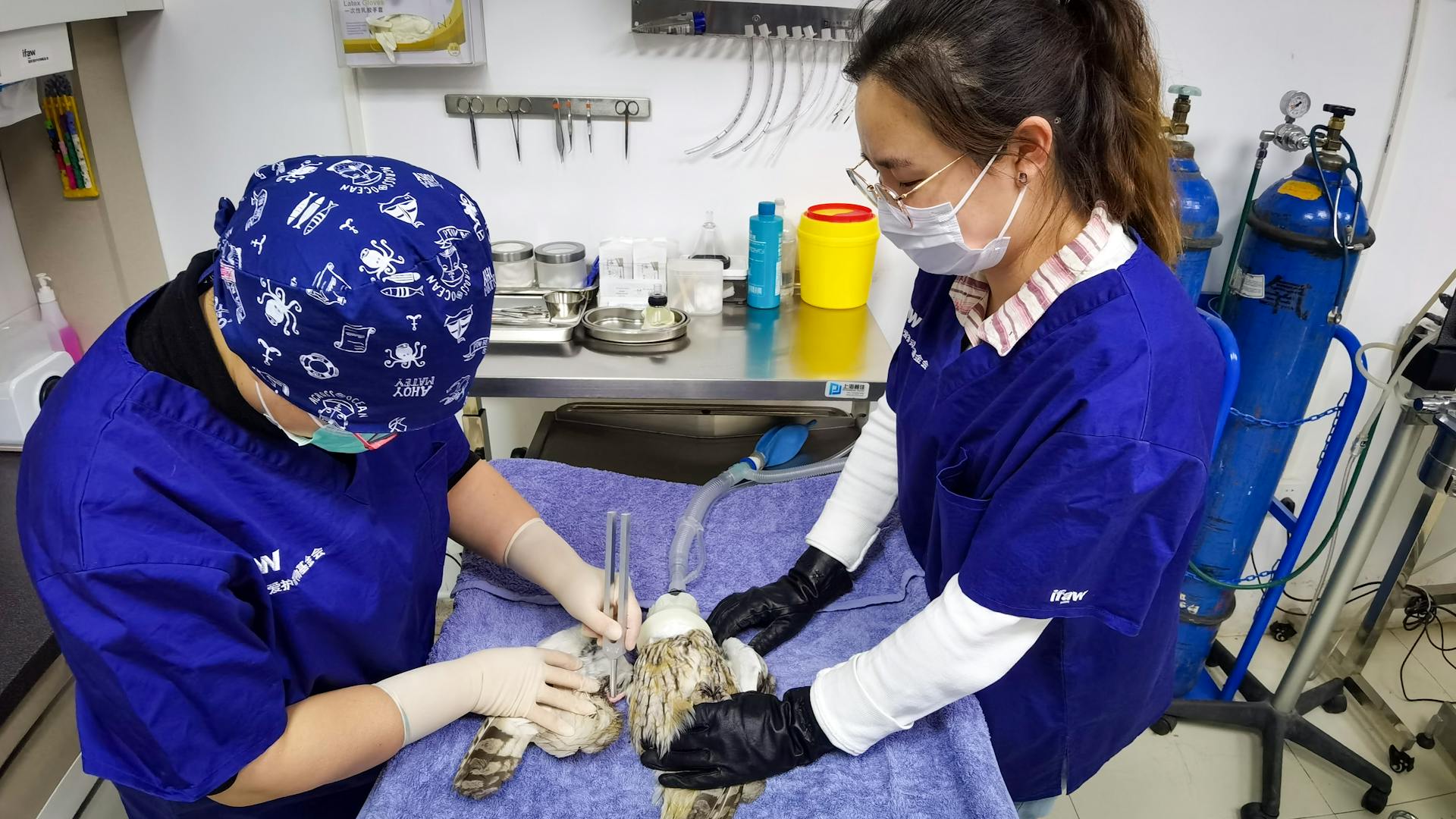
The job requires a high level of attention to detail and organizational skills, as you'll be handling multiple tasks and projects simultaneously. You'll need to be able to prioritize your workload and manage your time effectively to meet deadlines.
The pay is competitive, with median salaries ranging from $50,000 to over $100,000 depending on experience and location.
Is job finding difficult?
Finding a job as an emergency vet tech can be a challenge, but it's not impossible. In some locations, there's a high demand for emergency vet techs, making it easier to find a job.
The availability of jobs depends on where you live. If you live in an area with a high demand, you'll have more options to choose from.
Considering relocation might be necessary if you live in an area with limited job opportunities. Researching locations with a high demand for emergency vet techs can help you make an informed decision.
Qualifications and Skills
To become an emergency veterinary technician, you'll need to have a solid foundation in both education and experience. Typically, you'll need to complete an accredited veterinary technician program, which usually takes two years to complete and results in an associate's degree in veterinary technology.
To be successful in this role, you'll also need to possess strong communication skills, which involve effectively communicating with veterinarians, pet owners, and other veterinary staff. Manual dexterity is also essential, as emergency and critical care veterinary technicians must be able to handle animals and use tools in small spaces.
Compassion is a vital skill for emergency veterinary technicians, as they must be able to treat animals and their owners with empathy and understanding. This can be a challenging aspect of the job, especially when dealing with animals that are severely injured or sick.
Emergency veterinary technicians must also be able to work well under pressure, reacting quickly and remaining calm in high-stress situations. This requires a combination of technical proficiency, including operating medical equipment and performing medical procedures, and strong communication skills.
Additional reading: Pima Medical Institute Veterinary Technician
Here are some key skills and qualifications for emergency veterinary technicians:
- Strong Communication: Effectively communicating with veterinarians, pet owners, and other veterinary staff
- Calm Under Pressure: Maintaining composure and making quick, informed decisions in high-pressure situations
- Technical Proficiency: Operating medical equipment and performing various medical procedures with precision
In addition to these skills, many emergency veterinary technicians also hold certifications, such as the CVT, RVT, or LVT, which demonstrate their expertise and commitment to the field. They may also have previous experience working in an emergency veterinary setting, which can be beneficial in this role.
Certification and Licensure
To become an emergency veterinary technician, you'll need to pass the Veterinary Technician National Exam, or the VTNE, which is a three-hour exam with 170 multiple-choice questions.
The VTNE is offered four times a year, and to qualify for the exam, you'll need to complete a two- or four-year AVMA-accredited program.
After passing the VTNE, you'll need to obtain a state license, which has different requirements for licensure in each state, so be sure to check with your state's licensing board.
Obtaining a state license is a crucial step to becoming a licensed veterinary technician, and it allows you to begin pursuing specialty care as an emergency and critical care vet tech.
Curious to learn more? Check out: Georgia Veterinary Technician License
Specialized training in emergency and critical care can further enhance your ability to handle high-stress situations effectively, and it's essential for providing compassionate care to animals in need.
To become certified, you'll need to complete an accredited veterinary technology program, which typically results in an associate degree, and then pass the VTNE.
Salary and Job Outlook
Emergency veterinary technicians are in high demand, and their salaries reflect that. The median annual salary is around $45,980, according to the Bureau of Labor Statistics (BLS).
This figure is based on data from May 2024, which also provides a breakdown of annual wage percentiles. Here are the details:
Keep in mind that these figures may vary depending on factors like location, experience, and certifications.
Education and Training
To become an emergency veterinary technician, you'll need to complete an accredited veterinary technology program, which typically results in an associate degree. This is the most common educational path for veterinary technicians.
You can also pursue a bachelor's degree in a related field, such as nursing or animal sciences, but a bachelor's degree in a vet tech program is more common. This can provide a solid foundation for a career in emergency veterinary medicine.
In addition to formal education, passing the Veterinary Technician National Exam (VTNE) is required for certification as a veterinary technician. This exam assesses your knowledge and skills in areas such as patient care, pharmacology, and laboratory procedures.
Here are the educational requirements for becoming an emergency veterinary technician:
Education and Certification
To become a veterinary technician, you need to complete an accredited veterinary technology program, which typically results in an associate degree. This is a common educational path for those in the field.
There are two educational options available for those who want to pursue this profession: an associate's degree or a bachelor's degree. While a bachelor's degree in a related field can also lead to a job as an emergency vet tech, a bachelor's degree in a vet tech program is more common.
Take a look at this: Tcc Veterinary Technician Program

After completing your education, passing the Veterinary Technician National Exam (VTNE) is required for certification. This is an important step in becoming a certified veterinary technician.
Specialized training in emergency and critical care can further enhance a technician's ability to handle high-stress situations effectively. This training can be particularly helpful in a career as an emergency vet tech.
To stand out as an exemplary professional in emergency care, consider earning the AVECCT credential offered by the Academy of Veterinary Emergency and Critical Care Technicians and Nurses (AVECCT). This credential demonstrates extensive educational and professional experience in emergency and critical care veterinary medicine.
Here are some essential skills to become a successful emergency and critical care vet tech:
- Ability to work under pressure
- Able to listen well and take instructions from veterinarians and teams
- Administering and monitoring anesthesia
- Attentive to processes and details
- Compassionate communication skills when interacting with stressed-out animal owners
- Hand-eye coordination
- Patience with animals who are sick or in pain
- Physical strength (in the case of caring for large dogs or livestock)
- Prepping surgical spaces adequately
Qwen
The career outlook for emergency and critical care vet techs is incredibly promising, with the US Bureau of Labor Statistics projecting a 19 percent growth in employment from 2023 to 2033.
This growth rate is nearly five times the national average for all occupations, which is a testament to the high demand for skilled veterinary technicians in emergency and critical care settings.
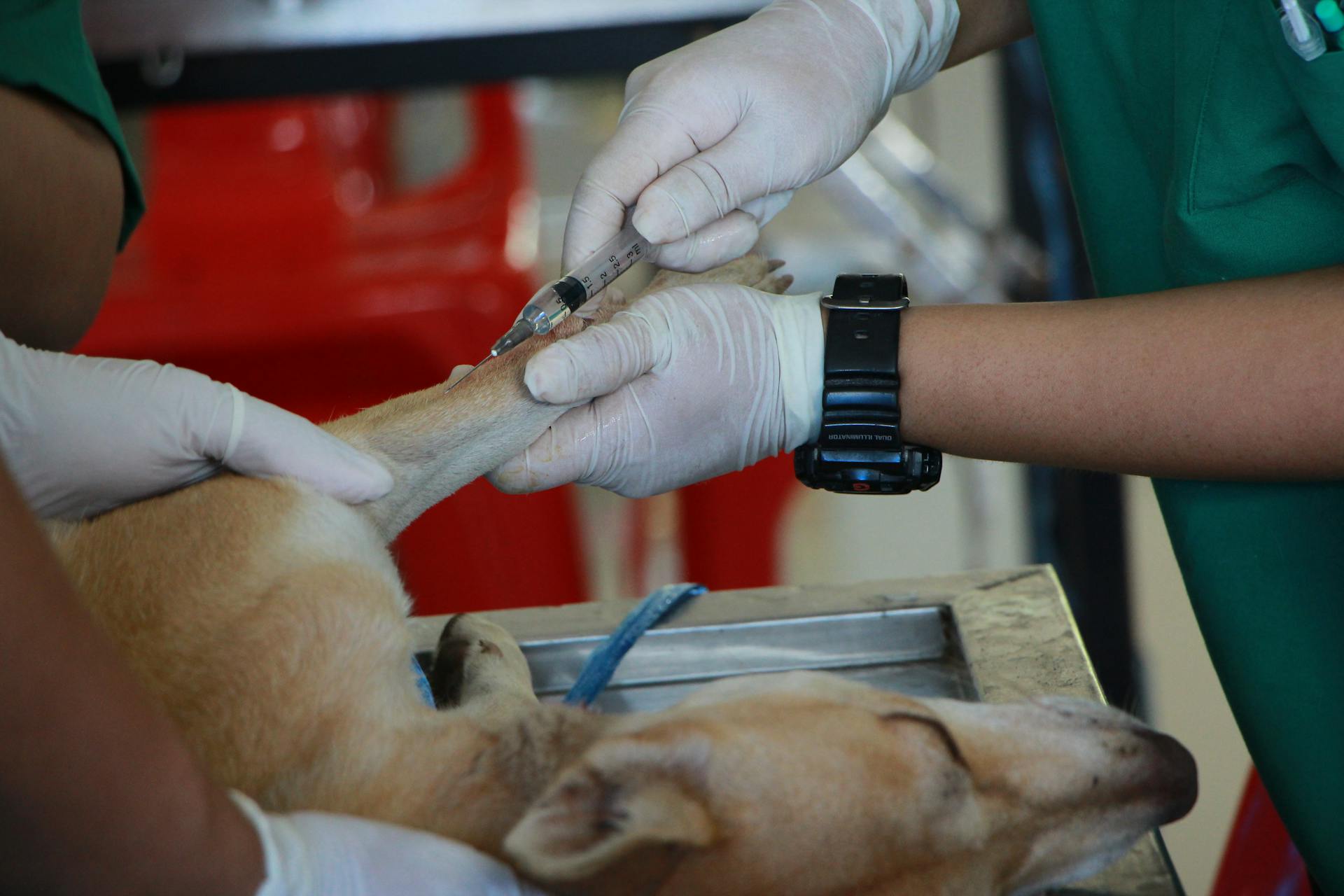
The creation of 24,300 new jobs is a significant number, and it's likely that many of these positions will be in hospitals and clinics that specialize in emergency and critical care veterinary medicine.
As a result, aspiring vet techs can look forward to a bright and stable career path with plenty of opportunities for advancement and professional growth.
Frequently Asked Questions
What is an emergency vet tech?
An Emergency Vet Tech is a crucial team member who provides critical care to animals in emergency situations. They play a vital role in ensuring animals receive the best possible care during emergency veterinary situations.
What's the difference between RVT and VT?
In Canada, the terms Registered Veterinary Technician (RVT) and Registered Veterinary Technologist (VT) are used interchangeably, with "technician" used in Eastern Canada and "technologist" in Western Canada. There is no difference in job responsibilities or qualifications between the two titles.
Featured Images: pexels.com