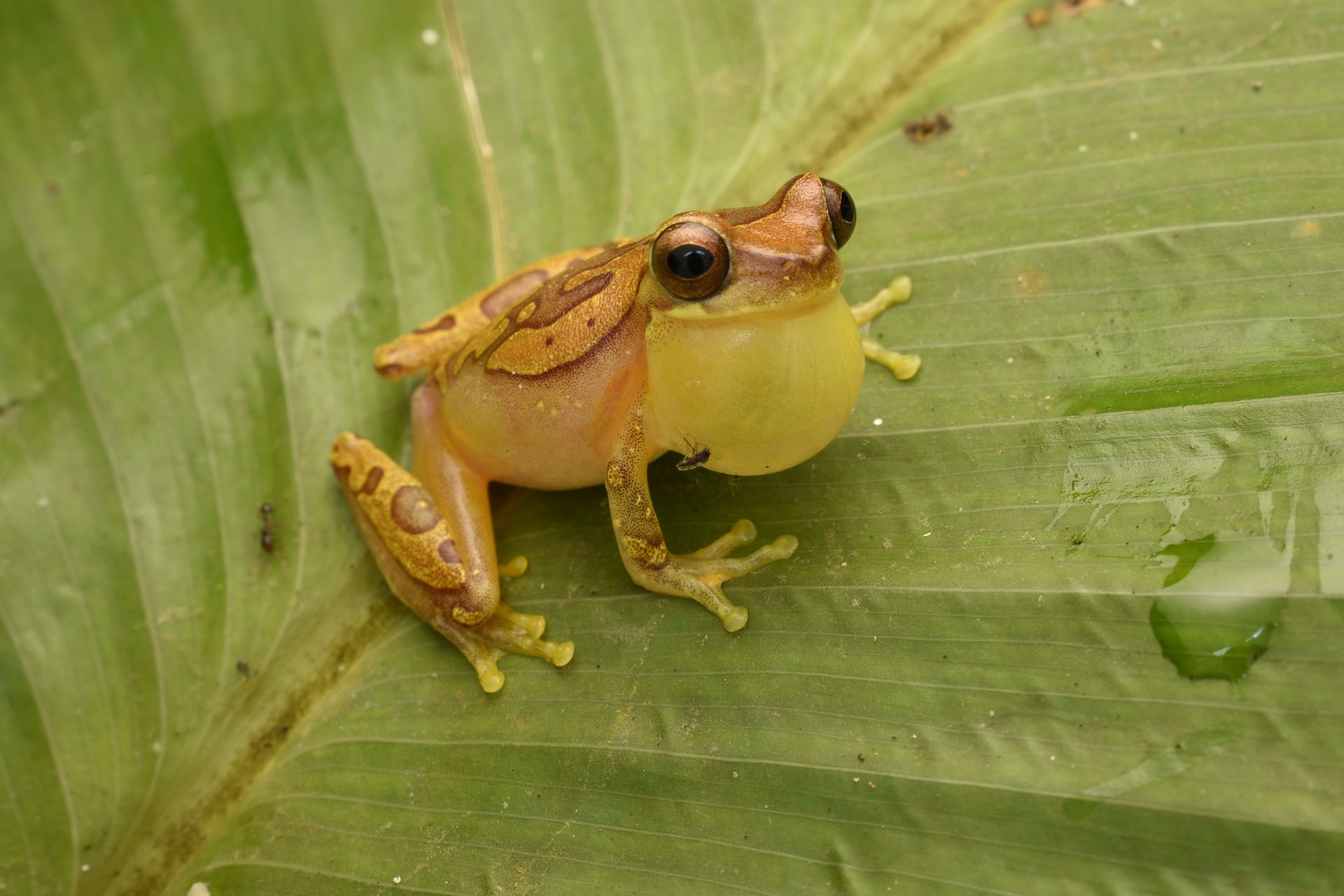
American treefrogs are a fascinating group of amphibians, and within the Dryophytes genus, you'll find some of the most iconic species.
The American green treefrog is one of the most well-known species in the Dryophytes genus.
These frogs are found throughout the southeastern United States, and their ability to change color from green to brown helps them blend in with their surroundings.
Dryophytes spp. are nocturnal, meaning they're most active at night, and they have large, round eyes that help them navigate in the dark.
As a group, Dryophytes frogs are carnivorous, feeding on small insects and other invertebrates.
Explore further: American Spadefoot Toad
Classification
Dryophytes are a fascinating group of treefrogs, and understanding their classification can help us appreciate their unique characteristics.
The genus Dryophytes belongs to the class Amphibia, specifically the subclass Lissamphibia, and the superorder Batrachia. This places them within the order Anura, which includes all frogs and toads.
Dryophytes are part of the family Hylidae, commonly known as treefrogs and their allies. Within this family, they are classified under the subfamily Hylinae.
Here's a breakdown of the Dryophytes species classification:
- D. andersonii
- D. arboricola
- D. arenicolor
- D. avivoca
- D. bocourti
- D. chrysoscelis
- D. cinereus
- D. euphorbiaceus
- D. eximius
- D. femoralis
- D. flaviventris
- D. gratiosus
- D. immaculatus
- D. japonicus
- D. leopardus
- D. plicatus
- D. squirellus
- D. suweonensis
- D. versicolor
- D. walkeri
- D. wrightorum
Ameroasian Treefrogs
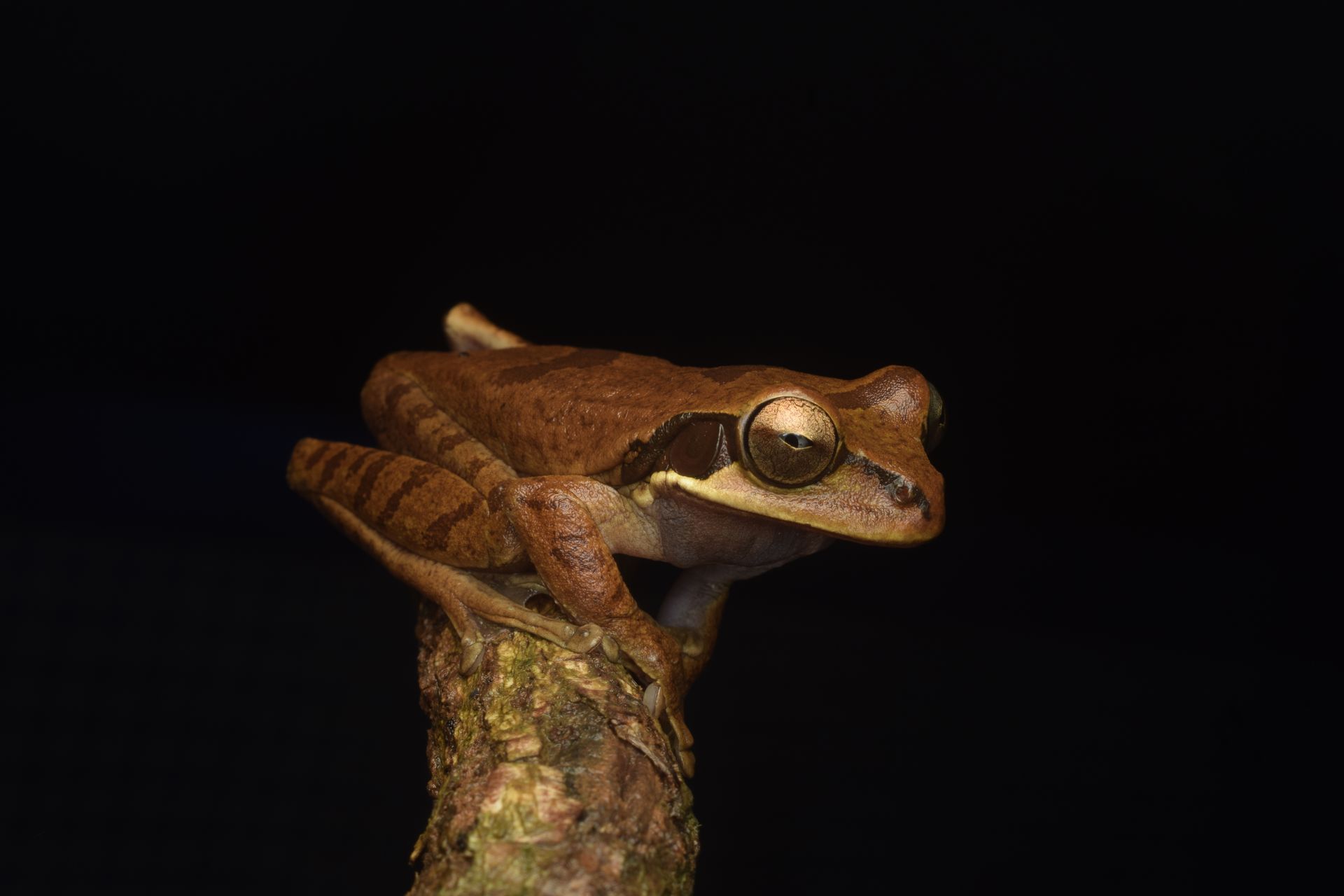
Ameroasian treefrogs are a newly resurrected genus of treefrogs. They are found in forests and wetlands, and mostly live in trees, but can often be seen on vegetation near the ground.
There are twenty species of Dryophytes worldwide, with seventeen species occurring only in North America. Three species occur in eastern Asia, and only two species occur in Minnesota. This is a significant range, and it's interesting to note that not all species are found in the same habitats.
The genus Dryophytes was originally described in 1843, and was later transferred to the genus Hyla in 1882. However, in 2014, North American species were placed in the new subgenus Dryophytes, and in 2016, the subgenus was raised to genus level, resurrecting the original genus.
Here are some of the species of Ameroasian treefrogs:
- American green tree frog (Dryophytes cinerea)
- Arboreal tree frog (Dryophytes arboricola)
- Barking tree frog (Dryophytes gratiosa)
- Bird-voiced tree frog (Dryophytes avivoca)
- Bocourt’s tree frog (Dryophytes bocourti)
- Canyon tree frog (Dryophytes arenicolor)
- Cope’s gray treefrog (Dryophytes chrysoscelis)
- Gray treefrog (Dryophytes versicolor)
- Japanese tree frog (Dryophytes japonica)
- Mountain tree frog (Dryophytes eximia)
- Pine Barrens tree frog (Dryophytes andersonii)
- Pine woods tree frog (Dryophytes femoralis)
- Ridged tree frog (Dryophytes plicata)
- Southern highland tree frog (Dryophytes euphorbiacea)
- Spotless tree toad (Dryophytes immaculata)
- Squirrel tree frog (Dryophytes squirella)
- Suweon tree frog (Dryophytes suweonensis)
- Walker’s tree frog (Dryophytes walkeri)
- Wright’s mountain tree frog (Dryophytes wrightorum)
- Yellow-bellied tree frog (Dryophytes flaviventris)
The common name for the genus is Ameroasian treefrogs, and this name reflects their distribution across the Americas and eastern Asia.
Taxonavigation
Taxonavigation is the process of grouping living organisms based on their evolutionary relationships. This system helps us understand the connections between different species.
The Anura order, which includes frogs and toads, is a part of the larger group called Amphibia. Within Amphibia, we have the subclass Lissamphibia, which is further divided into the superordo Batrachia.
Here's a simplified breakdown of the taxonomic hierarchy within Anura:
- Superregnum: Eukaryota
- Cladus: Amorphea
- Cladus: Obazoa
- Cladus: Opisthokonta
- Cladus: Holozoa
- Cladus: Filozoa
- Cladus: Choanozoa
- Regnum: Animalia
- Subregnum: Eumetazoa
- Cladus: ParaHoxozoa
- Cladus: Bilateria
- Cladus: Nephrozoa
- Superphylum: Deuterostomia
- Phylum: Chordata
- Cladus: Olfactores
- Subphylum: Vertebrata
- Infraphylum: Gnathostomata
- Cladus: Eugnathostomata
- Cladus: Osteichthyes
- Cladus: Sarcopterygii
- Cladus: Rhipidistia
- Cladus: Tetrapodomorpha
- Cladus: Eotetrapodiformes
- Cladus: Elpistostegalia
- Cladus: Stegocephali
- Cladus: Tetrapoda
- Cladus: Batrachomorpha
- Classis: Amphibia
- Subclassis: Lissamphibia
- Superordo: Batrachia
- Cladus: Salientia
- Ordo: Anura
The Hylidae family, which includes the genus Dryophytes, is a part of the Anura order. The genus Dryophytes has 21 species, each with its unique characteristics.
Here's a list of some of the species within the genus Dryophytes:
- D. andersonii
- D. arboricola
- D. arenicolor
- D. avivoca
- D. bocourti
- D. chrysoscelis
- D. cinereus
- D. euphorbiaceus
- D. eximius
- D. femoralis
- D. flaviventris
- D. gratiosus
- D. immaculatus
- D. japonicus
- D. leopardus
- D. plicatus
- D. squirellus
- D. suweonensis
- D. versicolor
- D. walkeri
- D. wrightorum
American Tree Frog
The American Tree Frog, also known as Dryophytes cinerea, is a small, green or gray frog native to North America. It's a species of tree frog that can be found in forests and wetlands.
The American Tree Frog is part of the genus Dryophytes, which is a newly resurrected genus of tree frogs. There are 17 species of Dryophytes in North America, and only two species occur in Minnesota.
A unique perspective: Eastern American Toad Poisonous
Here are some key characteristics of the American Tree Frog:
- Small size: They are small frogs, typically found on vegetation near the ground.
- Green or gray color: They have a green or gray color, which helps them blend in with their surroundings.
- Difficulty in distinguishing species: Due to the great difficulty in distinguishing between the two treefrog species in Minnesota, only expert-verified photos can be identified to the species level.
The American Tree Frog is a social species and is best enjoyed when kept in small groups of 4 to 8 animals. They are also hardy, long-lived, and "easy-to-care-for" amphibians, making them a popular choice for reptile enthusiasts.
Species
Dryophytes, a genus of frogs, belongs to the family Hylidae.
These frogs are primarily nocturnal, meaning they're active at night and rest during the day.
Their habitats range from forests to wetlands, with some species adapting to live in close proximity to human settlements.
Gray Treefrog Versicolor
The Gray Treefrog, also known as Dryophytes versicolor, is a small, green or gray frog. They are found in forests and wetlands, often living in trees but can also be seen on vegetation near the ground.
One of the unique characteristics of the Gray Treefrog is its ability to change color, but in the context of Minnesota, it's difficult to distinguish between the two treefrog species, so only expert-verified photos will be identified to the species level.
The Gray Treefrog belongs to the genus Dryophytes, which is a newly resurrected genus of treefrogs, and is part of the family Hylidae, which includes all tree frogs and their allies.
Here are some key facts about the Gray Treefrog:
- Class: Amphibia (amphibians)
- Order: Anura (frogs and toads)
- Suborder: Neobatrachia
- Superfamily: Hyloidea
- Family: Hylidae (tree frogs and allies)
- Subfamily: Hylinae
The Gray Treefrog was previously classified under the genus Hyla, but in 2016, it was reclassified to the genus Dryophytes, which now includes all North American treefrog species and three species in temperate eastern Asia.
Suggestion: Eastern Gray Treefrog
Breeding
Breeding is a crucial aspect of a species' survival and adaptation. Some species, like the Galapagos giant tortoise, have a slow reproductive rate, with females laying only 2-3 eggs per year.
In the wild, many species rely on instinct to guide their breeding habits. This is evident in the migratory patterns of animals like the monarch butterfly, which return to the same breeding grounds year after year.
The timing of breeding is also crucial, as seen in the case of the African elephant, which breeds during the wet season when food is abundant. This ensures the survival of their young.
Some species, like the axolotl, have the unique ability to breed through a process called parthenogenesis, where an egg develops into an embryo without fertilization.
The environment plays a significant role in shaping a species' breeding habits, as observed in the coral reef fish, which breed in synchronization with the lunar cycle.
Frequently Asked Questions
How rare is a grey frog?
The gray tree frog is not considered rare, as it has a wide distribution and presumed large population. However, regional populations are threatened by various factors, including habitat loss and disease.
Featured Images: pexels.com