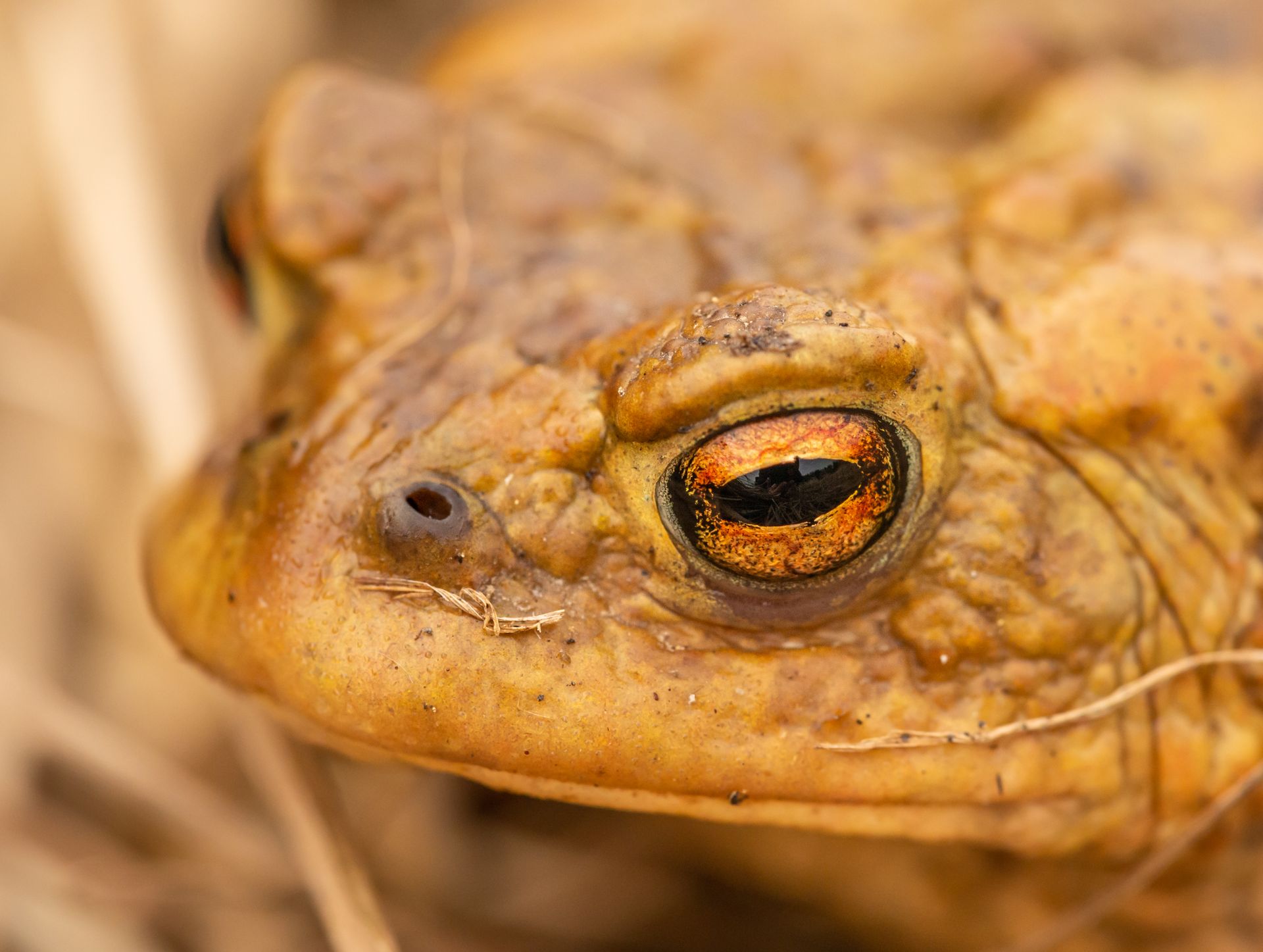
The American Spadefoot Toad is a unique and fascinating creature. It has a distinctive appearance, with a broad, flat head and a short, rounded body.
These toads are found throughout the southern and western United States, from Texas to California. They inhabit a variety of environments, including wetlands, grasslands, and deserts.
American Spadefoot Toads have a remarkable ability to survive in areas with limited water availability. They can dig burrows and estivate, a state of dormancy, during times of drought.
In the wild, American Spadefoot Toads are carnivorous, feeding on a diet of insects, worms, and other small invertebrates.
Toad Basics
American spadefoot toads are quite small, reaching lengths of 2 to 3 inches.
Their bodies are round and strong, with bulging eyes that give them a distinctive look.
The "spade" on their back legs is a hard, bony part that helps them dig into the soil.
Their skin is smooth and usually grey or brown.
Taxonomy and Classification
The American spadefoot toad family, Scaphiopodidae, is made up of two genera: Scaphiopus and Spea. These genera are found in North America and are distinct from the European spadefoot toad family, Pelobatidae.
Scaphiopodidae was previously included in a broader family, Pelobatidae, but was split off into its own family due to differences in classification. The family contains two genera, both in North America.
The two genera are Scaphiopus and Spea, each with different characteristics. Scaphiopus has a sickle-shaped spade, while Spea has a wedge-shaped spade. Here is a breakdown of the species within each genus:
Taxonomy
Taxonomy is the process of classifying living things into groups based on their characteristics and evolutionary relationships. The American spadefoot toads were previously grouped with European spadefoot toads in the same family, but they were later split off into their own family, Scaphiopodidae.
This family contains two genera, both found in North America: Scaphiopus and Spea. The Scaphiopus genus includes the Southern spadefoot toads, while the Spea genus includes the Western spadefoot toads.
The common name "spadefoot toads" might lead you to think that this family is only found in North America, but fossil evidence suggests that it once had a much larger distribution that reached eastern Asia.
Scaphiopodidae Family
The Scaphiopodidae family is a fascinating group of toads that are native to North America. They are found in the region and are known for their unique characteristics.
The Scaphiopodidae family is part of the Mesobatrachia suborder. This classification is important because it helps us understand their evolutionary relationships with other toads.
There are 2 genera within the Scaphiopodidae family: Spea and Scaphiopus. These genera are further divided into different species.
The Scaphiopodidae family has a total of 7 species. This is a relatively small number compared to some other families of toads.
Spea, the Western Spadefoot Toad genus, has a distinctive wedge-shaped spade on its foot. This is in contrast to the sickle-shaped spade found in the Scaphiopus genus.
The Western Spadefoot Toad (Spea hammondii) and the Mexican Spadefoot Toad (Spea multiplicata) are two species within the Spea genus that lack a bony boss on their heads.
Here's an interesting read: American Toad Poison Dog
Physical Characteristics
The American Spadefoot Toad is a unique creature, and one of its most distinctive features is its physical characteristics.
They have a broad, flat head and a long, narrow snout.
Their eyes are relatively small compared to other toads.
Their legs are powerful and well-suited for burrowing, which is a key part of their life cycle.
American Spadefoot Toads have a distinctive spade-like projection on their hind legs, which they use to dig into the soil.
They typically range in color from brown to gray, allowing them to blend in with their surroundings.
Habitat and Distribution
Spadefoot toads are generally found in arid climates, where they spend the majority of their lives underground.
They prefer to stay hidden in moisture-retaining areas like perennial ponds, creek beds, or other low-lying spots that retain water.
These areas provide the perfect environment for the toads to survive the harsh desert conditions.
The eastern spadefoot is the only species found east of the Mississippi River, ranging from New England to southern Florida.
The Great Basin spadefoot and the plains spadefoot are both found in Western Canada and the northwestern U.S.
The plains spadefoot has also spread into Texas and northern Mexico, while Couch's spadefoot, Hurter's spadefoot, and the New Mexico spadefoot are all spread across the Southern and Southwestern U.S.
The western spadefoot is found in California, mainly southern parts of the state and extending into Baja California, Mexico.
The toads are believed to have moved into North America from South American countries due to a changing climate.
They most likely moved into the U.S. as a single species, but split up as they spread across the continent and adapted to their new surroundings.
Spadefoot toads prefer marsh-like environments, but only enter the water to breed.
Protecting Toads
The eastern spadefoot toad was put on the endangered list in Pennsylvania in 2005 due to low numbers.
One reason for their low numbers is that breeding pools often dry up before the tadpoles can fully change into frogs.
Efforts are being made to save their homes, such as getting state approval before building on potential habitat land.
In 2004, the western spadefoot toad was listed as "near threatened" by the ICUN Red List, which tracks endangered species.
People are becoming more aware of spadefoot toad habitats and are taking steps to protect them.
Life Cycle and Ecology
American spadefoot toads breed during the summer monsoon rains, with males attracting females by calling while floating on the surface of standing water.
A single female lays about a 1,000 eggs on average, which are deposited in a cylindrical mass attached to submerged vegetation.
The eggs hatch in around two days, and tadpoles metamorphose in about three weeks, developing into two morphs: the typical omnivore and the strict carnivore, which have broader heads and heavier muscles around the jaws.
Tadpoles' diets depend on where they live and what food is around, starting with tiny water plants and animals called plankton, and later eating other small animals.
Spadefoot toads breed in shallow waters, which can lead to stress from drying water, rising heat, less food, and crowded spaces, causing them to eat each other to survive.
This cannibalistic behavior can result in their bodies changing, growing bigger heads, sharp beaks, stronger jaw muscles, and shorter intestines, which helps them grow faster by getting more food.
You might like: Tall Bulldog Breeds
Ecological Role
New Mexico spadefoots play a crucial role in controlling termite populations early in the rainy season. They consume large numbers of termites, helping to keep these populations in check.
Spadefoot toads also contribute to soil aeration when digging burrows, which is essential for healthy soil ecosystems.
Adult American spadefoot toads primarily eat small animals without backbones, including flies, crickets, and earthworms.
Life Cycle
The life cycle of the New Mexico spadefoot toad is a remarkable process. They breed during the summer monsoon rains, with males attracting females by calling while floating on the surface of standing water.
Eggs are fertilized by the male after they are laid, and a single female lays about a 1,000 eggs on average. These eggs are deposited in a cylindrical mass attached to submerged vegetation.
The eggs hatch in around two days, and tadpoles metamorphose in about three weeks. During this time, they can occur in two morphs – the typical omnivore and the strict carnivore.
The strict carnivore morph has broader heads and heavier muscles around the jaws, and their development is sped up by their consumption of fairy shrimp.
Species and Types
There are several types of American spadefoot toads. The Couch's spadefoot toad lives in the southwestern U.S. and parts of Mexico, staying buried for 8-10 months a year.
They can eat enough in one meal to last a whole year! This unique characteristic allows them to survive for long periods without food.
Some species, like the Great Basin spadefoot toad, are active at night and eat small animals like ants. This behavior is likely an adaptation to their environment.
Here are some of the different species of American spadefoot toads:
Frequently Asked Questions
Can you touch a spadefoot toad?
It's best to avoid touching a spadefoot toad, as its skin secretions can be noxious to humans. If you must handle one, wash your hands thoroughly before touching your face or eyes.
Are spadefoot toads rare?
Yes, spadefoot toads are considered rare, as their population has significantly declined and they are now listed as threatened under the Massachusetts Endangered Species Act.
Featured Images: pexels.com