Chinchillas can be quite skittish, but many owners have found that with patience and gentle handling, they can become quite affectionate and enjoy being held.
In fact, research has shown that chinchillas can recognize their owners and even form bonds with them, which is a great sign that they're comfortable with being held.
However, it's essential to understand that chinchillas are prey animals and may feel more secure in small, enclosed spaces, which can make them hesitant to be held.
If you're thinking of getting a chinchilla as a pet, it's crucial to learn about their specific needs and personality traits to ensure a harmonious relationship.
Reasons for Disliking Being Held
Chinchillas are naturally curious and independent, making them not want to be handled. They have to stay away from possible predators in the wild, so being picked up and held down can make them feel nervous or scared.
Their bones are very weak and their skeleton is fragile, so handling them wrong can lead to accidents or broken bones. It's crucial to learn the right way to hold them safely.
For more insights, see: Why Do Cats like Milk so Much?
Chinchillas remember things very well and can hold on to bad experiences. If they've been mistreated or scared in the past, they may connect being held with those bad memories and become nervous or unwilling to be held.
Every chinchilla has its own unique personality, just like every person. Some may be more friendly and like being around people, while others may be more shy or independent.
Chinchillas are naturally busy and curious animals, preferring to explore their surroundings and play rather than being held back. They don't like being held for long amounts of time due to their short attention spans.
Tips for Safely Holding Chinchillas
Holding a chinchilla close to your chest in a cradling position helps them feel more secure and comfortable. This is especially important because chinchillas are agile jumpers and can easily wiggle out of your grasp if you're not holding them securely.
Make sure to keep both hands under them at all times, as this reduces the risk of accidental drops or escapes. Chinchillas can get overwhelmed by handling that's too long or frequent, so it's essential to keep sessions brief and end them on a positive note before they get annoyed.
To avoid hurting your chinchilla, educate yourself on the correct way to hold them. Place one hand under or around the chest area, supporting the hind legs with your other hand. Holding them close to your body provides a sense of security and protects their delicate spine.
Chinchillas typically won't bite, but they will run away if they're startled or not feeling comfortable. Be gentle and calm when approaching them, and remember to pet them during this phase to help them relax.
It's essential to hold your chinchilla with two hands, especially when you're first starting out. This allows you to stabilize them and draw them close to your chest for support and comfort.
Consider reading: Can a Chinchilla Be a Pet
Start Slow, Build Trust
Building trust with a chinchilla takes time and consistency. You can start by sitting near their cage and speaking softly so they get used to your presence.
Gaining a chinchilla's trust is a process that requires patience, and it's essential to let them adjust to your presence first before attempting to handle them. Some steps for building a bond include offering treats by hand to associate you with good things.
You should open the cage door and let them come check you out, and pet them gently while they are eating. Once they seem comfortable, pick them up briefly and return to the cage.
Gradually lengthen handling sessions as they gain confidence. With regular, positive interactions, your chinchilla's natural wariness can transform into curiosity, playfulness, and affection over time.
It's also essential to respect their wishes and not force unwanted contact or attention on them. According to the House Rabbit Society, as much as 80% of chins will learn to tolerate or even enjoy interacting with their owners.
Here are some steps to build trust with your chinchilla:
- Sit near their cage and speak softly
- Offer treats by hand
- Open the cage door and let them come check you out
- Pet them gently while they are eating
- Pick them up briefly and return to the cage
- Gradually lengthen handling sessions as they gain confidence
Creating a Positive Experience
Offer treats like raisins or healthy tidbits during and after handling to associate yourself with yummy rewards.
Go at your chinchilla's pace, letting them approach and explore you instead of grabbing at them. This will help them feel more comfortable and in control.
Using a dust bath can be a great way to make handling a positive experience, as many chins enjoy a soothing dust bath. Gently pet them while they roll around for an extra-special bonding moment.
Keep initial handling sessions brief, around 5-10 minutes, to prevent overwhelming your chinchilla.
Here are some tips to keep in mind:
- Watch your chinchilla's body language and give them space if they seem stressed.
- Use a bonding pouch to carry them against your torso in a pouch or loose shirt.
- Limit initial handling to 5-10 minutes and stop interacting while your chinchilla is still happy.
By following these tips, you can create a positive experience for your chinchilla and help them look forward to future handling sessions.
Conditioning Your Chinchilla
Conditioning your chinchilla to enjoy being held takes time and patience. You need to build a bond with your chinchilla as it adapts to its environment.
Most chinchillas will allow you to hold them only after some time has passed. Some chinchillas will never prefer being held, so it's essential to understand their individual personalities.
Getting your chinchilla out of its cage often is crucial for building trust and affection. Newsflash: chinchillas spend nearly 23 hours in their cage on a good day for nearly 20 years, and that's a lot of cage time.
Interacting with your chinchilla outside of its cage is key. They love time out of the cage, and it's essential to make the most of it. Don't let the pattern of just letting them sleep in their cage continue for too long.
If you have a few bad days, let it go. It happens to all of us. Just remember to make the time to get them out of the cage and interact with them.
Handling and Support
Chinchillas need proper support when being held to prevent them from kicking or squirming around, so it's essential to scoop them up gently with one hand under their chest and the other supporting their hind legs.
To ensure a secure hold, keep your fingers loosely curled under their chin and chest, avoiding pressure on their ribcage, as chinchillas have delicate bones.
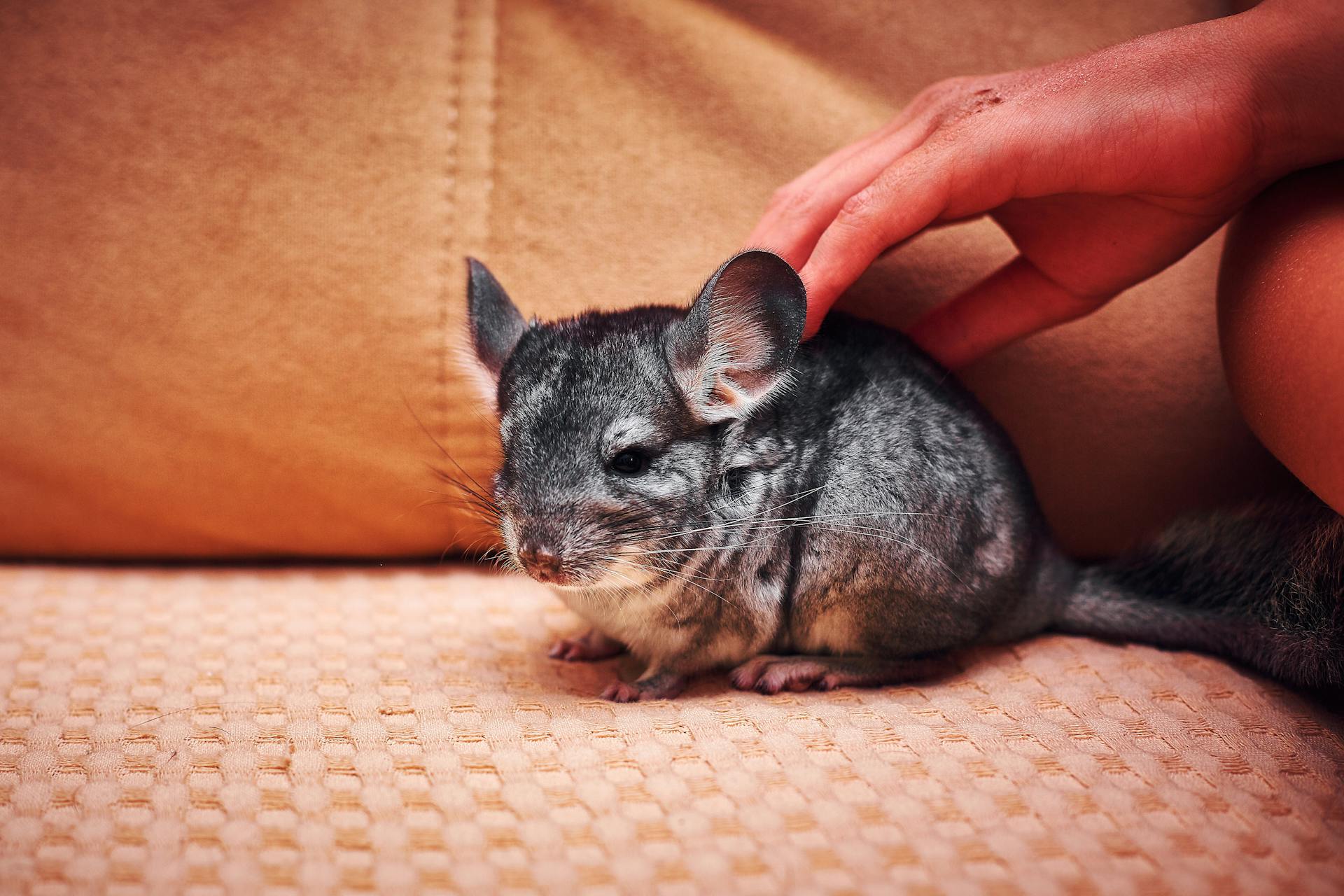
Most chinchillas like being pet, especially if it's done gently and without crossing their limits, and they can develop a preference for familiar faces and physical contact.
Pay close attention to your chinchilla's body language and change the way you pet them accordingly, as every chinchilla is different and may have a unique favorite way to be touched.
To make your chinchilla feel more secure and comfortable, bring them close to your chest in a cradling position, keeping both hands under them at all times.
Chinchillas are agile jumpers, so holding them securely with both hands reduces the risk of accidental drops or escapes.
Keep handling sessions brief and end them on a positive note before your chinchilla gets annoyed, as they can get overwhelmed by handling that's too long or frequent.
To support a chinchilla's body, especially their heavier parts, use one hand to support the lower part of their body and the other to stabilize their body, allowing them to rest their paws on your hands.
This method is one of the best techniques for holding chinchillas because it adequately supports their body and allows them to observe their surroundings freely.
Featured Images: pexels.com