Competitive horse driving has a rich history dating back to ancient civilizations, where horses were used for transportation and warfare.
The first recorded horse driving competition was held in 1888 in the United States. It was a four-in-hand competition, where four horses were harnessed together to a carriage.
Horse driving competitions have evolved over time, with various organizations developing their own rules and regulations. The American Horse Driving Society (AHDS) is one such organization that sets standards for horse driving competitions.
In competitive horse driving, the goal is to complete a course with precision and control, showcasing the horse's obedience and the driver's skill.
What Is Competitive Horse Driving
Competitive horse driving is a thrilling equestrian sport that involves two or more horses harnessed together to a carriage or cart.
The sport requires a great deal of teamwork between the horses, the driver, and the carriage. Horses are paired in matching sets of two or four, depending on the competition.
Each horse is trained to respond to specific commands and work together seamlessly with its partner. The driver must be skilled in communicating with the horses and navigating the course.
In competitive horse driving, horses are judged on their speed, agility, and synchronization. The carriage is also evaluated on its design, construction, and maintenance.
A well-trained team of horses can reach speeds of up to 25 miles per hour while maintaining a smooth and consistent pace.
History of Horse Driving
Horse driving has a rich history that spans thousands of years. Humans have been driving horses since around 2,500 BC, based on findings in the Middle East.
The earliest uses of driven horses were for transport, agriculture, and warfare. This ancient practice has persisted as a sport and recreational activity throughout the modern era.
The dawn of the Industrial Revolution brought a significant change to transportation with the introduction of steam trains. However, driving has continued to thrive as a competitive sport.
In 1970, combined driving entered the Fédération Équestre Internationale’s rulebook, making it an official international equine sport. This marked a major milestone in the history of horse driving.
The rules for combined driving were based on eventing, which tests a horse's stamina, obedience, and athleticism over a series of three phases. These same attributes are tested in combined driving's three phases.
Horse-drawn carriage racing has a long history dating back to ancient times. It has undergone significant evolution through technological and regulatory advances.
Here are three key stages in the development of horse-drawn carriage racing:
- Emergence in the 19th century with the first official competitions.
- Establishment of standardized rules by the International Equestrian Federation.
- Integration of modern technologies to improve performance.
Phases of Training
Physical assessment is a crucial part of a horse's training. Regular physical assessments help detect any anomalies that could impact performance.
Physical assessments are typically done regularly, and a structured and progressive training program is developed to optimize a horse's performance. This program should be tailored to the specific discipline of the hitch to improve coordination.
The training program should include ongoing veterinary care, including vaccinations and dental check-ups. This ensures the horse remains in excellent physical and mental condition for competition.
Phase Three - Schooling & Speed (6-9 Weeks)
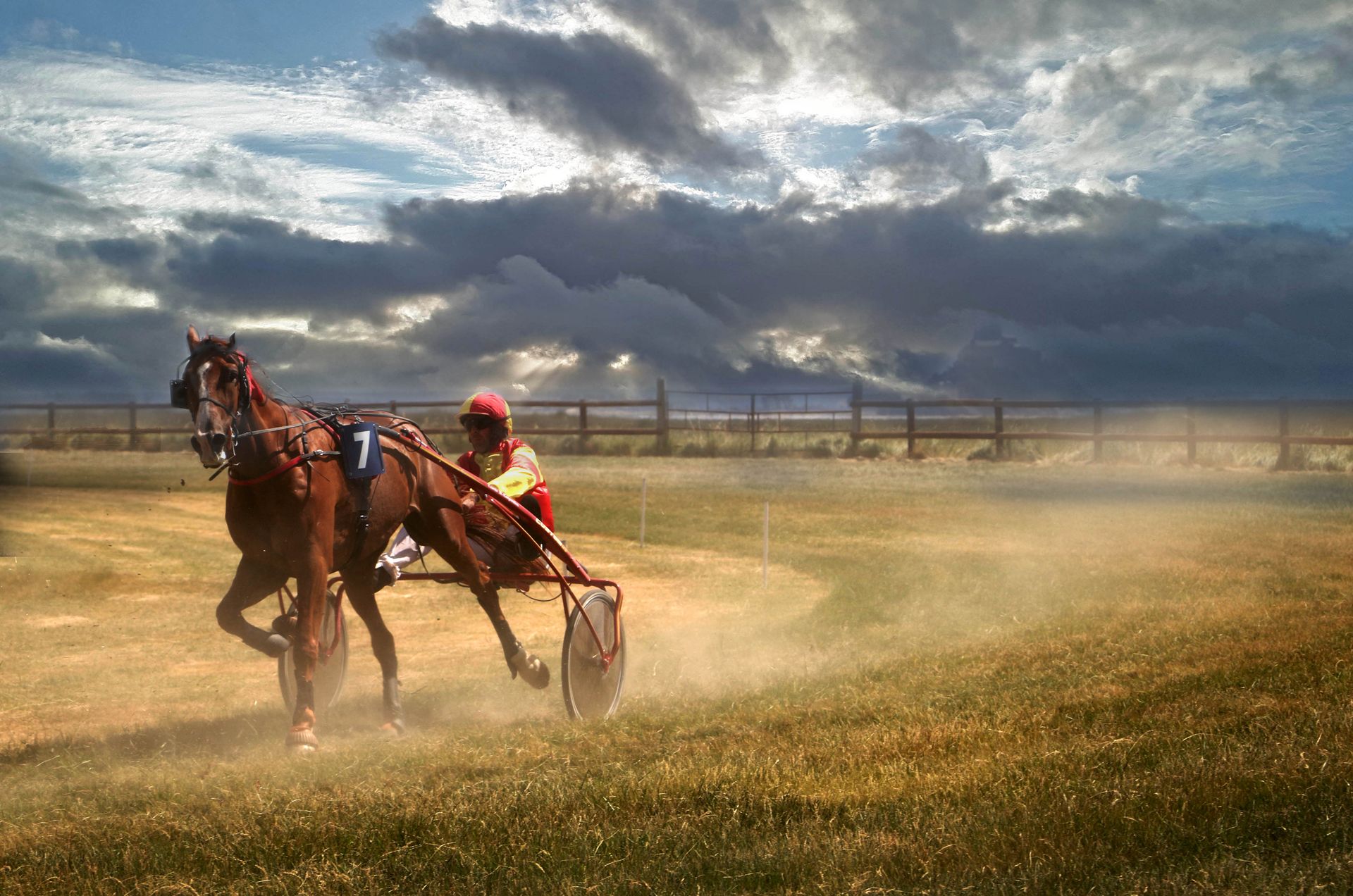
In Phase Three of training, your horse's fitness level should be adequate to begin competing. You can now drive out for longer periods of time and remain in trot for longer intervals.
You can increase schooling sessions and include some obstacle and cones training. Gradually increase the intensity over the three weeks.
Continue with your drive outs and schooling sessions. Your horse should now be at a good fitness level to begin competing.
Here's a rough outline of what you can expect during Phase Three:
Remember to gradually increase the intensity of your training over the three weeks to avoid overexerting your horse.
Levels
As you progress through the phases of training, you'll encounter various levels of competition that will challenge your skills and those of your horse or ponies.
The United States Equestrian Federation recognizes six national driving levels: Beginner, Training, Preliminary, Intermediate, Novice Advanced, and Open Advanced.
These levels are designed to help you build your skills and confidence, starting from the foundational level of Beginner and progressing to the more advanced levels.
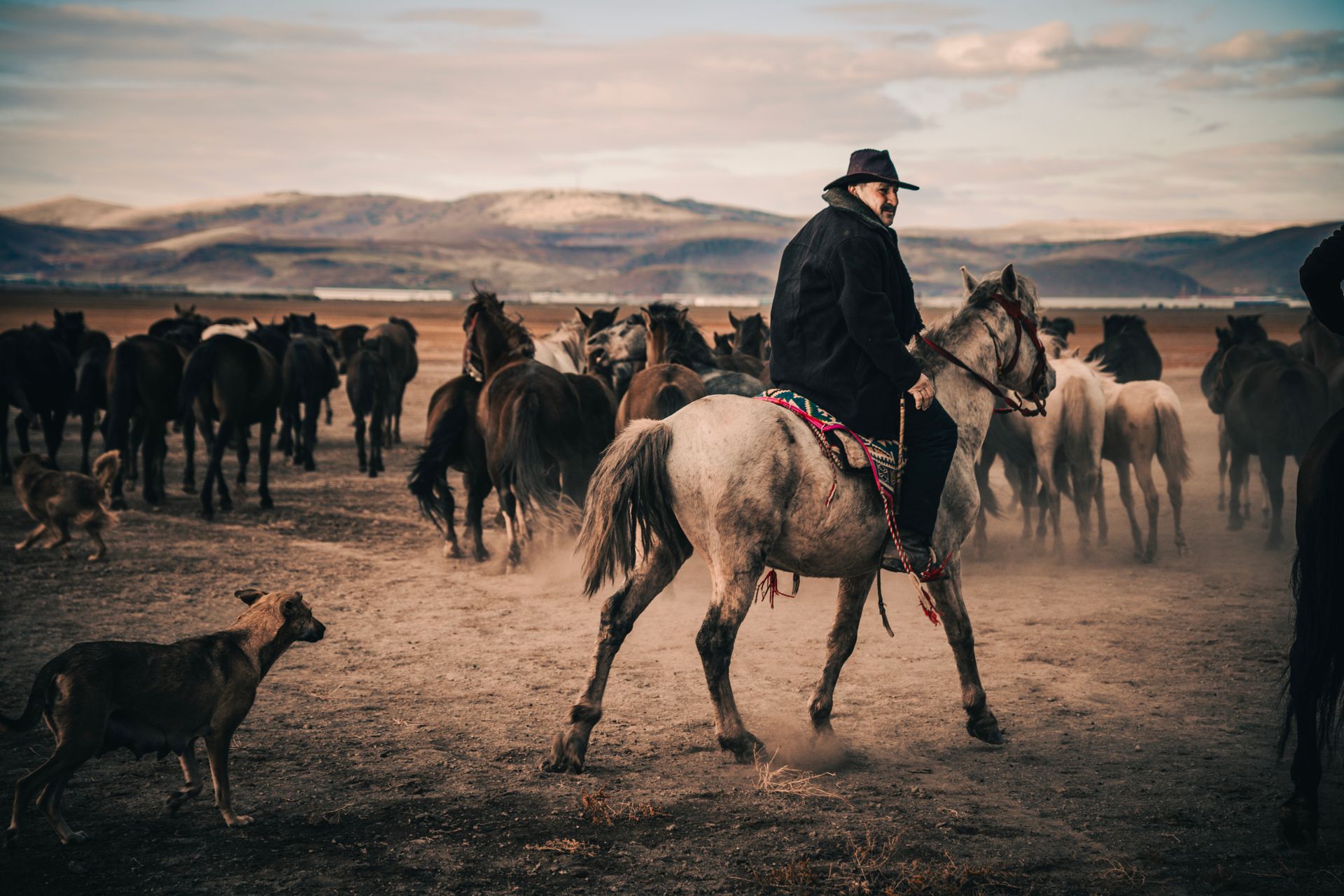
To give you a better idea of the progression, here's a breakdown of the national driving levels:
At the international level, the FEI uses the Star System to rank competitions, with 1* events being the lowest level of difficulty and 4* events being the highest.
Driven Dressage
Driven dressage is a competition that evaluates the freedom and regularity of the paces, harmony, accuracy, and obedience of driving horses.
The competition involves guiding horses through a predetermined series of maneuvers, known as a dressage test, which is judged on the quality of the performance and the judges' general impressions.
Judges assess the horses' freedom, regularity of pace, harmony, impulsion, suppleness, lightness, ease of movement, and correct bending while in motion.
Competitors are also evaluated on their style, accuracy, and general command of their horse(s) and the presentation of their turnout.
Driven dressage arenas typically measure 100m x 40m or 80m x 40m, depending on the level of competition.
The dressage test requires set movements and prescribed paces to be performed in a defined arena.
Judging Criteria
In competitive horse driving, the presentation of the horse(s), carriage, and drivers is a crucial aspect of the driven dressage judging. The judge will evaluate the turnout of the horses, attire of the driver, grooms, and/or passengers, and the fit and appearance of the harnesses and rigging.
A well-groomed horse team can make a big difference in the overall impression. The judge will also assess the size, weight, and suitability of the carriage to the horse team.
The safety of all equipment is also taken into account, and up to 10 penalty points can be added to the score based on presentation concerns.
Here's a breakdown of the presentation evaluation criteria:
- Turnout of the horses
- Attire of the driver, grooms, and/or passengers
- Fit and appearance of the harnesses and rigging
- Size, weight, and suitability of the carriage to the horse team
- Safety of all equipment
Competition Regulations
Competition regulations play a crucial role in ensuring fairness and safety for all participants in competitive horse driving. They oversee the equipment, horses, and events.
To be eligible for competition, drivers must use equipment that meets mandatory compliance standards. This ensures that all drivers are on an even playing field.
The regulations also classify horses by category, which helps to match horses with suitable drivers and events. This is particularly important for drivers who are just starting out.
Hardship regulations are standardized, which helps to prevent any one driver from gaining an unfair advantage.
Horse Care and Equipment
The carriage must be suitable for the horse(s) pulling it, so athletes must consider the weight, length, and other factors when choosing their competition carriage.
Most carriages have 4 wheels, but carriages used for the Single event may have 2 wheels.
The harness must fit well to avoid rubs, irritation, or other injuries.
Yokes and poles should allow freedom of movement and not interfere with the horse(s) as they travel.
Draft Allowed
Draft horses are allowed in competition, but only under specific conditions.
To qualify, a draft horse must be a recognized breed.
Their specific training also plays a crucial role in determining eligibility.
Compliance with regulations is another essential factor.
Physical aptitude is also taken into account when selecting draft horses for competition.
You might enjoy: Draft Horses
Horse Equipment
When choosing a carriage for competition, consider the weight, length, and other factors to ensure it's suitable for your horse(s). A well-fitting harness is crucial to avoid rubs, irritation, or other injuries.
Most carriages used in combined driving have 4 wheels, but those used for the Single event may have 2 wheels. The rigging for combined driving includes the harness, yokes, poles, and other equipment attached to the horse.
The harness must fit well to allow for freedom of movement and comfort. Some horses may wear additional equipment, such as blinkers, if the athlete deems it necessary.
Here's a breakdown of the essential equipment for competitive driving:
A well-fitting harness is not just about comfort; it also optimizes your horse's performance.
Training and Fitness
To ensure your horse is ready for competitive horse driving, rigorous preparation is essential. Physical assessment regularly is a must to detect any anomalies.
A structured and progressive training program is key to optimizing your horse's performance. This should include ongoing veterinary care, including vaccinations and dental check-ups.
Fitness is vital to competing comfortably, safely, and to the best of your horse's ability. If they're not at the correct level of fitness, you risk injury and they won't reach their full potential.
Several factors affect how you get your horse fit, including their past fitness level, any past injuries or weaknesses, and the facilities you have available. The temperament and age of the horse also play a role.
Here are some key factors to consider when getting your horse fit:
- Has the horse ever been very fit in the past?
- Has the horse got any past injuries or weaknesses?
- What facilities do you have at your disposal?
- The temperament and age of the horse
- What the end game is
As you begin training, start by introducing some inclines and varying the surface where possible. This could include working on grass, roads, forestry tracks, and so on.
In Phase Two, which typically lasts 4-5 weeks, you can begin introducing schooling sessions and some trot work in short intervals. Continue driving out and don't do too much schooling.
Common Drafts and Breeds
Combined driving is a unique sport that requires a specific type of horse or pony. Most top-level combined driving horses are Warmblood breeds.
Dutch Warmbloods are a popular choice for combined driving due to their athletic ability and temperament. They're often used for other equestrian disciplines as well.
Common Drafts Used
In competition, draft horses are carefully selected based on specific criteria. Only recognized breeds are considered.
To be eligible, draft horses must have specific training. This helps ensure they're ready for the demands of competition.
Compliance with regulations is also crucial. This includes following rules and guidelines set by the competition organizers.
Physical aptitude is another key factor. Draft horses need to be in top shape to perform well.
The Percheron and Friesian breeds are popular choices for competition. They're known for their strength, endurance, and competitive temperament.
Here are some of the most commonly used draft breeds in competition:
- Percheron
- Friesian
Breedings
Combined driving equines can be horses or ponies, so a variety of breeds appear in the international rankings for this sport. Most horses at the top levels of combined driving are Warmblood breeds.
Many of these Warmblood breeds originated in Europe, with the Dutch Warmblood being a popular choice. Dutch Warmbloods are known for their athletic ability and calm temperament.
The Hanoverian breed is another popular choice for combined driving, originating from Germany. They're prized for their intelligence, willingness to please, and athletic prowess.
Oldenburgs are also commonly used in combined driving, with their strong work ethic and calm demeanor making them well-suited for the sport.
Maryland
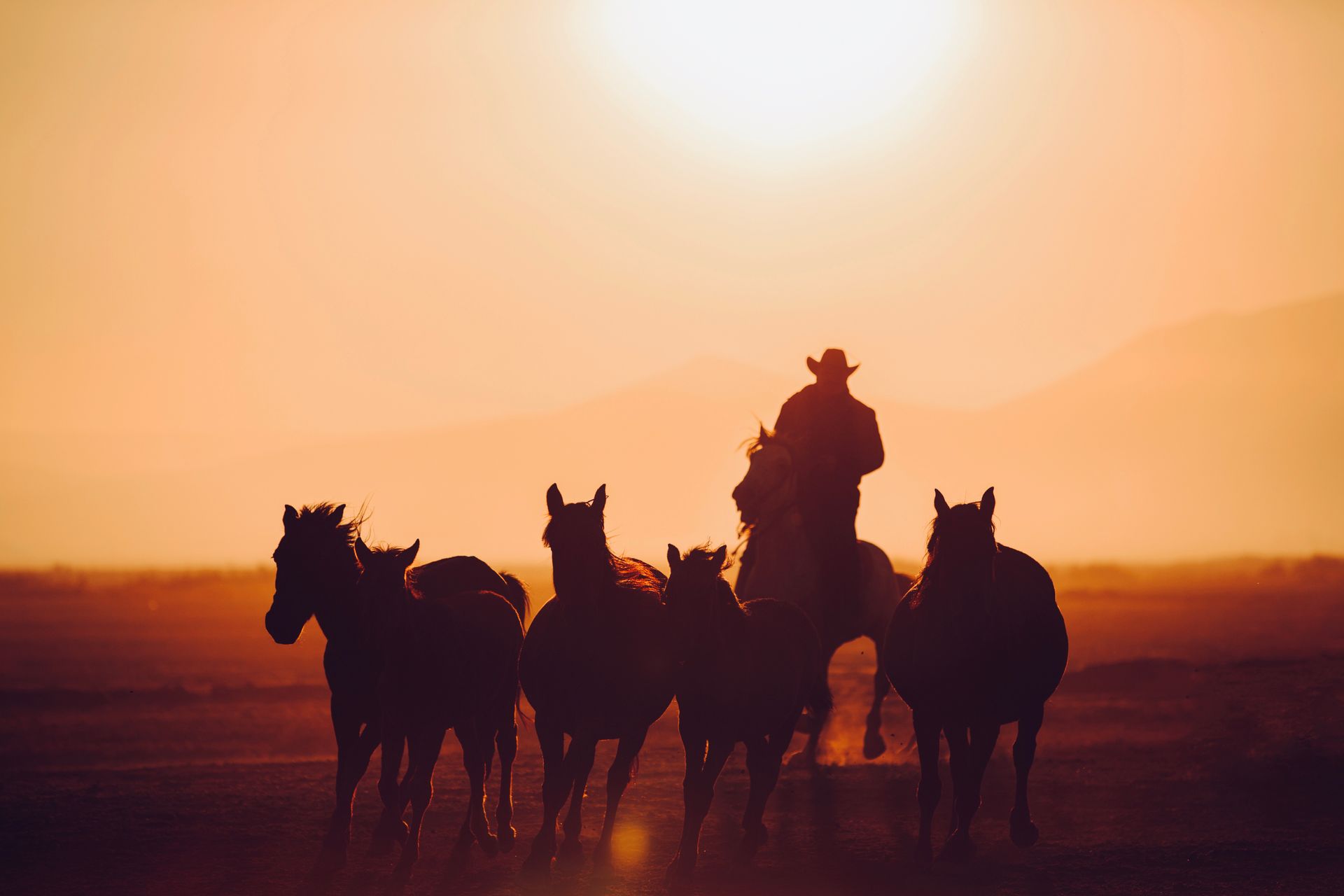
Maryland is a hub for horse driving trials and three-day events. The Myopia Horse Driving Trials take place in Topsfield, but Maryland has its own share of exciting events.
The Unicorn Farm CDE in Chesapeake City, MD, is a must-visit for horse enthusiasts. It's a great opportunity to watch skilled riders and horses in action.
Fair Hill International CDE & CCI*** Three Day Event in Fair Hill, MD, is a world-class event that attracts top talent. If you're a fan of horse driving, the Unicorn Farm CDE is a great place to be in May.
Expert Advice and Tips
To excel in horse driving, it's essential to choose high-quality harness. This will make a significant difference in your performance.
Choosing the right equipment is just the beginning. You should also maintain it regularly to ensure it's in top condition.
Evaluating the physical condition of your horses is crucial for their well-being and performance. This includes regular training to optimize their physical condition.
To develop precise strategies, adapt your driving tactics depending on the route and weather conditions. This will help you navigate challenging terrain and unpredictable weather.
Collaborating with experts can improve coordination between you and your horses. This can be achieved through advanced training courses or working with experienced trainers.
Here are some key tips to keep in mind:
- Choose high-quality harness
- Maintain equipment regularly
- Evaluate the physical condition of your horses
- Plan a suitable training session
- Know the regulations specific to your competition
- Participate in advanced training courses
Show and Competition
Show driving events, often termed harness classes, can be seen at most agricultural shows including Royal Shows and are often divided into light and heavy horse sections.
In these events, programs typically include classes for turnouts, for horses and ponies, and for drivers. Turnout classes judge the horse, vehicle, harness, and general appearance, while other classes concentrate on the performances of the horses/ponies or on the drivers.
Light harness horses and ponies are usually divided into height groups, and are sometimes also divided by breed such as hackney and non hackney. Vehicles often used in the light harness show ring include viceroys and buggies (4 wheelers) and sulkies, jinkers, and gigs (2 wheelers).
Additional reading: Horse Show
Competition horse driving is clearly distinguished from leisure driving by its technical and regulatory requirements. This includes more sophisticated harnesses and equipment, strict regulations to be respected, and intensive and targeted training.
To succeed in competition, rigorous preparation and suitable equipment are essential. Here are some key regulations that ensure fairness and safety for all participants:
Featured Images: pexels.com