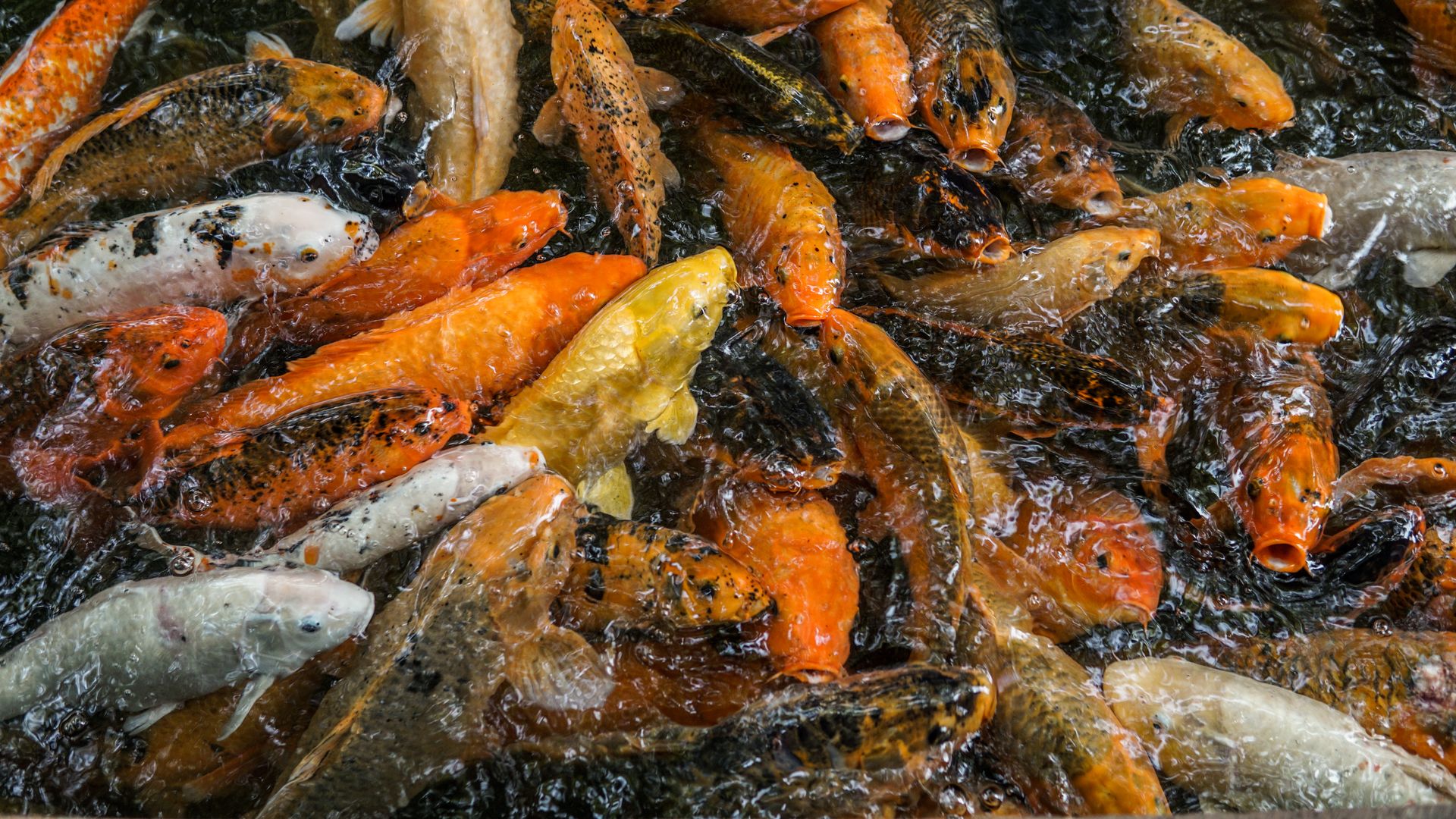
China carp fish are a fascinating species, and understanding their complexities is essential for effective management. They are a type of fish that can grow up to 1 meter in length and weigh up to 20 kilograms.
Their impressive size is due to their ability to thrive in a variety of aquatic environments, from slow-moving rivers to shallow lakes. This adaptability has made them a popular choice for aquaculture.
However, their popularity has also led to some negative consequences, including the spread of invasive species and competition with native fish for food and habitat. In fact, they have been known to displace native species and alter the ecosystem balance.
Despite these challenges, China carp fish can be managed effectively through sustainable aquaculture practices and regulations on their trade.
Physical Characteristics
Grass carp can grow to an average of 15-20 pounds and 20-35 inches in length.
Their average size is impressive, but they can grow even larger in ideal conditions, reaching up to 50-60 pounds and exceeding 50 inches in length.
In fact, the largest reported grass carp in Florida weighed a whopping 75 pounds.
You might notice that grass carp can display a range of colors, including silver, olive green, and dark gray, with light gold or pale yellow sides.
Their belly is typically silvery or bluish-white, and their fins are often light green or gray.
Unusually large fish scales are another identifying feature of grass carp.
Grass Carp Issues
Grass carp have proven to be extremely effective at controlling hydrilla in Florida lakes, especially when stocked in high enough numbers.
However, their effectiveness comes with a catch - they are nearly impossible to remove once released. This was discovered by managers and biologists who tried various techniques like nets, hooks-and-lines, electro-shocking, and poison baits, but found them to be minimally successful.
As of 2010, there are still no easy ways to remove grass carp from a stocked lake.
Grass Carp Sterility
Grass carp are typically sterile in lake systems because they require free-flowing river systems to spawn and produce eggs.
However, they can escape from stocked lakes or ponds and establish breeding populations in neighboring waterbodies, like the Mississippi River.
In Florida, three adult fish, including one gravid female, have been caught in the Suwannee River, indicating that grass carp can reproduce in some areas.
To prevent breeding, Florida law requires that grass carp used for weed control be sterile, or "triploid".
Triploid Chinese grass carp are hatchery-raised fish that have been sterilized by shocking fertilized eggs with drastic changes in temperature or hydrostatic pressure.
This technique adds an extra chromosome to the egg, making it unable to produce viable eggs.
Sterilization techniques are not 100% effective, and some studies have shown that triploid males can still produce viable sperm, albeit in very low numbers.
One study found that milt from some triploid males was used to successfully fertilize eggs from normal diploid females.
Some scientists suggest that every single fish be genetically tested by blood or tissue analysis before stocking them into a lake to ensure their sterility.
Several states have banned grass carp altogether due to concerns about their ability to reproduce and establish invasive populations.
Worth a look: Potomac River
Aquatic Invasive Species
In 2018, a massive effort was made to remove invasive Silver Carp and Bighead Carp from Creve Coeur Lake in Maryland Heights, Missouri, with over 240,000 pounds of the species being removed.
The USGS and its partners were responsible for this incredible feat, highlighting the importance of collective action against aquatic invasive species.
Aquatic invasive species, such as Silver Carp and Bighead Carp, can cause significant harm to local ecosystems, making their removal crucial for the health of our waterways.
The study mentioned earlier will assess whether bait platforms could aid in invasive carp removal, a promising development in the fight against these invasive species.
Invasive carp removal efforts, like the one in Missouri, demonstrate the impact that can be made when we work together to protect our environment.
Check this out: Fish Tofu Made
Jumping Silver
Silver carp are notorious for their acrobatic displays, jumping out of the water in response to various stimuli.
They've been observed jumping due to rocks thrown into the water, which can be startling and unpredictable for these fish.
Expand your knowledge: Water Dogs Fish
Passing trains have also been known to trigger a silver carp jump, likely due to the loud noise and vibrations they create.
It's not uncommon for silver carp to jump when geese take off from the water, possibly startled by the commotion.
In tight spaces, silver carp may also exhibit this jumping behavior, possibly as a way to escape or create some extra space.
Carp Management
Carp are notorious for their ability to outcompete native species for food and habitat, so it's essential to manage their populations effectively.
Carp can grow up to 40 kg in weight, making them a significant threat to ecosystems if left unchecked.
In some cases, carp can be a valuable food source for humans, particularly in Asian cultures where they are considered a delicacy.
Carp have been introduced to many parts of the world, including Europe and North America, often with devastating effects on local ecosystems.
Carp are known to be prolific breeders, with females able to lay up to 1 million eggs per year, resulting in rapid population growth.
Carp are generally easy to catch, making them a popular choice for recreational anglers, but this can also contribute to overfishing and population decline.
In some regions, carp are considered an invasive species and are actively managed to prevent further spread.
Carp as Food and Invasive Species
Carp are considered a food source in many cultures, but they can also be an invasive species.
The study will assess whether the bait platforms could aid invasive carp removal.
Carp are often used in traditional Chinese cuisine, where they're prized for their flavor and texture.
Invasive species can outcompete native species for food and habitat, causing harm to ecosystems.
In some regions, carp are considered a delicacy and are served grilled, steamed, or in soups.
The removal of invasive carp is crucial to maintaining a healthy balance in aquatic ecosystems.
Frequently Asked Questions
What are the Chinese carps called?
Asian carps, including Grass Carp, Silver Carp, Bighead Carp, and Black Carp, are collectively known as Asian carps. They originated in China and Russia's major river systems.
How big do Chinese carp get?
Asian carp can grow up to 4 feet long and weigh up to 90 pounds, depending on the species. They typically range from 18-30 inches in length and 10-15 pounds in weight.
What does the Chinese carp fish symbolize?
In Chinese culture, the carp fish symbolizes perseverance and martial attributes, representing strength and resilience in the face of adversity. Its determination to swim upstream against strong currents is a powerful metaphor for overcoming challenges.
Featured Images: pexels.com