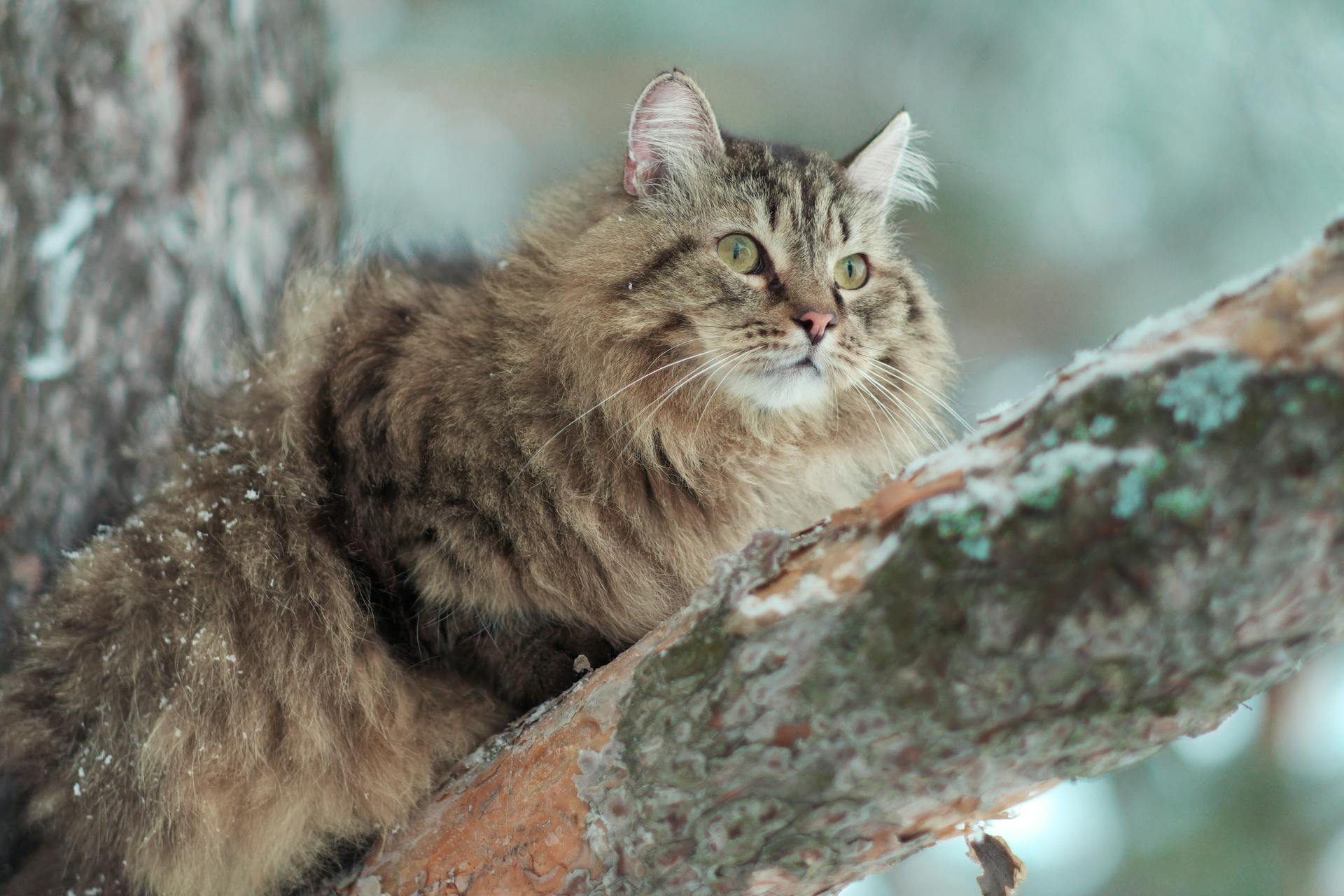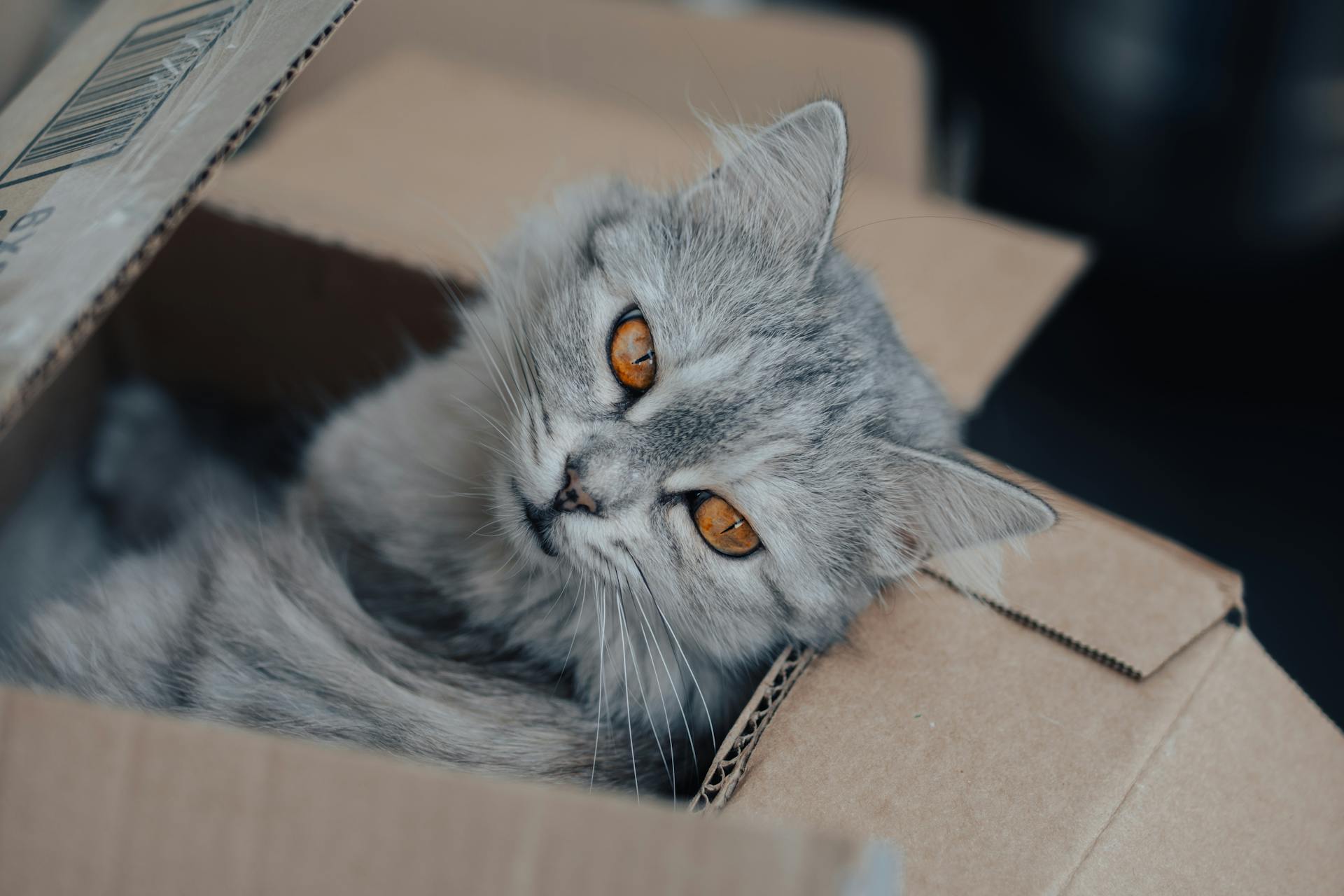
Cats are a beloved pet in the United States, with over 95 million domestic cats kept as pets.
According to the American Pet Products Association, the average cat owner spends around $1,500 per year on their pet's care.
Many cat owners adopt their pets from shelters, with approximately 3.2 million cats adopted from shelters each year.
The majority of cat owners are women, with 59% of cat owners being female.
Cat Population and Care
Cats in the United States have a significant population. Over 95 million cats are kept as pets in the country.
The average lifespan of a domestic cat is about 12-17 years. This can vary depending on factors such as diet and lifestyle.
Many cat owners are unaware that a single unspayed female cat can produce up to 18 litters in a six-year period, leading to a large number of unwanted kittens.
Communities Care
Communities are actively involved in the care of all cats, pet, stray, and feral.
Many Americans are opening their homes to stray and feral cats, creating a dynamic flow of stray and feral cats into the U.S. pet cat population.
Only 3% of households went to a breeder for a cat, indicating that most people are getting their cats from other sources.
People are taking care of stray and feral cats, allowing them to become part of the U.S. pet cat population.
Here's an interesting read: Cat Person or Dog Person
Cat Shelters in America
Cat Shelters in America have a long history, dating back to the formation of the American Society for the Prevention of Cruelty to Animals (ASPCA) in 1866. This marked the beginning of anti-cruelty laws in the US.
Cats were not specifically covered by these early laws until the early 1900s, when many counties in states throughout the country took up the anti-cruelty baton. This led to the establishment of local humane organizations.
The American Humane Society, formed in 1877, focused on the protection of animals and children alike, paving the way for the formation of the Humane Society of the United States (HSUS) in 1957. This organization is now the country's largest humane organization.
See what others are reading: Lymphoma for Dogs
Sadly, the majority of rescue centers and shelters had to euthanize dogs and cats if they were unable to get them adopted within a short space of time. This is still an issue in some areas.
The no-kill movement was sparked by a reaction against this euthanizing practice, with organizations like the North Shore Animal League leading the way. They began sheltering animals with no shadow of death hanging over them as early as 1944.
See what others are reading: Why Are There No Cats in the Bible?
What Effects Do Domestic Have
Domestic cats can kill over 1000 wild animals per year, although smaller numbers are more typical.
Rural cats kill many more wild animals than urban or suburban cats, with up to 90% of their diet consisting of wild animals.
Some studies suggest that rural free-ranging domestic cats in Wisconsin may be killing between 8 and 217 million birds each year, with the most reasonable estimate indicating 39 million birds are killed annually.
You might like: Wild Cats Scotland
Nationwide, rural cats probably kill over a billion small mammals and hundreds of millions of birds each year, adding to the toll of urban and suburban cats.
Cats are a serious threat to small mammals and birds, contributing to the endangerment of populations of birds such as Least Terns, Piping Plovers, and Loggerhead Shrikes.
In Florida, domestic cats have depleted several unique species of mice and woodrats to near extinction, and are threatening the marsh rabbits in Key West with predation.
Domestic cats can outnumber and compete with native predators, reducing the availability of prey for them, such as hawks and weasels.
Free-ranging domestic cats may also transmit new diseases to wild animals, including feline leukemia virus, which has been spread to mountain lions, and feline panleukopenia, which may have infected the endangered Florida Panther.
You might like: Feline Hyperesthesia Treatment
Cat Ownership and Sources
Forty-three percent of all cat-owning households obtained at least one cat from a friend or family member, making friends and family the single most common source of cats.
Many people turn to their social networks for help with pet care, and it's not hard to see why - friends and family can provide a sense of security and responsibility.
Income was a significant factor in a household’s likelihood to have adopted a cat from a friend or relative: 64% of households earning less than $35,000 had adopted a cat this way, compared to only 33% of households earning $35,000 or more.
For those on a tighter budget, adopting a cat from a friend or family member can be a more affordable option, which may be part of the reason why lower-income households are more likely to do so.
Related reading: Why Are My Cats so Staticy?
Cat Size and Behavior
Cats in the United States are known for their agility and flexibility, with the average domestic cat weighing between 8 and 12 pounds.
Their small size allows them to squeeze into tight spaces, making them expert hunters. Most cats are around 10-15 inches tall at the shoulder.
Cats are known for their independent nature, but they still require regular attention and care from their owners to stay happy and healthy.
Big
The big cats of North America are a fascinating topic. The jaguar, a species related to many big cats found on other continents, is now largely extirpated from the United States, with the exception of single individuals living in Arizona.
These big cats are actually quite massive, with the cougar weighing an average of 70 kg (150 lbs). Despite its size, the cougar is not a member of the Panthera genus and is more closely related to domesticated cats.
Cougars are found throughout the continental Americas, with their populations highest in the western states and provinces. They can be found as far north as the southern Yukon border in Canada.
Wild
In the United States, there are three species referred to as "wild cats": the ocelot, the Canada lynx, and the bobcat. None of these animals belong to the Felis genus.
The ocelot is found in low numbers only in Arizona and Texas, and is in the genus Leopardus. These small spotted cats inhabit the Americas.
The Canada lynx and bobcat are both in the genus Lynx, which inhabit Eurasia and North America. The Canada lynx is distributed in the Western United States, New England, Alaska, and Canada.
These wild cats have distinct habitats and ranges, and are not as commonly found as domestic cats.
Expand your knowledge: Wild Horses in the United States
Cat Statistics
Cats in the United States are incredibly popular pets, with over 95 million domestic cats kept as pets, which is more than double the number of dogs.
The average lifespan of a domestic cat is around 12-15 years, which is a significant amount of time to enjoy the companionship of these furry friends.
More than 50% of households in the US have at least one cat, making them a common sight in many neighborhoods.
Cats are low-maintenance pets, requiring less attention and exercise than dogs, which is one reason they're so popular among busy owners.
The American Society for the Prevention of Cruelty to Animals (ASPCA) estimates that over 3 million cats are adopted from shelters every year.
Readers also liked: Breeds of American Dogs
Frequently Asked Questions
Were cats native to the Americas?
No, cats are not native to the Americas. They were domesticated in the Middle East and introduced to North America by humans thousands of years ago.
When did cats first come to America?
Cats first arrived in America in the 15th century, brought by Christopher Columbus on his ships to control vermin and disease. This marked the beginning of the American Shorthair breed, which is believed to have originated from these early feline settlers.
Featured Images: pexels.com