Callipepla californica, also known as the California quail, is a species of bird that is native to the western United States.
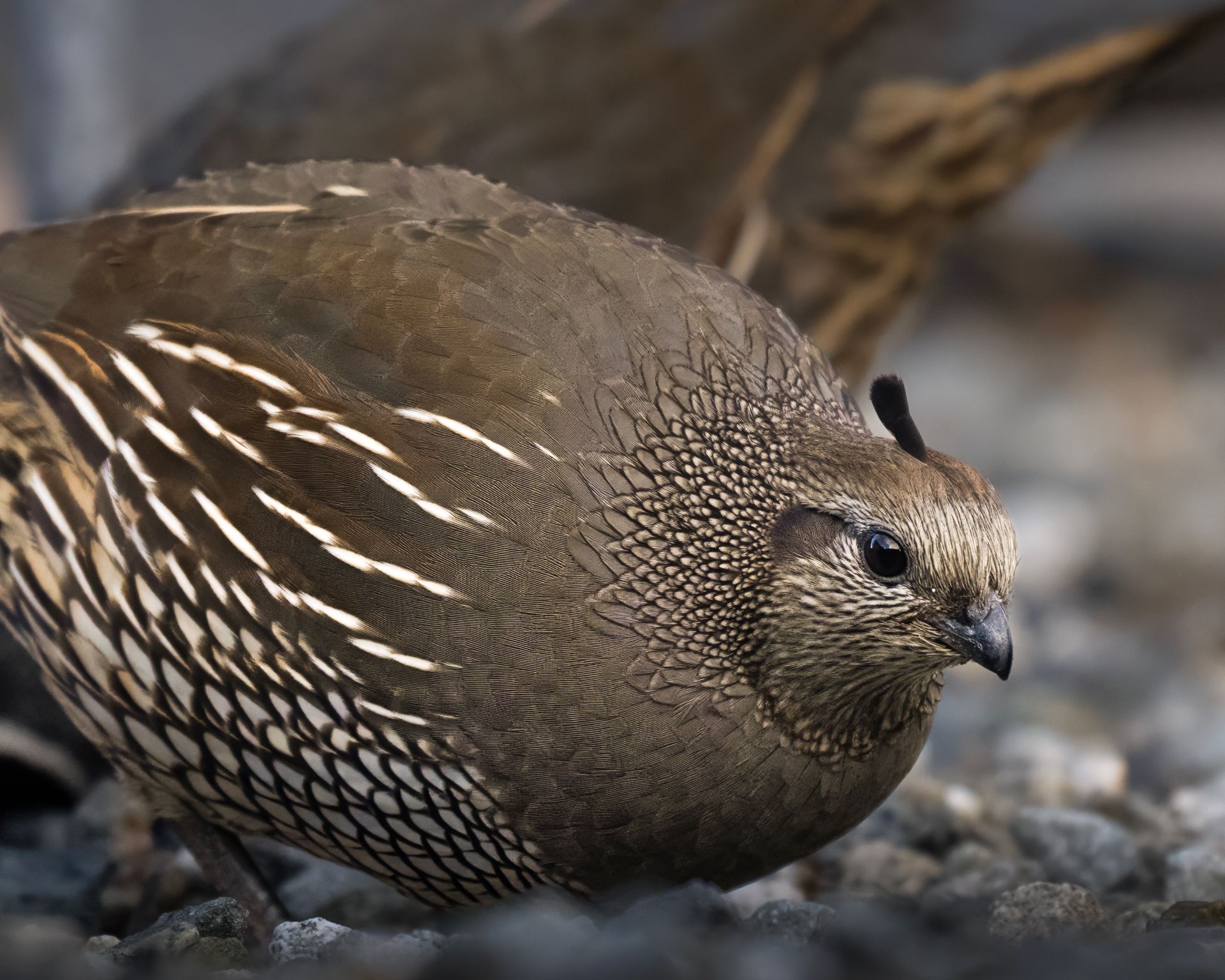
They are relatively small birds, measuring between 10 and 12 inches in length, with a distinctive topknot and a brown back.
California quails are ground-dwelling birds, meaning they spend most of their time on the ground, foraging for seeds, fruits, and insects.
Their habitat ranges from coastal scrub to mountainous forests, and they are often found in areas with dense vegetation and a reliable water source.
These birds are social creatures, typically living in small family groups or coveys, and are known to be quite vocal, with a distinctive call that sounds like a low, whistled "chirp".
They are also monogamous, with pairs forming during breeding season and staying together for several years.
The California quail's genome is still not fully understood, but research suggests that they have a relatively simple genetic makeup, with a relatively small number of genes compared to other birds.
You might enjoy: Sea Lion in California
Physical Characteristics
The California quail is a plump, short-legged game bird with a distinctive appearance. They have a forward-facing crest and a scaled black and white belly with a chestnut patch at the center. The black face is sharply outlined in white and the crown is rich brown.
Males are slightly larger than females, with an average weight of 150.6-189.5 grams (5-7 oz) and a length of 25 cm (9.8 in). Females have a greyish colored throat with black streaks, while males have a black throat.
California quail have a unique teardrop-shaped plume or double plume on the forehead, which is a key identifying feature. They also have black bills and grey legs.
Here's a comparison of the physical characteristics of male and female California quail:
These physical characteristics make the California quail a striking and recognizable bird species.
Habitat and Distribution
The California Quail is found in a variety of habitats, including open woodlands, bushy foothills, and valleys with streams.
They can also thrive in suburban areas and riparian zones. These birds are adaptable and can be found in different types of terrestrial biomes, such as savannas, grasslands, chaparral, forests, and scrub forests.
Here are some specific habitat features where the California Quail can be found:
- Terrestrial biomes: savanna or grassland, chaparral, forest, scrub forest
- Other habitat features: suburban, riparian
Their original range stretched from Baja California to Western Nevada and the southern counties of Oregon, but they have been successfully introduced to other regions, including Northern Nevada, New Mexico, Hawaii, and Utah.
Geographic Range
The California Quail can be found in the Western United States, specifically in the Pacific coast region. This region includes Baja California, a small portion of Western Nevada, and the southern counties of Oregon.
The original range of the California Quail stretched from Baja California to a small portion of Western Nevada. This range was its natural habitat.
The California Quail has been successfully introduced to other regions of the United States, including Northern Nevada, New Mexico, Hawaii, and Utah.
A fresh viewpoint: Ground Squirrel California
Habitat
California quail are most commonly found in the west coast regions of the United States. They have a diverse habitat, which includes open woodlands, bushy foothills, and valleys with streams.
These birds can thrive in various terrestrial biomes, such as savanna or grassland, chaparral, forest, and scrub forest. They're adaptable and can live in different types of environments.
In addition to these biomes, California quail also inhabit suburban areas and riparian zones. They seem to appreciate the mix of natural and human-altered landscapes.
Here's an interesting read: California Western Pond Turtle
State Bird
The California quail is the official state bird of California, a title it's held since 1931.
This bird has a bit of a complicated history in the state, with its population fluctuating significantly over time.
Once, quail were plentiful in San Francisco, but by 2017, only one California quail remained in the city, which birders named Ishi after the last known member of California's Native American Yahi tribe.
Quail were likely introduced to Santa Catalina Island about 12,000 years ago by Native Americans, and surprisingly, there's a minimal genetic difference between the island and mainland quail populations.
Behavior and Reproduction
California quail are social birds that live in small groups, called coveys, which can range from 25 to 40 birds, but have been known to exceed 1000 birds in size.
During the fall, these coveys are quite active, but in the spring, they disintegrate as individual birds pair up and males defend their territories and mates.
California quail are sedentary birds, meaning they don't migrate long distances, and their maximum movements have been recorded at up to 27 km (16.8 miles).
In fact, they've been timed flying at speeds of up to 93 km (58 miles) per hour, and their ground speed has been recorded at 19.3 km (12 miles) per hour.
As they prepare to mate and nest, California quail find a well-hidden area to prepare their scrapes, which are shallow depressions in the ground lined with grass.
Females lay their eggs between May and June, and the average clutch size is 13 to 17 eggs, ranging from 6 to 28 eggs.
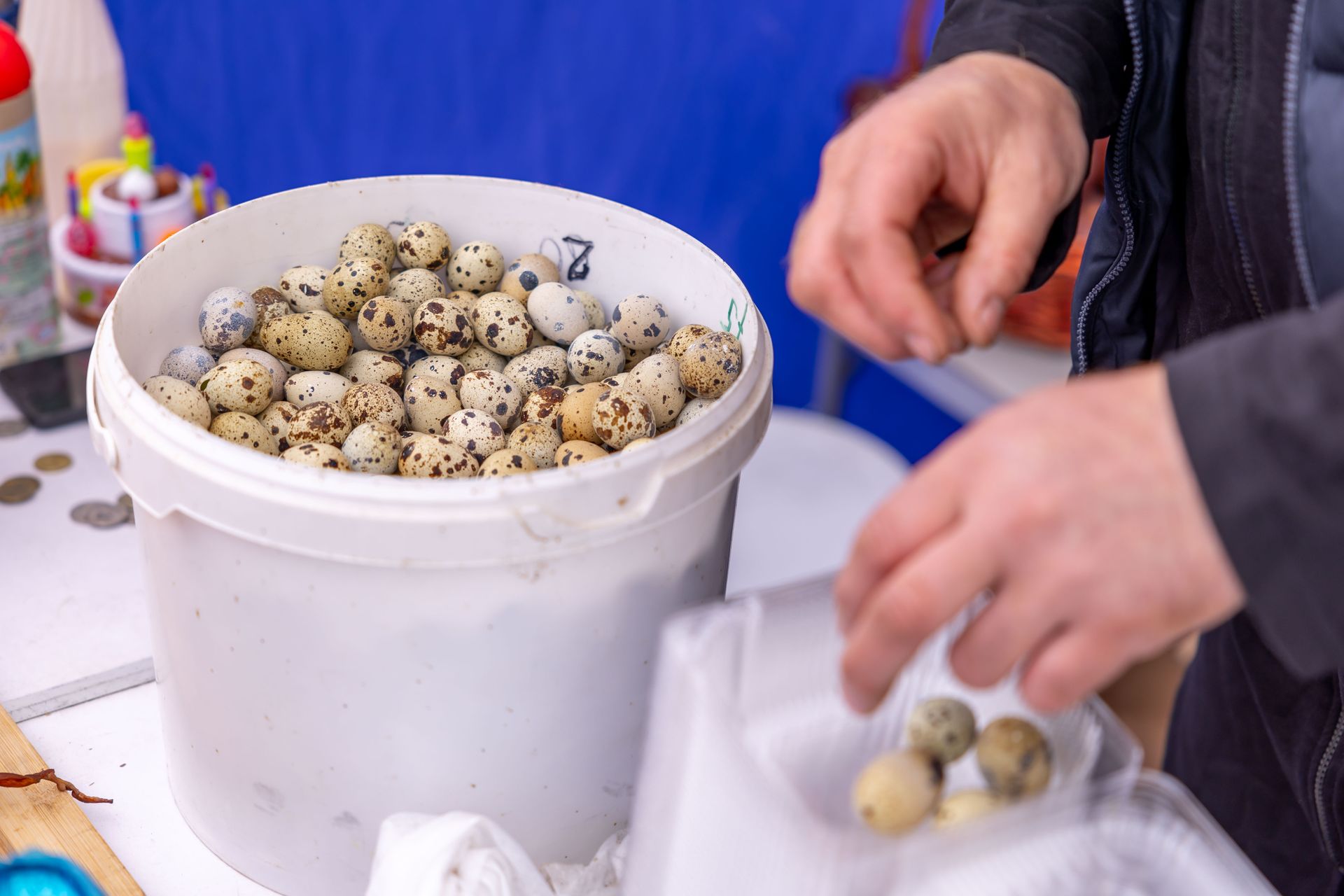
The eggs are creamy white with light golden brown spots and measure 31.6 by 24.1 mm (1.24 by 0.95 in) in size.
After the eggs hatch, the chicks are precocial, meaning they can run around within an hour of hatching, and the male will often provide care to the female while she incubates the eggs.
In fact, if the female dies, the male may even take on incubation duties, showing just how dedicated these birds are to their young.
Here's a summary of California quail breeding and nesting habits:
Conservation and Biology
The California quail, or Callipepla californica, is found in the Nearctic biogeographic province, which includes Greenland, the Canadian Arctic islands, and all of North America as far south as the highlands of central Mexico.
This bird is native to the region, meaning it's naturally found there and doesn't need to be transported from elsewhere.
In terms of its habitat, the California quail lives in grasslands with scattered trees, a type of community that's intermediate between grassland and forest.
The quail's home range is defended by the bird, which means it marks and guards a specific area within its territory to keep other birds away.
Interestingly, the quail's social behavior involves associating with others of its species and forming social groups, which is a common trait among many bird species.
Conservation Status
The conservation status of a species is a critical aspect of conservation biology. In the context of the Nearctic biogeographic province, which includes Greenland, the Canadian Arctic islands, and parts of North America, many species face unique challenges due to human activity.
Habitat loss and fragmentation are major concerns, as species that have been transported to and established populations in regions outside of their natural range, usually through human action, can outcompete native species for resources.
The area in which an animal is naturally found, the region in which it is endemic, is crucial for determining its conservation status. For example, species living in the southern part of the New World, Central and South America, may face different threats than those in the Nearctic biogeographic province.
Temperate grasslands, found in temperate latitudes, are also vulnerable to human activities such as overgrazing and fire suppression, which can alter the natural balance of these ecosystems.
The scrub biome, found in coastal areas between 30 and 40 degrees latitude, is characterized by dense, spiny shrubs with tough evergreen leaves, and may be maintained by periodic fire.
Biological Materials
A liver tissue sample was obtained from a male California quail. This bird was captured at Cow Mountain Recreation Management Area, Lake Co., California, on October 13, 2020.
The individual was collected with approval from the California Department of Fish and Wildlife and the U.S. Fish and Wildlife Service. Permit numbers are SCP-458 and MB153526-0.
A voucher specimen has been deposited at the Museum of Vertebrate Zoology, Berkeley, California. The specimen's code is MVZ:Bird:193975 and can be accessed online.
The bird was captured and euthanized using methods approved by the University of California, Berkeley IACUC. The approval code is AUP-2016-04-8665-1.
Consider reading: Fish and Wildlife Western Pond Turtle
Genome Assembly Assessment
We used a tool called meryl to generate k-mer counts from PacBio HiFi reads, which are then used to estimate genome features like genome size, heterozygosity, and repeat content using GenomeScope2.0.
GenomeScope2.0 is a powerful tool that helps us understand the characteristics of a genome, and it's based on a k-mer database that's generated from the k-mer counts.
We also used QUAST to get some general metrics about contiguity, which is a measure of how well the genome is assembled.
The Aves ortholog database contains 8,338 genes, and we used it with BUSCO to evaluate the quality and functional completeness of the genome.
We also used merqury to assess base level accuracy (QV) and k-mer completeness, which is a measure of how accurate the genome assembly is.
The quality metric nomenclature established by Rhie et al. is used to describe the genome quality, with a code like x·y·P·Q·C, where x = log10[contig NG50], y = log10[scaffold NG50], P = log10[phased block NG50], Q = Phred base accuracy QV, and C = % genome represented by the first “n” scaffolds.
We calculated these quality metrics on the primary assembly, which is the initial assembly of the genome.
The primary assembly is the foundation of the genome assembly, and it's what we build upon to get the final genome sequence.
We followed a known karyotype of 2n = 84 for C. californica, which is a reference genome that helps us understand the structure of the genome.
This reference genome is based on data from the Bird Chromosome Database, Chromosome number data V3.0/2022, and Degrandi et al.
Repeat Annotation
Repeat Annotation is a crucial step in understanding the complexity of an organism's genome. It involves identifying and cataloging repetitive DNA sequences, such as transposable elements (TEs).
We can use programs like RepeatModeler2 to perform de novo repeat annotation, which was used to identify 496 elements in the California quail reference assembly. These elements included LTR (Long Terminal Repeat) elements, which are a type of TE.
The RepeatMasker package was used to annotate TE diversity in the California quail assembly, providing insights into the types of TEs present in the genome. The script calcDivergenceFromAlign.pl was used to estimate the Kimura 2-parameter (K2P) distance of each TE element from the consensus sequence.
This process allowed researchers to generate barplots for the LTR, SINE, LINE, and DNA classes of TE elements found in the genome, providing a visual representation of TE diversity and activity over time.
Classification and History
The California quail, also known as the California valley quail or Valley quail, has a rich history that dates back to its classification. It is a small ground-dwelling bird in the New World quail family.
The California quail was first described by Shaw in 1798 as Callipepla californica. This is a significant milestone in the bird's history, marking the beginning of its formal classification.
Its closest relative is the Gambel's quail, which separated from the California quail about 1-2 million years ago. This separation occurred during the Late Pliocene or Early Pleistocene era.
The California quail has undergone significant changes in its classification over time. It has been recognized as a distinct species, with several subspecies identified. These include Callipepla californica californica, Callipepla californica plumbea, and Callipepla californica brunnescens.
Here is a list of the recognized subspecies of the California quail:
- Callipepla californica californica: northern Oregon and western Nevada to southern California (western USA) and Coronados Islands (northwestern Mexico)
- Callipepla californica plumbea: San Diego County (southwestern USA) southward through northwestern Baja California (northwestern Mexico)
- Callipepla californica brunnescens: far northern coastal California to southern Santa Cruz County (western USA)
- Callipepla californica catalinensis: Santa Catalina Island (off southern California) (southwestern USA)
- Callipepla californica canfieldae: Owens Valley of east-central California (western USA)
- Callipepla californica achrustera: southern Baja California (northwestern Mexico)
- Callipepla californica decolorata: Baja California between latitude 25°N and 30°N (northwestern Mexico)
The California quail's classification has significant implications for its conservation and management. It is the state bird of California, and its recognition as a distinct species has helped to raise awareness about its importance in the ecosystem.
Quail Chicks and Methods
Quail chicks can be raised from incubated eggs or hatched from broody quail.
To raise quail chicks from incubated eggs, you'll need to provide a warm and humid environment, with a temperature range of 90-95°F and humidity of 50-60%.
Quail chicks can start eating on their own at around 1-2 days old, but it's recommended to provide a starter feed that's specifically formulated for quail.
Quail Chicks
Quail chicks are incredibly adorable and fragile creatures that require special care.
Quail chicks need to be kept warm, as they can't regulate their body temperature like adult quails can. A temperature of around 90-95°F (32-35°C) is ideal for the first week.
Quail chicks need to be fed a starter feed that's specifically formulated for them, with a high protein content of around 20-22%. This helps them grow strong and healthy.
Quail chicks grow rapidly, doubling their weight in just a few days. By the end of the first week, they should be around 1-2 inches (2.5-5 cm) long.
Quail chicks need access to fresh water at all times, and it's essential to change the water daily to prevent bacterial growth.
Methods
Raising quail chicks requires a specific approach to ensure their health and well-being.
The most common method of hatching quail eggs is through incubation, which typically lasts 16-18 days.
Quail chicks need a brooder with a temperature range of 90-100°F (32-38°C) for the first week after hatching.
Providing a shallow water dish and a feeding trough is essential for easy access to water and food.
Quail chicks should be fed a starter feed specifically formulated for game birds, which typically contains 20-22% protein.
It's essential to maintain a clean and dry environment to prevent disease and parasites.
Frequently Asked Questions
What is Callipepla Californica in English?
The California quail is also known as Callipepla californica, a small ground-dwelling bird native to the Americas. It belongs to the New World quail family.
Are California quails invasive?
Yes, California Quails are considered invasive species in Chile and Argentina due to their non-native origin and rapid population growth. Their invasive nature is a result of human introduction, expanding their range in the region.
Featured Images: pexels.com