Birding in South Carolina is a treat, with over 400 species documented in the state. The Palmetto State is a haven for bird enthusiasts, with its diverse habitats ranging from beaches to swamps and forests.
The state's location on the Atlantic Flyway makes it a crucial stopover for many migratory birds. This means that birders can spot a wide variety of species, from warblers to raptors, at different times of the year.
To identify birds in South Carolina, it's essential to know the distinctive characteristics of each species. Look for features like beak shape and size, plumage patterns, and leg color.
Broaden your view: Bird Species in North Carolina
Bird Identification in South Carolina
If you're new to birdwatching in South Carolina, it's essential to know which birds to look out for. The Northern Cardinal is one of the most common birds to visit backyard feeders in the state, with a whopping 97% frequency.
The Carolina Chickadee and Tufted Titmouse are also frequent visitors, with 96% and 95% frequency respectively. These birds are often seen in the same areas, so keep an eye out for them when you're out birding.
To help you identify the birds you see, here's a quick rundown of some common species in South Carolina:
The Carolina Wren, on the other hand, is a feisty bird that's known for chasing off larger birds from its territory. It's a small, brown bird with a distinctive white eye stripe and a cocked-up tail.
Official List of Birds of South Carolina
The official list of birds in South Carolina is maintained by the South Carolina Bird Records Committee.
The list is updated annually and as of the 2022 report, it includes species accepted by the committee. Taxonomy follows the AOS Check-list of North American Birds, which has undergone changes reflected in its 64th Supplement (2023).
The South Carolina Main list includes all species with a South Carolina status of Definitive or Provisional.
You might enjoy: Bird Species Identification
Brown Thrasher
The Brown Thrasher is a common bird in South Carolina, recognizable by its reddish-brown back and pale wing bars. They have a long tail and are known for their bright yellow eyes.
These birds are shy and non-aggressive at feeders, often submissive to most other birds. They favor platform feeders and also feed on the ground.
Brown Thrashers visit 64.4% of backyard bird feeders in the State of South Carolina in groups of 1.1 individuals. They are attracted to hulled sunflower seeds, suet cage, cracked corn, and peanut hearts.
They build a relatively large cup-shaped nest in dense vegetation 2-7 feet above the ground. The nest is made of grasses, bark, twigs, and leaves.
Both the male and female Brown Thrashers help with nesting, picking the nested placement and making the nest together. They have 1 to 2 broods each breeding season with 2 to 6 eggs each.
Their diet consists mostly of insects, but they also eat fruit, seeds, and nuts. They will come to your feeders for seeds and you can find them eating seeds off the ground around feeders.
Brown Thrashers make a lot of noise but are hard to see because they prefer dense shrubs for cover. They can be aggressive birds and have been known to strike people and dogs if you go too close to their nests.
Expand your knowledge: Mud Bird Nest Identification
Description and Field Marks
The Carolina Wren is a feisty bird, known for packing a lot into a tiny body and having no problem chasing off larger birds from their territory. This small, brown bird has a distinctive creamy-colored breast and a cocked-up tail.
The Blue-Gray Gnatcatcher, on the other hand, is about the size of a sparrow with a long tail and thin bill. They're pale blue/gray in color with white underparts and a black tail.
The Carolina Wren's aggressive nature is matched only by their loud calls, which can be a challenge to ignore.
The Blue-Gray Gnatcatcher has a unique appearance, with white wing bars and a long, slender build.
These birds are expert nest builders, with both sexes choosing the site and constructing the nest together, usually in broadleaf trees.
Their nests are built to last, with several nests often constructed in a single breeding season.
The Blue-Gray Gnatcatcher's diet consists mainly of insects, including plant and tree bugs, spiders, and caterpillars. They don't eat seeds or fruits, and are not typically seen at bird feeders.
In South Carolina, you can spot the Blue-Gray Gnatcatcher year-round in coastal areas, and during the breeding season in the rest of the state.
You might like: Blue Bird Identification
Common Backyard Birds
The Northern Cardinal is one of the most common backyard birds in South Carolina, visiting nearly 97% of bird feeders in the state. This bird is a year-round resident and can be found in a variety of habitats.
The top 10 birds that visit backyard feeders in South Carolina are likely to visit your yard if you offer food. In fact, the Northern Cardinal is the most frequent visitor, followed closely by the Carolina Chickadee and Tufted Titmouse.
Here are the top 10 birds that visit backyard feeders in South Carolina, ranked by frequency:
List of Backyard Birds
If you're new to birdwatching or just want to learn more about the feathered friends visiting your backyard, let's dive into the world of common backyard birds.
The Northern Cardinal is a frequent visitor to South Carolina bird feeders, with a whopping 97% frequency of visits. This stunning bird is a year-round resident, and its bright red plumage is a treat to behold.
A different take: Backyard Bird Identification
In contrast, the American Robin visits bird feeders at a lower frequency of 62%, but it's still a welcome sight in many backyards. These birds are known for their earthworm-hunting skills and are a delight to watch.
If you're interested in attracting birds to your feeder, consider offering hulled sunflower seeds, nyjer, cracked corn, millet, and milo. These seeds are a hit with birds like the Chipping Sparrow, which visits 67.6% of backyard bird feeders in the state.
Here's a list of the top 10 birds that visit backyard feeders in South Carolina, ranked by frequency:
Keep in mind that this is not an exhaustive list, and many other birds visit backyard feeders in South Carolina. By offering a variety of seeds and creating a welcoming environment, you'll be sure to attract a diverse range of birds to your feeder.
House Finch
The House Finch is a small bird that's a common sight in many backyards, particularly in South Carolina. It's a ground-feeder that can be found at platform, hopper, and tube feeders.
House Finches have heavy, conical bills that are perfect for crushing seeds, which is their favorite food. They love black oil sunflower seed, hulled sunflower seeds, safflower, and nyjer.
In the State of South Carolina, House Finches visit 89.7% of backyard bird feeders, often in groups of 2.9 individuals. Sometimes, much larger flocks can be seen.
House Finches are surprisingly submissive to even smaller birds and generally interact well with other birds at feeders. They're also known to be common in suburban settings.
Female House Finches lay 2-6 bluish-white eggs dotted with brown, which take about 29 days to hatch. The incubation period is 13 days, and the nestling period is 16 days.
House Finches can live at least 11 years and 7 months, which is impressive for such a small bird.
Eastern Towhee
The Eastern Towhee is a delightful bird to have in your backyard. They have distinctive black or brown hoods, depending on their sex, and a white belly with rich brown sides.
These birds are primarily ground feeders, so they'll appreciate seed spills from elevated feeders. You can attract them with black oil sunflower seeds, hulled sunflower seeds, safflower, cracked corn, peanut hearts, millet, and milo.
Eastern Towhees are social birds and often visit feeders in groups of 1.4 individuals, which is 60.4% of backyard bird feeders in South Carolina.
They're not aggressive birds and tend to feed alongside other ground-dwelling birds. If you have dense low vegetation in your backyard, you're more likely to attract Eastern Towhees, as they prefer to stay close to their natural habitat.
Female Eastern Towhees build their nests on the ground in fallen leaves, and they lay 2-6 eggs at a time. The incubation period is 12-13 days, and the nesting period is 10-12 days.
Eastern Towhees are known for their unique call, often referred to as the "chewink." They're year-round residents in most of South Carolina, except for the northern tip, where they're more commonly seen during breeding season.
You might enjoy: South Carolina Bird Sounds Identification
American Goldfinch
The American Goldfinch is a delightful bird to have in your backyard. It's quite common, visiting 85.7% of backyard bird feeders in South Carolina in groups of 2.6 individuals.
These birds are non-aggressive and easy-going at feeders, often clings to them horizontally. They're submissive to most other feeder birds.
To attract American Goldfinches, try offering hulled sunflower and nyjer seeds at your feeders. They favor large and small tube feeders, large hopper and platform feeders, and the ground.
American Goldfinches build neat cup-shaped nests on twigs, dense shrubs, and dense foliage in overhanging branches of trees 4 to 15 feet above the ground.
For another approach, see: North American Bird Identification
Red-winged Blackbird
The Red-winged Blackbird is a common sight in many backyards, particularly those near lakes, marshes, and farmland. It's a frequent visitor to feeders in semi-urban areas.
You'll recognize this bird by its distinctive red shoulder patches and black body. Non-breeding males have rusty or whitish feather edges, while females and juveniles are brown with black streaks.
Explore further: Black Bird North Carolina
Red-winged Blackbirds are attracted to black oil sunflower seeds, hulled sunflower seeds, and cracked corn. They also love peanuts, millet, oats, and milo.
They favor platform feeders, but will also visit large tube and large hopper feeders. And if you're lucky, you might even spot them feeding on the ground.
Red-winged Blackbirds are often seen in groups, with an average of 4.6 individuals visiting a feeder in South Carolina. However, be warned: they can be aggressive to other birds, taking over feeders when they're in large numbers.
In the breeding season, which runs from early April to early August, Red-winged Blackbirds build cup-shaped nests in vertical shoots of marshes. They're usually 3 to 6 feet from the water and are made of twigs, grasses, and hair.
The female lays 2-4 bluish-green eggs with dark markings, which are incubated for about 12 days. The young leave the nest after 14 days.
Red-winged Blackbirds are known for their loud, clear whistle, which sounds like "fee-bee." They also make a variety of cackling and chattering noises, which can be heard from a perch high in a tree or on power lines.
Check this out: Red Bird North Carolina
Common Grackle
The Common Grackle is a bird you'll often see at backyard bird feeders, particularly in the State of South Carolina where they visit over 48% of feeders in groups of 4 or more individuals.
These birds are quite aggressive and dominant, taking over feeders when they're present. They're attracted to large hopper and platform feeders, and will even feed on the ground.
Common Grackles have a shiny greenish head with purple shades on the rest of their body, and a pale eye in adults. Their plumage is variable, but they're often mistaken for crows due to their long tails and shiny black feathers.
They're omnivores, eating a wide range of foods including insects, fruits, seeds, and grains. They'll dine on sunflower seeds, cracked corn, and suet at your backyard bird feeder.
In the breeding season, which lasts from early March to early July, Common Grackles build bulky nests with an open cup in trees and shrubs, usually 20 feet or less above the ground. They can also nest in barns, rock crevices, and even stored farm equipment.
Female Common Grackles lay 1-7 brownish to pale bluish-gray eggs spotted with brown, and it takes about 28 days from egg-laying until fledging. They can live at least 23 years and 1 month, which is impressive for a bird of this size.
Mockingbirds, Thrashers & Catbirds
Mockingbirds and thrashers are a delight to have in your backyard. They're great songsters, and some can even mimic other birds' songs.
Mockingbirds, thrashers, and catbirds all belong to the Mimidae family. They feed on insects and fruit, using their bills to toss leaves and sticks or rake through leaf litter in search of food.
These birds are quite vocal, and some are even known to incorporate parts of other local birds' songs into their repertoire. They're a joy to listen to, and their songs can be a great way to identify which birds are visiting your yard.
Brown thrashers, in particular, are shy and non-aggressive at feeders. They prefer platform feeders and also feed on the ground, making them a common sight in South Carolina backyards.
If you want to attract brown thrashers to your yard, try offering hulled sunflower seeds, suet cage, cracked corn, and peanut hearts. They also love dense vegetation and thickets, so consider planting some shrubs to provide them with cover.
Brown thrashers are relatively large birds, measuring 9.1-11.8 inches in length. They have a distinctive appearance, with a reddish-brown back, pale wing bars, and heavily streaked underparts.
Both male and female brown thrashers help with nesting, picking the nested placement together and making the nest out of grasses, bark, twigs, and leaves. They're devoted parents, incubating the eggs and feeding the young together.
Woodpeckers and Nuthatches
Woodpeckers are a common sight in South Carolina, with the red-bellied and downy woodpeckers being regular visitors to backyard bird feeders. They feed on a variety of foods including insects, seeds, and fruit.
The red-bellied woodpecker is known for its aggressive behavior, often dominating other birds at feeders. It's also a skilled forager, able to extract seeds from feeders and store them for later consumption.
You can attract red-bellied woodpeckers to your yard with black oil sunflower seeds, hulled sunflower seeds, suet, and nectar. They're particularly fond of suet cages and large hopper feeders.
In contrast, white-breasted nuthatches are smaller and more agile, often clinging to large tube and hopper feeders head-down. They're also known for their feisty behavior, but tend to lose out to woodpeckers and other birds.
White-breasted nuthatches can be attracted to your yard with peanut hearts, hulled sunflower seeds, and suet. They're particularly fond of mixed seed blends and will often grab a seed and fly off to eat or cache it in a nearby tree.
The brown-headed nuthatch is a common visitor to backyard bird feeders, particularly in the longleaf pine forests of the coastal plain.
Recommended read: White Bird Identification
Woodpeckers
Woodpeckers are fascinating birds that can be a delight to have in your backyard, but they can also be a bit aggressive at feeders. The red-bellied woodpecker, for instance, is known to be one of the most aggressive woodpeckers, dominating most other birds at feeders.
They are attracted to a variety of foods, including black oil sunflower seeds, hulled sunflower seeds, safflower, suet, cracked corn, peanuts, peanut hearts, nectar, fruit, and mealworms. You can offer these foods in a suet cage, large hopper, platform, or nectar feeder.
Red-bellied woodpeckers are also cavity-nesting birds, excavating their own cavities in dead trees or using pre-existing ones. They breed in mid-April through mid-September, laying 2-6 white eggs, and taking about 32 days from egg-laying to fledging.
Downy woodpeckers, on the other hand, are generally non-aggressive and favor semi-open woodlands and wooded urban areas. They visit 85.3% of backyard bird feeders in South Carolina, often in groups of 1.3 individuals.
Downy woodpeckers are attracted to suet, black oil sunflower seeds, hulled sunflower seeds, peanuts, peanut hearts, and mealworms. They favor suet cages, large and small hopper, and platform feeders.
Red-headed woodpeckers, with their entirely red head, neck, and throat, are easily identifiable. They prefer open woodlands, orchards, and savannas, and are known for their acrobatic flight and loud calls.
Pileated woodpeckers, the largest in South Carolina, have an all-black body with white stripes down a long neck and a bright red crest on the back of their heads. They fly in fairly straight lines, unlike other woodpecker species, and are known for their slow and powerful drumming.
These birds thrive in South Carolina's forests, especially throughout the Hocking Hills, providing an important source of biodiversity to the state's ecosystem.
Broaden your view: Dogs in South Carolina
White-Breasted Nuthatch
The White-Breasted Nuthatch is a common backyard bird found year-round throughout South Carolina. It's a small bird, but the largest nuthatch in North America.
They have a distinctive appearance with a black cap on top of their heads, white on either side, and on their bellies. Their lower belly is also a chestnut color.
White-Breasted Nuthatches are known to stuff nuts and seeds under tree bark, then use their sharp beaks to hatch the seed from the shell. This behavior earns them their name.
They're plump little birds, larger and heavier-bodied than Red-Breasted Nuthatches. They always start at the top of the tree and work their way down to the ground.
White-Breasted Nuthatches are cavity-nesting birds, making their nests in tree cavities or holes made by woodpeckers at least 15 feet above the ground. Females build their nests out of grasses, twigs, mosses, and bark fibers.
They have a unique way of foraging, usually grabbing a seed and immediately flying off to eat it or cache it in a nearby tree. They like mixed seed blends, black sunflower seeds, peanut butter, peanuts, or suet.
White-Breasted Nuthatches are social birds, often visiting backyard feeders in groups of 1.27 individuals. They visit 75.1% of backyard bird feeders in the State of South Carolina.
Their call sounds like a squeaky wheel, a distinctive sound that's easy to recognize.
Additional reading: Black Bird Identification
Brown-Headed Nuthatch
The Brown-Headed Nuthatch is a delightful bird to have in your backyard, and with the right food and habitat, you can attract them easily. They love suet, hulled sunflower seeds, peanut hearts, and millet.
These birds are non-aggressive, but they can be feisty with birds of the same size. They're also quite skilled at clinging to feeders head-down, making them a joy to watch.
The Brown-Headed Nuthatch is a bird of pine woodlands, and they're more likely to visit your feeder if it's located in or near a pine woodland. They're common visitors to backyard feeders in South Carolina, where they visit 63.5% of bird feeders.
In the wild, these birds nest in cavities they excavate in decayed wood, or they'll take over existing cavities excavated by woodpeckers. They breed from June to September, laying 3-7 whitish eggs with reddish-brown spots.
The incubation period is 13 days, and the nestling period is 18 days, until the young birds fledge. With proper care, the Brown-Headed Nuthatch can live for at least five years and nine months.
These birds are tiny, measuring 4 ½ inches in length, and they have a distinctive brown cap edged by a darker line through the eye. They're common residents of longleaf pine forests, but they can also be found in pine stands in the piedmont and foothills region.
Their squeaky call sounds like a children's rubber toy, and they're often heard foraging upside down among pine branches, probing for tiny arthropods. They're also common visitors to backyard bird feeders.
Wood Stork
Wood storks are large wading birds that stand nearly 40 inches tall. They're easily recognizable by their white body, bald blackish head, and prominent down-curved bill.
Soaring birds display sharply contrasting black flight feathers on their long broad wings and a black tail. This unique combination makes them a striking sight to behold.
Wood storks are specialized feeders, requiring a water depth of 10 to 20 inches for foraging. They capture fish by a unique tactile feeding strategy known as “tacto-location.”
Breeding populations of this federally endangered species have gradually shifted northward in recent years. Today nesting occurs at various coastal locations in the state, the largest concentrations occurring in the ACE basin region.
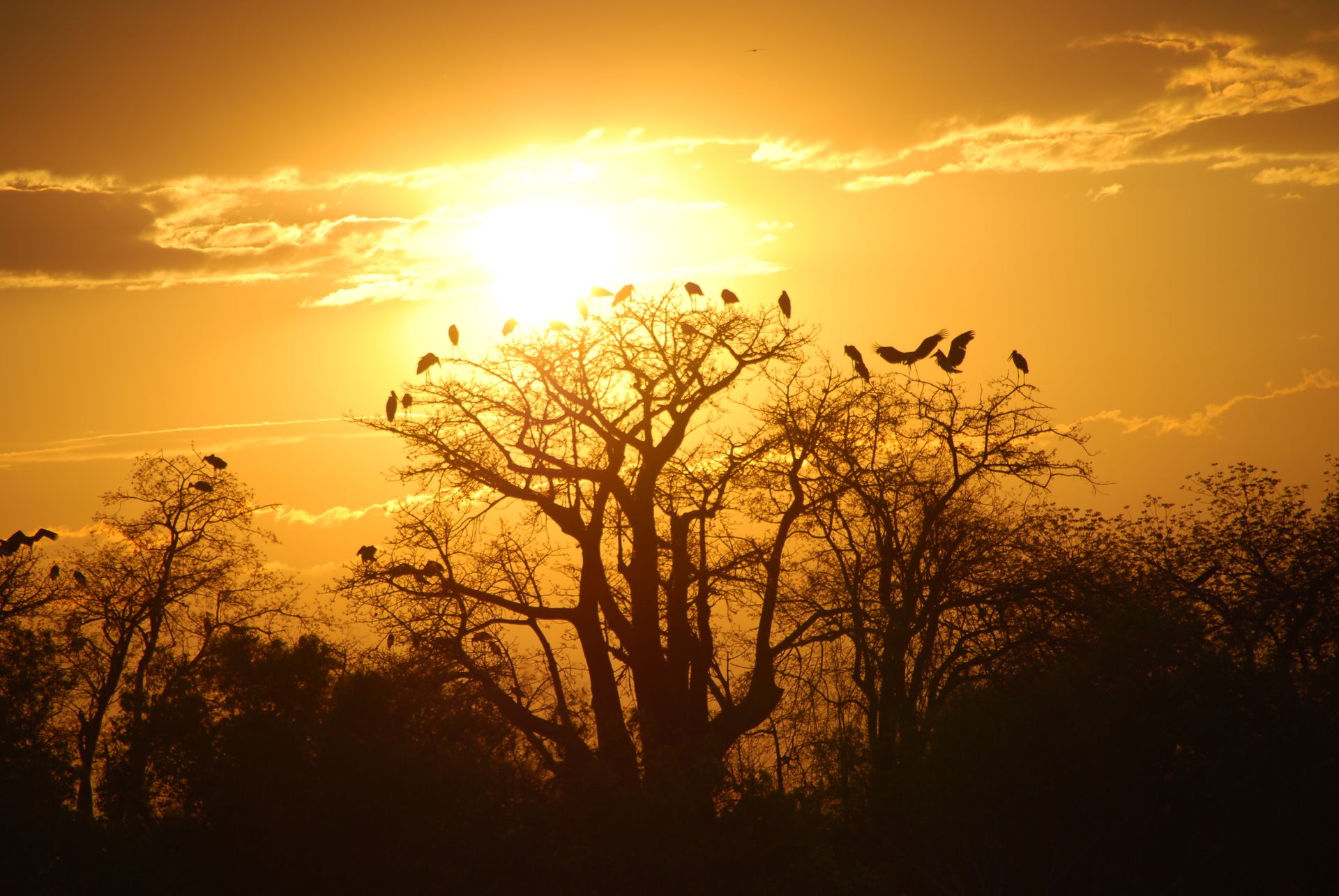
Wood storks form rookeries, and typically build their nests in the tops of tall cypress trees over open water.
Rare and Special Birds
South Carolina is home to a diverse range of bird species, and some of the rarest and most special birds can be found in the state. The Wood Stork, a large wading bird, is one of the rarest birds in the United States and can be spotted in the state's wetlands.
The Brown Pelican is another iconic bird species that can be found in South Carolina, particularly along the coast. Its distinctive nesting habits on mangrove islands are a sight to behold.
The Wood Stork's unique feeding habits, where it wades in shallow water with its long bill, make it a fascinating bird to observe.
Suggestion: South Carolina Bird Dogs
Indigo Bunting
The Indigo Bunting is a stunning bird to spot in your backyard. They are entirely blue in breeding plumage, with females being brown and having faint dark streaks on their breast and belly.
Their diet consists of small seeds, fruits, berries, and insects, making them a delight to attract to your feeders with hulled sunflower seed, millet, and nyjer.
In terms of feeder preference, Indigo Buntings favor large and small tube, large hopper, and platform feeders. They are nonaggressive and easy-going at feeders, often submissive to other birds.
To attract them to your backyard, it's essential to have dense vegetation around the feeders. This allows them to approach the feeder and return to cover, making them feel safe and secure.
Indigo Buntings are known for their whistling song, which they sing as they flit between feeders and dense vegetation. They are usually solitary birds, but during migration, they form flocks and travel together at night using the stars as guidance.
Their breeding season is from late May through late September, with females laying 3-4 white unmarked eggs with some or no brownish spots. It takes around 24 days from egg-laying for the young to fledge, with an incubation period of 13 days and a nestling period of 14 days.
With a lifespan of at least 13 years and 3 months, Indigo Buntings are a delight to observe and attract to your backyard.
Swallow-Tailed Kite
The Swallow-Tailed Kite is a stunning bird measuring 23 inches in length. Its striking black-and-white plumage, long forked tail, and slender wings make it unmistakably recognizable.
This beautiful raptor can be found in South Carolina, where it's an uncommon, local breeding resident. It typically inhabits mature river swamps.
In these habitats, breeding pairs often select the tops of tall pine trees for nesting. Foraging is a communal activity, with the birds often seen in small groups.
Winged insects, including numerous dragonflies, are a favorite food source for the Swallow-Tailed Kite. Small lizards and snakes are also snatched while on the wing.
The Santee Delta Wildlife Management Area near Georgetown and the Francis Marion National Forest in Charleston County are great places to spot this species. It's a summer visitor, with individuals typically arriving in March and departing by early fall.
Consider reading: Small Bird Nest Identification
Wilson's Plover
The Wilson's Plover is a beautiful bird to spot, measuring 7 ¾ inches in length. They have a distinctive appearance, with males being dark sandy brown above and white underneath, and marked by a black breast band.
One of the most striking features of the Wilson's Plover is its call, which is a musical chirping whistle note. This sound is a great way to identify the species, especially during the summer months when they're most active.
Their nests are surprisingly simple, consisting of a shallow depression on an exposed shelly beach flat. This camouflage helps protect the three eggs and young from predators.
If you're lucky enough to spot a Wilson's Plover, you might be surprised by how agile and quick the young birds are. They're quite elusive, making them a fun challenge to observe.
American Oystercatcher
The American Oystercatcher is a striking shorebird that's hard to miss, measuring 18 ½ inches in length and featuring a distinctive black head and neck.
Its dark brown back and wings provide a beautiful contrast to its white underparts, and its long, heavy-set bill is a vibrant reddish orange. Birds in flight reveal white wing stripes and a tail patch.
This species is a year-round resident of the coast, often staying close to shell banks that offer nesting, roosting, and foraging sites. The Cape Romain National Wildlife Refuge is a crucial habitat for the American Oystercatcher.
The oystercatcher's diet consists mainly of mollusks, particularly the raccoon oyster, which it quickly strikes down with its uniquely shaped bill.
Acadian Flycatcher
The Acadian flycatcher is a small, 5 ¾ inches in length, drab bird with distinctive markings. It's olive-green above and pale olive-gray on the breast, with a pale eye ring and two buffy white wingbars.
This species is commonly found in river forests, damp woods, and swamplands. It's a great bird to spot in these areas, especially if you're looking for something a bit off the beaten path.
The Acadian flycatcher requires a fairly developed understory for nesting, often using rhododendron in the mountains or iron wood in the piedmont. This is crucial for their survival, so it's essential to preserve these habitats.
Their nests are quite simple, consisting of three eggs draped over a forked branch, often over water or an open trail. It's amazing how they manage to construct such a delicate home in these environments.
The Acadian flycatcher's song is a simple, two-syllabled phrase: "pwit-seaa". It's a lovely sound to hear, especially when perched in an exposed spot in the understory.
Swainson’s Warbler
The Swainson's warbler is a rather plain-looking bird, measuring 5 ½ inches in length, with a dull olive-brown back and light gray belly.
Its distinctive field marks include a dirty white eyebrow stripe and rusty brown cap, which can be hard to spot at first glance.
This bird is a migratory species, found in two distinct areas of the state, where it inhabits dense rhododendron thickets along mountain stream forests and bottomland canebreaks of coastal plain swamps and floodplains.
The Swainson's warbler is more easily heard than seen, as it spends most of its time foraging on the ground for insects, sifting through leaves and debris with its long bill.
Its well-hidden nest, made of a large mass of dead leaves, is tucked into a low fork of a shrub or vine tangle and contains three to four eggs.
Bachman's Sparrow
The Bachman's Sparrow is a fairly large 6-inch sparrow that inhabits open pinewoods with scattered shrubs.
It's a grayish bird with distinctive streaks of dark chestnut brown above, dull gray across the breast, and whitish on the belly. The Bachman's Sparrow has a dark eye stripe and a fairly long rounded tail.
To spot one, locate singing males in favored long leaf pine habitat, as they're most easily observed there. The melodic song is a clear introductory whistle followed by a musical trill.
The nest of this sparrow is an unusual well-hidden structure built mainly with grass stems, typically placed at the base of a shrub or stump.
Explore further: Sparrow Bird Identification
Painted Bunting
The Painted Bunting is a brilliant sight to behold, measuring 5 ½ inches in length. Its male is unmistakable with a purplish head and neck, green back, and bright red under parts and rump.
The female Painted Bunting is quite different, being overall yellowish. This coloration is a stark contrast to the male's vibrant plumage.
Male Painted Buntings are fiercely territorial, often engaging in disputes that can result in death. This territorial behavior is a key aspect of their mating rituals.
Painted Buntings are common visitors to seed feeders, making them a favorite among backyard bird enthusiasts.
Habitat and Behavior
Birds in South Carolina can be found in a variety of habitats, including forests, grasslands, and wetlands.
The state's diverse landscape supports over 400 species of birds, with some species migrating through the state while others remain year-round.
Some birds, like the Northern Cardinal, are common in backyards and gardens, while others, like the American Golden-Plover, can be found in coastal areas.
These birds can be identified by their unique characteristics, such as the Northern Cardinal's distinctive song and the American Golden-Plover's black neck band.
Here's an interesting read: Northern California Bird Identification
Habitat and Distribution
Northern Cardinals are commonly found in woodlands, gardens, shrublands, and wetlands throughout South Carolina. They thrive in areas with dense vegetation and a reliable food source.
These birds are year-round residents, so you can spot them in your backyard or local park at any time of the year. They're often seen at bird feeders, so if you're looking to attract some visitors, consider setting one up.
In South Carolina, you can find Northern Cardinals in a variety of habitats, from the state's coastal regions to its mountains. Their adaptability makes them a common sight throughout the state.
On a similar theme: Washington State Bird Identification
Diet
The Carolina wren's diet is quite fascinating. They mostly eat insects and spiders, which they likely catch while foraging through dense vegetation.
Insects and spiders make up the bulk of their diet, and it's not uncommon for them to eat some plant material and seeds on occasion.
Their insect-eating habits are likely influenced by their environment, where insects are abundant and easily accessible.
Song and Call
Carolina Wrens have a distinctive way of communicating through song and call. Their song sounds like a finger running down a comb, and the easiest call to learn is the "Tea Kettle, Tea Kettle, Tea Kettle" call.
This unique call is a great way to identify a Carolina Wren, and it's often used to signal the presence of the bird. You might even hear it in your backyard if you have a Carolina Wren visiting.
Additional reading: Audubon Bird Call Identification
Backyard Attraction and Identification
If you're new to birdwatching in South Carolina, attracting birds to your backyard can be a thrilling experience. The Northern Cardinal is one of the most frequent visitors to backyard bird feeders in the state, with a whopping 97% visitation rate.
To increase the chances of attracting these beautiful birds, consider offering sunflower seeds, which are a favorite snack of the Northern Cardinal. I've had great success with this in my own backyard, and it's not uncommon to see a Northern Cardinal or two visiting my feeder every day.
The top 10 birds that visit backyard feeders in South Carolina are perhaps those that will almost certainly visit your backyard if you offer food to our feathered friends. Here are the top 10 birds:
The Mourning Dove, for example, is a frequent visitor to backyard bird feeders in South Carolina, with an 86% visitation rate. If you're looking to attract this bird, consider offering millet or cracked corn.
Frequently Asked Questions
How do I find a specific bird?
To identify a specific bird, observe its unique characteristics such as size, body shape, beak and leg features, coloration, and markings. By noting these details, you can narrow down the possibilities and learn more about the bird's behavior, habitat, and seasonal patterns.
What is the rarest bird in South Carolina?
The rarest bird in South Carolina is the Bar-tailed Godwit, a unique species spotted in the state. This bird's presence is a notable sighting for bird enthusiasts and ornithologists.
Featured Images: pexels.com